Florence food tour: what to expect from a Florentine steak walk
Florence: food and wine tour
- Free cancellation
- Small group
What a Florence food tour actually covers
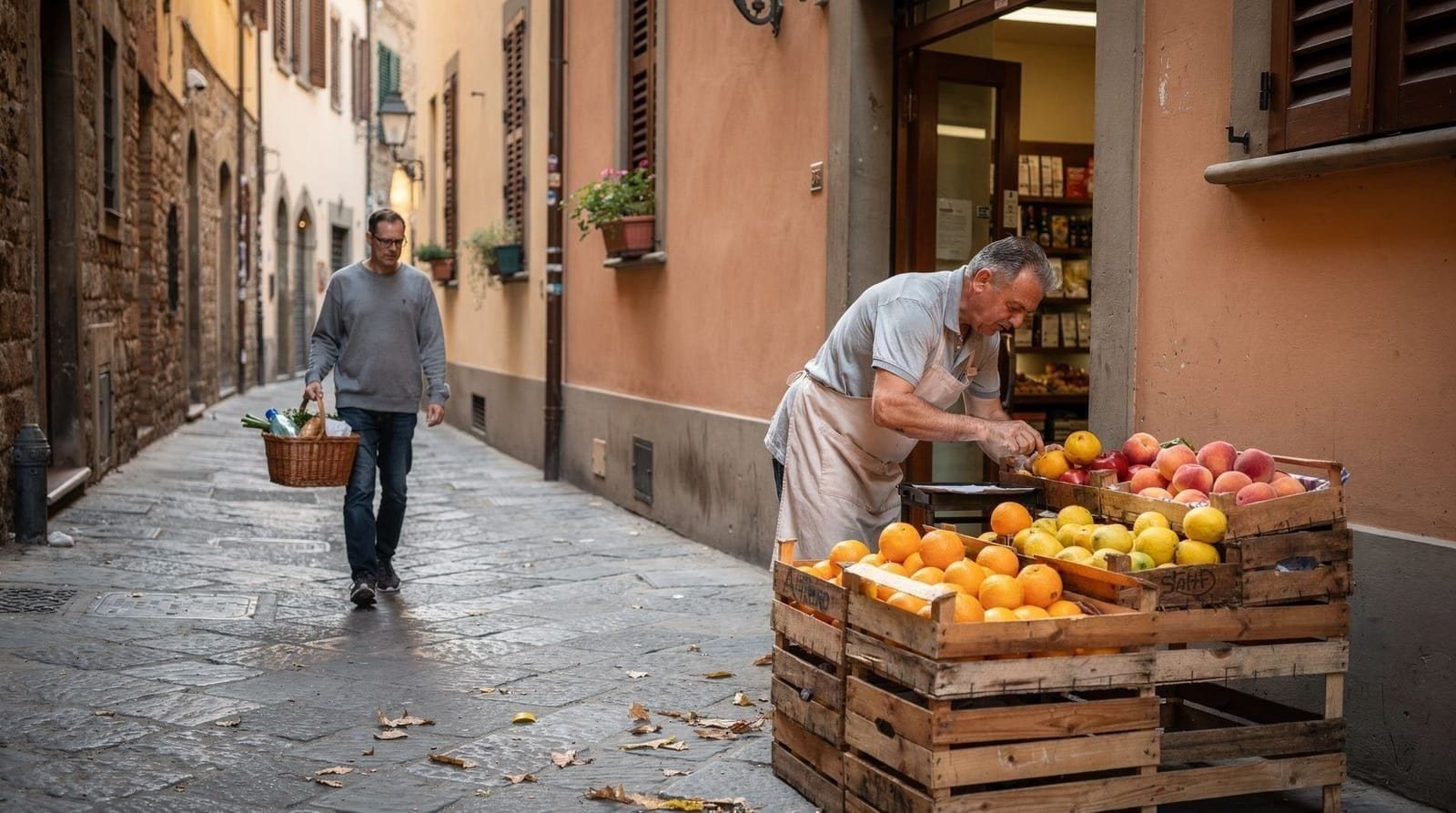
Florence has a strong, distinctive food culture that is poorly represented in the restaurants near the Duomo and Piazza della Signoria. The good food in Florence is in the markets, the lampredottaio carts, the neighbourhood trattorias, and the artisan producers in the Oltrarno and Sant’Ambrogio areas. A guided food tour connects you to this layer of the city that most short-stay visitors miss entirely.
This review covers the standard food and wine tour format — specifically the version that includes a bistecca alla fiorentina component — and how it compares to alternatives including self-guided market visits and cooking classes.
| Where | Mercato Centrale / Sant’Ambrogio area, historic centre |
| Cost | around €55-85/person standard; €80-120 with bistecca |
| Time needed | 3-4 hours, 8-12 tastings, roughly 3-4km on foot |
| Getting there | Meet on foot near Mercato Centrale or Piazza della Repubblica |
| Best time | Book 3-7 days ahead; Saturday mornings sell out fastest |
Florentine food culture: what makes it distinctive
Florence’s food tradition is not the same as generic Italian cooking. Several elements are specific to the city and its Tuscan hinterland:
Lampredotto: The fourth stomach of a cow, slow-cooked and served as a sandwich from carts (lampredottaio) near the major markets. Nerbone inside Mercato Centrale is a famous fixed address; mobile carts operate near the Buca dell’Orafo and Piazza del Mercato Nuovo. This is genuine working-class food, unchanged for centuries, and one of the more adventurous tasting experiences on any Florence food tour.
Schiacciata: Florentine flatbread, oilier and denser than Roman pizza bianca. Served plain or with toppings; available at any bakery (forno) in the city. The best schiacciata has a slightly crisp bottom and an open, oily crumb. Often the first stop on food tours.
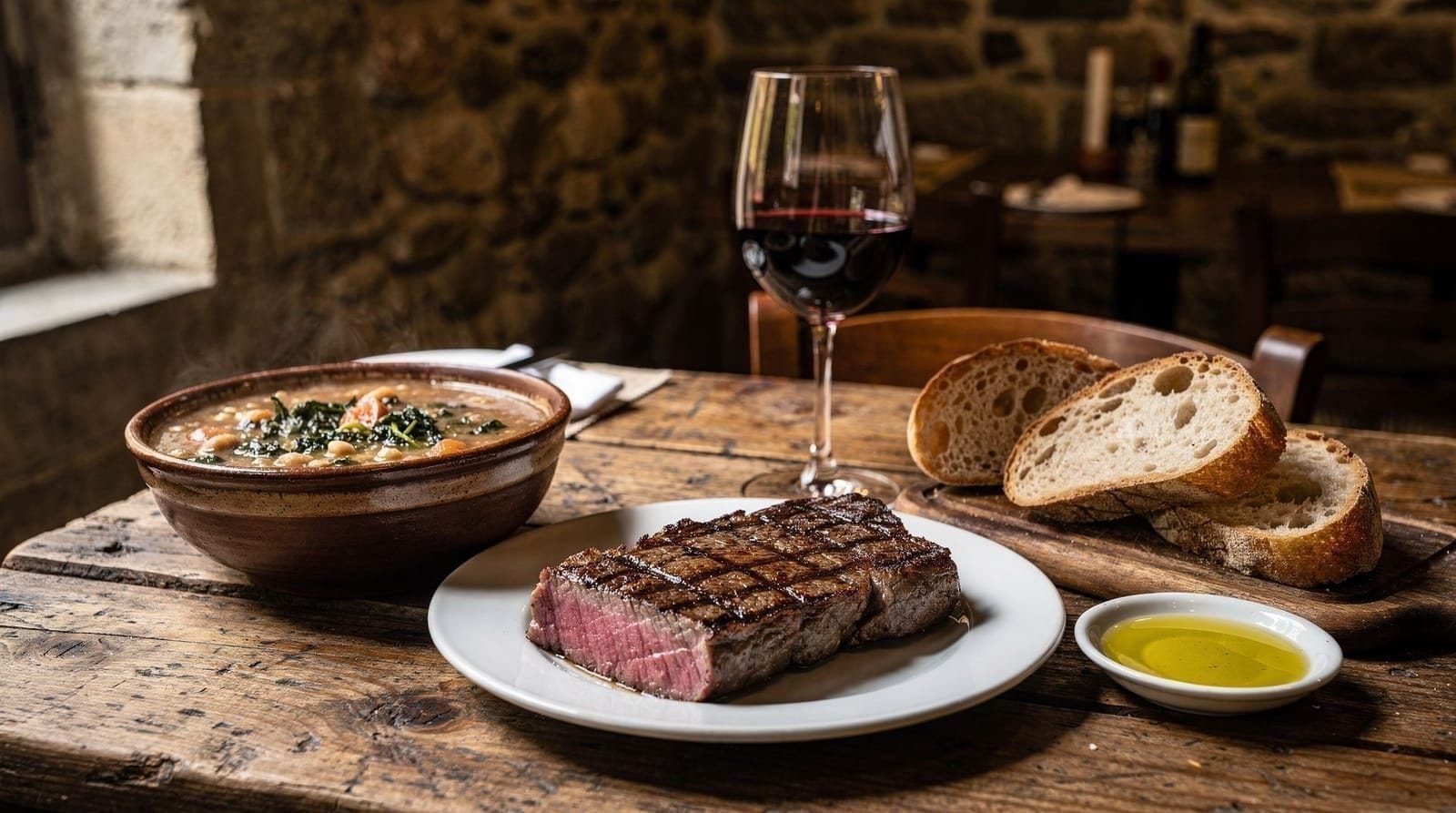
Bistecca alla fiorentina: The Florentine T-bone — minimum 600g per person (usually served for two or more as a shared portion), from Chianina or Limousine cattle, aged minimum 30 days, grilled rare over charcoal. The crust is marked; the interior is red. Served with white cannellini beans and Tuscan olive oil. The best bistecca in Florence costs €50-80 per kilo at the better trattorias.
Ribollita: A thick bread-and-vegetable soup made with cavolo nero (black kale), cannellini beans, and day-old Tuscan bread. “Ribollita” means “reboiled” — the soup is better on the second day. One of the most honest and satisfying dishes in the city.
Pici cacio e pepe or with wild boar: Pici is a thick, hand-rolled pasta (similar to fat spaghetti but without egg) typical of southern Tuscany and increasingly popular in Florence. Served with cheese and pepper, wild boar ragù, or garlic and olive oil.
Chianti wine: Food tours include wine at multiple stops — typically Chianti Classico with the cured meats and cheese stop, and often a Vernaccia di San Gimignano or Morellino di Scansano with the final savoury course.
What the tour route typically covers
Stop 1 — Schiacciata and introductions (local bakery or market): The tour begins near either Mercato Centrale or Mercato di Sant’Ambrogio. A Florentine forno, a taste of the local bread tradition, coffee or water.
Stop 2 — Lampredotto (market area): The guide explains the tradition and you try a lampredotto sandwich. This stop separates the adventurous from the hesitant in every group and produces the most conversation.
Stop 3 — Cheese and charcuterie (enoteca or specialist shop): Pecorino (fresh and aged), Prosciutto di Toscana, finocchiona (fennel salami), lardo di Colonnata (cured fatback from the Apuan Alps marble quarries — surprisingly delicious). Wine pairing: Chianti Classico.
Stop 4 — Market produce and pasta (Mercato Centrale or trattoria): Pasta tasting — often pici or fresh tagliatelle with seasonal sauce. Brief commentary on Florentine market culture.
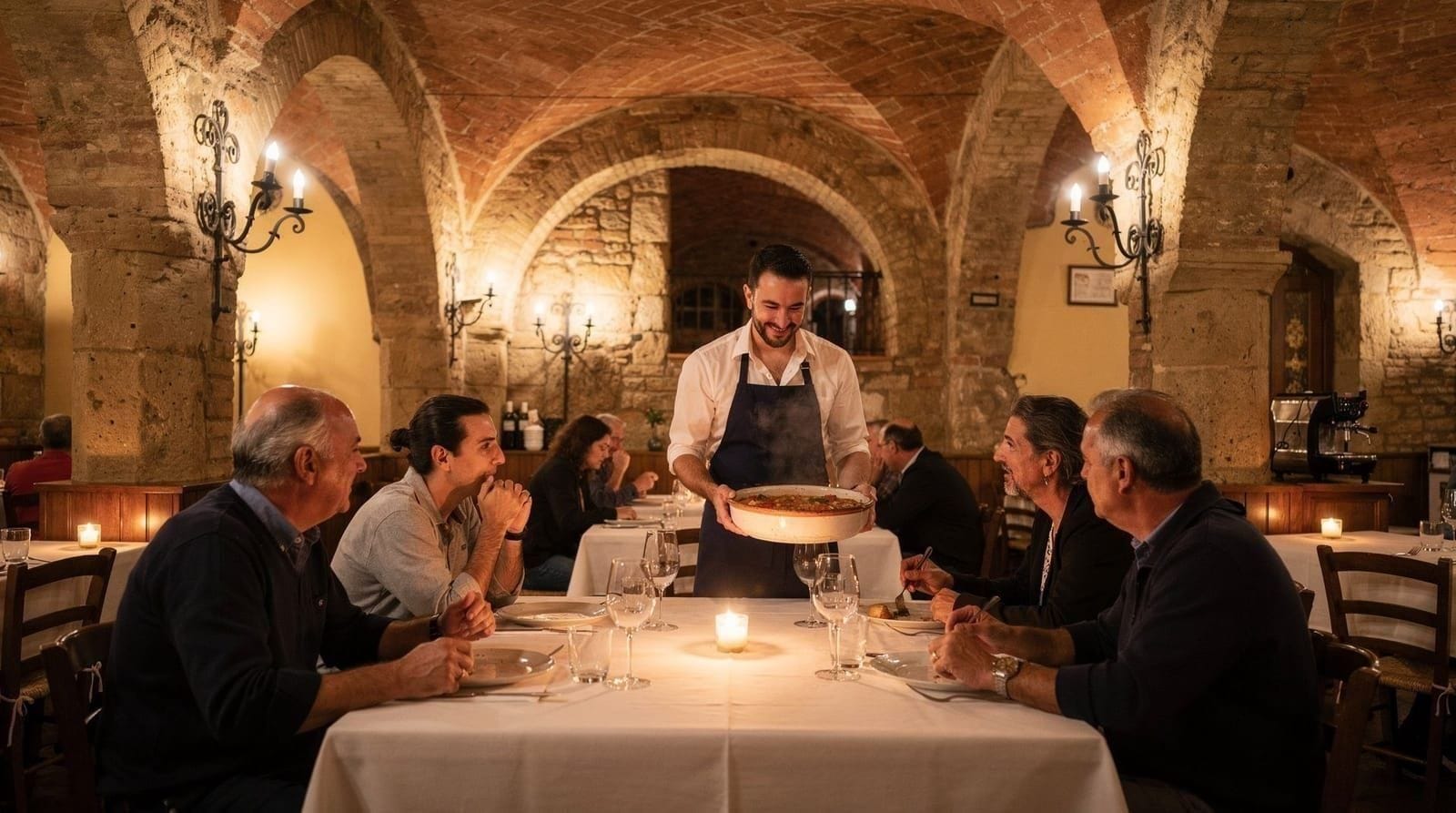
Stop 5 — Bistecca or bistecca tasting (trattoria): This is the anchor stop of the premium format. A shared portion of bistecca alla fiorentina, grilled to the Florentine specification (rare, charcoal, minimal seasoning). Accompanied by Tuscan white beans and olive oil.
Stop 6 — Gelato and cantucci (gelateria): Proper gelato (low overrun, natural colours, covered baths) and the traditional Florentine almond biscuit (cantucci) dipped in Vin Santo.
Total distance covered on foot: approximately 3-4 km through the historic centre and market neighbourhoods. Wear comfortable shoes.
The bistecca question: what’s included
The “food and wine tour with Fiorentina steak” format reviewed here specifically includes a bistecca component. This is a genuine differentiator from standard food tours, which typically cover street food and small tastings without a sit-down meat course.
The portion size varies by tour — some include a full shared bistecca; others include a smaller grilled portion or a bistecca tasting at a specialist shop rather than a full restaurant service. Clarify this when booking.
A full bistecca dinner at a proper Florentine trattoria (Buca Mario, Sostanza, Trattoria Sostanza il Troia) without a tour costs €40-60 per person including wine. If you prefer this format — independent restaurant, no tour structure — the honest Florence guide lists the best bistecca addresses.
How food tours compare to cooking classes
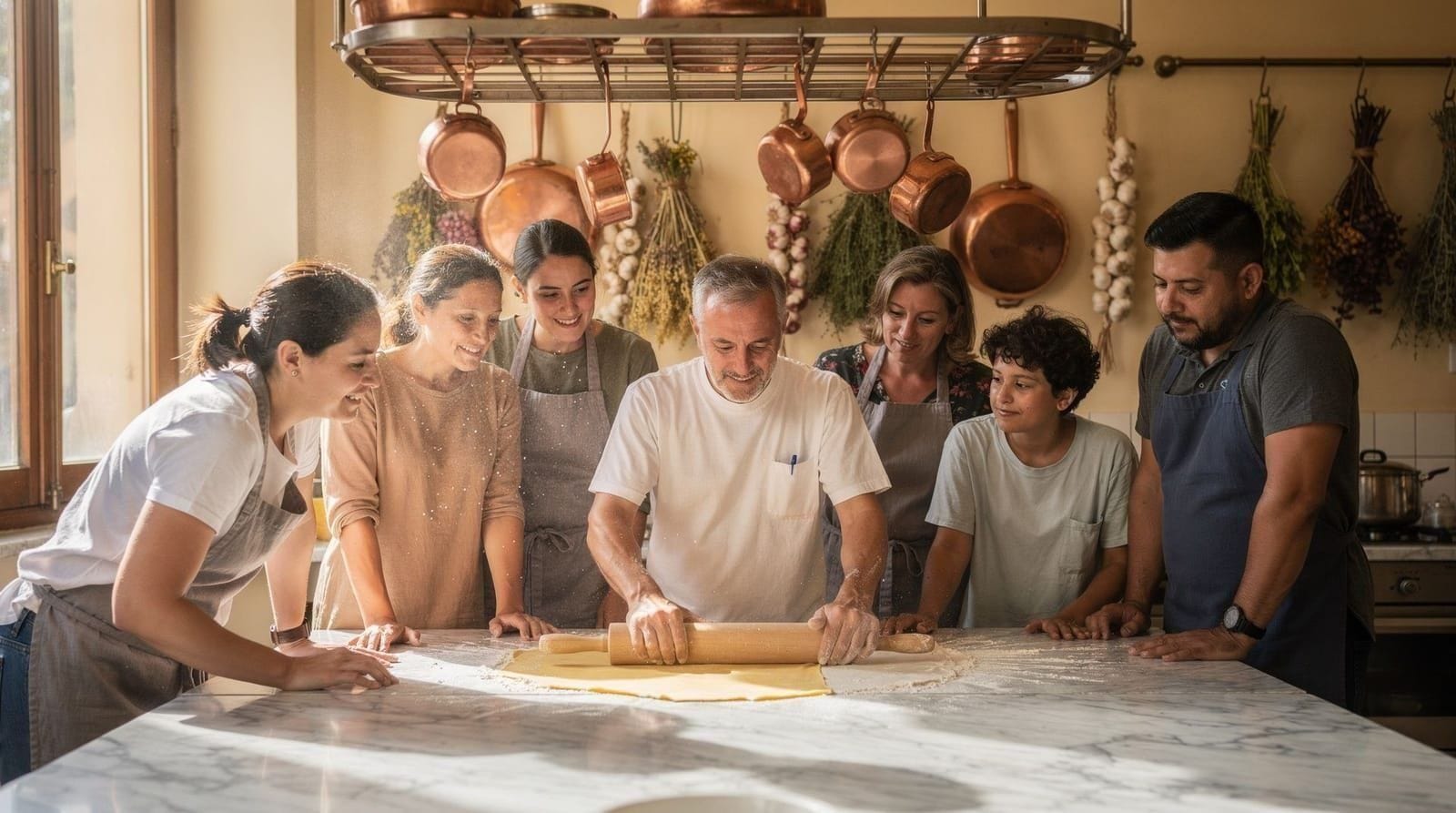
Food tours show you Florence’s food culture in situ — markets, street food, neighbourhood restaurants. You eat; you don’t cook. The experience is about understanding where Florence’s food comes from and what makes it distinctive.
Cooking classes teach technique. You cook; then you eat what you made. The emphasis is on skills transfer and the recipe knowledge you take home.
For most visitors, a food tour on day one (orientation + cultural context) and a cooking class mid-trip or near the end (skills consolidation) is the ideal combination. The two experiences complement rather than duplicate each other.
If you can only do one: the food tour wins for pure cultural education; the cooking class wins for the memorable doing-something-together experience.
Self-guided food exploration vs the tour premium
Florence is genuinely navigable for food without a guide. The essential stops:
- Nerbone (Mercato Centrale, ground floor): lampredotto, ribollita, Florentine lunch at working-class prices (€5-10 for a full plate)
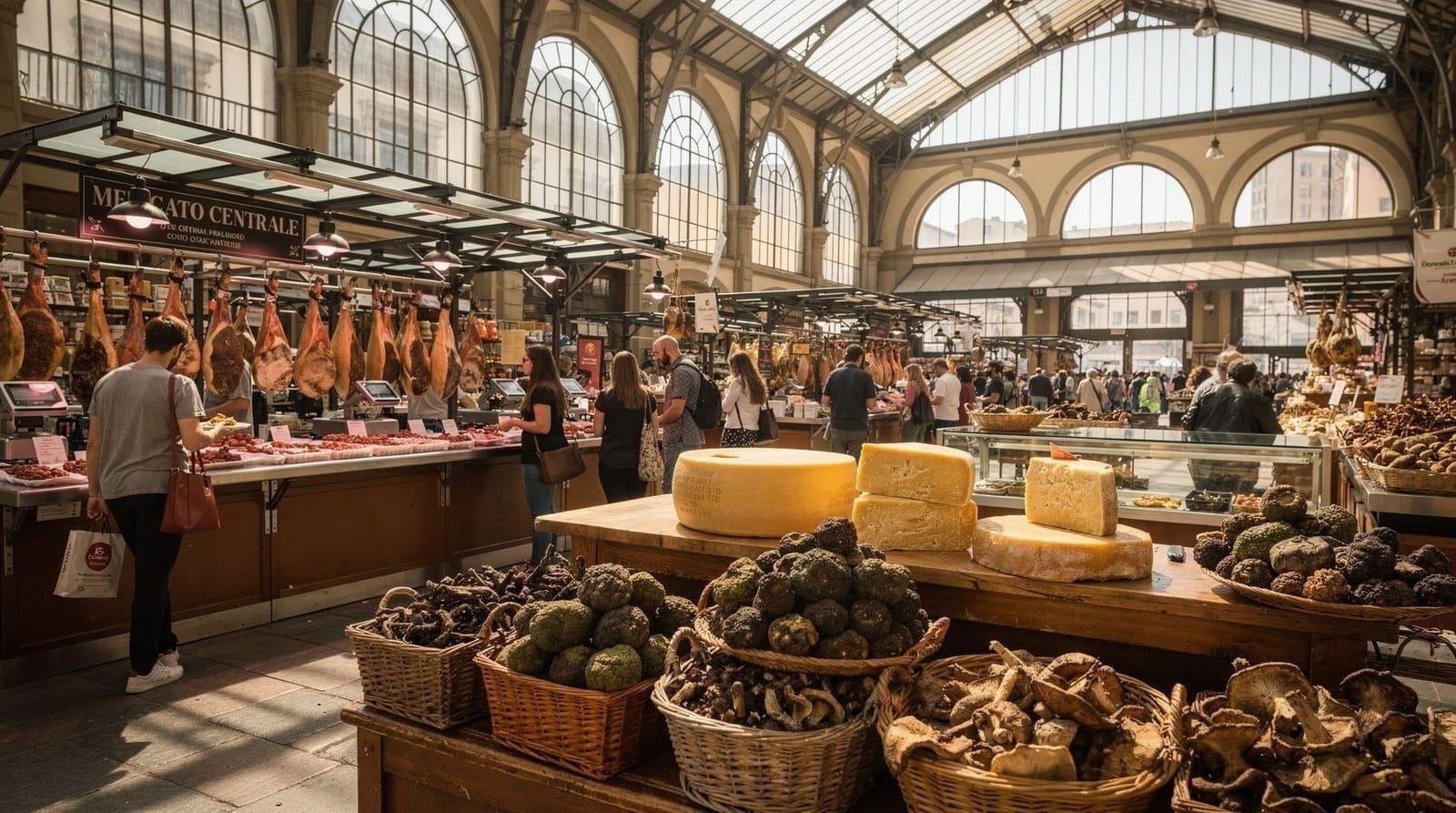
- Mercato di Sant’Ambrogio: fresher, less touristic than Mercato Centrale, with a good covered market hall and outdoor stalls
- Enoteca Pitti Gola e Cantina or any Oltrarno enoteca: Chianti by the glass, cheese and charcuterie boards, at low cost
- Buca dell’Orafo area or Piazza del Mercato Nuovo: mobile lampredottaio carts
- Any local gelateria with covered baths and muted colours (avoid fluorescent peaks of gelato towering above the glass)
Self-guided total cost for the above: €20-35. The tour premium (€55-85) pays for local knowledge, a structured narrative, and access to producers and addresses the guide has vetted personally.
| Format | Around | Best for |
|---|---|---|
| Self-guided market crawl | €20-35 | Budget travellers, confident navigating unfamiliar food |
| Standard guided food tour | €55-85 | Cultural depth, vetted addresses, first-timers |
| Premium tour with bistecca | €80-120 | Wanting a full sit-down steak course included |
| Cooking class | separate booking | Hands-on skills instead of a tasting walk |
Where to go if you want more after the tour
If a food tour whets your appetite for more hands-on cooking, our tuscan cooking class review covers the skills-based alternative in detail. For a deeper dive into the markets themselves outside the guided format, the Florence food markets guide and Mercato Centrale guide are worth reading before or after your tour. Coffee lovers should also look at the Florence coffee culture guide, which covers the espresso-bar etiquette a food tour rarely has time to explain.
Honest food traps to avoid in Florence
Florence has some of the most aggressive tourist restaurant trawling of any Italian city. Near the Duomo, Piazza della Repubblica, and Ponte Vecchio:
- Restaurants with laminated menus in six languages, photos on the menu, and a barker outside the door: the food is almost always mediocre and overpriced
- “Bistecca” at €20 on a tourist menu: genuine bistecca fiorentina costs €35-50 per person minimum; the €20 version is a different cut from a different animal
- Gelato in steel bins with towering, fluorescent mounds: artificial colours, air-pumped volume, not real gelato
- “Authentic Florentine leather” at the San Lorenzo market: most is produced outside Italy; only certified Scuola del Cuoio leather (produced at Santa Croce’s adjacent school) is genuinely made in Florence
A food tour with a good guide navigates away from all of the above.
Regional dishes you won’t find on most tours
Florence’s food tour circuit tends to focus on the greatest hits — lampredotto, bistecca, ribollita — but a few dishes worth knowing about rarely make the standard route. Trippa alla fiorentina (tripe stewed in tomato sauce, distinct from the lampredotto sandwich) is a heartier, less street-food version of offal cookery found at neighbourhood trattorias rather than market carts. Crostini di fegatini (chicken liver pâté on toasted bread) is a classic Tuscan starter, often served free with an aperitivo — see our aperitivo in Florence guide for where to find the best versions. And cantucci e vin santo (almond biscuits dipped in sweet dessert wine) closes most proper Tuscan meals, though many food tours only offer a token taste rather than the full ritual of dunking and lingering over a glass.
If any of these interest you beyond a single tasting, ask your food tour guide directly — most are happy to point you towards a trattoria doing a fuller version later in your trip.
Practical information
When to book: 3-7 days ahead in standard season; 1-2 weeks in peak season. Saturday morning food tours book fastest.
Meeting points: Most tours meet near Mercato Centrale or Piazza della Repubblica. Read the confirmation carefully — the address is often slightly off the main square.
Dietary requirements: Communicate in advance. Vegetarians can be accommodated with advance notice, but the tour loses some of its most interesting stops (lampredotto, bistecca). Vegetarian-specific food tours exist.
Physical demands: 3-4 km walking over 3-4 hours, mostly flat (the historic centre has minimal elevation change). Comfortable shoes, weather-appropriate clothing.
Appetite management: Do not eat a significant meal before a food tour. You will eat the equivalent of a full lunch across 6-7 small stops. Some tours ask you to arrive hungry — they are not joking.
Verdict
A Florence food tour is one of the best ways to understand the city’s genuine character, away from the tourist menu zone. Florence’s food culture — lampredotto, bistecca, ribollita, Chianti at a neighbourhood enoteca — is specific, historical, and rewarding when experienced with someone who knows it.
The premium format with a bistecca component (reviewed here) is worth the additional cost if you want to eat a genuine Florentine steak in context rather than simply at a restaurant. The portion and experience will be explained and contextualised rather than simply served.
For the budget-conscious: the self-guided market route covers 80% of the same experience at 25% of the cost. For visitors who want cultural depth and the best address selection: the guided tour earns its price.
Frequently asked questions about Florence food tours
What do you eat on a Florence food tour?
A typical tour includes: lampredotto (tripe sandwich), schiacciata (Florentine flatbread), Chianti wine, Pecorino cheese, cured meats, ribollita or pici pasta, and a portion of bistecca alla fiorentina in the premium format. 8-12 tastings across the walk.
How long do Florence food tours last?
Most guided food tours run 3-4 hours. Street food tours can be shorter (2-2.5 hours). Factor in 8-12 small tastings across the walking route through the market districts.
Is the bistecca fiorentina included in the food tour?
In the premium “food and wine tour with Fiorentina steak” format: yes, as a meaningful stop. Standard food tours typically do not include a full bistecca portion. Always verify what is included when booking.
What is lampredotto and should I try it?
Lampredotto is the fourth stomach of a cow, slow-cooked and served in a roll. It is Florence’s iconic street food, sold at market carts. It tastes like a deeply flavoured, slightly gelatinous sandwich. Worth trying once — it is one of the most characteristically Florentine experiences available.
How much does a Florence food tour cost?
Standard guided tours: €55-85 per person. Premium options with bistecca or full meal: €80-120. Self-guided market visits cost €20-35 for quality tastings. The guide premium pays for vetted addresses and cultural narrative.
What is the best Florence market for a food experience?
Mercato di Sant’Ambrogio (less touristy, more local) and Mercato Centrale (larger, excellent quality at the ground floor stalls). For the best lampredotto: Nerbone inside Mercato Centrale or the mobile carts near the Buca dell’Orafo.
Are Florence food tours suitable for vegetarians?
With modification — the Florentine tradition is heavily meat-based. Good operators can adapt the route, but you miss lampredotto and bistecca, which are central to the experience. Communicate vegetarian requirements when booking.
Should I do a food tour or a cooking class in Florence?
They complement each other rather than duplicate. A food tour on day one gives orientation and cultural context; a cooking class mid-trip teaches technique. If you can only do one, the food tour wins for cultural education and the cooking class wins for a memorable shared activity.
What is the best market to explore on my own after a food tour?
Mercato Centrale for scale and quality, or Mercato di Sant’Ambrogio for a more local, less touristic feel. Both are covered in more detail in our Florence food markets guide.
Compare alternative tours
| Tour | Duration | Rating | Price | Highlights | |
|---|---|---|---|---|---|
| Florence: Sant Ambrogio market food tour of 10 local dishes | — | — | — | Free cancellation · Small group | Check |
| Florence: old city street food tour and guided sightseeing | — | — | — | Free cancellation · Small group | Check |
| Florence: gelato tour and culinary walk in city center | — | — | — | Free cancellation · Small group | Check |