Pisa
Leaning Tower timed entry, the Field of Miracles, getting to Pisa from Florence by train and how much time you actually need. Honest Pisa travel guide.
Pisa: timed entry leaning tower and cathedral tickets
- Skip the line
- Instant confirmation
Quick facts
- Best for
- The Leaning Tower and Field of Miracles
- Days needed
- Half day to full day
- From Florence
- 1 hour by direct train (€8-12)
- Tower booking
- Essential — timed entry only, book in advance
- Best time
- Morning to avoid afternoon heat and crowds
| Where | Pisa, 80 km / 1 hour west of Florence by direct train |
| Cost | €8-12 train + €18-20 tower climb, €20-30 combined tickets |
| Time needed | Half day for the tower and cathedral; full day for everything |
| Getting there | Direct train from Firenze SMN to Pisa Centrale |
| Best time | Morning, before the Campo dei Miracoli fills with tour groups |
More than just the tower
Every visitor to Pisa comes for the Leaning Tower. That’s understandable — the tower is genuinely extraordinary, one of the most unusual major buildings in Italy. But the Campo dei Miracoli (Field of Miracles) contains three other buildings of equal age and architectural significance, and Pisa itself is a real university city with a genuine daily life that most day-trippers never see.
This guide covers what to actually visit, how to book the tower, and how to use your time well whether you have half a day or a full day.
Getting to Pisa from Florence
The Pisa Centrale station is on the main Florence-Pisa line; direct trains run roughly every 30-60 minutes. Journey time is 55-75 minutes depending on service. Tickets cost €8-12 on Trenitalia; book in advance on high-demand days (weekends, holidays) to secure a seat.
From Pisa Centrale to the Field of Miracles: The station is not adjacent to the monuments. Options:
- Walk: approximately 20 minutes on a flat route through the city centre
- Bus LAM Rossa: runs from outside the station to the Campo dei Miracoli, €1.70
- Taxi: €8-12, stands outside the station exit
Note: Pisa also has its own airport (Galileo Galilei, PSA). If you’re arriving by plane, the Field of Miracles is actually closer to the airport than to the train station — a 10-minute bus or taxi ride. This makes Pisa a possible first or last destination when flying into the region.
The Campo dei Miracoli (Field of Miracles)
The ensemble of buildings on the Piazza dei Miracoli was largely built between the 11th and 14th centuries, funded by the maritime trade of the Pisan Republic at its peak. The four buildings share a distinctive white Pisan Romanesque style: grey-and-white striped marble, blind arcading, and a visual richness that needs time to absorb.
The Leaning Tower (Torre Pendente)
Construction began in 1173, paused when the lean became noticeable after three stories, resumed in 1272, and was finished in 1372. The lean is caused by soft subsoil on the south side. By 1990, the tower was leaning at 5.5 degrees and was considered at risk of collapse; a major restoration project between 1990 and 2001 reduced the lean to about 3.97 degrees, which is considered stable for the foreseeable future.
The tower has eight storeys and 294 steps. The climb takes 15-30 minutes depending on pace. There is no lift. Steps are worn and slightly slippery; the lean is perceptible at the top. The view from the top terrace includes the Campo dei Miracoli at close range and the city beyond.
Tickets and booking: Timed entry is mandatory. Tickets are sold online at the official Opera della Primaziale Pisana website and through authorized resellers. Tower climbing tickets cost approximately €18-20; combined packages with the cathedral, baptistery and monumental cemetery cost €20-30 depending on inclusions. You cannot buy tower tickets at the entrance on the day.
Book at minimum 48-72 hours ahead for weekdays, 1-2 weeks for weekends in peak season (May-September). Children under 8 are not permitted to climb. Bags larger than a small backpack must be left at the luggage deposit (coin-operated lockers near the ticket office).
The Cathedral (Duomo di Pisa)
Pisa’s cathedral is the mother church of the Pisan Romanesque style that influenced church architecture across Tuscany and Sardinia for two centuries. Construction began in 1063 after Pisa’s naval victory over the Saracens at Palermo; the cathedral was largely complete by the late 12th century.
The interior retains its full medieval grandeur despite a serious fire in 1595. Key works: Giovanni Pisano’s pulpit (1302-1311), considered one of the finest examples of medieval sculpted narrative; Cimabue’s mosaic of Christ in the apse (1302, partly restored after the fire); and bronzed doors by Bonanno Pisano (late 12th century) on the transept facade.
Entry to the cathedral is included with any ticket that includes at least one other monument (baptistery, cemetery, sinopie museum). A stand-alone cathedral entry can be purchased for a lower fee. Free entry with proof of ticket purchase for other monuments on the same day.
The Baptistery
The Baptistery of Pisa is the largest baptistery in Italy (55 metres high). The lower story was built in Romanesque style in the 12th century; the upper stories were added in Gothic style in the 13th-14th centuries, creating a mixed-style exterior of considerable interest.
Inside: Nicola Pisano’s pulpit (1260), the first major commission of the Pisano family and a crucial moment in the shift from Byzantine flatness to Renaissance naturalism in Italian sculpture. The acoustics in the baptistery are exceptional; the echo sustains a sung note for 8-10 seconds. Guards often demonstrate this.
Camposanto Monumentale
The monumental cemetery, founded in 1278, runs along the north edge of the piazza in a long Gothic cloister. The interior walls were covered in a major fresco cycle from the 14th-15th centuries, largely destroyed in World War II when incendiary bombs ignited the lead roof and melted it over the frescoes. Extensive conservation work is ongoing; the best-preserved section, the Triumph of Death (c.1336-1341), is extraordinary and well worth the visit.
The Museo delle Sinopie, a separate building on the south side of the piazza, shows the sinopie (preliminary drawings transferred to walls before fresco painting) recovered during post-war restoration. Entry to the Camposanto is approximately €5-8, or included in combined tickets.
Beyond the Campo dei Miracoli
Most day-trippers photograph the tower and leave. If you have more time:
The historic centre: Pisa’s centre, along the Arno, is an active university city (the Scuola Normale Superiore is one of Italy’s elite institutions) with cafés, restaurants and a commercial street that serves residents rather than tourists.
Piazza dei Cavalieri: A 15-minute walk south from the Campo, this was the civic heart of the Pisan Republic and later the seat of the Knights of St. Stephen (the Order founded by Cosimo I de’ Medici). The Palazzo della Carovana, designed by Vasari and covered in graffito decoration, is the most striking building. The tower in the corner is the Torre dei Gualandi, where Count Ugolino della Gherardesca was imprisoned and died of starvation in 1289 — an event described in canto 33 of Dante’s Inferno.
Lungarno: The embankments on both sides of the Arno are pleasant for a walk. The Logge di Banchi (17th-century loggia) marks the traditional market area on the south bank.
How much time do you need?
| Goal | Time needed |
|---|---|
| Tower climb only + quick walk | 2-3 hours |
| Full Campo dei Miracoli (all 4 monuments) | 4-5 hours |
| Campo + historic centre + lunch | Full day |
A half-day from Florence (leave 8-9am, return 2-3pm) is adequate for the tower and cathedral. A full day allows for all four monuments and a proper lunch in the city.
Where to eat in Pisa
Restaurants on Piazza dei Miracoli are predictably tourist-priced. Walk toward the city centre:
- Trattoria da Matteo (Via l’Arancio 46): Simple Pisan food, local clientele, fair prices.
- Osteria del Porton Rosso (Vicolo Porton Rosso 11): Near the Arno, traditional Pisan dishes including cecina (chickpea flatbread, a local specialty not widely found in Florence).
- La Taverna dei Cavalieri (Via San Frediano 16): Central, honest trattoria.
Cecina (farinata): Pisan chickpea flatbread cooked in a wood oven, served in slices. Found at bakeries and street food stalls throughout the centre. Around €2-3 for a portion. This is Pisa’s best street food and is much less well-known than Florence’s lampredotto.
Pisa as a base: the airport advantage
Pisa Galileo Galilei airport (PSA) handles significantly more international routes than Florence’s FLR, including direct services from London Stansted, Dublin, Amsterdam and many other European hubs on Ryanair and other low-cost carriers. If you’re flying into Tuscany, Pisa airport is often the more practical entry point.
The airport is connected to Pisa Centrale by shuttle bus (10 minutes) and to Florence SMN by direct train (1h10-1h20). This means you can arrive at Pisa airport, spend a few hours at the Leaning Tower, and be in Florence for dinner — a logical start to a Tuscany trip.
From Pisa airport to Florence directly: The Pisa Mover connects the airport to Pisa Centrale station (7 minutes, €5 per person or included in some combined train tickets), from where direct trains run to Florence SMN.
The Scotto Garden and the Arno
Beyond the Campo dei Miracoli, Pisa has a pleasant historic centre that most visitors skip entirely. The walk from the monuments south to the Arno takes about 15 minutes and passes through:
Via Santa Maria: The main pedestrian street connecting the Campo to the river. Medieval tower houses line parts of this street; the Domus Galileana (at number 26) is a small museum dedicated to Galileo Galilei, who was born in Pisa in 1564 and made early discoveries here before his better-known work in Florence and Padua.
Orto Botanico di Pisa: Adjacent to the university, this is the oldest university botanical garden in the world, established in 1544. Small, historic, and almost completely unvisited by tourists. Free entry with a token charge.
Piazza dei Cavalieri: Described above — the Knights of St Stephen piazza, a Vasari-designed space with the graffito-covered Palazzo della Carovana.
Lungarno: The embankment walks along both sides of the Arno in central Pisa are genuinely pleasant and almost tourist-free. The view west from the Ponte di Mezzo at sunset, when the light hits the Palazzo Blu and the other riverside palaces, is unexpectedly beautiful.
Palazzo Blu (Lungarno Gambacorti 9): A restored 15th-century palace housing a permanent collection of Pisan art and rotating contemporary exhibitions. Free entry for the permanent collection. One of the better art spaces in Pisa’s centro and consistently overlooked.
Pisa by night
Pisa’s university population (the Università di Pisa has around 45,000 students) means the city has an active nightlife that is essentially invisible to day-trippers. The Campo di Miracoli empties by evening, and the city’s residents return to the piazzas and bars of the historic centre. The area around Piazza delle Vettovaglie (the old market square, now lined with cheap restaurants and bars) and the Borgo Stretto pedestrian street have the most concentrated evening activity.
If you’re staying overnight rather than day-tripping, Pisa in the evening is considerably more relaxed than Florence — lower prices, fewer tourists, and a city going about its actual daily life. The tower is spectacularly lit after dark and can be photographed without the crowds of the day.
Accommodation notes
Pisa has a range of accommodation at lower prices than Florence for equivalent quality. Most visitors don’t realize this because the tourism infrastructure is so focused on day trips. Staying overnight here makes sense if you’re planning to visit both Lucca and the Field of Miracles — it’s a logical base for exploring the coast and hills of western Tuscany.
The centro storico has several good B&Bs and small hotels within walking distance of both the station and the Campo. The area around Piazza Torricelli and Borgo Stretto has good options.
Pisa or Lucca: which day trip to pick
Pisa and Lucca sit 20 minutes apart by train but offer genuinely different days out, and most visitors with one free day have to choose:
| Pisa | Lucca | |
|---|---|---|
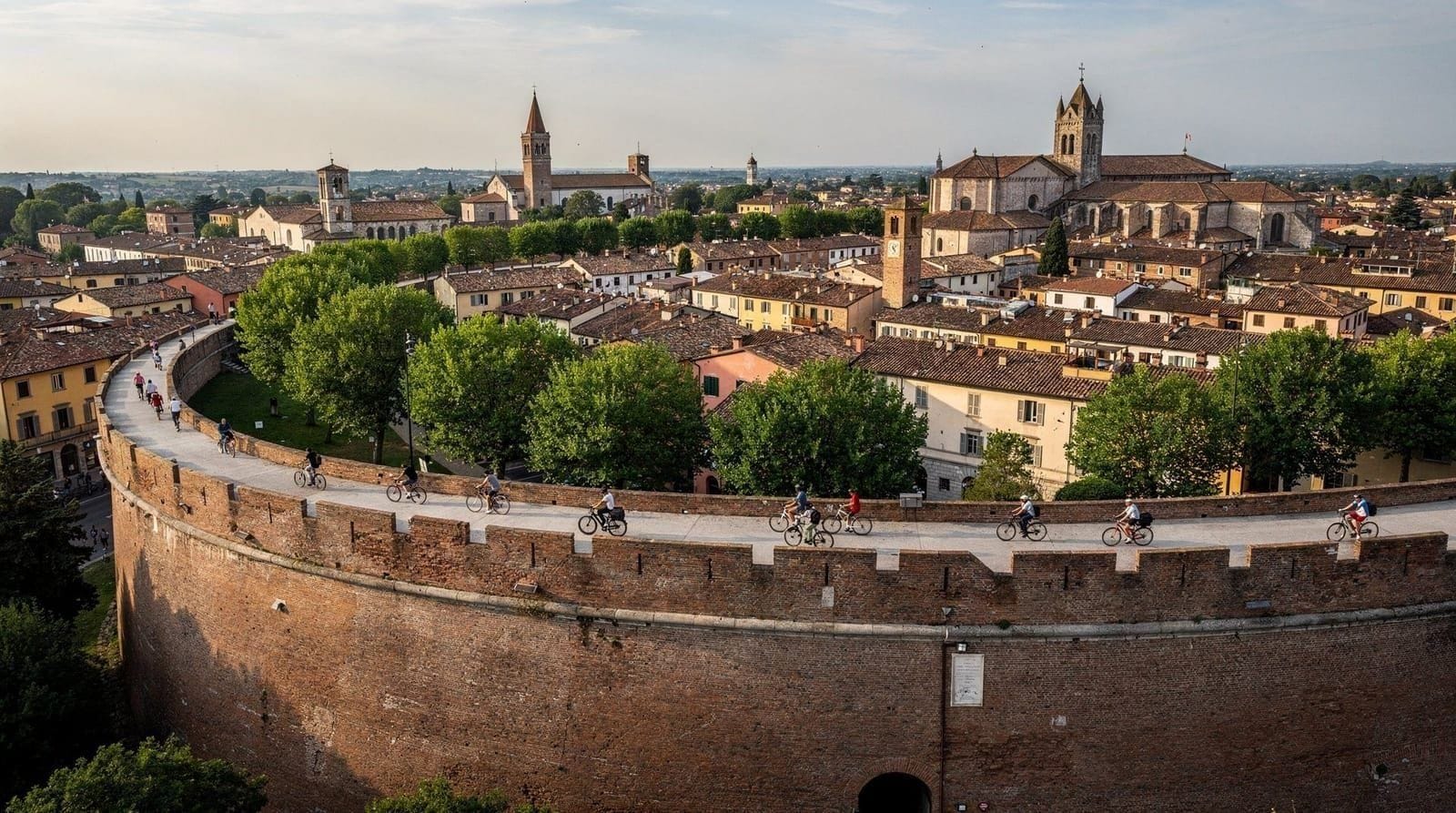
| Signature sight | Leaning Tower + Campo dei Miracoli | Intact Renaissance walls, walkable/cyclable |
| Booking pressure | High — tower is timed entry, sells out | Low — no must-book ticket |
| Pace | One iconic sight plus a quiet university centre | Slow wandering, café culture, no headline monument |
| Best for | First-timers who want the classic photo | Repeat visitors, cyclists, those who dislike crowds |
If you only have time for one, Pisa wins for first-timers because of the tower; Lucca wins for a calmer, less scripted afternoon. Our Lucca guide and Lucca day trip guide cover it in full, and the Pisa day trip guide has more on combining both in a single, ambitious day.
Pisa as part of a longer Tuscany trip
Pisa fits naturally into itineraries longer than a single Florence base. If you’re flying in via Pisa airport, see Pisa airport to Florence for the transfer options — spending your arrival afternoon at the tower before heading into Florence for the evening is a logical way to open a trip. Pisa also works as a stop en route to the Cinque Terre by train, or as one stop in a broader western Tuscany loop alongside Lucca and the coast. For multi-day planning, the Florence and Tuscany 5-day itinerary shows where a Pisa half-day typically sits in a longer trip, and drivers should check the driving in Tuscany guide before choosing car over train — Pisa’s centre has ZTL restrictions like most Tuscan towns.
Frequently asked questions about Pisa
Do I need to book the Leaning Tower in advance?
Yes, absolutely. The tower has a maximum capacity of 45 people at any one time, with timed entry every 30 minutes. Slots sell out weeks ahead in peak season. The official booking website is opapisa.it.
How long does it take to climb the Leaning Tower?
The climb takes 15-30 minutes at a normal pace. The descent is often slower (narrow stairs on the lean side). Add 30-60 minutes for the view and photography at the top. Total visit including descent: 45-90 minutes.
Is Pisa worth visiting beyond the Leaning Tower?
Yes, if you have the time. The Baptistery pulpit by Nicola Pisano is a landmark work in Italian art history. The Camposanto is deeply affecting. And the city itself — a working university town — is a genuine place to eat and walk.
Can I combine Pisa with Lucca in one day?
Possibly, but it’s tight. Pisa to Lucca is 20 minutes by train. A compressed itinerary might cover the tower and cathedral in Pisa in the morning, then Lucca’s walls and historic centre in the afternoon. You’d miss some of both. A dedicated day for each is better.
What is the best way to get from Florence to Pisa?
Direct train from SMN to Pisa Centrale, 55-75 minutes, €8-12. Services run every 30-60 minutes. This is considerably faster and simpler than driving (which also involves the ZTL question in both cities).
Are there tours from Florence to Pisa?
Several organized day trips operate from Florence, combining Pisa with Lucca or with Siena and San Gimignano. These are useful if you don’t want to manage the train independently. See the day trips from Florence guide for the full breakdown.
Is it faster to reach Pisa by train from Florence than by car?
Yes, in almost every case. The direct train takes 55-75 minutes and drops you close to the centre, while driving takes a similar time but adds parking search and the ZTL restrictions inside Pisa’s centro storico. Unless you specifically need a car for onward travel to the coast or Lucca the same day, the train is simpler and cheaper.
Can I see Pisa on the way to or from Rome?
Yes, though it requires a change. Pisa is not on the direct Florence-Rome high-speed line, so combining it means routing via Florence or via a regional connection, which adds time. It works better as a dedicated day trip from Florence than as a stopover between the two cities; see the Florence to Rome train guide for the direct-route timings.
Top experiences
Bookable activities with verified prices and instant confirmation on GetYourGuide.

Pisa: timed entry leaning tower and cathedral tickets
- Skip the line
- Instant confirmation
Pisa: guided 90-minute walking tour
- Free cancellation
- Small group
Florence: Pisa half-day trip with cathedral and tower entry
- Free cancellation
- Hotel pickup
Florence: Tuscan wine tasting in Pisa and Lucca
- Free cancellation
- Small group