Chianti
Chianti Classico wine country between Florence and Siena — best wineries to book, the Gallo Nero villages, touring without a car and what Chianti actually
Florence: Chianti wineries tour with wine tasting
- Free cancellation
- Small group
Quick facts
- Best for
- Wine tasting, Tuscan countryside, cycling, olive oil
- Days needed
- 1-2 days
- Transport
- Car strongly recommended; organized tours from Florence work
- Wine to try
- Chianti Classico DOCG (black rooster label)
- Best season
- April-June and September-November (harvest)
The road between Florence and Siena
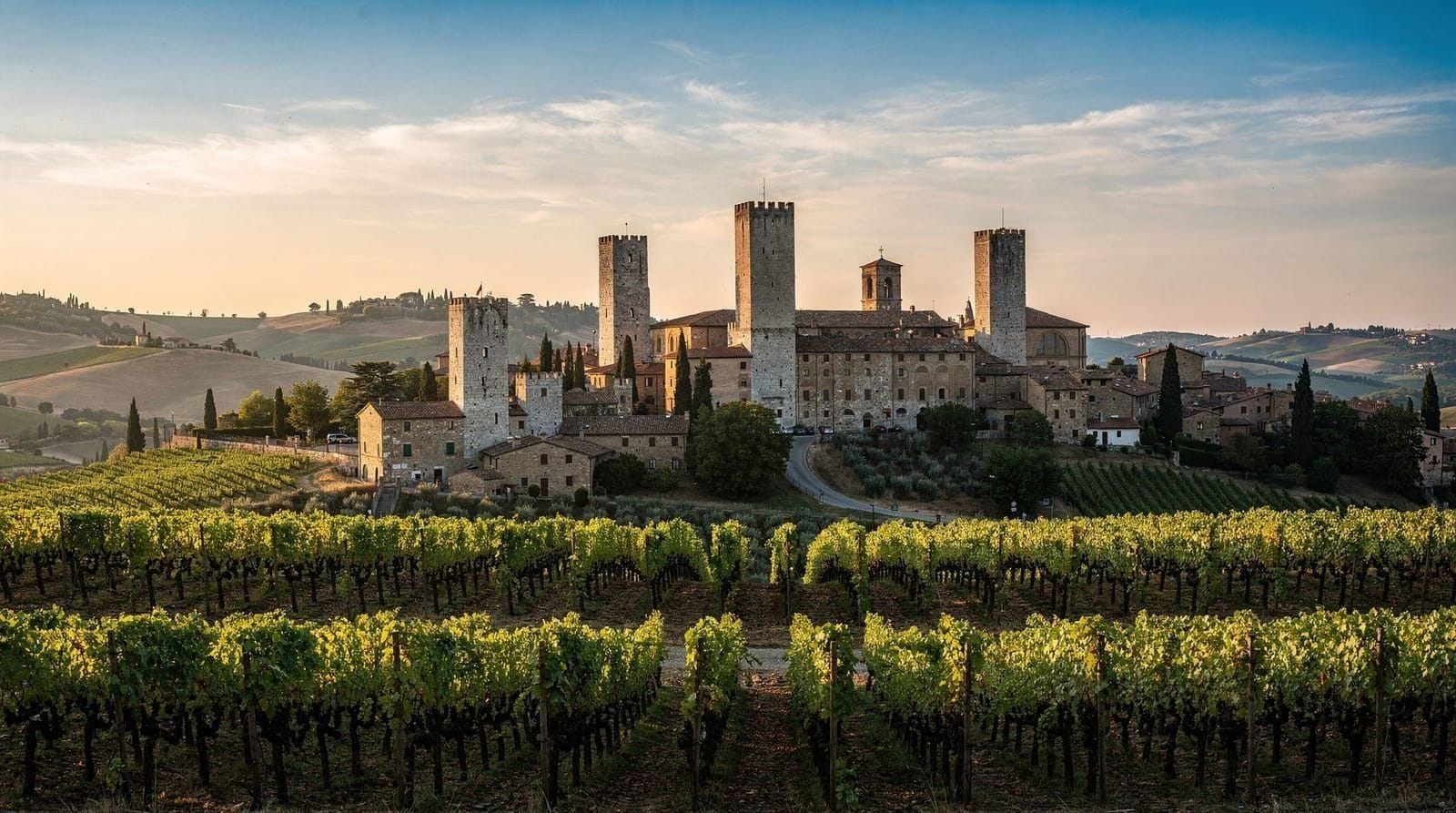
The Chianti wine region occupies the hills between Florence and Siena — a roughly rectangular area of oak forests, olive groves, cypress-lined tracks and vineyard terraces that has been producing wine since at least the 13th century. The landscape is iconic enough that it has become a visual shorthand for Tuscany itself, and for good reason: the combination of medieval stone hamlets, terraced vines and panoramic hilltop views is genuinely beautiful.
The Chianti Classico zone (protected DOCG designation, identified by the black rooster — Gallo Nero — on the bottle neck) runs roughly between Greve in Chianti to the north and Castelnuovo Berardenga to the south. Wines from the broader Chianti area (not Classico) are produced across a wider zone in multiple provinces.
| Where | Between Florence and Siena, core zone along the SR222 |
| Cost | Around €80-130/day for an organized tour; self-drive varies |
| Time needed | 1-2 days for a proper visit |
| Getting there | Car strongly recommended; organized tours from Florence work well |
| Best time | October (harvest); April-May (flowers); September (pre-harvest) |
Getting to Chianti
This is where honesty is important: Chianti is not practical without a car or an organized tour. There are no meaningful train connections to the Chianti villages; buses exist but are infrequent (once or twice daily) and designed for residents, not visitors. To see more than one winery or village in a day, you need either:
- A rental car (international licence required for non-EU visitors; ZTL is not an issue in the countryside; driving on SR222 is straightforward)
- An organized tour from Florence (coach or minibus; several operators run Chianti day trips with 2-3 winery stops)
- A Vespa, Fiat 500 or e-bike tour (several Florence operators offer these; better for the experience than bus tours, though routes are fixed)
Do not attempt Chianti wine roads by bicycle unless you’re an experienced cyclist — the hills are significant, the roads are shared with cars, and temperatures in summer make it genuinely difficult. E-bikes change this calculation substantially.
The key villages
Greve in Chianti: The commercial centre of the Chianti Classico zone, about 27 km south of Florence. An irregular piazza with arcaded buildings hosts a weekly market (Saturday) and the annual Expo del Chianti Classico in September. Enoteca Falorni (Piazza Giacomo Matteotti) offers one of the widest selections of Chianti Classico in a single location, with self-service wine machines allowing tastings by the glass.
Panzano in Chianti: A small village 10 km south of Greve, famous above all for the butcher Dario Cecchini (Via XX Luglio 11), whose shop and adjacent trattoria Solociccia have become a pilgrimage destination for food enthusiasts. Cecchini has been described as the best butcher in Italy (and possibly in Europe); the beef is Chianina and other heritage breeds, the cured meats are remarkable, and the theatrical atmosphere is part of the experience. The trattoria serves fixed-price lunches.
Radda in Chianti: A small medieval village on a ridge, 35 km south of Florence. The town walls are largely intact; the narrow main street has wine shops, a good enoteca and views across the surrounding hills. Less commercial than Greve but equally representative.
Castellina in Chianti: The southernmost main town, 18 km from Siena. A particularly good base for accessing wineries on both the Florence and Siena sides of the zone.
Gaiole in Chianti: More off the main tourist route, southeast of Radda. The l’Eroica vintage cycling event is based here (October, with period-appropriate bicycles and gravel roads). Several important wineries nearby including Badia a Coltibuono and Brolio Castle.
For a deeper look at two of these villages, see our dedicated Castellina in Chianti guide and our Greve in Chianti guide — both cover village-specific logistics, restaurants and winery recommendations beyond what fits here.
Choosing a village to base yourself in
Each of the main Chianti villages has a distinct character, and picking the right one shapes the whole trip:
| Village | Character | Best for |
|---|---|---|
| Greve in Chianti | Commercial hub, biggest market, easiest access | First-time visitors, easiest logistics |
| Panzano | Small, food-focused (Dario Cecchini) | Food lovers, a quick stop |
| Radda | Intact medieval walls, quieter | Atmosphere without crowds |
| Castellina in Chianti | Fortress town, serious wineries, Etruscan sites | Wine enthusiasts, Siena-side base |
| Gaiole | Off the tourist route, historic estates nearby | Cycling, Brolio Castle, quieter exploring |
Chianti Classico: the wine
What makes it Classico: The DOCG designation requires Sangiovese as the dominant grape (at least 80%), produced in the historic Classico zone. The black rooster (Gallo Nero) on the neck label is the quality mark of the Consorzio Vino Chianti Classico.
Quality tiers:
- Chianti Classico: Minimum 12 months ageing. Accessible, food-friendly, typically €10-20 at the estate.
- Chianti Classico Riserva: Minimum 24 months ageing. More structure and depth. €18-35 at the estate.
- Gran Selezione: Single-vineyard or best-barrel selection, minimum 30 months ageing. The top tier, €35-80+.
Key estates for visits:
- Castello di Brolio (Ricasoli): The historic estate that standardized the Chianti formula in the 19th century; castle and winery tours available (book ahead), impressive hillside setting.
- Badia a Coltibuono: A former Benedictine abbey with outstanding wines and a cooking school; tours and tastings available.
- Fontodi (Panzano): Consistently one of the top-rated Chianti Classico producers; tasting by appointment.
- Isole e Olena: In Barberino Val d’Elsa; rigorous, age-worthy wines; tastings by appointment.
- San Felice: Near Castelnuovo Berardenga; large estate with hotel and restaurant, easy to visit.
Most reputable estates require advance booking for tastings — email or use their website. Walk-in visits are possible at some estates during opening hours but the best experiences (guided cave visits, comparative vertical tastings) are always pre-booked.
Organized tours from Florence
Several operators run Chianti day trips that include transport and 2-3 winery visits with tastings. These are the right choice if you’re not comfortable driving on narrow Italian hill roads or if you want to drink without calculating who’s driving.
Standard day tour: depart Florence 9-10am, 2-3 winery stops with tastings, lunch at a farmhouse (often included), return to Florence 6-7pm. Approximately €80-130 per person depending on inclusions.
Higher-end options include private Vespa tours, vintage Fiat 500 rentals with a guide, and half-day tours (better value for time-limited itineraries). See the Chianti day trips guide.
Olive oil
The same hillsides that produce Chianti also produce some of Italy’s finest extra-virgin olive oil. The Tuscan pressing season runs November-December; the new oil (olio nuovo) is intensely green, peppery and almost bitter when fresh — nothing like the mild yellow oil sold in supermarkets. Estates that produce wine often also produce and sell olive oil; buying directly from a farm (where the provenance is verifiable) is the most reliable way to get genuinely Tuscan extra-virgin.
Look for the DOP Chianti Classico olive oil designation (the same geographic indication as the wine) or the DOP Terre di Siena.
Driving the SR222 (Via Chiantigiana)
The SS222 provincial road, commonly called the Via Chiantigiana, runs the length of the Chianti Classico zone from Florence to Siena through the core villages. It takes about 1h30-2h without stops (versus 1h on the autostrada); with stops at villages and wineries, make it a full day. The road is scenic but narrow in places and has tourist traffic in summer; driving it outside July-August is more relaxed.
A suggested two-day self-drive itinerary:
- Day 1: Florence → Greve in Chianti (market if Saturday, Falorni enoteca, 1-2 winery visits) → Panzano (Dario Cecchini for lunch or supplies) → Radda for overnight
- Day 2: Radda → Gaiole (Badia a Coltibuono, Brolio Castle) → Castellina in Chianti → back to Florence via Siena autostrada
See the Chianti self-drive itinerary for the full route.
Cycling Chianti
The Chianti hills are beloved by road cyclists (Eroica, held each October, is one of the world’s most famous vintage bike events). The gradients are serious — climbs of 300-500 metres over several kilometres are common. For experienced cyclists, the routes between Greve, Panzano and Radda are exceptional.
For most visitors, e-bike tours are the more realistic option — the motor handles the climbs, leaving you to enjoy the views. Multiple operators offer guided e-bike tours from both Florence and Greve in Chianti.
Truffle hunting in Chianti
The Chianti hills and the surrounding Val di Pesa and Elsa valleys produce white and black truffles, though the prestige territory is further south (San Miniato for white truffles, Norcia for the best blacks). Local guides offer truffle hunting experiences — typically 2-3 hours walking with trained dogs in the oak woods — from autumn through winter. Most are combined with lunch at a farmhouse or winery.
Autumn (October-December) is the truffle season; summer black truffles (scorzone) are available from June to September. The hunts are genuine agricultural experiences rather than theatrical presentations. Book through established outfits — individual guides can be found in Greve and the surrounding communes.
See truffle hunting day trips from Florence for booking information.
Agriturismo: staying in the Chianti countryside
One of the most distinctive accommodation options in Tuscany is the agriturismo — farmhouse accommodation on a working farm or wine estate, offering rooms, often meals made from estate produce, and sometimes cooking classes. The legal definition requires actual agricultural activity; quality and character vary enormously.
In the Chianti zone, agriturismo options range from converted stone farmhouses with pool and vineyard views (€150-300/night) to simple rural rooms with minimal facilities (€60-100/night). The better establishments book out months ahead for summer.
Key areas for agriturismo in Chianti: the hills between Panzano and Greve, the Radda area, and the hillsides around Gaiole. Booking through the Agriturismo.it platform or directly via estate websites is generally reliable. Ask specifically about wine tasting inclusion — at estate-based agriturismo, a complimentary evening tasting is common.
Tuscan food in Chianti
The Chianti landscape produces several foods worth seeking out at estate shops and local markets:
Extra-virgin olive oil: Pressed in November-December from Frantoio, Moraiolo and Leccino olives; the fresh (nuovo) oil is intensely green and peppery. Olive oil from the Chianti zone carries the DOP Chianti Classico designation. Buy from the estate if possible — the production is small and the provenance is verifiable.
Cured meats (salumi): Finocchiona (fennel-seed salame) is a Chianti specialty; Dario Cecchini in Panzano makes arguably the definitive version. Also look for lardo (cured fatback), sbriciolona (crumbly dry salame) and local prosciutto.
Sheep’s cheese (pecorino): The hillsides support sheep; several dairies in the Chianti area produce pecorino ranging from fresh (fresco, mild) to aged (stagionato, sharp and crystalline). Market towns like Greve and Radda have weekly markets with cheese vendors.
Bread: Tuscan bread (pane sciocco) is deliberately unsalted — a culinary tradition dating from the medieval salt tax. It tastes bland on its own but is designed to accompany strongly-flavoured foods like aged cheeses, cured meats and peppery olive oil. Visitors expecting salted bread are often surprised by this.
Day trip logistics: sample itineraries
Half-day from Florence (organized tour): Depart 9am, visit 1-2 wineries in the Greve area, light lunch included, return to Florence by 1-2pm. Good introduction; limited depth.
Full day from Florence (organized tour): Depart 9am, 3 winery visits including a cellar tour, farmhouse lunch, optional village walk at Greve or Radda, return to Florence by 6-7pm. The standard offering from most tour operators.
Self-drive, 1 day: Rent a car in Florence (depart 8:30am), Greve by 9:30am (enoteca Falorni for an overview), Panzano for lunch at Dario Cecchini or a picnic from his shop, afternoon at a Radda or Gaiole estate (booking required), return to Florence by 7pm. Best if you drink moderately at the winery — you’re driving.
Overnight stay: The qualitatively different experience. Stay at a Chianti agriturismo, eat dinner on site, take the next morning for walks in the vineyards before the day-trippers arrive.
See the Chianti day trip planning guide for full operator and route options. If you would rather compare Chianti against other Tuscan wine touring options first, our Tuscan wine regions overview and wine tasting in Florence guide cover in-city alternatives for anyone without a full day to spare.
Frequently asked questions about Chianti
Can I visit Chianti without a car?
In practice, no — not beyond Greve, which has limited bus service from Florence. Organized tours solve this completely. For independent visitors, a rental car is the most flexible option.
What is the difference between Chianti and Chianti Classico?
Chianti Classico is a smaller, historically-defined zone between Florence and Siena with stricter quality rules. Broader Chianti can come from a much larger area across multiple Tuscan provinces. The Classico designation (and the Gallo Nero neck label) is the clearest quality indicator.
When is the best time to visit Chianti?
The harvest (vendemmia) in October is the most atmospheric time — the vineyards are active, the new wine is being pressed, and estates are in their most celebratory mood. April-May has wildflowers and green hills. September is warm and pre-harvest activity is visible.
How many wineries can I visit in a day?
Realistically, 2-3 with tastings. More than that and you’re either rushing or impaired. Most organized tours do 2-3; a self-drive day with proper time at each estate covers the same.
Do I need to book winery visits in advance?
For the best estates, yes — usually 48-72 hours to 1-2 weeks depending on the property. Some have online booking; others require email or phone. Walk-in visits are possible at larger commercial wineries and at enoteca shops, but the guided experiences require advance arrangement.
Should I base myself in Chianti or day-trip from Florence?
Day-tripping from Florence works well for one visit, but if you have the time, an overnight stay at a Chianti agriturismo is qualitatively different — you avoid the return drive after tastings, catch the vineyards in early morning light before day-trippers arrive, and can genuinely relax over an estate dinner. For a single focused day, Florence-based tours or a self-drive day trip cover the essentials; for a slower, deeper experience, plan at least one night in the region.
Which is better for a first visit: Chianti or San Gimignano?
They serve different purposes. Chianti is about wine, countryside and villages spread across a region, requiring a car or tour and rewarding a full day or more. San Gimignano is a single, highly photogenic walled town reachable in a shorter, simpler trip. Many itineraries combine both — a morning in Chianti villages followed by an afternoon in San Gimignano, or vice versa, as covered in our Tuscany hill towns road trip itinerary.
Top experiences
Bookable activities with verified prices and instant confirmation on GetYourGuide.

Florence: Chianti wineries tour with wine tasting
- Free cancellation
- Small group
Florence: Chianti vineyards tour with wine tasting dinner
- Free cancellation
Florence: Chianti wine region Vespa or Fiat Topolino tour
- Free cancellation
- Small group
Florence: Chianti hills wineries tour with tasting
- Free cancellation
- Small group