Florence
Plan your Florence trip with real logistics: Uffizi tickets, ZTL warnings, best neighborhoods, honest restaurant picks and day-trip advice.
Florence: Uffizi Gallery skip-the-line tickets
- Skip the line
- Free cancellation
Quick facts
- Best for
- Art, Renaissance architecture, food and wine
- Days needed
- 3-4 days
- Getting there
- Tram T2 from FLR airport, 18 min to SMN
- Peak crowds
- June-August; go April-May or September-October
- ZTL zone
- No driving in the historic centre — fines €80-335
- Currency
- EUR
The honest Florence planner
Florence is one of the most visited cities in Europe — and one of the most misunderstood. Visitors arrive expecting a leisurely stroll and often find two-hour queues for museums they forgot to book in advance, a historic centre peppered with overpriced tourist menus, and a ZTL camera that mails them a fine three weeks after they get home. This guide cuts through that.
The core of Florence is compact: most of what matters fits within a 20-minute walk. The Uffizi and Accademia need advance bookings (plan 3-6 weeks ahead in high season). The Duomo complex needs timed entry. And the most rewarding parts of the city — Oltrarno, Santa Croce, San Lorenzo — are the ones that feel most like a place where people actually live.
| Where | Central Tuscany, on the Arno river |
| Time needed | 3-4 days minimum |
| Getting there | Tram T2 from FLR airport (18 min) or train from Pisa airport (1h-1h20) |
| Book ahead | Uffizi, Accademia, Duomo complex — all require timed entry |
| Watch for | ZTL fines (€80-335) if driving into the historic centre |
Getting to Florence
By air. Florence’s Peretola airport (FLR) is small but well-connected. Take the T2 tram from Terminal 1 directly to Santa Maria Novella station (SMN) in 18 minutes; tickets cost €1.70. Avoid airport taxis unless you know the fixed-rate scheme (€22 to the city centre, fixed rate official, never negotiate up).
From Pisa airport. Pisa Galileo Galilei (PSA) handles more international routes. The train runs roughly hourly; journey to Florence SMN takes 1 hour to 1 hour 20 minutes, costs around €8-12 on Trenitalia. Book ahead for the faster trains.
By train. SMN is a major hub: Rome (1h30), Venice (2h), Bologna (40 min), Milan (1h45 on fast trains). From SMN everything in the centre is walkable.
By car. Do not drive into the historic centre. Florence’s Zona a Traffico Limitato (ZTL) covers virtually all of the medieval core. Cameras read your plate automatically; fines arrive by post 2-3 weeks later and range from €80 to €335. Park at Parterre (Piazza della Libertà), Fortezza da Basso or Parcheggio Lungarno and walk or take a bus.
When to visit Florence
The clearest honest advice: April-May and September-October are the sweet spots. Temperatures sit between 15°C and 24°C, queues are shorter than summer, and restaurant terraces are pleasant.
June-August brings intense heat (30-35°C), maximum crowds, and some Florentine institutions close entirely in August. The Uffizi and Accademia are still open, but waits outside without a ticket can reach 2-3 hours. Many Florentines leave the city in August, so some neighbourhood restaurants shut.
November-March is quieter and meaningfully cheaper. January temperatures drop to 4-8°C. Museums stay open (check individual Monday closures). Some hilltop views get mist, but the Duomo interior without a crowd is something.
Museum closures: Most state museums close on Mondays. Always check the official website of each museum before planning your day.
The Uffizi and Accademia: the two non-negotiables
If you visit Florence without booking the Uffizi and the Accademia Gallery in advance, you are gambling with your trip. In high season (May-September), same-day tickets are sold out by mid-morning and the standby queue can take 2-3 hours.
The Uffizi Gallery holds the world’s greatest concentration of Renaissance paintings: Botticelli’s Birth of Venus and Primavera, Caravaggio, Raphael, Michelangelo, Titian. Budget at least 2-3 hours; a full circuit takes longer. The building itself — the Vasari-designed U-shape overlooking the Arno — is worth pausing in.
Ticket prices: €20-25 for standard timed entry. Guided tours cost €35-55. Booking fees add €4-5. Skip-the-line tickets are worth every cent.
The Accademia Gallery houses Michelangelo’s David — the 5.17-metre marble original, finished in 1504. The gallery is smaller than the Uffizi and easier to see in 90 minutes. The David is in the Tribuna room, purpose-built with a domed ceiling to display it. Ticket prices: around €16-18 standard, €24-30 with guided tour.
Both museums require timed entry. Book via the official Firenze Musei website or directly through a trusted ticket provider. See the guide to booking Uffizi tickets for the full breakdown of options.
The Duomo complex
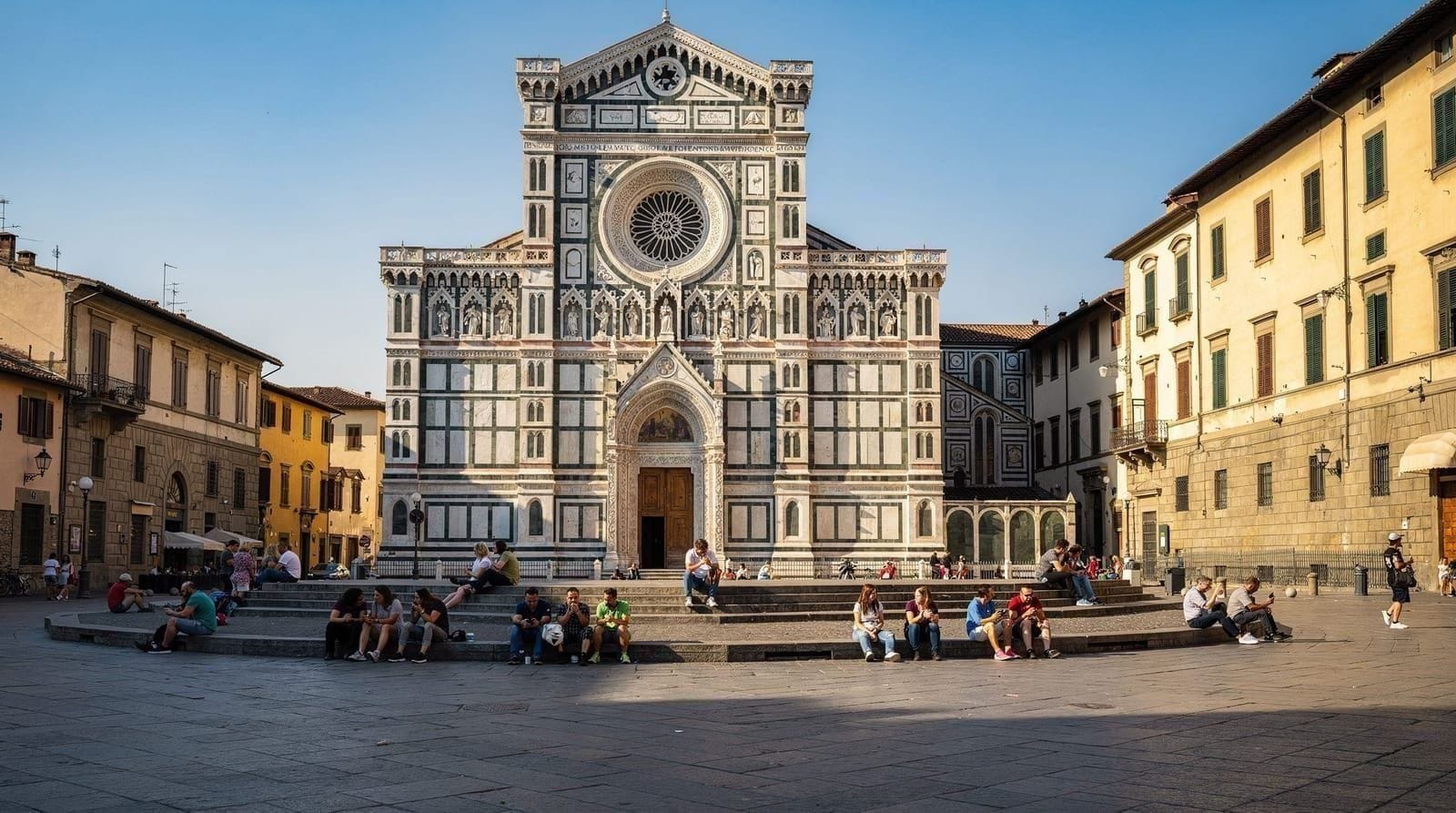
The Cathedral of Santa Maria del Fiore, its Brunelleschi Dome, Giotto’s Bell Tower, the Baptistery and the Museo dell’Opera del Duomo are all managed under a single ticketing system. You cannot buy just a dome ticket on the day — everything requires advance booking.
Brunelleschi’s Dome (the Cupola): the climb involves 463 narrow steps and no lift. It takes 30-45 minutes up. The view across Florence’s terracotta rooftops is exceptional. Go early — the dome gets very warm mid-afternoon. Timed entry tickets cost around €20-30 depending on the package.
Giotto’s Bell Tower (Campanile): 414 steps to a slightly different perspective than the dome, and arguably better as a photograph — you can see the dome itself from the tower. Ticket included in the Duomo complex pass (€18-30 depending on inclusions).
The Baptistery of San Giovanni: older than the cathedral, with Ghiberti’s famous bronze “Gates of Paradise” doors (the originals are in the Museo dell’Opera next door — the doors on the building are high-quality replicas). Worth visiting.
Read the complete Duomo district guide for what to see in the surrounding piazzas.
The Palazzo Vecchio and Piazza della Signoria
The medieval town hall and its tower have dominated civic life in Florence since 1299. The Piazza della Signoria outside it contains an open-air sculpture collection including (copies of) Michelangelo’s David and Cellini’s bronze Perseus. The originals of most statues are in the Loggia dei Lanzi or museums.
Inside the Palazzo Vecchio, the Salone dei Cinquecento is worth seeing even on a ticket-free pass through the ground floor. Guided tours access the secret rooms (Studiolo di Francesco I) and the towers. Audio guide tickets start at around €14.
Oltrarno: the other side
Cross the Arno via the Ponte Vecchio (the medieval bridge lined with jewellers — tourists should know those shops are not representative of Florence’s actual gold trade, and prices reflect location) and you arrive in Oltrarno. This neighbourhood south of the river has genuine neighbourhood energy: independent workshops, local restaurants, the Pitti Palace and Boboli Gardens, the best views of the city from Piazzale Michelangelo and the church of San Miniato al Monte.
See the full Oltrarno neighbourhood guide for where to eat, drink and explore.
Where to eat in Florence (honestly)
Avoid: Restaurants on Piazza del Duomo, in the immediate vicinity of Ponte Vecchio, and anything displaying a “tourist menu” board in four languages outside. These places charge 30-50% more for food that is often worse than neighbourhood alternatives.
Look for: Places with a chalkboard menu in Italian, where the staff seems slightly harried because they’re actually busy, and where locals are eating.
Bistecca alla Fiorentina (Florentine steak): the city’s signature dish — a thick T-bone from Chianina cattle, cooked rare, served on the bone, priced per 100g (typically €5-8/100g, so a 600g steak for two costs €30-50). Buca Mario (Via dei Girolami) and Trattoria Sostanza (Via del Porcellana) are long-established options. Also see the best restaurants in Florence guide.
Lampredotto: the real Florentine street food. Braised tripe sandwich sold at lampredotto carts (lampredottai) around the Mercato Centrale and Sant’Ambrogio market. Around €4-5. Nerbone, inside the Mercato Centrale ground floor, is the tourist-accessible version.
Ribollita and pappa al pomodoro: bread-based soups that are the soul of cucina povera Toscana. Trattoria Mario (Via Rosina 2, near San Lorenzo) serves them without ceremony at communal tables, lunch only, no reservations.
Gelato: Real gelato has natural colours (pistachio is grey-green, not fluorescent green; raspberry is dull pink, not magenta). It’s stored in covered metal cylinders, not piled in Instagram-worthy mounds. The mounds you see on Via dei Calzaiuoli contain stabilizers and air. Gelateria dei Neri (Via dei Neri) and Vivoli (Via dell’Isola delle Stinche) are two of the older, honest options.
Practical logistics
Taxis and apps. Official Florence taxis are white. Rates are metered. iTaxi app works. Uber does not operate in Florence. Agree on a fare before getting in if it’s a metered override zone (airport, station).
Buses. ATAF buses cover the city. Tickets must be bought before boarding (newsagents, tabacchi, machines). Validate on board. A single ticket costs €1.70; a 90-minute pass costs €2.00.
Walking. Most of the historic centre is pedestrianized or low-traffic. Wear comfortable shoes — the streets are stone-paved and uneven.
Luggage storage. Luggage storage is available at SMN station (€7-10/bag/day) and at various private lockers around the centre.
Pharmacies. Farmacia open 24h near SMN: Farmacia Comunale No. 13, Via Pietrapiana 47.
Budget. Realistic daily budgets: backpacker €70-90 (hostel, market food, some museum tickets); mid-range €150-250 (3-star hotel, trattoria meals, 1-2 major museums); upmarket €350+ (4-5 star, fine dining).
Day trips from Florence
Florence makes an excellent base for Tuscany. Key options by train:
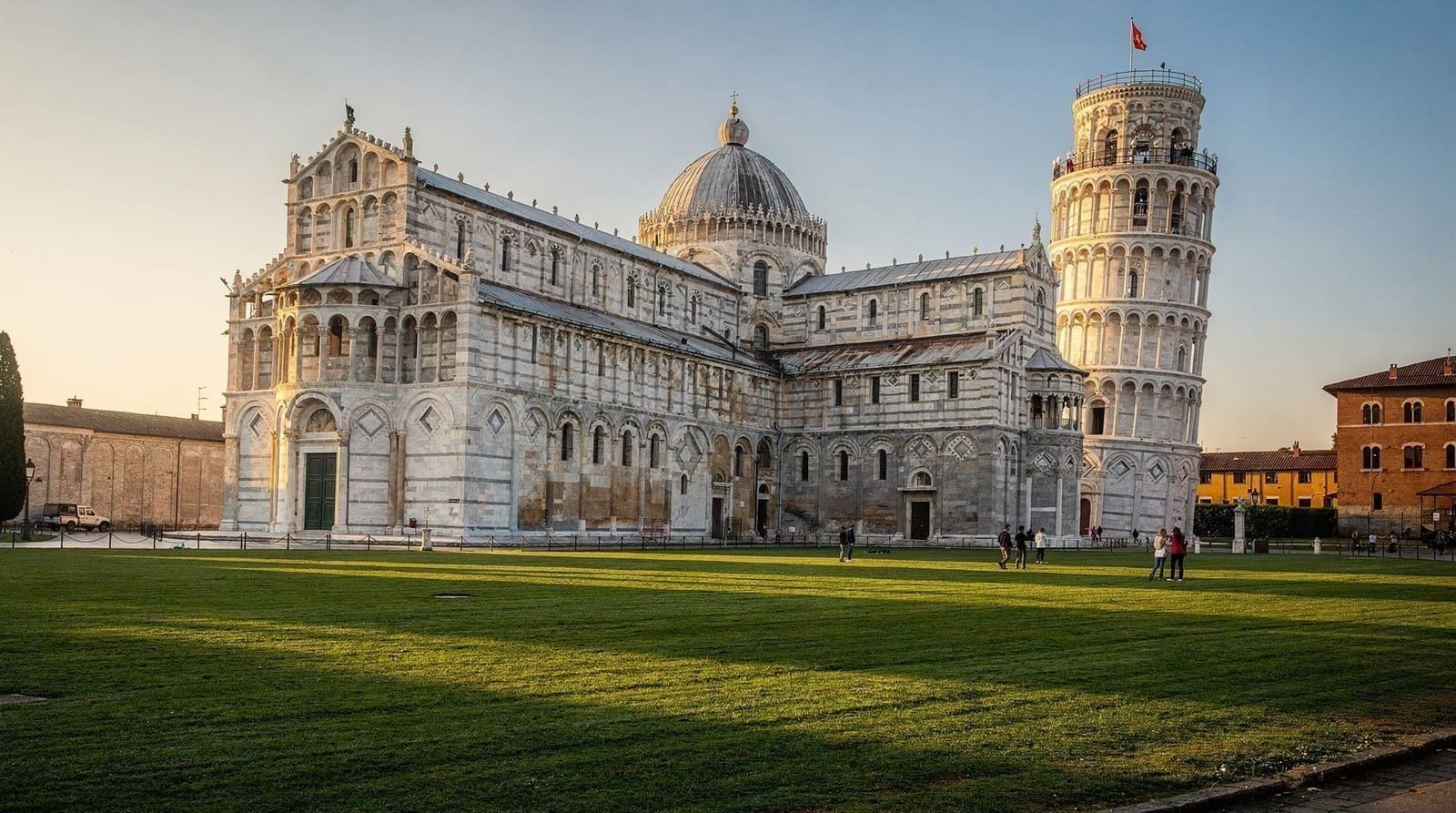
- Pisa: 1 hour by train, worth a half-day. The Leaning Tower requires advance booking. See the Pisa guide.
- Lucca: 1 hour 20 minutes by train, relaxed walled city with Roman amphitheatre intact. See the Lucca guide.
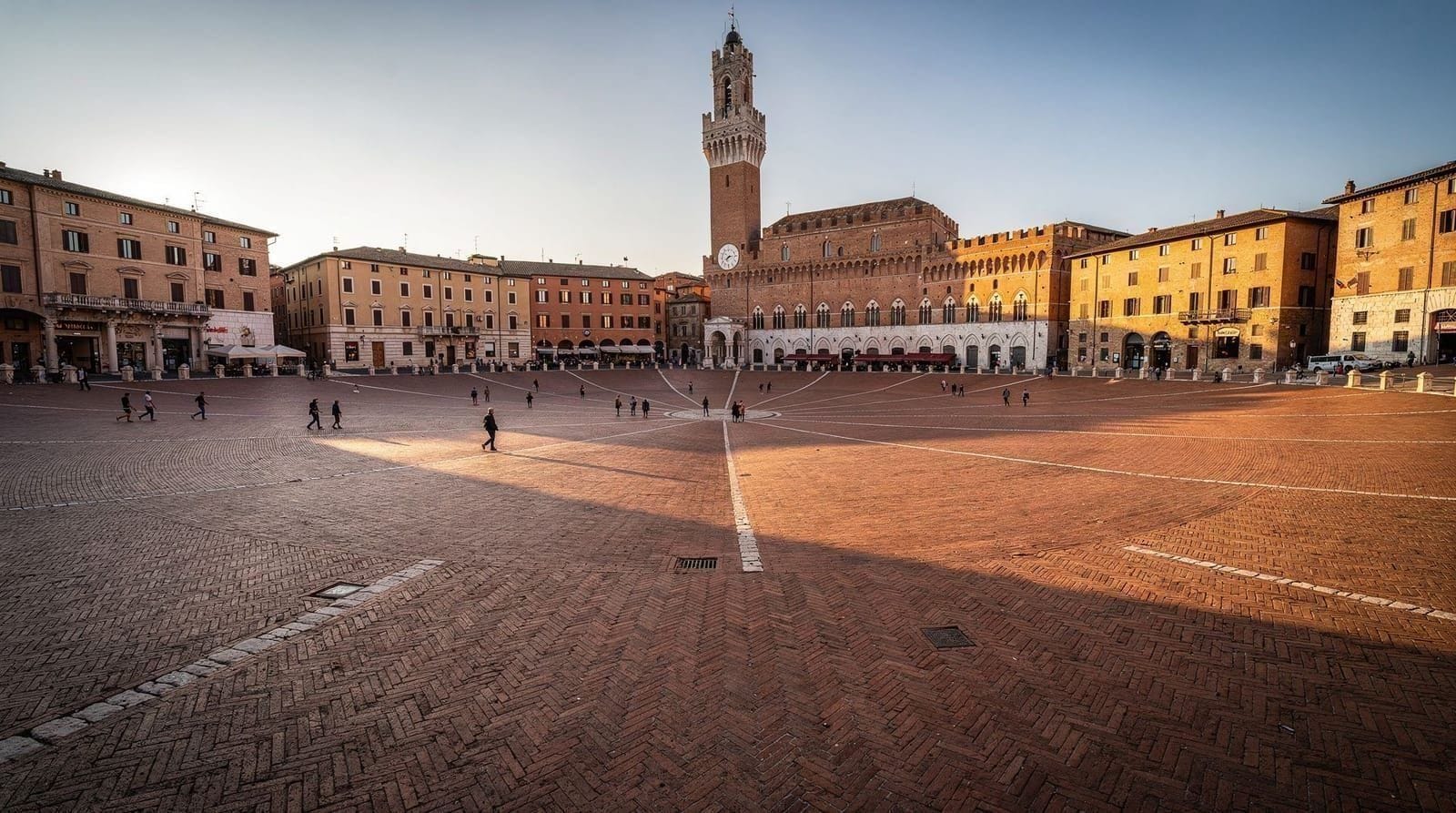
- Siena: Bus is often faster than train (1h30 by SITA bus vs 1h30-2h changing trains). Medieval hilltop city with the Piazza del Campo. See the Siena guide.
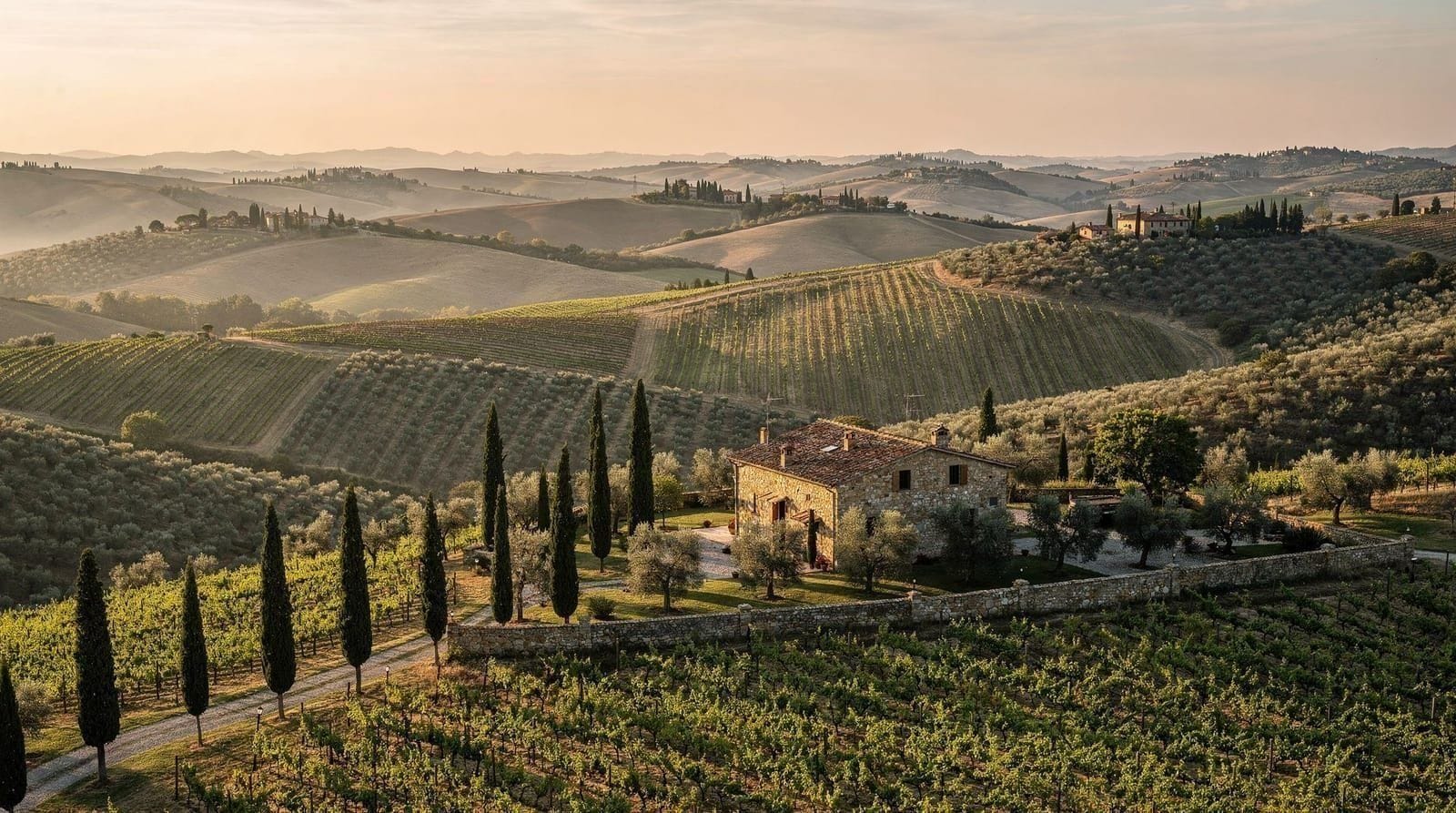
- Chianti: Requires a car or organized tour — the wine country between Florence and Siena is not reachable by train. See the Chianti guide.
- Cinque Terre: About 2h30 by train each way. Long but doable. See the Cinque Terre guide.
Full day-trip logistics in the Florence day trips overview.
The Bargello: Florence’s overlooked sculpture museum
Between the Uffizi and the Duomo, on Via del Proconsolo, the Bargello is the third leg of the museum triangle that most visitors to Florence never complete. It was Florence’s first municipal building (1255), served as the chief of police headquarters (bargello) and prison — the rings in the courtyard wall were used for executions — and is now the national sculpture museum.
The collection is as concentrated as any in Florence. Ground floor: Michelangelo’s early Bacchus (1497), carved when he was 21, and the Tondo Pitti (a circular relief). Courtyard loggia: Donatello’s bronze David (1440s), the first freestanding bronze nude of a secular subject since antiquity, relaxed and sensual in a way that was genuinely radical. First floor: Donatello’s marble Saint George, the two competition reliefs from the 1401 Baptistery door competition (Ghiberti won; Brunelleschi’s losing entry is also here), and Verrocchio’s bronze David, later and more self-consciously heroic than Donatello’s.
Entry €8-10. Tuesday to Sunday, closed Mondays. Rarely crowded. Allow 90 minutes.
Michelangelo’s Florence
Florence shaped Michelangelo as much as he shaped Florence. He was born in 1475 in Caprese (in the Casentino), but grew up in the city from age 13 when he entered Ghirlandaio’s workshop, then spent formative years in the Medici household under Lorenzo the Magnificent. He left for Rome permanently after 1534, but his work in Florence spans four decades.
What you can see:
- David (Accademia Gallery): The defining work of his early maturity, carved from a single flawed block of Carrara marble that had defeated two previous sculptors. The 5.17-metre figure was intended for a high niche on the Duomo facade; instead it was placed in the Piazza della Signoria (a copy now stands there) as a symbol of Florentine civic virtue.
- Prisoners/Slaves (Accademia Gallery): Four unfinished figures for a tomb commission that was never completed — the half-emerged forms have become celebrated in their own right as images of form struggling from raw matter.
- Medici Chapels (Sagrestia Nuova): The Night, Day, Dawn and Dusk figures for the Medici tombs — late work, heavier and more sorrowful than the Accademia pieces.
- Pietà Bandini (Museo dell’Opera del Duomo): Also called the Pietà Fiorentina, carved in the 1550s for his own tomb; he damaged it in frustration and it was finished by a student.
The Michelangelo in Florence guide covers all locations in detail.
The Arno and the bridges
The Arno bisects Florence from east to west, and the bridges — six in the historic centre, of which four date from the medieval and Renaissance period — are part of the city’s visual identity.
Ponte Vecchio is the oldest surviving bridge (the current structure dates from 1345, replacing earlier bridges destroyed by floods). The shops on its sides have housed goldsmith and jewellers since the 16th century, when Ferdinand I de’ Medici expelled the butchers and tanners who previously occupied the bridge on grounds of smell. The shops are genuine, the prices are high, and they are not representative of where Florentines buy gold — but the bridge itself, and the view from its midpoint, is one of the city’s essential experiences. The Vasari Corridor that passes above the eastern row of shops connected the Palazzo Vecchio to the Pitti Palace; it reopened to visitors in 2021 after years of closure.
Ponte Santa Trinita (1569, Bartolomeo Ammannati): Rebuilt in 1948 from recovered stones after German destruction in 1944. The most elegant of the bridges, with a shallow arch profile that Ammannati achieved through a technique that structural engineers still study.
The riverbanks (Lungarni) are worth walking at any time of day, particularly at sunset when the light on the Ponte Vecchio and the southern hills is at its most painterly.
Fiesole: Florence’s hilltop neighbour
Ten kilometres northeast of Florence, on a hilltop visible from much of the city, Fiesole (Faesulae in Roman times) predates Florence by several centuries. The Etruscans established a settlement here in the 7th century BC; the Romans took it in 283 BC and built the theatre and baths that are still partially visible.
The Archaeological Area of Fiesole contains the best-preserved Roman theatre in Tuscany (regular summer performances still held here), the Roman baths, and remnants of an Etruscan temple. Entry approximately €10-12.
Above the archaeological area: the Cathedral of San Romolo, several religious houses, and the hilltop Belvedere Terrace with one of the most famous views of the Florentine valley below.
Getting to Fiesole: Bus 7 from SMN station (every 30 minutes, approximately 25 minutes, €1.70). No ZTL issue — Fiesole is a separate municipality. The Fiesole guide covers the full site.
The Accademia Gallery in detail
Beyond Michelangelo’s works, the Galleria dell’Accademia di Firenze houses several other collections worth mentioning:
Musical instruments collection: Stradivari and Amati instruments from the Medici collection, including two Stradivarius violins. Small room adjacent to the main gallery, often overlooked.
Plaster cast collection: 19th-century plaster models used for teaching at the Academy of Fine Arts, including copies of classical works.
Gothic and early Renaissance paintings: The sala delle pitture on the ground floor contains panels by Daddi, Orcagna and other late medieval Florentine painters — quieter and less studied than the Uffizi’s Botticelli rooms, but worth 20 minutes.
The Accademia is smaller than the Uffizi and can be done properly in 90-120 minutes. Booking in advance remains essential in peak season.
Practical Florence: currency, connectivity and useful apps
ATMs: Widely available throughout the historic centre. Airport ATMs are fine. Avoid currency exchange booths near tourist attractions — the rates are significantly worse than bank ATMs.
Wi-Fi: Most accommodation provides it. Many restaurants and cafés provide free wi-Fi. The municipality provides free wireless in several piazzas. An Italian SIM (available at any TIM, Vodafone or Wind Tre shop with a valid ID) gives better coverage for navigation.
Maps: Google Maps and Apple Maps both work well in Florence. The offline map feature is worth downloading for areas with poor signal.
Transport apps: iTaxi (official Florence taxi app); Trenitalia and Italo apps for train tickets; ATAF app for bus routes.
Museum booking: The official Firenze Musei portal covers Uffizi, Accademia, Bargello, Pitti Palace. Opera del Duomo website covers the entire Duomo complex. Book directly rather than through aggregators when possible — lower fees, better cancellation terms.
Full day-trip logistics in the Florence day trips overview.
Shopping in Florence: what’s genuine and what isn’t
Florence has a real luxury and craft shopping tradition, alongside a large volume of imported goods sold as if they were local. Knowing the difference saves money and disappointment.
Via de’ Tornabuoni is Florence’s luxury shopping street — Gucci (a Florentine brand originally), Ferragamo, Prada and other major houses have flagship stores here, several in historic palazzos. Prices match any European capital; the interest is as much architectural as commercial.
Leather goods are Florence’s signature product, but quality and origin vary enormously. The San Lorenzo market stalls sell leather goods of mixed origin, often not Italian-made despite “genuine leather” signage — a technically true but misleading claim, since “genuine leather” only describes the material, not where it was tanned or sewn. For workshop-made pieces, head to Oltrarno, particularly Via Maggio and the streets around Santo Spirito, or the Scuola del Cuoio behind Santa Croce, where you can watch leatherworking in progress. See the Florence shopping guide for a fuller breakdown of where prices reflect genuine craft.
The Mercato Centrale (San Lorenzo, ground floor) combines a working food market with an upstairs food hall aimed at visitors; the ground floor is where locals actually shop for produce, meat and cheese, and it’s worth a visit even if you’re not buying. The Florence food markets guide covers Sant’Ambrogio and the smaller neighbourhood markets too.
The Mall outlet village, about 40 minutes outside Florence, sells discounted designer goods from Gucci, Prada and other major Italian and international brands. A shuttle bus runs from SMN station; it makes sense only if you have a specific shopping goal, as it eats most of a day.
Florence at night
Florence’s evening character shifts noticeably by neighbourhood. The centro storico around the Duomo empties out relatively early outside peak season, as many restaurants there cater to day-trippers rather than an evening crowd. The more genuine evening life happens in Oltrarno (particularly Piazza Santo Spirito and Borgo San Frediano), around Sant’Ambrogio, and in San Niccolò.
Aperitivo runs roughly 6-9pm across the city — a cocktail (€7-12) with bar snacks included is standard practice, not a special deal, and a good way to eat lightly before a late dinner. See the aperitivo in Florence guide for specific venues by neighbourhood.
Evening views: Piazzale Michelangelo at sunset is the classic, crowded but worth it; the Ponte Vecchio at dusk, with the Lungarno lights coming on, is quieter and just as rewarding.
Opera and classical music: The Teatro del Maggio Musicale Fiorentino and several churches host regular concerts, particularly in summer. Evening dome or museum openings (some run limited late hours in peak season) are worth checking if you want to see the Uffizi or Duomo with smaller crowds.
Safety at night: The historic centre is well-lit and busy well past midnight in season; standard city caution (bag awareness, sticking to lit streets) applies rather than any specific Florence risk.
Florence with kids
Florence is more manageable with children than its museum-heavy reputation suggests, provided you pace the day around their attention span rather than a full adult itinerary. The Boboli Gardens and Piazzale Michelangelo give open space to run around after a morning of queuing. The Bargello and the Accademia are shorter, more digestible museum visits than the full Uffizi circuit. Gelato breaks are not optional — budget for at least one a day.
The Florence with kids guide and kid-friendly museums guide cover specific age-appropriate itineraries; the Florence parks and playgrounds guide is useful for building in downtime between sights.
Frequently asked questions about Florence
Do I need to book the Uffizi in advance?
Yes, in any month from March to October you should book at least 1-2 weeks ahead, and 3-6 weeks for peak summer visits. The museum is open Tuesday to Sunday, closed Mondays. Same-day tickets sell out online; the standby queue for walk-ups can be 2-3 hours. See the Uffizi booking guide.
What is the ZTL and how do I avoid a fine?
The Zona a Traffico Limitato is the restricted traffic zone covering most of central Florence. Entering it with a non-authorized vehicle triggers an automatic camera fine. The fine arrives by post to the rental company, which then charges your credit card plus an administration fee. The total can exceed €150. Solution: park outside the ZTL and walk, or use public transport.
How many days do I need in Florence?
Three full days is a realistic minimum for first-time visitors: one day for the Uffizi and surroundings, one for the Accademia and San Lorenzo, one for Oltrarno and the Duomo complex. Four days allows for a day trip to Pisa or Siena. See the three-day Florence itinerary.
When do the major museums close?
Most state museums (Uffizi, Accademia, Bargello) close on Mondays. The Duomo complex closes Sunday mornings for mass. Always verify on the official website before visiting — hours change seasonally.
Is Florence safe?
Generally yes. Pickpocketing is the main risk, especially on buses (particularly bus 13 to Piazzale Michelangelo and the airport tram). Keep bags in front, don’t use phones openly in crowds, and don’t leave valuables visible in rental cars. The city centre is active and well-lit at night.
What is the Firenzecard and is it worth it?
The Firenzecard (€85, valid 72 hours) grants entry to 72 sites including the Uffizi, Accademia, Bargello, Medici Chapels, Palazzo Vecchio, Pitti Palace and Boboli Gardens. It is worth it if you plan to visit 4+ major museums in 3 days. If you’re only doing the Uffizi and Accademia, individual skip-the-line tickets are cheaper. See the Firenzecard vs individual tickets comparison.
What are the main tourist traps in Florence?
Restaurant menus displayed in 4+ languages near the Duomo and Ponte Vecchio; leather goods markets claiming “made in Italy” that are imported (genuine leather goods workshops exist in the Santa Croce district and Oltrarno); gelato with piled, coloured mounds using artificial colours; and “skip-the-line” tickets bought from street resellers for more than the official price. See the honest Florence guide.
Can I walk from the train station to the major sights?
Santa Maria Novella station is a 10-minute walk from the Duomo and about 15 minutes from the Uffizi. Almost all the major sights in the historic centre are within a 20-minute walk of SMN. There is no need for taxis or buses within the centro storico.
Top experiences
Bookable activities with verified prices and instant confirmation on GetYourGuide.

Florence: Uffizi Gallery skip-the-line tickets
- Skip the line
- Free cancellation
Florence: Accademia Gallery — David skip-the-line ticket
- Skip the line
- Instant confirmation
Florence: ticket to Brunelleschi's Dome with panoramic views
- Skip the line
- Free cancellation
Florence: walking tour
- Free cancellation
- Instant confirmation
Florence: food and wine tour
- Free cancellation
- Small group