Duomo complex tickets explained
Florence: dome climb and cathedral 3-day Duomo complex pass
- Skip the line
- Instant confirmation
How do Duomo complex tickets work in Florence?
The €30 Duomo complex pass covers all five sites for 3 days: the Cathedral of Santa Maria del Fiore (free but queue), Brunelleschi's Dome (timed entry required), Giotto's Bell Tower, the Baptistery of San Giovanni, and the Opera del Duomo Museum. The dome climb requires a separate timed reservation even with the pass.
The Duomo of Florence — officially the Cathedral of Santa Maria del Fiore — is the centrepiece of the entire city. Its terracotta dome, designed and built by Filippo Brunelleschi in the 15th century, remains one of the greatest engineering achievements in history. Visiting it properly requires understanding how the ticketing system works, because the Duomo complex has an unusual structure that trips up many first-time visitors.
| Where | Piazza del Duomo, historic centre — see the Duomo district |
| Cost | Around €30 for the 3-day complex pass; cathedral nave is free |
| Time needed | Half a day to cover all five sites properly |
| Book ahead | Yes — dome time slots sell out days to weeks ahead in peak season |
| Firenzecard | Does not cover the Duomo complex — buy separately |
The five components of the Duomo complex
The Opera di Santa Maria del Fiore manages five separate sites as one ticketed complex:
- Cathedral of Santa Maria del Fiore — free entry to the nave; paid pass required for crypts and terraces
- Brunelleschi’s Dome — separate timed reservation required even with the complex pass
- Giotto’s Campanile (Bell Tower) — 414 steps, separate entry within complex
- Baptistery of San Giovanni — one of Florence’s oldest and most important buildings
- Museo dell’Opera del Duomo (Opera del Duomo Museum) — arguably the finest ecclesiastical museum in Italy
The key insight: these five sites are on one ticket system but must be visited as separate attractions — you cannot enter all five at once. The complex pass gives you 72 hours to cover all of them.
Ticket prices and options
| Ticket | Price | What’s included |
|---|---|---|
| Full 3-day complex pass | €30 | All 5 sites, timed dome reservation |
| Baptistery only | €5 | Baptistery alone |
| Children under 6 | Free | All sites |
The €30 complex pass is almost always the right choice if you want to climb the dome. Individual component pricing doesn’t offer meaningful savings, and the Baptistery-only ticket is only for visitors with very limited time who specifically want to see the golden mosaics inside.
The cathedral: free entry decoded
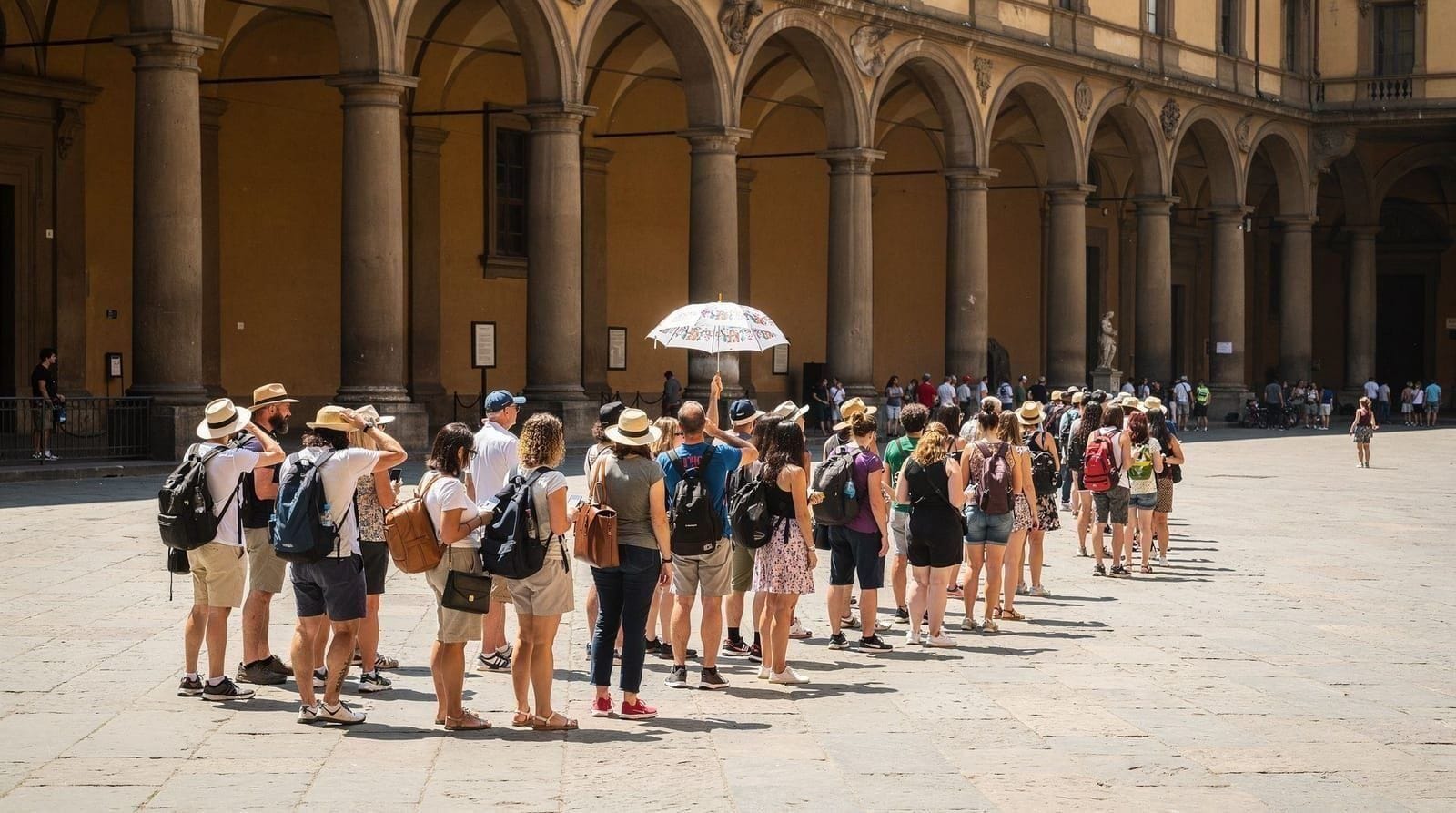
Entering the cathedral nave is genuinely free — no ticket required. Walk to the entrance on the north side (Via dei Servi side, not the facade) and join the security queue. In July and August, this free-entry queue can be 30–60 minutes.
What you see with free entry: the enormous Gothic interior, the frescoes in the nave, the clock face by Paolo Uccello, the equestrian portraits of condottieri, and the floor looking up at the base of the dome. You do not get access to the crypt (Brunelleschi’s tomb is here), the terraces at the base of the drum, or the climb itself.
The cathedral is closed Sunday mornings for Mass (opens to tourists approximately 12:30 pm). Check for other closures during major religious events.
Brunelleschi’s Dome: the highlight
What the climb involves
The dome climb starts from the Porta della Mandorla (the north sacristy entrance). From there, 463 steps wind up between the inner and outer shells of the dome — a space that is sometimes very narrow and occasionally requires passing other visitors going in the opposite direction. There is no lift. The climb takes 45–75 minutes depending on pace and crowds.
Halfway up, you reach the drum balcony inside the dome — a circular walkway looking down into the cathedral and up at Vasari and Zuccari’s enormous Last Judgement fresco covering the entire interior of the dome. This perspective, from inside the fresco, is one of the most extraordinary views in Italian art.
From the exterior lantern at the top (the small round structure at the very peak), the view over Florence is panoramic and completely unobstructed — rooftops, the Arno, the surrounding hills, and the terracotta sea of the city.
Booking the dome timed entry
Dome time slots are the most constrained element of the complex ticket system. They must be reserved in advance, even if you already have a complex pass. The reservation is included in the cost of the complex pass — it’s not an extra charge, just an extra step in the booking process.
Popular time slots (8:30 am, 9:00 am, 3:00 pm) typically sell out days to weeks before in peak season. Book the dome reservation first, then plan everything else around it.
Booking source: museumflorence.com (official Opera del Duomo booking platform). Third-party platforms like GetYourGuide often bundle the dome entry with a guided tour for a higher price — useful if you want expert context, but not necessary for the self-guided climb. If your dates are flexible, shifting a day or two either way can sometimes surface an open morning slot when the exact date you wanted is sold out — check a 3–4 day window around your preferred visit before giving up on a morning climb.
Is the dome climb worth it?
For most visitors: yes, clearly. The views are superb, the engineering story is fascinating (Brunelleschi built the dome without scaffolding using a system of techniques he largely invented as he went), and the experience of climbing between the two shells of the dome is genuinely unlike anything else.
For visitors who are claustrophobic or have mobility limitations: honestly, consider the bell tower instead. Giotto’s Campanile (bell tower) offers comparable views at 414 steps with a wider staircase and is significantly less crowded.
Giotto’s Bell Tower
The campanile stands 84 metres tall and offers exceptional views of the dome (which the dome itself cannot provide — you can’t see it while you’re on it). The 414-step climb is less claustrophobic than the dome and typically quicker to reserve. If you have children or less confident climbers in your group, the tower is often the better option.
Baptistery of San Giovanni
One of Florence’s oldest buildings (11th–13th centuries), the Baptistery faces the cathedral’s main facade across the Piazza del Duomo. It’s famous primarily for its bronze doors — especially the Eastern Door by Lorenzo Ghiberti, famously called the “Gates of Paradise” by Michelangelo.
The originals are inside the Opera del Duomo Museum (see below); the doors you see outside are very good reproductions. Inside the Baptistery, the Byzantine-Romanesque mosaic ceiling (13th century) is extraordinary — one of the finest surviving examples of mosaic work in Italy.
Allow 20–30 minutes inside. The interior is smaller than you expect but the ceiling requires time to absorb.
Opera del Duomo Museum
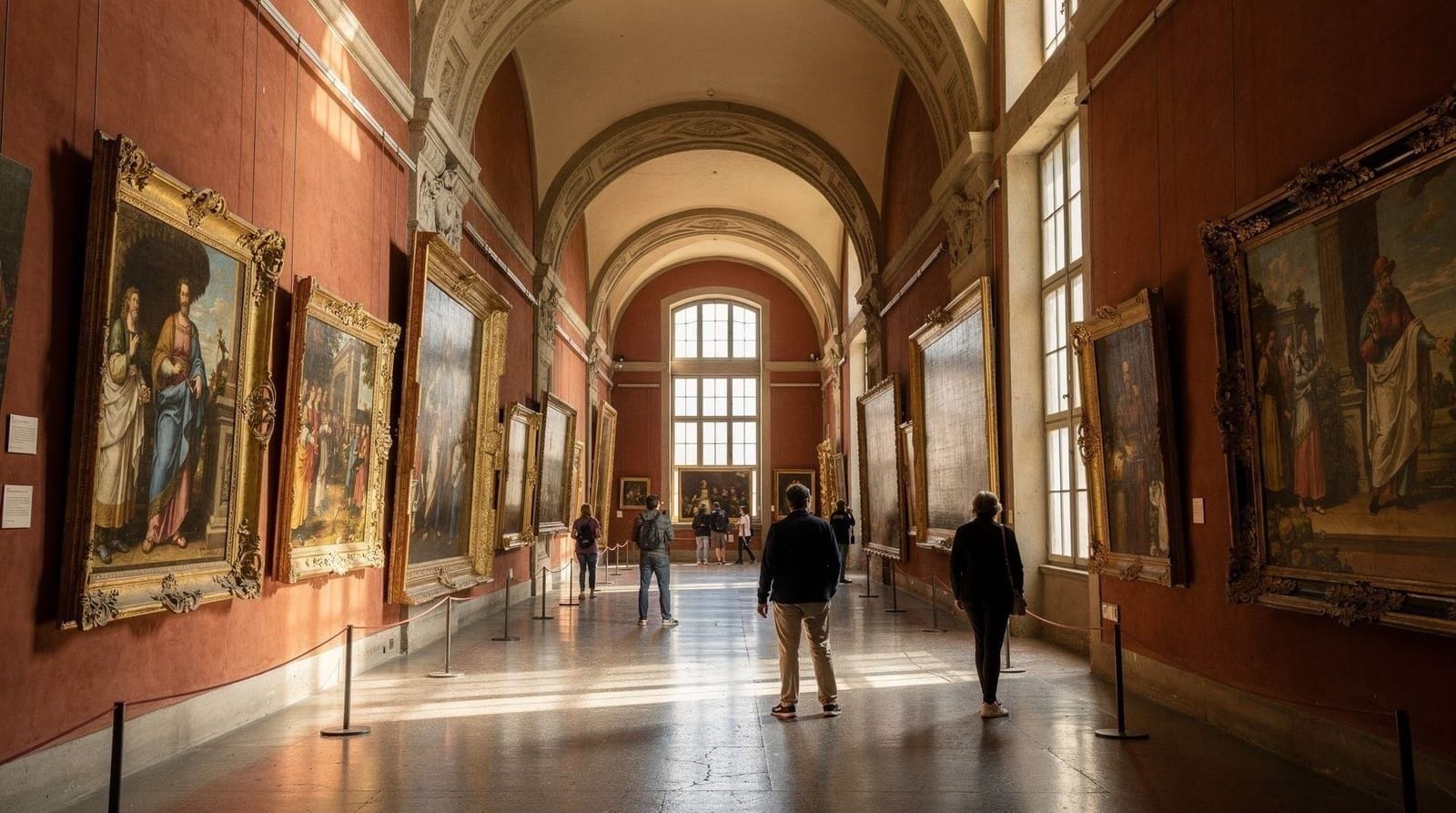
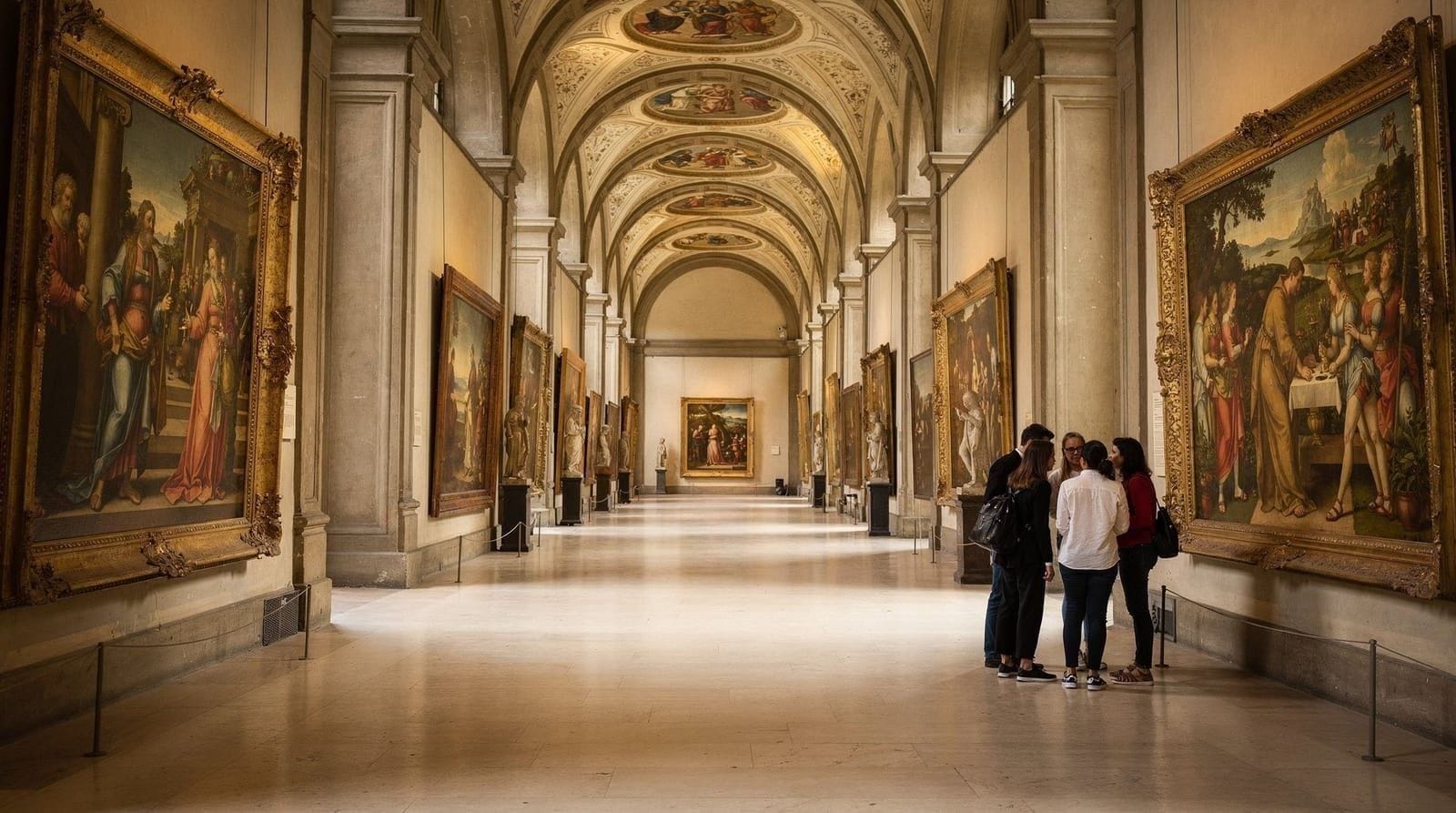
This is the great undervisited gem of the complex. The museum houses:
- The original Gates of Paradise by Ghiberti (the real ones, restored after the 1966 flood)
- Michelangelo’s Pietà Bandini — an unfinished late work of haunting power, carved when Michelangelo was over 70
- Donatello’s penitent Mary Magdalene — one of the most emotionally powerful works of the Renaissance
- Brunelleschi’s death mask and architectural models
- Original sculptures from the cathedral facade, replaced by copies
- The Cantorie (singing galleries) by Donatello and Luca della Robbia
The museum is genuinely world-class and far less crowded than the Uffizi. Allocate 60–90 minutes. This alone justifies the €30 complex pass for many visitors.
Practical visit planning
Recommended sequence for one day
| Time | Activity |
|---|---|
| 8:30 am | Dome climb (book first slot) — 75 min |
| 10:00 am | Cathedral nave (free entry queue is shorter after 8 am) — 30 min |
| 10:45 am | Baptistery — 25 min |
| 11:15 am | Opera del Duomo Museum — 75–90 min |
| 1:00 pm | Lunch break |
| 3:00 pm | Bell tower (if desired) — 60 min |
This sequence avoids the midday dome crush, covers all five components, and leaves afternoon free for other Florence sights. The Opera del Duomo Museum is best saved for after the dome climb rather than before, as it provides excellent context on what you’ve just seen.
The Firenzecard does not cover the Duomo complex
This is the single most common source of confusion among Florence visitors. The Firenzecard covers 72+ civic and state museums but excludes the Duomo complex, which is managed by the private Opera di Santa Maria del Fiore. Buy the €30 complex pass separately. See Florence museum passes compared for a full breakdown.
Dress code
A dress code applies to the cathedral and baptistery. Shoulders and knees must be covered. Carry a light scarf if your outfit doesn’t comply — entry will be denied without one. The dome climb and bell tower have no dress code beyond sensible footwear.
Getting there
The Duomo is the geographic centre of historic Florence, a 15-minute walk from Santa Maria Novella station. The entire Piazza del Duomo and surrounding streets are in the ZTL — do not attempt to approach by car. ZTL fines are €80–335 and are automatically captured by cameras, usually arriving weeks later via your rental car company.
Taxis cannot drop you at the piazza itself; they stop on the ring roads surrounding the historic centre. The walk from any drop-off point is 5–10 minutes.
Combining the Duomo with the rest of your first day
Most first-time visitors pair the Duomo complex with a walk through the surrounding streets rather than trying to fit in a second major sight the same day — the sequence above already runs 8:30 am to roughly 4:00 pm once lunch is included. If you do want to add something, Piazza della Signoria and the exterior of the Uffizi are a 5-minute walk south and work well as a late-afternoon stroll after the bell tower. Save the Uffizi and Accademia interiors for a separate day; both need 2–3 hours of unhurried time and their own advance booking, covered in how to book Uffizi tickets and how to book Accademia tickets. For a full first-day framework, see first time in Florence.
Related guides
- Skip-the-line guide for Florence
- Is the Firenzecard worth it?
- Best Florence combo tickets
- Florence museum passes compared
Frequently asked questions about Duomo complex tickets
Can I visit the dome without a ticket if I queue on the day?
The dome operates exclusively on pre-booked timed entry — there is no walk-up option for the dome climb. Without a reservation, you cannot enter, regardless of how long you queue. Buy and reserve your time slot in advance.
Is there a combined Duomo and Uffizi ticket?
No official combined ticket exists. The Duomo complex (Opera di Santa Maria del Fiore) and the Uffizi (Gallerie degli Uffizi — a state institution) are managed by separate organisations. Book them independently. Some guided tour packages include both on the same day.
Can pregnant visitors or those with heart conditions climb the dome?
The dome climb involves 463 steps in occasionally very confined spaces. The Opera del Duomo advises against the climb for visitors with claustrophobia, heart conditions, or pregnancy. The bell tower offers similar panoramic views with a slightly less demanding climb and wider staircase.
Is there a guided tour of the Duomo complex?
Yes. Several licensed operators offer guided tours covering one or more components of the complex. These are particularly good for the Baptistery and Opera del Duomo Museum, where context dramatically improves the experience. The dome climb itself requires no guide — the engineering story is well told by information panels along the route.
What time does the Duomo complex open?
The dome and bell tower typically open at 8:15 am; the museum opens at 9:00 am; the Baptistery at 8:15 am. The cathedral nave opens at variable times (typically 10:00 am for tourists, with earlier access for worshippers). All close around 7:00 pm in summer, earlier in winter. Check museumflorence.com for current seasonal hours.
Does the Firenzecard cover any part of the Duomo complex?
No. The Firenzecard covers 72+ civic and state museums, including the Uffizi and Accademia, but the Duomo complex is managed separately by the private Opera di Santa Maria del Fiore and is never included. Budget for the €30 complex pass on top of a Firenzecard if you want both. See Firenzecard vs individual tickets for the full comparison.
How far in advance should I book the dome climb?
In peak season (May–September), book 2–3 weeks ahead for popular morning slots. In shoulder season, a few days’ notice is usually enough. In winter, same-week booking is often possible. The dome, not the other four sites, is what sells out — book that reservation first and build the rest of your day around it.
The architecture of the Duomo: what you’re looking at
Standing in Piazza del Duomo, most first-time visitors feel the visual impact before they understand the source of it. The cathedral, dome, campanile, and baptistery are extraordinary individually and extraordinary together — but each for different reasons.
The Cathedral of Santa Maria del Fiore: Construction began in 1296 under Arnolfo di Cambio, the same architect working on the Bargello and Palazzo Vecchio simultaneously. The goal was to build the largest church in the Christian world — a deliberate statement of Florentine ambition and wealth. The Gothic exterior was gradually revised and the famous white, green, and pink marble facade was only completed in 1887 (in a neo-Gothic style that attempts to harmonise with the 14th-century fabric).
The extraordinary fact: construction of the cathedral proceeded for over a century without anyone knowing how the dome would be built. The crossing was left open, a massive empty octagon, waiting for a solution. No dome of that diameter had been built in Europe since the Pantheon in Rome (completed around 125 CE), and the Roman technique — simple vertical construction in concrete — was not transferable to the scale and Gothic architecture of the Florentine building.
Brunelleschi’s dome: Filippo Brunelleschi presented his solution in a competition in 1418. He refused to reveal the construction details (fearing theft of his ideas) and was nearly dismissed for insubordination. He won the commission and built the dome between 1420 and 1436. The lantern at the top was completed only in 1461, after Brunelleschi’s death.
The dome is a double-shell construction: an inner shell (brick, lightweight) and an outer shell (tile, weather-protective), connected by eight large stone ribs and sixteen minor ribs, held together by stone and wooden chains. No scaffolding from the ground was used — the dome supported itself as it rose, using the herringbone brick pattern Brunelleschi devised to distribute weight.
At the time of completion, it was the largest dome in the world. It held that record until the 20th century in terms of masonry construction. No reinforced concrete, no steel, no modern structural engineering — just Brunelleschi’s unprecedented geometrical and technical insight.
Giotto’s Campanile: The bell tower was begun by Giotto di Bondone in 1334, two years before his death, and continued by Andrea Pisano and Francesco Talenti. The marble cladding in white, green, and pink matches the cathedral and creates the visual unity of the piazza. The lower section has carved reliefs showing the seven sacraments, seven planets, seven virtues, and liberal arts. The upper portion, added by Talenti, has the Gothic windows that give the tower its characteristic profile.
The Baptistery of San Giovanni: The oldest building in the piazza (11th–13th centuries), predating the cathedral by 200 years. The Baptistery served as Florence’s cathedral before the construction of Santa Maria del Fiore. Its octagonal plan and green and white marble cladding established the decorative scheme that both the cathedral and campanile would later follow.
The three sets of bronze doors are the Baptistery’s most celebrated feature. The south doors (Andrea Pisano, 1336) depict the life of John the Baptist; the north doors (Lorenzo Ghiberti, 1403–1424, the result of the famous competition) depict the life of Christ; the east doors (Ghiberti, 1425–1452, the “Gates of Paradise”) depict Old Testament scenes. The originals of the east doors are now in the Opera del Duomo Museum; reproductions are installed in the architectural context.
Practical advice for visiting in different seasons
Spring (April–May): Excellent conditions — mild temperatures, good light for photography, manageable crowds (particularly weekdays). Dome slots for popular morning times should be booked 2–3 weeks ahead.
Summer (June–August): Hot (often 30–35°C by midday), very crowded. The dome climb in August involves ascending 463 steps in an enclosed staircase — if you’re doing this in summer, book the earliest possible slot (8:30–9:00 am) when temperatures inside the dome are still manageable. By afternoon, the interior can feel stifling.
Autumn (September–October): Near-ideal conditions. Temperatures drop to the high 20s, crowds thin after the school return, and the afternoon light on the marble is exceptional. Dome slot availability improves considerably.
Winter (November–March): The piazza is beautiful in winter light, crowds are thin, and booking pressure eases significantly. The dome climb is more comfortable temperature-wise. The main risk is rain (November and February can be wet); the cathedral and museum are unaffected, the open-air walk around the dome’s exterior base can be cold and wet.
Guided tours of the Duomo complex: what they cover
Several guided tour options are available through licensed operators:
Cathedral interior tour: Focuses on the frescoes, the architectural history, and the crypt (Brunelleschi’s tomb, remains of the pre-existing church). Typically 45–60 minutes.
Dome climb tour: A guide accompanies you up the dome staircase, explaining the structural logic of the double shell, the herringbone brickwork visible on the inner surface, and Vasari’s fresco programme from the drum balcony inside. Typically 60–90 minutes including the climb.
Full complex tour: Covers cathedral, dome, baptistery, and campanile in sequence with a guide. Full day; typically 4–5 hours. These tours are best booked through established operators — GetYourGuide lists several with verified reviews.
For the Opera del Duomo Museum specifically, a guided tour significantly enriches the experience of the Gates of Paradise and the Bandini Pietà. The wall panels provide good context, but a guide who can draw comparisons between Ghiberti’s panels and Brunelleschi’s competition relief (both in the museum) makes the 1401 competition legible in a way that independent viewing may not.
How the Duomo complex compares to Florence’s other must-see tickets
Florence has three separate ticketing systems that first-time visitors routinely conflate: the Duomo complex (this guide), the Uffizi, and the Accademia (David). None of them are interchangeable, and none of them are covered by a single universal pass.
| Attraction | Managed by | Covered by Firenzecard? | Advance booking needed? |
|---|---|---|---|
| Duomo complex (dome, baptistery, museum) | Opera di Santa Maria del Fiore | No | Yes, for the dome |
| Uffizi Gallery | Gallerie degli Uffizi (state) | Yes | Strongly recommended |
| Accademia (David) | Gallerie dell’Accademia (state) | Yes | Strongly recommended |
If you’re weighing whether the Firenzecard is worth buying at all given it excludes the Duomo, see is the Firenzecard worth it and Firenzecard vs individual tickets for the full cost breakdown. For the two other headline tickets, how to book Uffizi tickets and how to book Accademia tickets walk through the same booking mechanics.
Where to stay for easy Duomo access
Staying inside or immediately around the Duomo district puts you within a 5–10 minute walk of every component of the complex, which matters most on the morning of your dome slot — you don’t want a 25-minute cross-town walk cutting into a tight timed reservation. The trade-off is noise and higher accommodation prices right on the piazza; the Santa Croce district and San Lorenzo district are both a short walk away and generally quieter after dark. See where to stay in Florence for a fuller neighbourhood comparison.
Top experiences
Bookable activities with verified prices and instant confirmation on GetYourGuide.

Florence: ticket to Brunelleschi's Dome with panoramic views
- Skip the line
- Free cancellation
Florence: cathedral terraces and dome skip-the-line tour
- Skip the line
- Small group
Florence: Duomo tour with Brunelleschi's Dome climb access
- Skip the line
- Free cancellation
Florence: skip-the-line Duomo, Baptistery and Giotto Bell Tower
- Skip the line
- Free cancellation
Florence: Dome 1-hour priority entrance tour
- Skip the line
- Small group