Florence ZTL fines: how to avoid driving into a restricted zone
What is the ZTL fine in Florence and how do I avoid it?
ZTL (Zona Traffico Limitato) fines in Florence range from €80 to €335 per violation, with each camera a separate violation. The cameras photograph your plate automatically and fines arrive by post weeks later via your rental company. Avoid them by parking peripherally and walking into the centre, or by coordinating with your hotel before arrival if it is inside the ZTL.
What the ZTL is and why it catches so many tourists
Florence’s Zona Traffico Limitato is one of the oldest and most comprehensive restricted traffic zones in Italy. The historic centre — essentially everything inside the medieval city walls and more — is closed to non-authorised vehicles. The system is enforced by cameras at every entry point, 24 hours a day, with no grace period and no obvious warnings for tourists approaching from outside the zone.
Thousands of tourist rental car drivers receive ZTL fines every year. The pattern is consistent: tourists drive from the autostrada or airport following GPS to a hotel in the centre, pass through a camera they do not notice, and receive a fine notice weeks later that they do not recognise until the rental company charges their credit card.
This guide exists to stop that from happening to you.
| Fine range | €41.67 (paid within 5 days) to €333.33 (over 360 days) per violation |
| Enforcement | Automatic cameras, 24/7, no grace period, no exceptions |
| Who’s at risk | Anyone driving to a central hotel, or following GPS blindly into the centre |
| How to avoid it | Park peripherally and walk, or use the tram/train instead |
| If already fined | Pay within 60 days for the standard rate; contest only with real grounds |
For the wider picture on driving in the region beyond Florence itself, see the driving in Tuscany guide.
The geography: where the ZTL is
The Florence ZTL is divided into several overlapping zones. The core is the Zona A — the historic centre within the medieval walls, roughly bounded by the ring roads on the north side and the Arno on the south side. This zone is enforced 24/7.
Key entry points where cameras operate:
- Via de’ Cerretani (north of Piazza del Duomo)
- Via Cavour (near San Marco)
- Borgo San Lorenzo
- Lungarno Corsini and Lungarno Acciaiuoli (river access from the west)
- Lungarno Torrigiani and Via de’ Bardi (south bank approaches)
- Via de’ Guicciardini (Oltrarno approach from Ponte Vecchio)
- Via Romana (Pitti Palace approach)
This is not an exhaustive list — there are over 30 camera positions controlling the historic centre. The cameras are visible if you know what to look for (yellow rectangular boxes on posts or embedded in walls), but most drivers do not notice them.
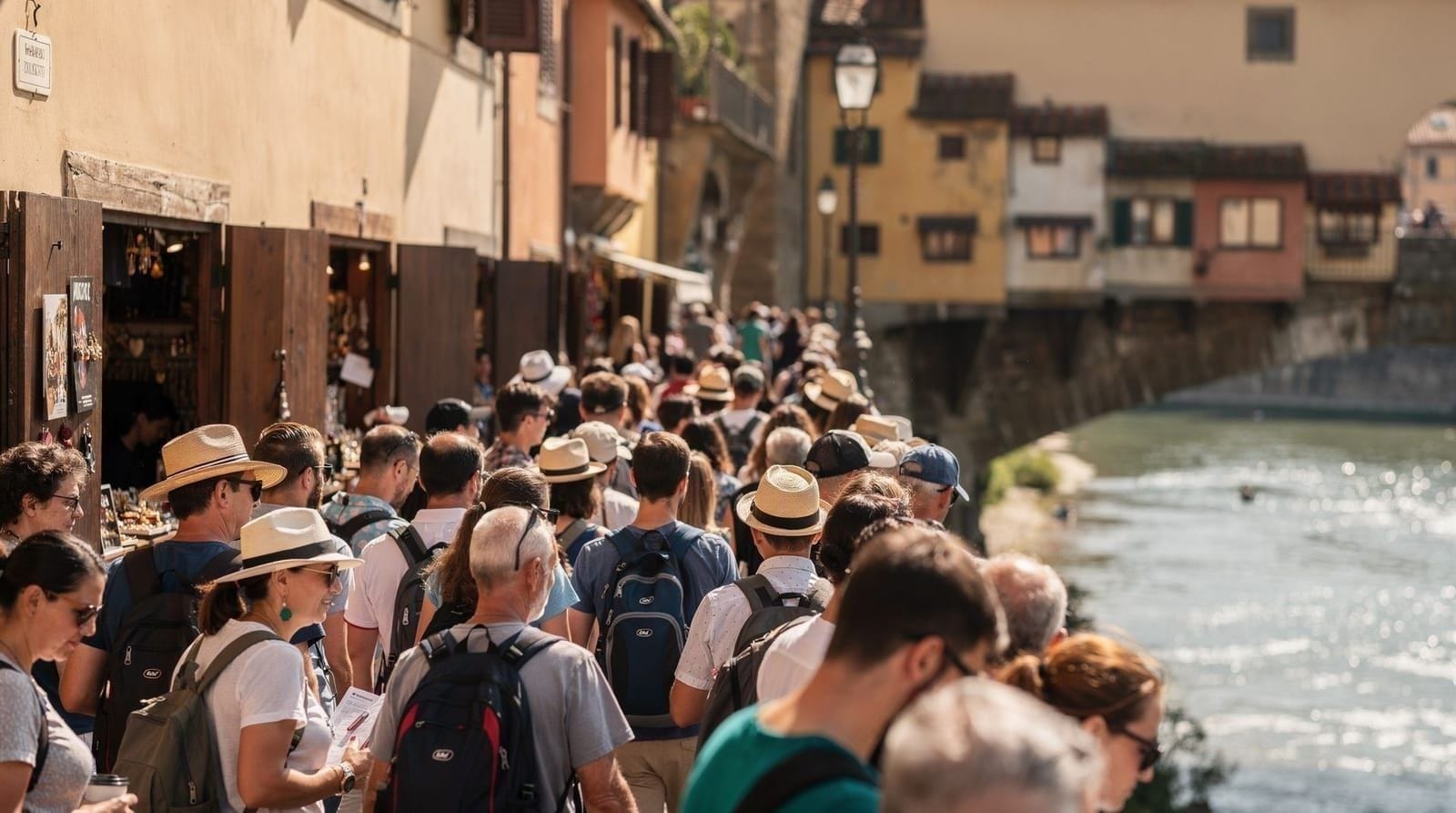
Critically: the Ponte Vecchio area and both its approaches are inside the ZTL. If your GPS routes you via the Ponte Vecchio or the Lungarno roads parallel to it, you are in the ZTL.
The fine structure
Fines for ZTL violations in Florence are set by municipal ordinance and have increased several times in recent years:
| Violation type | Base fine |
|---|---|
| First violation (paid within 5 days) | €41.67 |
| Standard violation (paid within 60 days) | €83.33 |
| Late payment (60-360 days) | €166.67 |
| Very late payment (over 360 days) | €333.33 |
Multiple violations (multiple cameras on the same route) are each counted separately. Driving into the ZTL via one road and out via another can produce two separate fines. A tourist who drives into the ZTL at night and exits via a different route the next morning may receive three or four violations.
Add the rental company’s administrative fee of €20-40 per violation, and a single careless drive through the ZTL can cost €200-400 before counting.
Who is actually at risk
You are at risk if any of the following apply:
You are staying at a hotel inside the historic centre. Florence’s most centrally located hotels — near the Duomo, Piazza della Signoria, Ponte Vecchio, the Accademia — are inside the ZTL. If you are driving and staying at one of these hotels, you need a ZTL permit arrangement before you arrive. Ask specifically when booking.
You are following GPS. Consumer navigation apps do not filter for ZTL access in real time. Google Maps and Waze have improved somewhat on this front but remain unreliable for Italian ZTL avoidance. Do not follow GPS blindly into a city centre.
You are driving from the south (Siena, highway A1 Firenze Sud exit) toward the centre. The most common route from the A1 south exit takes drivers through or near the Oltrarno and the south bank ZTL. The Pitti Palace area, Via de’ Guicciardini, and the Oltrarno side streets are all ZTL.
You are picking up or dropping off someone at a central hotel. Even a brief stop inside the ZTL triggers the camera. There is no “I was only there for 5 minutes” defence.
You are NOT at risk if
- You use the tram system (Line T2 from the airport to Santa Maria Novella, Line T1 for other routes)
- You park at a peripheral car park and walk or use public transport into the centre
- You stay in a hotel outside the ZTL (there are good options 10-15 minutes’ walk from the centre)
- You coordinate your hotel stay inside the ZTL with a proper ZTL permit in advance
If your Florence hotel is inside the ZTL and you’re not driving at all, none of this applies to you — the where to stay in Florence guide covers which central areas are worth the ZTL hassle for drivers and which are easily reached car-free.
The practical avoidance strategy
Strategy 1: Park peripherally
Several large car parks operate just outside the ZTL, accessible from the ring roads without entering the restricted zone:
Piazza della Libertà (north): Entrance from Viale Matteotti. Walk 15 minutes to the Duomo, or take any bus along Via Cavour. Covered, overnight available.
Via della Fortezza (north-west): Near the Fortezza da Basso exhibition centre. Walk 15-20 minutes to the historic centre. Shuttle bus available during events.
Parterre (north-east, Piazza della Libertà area): Indoor car park, 15-minute walk to the Duomo via Via Cavour.
Piazzale Michelangelo (south): Not inside the ZTL, accessible from Via del Poggio Imperiale from the south (Siena direction). Walk down into the Oltrarno — 20 minutes to the Ponte Vecchio. No overnight parking.
Lungarno della Zecca Vecchia and Piazza Poggi: South bank, east of the restricted zone. Limited spaces.
Strategy 2: Use the tram or train
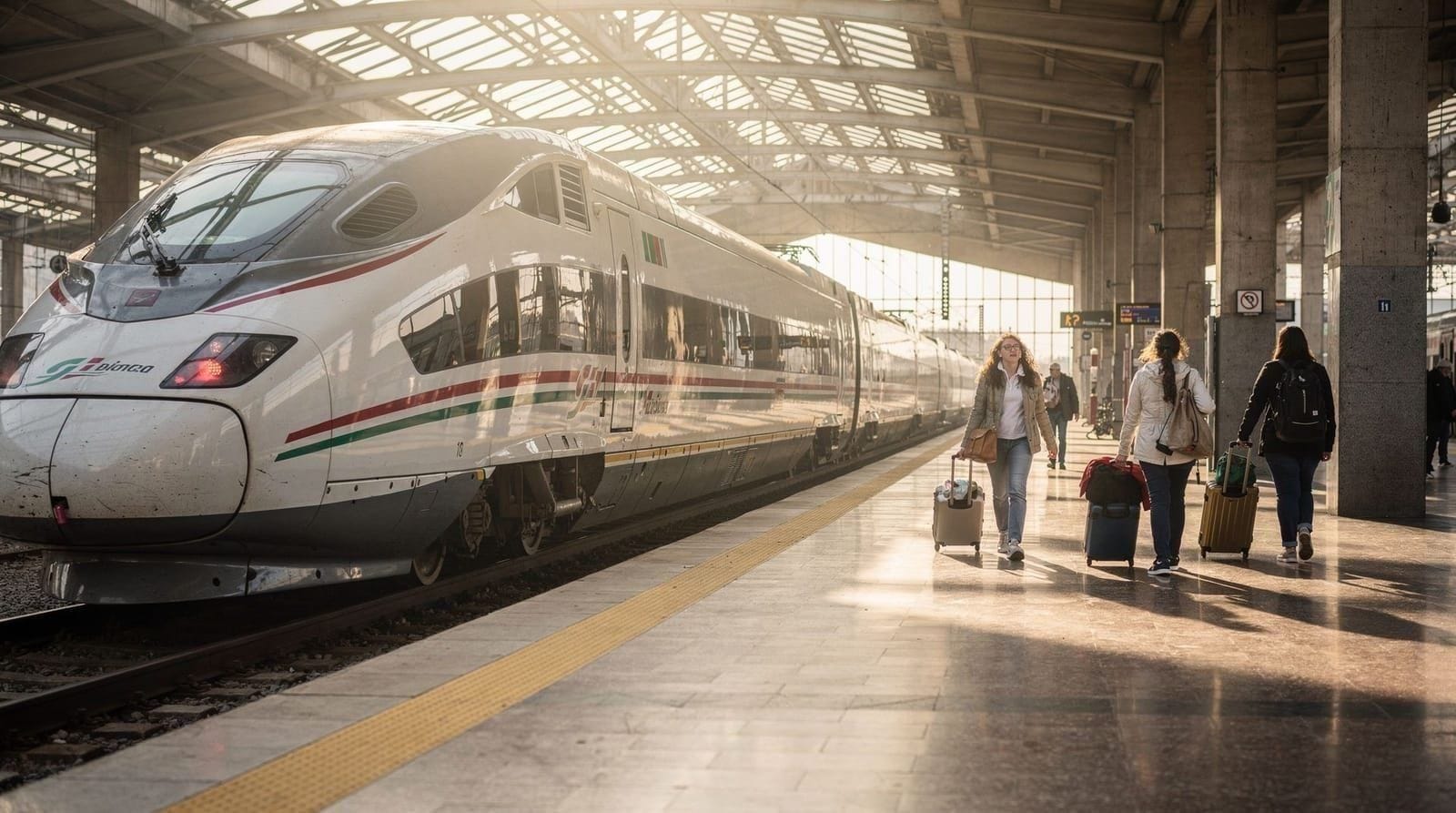
The tram line T2 connects Florence Airport (Aeroporto di Firenze) to Santa Maria Novella train station in 18 minutes. From Santa Maria Novella, the historic centre is 10 minutes on foot. There is no reason to drive from the airport into the centre.
For arrivals by car from other Italian cities, the most efficient approach is to park at a peripheral car park on the motorway exit side (Piazza della Libertà for the A1 north/Bologna exits, Piazzale Michelangelo for the A1 south/Siena exit) and continue by foot or bus.
Strategy 3: Coordinate hotel ZTL permits
If you are staying inside the ZTL and arriving by car, the procedure is:
- Contact the hotel at least 48 hours before arrival (ideally at booking time)
- Provide your vehicle registration number, country of registration and exact arrival/departure dates
- The hotel submits a temporary permit request to the Comune di Firenze
- On arrival, drive to the hotel following the hotel’s specific instructions — often a precise route that minimises non-ZTL entry points
- On departure, use the same or equivalent authorised route
Not all hotels manage this process efficiently. Confirm the permit has been registered before you drive to the hotel.
Strategy 4: Rent the car only when you need it
For most visitors, the cleanest solution is to skip renting a car for the Florence portion of the trip entirely and pick one up only for the Tuscan countryside days — Chianti, Val d’Orcia, or a hill town like Volterra. Pick up and drop off at a location outside the ZTL (the airport or a station car park both work), and you eliminate the risk completely for the days you’re actually staying in the city. See the renting a car in Tuscany guide for how to structure this.
ZTL and day trips: Tuscan town centres
If you are renting a car for Tuscan day trips (which is a genuinely good idea for Chianti, Val d’Orcia and areas not well-served by public transport), the ZTL system extends to virtually every historic town centre in Tuscany. The towns most commonly visited by Florence day-trippers all have ZTL:
Siena: The full historic centre, including Piazza del Campo and all surrounding streets, is ZTL. Park at the large peripheral car parks (Parcheggio il Campo, Parcheggio Fontebranda) and walk down into the centro storico.
San Gimignano: The entire walled hilltop town is pedestrianised / ZTL. Park at the gates (Parcheggio P1 or P2 outside the walls). The walk into the centre is 5-10 minutes.
Lucca: The area inside the city walls has restricted access. The car parks outside the walls (Parcheggio Carducci, Parcheggio Porta Santa Maria) are outside the ZTL and within walking distance of everything inside.
Pisa: The historic centre including the Campo dei Miracoli area has ZTL restrictions. Park at Parcheggio Via delle Piagge or the dedicated Campo dei Miracoli car parks.
The pattern for all of these: park at the edge, walk in. This is actually a better experience than driving — Italian historic centres are designed for pedestrians and the walls, gates and approaches are best approached on foot.
Comparing the avoidance strategies
| Strategy | Best for | Effort | Risk if done right |
|---|---|---|---|
| Park peripherally, walk in | City-only visitors | Low | None |
| Tram/train from airport | No car needed at all | Lowest | None |
| Hotel ZTL permit | Staying inside the centre with a car | Medium (advance coordination) | Low, if confirmed |
| Rent only for day trips | Mixed city + countryside trip | Low | None, if pickup/dropoff is outside the ZTL |
The ZTL rules apply just as strictly to day-trip destinations, so this isn’t a problem you solve once and forget — see the best day trips from Florence guide for which excursions need a car and which don’t.
What to do if you already received a fine
Check the notice carefully. The notice from the Comune di Firenze will specify the date, time, camera location and vehicle. Verify these are correct — clerical errors do occasionally occur.
Pay within 5 days if possible. Paying within 5 days of the original violation (not of receiving the notice) triggers a reduced amount. If you receive the notice weeks later, this window has passed, but pay within 60 days of the original violation date for the standard rate.
Review the rental company’s charges separately. The rental company may charge its administrative fee separately from the fine itself. Review your credit card statement and the rental company’s communications carefully to understand what you owe and to whom.
Consider whether to contest. Contesting is worth attempting if: you can prove the vehicle was in an authorised ZTL with a valid permit, or the camera data shows a different vehicle. Generic contestation (“I didn’t know”) is not a valid ground. Formal contestation requires a written submission in Italian to the Comune di Firenze’s traffic violation office within 30 days of receiving the notice.
The ZTL and electric vehicles
Florence has designated a ZEZ (Zona Emissioni Zero — Zero Emission Zone) within the ZTL. Fully electric vehicles (BEV) have reduced restrictions in the ZEZ. However: this applies only to registered residents and authorised vehicles, not tourists in rented electric cars. A rented EV has no more right to enter the Florence ZTL without a permit than a petrol vehicle. Do not assume an electric rental car bypasses ZTL restrictions.
Frequently asked questions about Florence ZTL fines
Can I pay ZTL fines online?
Yes. The Comune di Firenze accepts payment via the municipal website and at post offices. The fine notice includes payment instructions. The rental company may also handle payment on your behalf (and charge your card accordingly).
Does travel insurance cover ZTL fines?
Standard travel insurance does not cover traffic fines. Some premium travel insurance products include a legal assistance component that may provide advice but not payment of fines. Credit card travel protection also does not cover traffic violations.
What if the rental company charges me more than the fine amount?
Rental companies are entitled to charge an administrative fee for processing and forwarding the fine notice. This is specified in rental agreements, though often in fine print. The combined charge of fine plus administrative fee is the total you owe. If the rental company charges more than the fine plus a reasonable administrative amount, you can dispute the administrative fee with the rental company’s customer service.
Are there times when the ZTL cameras are turned off?
The cameras operate continuously. They are not turned off for weekends, public holidays, or nighttime hours in the historic centre. There is no reliable information that would indicate a “safe” time to drive through the ZTL without authorisation.
Is it worth renting a car for a Florence trip?
For the city of Florence itself: no, a car is counterproductive. The historic centre is best explored on foot and the ZTL makes driving impossible. For Tuscany day trips to Chianti, Val d’Orcia, Montalcino and off-rail destinations: absolutely yes. The optimal strategy is to stay in Florence car-free (tram from airport, trains from SMN), then rent a car for specific day trips — picking up and dropping off outside the ZTL, at the airport, or at a station car park.
How will I know if I’ve received a ZTL fine?
Notices go first to the vehicle’s registered owner — for rental cars, that’s the rental company, which then forwards the fine to you, typically by charging your card on file weeks or even months after the trip, along with its own administrative fee. Check your rental agreement’s terms on this, and don’t assume no news after a few weeks means no fine; processing can take longer.
Does the ZTL apply to taxis and ride-hailing?
No — licensed taxis and NCC (private hire) vehicles are authorised to enter the ZTL. This is one reason a taxi from the station to a central hotel is often the simplest solution for the last stretch of a journey, rather than trying to drive yourself in.