Tuscan cooking class in Florence: pasta and gelato review
Florence: authentic cooking class for fresh pasta and gelato
- Free cancellation
- Small group
What a Florence cooking class actually offers
Florence is one of the best cities in Europe to learn to make fresh pasta. The Tuscan tradition — egg pasta (sfoglia), rustic pici (a thick hand-rolled spaghetti without egg), handmade gnocchi, ribollita, bistecca alla fiorentina — is one of the most ingredient-driven and teachable in Italian cooking. A good cooking class covers a morning’s hands-on cooking, a sit-down meal of what you made, and enough technique to replicate at home.
This review covers what to expect from the pasta and gelato format specifically — the most popular class type in Florence — and how it compares to the alternatives. For the wider landscape of options, our best cooking classes in Florence guide rounds up formats beyond the one reviewed here.
| Where | central Florence cooking school (most formats); some farmhouse options |
| Cost | around €70-90 standard; €180-250 private for two |
| Time needed | 3-3.5 hours standard; 4-5 hours market-to-table |
| Getting there | walkable meeting point in central Florence |
| Best time | book 1-2 weeks ahead in peak season (April-October) |
What you cook in a pasta and gelato class
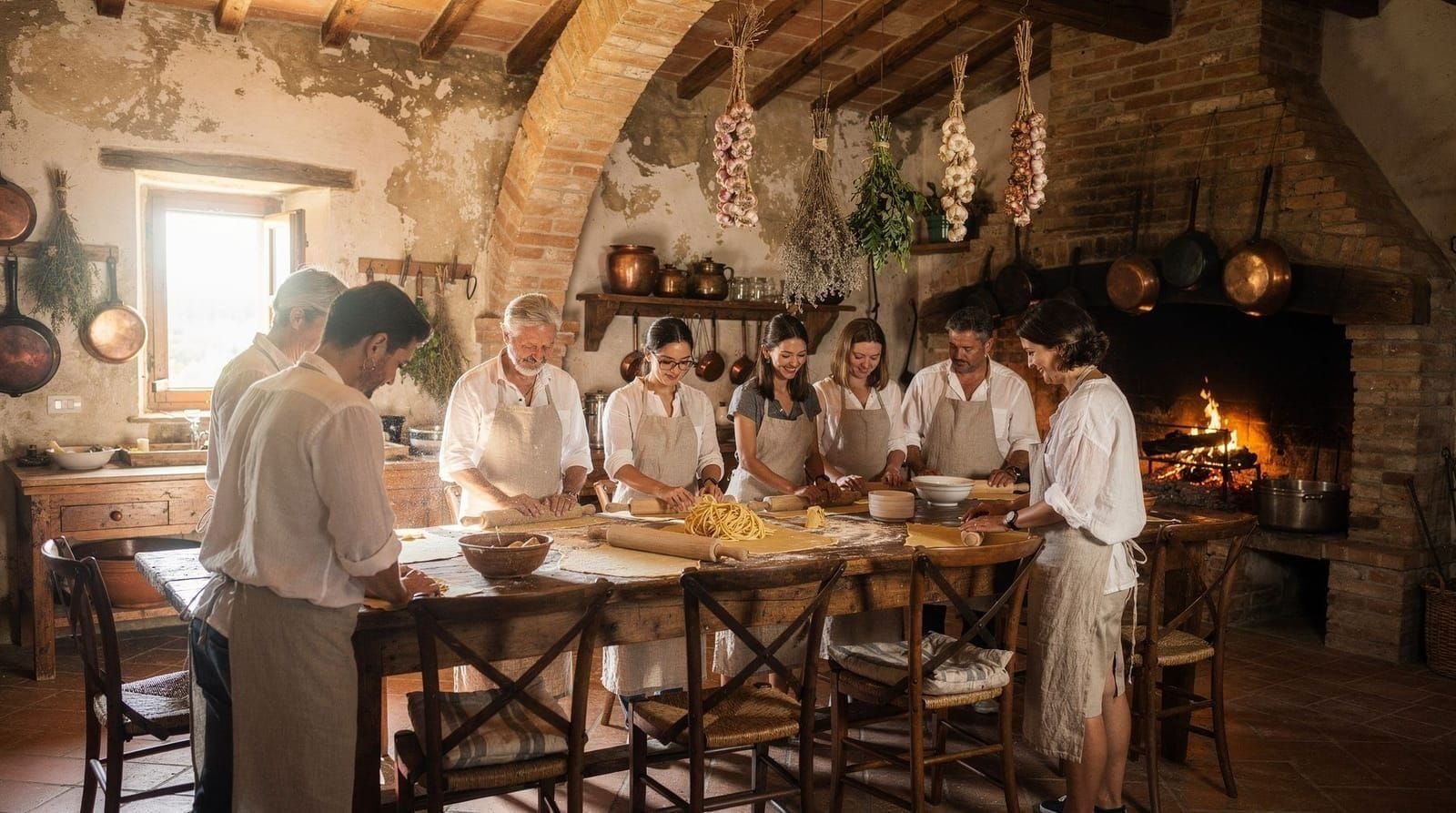
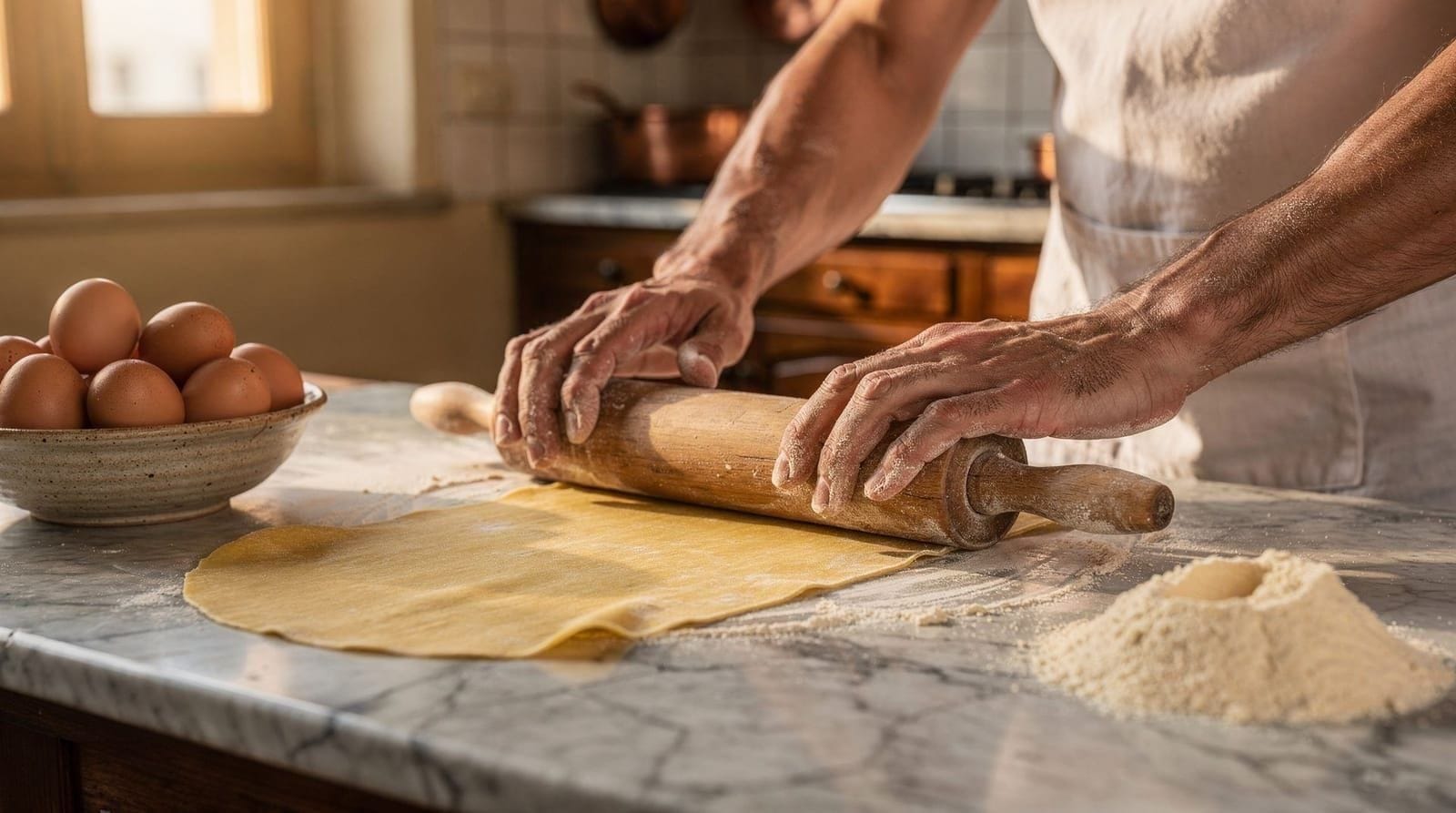
Fresh pasta section (60-75 minutes): The instructor demonstrates the pasta dough — typically 100g flour per egg, formed on a wooden board. You make your own portion, learn to knead and rest the dough, then roll it out (usually by hand with a rolling pin, sometimes with a pasta machine depending on the class) and cut it into the target shape. Common shapes: tagliatelle (long ribbons), pici (hand-rolled thick spaghetti, very satisfying to make), tortellini (labour-intensive, taught in detail-focused classes), or ravioli.
Sauce: While the pasta rests, the instructor covers a Tuscan sauce — ragù (slow-cooked meat sauce), a simple sugo di pomodoro (San Marzano tomatoes, garlic, basil), or pesto with Ligurian basil. This is the most technically instructive part for home cooks.
Gelato section (30-45 minutes): The base ratios (milk, cream, sugar, egg yolks for crema; fruit purée for sorbetto) are explained. Most classes make fior di latte (pure cream flavour) or chocolate as the base, sometimes with one or two additional flavours. The mixture is churned in the class gelato machine while you eat.
The meal (45-60 minutes): You eat what you made, with wine (usually Chianti or a house white included), bread, olive oil, and sometimes additional Tuscan dishes prepared by the class kitchen.
What distinguishes a good cooking class
Not all Florence cooking classes are equal. The key variables:
Group size: The best classes cap at 8-10 participants. Classes of 15-20 become demonstration-focused rather than hands-on. Check the maximum group size before booking.
Instructor quality: A certified Italian chef teaching a small group is different from a tourism professional reading a script. English-language classes are standard; ask whether the instructor is a working cook or a tourism employee.
Kitchen setting: A historic palazzo kitchen, a dedicated cooking school space, or a farmhouse kitchen all work well. Avoid classes in hotel demonstration kitchens where you watch more than cook.
What you take home: Good classes send you home with the pasta recipe card, sometimes a small bag of pasta flour or a bottle of olive oil. This is a minor detail but signals the operator’s attention to quality.
The meal: Eating what you made is non-negotiable for a satisfying class. Avoid any class where the instructor cooks the demonstration dishes and you eat those rather than your own work.
The standard pasta-gelato format vs alternatives
Standard city-centre class (€70-90): The pasta and gelato format reviewed here. 3-3.5 hours, central Florence location, English-language instruction, wine included with meal. Best value and most convenient.
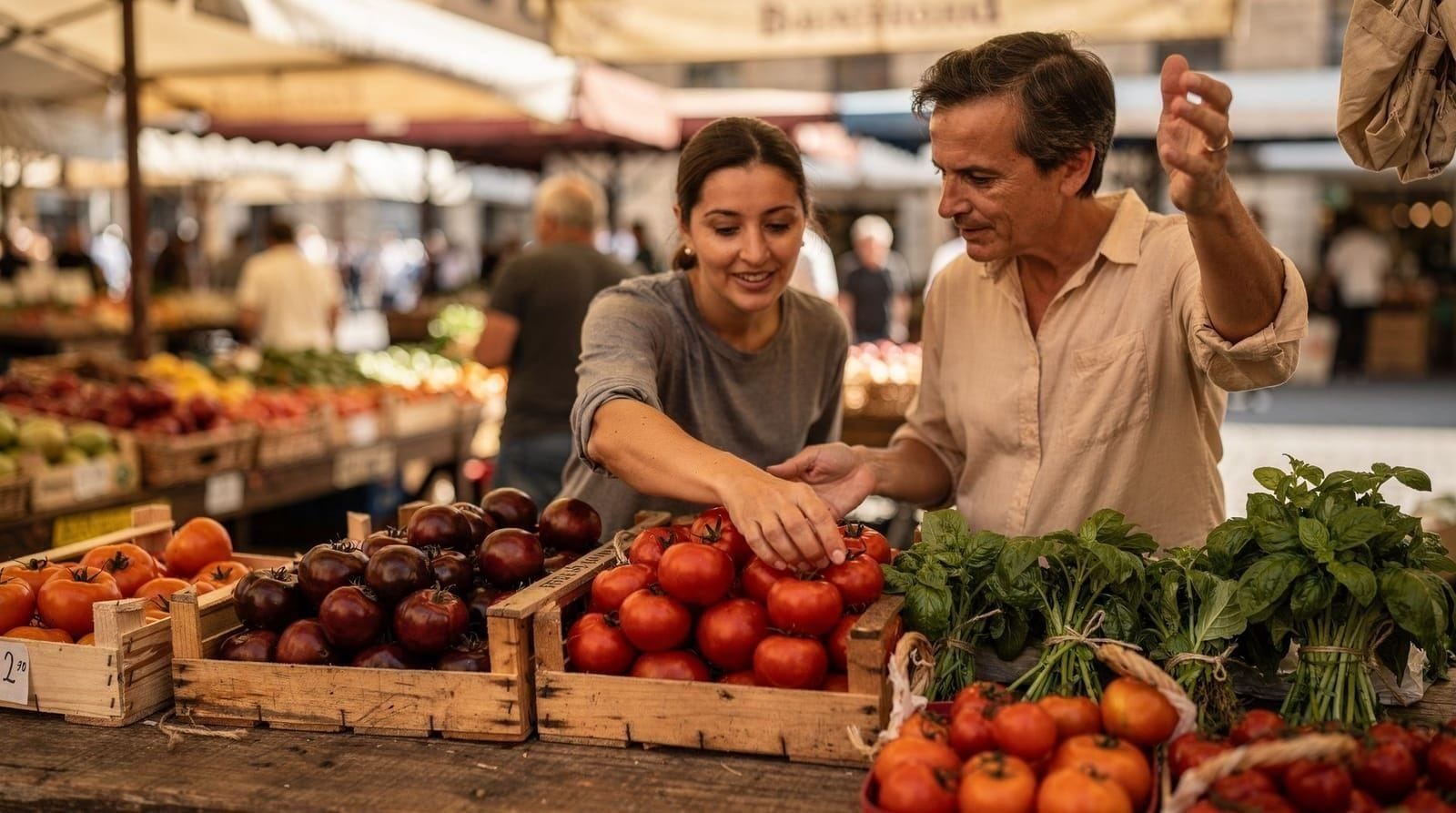
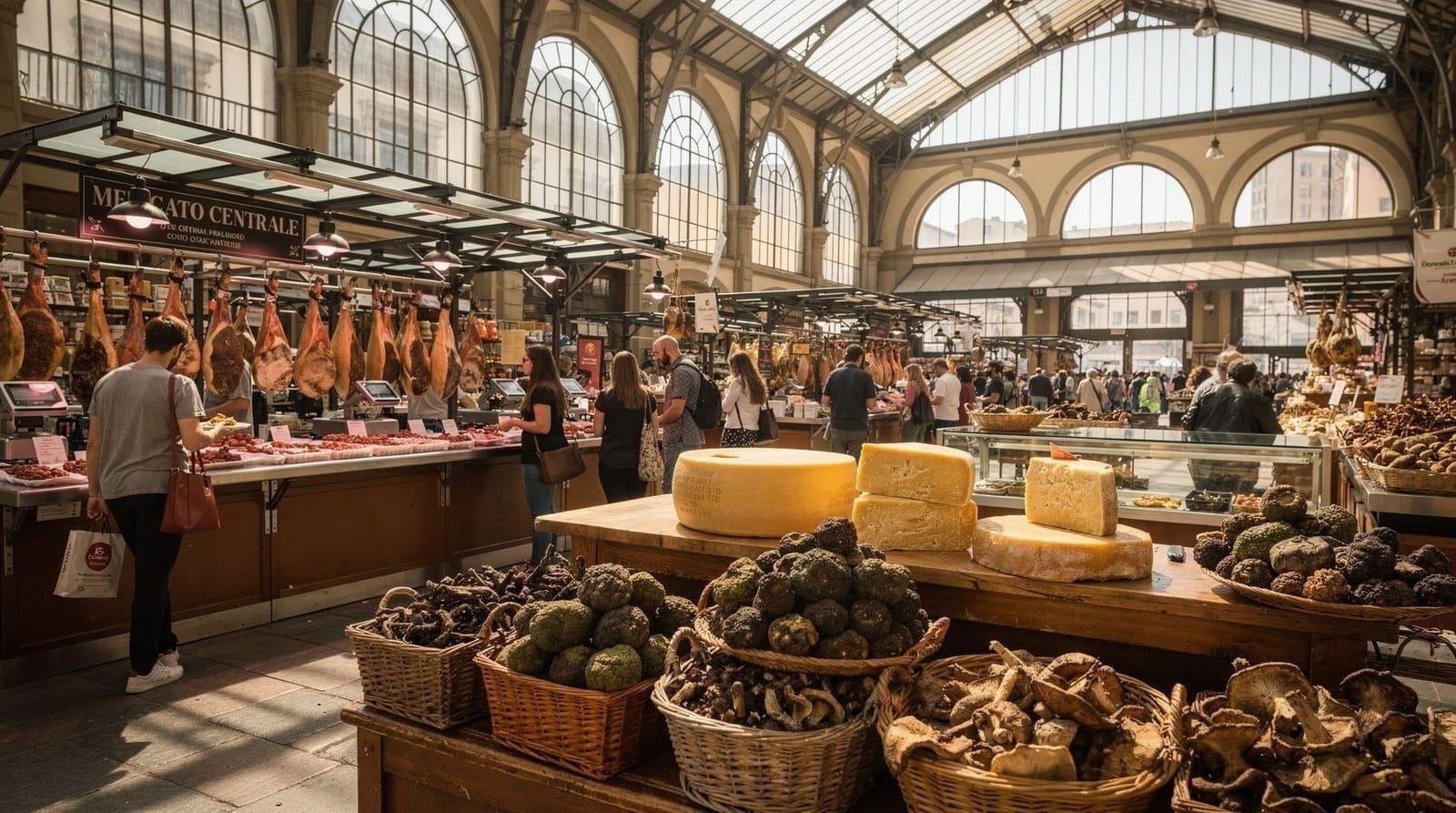
Market-to-table class (€85-110): Begins with a guided visit to a local market (Sant’Ambrogio or Mercato Centrale), where you shop for ingredients with the chef. Adds 60-90 minutes and meaningful food market education. Worth the premium if you want to understand Florentine produce sourcing — our market-to-table cooking guide covers exactly what this format involves and which markets pair with which schools.
Pizza and gelato class (€65-85): A lighter, more child-friendly format focused on pizza dough and gelato rather than fresh pasta technique. See the pizza and gelato classes guide for family-specific recommendations.
Farmhouse class (€90-120): 30-45 minutes outside Florence at an agriturismo. The setting is beautiful (Tuscan countryside, garden, panoramic views). Class content is similar to the city format, but you add travel time. Best for visitors who want the countryside experience as part of the cooking day.
Dinner format class (€90-120): Evening cooking class ending with a 3-course dinner and wine pairing. A good date night or special occasion option. Slightly more structured and formal than the daytime format.
Private class for two (€180-250): Entirely personal instruction, flexible menu, your schedule. The clear premium over group classes but the most intensive learning experience.
| Format | Around | Best for |
|---|---|---|
| Standard city-centre class | €70-90 | Most first-time visitors, best value |
| Pizza and gelato class | €65-85 | Families with young children |
| Market-to-table class | €85-110 | Anyone wanting food-sourcing context |
| Farmhouse class | €90-120 | The countryside setting as part of the day |
| Dinner format class | €90-120 | Date nights, special occasions |
| Private class for two | €180-250 | Serious home cooks wanting intensive technique |
Honest assessment of value
At €70-90 per person for 3-3.5 hours including all food and wine, a Florence cooking class is excellent value compared to European cooking school equivalents. A comparable class in London or Paris costs €120-180. The food quality (fresh eggs, Italian 00 flour, San Marzano tomatoes, real Chianti) is high.
What you are paying for: hands-on time, the technique knowledge that makes fresh pasta at home not daunting, a proper Tuscan meal, and — honestly — the experience and memory of cooking in Florence. This is travel value, not just kitchen value.
When it is not worth it: If you are a confident home cook who regularly makes fresh pasta, the beginner orientation of group classes may not add much technique. In this case, a market visit + private class, or a more advanced wine-pairing dinner class, may be more satisfying.
How to choose the right class for your group
Solo travellers or couples: Standard small-group class is ideal — the social format of cooking alongside strangers is genuinely pleasant. Most classes mix nationalities and the cooking creates easy conversation.
Families with children: Look specifically for family-friendly or pizza-gelato classes. The pasta technique focus of standard classes requires patience from young children. Pizza and gelato classes are more immediately engaging for ages 6-12.
Special occasions: Dinner format classes or private classes. The evening dinner format is particularly good for a birthday or anniversary — candlelit dinner of food you just made is memorable.
Groups of 4-8 people: A private class becomes competitive in price per person while giving a completely tailored experience. Worth the comparison.
What to book and when
Booking ahead: Florence cooking classes book up 1-2 weeks ahead in peak season (April-October). The most popular morning time slots (10am start) fill fastest. Book at least a week ahead; two weeks in summer.
Dietary requirements: Communicate in advance. Most classes can adapt for vegetarians, celiacs (gluten-free pasta flour is available), and lactose intolerance. Vegan is harder in a pasta-gelato class but some operators offer alternatives.
What to wear: No restrictions, but an apron is provided. Wear something you don’t mind flour on.
Meeting point: Classes specify whether you meet at a central Florence address (most common) or require a taxi to a nearby location. Read the confirmation carefully.
The Tuscan pasta shapes worth knowing before class
Understanding what you’re actually making helps you get more out of the hands-on time. Pici is Tuscany’s signature shape — a thick, hand-rolled spaghetti made without egg, traditionally from the Val d’Orcia and Siena countryside, and the most forgiving shape for beginners because there’s no cutting precision required, just rolling by hand. Tagliatelle is the classic egg-pasta ribbon, thin and requiring more knife-cutting accuracy. Tortellini is the most labour-intensive shape taught in detail-focused classes — small filled parcels folded by hand, genuinely difficult to master in one session but satisfying to attempt. Most standard classes teach one or two of these rather than all three, so it’s worth checking the class description if a specific shape interests you.
Combining with other Florence food experiences
A Florence food day might combine:
- Morning: Cooking class (10am-1:30pm) at a city-centre school
- Afternoon: Florence food tour covering different street food stops in the Oltrarno and Mercato Centrale neighbourhoods
These two experiences complement each other — the cooking class teaches technique and the food tour covers cultural context. Done on the same day, they form one of the most food-focused days possible in Florence.
Alternatively, the cooking class makes a strong first or last day activity — early in the trip to educate your palate for the rest, or late in the trip to consolidate what you have been eating.
Practical checklist before you go
Before your class:
- Confirm the meeting point (many classes provide a slightly hidden address)
- Note any dietary restrictions in advance
- Don’t eat a large meal before — you will eat at the end of the class
- Bring a reusable bag if you want to take home leftovers or purchases
At the class:
- Arrive 10 minutes early to settle in
- Ask about the flour-to-egg ratio and technique notes at the end — most instructors are happy to share the recipe card
- Try the gelato before the machine has finished churning (the semi-freddo stage is excellent)
Verdict
A Florence pasta and gelato cooking class is one of the best ways to spend 3-4 hours in the city. It is hands-on, educational, social, delicious, and one of the more exportable memories of a Florence trip — skills you actually use when you get home. The price point (€70-90) is fair for what you receive.
The standard city-centre format is the right choice for most visitors. Upgrade to the farmhouse format if the Tuscan setting matters to you; to the market-to-table format if food culture education is your priority; to a private class if you are a serious cook wanting intensive technique time.
The one honest limitation: the pasta and gelato combination is geared toward beginners and intermediate cooks. Advanced home cooks who make fresh pasta weekly will find little new technique. For this group, a more specialised class — wine pairing, bistecca alla fiorentina preparation, or a market-focused class with a working chef — is more rewarding.
Frequently asked questions about Tuscan cooking classes in Florence
What do you cook in a Florence pasta and gelato cooking class?
Typically 2-3 fresh pasta shapes (tagliatelle, pici, or gnocchi), a traditional Tuscan sauce (ragù, sugo di pomodoro, or pesto), and handmade gelato (fior di latte, chocolate, or a seasonal flavour). Some classes add bruschetta or tiramisu.
How long does a Florence cooking class last?
Standard classes run 3-3.5 hours including cooking and the sit-down meal. Market-to-table classes run 4-5 hours. Evening dinner format classes run 3-4 hours.
How much does a Florence cooking class cost?
Standard pasta and gelato: €70-90 per person. With market visit: €85-110. Dinner format: €90-120. Private class for two: €180-250.
Are Florence cooking classes suitable for beginners?
Yes — all standard classes are designed for beginners. No prior kitchen experience is needed. The instruction covers basic pasta technique and gelato ratios from scratch.
Is wine included in Florence cooking classes?
Almost always yes — Chianti or a house white included with the meal. Some classes specifically include unlimited wine during both cooking and eating.
Can children participate in Florence cooking classes?
Most classes accept children aged 6 and above. Pizza and gelato classes tend to be more child-friendly than detailed pasta technique classes. Check the specific class description for family suitability.
What is the difference between a city class and a farmhouse cooking class?
City classes use dedicated school kitchens in historic buildings. Farmhouse classes (30-45 minutes outside Florence) cook in an agriturismo setting with Tuscan countryside views. Farmhouse classes cost more but are more immersive.
What’s the difference between pici, tagliatelle and tortellini in a Florence class?
Pici is a thick hand-rolled spaghetti without egg, the easiest shape for beginners. Tagliatelle is a thin egg-pasta ribbon requiring more cutting precision. Tortellini is small filled parcels, the most labour-intensive shape and usually reserved for detail-focused classes. Most standard classes teach one or two of these, not all three.
Where can I shop for ingredients before or after a cooking class?
Mercato Centrale and the Sant’Ambrogio market are Florence’s two main food markets and the usual starting points for market-to-table classes. Both are worth a visit even outside a class for produce, cheese, and cured meat shopping.
Compare alternative tours
| Tour | Duration | Rating | Price | Highlights | |
|---|---|---|---|---|---|
| Florence: cooking class and lunch at a Tuscan farmhouse | — | — | — | Free cancellation · Small group | Check |
| Florence: pasta cooking class with unlimited wine | — | — | — | Free cancellation · Small group | Check |
| Florence: Tuscan cooking class with lunch or dinner | — | — | — | Free cancellation · Small group | Check |