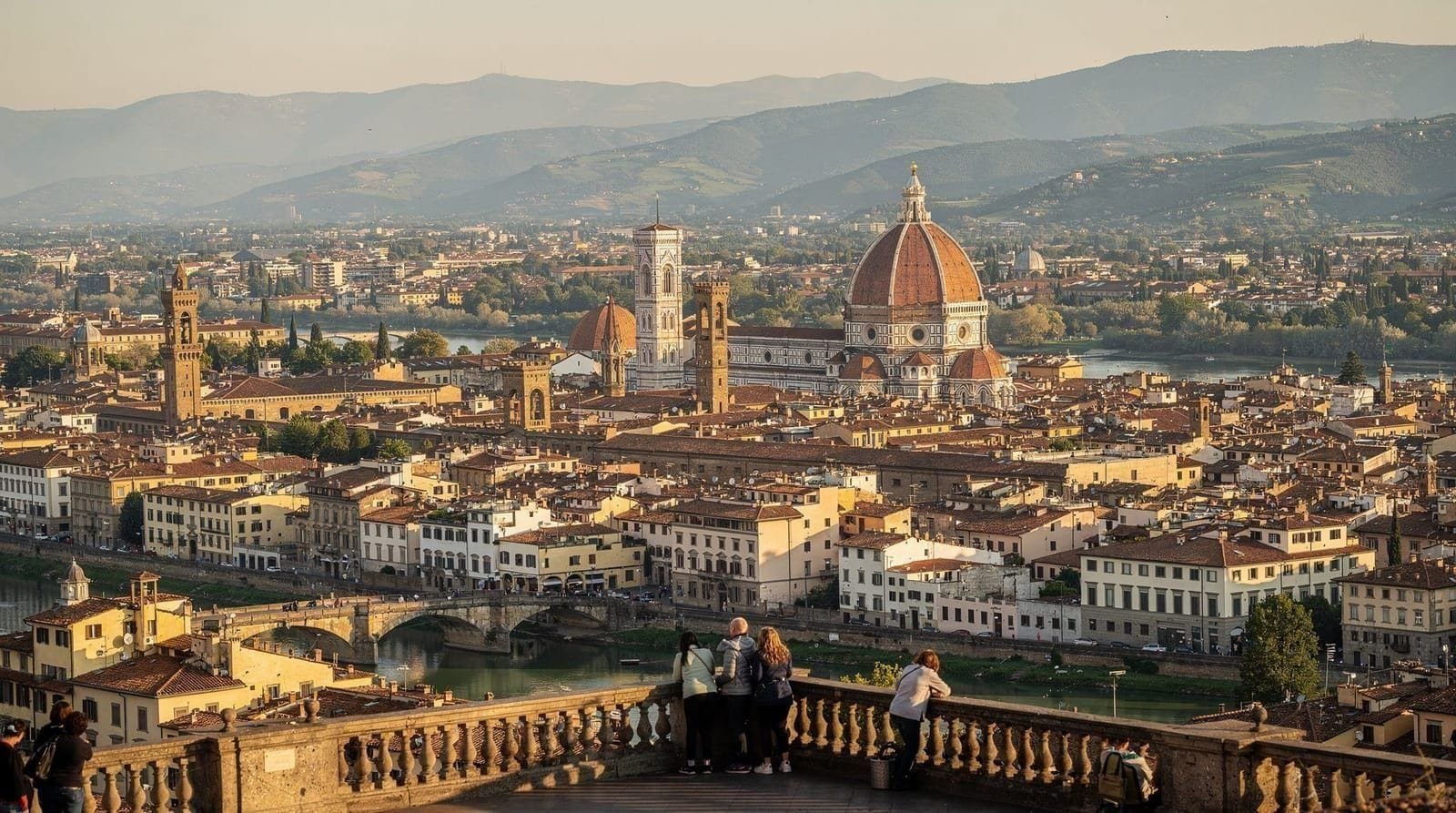
Vasari Corridor tour: is the exclusive Uffizi access worth it?
Florence: Vasari Corridor and Uffizi Gallery exclusive tour
- Small group
- Free cancellation
What the Vasari Corridor is and why it exists
In 1565, Duke Cosimo I de’ Medici wanted a private route from his residence (Palazzo Pitti) to his seat of government (Palazzo Vecchio) that bypassed the public streets of Florence. He commissioned architect Giorgio Vasari to design and build the elevated passageway in just five months for the wedding of his son Francesco.
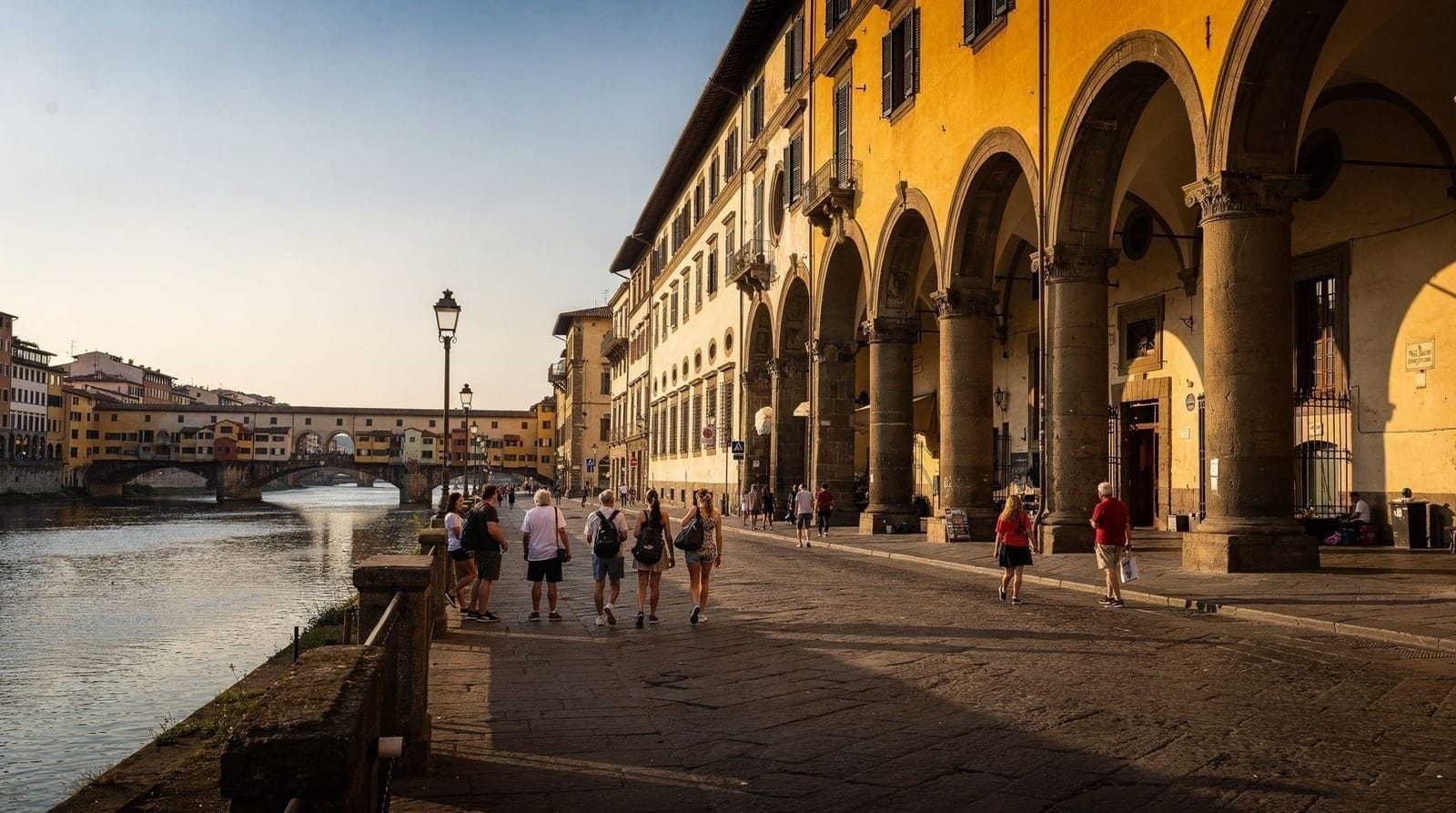
The result is a 1-km corridor that winds through the upper floors of the Uffizi, across the Arno on a passage above the Ponte Vecchio goldsmiths’ shops, through the Oltrarno, and into Palazzo Pitti. For over four centuries it was used as a private Medici family route, then as an art storage space, and was closed to the public for much of the 20th and early 21st centuries.
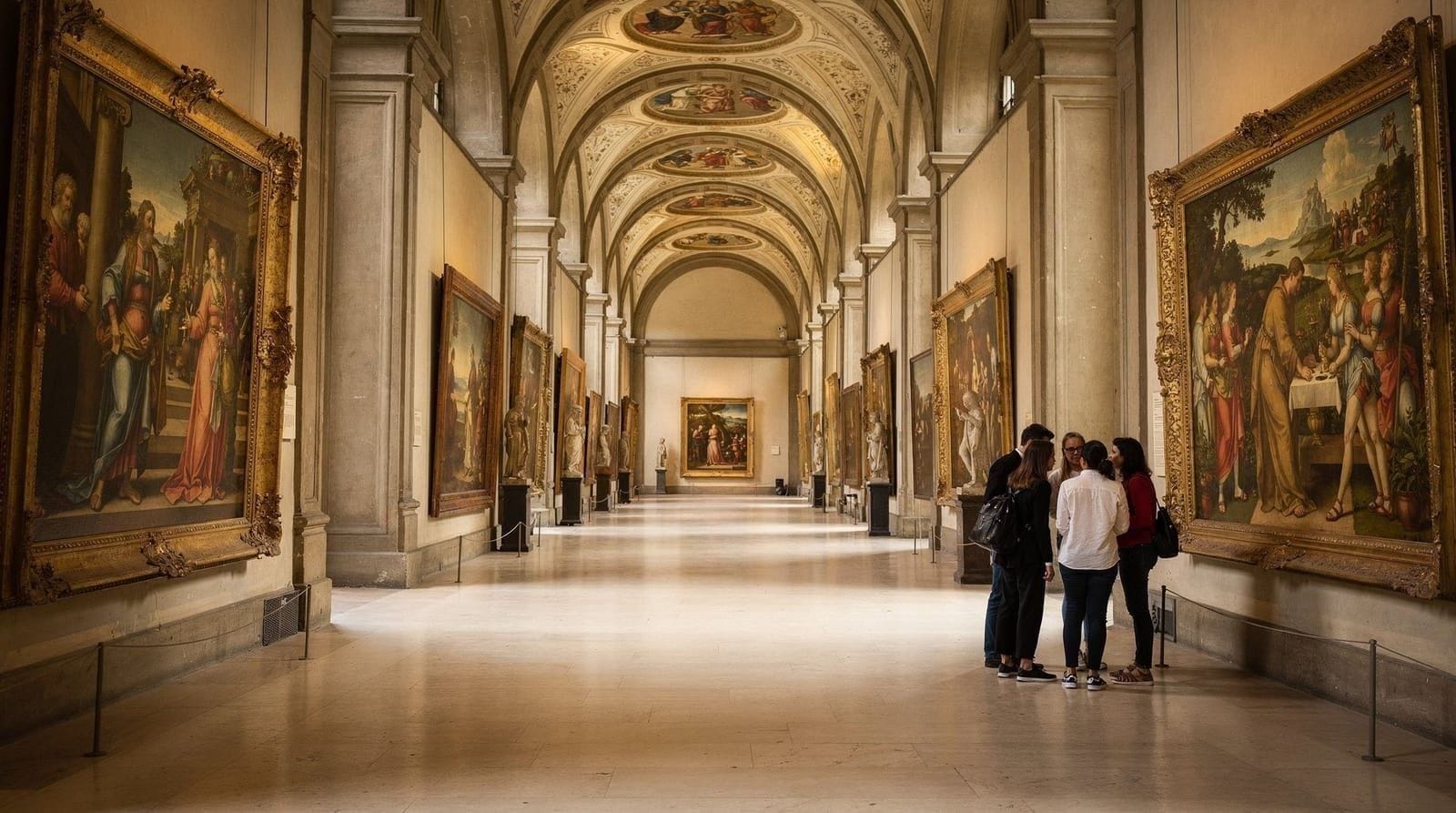
After years of renovation completed in 2025, the Corridor is now open with a new purpose: the Uffizi’s collection of self-portraits (over 700 works spanning the 16th century to the present) is displayed along its walls.
| Where | connects the Uffizi to Palazzo Pitti via Ponte Vecchio |
| Cost | around €55-65 self-guided combined ticket; €75-90 guided |
| Time needed | 3-4 hours combined with the Uffizi |
| Getting there | enter via the Uffizi, exit into the Oltrarno |
| Best time | book 3-6 weeks ahead; slots are the constraint |
What you see in the Vasari Corridor
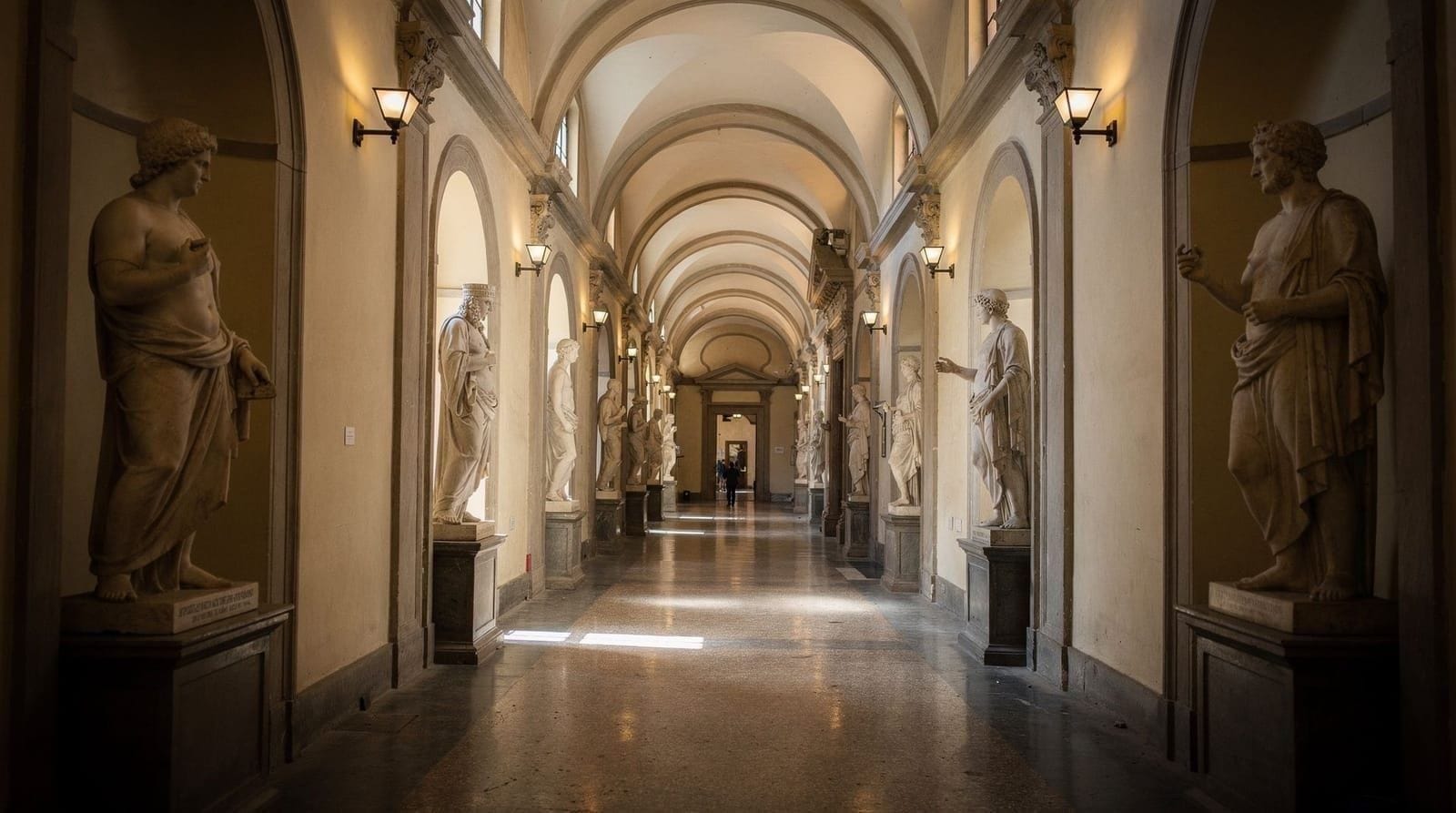
The architecture: The Corridor itself is an extraordinary architectural achievement — a 1-km covered elevated walkway with rounded windows looking over the Arno and the rooftops of Florence. The engineering involved in bridging across Ponte Vecchio (building above an existing structure, without disrupting the shops below) was a significant feat for 1565.
The view over Ponte Vecchio: The Corridor passes directly above the goldsmith shops on Ponte Vecchio. Through the windows on the south side, you look down at the jewellery shops that have lined the bridge since the 16th century (Cosimo I expelled the butchers and replaced them with goldsmiths, whose merchandise was less olfactorily offensive to the royal passage above). This view — down into the rooftops and shopfronts of Ponte Vecchio from above — is available nowhere else in Florence.
The self-portrait collection: 700+ self-portraits arranged chronologically along the Corridor walls. Includes:
- Raphael (early 16th century — one of the earliest works in the collection)
- Titian, Veronese, Tintoretto (16th century Venetian masters)
- Rubens and Van Dyck (17th century Flemish, both acquired during their time in Florence)
- Velázquez (acquired during his Italian period)
- Rembrandt (the most psychologically penetrating self-portraitist in the collection)
- Later additions through the 19th and 20th centuries
- Contemporary works commissioned by the Uffizi
This is not a minor collection — it is the most important concentration of self-portraits in the world, assembled by the Medici from the 16th century onward through deliberate patronage of the most important artists of each era.
The Uffizi section: The tour begins with access to the Uffizi Gallery before entering the Corridor. The combination ticket includes full Uffizi access (normally €25 separately).
Ticket price and what is included
Self-guided combined ticket (Uffizi + Vasari Corridor timed entry): Approximately €55-65 per person. Includes timed Uffizi entry and a timed window for the Corridor. No guide; you explore with the audio app.
Guided tour (small group): Approximately €75-90 per person. A licensed guide leads a group through the Uffizi highlights (2 hours) and then the Corridor (45-60 minutes). The guide covers both the art history and the architectural significance of the passageway.
Private guided tour: €180-300 for a couple or small group. Fully personalised; the guide can adjust the Uffizi sections to your interests before the Corridor walk.
Standalone Corridor access (without Uffizi): Not available. The Corridor is only accessible as part of the combined Uffizi experience.
Comparison with standard Uffizi entry: Standard Uffizi timed entry costs €25 (+ €4-6 booking fee). The Corridor premium adds €30-65 on top, depending on format.
Is the premium worth it?
Yes, if:
- You are a serious art history or architecture enthusiast
- The Uffizi is a centrepiece of your Florence trip (you plan to spend 3+ hours there)
- You want an experience that is genuinely impossible to replicate — the view over Ponte Vecchio from above is something no other access point in Florence provides
- You are on a longer visit (5+ days in Florence) and have already covered the standard sights
- Self-portraits as a genre interest you — the collection is extraordinary and rarely seen in its entirety
Skip it if:
- You are visiting Florence for 2-3 days and have not yet seen the Uffizi highlights, the Accademia, or the Duomo complex — these are higher priority
- Your budget is limited — the €25 standard Uffizi ticket covers the same Botticelli, Leonardo, and Michelangelo
- The architectural history context of the passageway does not particularly interest you
How to book
Via GetYourGuide: The option on this page offers the guided small-group format. English language, certified guide, all logistics handled including the timed Corridor slot.
Via the Uffizi official site: The timed Corridor entry slots are released 3 months ahead. In peak season (April-October), slots for popular time windows (9:00-11:00am) go within days of release. If you want the Corridor on a specific date, check the booking calendar 3 months ahead and book immediately when slots open.
Book the Corridor before other plans: The Corridor is the limiting factor. The standard Uffizi ticket is always more available than the Corridor slots. Reverse the usual planning sequence: book Corridor first, then plan everything else around it.
The Corridor + Uffizi as a full-day programme
Most visitors combine the Corridor access with a full Uffizi morning. A suggested sequence:
8:15am: Uffizi opens — enter with your combined ticket. Rooms 2-7 (medieval and Gothic), then Room 10-14 (Botticelli) while the crowd is minimal. Room 15 (Leonardo). First-floor rooms (Caravaggio, Rembrandt) — approximately 2.5 hours.
10:45am: Vasari Corridor access begins (timed slot). Walk the 1-km passageway; 45-60 minutes including the self-portrait viewing.
12:00pm: Exit via Palazzo Pitti side or return through the Uffizi. Lunch in the Oltrarno (the neighbourhood you emerge in from Palazzo Pitti).
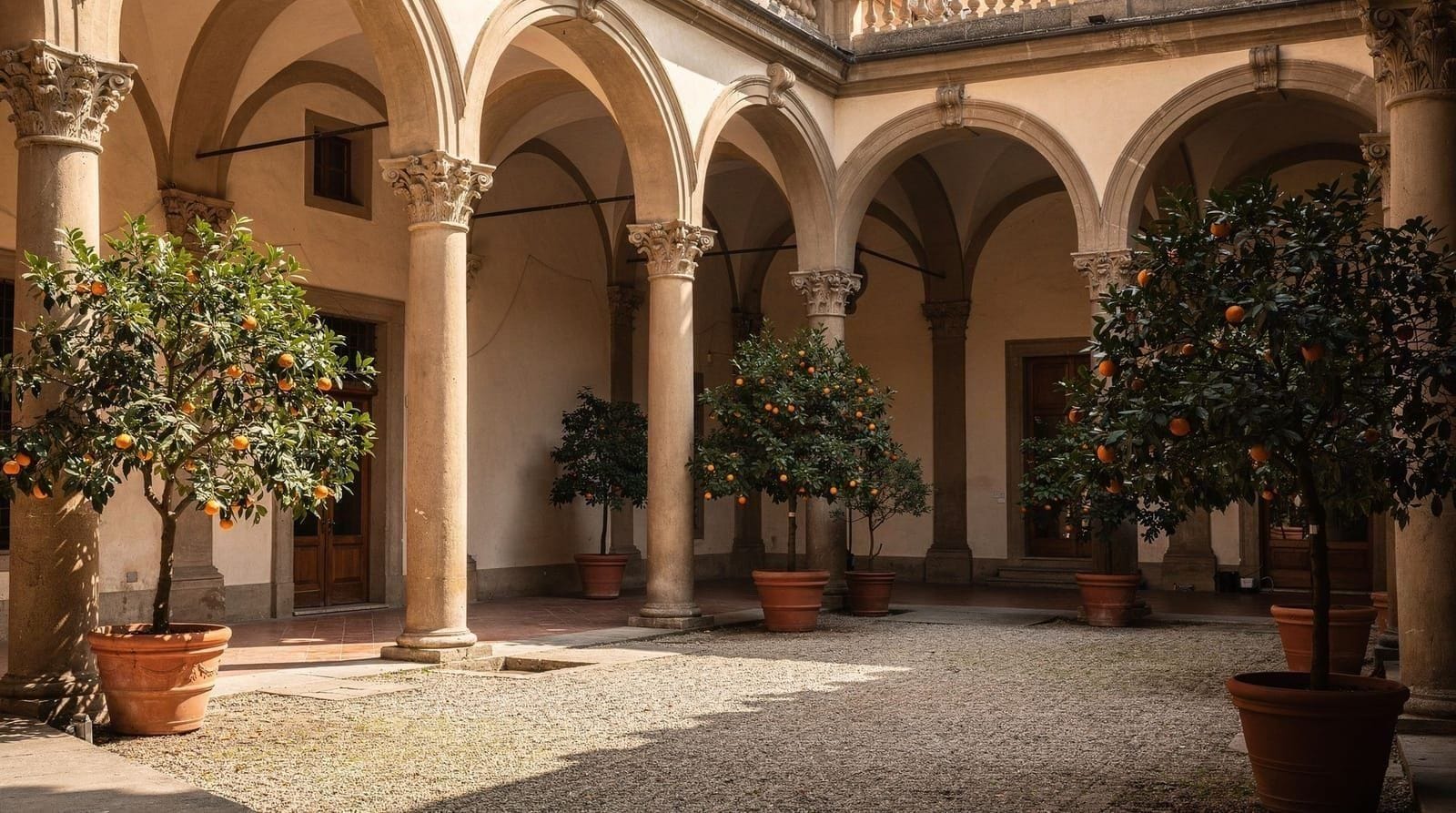
Afternoon: Explore the Oltrarno — the Palazzo Pitti galleries, the Boboli Gardens, the artisan workshops along Via Maggio and Via dei Serragli.
The Ponte Vecchio view in context
The Corridor’s most talked-about feature is the run of windows directly above the Ponte Vecchio goldsmith shops — a vantage point that exists nowhere else in the city. It’s worth pairing this with a visit to the bridge itself at street level either before or after your Corridor slot, so you can compare the view down from above with the experience of walking across at ground level among the jewellers. If you’ve read about crowding or scams on the bridge, our Ponte Vecchio reality check guide covers what to expect and how the Corridor view differs from the street-level one.
Historical context that makes the Corridor richer
Knowing the history transforms the Corridor from a long covered walkway into something more interesting:
The Pitti side of the Arno: The Medici moved their residence to Palazzo Pitti in 1549. Cosimo I needed a secure private connection between there and the Palazzo Vecchio (his seat of government, established after the Republic fell) and the Uffizi (his administrative centre). The Corridor solved a legitimate security concern — a ruler walking through public streets was vulnerable.
The Ponte Vecchio butcher expulsion: Before 1565, Ponte Vecchio was lined with butchers and fishmongers — the same trades that had occupied it since medieval times. Cosimo I found the smell offensive and replaced them with goldsmiths and jewellers. The goldsmith tradition on Ponte Vecchio continues to this day.
Vasari’s speed: The Corridor was completed in five months, for the wedding of Francesco de’ Medici and Joanna of Austria in December 1565. Building a 1-km elevated passageway in five months — through existing buildings, over a river — was a remarkable feat that says something about both Vasari’s ability and the resources the Medici commanded.
World War II escape: The Corridor (and Ponte Vecchio itself) was the only Arno crossing left standing in Florence after the Nazi retreat in August 1944. The German commander reportedly refused orders to demolish Ponte Vecchio. The Corridor survived intact; the other Arno bridges were rebuilt after the war.
For visitors who want the fuller Medici story before their visit, our Medici family history guide covers the dynasty’s rise and how projects like the Corridor fit into their broader use of architecture as political statement. And because the self-portrait collection is fundamentally about the development of Western portraiture, the Renaissance art in Florence guide is a useful primer if the artistic context matters as much to you as the architecture.
Verdict
The Vasari Corridor is a genuinely exclusive experience — limited availability, significant historical interest, the view over Ponte Vecchio from above, and one of the world’s great self-portrait collections in a uniquely atmospheric setting. For the right visitor, it is one of the best things to do in Florence.
The price premium (€30-65 over a standard Uffizi ticket) is justified for visitors who engage with what the Corridor offers. For casual museum visitors who want to see the Botticelli and call the Uffizi done, the premium is not necessary.
Book 3-4 weeks ahead minimum in peak season. The slots are the constraint; everything else is flexible. If you miss the booking window, the standard Uffizi + optional Corridor ticket (with audio guide, no guide) is available with less lead time and still gives access to the passageway.
Frequently asked questions about the Vasari Corridor tour
What is the Vasari Corridor?
A 1-km elevated private passageway built in 1565 by Giorgio Vasari for Cosimo I de’ Medici, connecting Palazzo Vecchio to Palazzo Pitti via the Uffizi and Ponte Vecchio. Now housing the Uffizi’s self-portrait collection after renovation.
Is the Vasari Corridor currently open?
Yes — the Corridor reopened after years of renovation in 2025 and now displays the Uffizi’s collection of over 700 self-portraits. Access is strictly ticketed and timed.
How do you book the Vasari Corridor tour?
Via the Uffizi booking system or authorised operators like GetYourGuide. Slots are limited; book 3-6 weeks ahead in peak season. The Corridor is only accessible as part of a combined Uffizi + Corridor ticket.
What is the price of the Vasari Corridor tour?
Self-guided combined ticket: €55-65. Small-group guided tour: €75-90. Private guided tour: €180-300. Compare with standard Uffizi entry at €25.
What can you see from the Vasari Corridor windows?
The view directly down into the goldsmith shops on Ponte Vecchio, from above — a perspective available nowhere else in Florence. Also views over the Arno and Piazza della Signoria from the elevated corridor windows.
How long does the Vasari Corridor experience take?
The Corridor itself: 45-60 minutes. Combined with the Uffizi: 3-4 hours total. Most visitors combine it with a full Uffizi morning.
Is the Vasari Corridor worth the premium over a standard Uffizi ticket?
For serious art and history enthusiasts: yes. For visitors covering the main highlights of a 2-3 day Florence trip: the standard Uffizi ticket is sufficient and higher-priority sights should come first.
Do I need to visit Ponte Vecchio separately if I do the Vasari Corridor?
Yes, it’s worth it — the Corridor gives you a unique view down onto the goldsmith shops from above, but walking across the bridge at street level is a different, complementary experience. Our Ponte Vecchio reality check guide covers what the street-level visit actually involves.
How does the Vasari Corridor connect to Florence’s Renaissance art story?
The self-portrait collection displayed in the Corridor spans the 16th century to today and was assembled through Medici patronage of the era’s leading artists. Our Renaissance art in Florence guide gives useful context on the period, and the Medici family history guide explains why the dynasty built the Corridor in the first place.
Compare alternative tours
| Tour | Duration | Rating | Price | Highlights | |
|---|---|---|---|---|---|
| Florence: Uffizi Gallery with optional Vasari Corridor guided tour | — | — | — | Skip the line · Free cancellation | Check |
| Florence: Uffizi Gallery and Vasari Corridor private tour | — | — | — | Free cancellation | Check |
| Florence: Uffizi Gallery Medici and Vasari Corridor guided tour | — | — | — | Skip the line · Small group | Check |