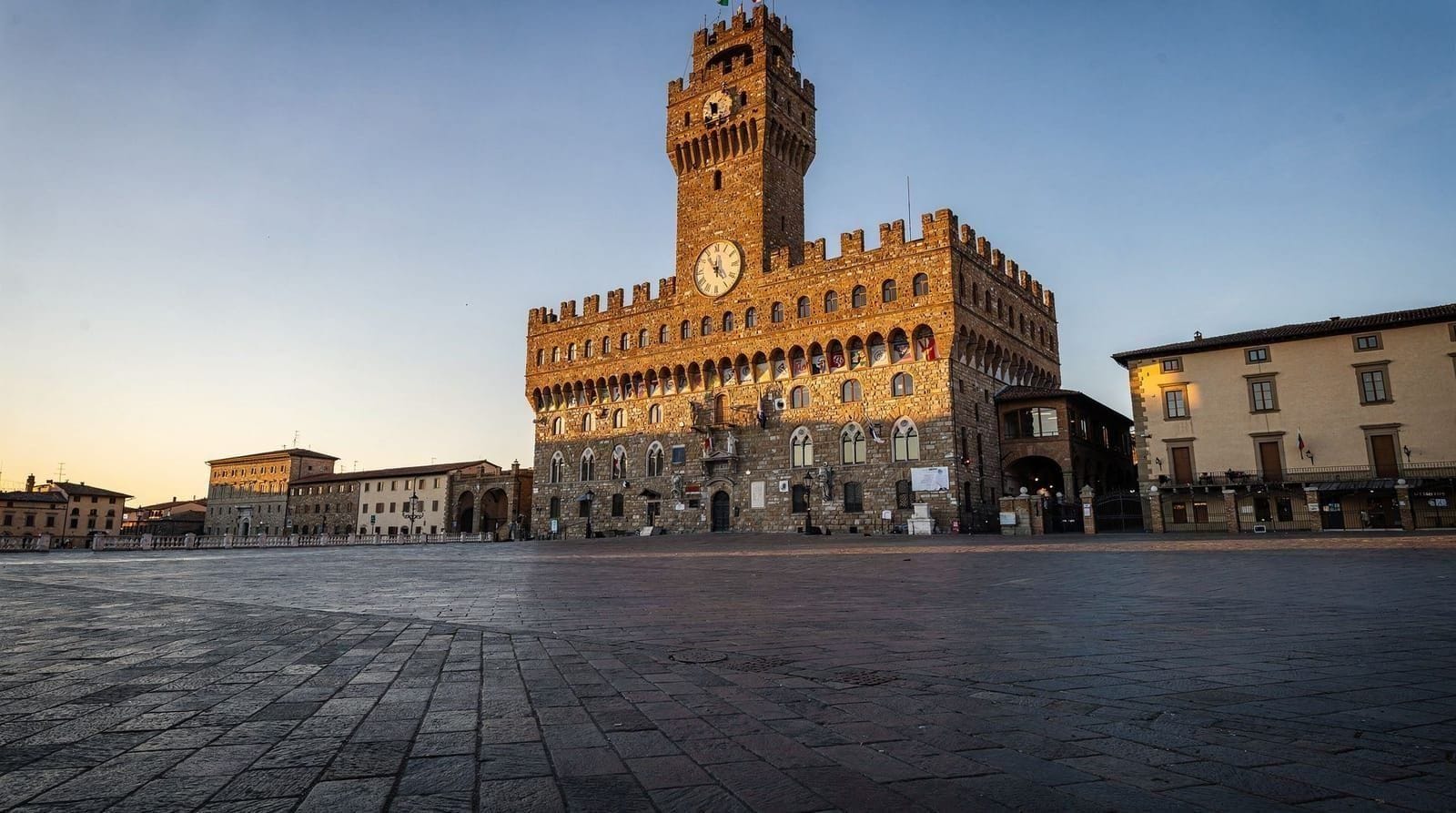
Uffizi Gallery: complete visitor guide
Florence: Uffizi Gallery guided tour with skip-the-line ticket
- Skip the line
- Small group
What is the Uffizi Gallery and how long does a visit take?
The Uffizi Gallery in Florence is one of the world's great art museums, housing the finest collection of Italian Renaissance painting anywhere. A focused visit takes 2–2.5 hours; a thorough visit 3–4 hours. Pre-book timed entry tickets at least 2 weeks ahead in peak season — entry is €20.
| Cost | €20 + €2–5 booking fee |
| Time needed | 2–2.5 hours minimum, 3–4 for a thorough visit |
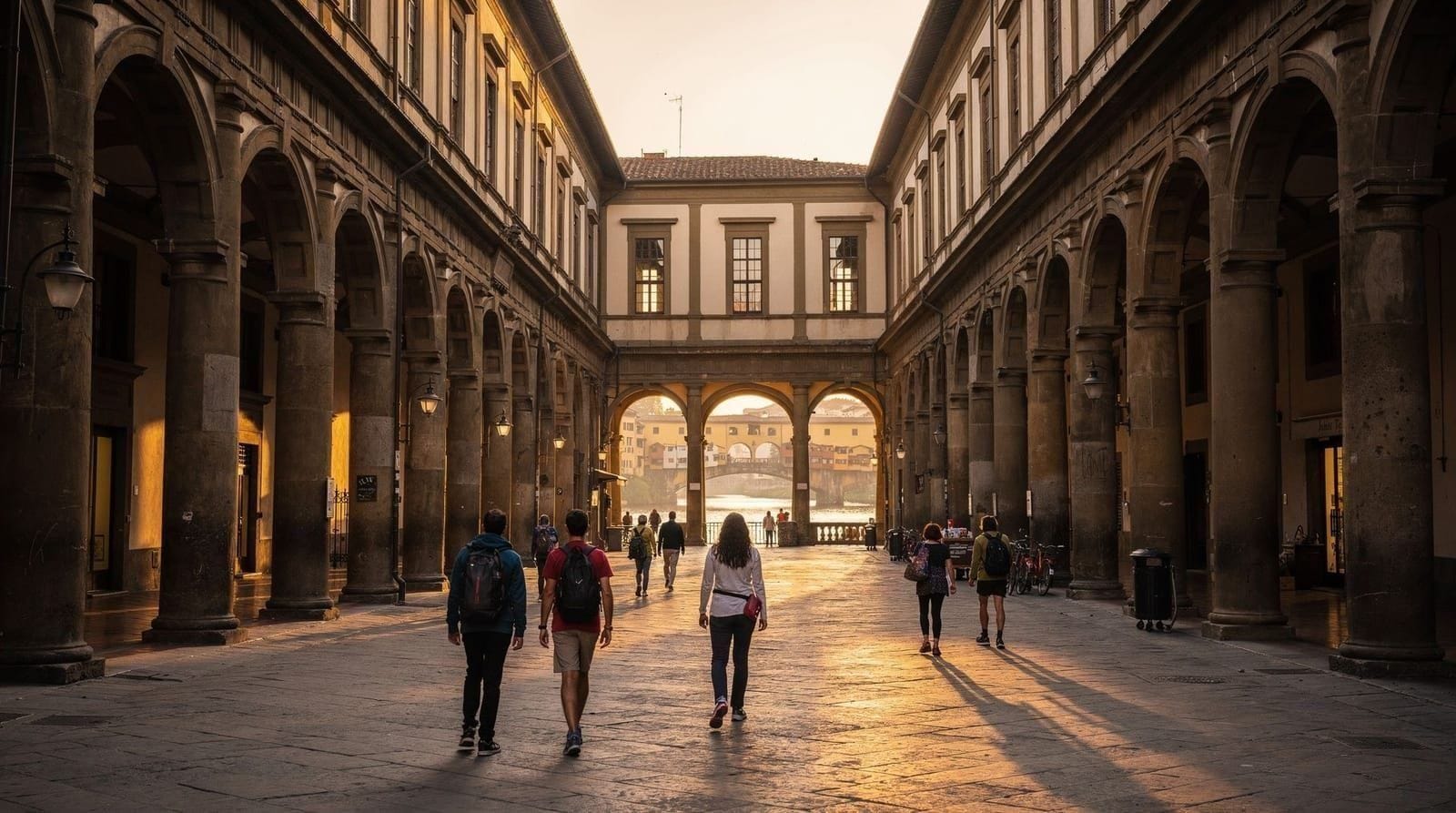
| Where | Piazzale degli Uffizi 6, between Piazza della Signoria and the Arno |
| Best time slot | 8:15am first entry or 4:00–5:00pm |
| Booking window | 2–3 weeks ahead in peak season (May–September) |
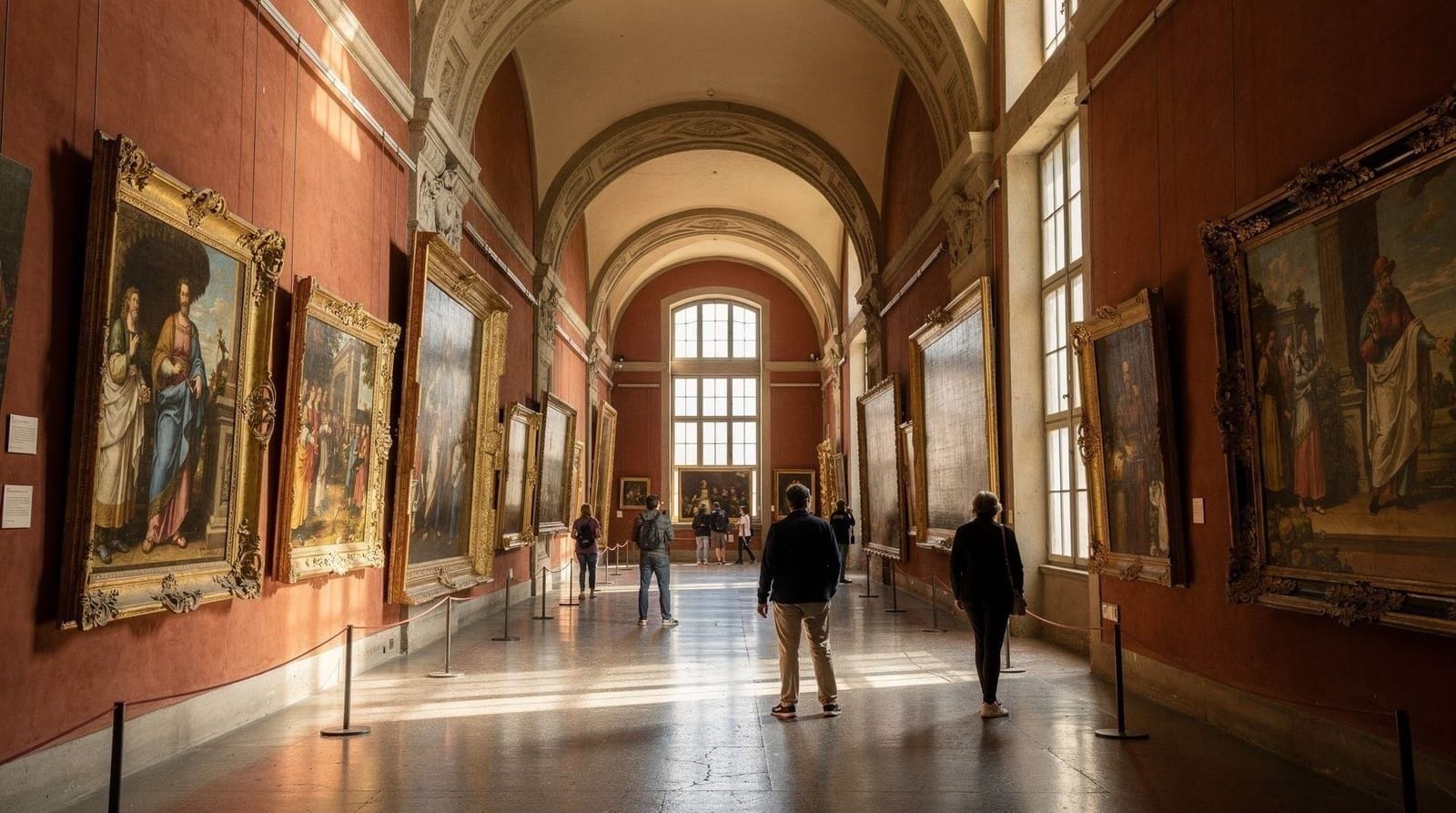
The Galleria degli Uffizi is one of those museums that exceeds its own reputation. Most visitors arrive expecting a tick-box experience — see the Botticelli rooms, photograph the Birth of Venus, move on — and leave several hours later, somewhat shaken by how much more there was. The Uffizi is not just the home of two famous paintings. It is the world’s finest collection of Italian Renaissance art, concentrated in a building whose own history is inseparable from the art inside it.
A brief history of the building and collection
The Uffizi (meaning “offices”) was built by Giorgio Vasari — himself one of history’s great art historians — starting in 1560 for Cosimo I de’ Medici. The ground floor served as administrative offices for the Florentine state; the Medici family’s vast private art collection was displayed on the upper floors, accessible initially only to the family and their guests.
In 1765, the last Medici heir, Anna Maria Luisa, bequeathed the entire collection to the city of Florence on the condition that it never leave the city. This act of extraordinary generosity created what is now the public Galleria degli Uffizi. The museum has been expanded and reorganised over the centuries, but the core collection remains essentially what the Medici assembled over 300 years of passionate patronage.
Before you visit: the practicalities
Tickets: €20 standard entry + €2 booking fee online. Pre-book via uffizi.it or GetYourGuide. Walk-up queue April–October can be 90–120 minutes. Full booking guide: How to book Uffizi Gallery tickets.
Hours: Tuesday–Sunday, 8:15 am – 6:30 pm (last entry 5:30 pm). Closed Mondays.
Time needed: 2–2.5 hours minimum for highlights; 3–4 hours for a thorough visit. The entire collection would take multiple full days.
Location: Piazzale degli Uffizi 6, between Piazza della Signoria and the Arno. 2 minutes’ walk from Piazza della Signoria; 5 minutes from Ponte Vecchio.
Getting there: Walk from anywhere in the historic centre; the museum is deep in the ZTL zone and entirely inaccessible by private car without severe fines. From Santa Maria Novella station: 15 minutes on foot.
Room-by-room guide: the essential highlights
The Uffizi’s 50+ rooms flow in roughly chronological order through Italian art from Byzantine to Baroque. Here are the rooms you should not miss.
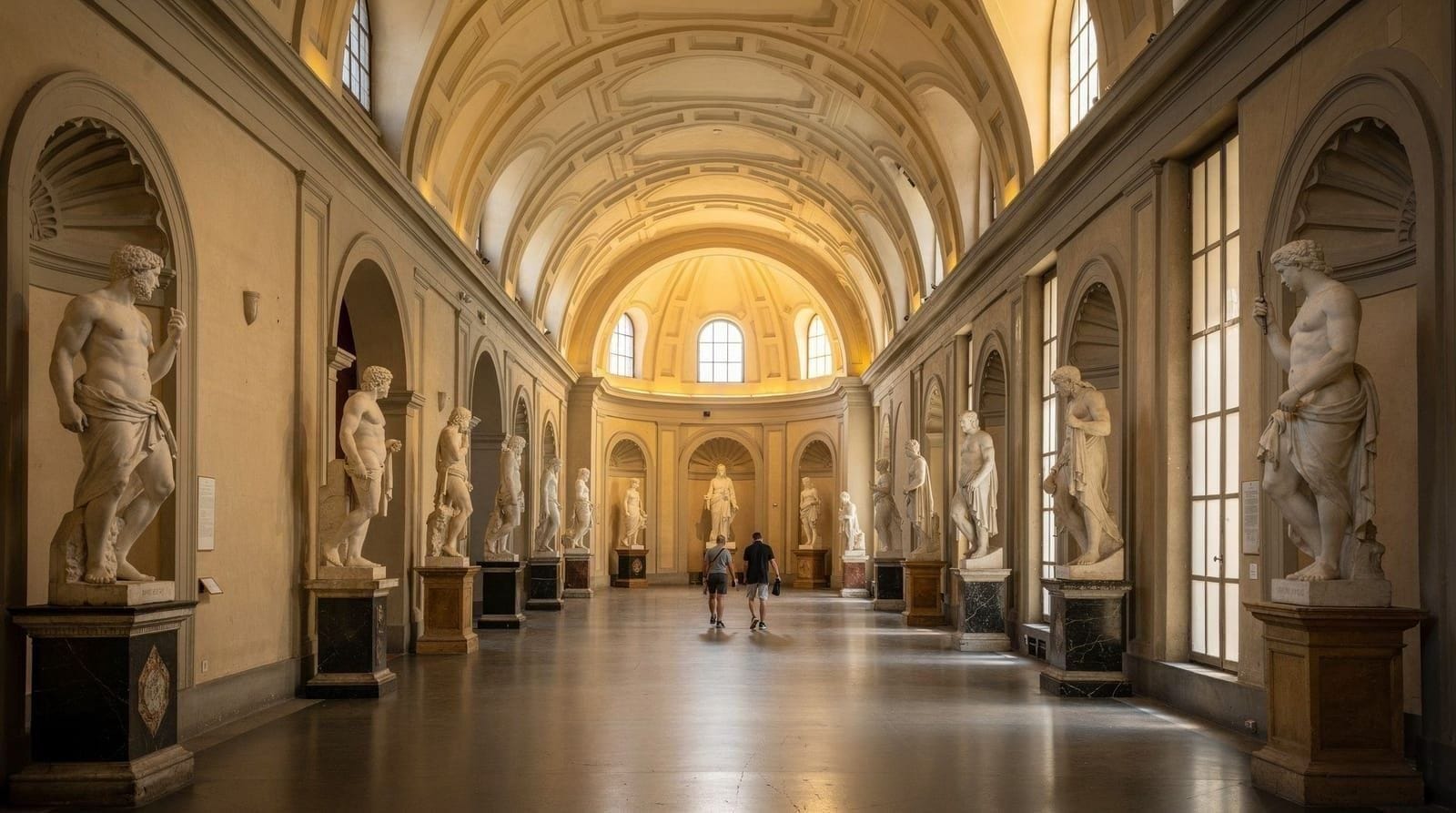
The Niobe Room and the ancient sculpture corridor
The museum’s famous three-sided corridor on the second floor houses one of Europe’s finest collections of ancient Greek and Roman sculpture. Even if your primary interest is Renaissance painting, spend 10 minutes walking the corridor — the sculptures set the context for why Renaissance artists were so obsessed with recreating classical beauty.
Rooms 2–5: Medieval beginnings
Three great altarpieces by Cimabue, Duccio, and Giotto — each representing a different answer to the challenge of making sacred figures feel human — hang facing each other. This room is one of the great dramatic setpieces in all of art history. Giotto’s Madonna (c. 1310) is unmistakably different from the Byzantine convention of his predecessors. Looking at all three together, you can see the exact moment European art began to change.
Rooms 7–9: Early Renaissance
The collection moves through the early 15th century: Fra Angelico, Masaccio, Paolo Uccello’s extraordinary Battle of San Romano (the full-scale perspective experiment in warfare), and Piero della Francesca’s famous double portraits of Federico da Montefeltro and his wife Battista Sforza — the Duke with his distinctive hooked nose is one of the most reproduced profile portraits in Western art.
Rooms 10–14: Botticelli (the real reason most people come)
This is it. The two most famous works in the Uffizi — La Primavera (Spring, c. 1480) and La nascita di Venere (Birth of Venus, c. 1485) — are here, along with other major Botticellis.
A few things worth knowing before you arrive:
The Birth of Venus is larger than most people expect — roughly 1.8 metres high by 2.8 metres wide. The figure of Venus herself is modelled after Simonetta Vespucci, the Florentine beauty who died young and was mourned by the entire city, including Botticelli, who requested to be buried at her feet.
La Primavera is more complex and more debated. Art historians have proposed dozens of interpretations. The most widely accepted reading involves the three Graces, Mercury, Venus, Zephyrus, and the nymph Chloris transforming into Flora. The painting rewards time — the longer you look, the more figures and movements emerge.
Plan to spend at least 20–30 minutes in this section. The Botticelli rooms get very busy between 10 am and 3 pm; if you have an early slot, head here first.
Room 15: Leonardo da Vinci
Two unfinished works by Leonardo — the Annunciation and the Adoration of the Magi — alongside the Baptism of Christ that he worked on with his master Verrocchio (Leonardo reportedly painted the angel on the left, which so outshone the rest that Verrocchio allegedly put down his brush in shame). The Adoration is particularly powerful as an unfinished work — the composition energy is visible without the distraction of finished surface.
Room 25: Michelangelo’s Doni Tondo
The only panel painting by Michelangelo in any museum — and therefore, the only finished easel painting by the artist in existence. The Doni Tondo (c. 1506) is a circular composition (tondo) of the Holy Family. Michelangelo’s muscular figures and the peculiar arrangement of nude male figures in the background have puzzled art historians for centuries. The virtuosity of the technique — the fabric, the flesh, the foreshortening — is simply astonishing.
Rooms 26–28: Raphael and Michelangelo’s contemporaries
Raphael’s Madonna of the Goldfinch sits in room 26 alongside several other key works. Room 28 contains Titian’s Venus of Urbino (1538) — one of the most influential paintings in Western art history, a work so bold in its direct engagement with the viewer that it made every subsequent nude painting either a conversation with it or a deliberate departure from it.
Rooms 34–35: Caravaggio and the Baroque
Several rooms of Caravaggio, including the famous painted shield with Medusa’s severed head (a gift to Cosimo de’ Medici) and Sacrifice of Isaac. The violent intensity of these paintings against the serene Madonnas of the earlier rooms is a genuinely startling transition — 17th-century Italian painting feels like a different world from the 15th century.
Rooms 45–50: Northern European masters
Dürer, Rembrandt, Rubens, and Cranach. Often less visited than the Italian rooms, but the Uffizi’s northern European collection is exceptional, and the contrast between Italian and northern approaches to the same themes (portraiture, mythology, religion) is fascinating.
Practical tips for your visit
Audio guides and tours
The Uffizi’s official app (available free but with paid audio content) covers 50 major works with commentary. A good digital audio guide adds context that significantly enriches the experience, particularly in the Botticelli rooms and for Michelangelo’s Tondo.
Guided tours with a licensed art historian (typically 2–2.5 hours) are available via GetYourGuide and other operators. Small-group tours of 8–15 people offer a good balance between personalised attention and cost. For families with children, a private guide who can pitch the narrative at the right level is highly valuable.
Avoiding the crowds
The most effective strategy: arrive at opening (8:15 am, if you book the first slot) or book an afternoon slot (3:30–5:30 pm). The museum is measurably quieter at both ends of the day.
During your visit, work against the crowd flow. Most visitors turn left (towards Botticelli) immediately on entering the second floor. If you turn right instead and visit the later rooms first, you’ll find them pleasantly quiet while the masses cluster around the Birth of Venus. See Botticelli last — the rooms thin out significantly by late morning.
The terrace café
The Uffizi has a rooftop café (Caffè degli Uffizi, accessible via the museum) with outdoor terrace views over the rooftops towards Piazza della Signoria and the Vasari Corridor. It’s not cheap, but the view makes it the most scenic coffee break in Florence. Plan a 20-minute stop here.
Photography
Photography without flash is permitted throughout the museum. Tripods are not allowed. If you want a clean shot of the Birth of Venus without other visitors in frame, arrive at the first entry slot — by 9 am on a summer day, the Botticelli rooms are significantly crowded.
Planning multiple visits
The Uffizi’s collection is large enough that a single visit covers only the highlights. Regular visitors to Florence — or art enthusiasts who want to go deeper — often plan multiple visits:
- Visit 1: Medieval rooms through Botticelli and Leonardo (Rooms 2–16)
- Visit 2: High Renaissance through Mannerism (Rooms 17–33)
- Visit 3: Baroque, northern European, and self-portrait collection (Rooms 34–50 + Vasari Corridor if available)
The first visit priority is clear: Giotto/Cimabue, Botticelli, Leonardo, Michelangelo, Raphael, Titian, Caravaggio.
The Vasari Corridor
The Corridoio Vasariano — a private elevated passageway connecting the Uffizi to Palazzo Pitti across the Ponte Vecchio — houses an extraordinary collection of artists’ self-portraits accumulated by the Medici over centuries. The Corridor was closed for many years for renovation. Check current status at uffizi.it; when open, separate tickets or guided tours are required.
The physical experience of walking through this secret overhead passage — suspended above the Arno, passing through the upper level of the medieval Ponte Vecchio — is among the most atmospheric things to do in Florence.
After the Uffizi
The Uffizi’s location between Piazza della Signoria and the Arno makes it easy to combine with several other key sites:
- Piazza della Signoria: 2 minutes’ walk — the outdoor sculpture gallery with Michelangelo’s David (copy) and the original Loggia dei Lanzi
- Palazzo Vecchio: entrance on the piazza — Florence’s fortified town hall, open for visits
- Ponte Vecchio: 5 minutes’ walk towards the Arno — the medieval bridge with goldsmiths’ shops
- Oltrarno: cross Ponte Vecchio for lunch in the artisan district away from tourist crowds
Related guides
- How to book Uffizi Gallery tickets
- Accademia Gallery: complete visitor guide
- Best Florence combo tickets
- Palazzo Vecchio visitor guide
- Bargello Museum guide
Frequently asked questions about the Uffizi Gallery
How is the Uffizi Gallery organised?
The permanent collection is arranged chronologically across three floors, starting with Byzantine and medieval art on the second floor (piano nobile) and progressing through Renaissance, Mannerist, and Baroque periods. The collection ends with 17th–18th century Italian and northern European masters. A separate floor displays self-portraits from the Medici collection.
Can I store luggage at the Uffizi?
The Uffizi has a free cloakroom for bags, backpacks, and coats. You cannot enter the gallery with a bag larger than approximately 30x30 cm. Rolling suitcases and large backpacks must be checked. There is no left-luggage service for very large items — if you’re coming directly from your hotel, store luggage there first.
Is there an Uffizi restaurant or café?
Yes — the Caffè degli Uffizi is on the rooftop with an outdoor terrace. Access is via the museum (you don’t need to exit and re-enter). Menu includes coffee, pastries, light lunches, and drinks. Prices are above average but the location is exceptional. There is also a small ground-floor café near the museum entrance.
How often does the Uffizi rotate its collection?
The permanent collection is largely stable year to year. Works occasionally go on loan to international exhibitions or into conservation. The Vasari Corridor self-portrait collection has had its own rotation history. Temporary exhibitions happen in dedicated spaces and require separate or additional tickets.
Can I re-enter the Uffizi with the same ticket?
No. The timed entry ticket is for a single visit. If you exit the museum, you cannot re-enter on the same ticket. If you want to have lunch and return, you would need a new ticket (subject to availability). Plan your visit as a single continuous block of time.
The Uffizi and its collection: a broader cultural context
The Uffizi is the most visited museum in Italy and one of the most visited in the world. The numbers are extraordinary — well over 4 million visitors annually before the pandemic, recovering toward that level again. Understanding why people travel from every country on earth to stand in front of Botticelli’s Birth of Venus requires engaging with a question about the nature of cultural heritage.
The Medici collection was assembled with deliberate, systematic intelligence over more than a century. Cosimo de’ Medici the Elder began collecting antiquities and commissioning contemporary art in the mid-15th century. Lorenzo the Magnificent expanded the collection dramatically, acquiring Flemish and northern Italian works alongside the Florentine core. His heirs continued through the 16th and 17th centuries, adding Raphael, Titian, Caravaggio, Rembrandt, and Rubens. Anna Maria Luisa’s extraordinary bequest of 1737 — the condition that nothing should ever leave Florence — preserved the coherence of this collection that might otherwise have been dispersed across Europe’s royal collections.
The result is a collection that was assembled within a single aesthetic and intellectual tradition (the Medici’s humanist ideal of universal knowledge through art and ancient learning) rather than built through competitive acquisition across multiple collecting traditions. This gives the Uffizi a different quality from the Louvre (which collects everything) or the Metropolitan (which collects globally): it is intensely focused on a specific argument about the relationship between ancient and Renaissance art, played out across 700 years of Western painting.
For visitors with limited art history background, the most useful thing to remember is this: the Uffizi is not just a repository of famous paintings. It is an argument, assembled by one of the most ambitious families in history, about what painting can do and what it means.
The Uffizi and tourism management
The Uffizi’s management faces a genuine dilemma familiar to all heavily-visited cultural institutions: how do you give 4+ million people a meaningful experience of works that require stillness, attention, and time?
The timed entry system, introduced gradually and made mandatory, is the primary tool. By controlling how many people enter each 15-minute window, the museum prevents the worst bottlenecks. But the museum is still crowded by any normal standard at peak times — room 10–14 (Botticelli) on a July Saturday morning has dozens of people at any moment.
A few honest observations on crowding:
The Botticelli rooms are always the most crowded. If you can see the Birth of Venus and Primavera at 8:20 am (arriving for the first slot), you’ll have a different experience from seeing them at 11:30 am. This is not a marketing claim — it is a straightforward consequence of how visitor flow works.
Guided tours, paradoxically, can provide more focused access in crowded conditions. A guide who has spent years working in these rooms knows exactly where to stand to see the works without other visitors in the way, which angle the light is best from, and how to use the moments when the crowd momentarily thins.
The Uffizi is working on various crowd dispersal initiatives: promoting earlier and later entry slots, improving wayfinding to distribute visitors across the full collection rather than concentrating in the famous rooms, and occasionally running pre-opening events for small premium groups. These are incremental improvements to a structural problem that the museum’s own success has created.
For you, the practical takeaway is simple: book the first available morning slot, arrive exactly on time, turn right (away from the Botticelli crowd) when you enter the second floor, and work backward to the famous rooms when the morning rush has thinned.
Top experiences
Bookable activities with verified prices and instant confirmation on GetYourGuide.

Florence: Uffizi Gallery skip-the-line tickets
- Skip the line
- Free cancellation
Florence: Uffizi skip-the-line ticket with digital audio guide
- Skip the line
- Mobile ticket
Florence: Uffizi Gallery VIP guided tour
- Skip the line
- Small group
Florence: Uffizi and Accademia Gallery skip-the-line ticket
- Skip the line
- Free cancellation
Florence: Uffizi Gallery skip-the-line monolingual tour
- Skip the line
- Free cancellation
Florence: Uffizi and Vasari Corridor reserved ticket with audio app
- Skip the line
- Mobile ticket