Florence to Rome by train — tickets, times and tips
How long is the train from Florence to Rome?
The fastest Frecciarossa and Italo high-speed trains take 1 hour 30 minutes from Florence Santa Maria Novella to Roma Termini. Standard regional trains take 3–4 hours and are not recommended. Book in advance for prices from €19.
Florence to Rome by high-speed train — the basics
The Florence–Rome rail corridor is one of the busiest in Italy and one of the most efficient in Europe. Two private operators — Trenitalia (Frecciarossa) and Italo — run high-speed services throughout the day on tracks that carry these trains at up to 300 km/h.
The journey covers roughly 280 km and takes 1 hour 30 minutes on the fastest non-stop services. That is faster than flying once you account for airport check-in, security, boarding and the journey from Rome’s Fiumicino airport into the centre.
| Where from | Firenze Santa Maria Novella (SMN) |
| Journey time | 1h30 fastest, up to 1h35 with stops |
| Cost | €19–120 depending on class and booking window |
| Operators | Frecciarossa (Trenitalia) and Italo |
| Book by | 4–8 weeks ahead for the best fares |
Timetable overview
High-speed trains run between Florence SMN and Roma Termini approximately every 30–60 minutes throughout the day, from early morning to late evening.
Typical daily schedule
| Departure (SMN) | Arrival (Roma Termini) | Operator | Journey time |
|---|---|---|---|
| 06:05 | 07:35 | Frecciarossa | 1h30 |
| 06:55 | 08:25 | Italo | 1h30 |
| 07:20 | 08:55 | Frecciarossa | 1h35 |
| 08:00 | 09:30 | Italo | 1h30 |
| 09:00 | 10:30 | Frecciarossa | 1h30 |
| 10:00 | 11:30 | Italo | 1h30 |
| 11:00 | 12:30 | Frecciarossa | 1h30 |
| … | … | Both | Every 30–60 min |
| 21:05 | 22:35 | Frecciarossa | 1h30 |
| 22:00 | 23:30 | Italo | 1h30 |
Check trenitalia.com and italotreno.it for live timetables — these change by season and special service days.
Booking and pricing
Frecciarossa (Trenitalia)
Book at trenitalia.com or the Trenitalia app. The price classes:
| Class | Name | Includes | Typical price |
|---|---|---|---|
| Economy | Standard | Seat, limited luggage | €19–35 |
| Standard | Standard | Standard seat, food service access | €25–55 |
| Business | Business | Wider seats, meal included | €50–80 |
| Executive | Executive | Armchair seats, full meal | €80–120 |
Standard economy (the lowest price) is perfectly comfortable for a 90-minute journey. It has no free cancellation — upgrade to the SuperEconomy or Base fare if you need flexibility.
Italo
Book at italotreno.it or the Italo app. Fare classes:
| Class | Name | Typical price |
|---|---|---|
| Smart | Economy | €19–40 |
| Prima | Business | €45–75 |
| Club | Premium | €80–110 |
Italo’s Smart class is equivalent to Trenitalia’s standard economy. Comfort is comparable — seat width and spacing are similar.
When to book
| Booking window | Typical price range (one way) |
|---|---|
| 3–4 months ahead | €19–29 |
| 4–8 weeks ahead | €25–39 |
| 1–2 weeks ahead | €35–55 |
| Day of travel | €45–80+ |
| School holidays and August | Add €10–20 to all above |
Book as early as possible if you have fixed travel dates. Both operators release the cheapest seats first and they sell out quickly, especially for the most convenient morning and early afternoon departures.
Which operator to choose?
The honest answer is: whichever is cheaper on your specific date and time. Both trains are modern, comfortable, punctual and fast.
| Factor | Frecciarossa | Italo |
|---|---|---|
| Trains per day | More frequent | Slightly fewer |
| On-time performance | Very good | Very good |
| Onboard food | Bar car, table service in upper classes | Café bar, table service in Prima |
| Wi-Fi | Free on board | Free on board |
| Power sockets | Yes, at seats | Yes, at seats |
| Loyalty scheme | CartaFreccia | Italo Più |
| App quality | Good | Good |
If you have a Trenitalia loyalty card or have used Trenitalia for regional trains already, sticking with Trenitalia/Frecciarossa has some convenience. Otherwise, compare prices on both sites before booking.
Stations: Florence Santa Maria Novella (SMN)
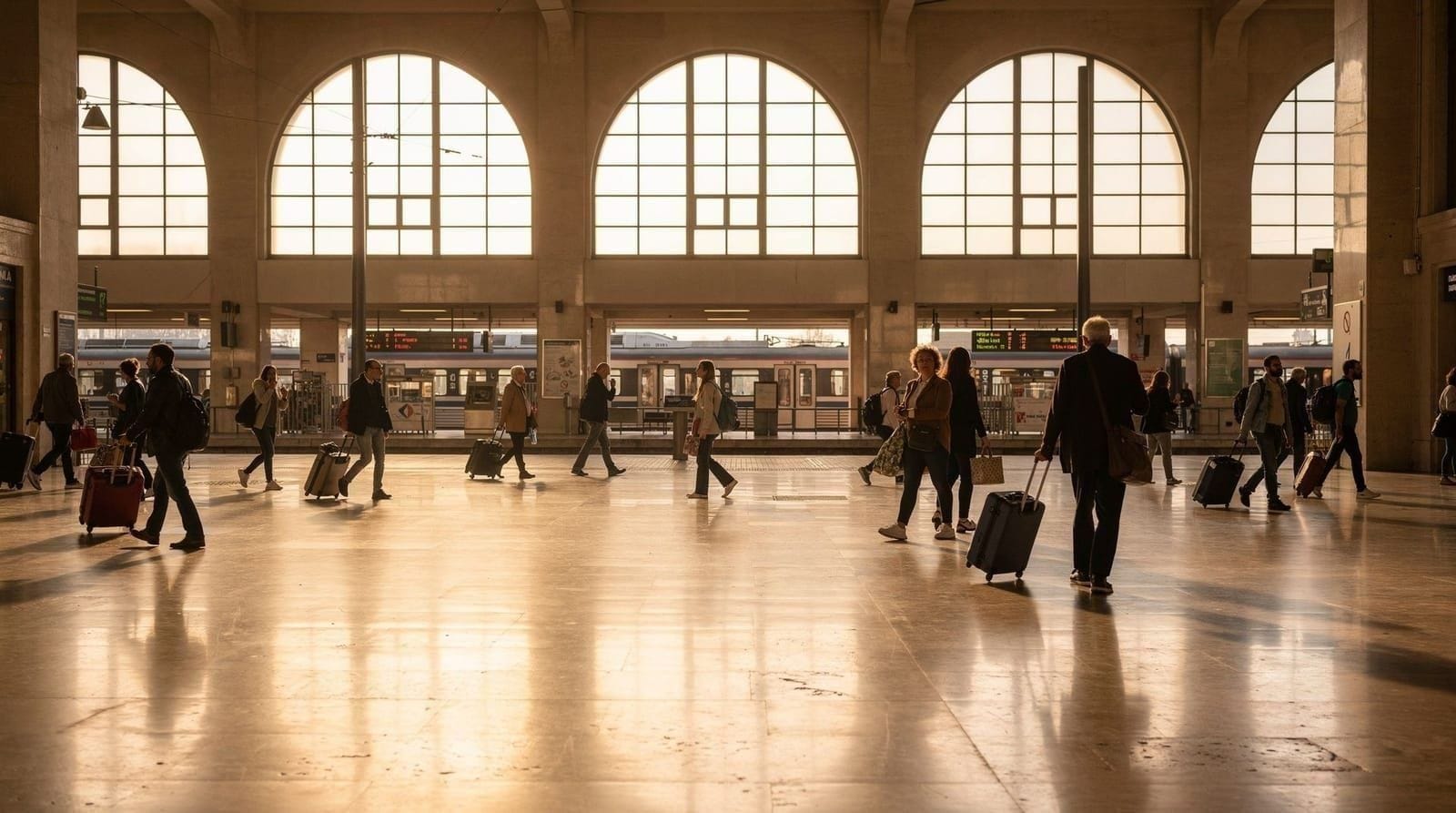
All high-speed Rome trains depart from Firenze Santa Maria Novella (station code: FI SMN). This is the main Florence station, centrally located 18 minutes by tram from the airport.
At SMN before your train
- Departure boards: large screens show platform numbers about 15 minutes before departure — do not go to the platform before the number appears
- Luggage storage (KiPoint): available at the station, open approximately 06:00–23:00, €6–8 per item per day
- Left luggage lockers: a few automated lockers near the main exit
- Dining: multiple bars and restaurants inside the station — the La Vecchia Bettola near platform 16 is worth a stop for a quick panino
- Toilets: available but require a €0.80 coin
Getting to SMN from the centre
- Walking from Duomo: 18 minutes
- Tram T2 from airport: 18 minutes (terminates at SMN)
- Taxi from most central hotels: €8–12
Arrive at SMN at least 20–25 minutes before high-speed train departure. Unlike regional trains, Frecciarossa and Italo close the platform doors 3 minutes before departure. For the full picture of SMN and Florence’s other station, see the Florence train stations guide, and for getting to SMN from wherever you’re staying, getting around Florence covers the tram, bus and walking options in detail.
Stations: Roma Termini
All Florence high-speed trains arrive at Roma Termini — Rome’s main station, located in the Esquilino neighbourhood. From Termini:
| Destination | Transport | Time | Cost |
|---|---|---|---|
| Colosseum | Metro B, then A → Colosseo | 20 min | €1.50 |
| Vatican | Metro A → Ottaviano | 15 min | €1.50 |
| Spanish Steps | Metro A → Spagna | 12 min | €1.50 |
| Trastevere | Tram 8 | 25 min | €1.50 |
Termini has good metro, bus and taxi connections. Allow 45–60 minutes to reach most central Rome hotels from Termini.
Florence to Rome as a day trip
Is Rome doable as a day trip from Florence? Technically yes, but barely. The earliest train is around 06:00–06:30, giving you arrival in Rome by 08:00. The last practical return is around 21:00–22:00, arriving in Florence around 23:00.
A day trip to Rome gives you 12–13 hours in the city. This is enough to see the Colosseum, Forum, and one other major site (Vatican or Borghese Gallery). It is exhausting and not recommended if you want to enjoy rather than tick boxes.
Rome rewards at least 2 nights. If you are based in Florence and Rome interests you, consider a 2-night detour mid-trip rather than a day trip. It’s a genuinely different city rhythm from Florence’s compact centre, and rushing it back-to-back with the rest of a Tuscany trip tends to blur both experiences together rather than let either land properly.
Combining the Rome trip with the rest of your Florence stay
If Rome is one stop among several, plan it so it doesn’t compress your Florence and Tuscany time. Visitors who also want a Tuscan countryside day — Chianti, Siena — are usually better served bookending the Rome leg at the start or end of the trip rather than squeezing both into the same week. If you’re arriving in Italy via Florence Airport, it’s worth checking whether flying into Rome and training up to Florence (or the reverse) saves a leg entirely, rather than treating Florence and Rome as two separate round trips.
Other train routes from Florence
| Destination | Departure station | Journey time | Notes |
|---|---|---|---|
| Venice Santa Lucia | SMN | 2h (Frecciarossa) | Hourly |
| Bologna Centrale | SMN | 40 min (Frecciarossa) | Very frequent |
| Milan Centrale | SMN | 1h45 (Frecciarossa) | 1–2 per hour |
| Pisa Centrale | SMN | 1h (regional) | See Pisa airport guide |
| Siena | SMN | 1h30 (regional) | Bus is often better |
| Cinque Terre | SMN | 2h30 (regional, via La Spezia) | See Cinque Terre guide |
Practical tips for the Florence–Rome journey
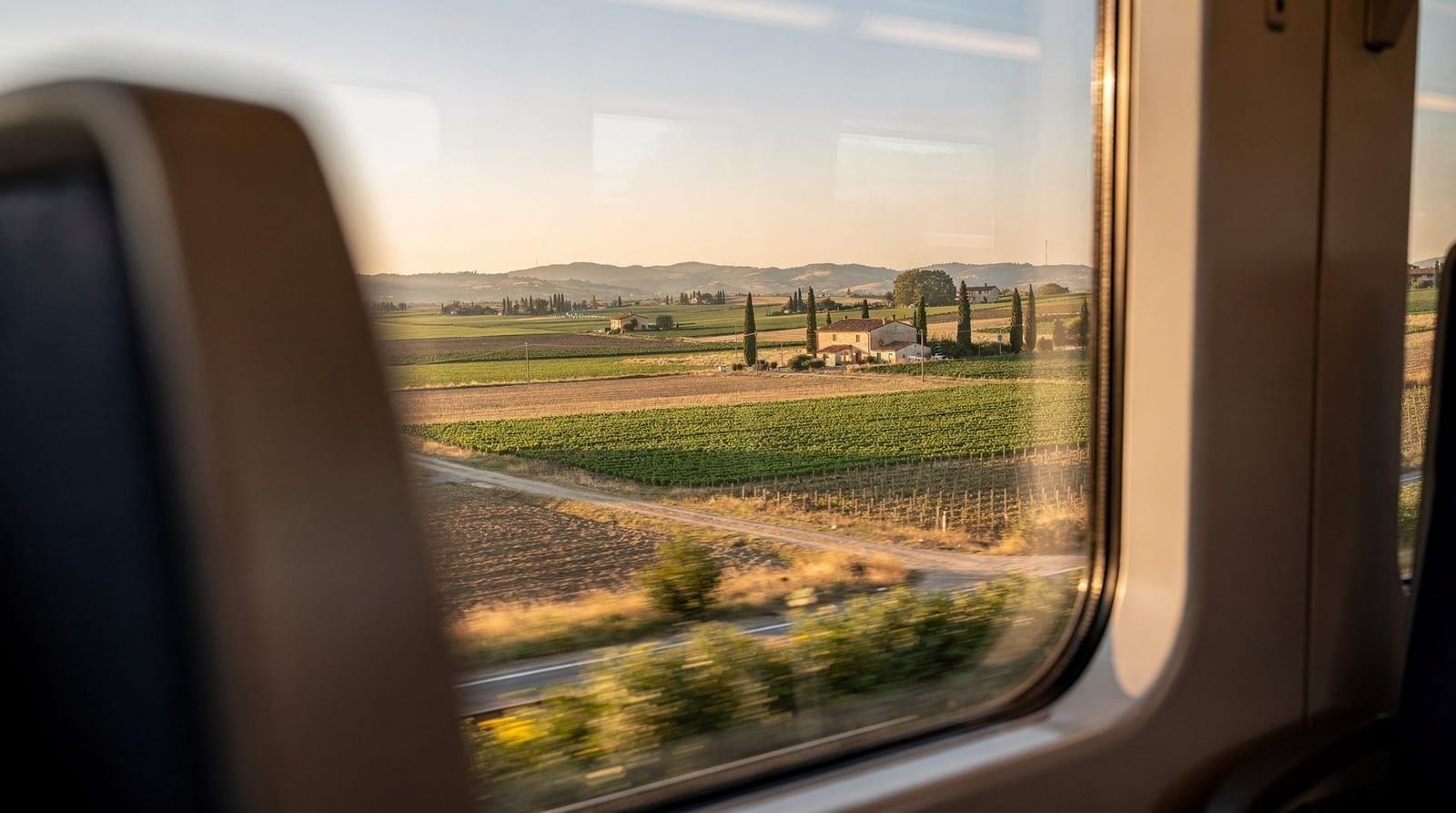
- Seat selection: both Frecciarossa and Italo allow seat selection at booking. Window seats on the right side (when travelling south to Rome) give views of the Apennine hills. The train travels through tunnels for parts of this route.
- Luggage: overhead racks and end-of-carriage luggage areas are available. There is no checked luggage service. Maximum common sense applies: if you can lift it onto an overhead rack, it is fine.
- Food: carry snacks if you are particular. Onboard bar cars are available but pricey. Standard class has table service in some carriages on the Frecciarossa.
- Tickets: have your ticket ready on your phone or printed. Inspectors check tickets shortly after departure. QR codes on the Trenitalia or Italo app work perfectly.
- Validate?: high-speed tickets do not need to be validated at a stamp machine — the booking is tied to your specific train. Regional train tickets do need validating.
Baggage, travel cards and practical booking tips
Interrail and Eurail pass holders
If you are travelling Italy on an Interrail (EU citizens) or Eurail (non-EU) pass, the Florence–Rome route requires a reservation supplement on Frecciarossa and Italo trains:
- Frecciarossa reservation: €10 (economy class)
- Italo reservation: not covered by Interrail/Eurail — buy a separate Italo ticket
You cannot simply board a high-speed train with a rail pass without a reservation. Book the reservation at any Trenitalia ticket desk or at trenitalia.com. Rail passes cover regional trains without supplements, but the 3+ hour regional journey Florence–Rome is not practical.
Luggage on the Florence–Rome train
There is no checked luggage service on Italian high-speed trains. Luggage goes in:
- Overhead racks (above your seat): suitable for standard cabin bags up to approximately 55x35x25cm
- End-of-carriage luggage areas (at each end of the carriage): for larger suitcases. First-come, first-served basis.
There is no size or weight limit stated in official Trenitalia policy, but practically speaking, if you cannot lift your bag onto the overhead rack or fit it in the end-area, you will have difficulty. One large wheeled suitcase per person is manageable.
No advance luggage registration or labelling is required.
Trenitalia loyalty programme (CartaFreccia)
If you travel Italy regularly by Trenitalia, register for the free CartaFreccia card. Points accumulate on every purchase:
- Bronze level: free, earns 1 point per €1 spent
- Silver/Gold: tiered based on annual spending
- Points can be redeemed for free tickets or upgrades
The card is worth having for any visit involving multiple train journeys within Italy. Register at trenitalia.com before you travel — the card number is attached to your account and you do not need a physical card.
Italo loyalty programme (Italo Più)
Italo’s equivalent is Italo Più. Similar structure to CartaFreccia — earn points and redeem for future travel. If you plan to use Italo primarily during your trip, sign up before purchasing tickets. Neither loyalty scheme is worth joining purely for a single Florence–Rome leg; they pay off over multiple journeys within Italy, so weigh that against how much rail travel the rest of your trip actually involves.
Florence to Rome via scenic alternatives
The high-speed route via the dedicated AV (Alta Velocità) track through the Apennines is fast but largely underground and through tunnels for the central portion. Some travellers prefer the scenic “slow” coastal or inland alternatives:
Via the Tuscan coast (IC on the Tirrenica line)
Older intercity trains on the coastal Tirrenica line travel Florence → Pisa → Livorno → Grosseto → Rome via the Tyrrhenian coast. Journey time is approximately 3.5–4 hours but the scenery — Maremma coast, Argentario headland, the approach to Rome via Lazio — is genuinely beautiful.
Practical: these are not premium trains, but clean and comfortable. Cost is approximately €20–30. Frequency is limited — 2–3 per day. Good for travellers with time to spare.
Via Arezzo and Perugia (diversion through Umbria)
There is no direct train on this route — you would change at Terontola for Perugia, then continue separately. More of a multi-destination tour than a Florence–Rome transit. Not recommended for a simple transfer.
Travelling with children or reduced mobility
Both Frecciarossa and Italo trains are step-free from platform to carriage at most stations, including SMN and Termini, making the route genuinely manageable with pushchairs or for travellers with reduced mobility — a meaningful advantage over flying, where security and boarding add friction. Book assistance in advance through Trenitalia’s Sala Blu service or Italo’s equivalent if you need boarding help; standard staff assistance at both SMN and Termini is reliable if arranged ahead rather than requested on the day. For families, the 90-minute journey is short enough that most children manage without much entertainment planning, and both operators’ apps show real-time delay information if plans need to flex.
Getting around Rome on arrival at Termini
After the 90-minute journey, Roma Termini is your arrival point. The station is central and well connected:
| Transport | Route | Time | Cost |
|---|---|---|---|
| Metro Line A | Termini → Spagna (Spanish Steps) | 12 min | €1.50 |
| Metro Line A | Termini → Ottaviano (Vatican) | 15 min | €1.50 |
| Metro Line B | Termini → Colosseo (Colosseum) | 3 stops | €1.50 |
| Taxi | Termini → most central addresses | 15–30 min | €12–20 |
| Bus 40 | Termini → Vatican via Largo Argentina | 30–40 min | €1.50 |
Rome’s Metro: unlike Florence (which has no metro), Rome has two metro lines (A and B) crossing at Termini. The system is straightforward and connects to most major tourist areas. Single tickets are €1.50, valid 100 minutes.
Rome taxis: official white taxis queue outside both the Piazza dei Cinquecento exit and the Via Marsala exit at Termini. There are fixed rates for common routes (€48 to Fiumicino airport, for example). For hotels in the historic centre, metered fares of €12–20 are typical.
Onward from Rome to other destinations: Termini is also the hub for trains south to Naples (1h10 by Frecciarossa) and onward toward the Amalfi Coast, if Rome is a stopover rather than the end point of the trip. Check both operators’ timetables together, since neither shows the other’s full schedule by default, and the cheapest option for a specific date sometimes differs between them by a wide margin.
Frequently asked questions about Florence to Rome by train
Is it faster to fly from Florence to Rome?
For most travellers, no. A flight is theoretically shorter in the air (45 min) but when you add airport transfers, check-in, security, boarding, baggage claim and the journey from Fiumicino airport into central Rome (30–45 min), the total door-to-door time is typically 3.5–4.5 hours. The train from central Florence to Roma Termini takes 1h30 and is city-centre to city-centre.
Can I board the Florence to Rome train with only a mobile ticket?
Yes. Both Trenitalia and Italo accept mobile tickets (QR codes) from their apps. The inspector scans your phone. Ensure your screen brightness is turned up and your ticket is open before the inspector reaches you.
What if my high-speed train is delayed?
Frecciarossa and Italo have good on-time records — typically over 85% arrive on time or within 5 minutes. Significant delays (over 60 minutes) entitle you to partial refunds under EU rail regulations. Both apps have a refund process.
Is there a cheaper overnight train option?
There is no regular overnight train between Florence and Rome. The journey is too short for sleeper services — the standard high-speed service is the only practical option.
Can I buy tickets at the SMN station on the day?
Yes — ticket machines and ticket windows at SMN sell same-day tickets. However, for morning trains in summer, popular departure times may be fully booked. Same-day purchase costs more than advance booking.
Are there left luggage facilities at Roma Termini?
Yes — KiPoint operates at Roma Termini. Prices are similar to Florence SMN (€6–8 per item per day). There are also automated lockers near the station exits.
Should I book Florence to Rome as part of a longer Italy trip?
If your itinerary already includes Venice, Milan or Bologna, it’s often cheaper and simpler to book each high-speed leg separately rather than search for a multi-city pass — Italy’s high-speed network doesn’t have a strong discount for combined bookings the way some rail passes suggest. Compare the other train routes from Florence table above and book each leg 4–8 weeks ahead for the best fares.