Pisa day trip from Florence
Pisa: timed entry leaning tower and cathedral tickets
- Skip the line
- Instant confirmation
How do I get from Florence to Pisa and back?
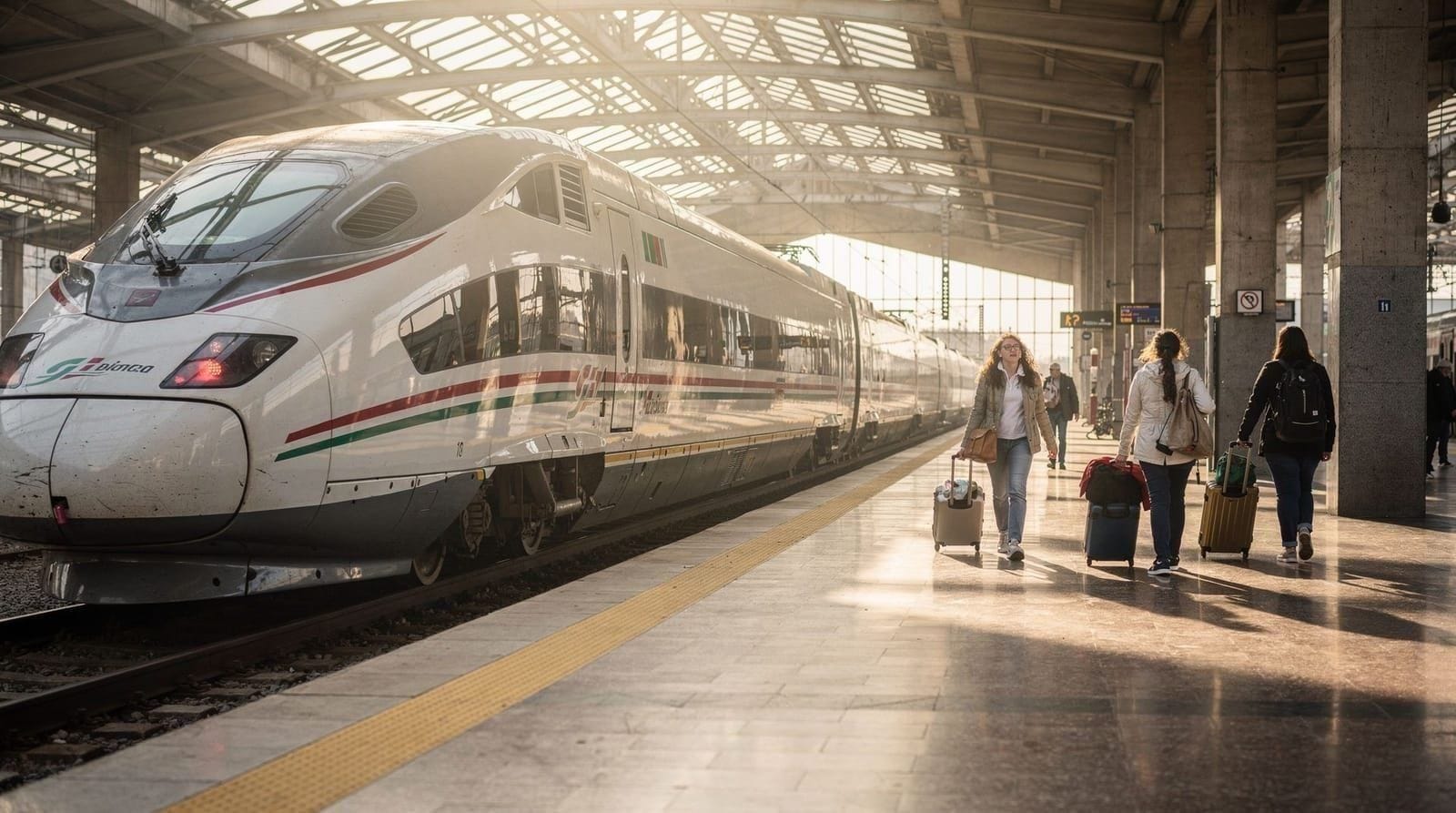
Regional trains leave Santa Maria Novella every 20–30 minutes; journey time is 55–70 minutes depending on service. Return fares cost €18–28. No reservation needed — just buy at the machine on the day, or book online to lock in the price.
Pisa is one of Tuscany’s easiest and most rewarding day trips from Florence — a short train ride away, genuinely famous for a good reason, and quiet again the moment you step off the Piazza dei Miracoli. This guide covers the practical logistics and what’s worth your time beyond the tower photo.
| Where | 55–75 min by train from Florence Santa Maria Novella |
| Cost | €18–28 return train; tower + cathedral ticket around €15 |
| Time needed | Half day (4–5h) minimum; full day (7–8h) to see it properly |
| Getting there | Regional/Intercity Trenitalia, every 20–30 min |
| Booking | Tower climb must be booked ahead online; train tickets buyable same day |
Getting from Florence to Pisa
The train is the obvious choice, and it works well. From Santa Maria Novella (SMN) station, Trenitalia regional services run throughout the day to Pisa Centrale. The journey on a Regionale Veloce or Intercity takes about 55 minutes; slower Regionale trains stop at more stations and take up to 75 minutes. If you’re arriving into Tuscany via Pisa’s airport rather than starting from Florence, the logistics are slightly different — see the Pisa airport to Florence guide for that route instead.
Train schedule and fares
| Service type | Journey time | Frequency | One-way fare |
|---|---|---|---|
| Regionale Veloce | 55–60 min | Every 30 min | €8.90–10.90 |
| Regionale | 65–75 min | Every 30–60 min | €8.90 |
| Intercity | 55 min | Less frequent | €12–15 |
No seat reservation is needed for regional services. Buy at the SMN ticket machines (faster, multiple languages) or at a Trenitalia window. Validate your ticket in the yellow machine on the platform before boarding or you risk a fine.
First useful departure: From SMN around 6:15am (Regionale), with major services starting from 7:00am. Last return from Pisa: Services run until around 11pm. Recommended departure from Florence: 8:00–8:30am to arrive at the Piazza dei Miracoli by 9:30am.
Pisa Centrale station is about 2km south of the Piazza dei Miracoli. Walk straight up Via Francesco Crispi and Via Santa Maria (25 minutes, well-signposted), take a taxi (€6–8 from the rank outside the station), or hop on bus LAM Rossa (€1.50, 10 minutes).
The Piazza dei Miracoli — what you’re here for
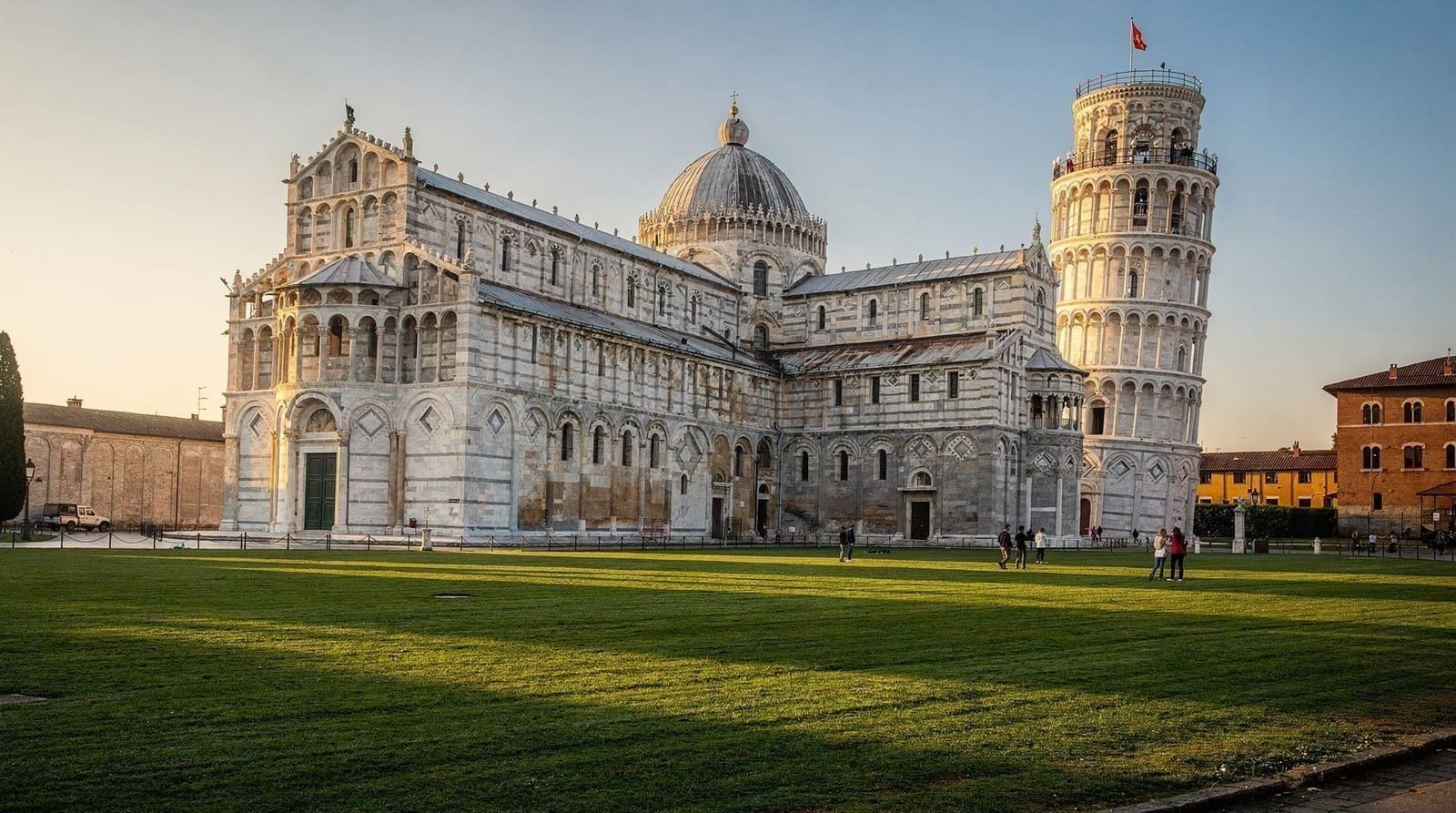
The Piazza dei Miracoli (officially Piazza del Duomo) is genuinely extraordinary. Four major monuments stand on a carpet of grass that contrasts with the white marble in a way that no photograph quite captures.
The Leaning Tower (Torre Pendente)
The tower leans because the soil beneath the southern side is softer than the northern side — construction began in 1173 and the lean became apparent early. The current lean is about 3.97 degrees (reduced from 5.5 degrees after engineering work between 1993 and 2001). Climbing the 294 steps to the top rewards you with views over Pisa’s rooftops and out toward the sea.
Tickets: Tower + Cathedral entry costs €15. Tower-only tickets are not available; the Cathedral is included. Baptistery costs €5 separately; Camposanto €5; Museo dell’Opera costs €5. A combined ticket covering all monuments costs €27 but does not include tower climbing. Tower climbing tickets must be booked in advance via the Opera della Primaziale Monumentale website — you cannot buy climbing tickets on the day at the ticket office.
Opening hours: The tower opens at 9:00am. Last entry varies by season — 6pm in winter, 8pm in peak summer. Tower visits are in guided groups of 30 with 30-minute slots.
The obligatory photo: The famous forced-perspective “pushing the tower” photos are taken from a specific spot outside the ticket office area. You’ll see exactly where from the dozens of people doing it.
The Cathedral (Duomo di Santa Maria Assunta)
The Cathedral is the oldest and arguably most impressive building on the square, begun in 1064. The facade is five tiers of blind arcading in white and grey marble. Inside, the scale is enormous and the gilded ceiling, Giovanni Pisano’s pulpit, and the Galileo Lamp (the chandelier whose swinging supposedly inspired Galileo’s pendulum research) are the highlights. Entry is included with Tower tickets or free for non-Tower visitors with a free timed ticket from the ticket office.
The Baptistery
The largest baptistery in Italy, its interior is remarkable for acoustics. Volunteer attendants demonstrate the echo effect at scheduled intervals — wait around and it’s worth hearing. The Nicola Pisano pulpit inside dates from 1260 and is one of the masterpieces of medieval Italian sculpture.
Camposanto Monumentale
This monumental cemetery is built around earth reputedly brought from Jerusalem during the Crusades. The covered walkways contain some of the most important medieval frescoes in Italy, including the famous Triumph of Death cycle. Despite war damage (Allied bombing in 1944 destroyed much of the roof and damaged the frescoes), what remains is sobering and powerful.
Pisa beyond the Piazza dei Miracoli
Most tourists see the monuments and leave, which means the actual city of Pisa remains refreshingly uncrowded. The area between the Piazza dei Miracoli and the Arno River is the real Pisa.
Borgo Stretto is the main medieval shopping street, a colonnaded pedestrian lane full of local shops, bars, and gelaterie that feels nothing like a tourist trap. Try the Pasticceria Salza for traditional Pisan pastries.
Piazza dei Cavalieri was the political heart of Pisa when it was a major maritime republic. The elaborately decorated Palazzo della Carovana, designed by Vasari in the 16th century, now houses the Scuola Normale Superiore (one of Italy’s elite universities). The clock tower with the mural is striking.
Lungarno Galileo Galilei — the riverside embankment named after Pisa’s most famous son (born 1564 in Via Giuseppe Giusti, just off Borgo Stretto). The Arno here is wide and calm, and the views across to the far bank churches are better than Florence’s Arno views in some ways.
Museo Nazionale di San Matteo contains Pisa’s best art collection: works by Simone Martini, Giovanni Pisano’s sculpture, and important Islamic bronzes captured during Pisan maritime expeditions. Often empty and excellent. Entry around €5.
Where to eat in Pisa
Pisa has a large student population (the university is one of Italy’s oldest, founded 1343), which keeps the food and drink scene honest and affordable.
Osteria dei Cavalieri (Via San Frediano 16) — traditional Pisan cooking in an unfussy setting. Excellent pasta, ribollita, and local wines. Lunch from €14–20 per person.
Trattoria la Buca (Via Giosuè Carducci 27) — busy local trattoria near the Arno, always full at lunch. Cacciucco (Livornese fish stew) on Fridays.
Il Montino (Vicolo del Monte 1) — famous for their cecina, a crispy chickpea flatbread that is Pisa’s signature street food. Get a slice in a paper wrapper and eat it standing up. Open since 1883. Costs about €2–3.
Gelateria De’Coltelli (Lungarno Pacinotti 23) — high-quality artisan gelato using Sicilian pistachios and local fruit.
Half-day versus full-day in Pisa
Half-day (4–5 hours): Covers the Piazza dei Miracoli thoroughly — tower, cathedral, baptistery. Walk back through Borgo Stretto and Piazza dei Cavalieri. Back on the train by early afternoon. This is the minimum.
Full day (7–8 hours): Half-day programme plus the Camposanto, Museo di San Matteo, a proper lunch, and the Lungarno walk. Add a late afternoon return, possibly combining with Lucca.
Pisa’s history as a maritime republic
Before Florence dominated Tuscany, Pisa was one of Italy’s great maritime powers. The Pisan Republic controlled trade routes across the western Mediterranean from the 9th through 13th centuries, maintaining commercial colonies in Sardinia, Corsica, the Balearic Islands, and the Levant. Pisan merchants and navigators competed with Genoa and Venice for control of trade with the Arab world — bringing back Islamic artistic influences that are visible in the Piazza dei Miracoli’s complex geometric decorations and even in the inscriptions carved into the Cathedral facade.
The Pisan wealth that funded the Piazza dei Miracoli came largely from maritime commerce and warfare. The Camposanto’s earth from Jerusalem was said to have been brought back on Pisan ships from the Third Crusade (1189–1192) — whether true or legendary, it reflects the city’s genuine engagement with the medieval Mediterranean world.
Pisa’s decline came gradually after defeats to Genoa (the naval Battle of Meloria in 1284 was catastrophic) and eventually under Florentine domination from 1406. The university — founded 1343, rebuilt and elevated under Medici patronage — became Pisa’s new source of prestige, and it remains one of Italy’s finest institutions.
This maritime and academic history gives Pisa a different character from purely landlocked Tuscan cities. The Piazza dei Cavalieri (the former political heart of the maritime republic, redesigned by Vasari in the 16th century as a seat of the Medici’s new Order of the Knights of Santo Stefano) is a direct reminder of how different Pisa’s function was before Florentine conquest.
Visiting Pisa with children
Pisa is one of the best Tuscan destinations for families with children. The Piazza dei Miracoli offers wide open lawns for running and playing, while the tower and the Baptistery are visual spectacles that engage younger visitors immediately. Climbing the tower is appropriate for children over about 7 who are comfortable with heights; the stairs are genuinely steep and the lean becomes noticeable near the top.
The Cecina (chickpea flatbread) at Il Montino is excellent child food — simple, filling, and cheap. The waterfront Lungarno has good open space for walking and there are gelaterie with proper seating for tired feet.
One important note: the piazza area can get very hot at midday in summer (white marble radiates heat). Go early, bring hats and sunscreen, and retreat to the cathedral interior for midday shade.
Combining Pisa with Lucca
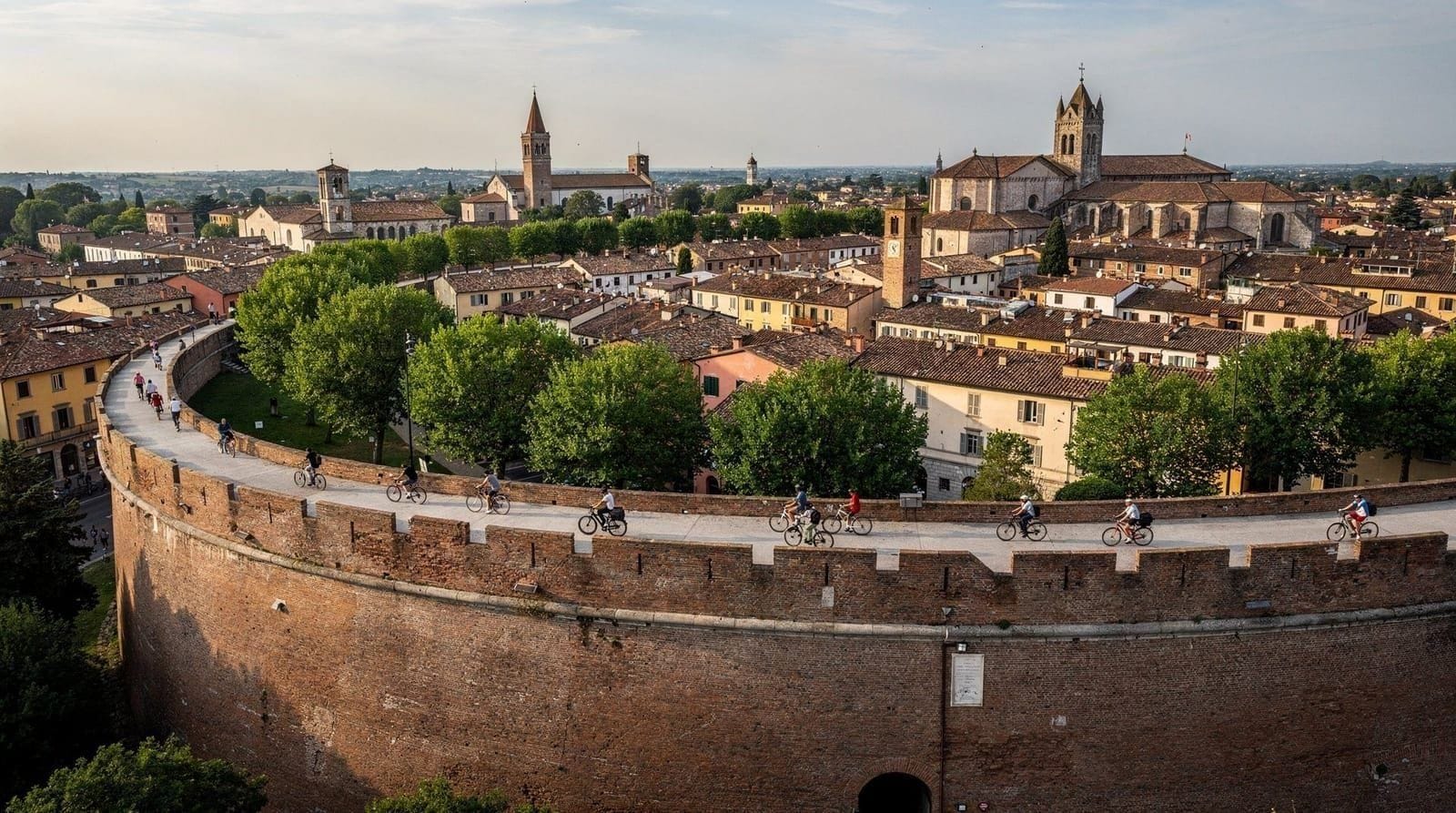
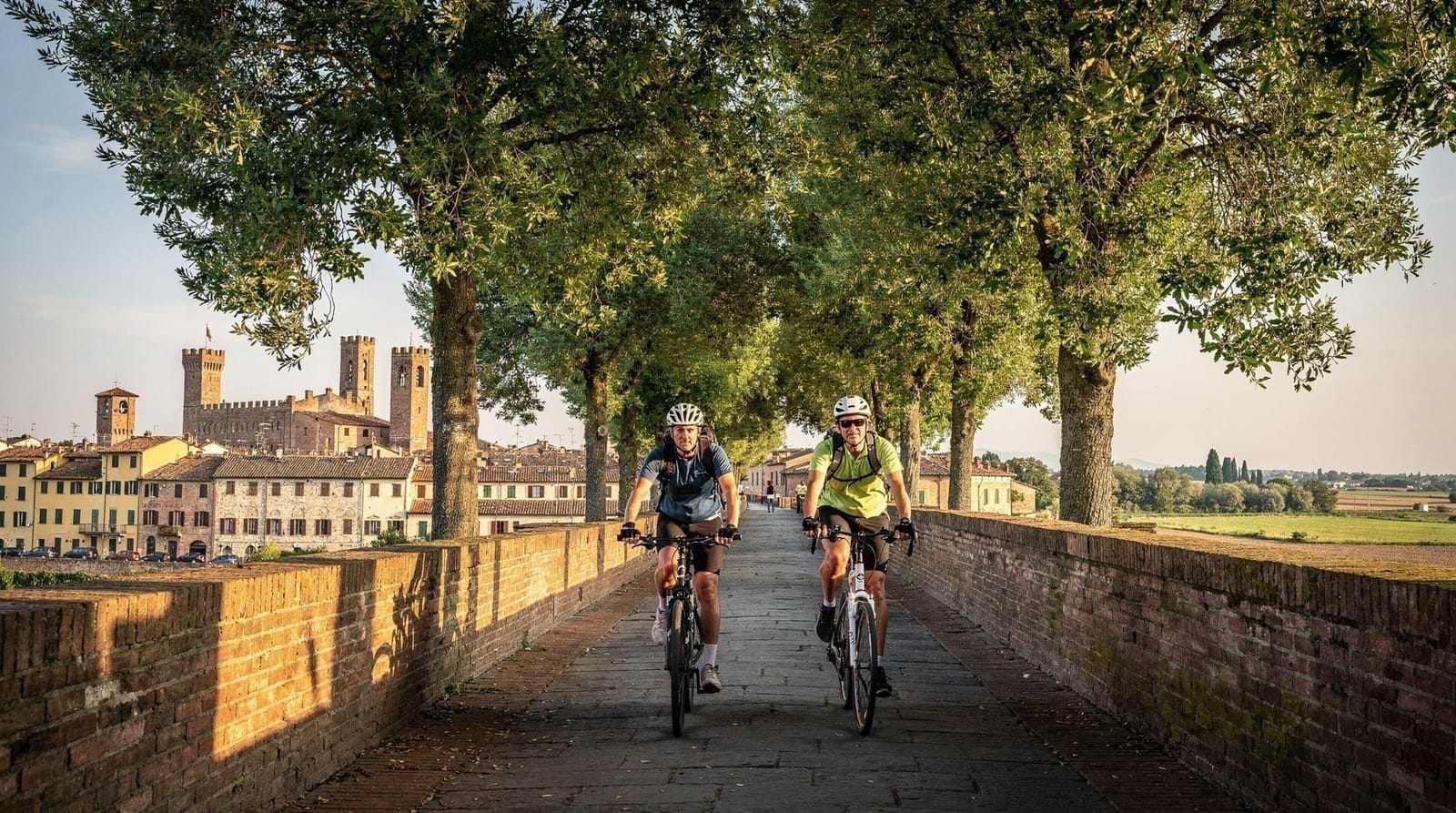
Pisa and Lucca on the same day is one of the best combinations in Tuscany. The train between the two cities takes just 20 minutes from Pisa Centrale to Lucca, with departures every 30 minutes. Spend the morning at the Piazza dei Miracoli (arrive by 9am), walk through central Pisa, take the 1pm train to Lucca, spend the afternoon cycling the walls or visiting the towers, return to Florence from Lucca by 7pm.
See the Lucca day trip guide for details on Lucca.
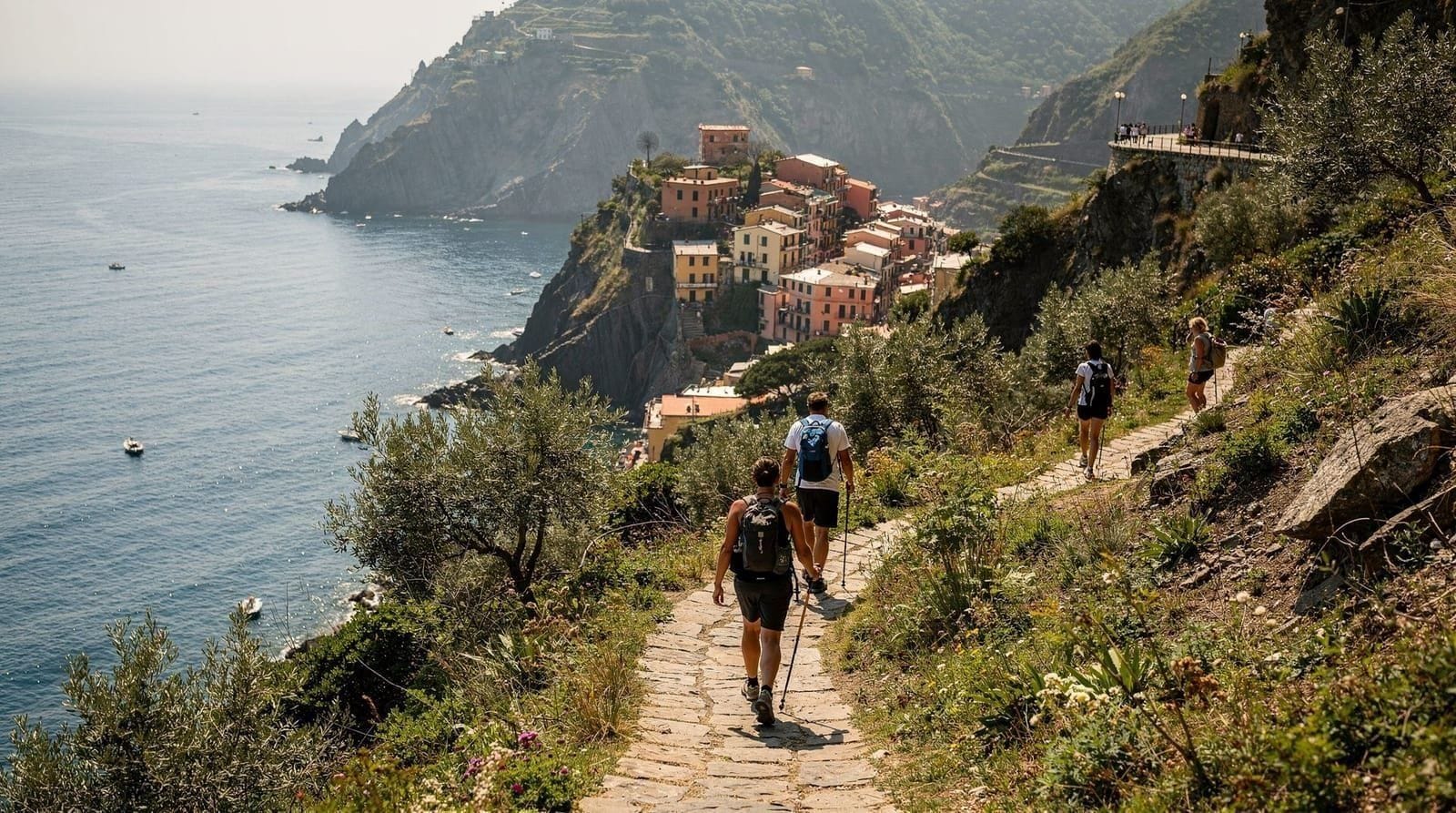
You can also combine Pisa with the Cinque Terre day trip — the Florence-to-Cinque Terre train route passes through Pisa, making a 2-hour Pisa stop feasible on the way. See that guide for the logistics.
If you’re weighing Pisa against Tuscany’s other popular day trips before committing to a plan, the best day trips from Florence guide compares Pisa, Lucca, Siena, San Gimignano and Chianti side by side.
Driving to Pisa instead of the train
A rental car is genuinely unnecessary for a single Pisa day trip — the train is faster door-to-door once you account for parking, and Pisa’s historic centre has its own ZTL that catches unwary drivers just as Florence’s does. A car becomes worthwhile only if you’re combining Pisa with rural stops that trains don’t reach, such as a wider loop through the Tuscan countryside. If that’s your plan, see the driving in Tuscany guide and the renting a car in Tuscany guide before you book, since the ZTL fines described there apply equally in Pisa.
Practical information for Pisa visitors
Climate: Pisa is slightly cooler than Florence in summer but still hot (28–33°C in July–August). The flat topography means no climbing hills. UV exposure on the white marble piazza is intense — bring sunscreen and a hat.
Crowds: Peak crowds are Tuesday through Sunday, 11am–3pm, in June–August. Monday mornings and the shoulder months (April–May, September–October) are noticeably quieter.
Accessibility: The piazza is flat and accessible, but the Leaning Tower involves 294 steps with no lift — not accessible for wheelchairs. The Cathedral is largely accessible. The Camposanto is accessible.
ZTL zones: Don’t drive into Pisa’s historic centre — it has its own ZTL area distinct from Florence’s. The area around Piazza dei Miracoli is pedestrianised. If you’re driving, use the Parcheggio di Torre (metered parking near the tower, €2/hour) or the car parks off Via Pietrasantina.
Emergency contacts: Pisa’s tourist information office is on the piazza (Piazza del Duomo 7). Emergency services: 112 (police/medical/fire).
Frequently asked questions about the Pisa day trip
Is the Leaning Tower worth the extra cost to climb?
Yes, if you’re physically able. The interior staircase is steep and slippery (worn marble, no handrails in places), but the view from the top is excellent, and the experience of the lean — more apparent inside than looking up from below — is memorable. €15 for Tower + Cathedral is reasonable.
What is the cheapest way to do Pisa from Florence?
Buy a standard Regionale train ticket (€8.90 each way), walk to the piazza, get the free Cathedral entry ticket (no tower climbing), visit the Baptistery and Camposanto (€5 each), eat cecina at Il Montino. Total cost: under €40 including train.
Are there good guided tours from Florence to Pisa?
Yes — half-day guided coach tours from Florence are widely available for €25–45 per person. They typically include hotel pickup, guide commentary on the journey, and 2–3 hours at the Piazza dei Miracoli. They don’t usually include tower tickets, so factor in the extra cost. For solo travellers uncomfortable with transport logistics, these are convenient.
Does Pisa have a beach?
Yes — Marina di Pisa and Tirrenia are about 12km west. This is mostly relevant for Italians on beach holidays rather than Florence day trippers. The historic centre is the draw.
Is Pisa too touristy to be worth it?
The Piazza dei Miracoli itself is undeniably touristy — it’s one of the most photographed spots in Italy — but the rest of central Pisa, from Borgo Stretto to the Lungarno, is genuinely uncrowded because most visitors leave the moment they’ve taken the tower photo. Staying an extra hour or two beyond the piazza rewards you with a much quieter, more authentic version of the city.
Can I do Pisa as a stopover rather than a dedicated day trip?
Yes, if you’re already passing through Pisa Centrale on the way to or from the airport, Lucca, or Cinque Terre — a 2–3 hour stop covers the Piazza dei Miracoli comfortably. Just don’t try to also see the Camposanto, Museo di San Matteo, and a proper lunch in that window; save the fuller version for a dedicated day.
Top experiences
Bookable activities with verified prices and instant confirmation on GetYourGuide.

Pisa: timed entry leaning tower and cathedral tickets
- Skip the line
- Instant confirmation
Pisa: 1.5-hour small group leaning tower tour with tickets
- Skip the line
- Small group
Florence: Pisa half-day trip with cathedral and tower entry
- Free cancellation
- Hotel pickup
Florence: Tuscan wine tasting in Pisa and Lucca
- Free cancellation
- Small group
Pisa: guided 90-minute walking tour
- Free cancellation
- Small group
Pisa: top sights, leaning tower admission and expert tour
- Skip the line
- Small group
Pisa: full Field of Miracles visit with leaning tower climbing
- Skip the line
- Free cancellation