How to book Uffizi tickets in 2026: the complete step-by-step guide
Why booking in advance is not optional
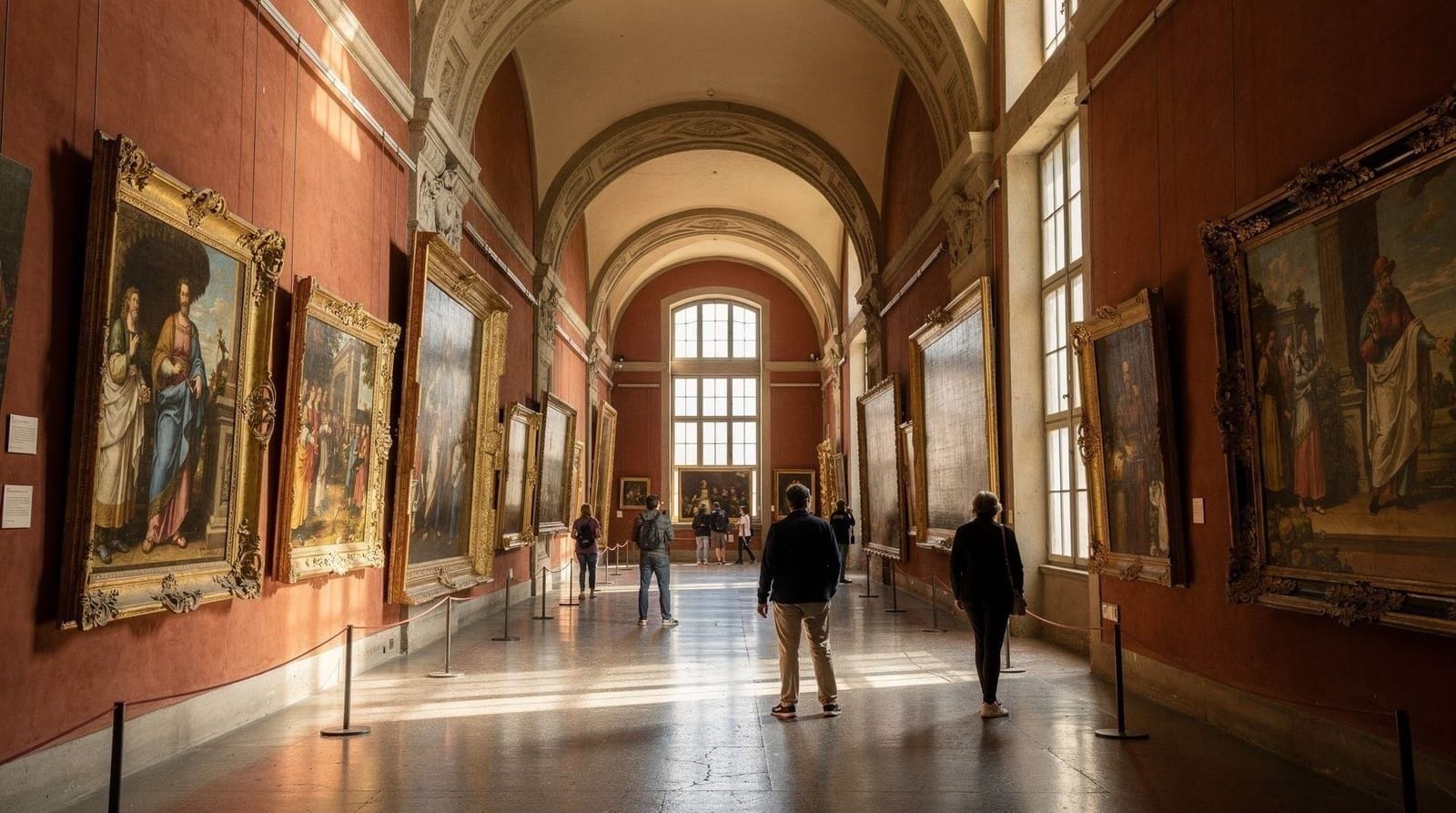
The Uffizi Gallery in Florence receives approximately two million visitors per year. The building — a U-shaped 16th-century palace commissioned by Cosimo I de’ Medici, designed by Giorgio Vasari — was not built with two million visitors in mind. The result is a timed-entry system that operates at capacity for most of the year, and a walk-in queue that runs two to three hours in peak season and an hour or more even in shoulder months.
This guide covers the booking process for 2026: the official booking route, the alternatives, what each costs, and what happens when all the slots are sold.
If you’re planning to visit the Uffizi, book before you book your flights. That is not an exaggeration.
| Cost | €25 admission + €4 booking fee = €29/adult |
| Book how far ahead | 4–6 weeks in summer, 1–2 weeks off-peak |
| Time needed | Minimum 2 hours inside |
| Closed | Every Monday |
| Best route | Official site (uffizi.it) over resellers |
Option 1: Book directly through the official Uffizi booking site (recommended)
The official booking platform for both the Uffizi Gallery and the Galleria dell’Accademia is operated by the Uffizi at uffizi.it. The process:
- Go to uffizi.it and navigate to “Book Tickets” or “Biglietti.”
- Select the Uffizi Gallery.
- Choose the number of adults, any reduced-price categories (EU residents 18–25, under-18s from outside the EU), and any free categories (EU under-18s).
- Select your preferred date. A calendar shows availability; green dates have slots available, grey dates are full.
- Select your preferred time slot. Slots run every 15 minutes starting from 9 a.m. (or 8:15 a.m. from March through October). Clicking a slot shows available spaces.
- Complete the payment. The admission price is €25 for adults, plus a €4 booking fee regardless of group size, totalling €29 per adult.
- Receive your confirmation email with a QR code, which is your ticket.
The confirmation email is your entry pass. You do not need to collect a physical ticket. When you arrive at the Uffizi, bypass the queue for walk-in ticket buyers and proceed directly to the timed-entry gate at the door corresponding to your arrival time (the gates are numbered; your ticket indicates which one).
When to book: In June, July, August, and the peak week around Easter, book four to six weeks in advance. In April, May, September, and October, book two to four weeks in advance. In November through February (excluding Christmas week), one week ahead is usually sufficient.
What to do if the official site shows no availability: See the “sold out” section below.
Option 2: Guided tour with included timed entry
Booking a small-group guided tour through a reputable third-party operator includes skip-the-line entry as part of the product. These cost €50–90 per person (adult) and have several advantages beyond the entry logistics:
A specialist guide transforms the visit. The Uffizi contains more than 3,000 works, and without orientation, most visitors walk quickly past significant paintings trying to find the Botticellis. A guide selects, contextualises, and — crucially — creates the opportunity to stop in front of specific works and pay real attention.
The group size matters. Small groups of 6–12 people allow a guide to pause, point out details, and answer questions in a way that larger groups don’t. If you’re visiting the Uffizi for the first time and have any interest in Renaissance art beyond checking it off a list, a guided tour is the right choice.
The booking logistics are handled by the operator; you show up at the designated meeting point at the designated time, and the guide takes you through.
Reliable operators offer tours in English that run 90 minutes to two hours inside the museum. Look for tours that specify the group size cap (six to fifteen people is good; tours that don’t specify or have unlimited size are less controlled).
Option 3: Third-party ticket resellers (with caveats)
A large number of websites sell “skip-the-line” Uffizi tickets at prices ranging from €29 (official price) to €45+ per person. These range from legitimate services that provide real timed-entry tickets to operations that charge significant premiums for no additional benefit.
How to evaluate a third-party seller:
- Are they transparent about what they’re selling? (A timed-entry ticket, not a “walk in at any time” magic pass)
- What is the price relative to the official rate? (Anything more than €5–10 above the official rate deserves scrutiny)
- Do they have a refund/cancellation policy that is clearly stated?
Some third-party sellers offer genuine added value: combined museum tickets, combined transport and museum packages, or curated multi-day passes. These can be worth the premium. A reseller charging €45 for a plain Uffizi timed-entry ticket that you can buy for €29 on the official site is just arbitraging the booking fee, and the value is minimal.
The Florence museum passes compared guide covers the combination ticket options — including the Firenzecard — in full.
What happens if the Uffizi is sold out
The sold-out scenario happens more often than people expect, particularly for popular date ranges.
Options when sold out in advance:
-
Try different time slots. Even if the 10 a.m. slot is sold out, the 3 p.m. slot might have spaces. The evening slots (the Uffizi has late openings on some evenings) are often less booked.
-
Check for cancellations. The official site releases cancelled slots back into inventory, often with little advance notice. Check the site in the days immediately before your visit — new slots sometimes appear at 24–48 hours’ notice.
-
Book a guided tour with included entry. Tour operators reserve blocks of timed-entry slots that are not visible on the public-facing booking calendar. A tour that appears bookable when the direct ticket site shows no availability is using these operator-reserved slots.
-
Go early and join the standby queue. The Uffizi sells a limited number of same-day walk-in tickets from a separate queue, typically available from 8:30 a.m. Arrive by 7:30–8 a.m. to have a reasonable chance. This is not guaranteed to work and is most viable in low season.
-
Adjust your dates. If you have flexibility in your travel plans and your visit is still in the future, moving your trip by one or two days often opens up availability.
What to do on the day of your visit
Arrive at the Uffizi no more than 5–10 minutes before your timed slot. The queuing area near the Piazzale degli Uffizi can be confusing — there are separate queues for walk-in buyers, pre-booked ticket holders, and guided tour groups. Follow the signs for “prenotazioni” (pre-bookings). Have your QR code ready on your phone or printed.
You will go through a security check (bag screening, similar to an airport). Large bags and backpacks may need to be checked at the cloakroom. The cloakroom is free.
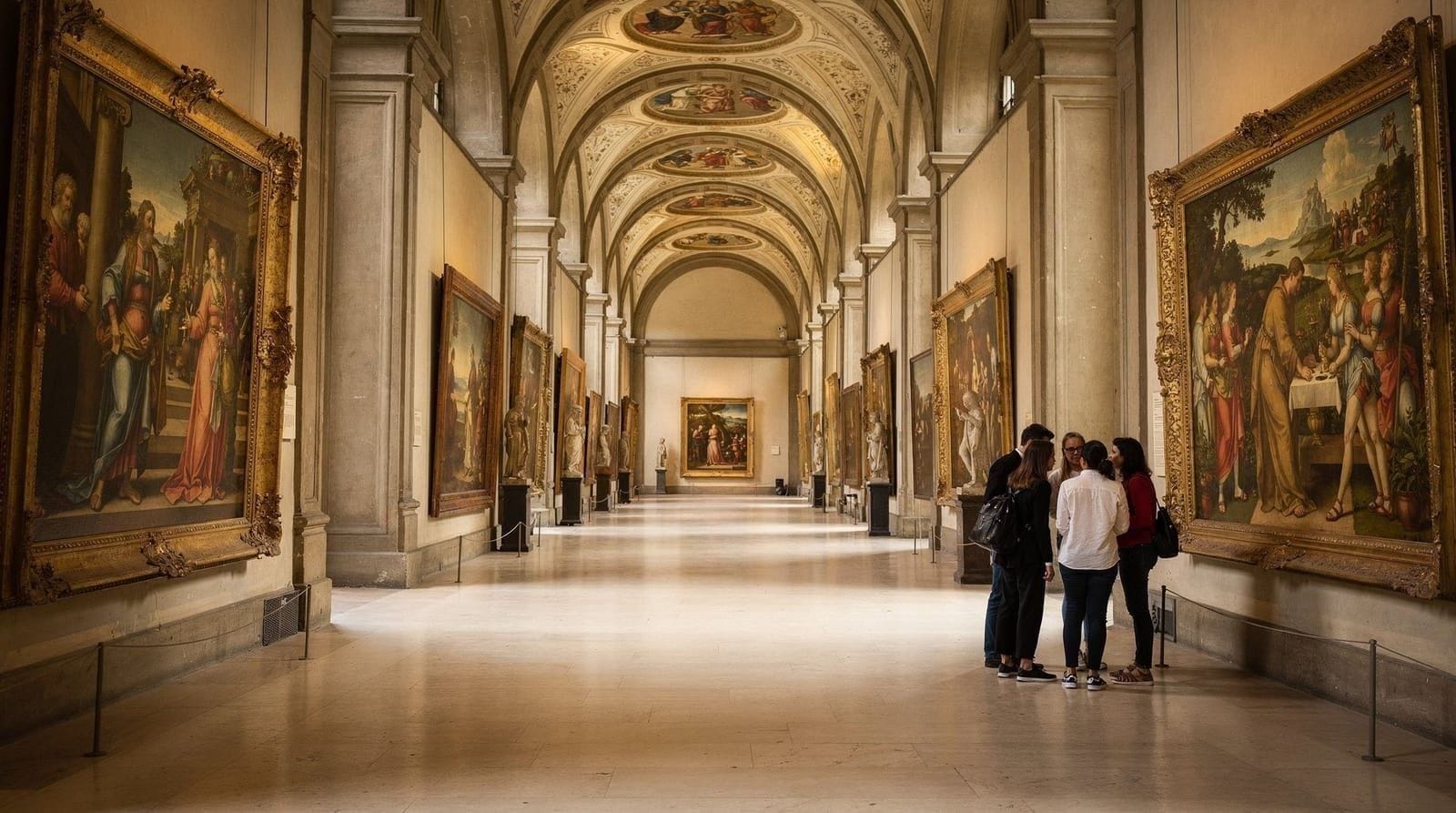
Inside: the museum is organised chronologically across two floors, starting with medieval and early Renaissance on the upper floor (Room 2 onwards) and descending through the Renaissance and into the 16th and 17th centuries. A logical route follows the rooms in numerical sequence; the audio guide or a guided tour maps this explicitly. The Uffizi gallery guide covers the essential rooms and the key works in each.
Allow a minimum of two hours. The rooms with the Botticellis (Rooms 10–14 on the upper floor) typically have the most crowding regardless of your entry time; arrive there early in your visit.
Photography is permitted without flash. The Botticelli Primavera and Birth of Venus are in a room that prohibits flash photography particularly strictly, as the paintings are sensitive to light exposure.
The gift shop at the exit has the best selection of art-related books and reproductions in Florence. Budget 15–20 minutes if you’re interested.
Prices and tickets at a glance (2026)
- Adult admission: €25
- Online booking fee: €4 per transaction (not per ticket)
- EU citizens aged 18–25: €2 reduced (proof of age required)
- EU citizens under 18: free
- Non-EU under 18: €2
- First Sunday of the month: free admission (long queues advised)
- Firenzecard (combined pass): €85 for 72 hours, covers Uffizi + Accademia + many other museums — only worth it for systematic museum visitors seeing many paid sites
Prices are confirmed for 2026; the Uffizi reviews admission prices periodically and they have increased incrementally each year since 2018.
Frequently asked questions about Uffizi tickets
Can I change my timed entry slot after booking?
Yes, subject to availability. Log in to the Uffizi booking system with your order number and you can modify the date or time of your ticket up to 24 hours before the visit. After that, changes are typically not possible, though you can apply for a refund in some circumstances.
Is the Uffizi open on Mondays?
No. The Uffizi is closed every Monday. Standard opening hours Tuesday through Sunday: 8:15 a.m. to 6:50 p.m. (last entry 6:15 p.m.). Extended summer hours apply from June through September. Check the official website for the current year’s holiday closures.
What is the difference between the Uffizi and a combined Uffizi/Accademia ticket?
There is no official combined Uffizi/Accademia ticket sold by the two museums directly — they are separate institutions and separate bookings. Combined guided tours that cover both are available from third-party operators and are a good option for visitors wanting both major museums on the same day. The Uffizi vs Accademia guide covers the comparison.
Is the Uffizi worth the price?
Unambiguously yes. The Uffizi contains Botticelli’s Primavera and Birth of Venus, Leonardo’s Annunciation, Raphael’s Portrait of Leo X, Titian’s Venus of Urbino, Caravaggio’s Young Bacchus, and thousands of other works — the most significant collection of Renaissance Italian painting anywhere in the world. At €25, it is one of the better-value world-class museum visits available. The booking fee is annoying; the collection is not.
Should I book the Uffizi and Accademia for the same day?
It’s possible but tight. Both museums need at least two hours to see properly, and moving between them (about 15 minutes on foot) adds to the day. If you want an unhurried visit to both, spread them across two mornings rather than stacking them into one day. The how to book Accademia tickets guide covers that museum’s booking process in the same detail as this guide covers the Uffizi.
What if I only have time for one museum — Uffizi or Accademia?
Choose the Uffizi if Renaissance painting is your priority; choose the Accademia if seeing Michelangelo’s David in person matters most and your time is very limited (the Accademia visit can be done in under an hour). The Uffizi vs Accademia guide and the Accademia gallery guide both go deeper into this trade-off.
Top experiences
Bookable activities with verified prices and instant confirmation on GetYourGuide.