Uffizi vs Accademia — which should you visit?
Florence: Uffizi Gallery skip-the-line tickets
- Skip the line
- Free cancellation
Should I visit the Uffizi or the Accademia in Florence?
Visit both if you have three or more days. If you must choose one: the Uffizi is a much larger collection and the greater overall experience. The Accademia is essential if seeing Michelangelo's David is your priority — nothing prepares you for the scale and presence of the original. Plan 3–4 hours for the Uffizi; 1.5–2 hours for the Accademia.
| Uffizi cost | ~€20 + booking fee, 2.5–4 hours needed |
| Accademia cost | ~€12 + booking fee, 1.5–2 hours needed |
| Booking window | 2–4 weeks ahead in peak season |
| If choosing one | Uffizi for the fuller collection |
| If choosing both | Accademia first (fresh), Uffizi second |
The wrong question
“Uffizi or Accademia?” is the wrong question. The correct one is: which to visit first, and how to plan both within your Florence schedule. These are the city’s two most important museums and they cover completely different artistic territory. Visiting only one is like seeing half a sentence.
That said, if genuinely forced to choose — and some travellers with only one day have to — this guide gives you the honest breakdown.
The Uffizi: what it actually contains
The Uffizi Gallery (Gallerie degli Uffizi) occupies the former Medici administrative offices, a U-shaped building designed by Giorgio Vasari and begun in 1560. The Medicis used the top floor to house their art collection from the 1580s; it became a public museum in 1765.
The collection has approximately 1,500 works on display across 45 rooms, spanning the thirteenth through the eighteenth centuries.
The rooms you must not miss:
- Room 2 (Cimabue and Duccio): three enormous thirteenth-century altarpieces of the Madonna in Majesty — this room is the starting point of Italian art history
- Room 3 (Giotto): Giotto’s Ognissanti Madonna, which revolutionised the representation of space and emotion in Western painting
- Room 9 (Pollaiolo): two panels of the Theological Virtues
- Room 10–14 (Botticelli): the two masterpieces — Birth of Venus and Primavera — are here. These are larger than photographs suggest; plan to stand in front of them for time
- Room 15 (Leonardo): the Annunciation and the unfinished Adoration of the Magi
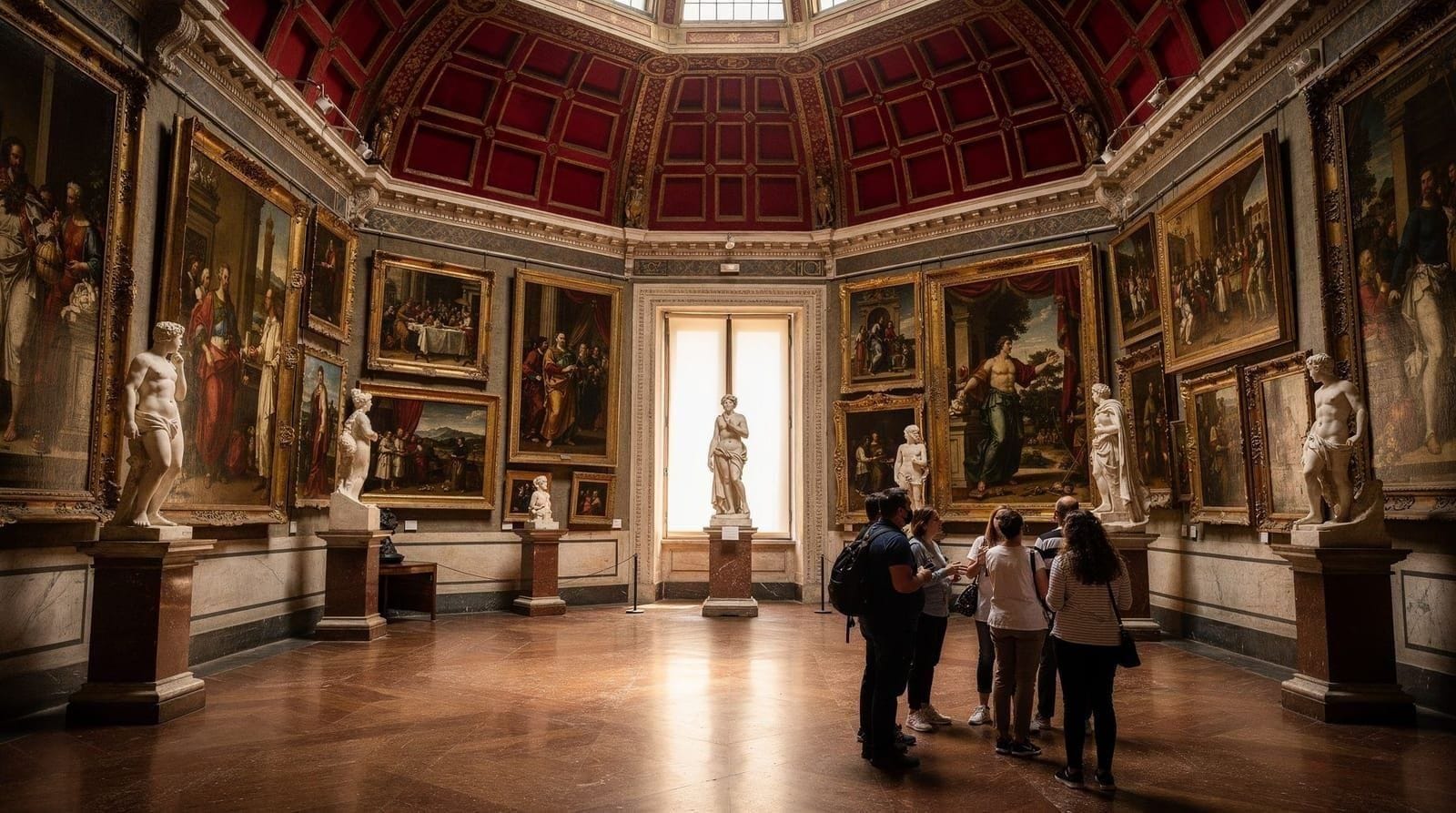
- Room 18 (Tribune): the octagonal red room that Buontalenti designed to house the Medici collection; the Venus de’ Medici is here
- Room 21 (Raphael and Michelangelo): Raphael’s Madonna of the Goldfinch and Michelangelo’s Doni Tondo (the only finished panel painting by Michelangelo)
- Room 28 (Titian): Venus of Urbino
- Rooms 90–93 (Caravaggio): Medusa, Sacrifice of Isaac, Bacchus
Time required: realistically, 2.5–3.5 hours for the key works, more if you are a specialist. The museum is physically demanding — long corridors, crowded rooms in season, and the quantity of masterpieces is genuinely overwhelming.
The Accademia: what it actually contains
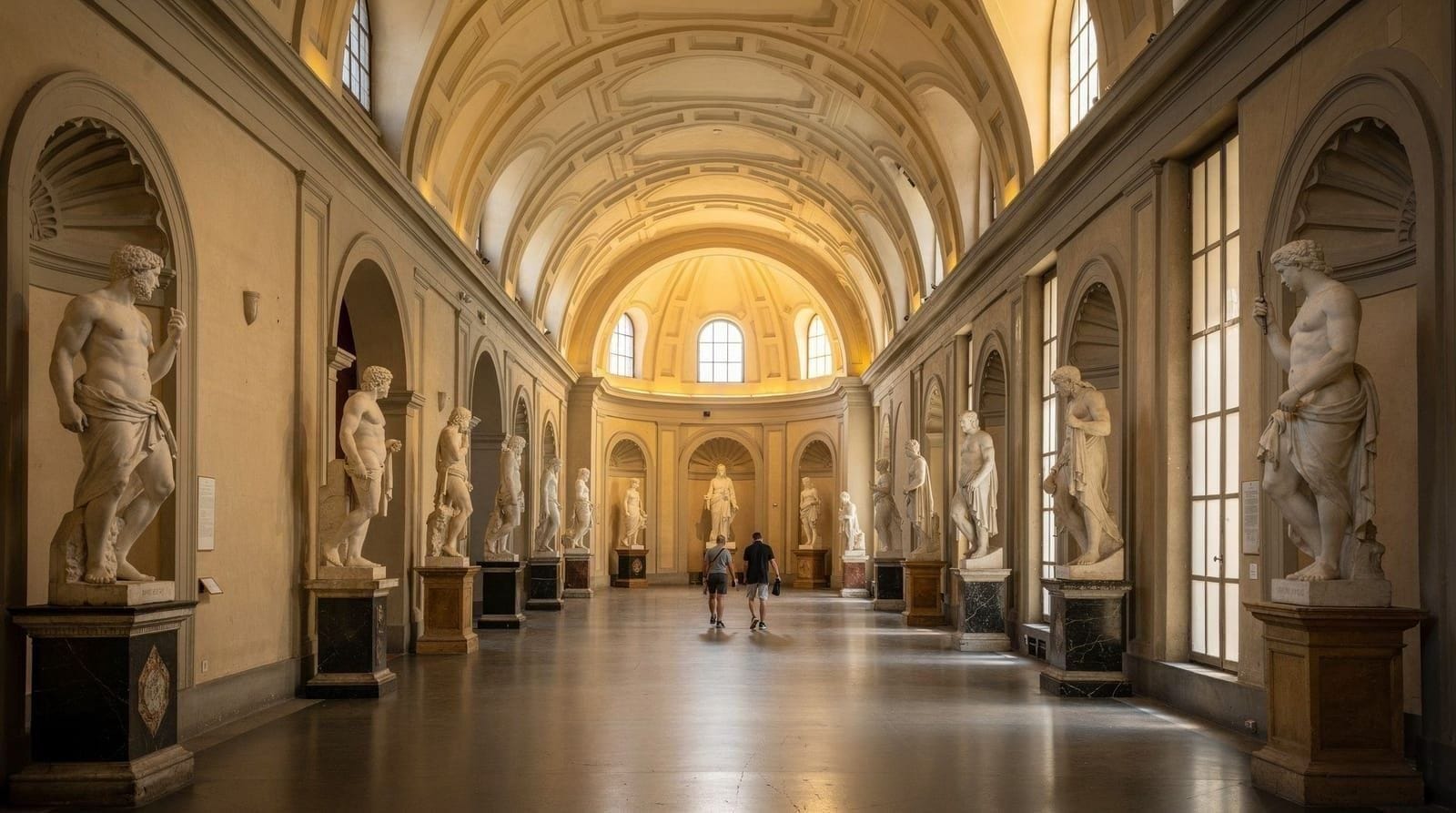
The Galleria dell’Accademia di Firenze is a smaller, more focused museum. The main draw is explicit from the entrance: you walk down a long gallery (the tribuna) toward Michelangelo’s David, which becomes visible from the entrance and grows in scale as you approach.
The David: carved from a single block of Carrara marble between 1501 and 1504 by Michelangelo, who was 26 years old when he began it. The statue stands 5.17 metres tall (17 feet) — significantly larger than most visitors expect from photographs. The proportions are exaggerated in a specific way: the head and hands are oversized relative to the body, calibrated for the position the statue was originally intended to occupy (it was planned for a buttress of the Duomo, to be viewed from below). Seeing it at eye level, in the circular tribune built specifically for it, is a fundamentally different experience from any reproduction.
The Prisoners (Prigioni): in the corridor leading to the David, Michelangelo’s four unfinished slaves strain to emerge from their marble blocks. These are the most explicit existing evidence of Michelangelo’s sculptural philosophy — the idea that the figure exists within the stone and the sculptor’s task is to liberate it. The figures appear to be in genuine physical distress, emerging from the rough stone. They are arguably more emotionally powerful than the David.
The painting collection: frequently overlooked because the David dominates attention. The Accademia holds significant Florentine Gothic and early Renaissance painting: Lorenzo Monaco, Fra Bartolommeo, and a substantial collection of Byzantine-influenced icons.
The musical instruments museum: a specialised collection including Stradivarius instruments, housed in a separate wing of the Accademia building. Worth 30 minutes for the interested visitor.
Time required: 1.5–2 hours is comfortable for a focused visit. The David and the Prisoners can occupy 45 minutes alone.
Honest comparison table
| Category | Uffizi | Accademia |
|---|---|---|
| Primary draw | Renaissance painting collection | Michelangelo’s David |
| Collection size | Very large (~1,500 works on display) | Medium (focused) |
| Visit duration | 2.5–4 hours | 1.5–2 hours |
| Standard adult ticket | ~€20 + booking fee | ~€12 + booking fee |
| Booking urgency (peak) | Book 3–4 weeks ahead | Book 2–3 weeks ahead |
| Difficulty of visit | Overwhelming (scale and quantity) | Focused and manageable |
| Crowds in summer | Extreme | Very high |
| Best time to visit | 9am opening, Tuesday–Thursday | Any weekday morning |
| Audio guide value | High (complex collection) | Medium (David is self-evident) |
| Guided tour value | Very high | High |
Ticket options
Individual tickets: the standard approach. Uffizi adult ticket is approximately €20 plus a booking surcharge of €4–5. Accademia is approximately €12 plus booking surcharge.
Combined entry with a guide: the guided Uffizi and Accademia combination tour typically costs €45–65 per person but includes skip-the-line access and a specialist guide who prevents you from missing key works and provides the context that makes the collection legible.
Combo tickets: the Uffizi and Accademia timed-entry combo ticket provides entry to both museums with a reserved time slot at each. This saves the booking surcharge paid separately on two tickets and is the most practical option for visitors who want to visit both in one day.
Firenzecard: covers both museums among others. See the Firenzecard vs individual tickets guide for whether it is worth it.
Planning your visit: practical sequence
If you have one day for both: visit the Accademia first (morning, typically opens at 9am), allowing 1.5–2 hours. Then walk to the Uffizi (12-minute walk) for a 12pm or later slot, allowing 3+ hours. This order means you see the David when you are fresh and the Uffizi when the late morning crowds have slightly thinned from the 9am opening rush.
If you have two days: Accademia on day one, Uffizi on day two. This allows you to recover from the Uffizi’s scale and give it the time it deserves.
Audio guides: the Uffizi’s audio guide (available at the entrance) is worth renting — the collection is too large and too important to navigate without some orientation. The Accademia’s is less essential; the David requires no explanation beyond scale.
The rooms not to skip at the Uffizi: if running short on time, the essential rooms are the Botticelli rooms (10–14), the Leonardo room (15), and the Raphael/Michelangelo room (21). The Caravaggio rooms (90–93) are at the end of the collection and often missed by tired visitors — this is a mistake.
What about the Bargello?
The Bargello (Museo Nazionale del Bargello) is the third element of Florence’s great sculpture triangle that often gets overlooked. Housed in a thirteenth-century palace that was once the city jail, it holds:
- Donatello’s marble and bronze David (both the youthful marble version and the provocative bronze — both in the same museum, different from Michelangelo’s)
- Ghiberti’s original competition panels for the Baptistery doors
- Brunelleschi’s competition panels (same competition)
- Michelangelo’s Bacchus (his first major sculpture, done in Rome)
- Della Robbia terracottas throughout
The Bargello is less crowded than either the Uffizi or Accademia and contains works of equal importance. If you have four days in Florence, it is non-negotiable. For a three-day visit, prioritise the Uffizi and Accademia first. See the Bargello Museum guide for the full detail.
Where these museums fit in a wider Florence plan
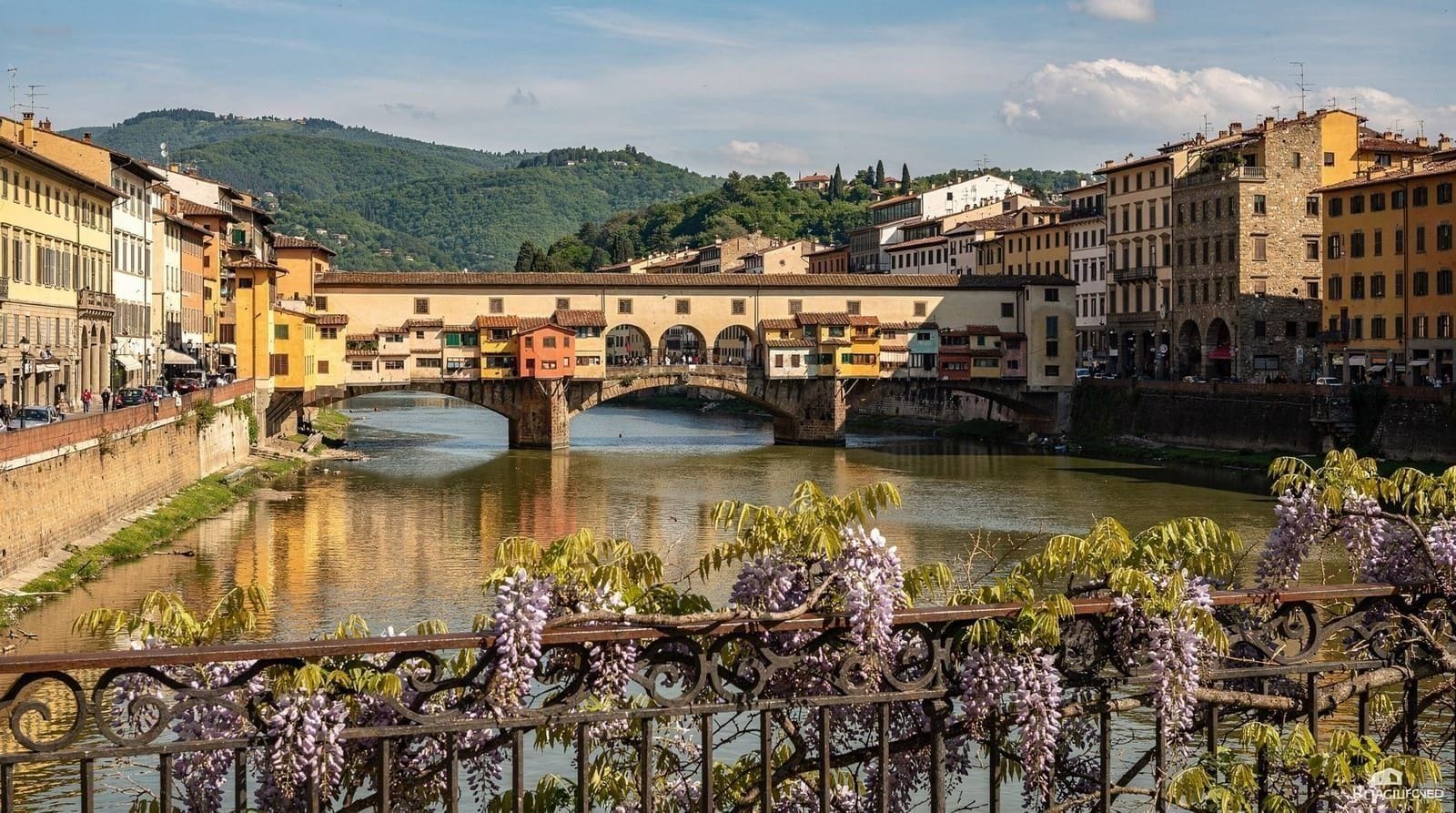
Neither museum exists in isolation. If you’re building a first-time itinerary, the first time in Florence guide shows where Uffizi and Accademia slots fit against the Duomo, Ponte Vecchio and Oltrarno. If skip-the-line logistics for either museum are still unclear, the skip-the-line Florence guide covers exact queue times and booking windows for both.
For travellers deciding between a museum pass and individual tickets, the Florence museum passes compared guide lays out whether bundling the Uffizi and Accademia with other sights saves money for your specific itinerary length.
The honest verdict
Visit the Uffizi if you only visit one museum in Florence. It is the greater collection, the more complete experience, and — despite the scale and crowds — the museum that most rewards the time spent.
Add the Accademia as your second priority. The David alone justifies the ticket price. No reproduction, at any scale, prepares you for the experience of standing below the original.
Visit both if you have three or more days in Florence — which you should. The combined experience of the Uffizi’s painting mastery and the Accademia’s sculptural presence is what makes Florence’s art scene categorically different from any other European city.
Frequently asked questions about the Uffizi and Accademia
Can I visit both museums in one day?
Yes, with advance planning. Book a 9am slot at the Accademia and a 12pm or 1pm slot at the Uffizi. You will be tired by late afternoon — the Uffizi in particular demands sustained attention. Allow at least a 30-minute break between museums.
Is the Accademia worth visiting just for the David?
Yes. The David at full scale is a genuinely transformative experience. What appears in photographs as a beautiful statue becomes, in person, a presence that occupies the room physically and emotionally. The 45 minutes in front of it is not wasted even if you see nothing else in the museum.
Are there any free days at the Uffizi or Accademia?
The first Sunday of each month, all Italian state museums (including the Uffizi and Accademia) offer free admission. The queue on the first Sunday in summer can actually be longer than on paid days. In winter (November–February), first-Sunday free entry is a genuinely good option.
Is a guided tour worth the extra cost?
At the Uffizi, strongly yes. The collection is vast, the context is complex (who influenced whom, what was being responded to, why this size and this composition), and a knowledgeable guide transforms what can be an overwhelming experience into a coherent narrative. At the Accademia, the value is lower — the David is comprehensible on its own — but a guide adds meaningful context about Michelangelo’s technique and the competition history.
What happens if I arrive without a booking in peak season?
At the Uffizi in July or August: expect a queue of 2–3 hours. In September or October: 45–90 minutes. The queue is outdoors, in direct sunlight. At the Accademia: slightly shorter queues but the same principle applies. There is genuinely no reason not to book in advance; the booking surcharge is €4–5 per ticket, which is less than the cost of one coffee.
Top experiences
Bookable activities with verified prices and instant confirmation on GetYourGuide.

Florence: Uffizi Gallery skip-the-line tickets
- Skip the line
- Free cancellation
Florence: Accademia Gallery — David skip-the-line ticket
- Skip the line
- Instant confirmation
Florence: Uffizi and Accademia Gallery skip-the-line ticket
- Skip the line
- Free cancellation
Florence: Uffizi Gallery and Accademia Gallery guided tour
- Skip the line
- Free cancellation