Christmas in Florence: what it's actually like in December
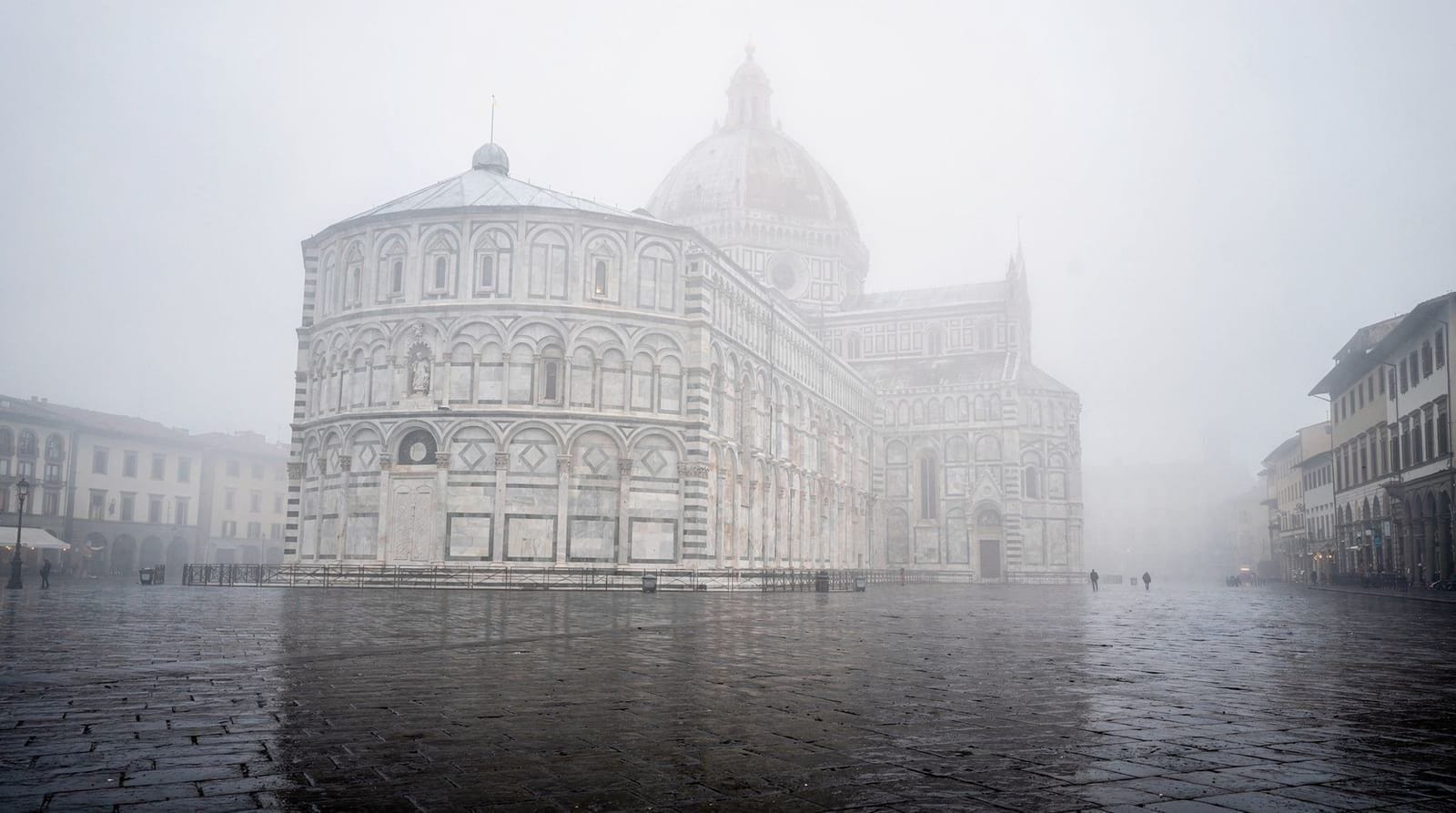
December in Florence looks like this: the Piazza della Repubblica has a Christmas market under the loggia, the Duomo is strung with lights, and the tourist numbers are down by roughly two-thirds compared to July. A Florentine friend who runs a small restaurant near Santa Croce told me December is one of her favorite months — the city belongs, a little bit, to itself again.
This is not to say Florence in December is a secret. The city still has visitors, particularly around the main Christmas and New Year windows. But the quality of the experience shifts. You can stand in front of Botticelli’s Primavera without a crowd pressing in from behind. You can eat at a restaurant you actually want to eat at without a reservation made three weeks in advance. The streets are lit and the air is cold and sharp, and the golden stone of the historic centre has a different beauty under winter skies.
| Temperature | 3–12°C, occasional light frost |
| Crowds | Roughly a third of July’s numbers |
| Hotel prices | 20–35% below May/September rates |
| Best window | December 27–January 5 |
| Watch for | December 25, January 1 and 6 mostly closed |
What to expect from the weather
Florence winters are mild by northern European standards and occasionally brutal by Italian standards. December temperatures typically range from 3°C at night to 12°C during the day. Frost is possible but light snowfall is rare (though it happens, roughly every four to five years, and is spectacular when it does).
Rain is the more likely irritant: December brings occasional prolonged grey spells with light but persistent drizzle. Pack layers and a proper waterproof. The city is fully functional in winter weather — this isn’t a place where a light frost closes public transport — but dressing for warmth makes the difference between enjoying the outdoor markets and enduring them.
The Christmas markets
Florence’s Christmas markets are pleasant without being transcendent — they’re better than what a British high street offers and considerably worse than the serious German-style Weihnachtsmärkte of Strasbourg or Nuremberg.
The main market in Piazza Santa Croce is one of the better Italian Christmas markets, with genuine craft stalls alongside the usual mulled wine and vin brûlé (Italian hot spiced wine, worth trying). Runs roughly late November to early January. German-inspired but with a distinctly local character — look for stalls selling Panforte (the dense Sienese fruit and spice cake) and Cavallucci (anise-spiced biscuits from Siena).
The Fierucola market, held monthly in Piazza Santissima Annunziata and specifically for organic local products, has a special December edition around mid-month that’s significantly more local in character — farmers selling olive oil, cheese, wine, and seasonal produce alongside craft producers.
The German Christmas Market in Piazza della Repubblica is explicitly German-themed, imported and operated by German associations. Well-run, atmospheric, good for glühwein and stollen. Worth an hour.
Our dedicated Florence at Christmas guide has current market dates and hours, which shift slightly year to year — worth checking before you plan an evening around a specific stall.
December week by week
| Period | What it’s like |
|---|---|
| Dec 1–14 | Markets open, mild crowds, best value on hotels |
| Dec 15–23 | Busier, decorations at their fullest, book restaurants ahead |
| Dec 24–26 | Most closed; Midnight Mass and the Duomo’s decoration are the highlights |
| Dec 27–Jan 5 | Quietest good window: open again, still decorated, no Christmas Eve crowds |
| Jan 6 onward | Epiphany parade, then a sharp drop in both prices and crowds |
What’s open and what closes
This is the critical information most guides skip over.
Open December 24: Most museums and sites operate on reduced hours, closing mid-afternoon. The Uffizi typically closes at 2pm on Christmas Eve. Check individual museum websites for current year hours.
December 25: Florence is largely closed. Museums, most shops, and most restaurants shut entirely. The major churches hold Mass and remain accessible for worshippers, including the Duomo (which has spectacular Christmas decoration in the apse). A handful of tourist-oriented restaurants in the centre remain open but at premium prices.
December 26 (Santo Stefano): A national holiday. Many businesses remain closed. Tourist attractions typically reopen on this day after Christmas Day closure.
New Year’s Eve: The piazzas host celebrations (particularly Piazza della Repubblica and Piazzale Michelangelo), restaurants charge premium prices for fixed menus (often €60-150 per person), and booking anything requires significant advance planning.
January 1: Closed. Similar pattern to December 25.
January 6 (Epifania/La Befana): Another holiday. Many restaurants and some museums close again.
The window between December 27 and January 5 is actually one of the better times to visit: the Christmas closures are over, the holiday pricing eases slightly, and the city is still decorated and atmospheric without the Christmas Eve crowds.
The Florentine Christmas food tradition
This is where December in Florence becomes most specifically itself.
Panettone and pandoro: The northern Italian Christmas cakes are everywhere. But in Florence, the traditional Christmas sweet is Panforte Marginato — the dense, sticky, spiced cake from Siena made with honey, nuts, dried fruit, and warming spices like cinnamon and cloves. Buy it at Pasticceria Nencioni or at the better alimentari shops rather than the tourist versions at market stalls.
Ribollita: The quintessential Florentine winter soup — stale bread, cannellini beans, cavolo nero (Tuscan kale), onion, tomato — becomes almost omnipresent on restaurant menus in December. A proper ribollita, cooked slowly and reheated (re-boiled, hence the name), is one of the great winter foods of Europe.
Arista di maiale: Pork roast with rosemary and garlic, a Florentine Sunday tradition, appears on December menus alongside roasted chestnuts from the street carts.
Vin brûlé: The Italian version of mulled wine, spiced with cinnamon, cloves, and orange peel. Get it at the Christmas markets or order it at any bar in December. €3-5 per cup.
Specific things to do in December
Midnight Mass at the Duomo: The Cathedral holds Mass at midnight on Christmas Eve. It’s standing room only and an extraordinary setting — Brunelleschi’s dome above, the nave candlelit, the Florentine tradition of thousands of years bearing down on the moment. Arrive by 11pm to get inside.
The Epiphany parade: On January 6, the Cavalcata dei Magi — a historical pageant recreating the Magi’s procession to Bethlehem — winds through the city centre. This is a serious local tradition, not a tourist construction: period costumes, musicians, and the three kings on horseback. Free to watch from the street.
Fiesole in winter: The hilltop town above Florence, typically crowded in summer, is calm in December. The Roman theatre and archaeological museum are open, and the view over the Florence valley from the main piazza, on a clear winter day, looks over the tiled rooftops with the Arno catching the low winter light. The Fiesole day trip guide covers the bus route up and what else to see while you’re there.
Museum visiting without crowds: The Bargello, Galileo Museum, and Museo di Santa Maria del Fiore (Duomo Museum) are all exceptional and dramatically quieter than in summer. Book the Uffizi and Accademia in advance even in December — they’re not empty, just more manageable. If you’re comparing museum passes for a winter trip, the Florence museum passes compared guide helps you decide whether a card is worth it at December’s lower crowd levels.
Budget considerations
December is one of the less expensive months for hotel prices in Florence. Expect to pay 20-35% less than the equivalent room in May or September. The window of January 7-31 (after all holidays are over) is the absolute cheapest time, though some smaller properties close for maintenance.
Flying into Florence before December 20 or after January 7 also avoids the holiday pricing surge on flights.
The one cost spike is New Year’s Eve, when restaurant fixed-price menus make a normal dinner into a budget-breaking event. Counter strategy: eat at a simple trattoria that doesn’t do a special NYE menu (they exist, particularly in the Oltrarno), or buy provisions at the Mercato Centrale and eat at your accommodation.
Flights follow a similar curve to hotels: the cheapest fares land in the first half of December and again after January 7, with a sharp spike for arrivals between December 20 and January 2. If your dates are flexible by even a few days, shifting a flight out of that window can save more than a discounted hotel room does.
Winter light and photography in December
December in Florence offers lighting conditions that summer visitors never see. The low winter sun — the sun in December never gets more than 25 degrees above the horizon in Florence — produces raking, golden, horizontal light even at midday. The Duomo’s terracotta in that winter light, the way the dome’s colour shifts from orange to bronze to rust as the afternoon advances, is extraordinary.
The city’s photographic character in December:
- Long blue-hour mornings, the city slowly lit
- Hard shadows from the low sun angle, throwing the architectural details of building facades into dramatic relief
- The mist that sometimes fills the Arno valley in the mornings, the historic centre rising above it
- Christmas illumination from late afternoon, the cobbled streets reflecting light upward
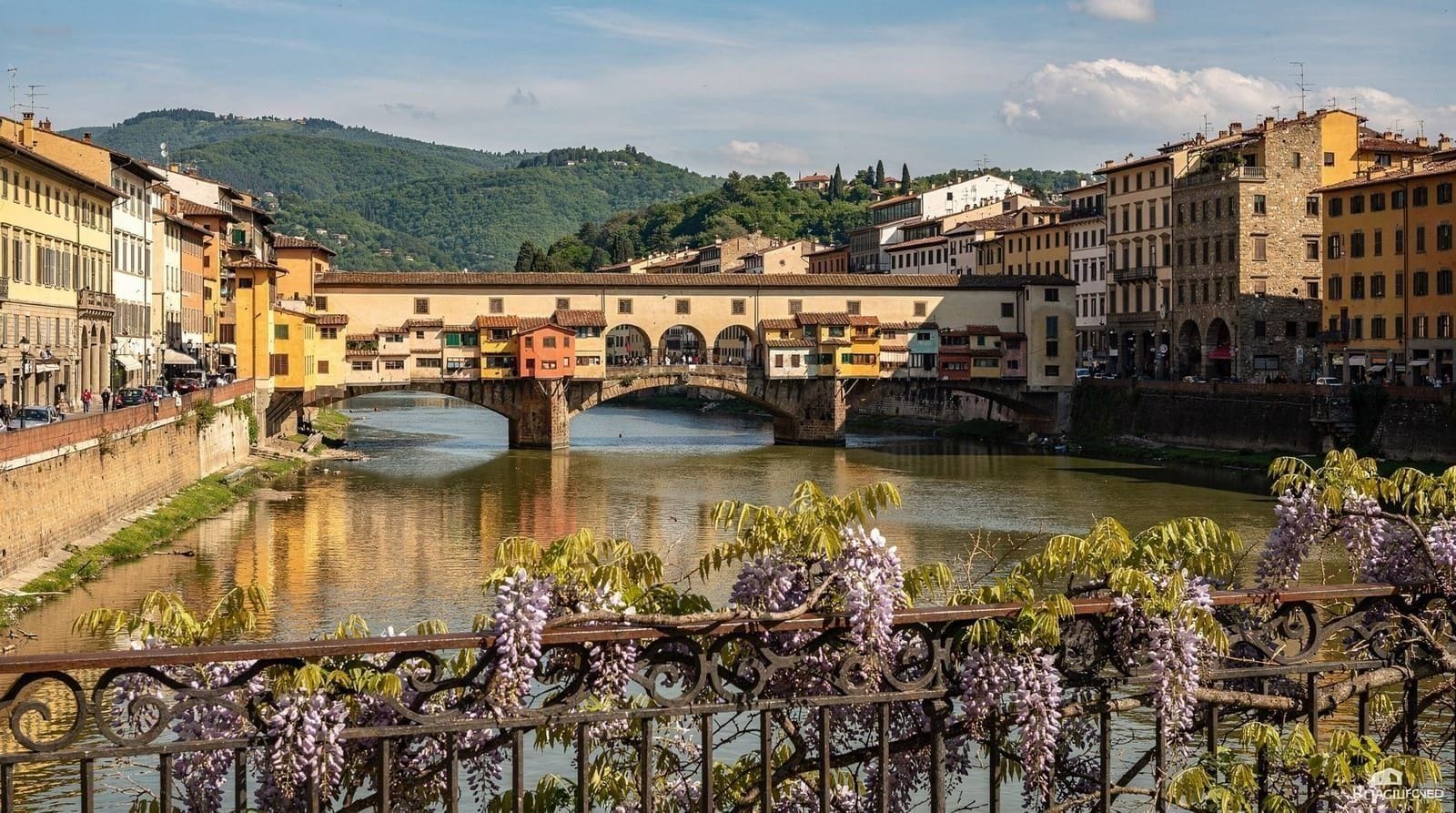
The Ponte Vecchio at 7pm in December, with the gold and jewellery shops lit from inside and the reflections dancing on the Arno below, is worth the cold.
The best things to eat in December
December means the best Italian food markets. The products available — white truffles until mid-December, the new olive oil (olio nuovo) pressed in November-December, fresh porcini until the cold sets in, chestnuts roasted on outdoor braziers — are seasonal in a way that summer travel doesn’t offer.
Olio nuovo (new oil): The first cold pressing of the olive harvest, typically available November through January. Intensely grassy, slightly peppery, with a freshness that older oil loses. Buy a bottle from a quality alimentari (Del Duca near the Mercato Centrale is reliable) and use it on bread immediately. The standard is to taste it on plain grilled Tuscan bread (fett’unta — literally “oily slice”), nothing else.
Chestnuts: The street carts selling charcoal-roasted chestnuts (caldarroste) appear throughout November and December. A cone of ten costs €2-3. The chestnuts go well with the fortified Vin Santo wine available by the glass in most wine bars.
Cantucci e Vin Santo: The Florentine Christmas dessert ritual — hard almond biscuits (cantucci or cantuccini) dipped in Vin Santo, the amber dessert wine made from dried Trebbiano and Malvasia grapes. Buy cantucci from Biscottificio Antonio Mattei in Prato (30 minutes by train) if you can, or from their Florence outlets. The ritual is to dip, not to dunk — the cantucci should absorb the wine at the tip rather than becoming soggy throughout.
Practical winter logistics
Opening hours in winter: Museums often reduce their hours in winter. Check the current official websites, not travel blog posts written a year ago, which may reflect old hours. The Uffizi and Accademia typically reduce to six days per week (closed Mondays) and may adjust their last entry time.
Church hours: Churches in Florence adjust their visiting hours based on Mass schedules, which are more elaborate in December. The main cathedral holds multiple services daily throughout Advent, and visiting hours fit around them. Check the Duomo Opera’s website for current hours.
Dress code: Florence’s churches maintain their dress code (covered shoulders, no shorts) even in December — sometimes more strictly observed than in summer when the volume of tourists makes enforcement impractical.
Heating in restaurants: Most Florence restaurants are properly heated in winter. The cold-stone restaurants of summer — those beautiful but freezing terraces — are warmed in December. Table seating inside is generally warmer than in courtyards; ask if in doubt.
Florence in December is not the city of the travel posters — the ice cream queue, the sunlit piazza, the summer evening aperitivo. It’s something else: quieter, more honest, more itself. Worth the cold.
If you’re weighing December against other quiet-season options, the best time to visit Florence guide has the full year comparison, and the Florence in winter guide covers January and February for anyone extending the trip past the holidays. For food specifically, the Mercato Centrale is at its best in December, with truffles, olio nuovo and chestnuts all in season at once.
Top experiences
Bookable activities with verified prices and instant confirmation on GetYourGuide.

Florence: walking tour and optional fast-track Duomo visit
- Free cancellation
- Small group
Florence: Duomo tour with Brunelleschi's Dome climb access
- Skip the line
- Free cancellation
Florence: guided tour of Medici family secrets and chapels
- Small group
- Free cancellation
Florence: 2-hour night walking tour
- Free cancellation
- Small group