The truth about Florence in August — and why I'd still go
Let me be blunt: August is not the best month to visit Florence. It is one of the most popular months, which is a different thing entirely.
The temperatures regularly hit 35-38°C by early afternoon, the humidity rising off the Arno turns the air into something you have to push through, and Ferragosto (August 15th) triggers a mass exodus of Florentines that leaves the city half-closed, half-tourist. Some of the best local restaurants shut entirely for two to three weeks. The queues at the Uffizi, on days without pre-booked timed entry, stretch down Via dei Calzaiuoli and don’t move.
And yet. I have been to Florence in August twice. I would go again.
What August actually looks like
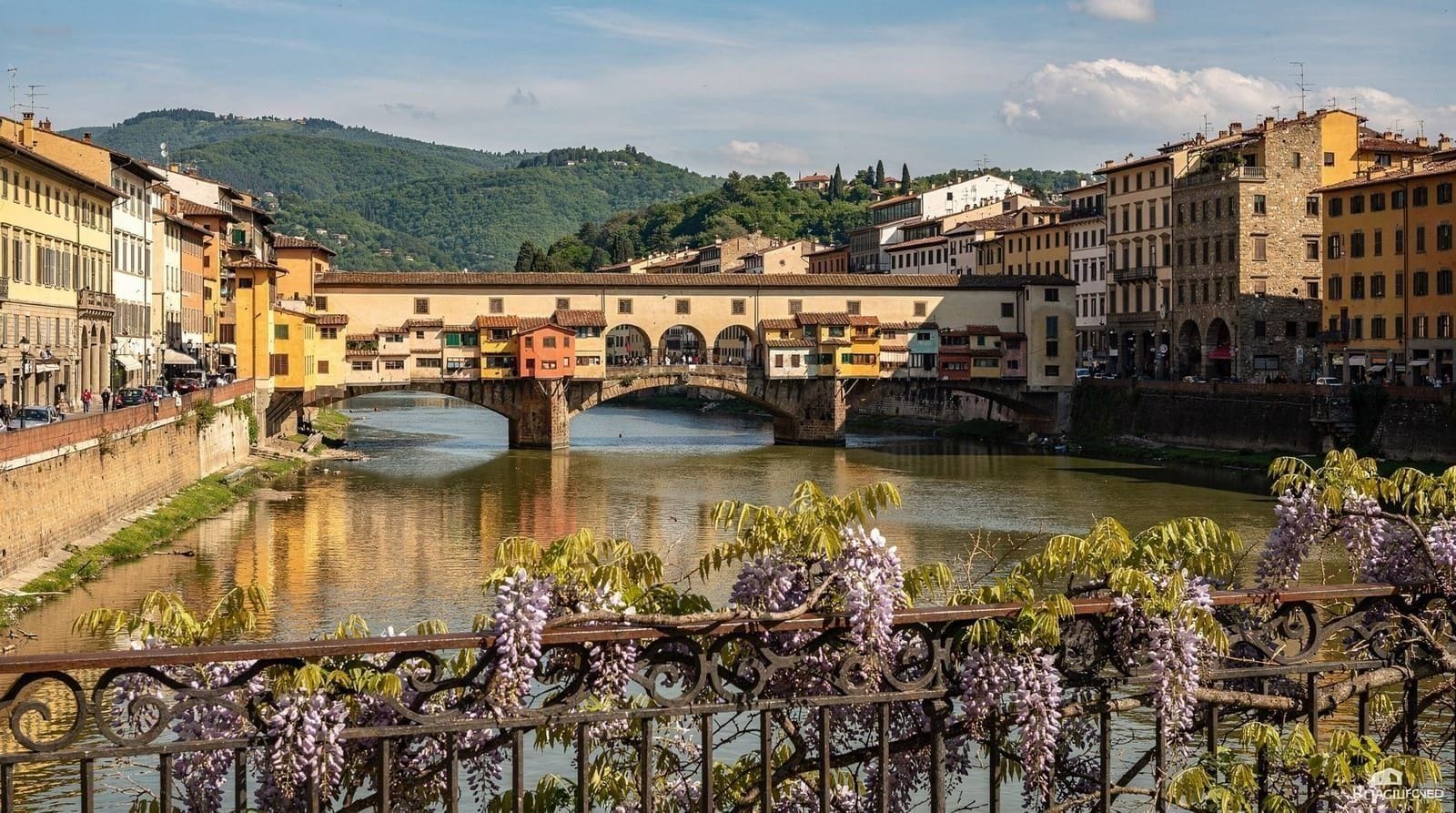
The heat is the first thing you feel, stepping off the train at Santa Maria Novella. The air between the station and the Duomo — a ten-minute walk — smells of sunscreen and stone warmed since morning. By 11am, the main streets are at full tourist capacity. The Ponte Vecchio at noon is a crush of selfie sticks and tour groups.
Between 2pm and 4pm, something interesting happens. Florence, following Italian rhythm, half-stops. Restaurants close. Some smaller shops pull down the shutters. The tourist swarm thins slightly as people retreat to air-conditioned hotels or crawl into the shade of the Boboli Gardens. The city briefly approximates what it might feel like to be there in May.
After 5pm, when the temperature drops from “oppressive” to merely “warm,” Florence becomes something else: the evening city, the one locals actually use. The Oltrarno neighborhood on the south bank of the river, where genuine Florentines still live and eat, fills with people who know where the good aperitivo is. The narrow streets of Santa Croce cool down. The light turns amber and then rose and hits the rooftops in ways that justify every photograph you’ve ever seen.
The practical August problems
Ferragosto week (roughly August 10-20): This is when many Italian-owned businesses simply close. The city doesn’t shut down — it’s too commercially dependent on tourists — but the family-run trattoria you read about on a food blog may have a hand-written note on the door saying it reopens September 3rd. Always check opening hours before making a specific restaurant the plan.
Museum queues without booking: Every museum in Florence has timed-entry tickets available online. If you arrive in August without them, you will queue for 2-3 hours at the Uffizi and may not get in at all for the Accademia. There’s no good excuse for this in 2025 — book tickets online at least two weeks in advance in peak season.
Heat management: The Uffizi and Accademia are air-conditioned — a genuine August survival argument for spending three hours in a museum. The Boboli Gardens, the Piazzale Michelangelo, and any outdoor activity require either early morning (before 10am) or late afternoon (after 5pm) scheduling.
Prices: August is high season. Hotel prices are at their annual peak, typically 20-40% higher than April or October equivalent rooms. A mid-range hotel that costs €180 in spring will ask €240 or more in August.
What works better in August
Early mornings are magical. I’ve walked through the Piazza della Signoria at 7am in August with barely fifteen other people present, the stones still cool underfoot and a street cleaner’s cart the only sound. The Piazzale Michelangelo at sunrise — I know every guidebook says this — is, in August, still genuinely quiet before 8am and the view over the city with the morning mist on the Arno is worth setting an alarm.
The smaller museums are less crowded. While the Uffizi and Accademia draw the masses, the Bargello (one of Europe’s great sculpture museums), the Museo Nazionale di Palazzo Davanzati, and the Museo dell’Opera del Duomo all operate with shorter queues even in August.
San Miniato al Monte is your friend. The basilica above the Piazzale Michelangelo has its own magnificence — a Romanesque facade in green and white marble, mosaics inside, Gregorian chants at vespers — and because it’s a working monastery rather than a ticketed attraction, it’s rarely overwhelmed even in peak season.
Night Florence is excellent. Evening walking tours through the historic center, when the temperature has dropped and the illuminated buildings glow against the dark sky, are one of August’s genuinely better experiences. The tourists thin out (they’re at dinner), the city feels ancient, and the Piazza della Repubblica with its carousel is absurdly charming at 10pm.
The August outdoor music programme
One of August’s genuine advantages over other months is the cultural programme that activates specifically for summer. Florence’s Estate Fiesolana (the summer arts festival in Fiesole’s Roman theatre, accessible in 20 minutes by bus) runs throughout July and August with concerts, dance, and theatre in one of the most extraordinary outdoor settings in Italy.
In the city, the Cortile di Palazzo Vecchio hosts a summer concert series. The outdoor cinema programme (Cinema all’Aperto) operates in various gardens and piazzas — the one in the Piazzale Michelangelo at dusk, with the city spread below you, has an obvious appeal.
The evening cultural programme also includes the many open-air churches: several Florentine basilicas hold evening concerts in their naves and cloisters throughout summer, many of them free. The music in the acoustic of a 14th-century church in August — when the walls have absorbed the season’s warmth — has a quality that no indoor venue approximates.
What to do with children in August
Florence in August with children requires honest planning around the heat. The afternoon heat exclusion principle applies particularly forcefully to young children; a 3pm visit to an outdoor piazza in 38°C heat is miserable for everyone.
The Boboli Gardens have play areas and fountains; the grotto sections (La Grotta del Buontalenti, in particular — a Mannerist fantasy cave with plaster sea creatures and Michelangelo’s Prisoners embedded in the walls) are reliably cooler than the open terrace areas. Entry included with the Pitti Palace ticket.
The Pinocchio Park in Collodi (an hour by car) is Florence-area August family infrastructure — not high art, but genuinely fun, and the Pinocchio story has a specific resonance in Tuscany where Carlo Collodi was born.
For older children: the Galileo Museum is underrated for younger visitors. The telescopes, the preserved moons model, the preserved finger in a reliquary — the museum plays well to the particular combination of scientific curiosity and morbid fascination that characterises approximately ten to fourteen year olds.
The gelato issue
This is a good month to learn the difference between good gelato and tourist-trap gelato, because the distinction matters everywhere in Florence but is most dramatically visible in August, when every bad operator has a mountain of lurid mango-coloured gelato piled high in the window.
Real Florentine gelato: subdued colours (pistachio is pale green, not neon; chocolate is dark brown), stored in covered stainless steel containers called pozzetti, not displayed in mountainous piles. Good spots include Gelateria dei Neri (Via dei Neri), Gelateria Santa Trinita (Piazza Santa Trinita), and Sbrino Gelatificio Contadino in Oltrarno.
In August, with temperatures above 35°C, having a reliable gelato spot within five minutes is a survival strategy.
The heat management strategy
The fundamental error most August visitors make is trying to operate on their usual travel schedule — museums at 10am, lunch at 1pm, afternoon walk. In August Florence, this puts you outdoors at the worst heat of the day and competing for museum time with everyone who had the same idea.
The better approach, borrowed from how Florentines themselves handle August:
6:30-10am: Everything worth doing outside — Piazzale Michelangelo at sunrise, early morning markets, walking the Oltrarno streets before they fill. The air is still cool, the light is beautiful, and the city is yours.
10am-1pm: Air-conditioned museums. The Uffizi and Accademia are genuinely pleasant in August once you’re inside — both are well cooled. Schedule your major museum visits here.
1-4pm: The Italian afternoon. Eat lunch early (noon to 12:30pm at a proper trattoria), then retreat to your accommodation, the shade of the Boboli Gardens, or a gelato shop with seating. This window is not for sightseeing.
4-7pm: Return to outdoor activity as temperatures drop. Walking tours, the Piazza della Signoria, the river walk along the Lungarni.
7pm onwards: The best part of August in Florence. Long evenings, tables outdoors, aperitivo bars with the terraces filling up, outdoor cinema screenings (the Estate Fiorentina programme runs throughout summer and includes open-air film and music events in various piazzas and parks — free or low cost).
Accommodation advice for August
Hotels in August cost more and require booking further ahead than any other month. The trade-off is that more of the city’s accommodation stock is functioning, as opposed to November when some smaller hotels close for renovation.
Book the following as early as you can confirm your dates:
- Your hotel (2-3 months in advance minimum for good options)
- Uffizi timed entry (book the day slots open — typically 60 days ahead)
- Accademia timed entry (same approach)
- Any restaurant with a specific garden or terrace (outdoor dining fills up fast in summer)
My honest verdict
August is Florence on hard mode. The heat, crowds, and Ferragosto closures create a genuinely difficult travel environment. If you have a choice of months, go in April, May, September, or October — you’ll have better weather, shorter queues, and more of Florence’s authentic local life available to you.
But if August is what you have, then plan around the heat (early mornings, museum afternoons, evening everything), book every museum ticket in advance, and embrace the golden-hour version of the city that the crowds can’t touch because they’ve all gone to dinner.
It’s different from the Florence of spring. It’s not lesser.
Escaping the heat: day trips that work better in August
If two days of city heat is enough, an August day trip changes the register entirely. The Fiesole half day trip gains you 200 metres of elevation and a genuinely cooler breeze twenty minutes by bus from the Duomo — the Fiesole destination guide covers the Roman theatre and the views. For a full day out of the city, the Chianti day trip trades pavement for shaded vineyard roads, and August is actually a reasonable month for it since the hill villages rarely reach the stifling density of the city centre. If open water is what you want, the closest realistic option is a train to the coast; ask locally about Viareggio-direction trains, as the Tuscan coast in August is intensely popular with Italian holidaymakers and beach clubs fill fast.
Closer to home, the Boboli Gardens function as an in-city escape — mature trees, box hedges, and enough elevation change to find pockets of shade even at midday, and they are considerably less crowded than the museum circuit because most first-time visitors skip them.
Is August worth it, honestly
August rewards a specific kind of traveller: one who can get up early, take the heat seriously, and isn’t visiting Florence for the first and only time with a rigid checklist. If this is your one shot at the Uffizi and the Accademia and you want a relaxed, unhurried visit, choose a different month if you possibly can — the best time to visit Florence guide lays out the full year. If August is genuinely the only window your schedule allows, it is not a wasted trip; it is a different one, with its own compensations.
See also: best time to visit Florence for a month-by-month breakdown, Florence in winter for the opposite experience, and the Florence budget guide for managing summer premium prices.
Top experiences
Bookable activities with verified prices and instant confirmation on GetYourGuide.

Florence: Uffizi Gallery skip-the-line tickets
- Skip the line
- Free cancellation
Florence: Accademia Gallery — David skip-the-line ticket
- Skip the line
- Instant confirmation
Florence: ticket to Brunelleschi's Dome with panoramic views
- Skip the line
- Free cancellation
Florence: 2-hour night walking tour
- Free cancellation
- Small group