Pienza
Pienza: the ideal Renaissance city built by a pope in the 1460s. Pecorino cheese, Piazza Pio II, Val d'Orcia views, and how to visit from Florence.
Val d'Orcia: Montepulciano, Pienza and Montalcino with winery
- Free cancellation
- Small group
Quick facts
- Distance from Florence
- 120 km / 1 hr 50 min by car
- Distance from Montepulciano
- 13 km / 15 min
- Best for
- Renaissance architecture, Pecorino cheese, Val d'Orcia views
- Budget
- €20-50 (cheese, lunch, optional museum)
Pienza rewards a slow half-day more than a rushed checklist visit: one piazza, one terrace view, and a handful of cheese shops carry the whole experience, so the trick is not seeing more but lingering longer at the parts that matter. Most people arrive on a wider Val d’Orcia circuit rather than as a single destination.
| Where | Val d’Orcia, 120 km / 1h50 south of Florence by car |
| Cost | Free piazza + terrace; €7 palace, €5 museum, €15-25/kg cheese |
| Time needed | 2-3 hours (half-day) |
| Getting there | Car essential; infrequent Tiemme bus via Siena |
| Best time | April-October, afternoon light on the Belvedere terrace |
The pope’s ideal city
In the 1460s, Pope Pius II — born Enea Silvio Piccolomini in the unassuming Sienese village of Corsignano — decided to make his birthplace worthy of his current position. He hired the Florentine architect Bernardo Rossellino, a student of Leone Battista Alberti, to rebuild Corsignano according to Renaissance principles of urban design. He renamed it Pienza, after himself. He died in 1464, before the work was complete, but the core of what Rossellino designed survives essentially intact: a cathedral, the bishop’s palace, the pope’s private residence, the civic hall, all arranged around a central trapezoidal piazza in deliberate geometric and symbolic relationship.
The result is the smallest complete example of Renaissance urban planning in Italy, inscribed as a UNESCO World Heritage Site in 1996. Pienza is not large — the historic centre takes about 20 minutes to walk from end to end — but its quality per square metre is extraordinary. And its cheese is outstanding.
Getting there and logistics
Pienza has no railway station. The practical approach is by car: from Florence (2 hours), take the Superstrada Firenze-Siena south, continue on the SR2 south through Torrenieri, and follow the SP146 east for 13 kilometres to Pienza. Parking is in the car parks outside the walls; do not attempt to drive inside the ZTL historic centre.
From Montepulciano, Pienza is 13 kilometres west (15 minutes). The natural itinerary combines both in the same day — Montepulciano for morning and wine, Pienza for afternoon and cheese. See our Montepulciano guide and the Val d’Orcia regional guide for combined planning.
Bus service from Siena to Pienza exists via Tiemme (change at San Quirico d’Orcia) but is infrequent and makes a long day trip without a car impractical.
Piazza Pio II
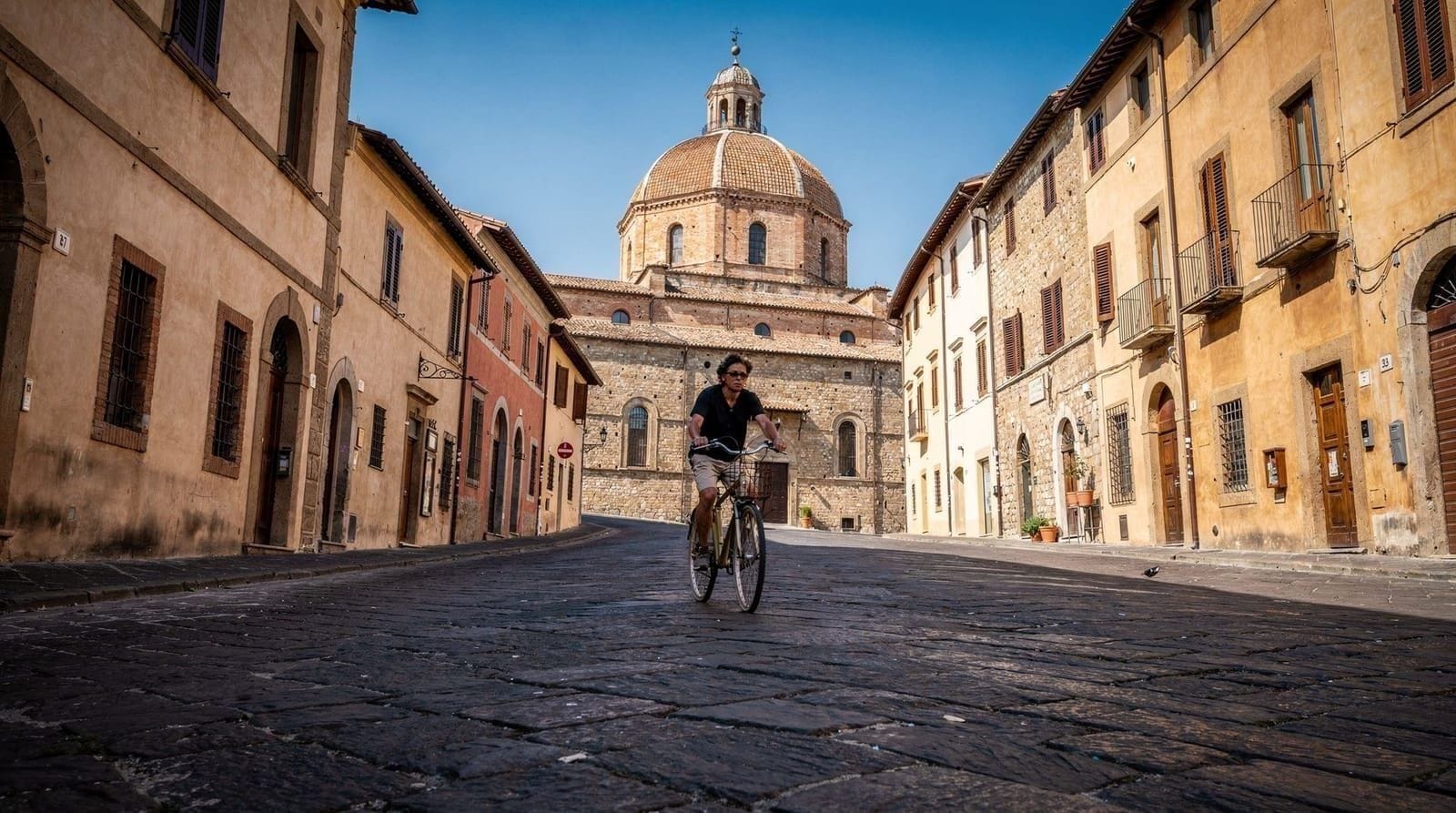
The main piazza, designed by Rossellino in a slightly irregular trapezoidal form to accommodate the existing street layout while still achieving a sense of geometric order, is the heart of the visit. The four principal buildings around it were designed as a coherent ensemble:
Cattedrale dell’Assunta: Rossellino’s cathedral, built 1459-1462, has a luminous white travertine interior flooded with light from large Gothic windows — Pius II explicitly requested that the church be as light-filled as possible, an unusual specification for the period. The high altarpieces were commissioned by Pius from five Sienese painters as matched panels; they remain in place. The crypt below has an interesting small museum. The apse end of the cathedral, visible from the town’s rear terrace, is already showing geological subsidence — the entire rear section is slowly sliding downhill due to the unstable clay soil. Free entry; small donation requested.
Palazzo Piccolomini: The pope’s private palace, adjacent to the cathedral. Rossellino modelled the street façade on Alberti’s Palazzo Rucellai in Florence. The rear of the palace has a triple-level loggia overlooking a hanging garden (giardino pensile) with extraordinary views across the Val d’Orcia. Tours of the palace interior (upper floors, reception rooms, the pope’s bedroom) run by timed entry; approximately €7. Open Tuesday-Sunday 10:00-18:30.
Palazzo Vescovile (Bishop’s Palace): Houses the Museo Diocesano with a collection of Sienese and local paintings, tapestries, illuminated manuscripts and Pius II’s embroidered ceremonial cope (mantle). Admission approximately €5. Closed Tuesdays.
Palazzo Comunale: The civic hall, the smallest and simplest building on the piazza, with a loggia at ground level. The bell tower offers views over the town if open.
The rear terrace and Val d’Orcia views
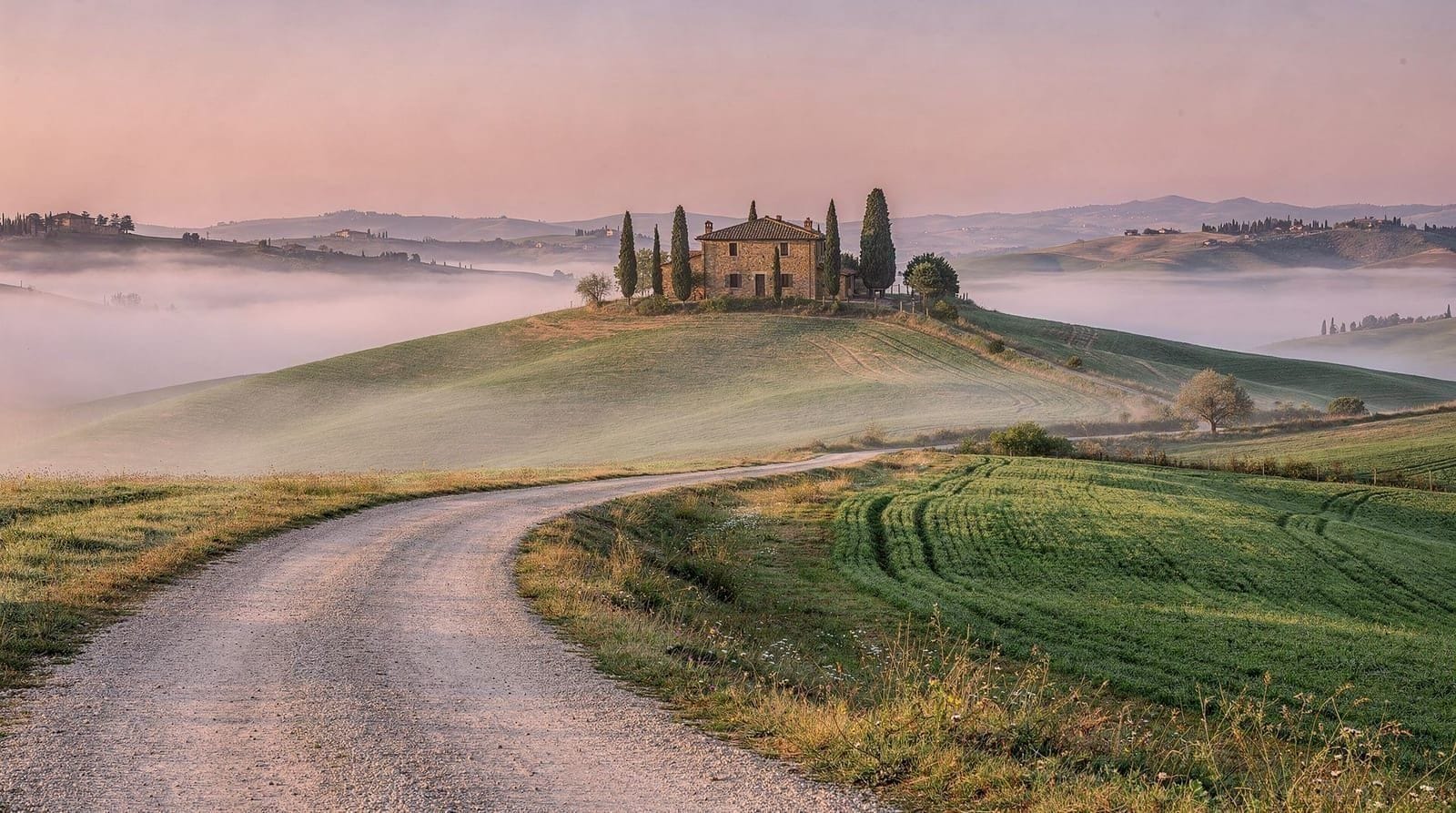
Behind the cathedral, a stone terrace (Belvedere) overlooks a sheer drop to the Val d’Orcia below. The view — rows of cultivated fields, scattered farmhouses, cypress lines, Monte Amiata on the horizon — is one of the classic Tuscan panoramas and is free. This is the shot. Go in the afternoon for warm light on the valley.
The same terrace shows the apse of the cathedral in profile and the progressive slide of the building’s foundations. Visible cracks and remedial work on the wall are ongoing.
Pecorino di Pienza
This is the other primary reason to visit Pienza. The sheep’s milk cheese of the Pienza area, produced by farms throughout the Val d’Orcia, is one of the finest cheeses in Italy. Corso Rossellino (the main street) has a sequence of cheese shops (formaggerie) selling Pecorino in multiple stages of aging and flavour variations:
- Fresco (fresh, white, mild, 3-4 weeks old)
- Semistagionato (semi-aged, 60-90 days, sharper flavour)
- Stagionato (aged 4-6 months, firm, crystalline, complex)
- Aged in various rinds: in vine ash, rubbed with olive oil, encrusted with red pepper, dusted with truffles, wrapped in walnut leaves
The differences in flavour are real and worth exploring. Ask for samples at any reputable shop. Buy the stagionato for travel — it keeps well.
Good shops on Corso Rossellino:
- Enoteca di Ghino: Good cheese selection with knowledgeable staff.
- Marusco e Maria: One of the best-stocked and most authentic shops on the corso.
- Buca delle Fate: Also sells local wines, honey and preserves alongside the cheese.
Budget approximately €15-25 per kilogram for mid-range Pecorino. The most expensive aged varieties with truffle or walnut rind run €40+/kg.
The historic streets
Pienza’s historic centre is walkable end-to-end in 20 minutes at a normal pace. Beyond the piazza, worth exploring:
Corso Rossellino: The main street, lined with the cheese and wine shops. The eastern end opens to views over the Valdichiana.
Via dell’Amore and Via del Bacio: Narrow lanes on the south side of the historic centre with views over the Val d’Orcia. The names (Lane of Love and Lane of the Kiss) suggest they were romantically popular among locals.
Church of San Francesco: Pre-Pius II, a Franciscan church with 14th-century frescoes inside. Free; often overlooked by visitors focused on the main piazza.
Eating in Pienza
Il Rossellino (Piazza di Spagna 4): Generally considered the best restaurant in Pienza, with a menu focused on local ingredients — Pecorino, wild boar, Cinta Senese pork, truffles in season. Expect €40-60 per person. Booking advised.
Osteria Sette di Vino (Piazza di Spagna 1): More casual, same piazza, good for a simpler lunch with local wine. €25-35.
La Buca delle Fate (Corso Rossellino): Alimentari and deli — buy cheese and cured meats for a picnic in the town park or on the Belvedere terrace.
Combining Pienza with other stops
Pienza is almost always visited as part of a wider Val d’Orcia circuit:
- Pienza + Montepulciano: The most common pairing. 13 kilometres, 15 minutes by car. Montepulciano for wine, Pienza for architecture and cheese.
- Pienza + Montalcino + Bagno Vignoni: A full southern Val d’Orcia day. See our Val d’Orcia guide.
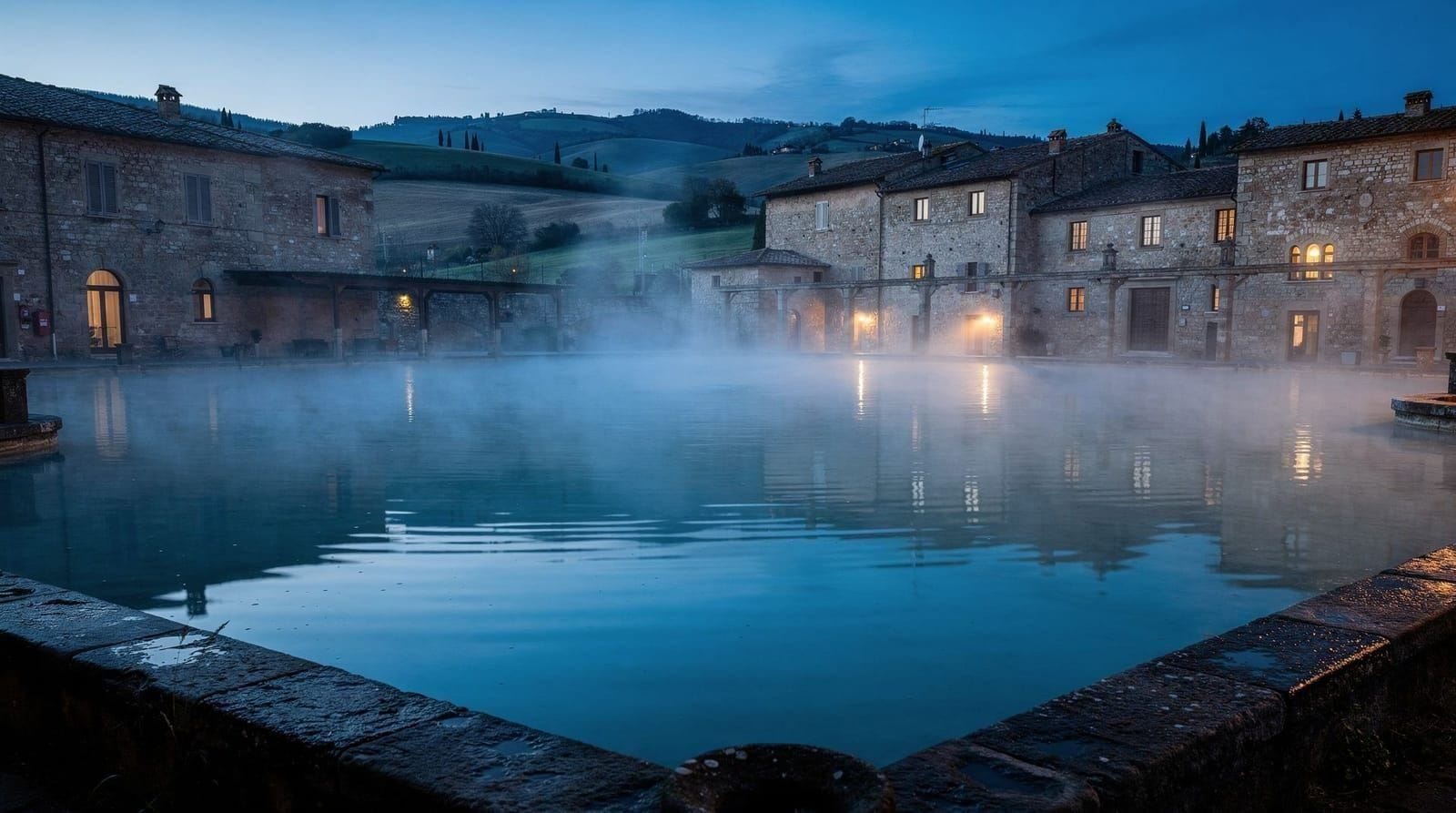
- Pienza + Bagno Vignoni: Bagno Vignoni is 12 kilometres west of Pienza, the thermal pool hamlet is a perfect late-afternoon stop. See our Bagno Vignoni guide.
Pienza, Montepulciano or Montalcino: which one to prioritise
Most Val d’Orcia itineraries only have time for two of the three big hill towns in a single day. Here is how they differ:
| Town | Best for | Time needed | Pairs well with |
|---|---|---|---|
| Pienza | Renaissance architecture, Pecorino cheese, terrace views | 2-3 hours | Montepulciano or Bagno Vignoni |
| Montepulciano | Vino Nobile wine, cellar visits, hilltop walls | 3-4 hours | Pienza |
| Montalcino | Brunello wine, fortress views, quieter streets | 3-4 hours | San Quirico area |
If you can only fit one, choose Pienza for architecture and food, Montepulciano for wine and views, Montalcino if Brunello is the priority. Many day tours from Florence bundle two or three; see the Val d’Orcia road trip itinerary for a slower self-drive version.
Driving and parking notes
Pienza’s ZTL covers the historic centre — do not attempt to drive inside the walls. The main car parks (Piazzale Dante Alighieri and along Via Case Nuove) sit just outside and are a two-to-five-minute walk to Piazza Pio II. Parking is metered during the day and free overnight. If you are self-driving through the wider Val d’Orcia, our driving in Tuscany guide covers ZTL zones, tolls and rental basics; the renting a car in Tuscany guide is useful before you book.
For travellers without a car, an organised Val d’Orcia day trip from Florence or Siena is the realistic alternative — Pienza’s bus connections alone are too sparse to build a comfortable day around.
Frequently asked questions about Pienza
How long does Pienza take to visit?
Two to three hours is enough for the piazza, Palazzo Piccolomini tour, the Belvedere viewpoint and Pecorino shopping. Add an hour for a proper sit-down lunch. It is compact and should not be stretched to a full day unless combined with a surrounding agriturismo visit or extensive wine tasting.
What makes Pienza’s Pecorino different?
The sheep in the Pienza area graze on specific herbs, flowers and grasses of the Val d’Orcia (including wild thyme, fennel and chicory), which gives the milk and cheese distinctive aromatic characteristics. The aging process in the various rind styles adds further complexity. It is genuinely different from generic Pecorino Toscano and worth seeking out.
Can I visit Pienza without a car?
With great difficulty by public transport (Tiemme bus from Siena via San Quirico with infrequent connections). A car or guided tour is strongly recommended. The town itself is walkable once you arrive.
Is the Palazzo Piccolomini tour worth it?
Yes, particularly for the hanging garden loggia with Val d’Orcia views and the surprisingly intimate scale of the reception rooms. The tour takes about 45 minutes with an audio guide. The views from the loggia alone justify the €7 admission.
Where is the best viewpoint over Val d’Orcia near Pienza?
The Belvedere terrace behind the cathedral is the most immediately accessible. The best dawn and morning photography viewpoint (the “cypress road” images) is approximately 3 kilometres north of Pienza on the road toward San Quirico d’Orcia — a hairpin bend section with a famous farmhouse in a cypress-lined field. Not accessible without a car.
Is Pienza worth visiting if I’m also going to Montepulciano?
Yes — the two are usually combined precisely because they complement rather than duplicate each other. Montepulciano is bigger, hillier and wine-focused; Pienza is compact, architecturally coherent and food-focused. Doing both in one day (Montepulciano morning, Pienza afternoon) is the most common and efficient Val d’Orcia itinerary from Florence.
Where should I eat cheese in Pienza — a shop or a restaurant?
Both, ideally. Buy from a formaggeria on Corso Rossellino to taste and compare aging styles side by side, then order a Pecorino-based dish or cheese board at a restaurant like Il Rossellino for a properly plated version with honey or pear. The shops are cheaper for take-home cheese; restaurants let you try it dressed and paired with wine.
Top experiences
Bookable activities with verified prices and instant confirmation on GetYourGuide.