Prato
Prato: 20 min from Florence by train. Filippo Lippi's masterpiece frescoes, a Medici castle, and the original Prato cantuccini biscotti.
Florence: walking tour
- Free cancellation
- Instant confirmation
Quick facts
- Distance from Florence
- 20 km / 20 min by train
- Train cost
- €2.80 one-way
- Best for
- Filippo Lippi frescoes, Medici castle, authentic working city
- Budget
- €20-40
| Where | Prato, 20 km / 20 min west of Florence by train |
| Cost | €2.80 train + around €13 combined Duomo museum + castle entry |
| Time needed | Half day (morning frescoes, afternoon back in Florence) |
| Getting there | Regional train, Firenze SMN to Prato Centrale, every 15-20 min |
| Best time | Year-round; avoid Mondays when some sites close |
20 minutes from Florence, a different world
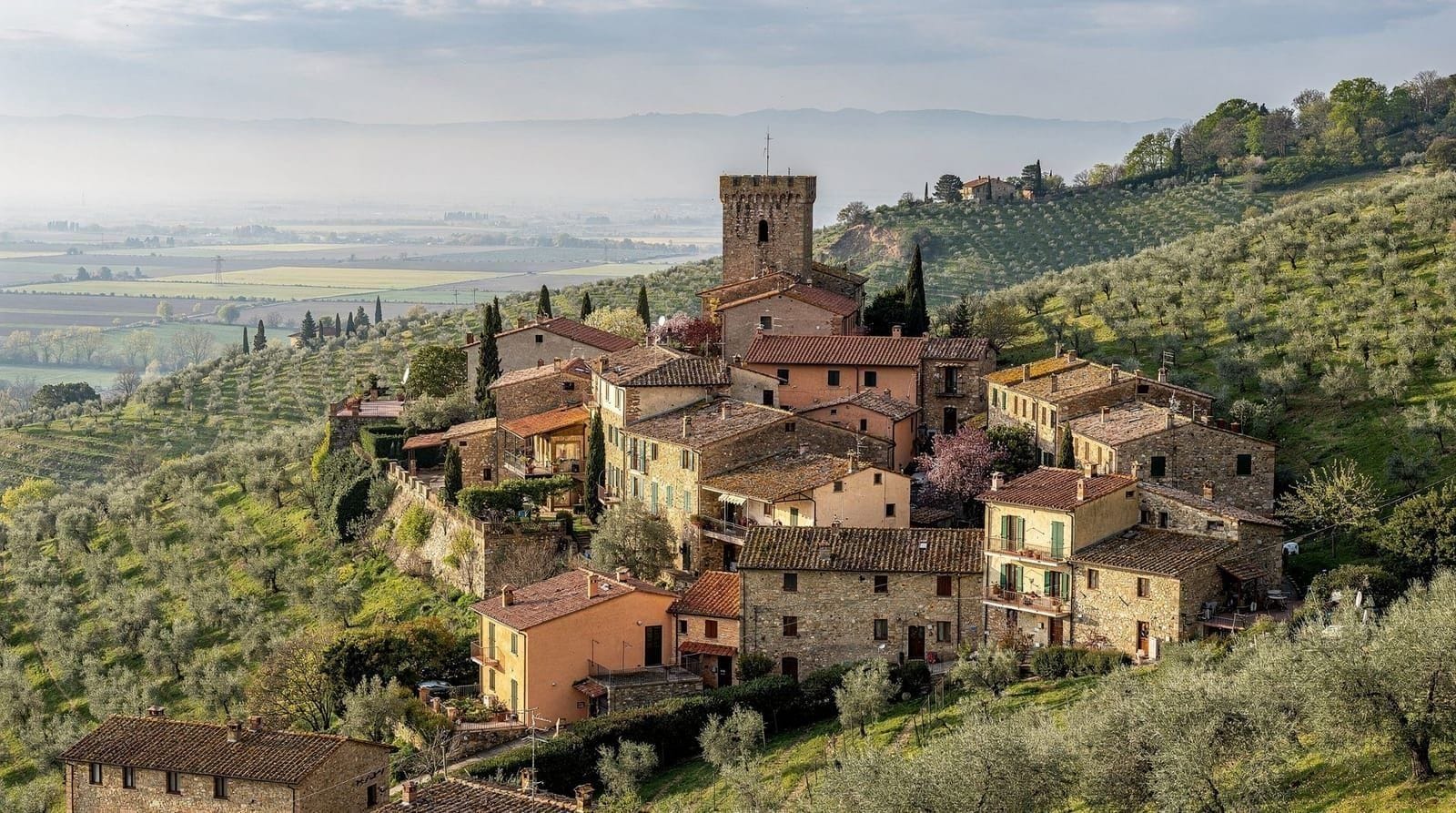
Prato is Italy’s second-largest city in Tuscany (population 190,000), 20 kilometres west of Florence, and it is thoroughly, deliberately unglamorous. While Florence attracts millions of visitors per year to its Renaissance monuments, Prato receives a fraction of that number and makes little effort to accommodate them. The city has been a textile production centre since the 12th century — it remains the most important textile manufacturing hub in Italy — and the working-city character is palpable in a way that has been largely designed out of central Florence.
What Prato offers in return for this uncharming first impression is one of the greatest fresco cycles in Italy, a Medici castle in the city centre that is inexplicably undervisited, cantuccini biscotti that are definitively better than those sold in Florence tourist shops, and the authentic experience of a major Italian city going about its business with minimal performance for tourists.
Getting there from Florence
By train (simplest): Regular trains run from Florence Santa Maria Novella to Prato Centrale station every 15-20 minutes. Journey time: approximately 20-22 minutes. Cost: €2.80 one-way (regional train, no reservation needed). Prato Centrale station is a 10-minute walk from the historic centre and the main sites.
By car: Via the A11 Autostrada (15-20 minutes) or the SS66/SR66 through Sesto Fiorentino (25 minutes). The city centre has a ZTL; park on the periphery and walk in.
Museo dell’Opera del Duomo and the Lippi frescoes
This is the essential reason to visit Prato. The cathedral of Santo Stefano’s choir chapel contains a fresco cycle by Filippo Lippi, painted between 1452 and 1465, depicting scenes from the lives of St Stephen (the cathedral’s patron) and St John the Baptist. Lippi was a Carmelite friar who had previously lived in Prato and fathered a son (Filippino Lippi, who became an important painter himself) with a nun he seduced from the convent where she was a ward. The scandal was enormous and temporarily disrupted Lippi’s career. The frescoes were painted during the period of the controversy.
The quality of the Prato frescoes is extraordinary, particularly the Feast of Herod sequence showing Salome’s dance and the presentation of John the Baptist’s head. The figures have a sense of movement, psychological depth and spatial sophistication that places Lippi among the great fresco painters of the period. Vasari ranked him among the leading painters of his generation.
Visiting logistics: The frescoes are inside the cathedral (free to enter, though donations welcomed) or accessible via the adjacent Museo dell’Opera del Duomo (admission approximately €8, which also includes access to the museum collection of works removed from the cathedral). Open Tuesday-Sunday 10:00-18:00.
The Cathedral of Santo Stefano
The exterior of the cathedral is notable for the external pulpit (Pulpito del Sacro Cingolo) designed by Donatello and Michelozzo, projecting from the south-west corner of the façade. The pulpit was built to display the Sacred Girdle (Sacra Cintola) of the Virgin — a relic traditionally brought to Prato by Michele Dagomari from Jerusalem in the 14th century. The relic is displayed from the pulpit five times a year on religious festivals; otherwise it is kept in the Chapel of the Sacred Girdle inside the cathedral. The Donatello-Michelozzo pulpit and the frescoes inside the chapel of the Sacred Girdle (by Agnolo Gaddi) are complementary to the Lippi cycle.
Castello dell’Imperatore (Medici Castle)
The Castello dell’Imperatore (Emperor’s Castle) stands in the city centre and is one of the best-preserved medieval castles in Tuscany — and one of the least visited for its quality. Built by Frederick II of Hohenstaufen in the 1230s, it is one of only two Hohenstaufen castles in mainland Italy (the other is in Puglia). The rectangular plan, the corner towers, the battlements and the empty interior court are intact. Walking the battlements provides views over the city and the surrounding industrial plain.
Admission approximately €5. Open Tuesday-Sunday 10:00-18:00.
Cantuccini of Prato
Prato claims the invention of cantuccini — the twice-baked almond biscotti served with Vin Santo for dipping. This claim is supported by a 1691 document from the Prato archive and the biscuit’s historical association with the Antonio Mattei bakery (founded 1858), which is still operating at Via Ricasoli 20 in central Prato. The biscotti sold by Mattei are genuinely different from the tourist-market versions in Florence: harder, more almond-forward, less sweet, and baked with whole almonds rather than flavoured with extract.
Buying a bag of Mattei cantuccini is among the most authentic Prato food experiences and the best souvenir you will find in the city. Also look for their brutti ma buoni (ugly but good) almond cookies.
Piazza del Comune and the historic centre
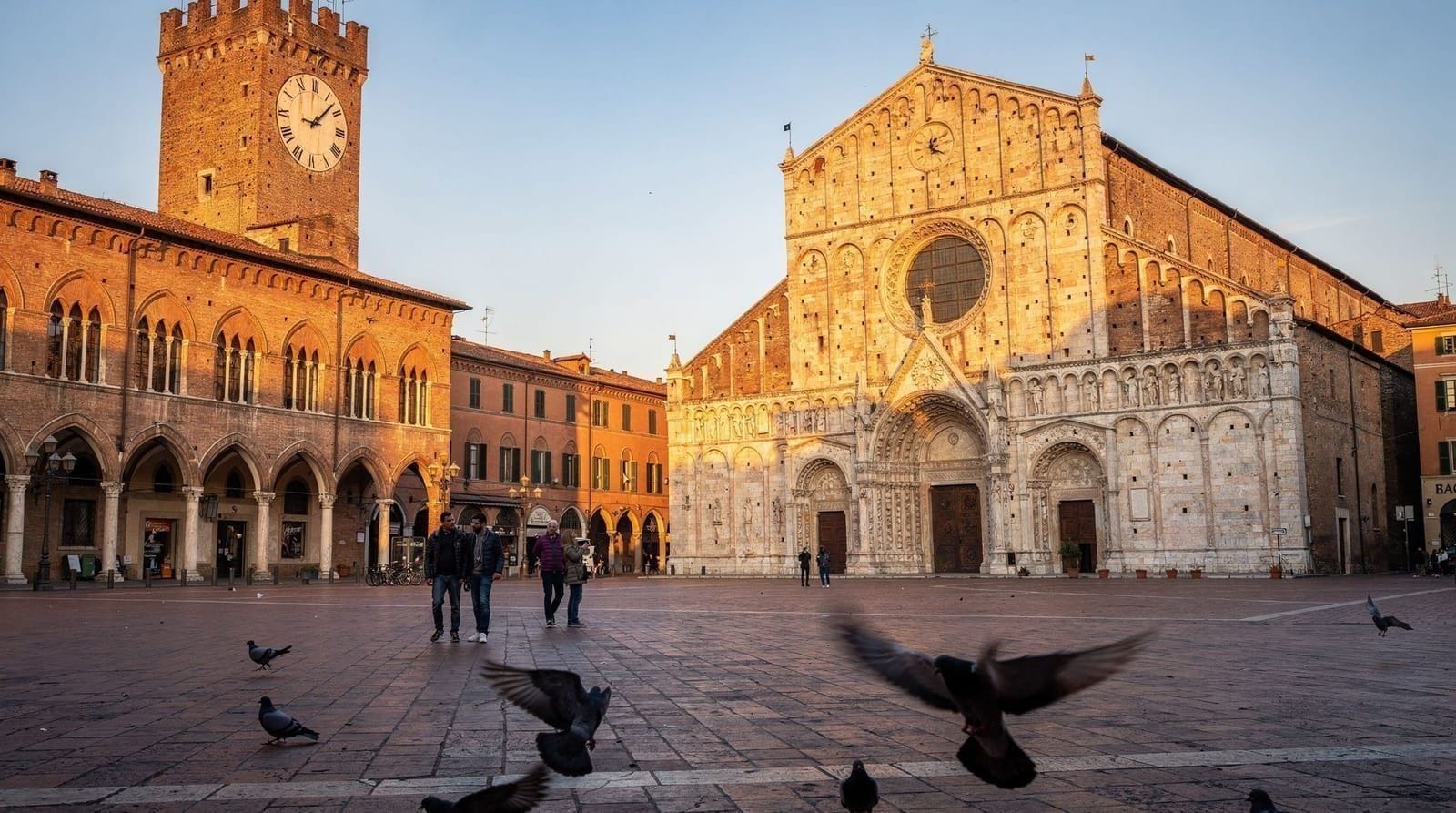
The main piazza is modest and working rather than spectacular, but it has a bronze statue of Francesco Datini (1335-1410) — Prato’s great medieval merchant, whose archive of 150,000 letters, ledgers and documents provided historians with the most detailed surviving picture of 14th-century business life in Italy. Datini left his fortune to the city; the Palazzo Datini (his family home) survives on Via Ser Lapo Mazzei with original frescoes.
The medieval walls still enclose much of the historic centre and are walkable in sections. Prato has the unusual feature (for a city this size) of retaining most of its medieval wall circuit.
Eating and drinking in Prato
Prato has a genuine food culture influenced by the substantial Chinese-Italian community (the largest in Italy after Milan) which has been present since the 1990s, as well as the traditional Tuscan base.
Antonio Mattei (Via Ricasoli 20): Buy cantuccini and Vin Santo here. The shop is a short walk from the Duomo and has been in continuous operation since 1858.
Osteria Cibbè (Piazza Mercatale 49): Traditional Tuscan cooking with excellent pasta and grilled meats. Local clientele. €25-35.
Il Piraña (Via Valentini 110): One of the best fish restaurants in inland Tuscany — surprising in a landlocked city, but Prato has a tradition of fresh fish transport from the Tyrrhenian coast. More expensive (€50-70), but exceptional quality.
Combining Prato with Florence or Vinci
Prato’s proximity to Florence (20 minutes by train, €2.80) makes it one of the easiest add-ons in Tuscany. A morning in Prato for the Lippi frescoes and Mattei cantuccini, followed by an afternoon in Florence, is a comfortable and rewarding day.
Prato to Vinci is approximately 20 kilometres southwest (25-30 minutes by car). The two towns can be combined in a single day for those interested in the western Florentine hinterland — Lippi in Prato, Leonardo in Vinci.
Prato also sits close to the Mugello hills to the north and Fiesole to the east, both plausible same-day pairings if you have a car and want a fuller loop around Florence’s outskirts rather than a single out-and-back trip. Travellers extending further afield sometimes combine Prato with a Bologna day trip, since both are on the same rail corridor north from Florence, though that makes for a long day.
For context on the broader around-Florence area, see our guide to day trips from Florence.
Is Prato worth a dedicated trip or just an add-on
Prato rarely gets a full day from Florence-based visitors, and that’s broadly the right call. The Lippi frescoes are a genuine highlight, but the rest of the city — while interesting for its working character — doesn’t have the density of sights that justifies clearing a whole day when Siena, Pisa or the Chianti hills are also on the table. Treat Prato as a half-morning add-on: arrive by the first or second train, see the Duomo frescoes and the castle, buy cantuccini, and be back in Florence for lunch or an early afternoon.
The exception is art specialists and anyone who has already covered Florence’s major museums and wants a quieter, less-touristed fresco cycle. For that traveller, a slower half-day with a proper sit-down lunch at Osteria Cibbè is worthwhile.
Frequently asked questions about Prato
Is Prato worth visiting from Florence?
For art enthusiasts, the Lippi frescoes alone justify the 20-minute train trip. For those interested in an authentic Italian working city without tourist infrastructure, Prato offers a genuinely different atmosphere from Florence. For the casual visitor, it works as a half-morning add-on rather than a full day.
How good are the Filippo Lippi frescoes compared to Florence’s major works?
The Prato fresco cycle is comparable in ambition and quality to the best Florentine fresco work of the period. Art historians rank it highly. The advantage over Florence’s most-visited works is the accessibility — no booking required, minimal crowds even in summer, and you can stand in front of the Feast of Herod sequence for as long as you like.
What is the Sacred Girdle relic at Prato Cathedral?
A linen belt (girdle) traditionally identified as belonging to the Virgin Mary, brought to Prato in the 12th century. It is one of the most venerated Marian relics in Italy. Kept normally in the cathedral, it is displayed from the external Donatello-Michelozzo pulpit five times a year on significant Marian feast days. The cult of the girdle was central to Prato’s medieval religious and commercial identity.
Why is Prato’s Chinese community notable?
Prato has the largest concentration of Chinese immigrants in Italy outside Milan, primarily involved in the textile and garment manufacturing industry since the late 1980s. The community now numbers approximately 20,000-30,000 and has created a notable Chinese-Italian cultural and food landscape in specific neighbourhoods. It is an unusual and interesting aspect of a post-industrial Italian city adapting to 21st-century migration patterns.
Can I get to Prato without a car?
Yes, easily — this is the easiest train day trip from Florence. Regional trains from Santa Maria Novella to Prato Centrale run every 15-20 minutes, journey 20 minutes, cost €2.80. No advance booking needed. The main sites are all walkable from Prato Centrale station in 10-15 minutes.
How much time should I actually budget for Prato?
Two to three hours covers the Duomo frescoes, the castle and a cantuccini stop. Add an hour for a sit-down lunch if you want to try Osteria Cibbè or Il Piraña. Most visitors from Florence treat it as a half-morning rather than a full day, returning to Florence by early afternoon.
Can I combine Prato with Vinci or Fiesole in one day?
With a car, yes. Prato to Vinci is about 25-30 minutes, making a Lippi-then-Leonardo day feasible for art-focused travellers. Prato to Fiesole is roughly 30-40 minutes and works as a looser pairing — Prato for the morning frescoes, Fiesole for an afternoon view over Florence. Without a car, stick to a single destination, since public transport between Prato and either town is indirect.
Top experiences
Bookable activities with verified prices and instant confirmation on GetYourGuide.