Mugello
Mugello: the Medici's ancestral valley north of Florence. Scarperia knives, chestnut woods, Medici villas and the famous MotoGP circuit.
Florence: Chianti wineries tour with wine tasting
- Free cancellation
- Small group
Quick facts
- Distance from Florence
- 30-40 km north / 40-50 min by car
- By train
- Train to Borgo San Lorenzo (~40 min), or Autolinee Toscane bus
- Best for
- Countryside, Medici history, chestnut woods, cycling
- Budget
- €20-50
The Medici valley
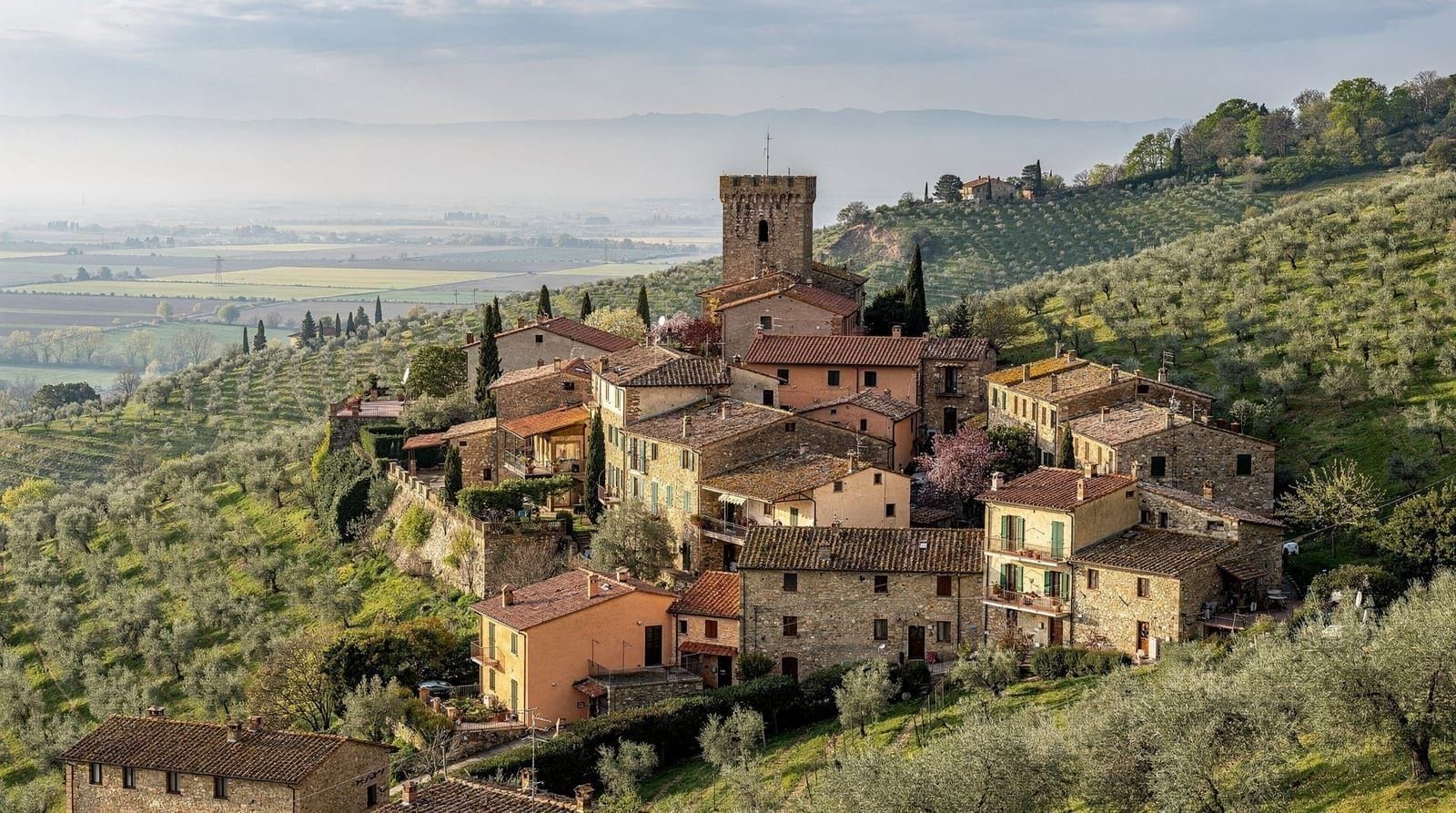
The Mugello is the broad valley north of Florence through which the Sieve river flows, enclosed by the Apennine foothills on three sides and opening toward the Arno valley to the south. It is the ancestral homeland of the Medici family — before they were bankers and rulers of Florence, they were rural landowners in Mugello — and the valley is dotted with their early villas, parish churches and fortifications. Today it is a quiet, green, relatively un-touristy area that offers an entirely different character from the Renaissance city 30-40 kilometres to the south.
For visitors to Florence, Mugello serves primarily as a rural escape rather than a monument-focused destination. The draw is landscape: dense chestnut forests on the Apennine slopes, river valleys, hilltop villages, cycling routes and hiking trails through scenery that Florence’s central museums cannot provide. There is enough Medici heritage to give the excursion cultural content.
| Where | 30-40 km north of Florence, Apennine foothills |
| Time needed | Half day to full day |
| Getting there | Car (40-55 min), Faentina train to Borgo San Lorenzo (~40 min), or Autolinee Toscane bus |
| Cost | €20-50 for a day, more on MotoGP race weekend |
| Best time | April-October; chestnut season September-November |
Getting there from Florence
By car (recommended): From Florence, take the SS65 (Via Bolognese) north from Piazza della Libertà through the Apennine passes, or the quicker SS302 north from the Autostrada. The SS65 through the hills is the scenic route (45-55 minutes to Borgo San Lorenzo). The faster A1 motorway cuts through tunnels and is quicker (35-40 minutes) but misses the hill scenery.
By train: The Faentina railway line runs from Florence Campo Marte station north through the Apennines to Borgo San Lorenzo and Faenza. Journey to Borgo San Lorenzo approximately 40 minutes. Trains run roughly hourly. This works for visiting Borgo San Lorenzo and the immediate valley; getting to more rural parts of Mugello requires a car or bike.
By Autolinee Toscane bus: Buses run from Florence’s bus station (Via Santa Caterina da Siena) to several Mugello towns including Scarperia and Borgo San Lorenzo.
Scarperia and the cutlery tradition
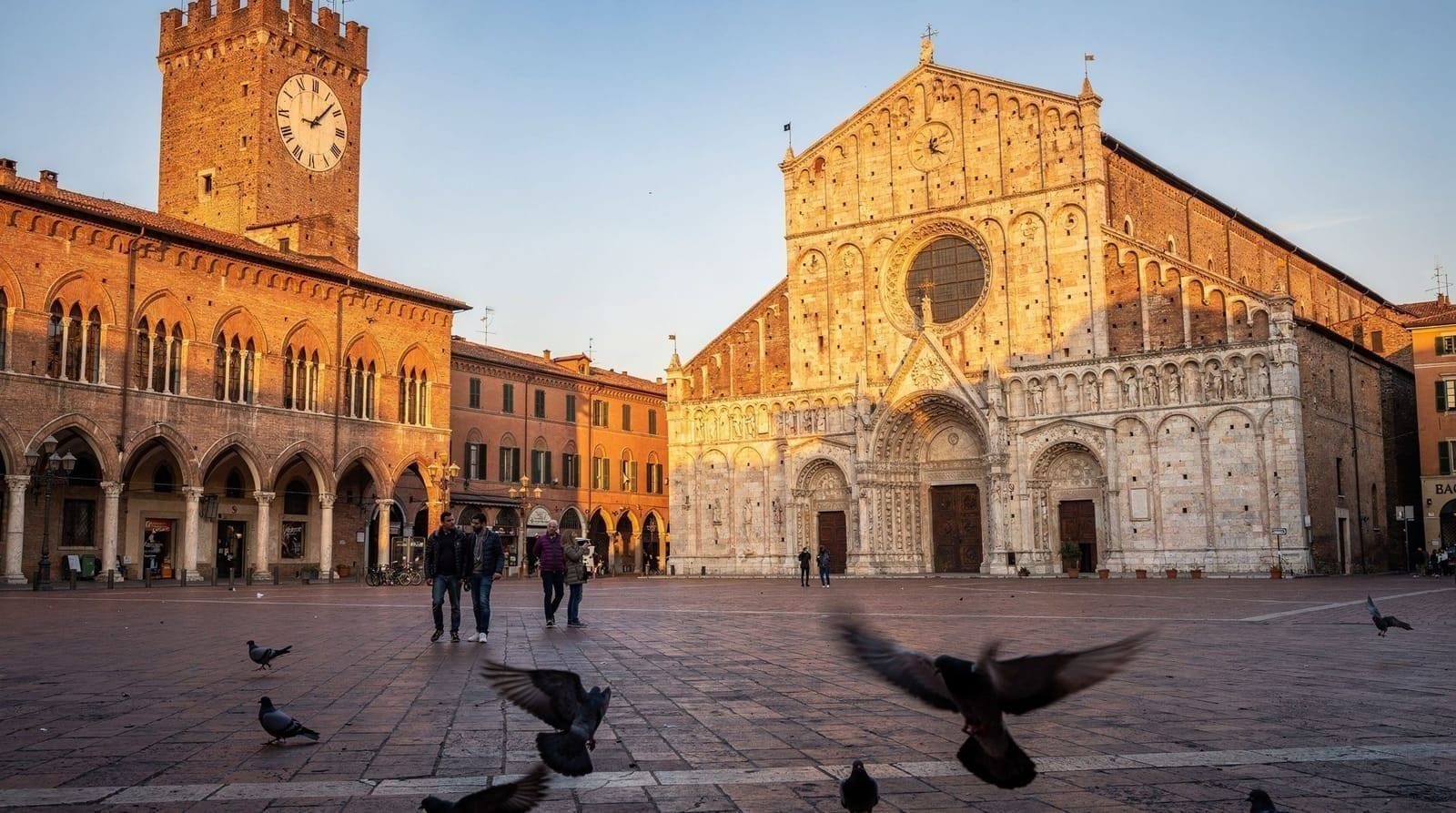
Scarperia, 30 kilometres north of Florence, is the most interesting town in the lower Mugello valley. Founded by the Florentine Republic in 1306 as a military outpost controlling the northern pass into Emilia-Romagna, it has a handsome medieval centre built on a regular grid — unusual for Tuscany — with the Palazzo dei Vicari at its heart. The palazzo’s exterior is covered with stone escutcheons (coats of arms) of the successive Florentine governors who served here, making it one of the more unusual civic monuments in the region.
Scarperia has been famous since the 14th century for the production of bladed tools: knives, scissors, hunting knives and artisanal cutlery. Several workshops and shops in the town still produce and sell handmade blades using traditional methods. The Museo dei Ferri Taglienti (Museum of Cutting Instruments) in the Palazzo dei Vicari documents this craft history. Admission approximately €4.
Medici villas in Mugello
The Medici family built several villas in the Mugello as retreats and symbols of their rural origins.
Villa Medicea di Cafaggiolo (near Barberino del Mugello): One of the oldest Medici residences, converted from a castle by Michelozzo in 1445. Lorenzo il Magnifico spent time here. Now privately owned and not regularly open to the public, but the exterior and grounds are visible from the road. It retains the crenellated towers of its castle origin.
Villa Medicea del Trebbio (near Sant’Piero a Sieve): A smaller Medici property also converted by Michelozzo, on a hillside above the Sieve valley. Similar restricted access.
Convento del Bosco ai Frati (near Borgo San Lorenzo): A Franciscan convent on a wooded hillside, also restored by Michelozzo for Cosimo il Vecchio. Contains a painted crucifix attributed to Donatello. Open to visitors (free); one of the most atmospheric Medici-era sites in Mugello and rarely visited.
The Autodromo del Mugello
The Mugello Circuit (Autodromo Internazionale del Mugello), located near Scarperia, is one of the finest and most challenging race tracks in the world. The Italian Grand Prix of MotoGP is held here annually (typically May-June), making it one of the most atmospheric events in world motorsport. The surrounding Apennine hillsides fill with Italian MotoGP fans, campers and flags, and the track’s layout — winding through the hills with spectacular scenery — makes it visually extraordinary as a race venue.
Outside race events, the circuit offers track days and driving experiences. Check mugellociruito.it for current schedules.
Landscape, walking and cycling
The Mugello’s greatest asset is its landscape. The Apennine hills north and east of the valley are covered with chestnut forests, beech woods and hiking paths. Several established cycling routes cross the valley, including sections of the VENTO route (Venice-Turin cycle path) and the Ciclopista del Sole.
Chestnut season (October-November): The Mugello chestnut harvest is celebrated with sagre (festivals) in various villages throughout October. Local chestnuts are roasted, made into flour (farina di castagne) for the typical Tuscan chestnut cake (castagnaccio) and sold at roadside stands.
Lago di Bilancino: A reservoir lake in the western Mugello, created in the 1990s. The lakeside area has cycle paths, beaches and water sports in summer. A pleasant afternoon stop.
Combining Mugello with other stops
Mugello can be combined with Fiesole for a northern hills day — leaving Florence, stopping at Fiesole for 2 hours, continuing north through the Apennine foothills to Scarperia or Borgo San Lorenzo.
The Florence-Bologna road (SS65, “Passo della Futa”) passes through the heart of the Mugello and is the historic route connecting the two cities before the motorway. Driving this road rather than the motorway when travelling to Bologna adds 20-25 minutes but passes through extraordinary Apennine landscape. See our Bologna guide for the onward destination.
Planning the day around your own pace
Mugello rewards a loose plan. The valley is not built around a single headline sight, so the best days are the ones that pick one or two anchors and leave room for the rest: a long lunch in a trattoria, a slow walk in the chestnut woods, a detour down a side road because a village looked inviting. If you arrive expecting a queue of famous monuments, you will be disappointed; if you arrive wanting space and quiet, the valley delivers.
A sensible shape for a day is to choose a theme. A history day would pair Scarperia’s Palazzo dei Vicari with the Medici sites around Borgo San Lorenzo and San Piero a Sieve. A landscape day would put a bike or a pair of walking shoes at the centre and treat the towns as lunch stops. A motorsport day is built around the circuit and little else. Trying to do all three in one outing is the usual mistake, and it turns a relaxing valley into a rushed drive between car parks.
If you want to understand why the Medici mattered here before they mattered in the city, it helps to read up first. Our Medici family history guide sets out how a family of rural landowners became the dominant force in Florence, and the Medici Chapels guide shows where that story ends up in stone and marble. Seen in that order, the modest villas of the valley make much more sense, and so does the contrast with the grand city monuments you may have already visited.
How Mugello fits into a longer Tuscany trip
Mugello sits at the quiet end of the day-trip spectrum. Compared with San Gimignano, Pisa or Lucca, it has far fewer visitors and far less infrastructure aimed at them. That is exactly its appeal, and also the reason it works best as a second or third excursion rather than a first. Travellers who have not yet decided how to divide their time can compare the options in our best day trips from Florence guide.
If you are travelling with a rental car, the valley is among the easier places to drive, with little of the pressure you feel in the historic centre. Read our guide to driving in Tuscany before you set off, and our Florence ZTL explainer before you collect or return the car, since the restricted traffic zone is the one place where a driving mistake becomes expensive. For those who prefer two wheels, the cycling in Tuscany guide covers the wider picture, and the Mugello’s quiet roads and cycle routes fit it well.
Those who want a fuller loop through the region can fold the valley into a longer route. The Tuscany hill towns road trip shows how a car-based itinerary can be paced, and the Florence and Tuscany in 5 days plan is a good model if you want to see how an excursion like this slots between city days.
A slower alternative to the busier day trips
Many first-time visitors to Florence default to the same short list of excursions, and all of them are worth doing. But if you have already seen the famous towns, or you travel in the heat of summer and want cooler air and shade, Mugello is a thoughtful alternative. Its woods are the main reason: the slopes are forested, the paths are shaded, and the whole valley feels removed from the crowds you meet around the Duomo and the Uffizi.
It also suits travellers who are tired of city pavements. After several days of museums and queues, a day among chestnut trees and farmland resets the pace of a trip. Plan it for a day when you have nothing booked in the city, so that you can linger where you like and leave when the light starts to fade rather than watching the clock for a return train. For the days on either side, our first time in Florence guide and best time to visit Florence pages help you place a quiet valley day into the wider calendar.
Practical tips
Best season: Spring (April-May) for green hills and mild temperatures. Autumn (October-November) for chestnut harvest and warm-coloured foliage. Summer weekends see local Florentines heading to the hills for cooler air.
Scarperia knife shopping: If buying a handmade knife at Scarperia, check airline regulations for carrying bladed items in hand luggage before purchase. Checked luggage is permitted; hand luggage is not, regardless of blade length.
MotoGP timing: If the Italian MotoGP falls during your Florence visit (typically first or second week of June), the Mugello race weekend is worth considering — tickets from €50-150 for race day, atmosphere extraordinary.
Food in Mugello
The Mugello has its own rustic culinary identity, distinct from both Florence and the Chianti wine towns to the south. Tortelli di patate (potato-filled fresh pasta, usually served with a meat ragù) is the valley’s signature dish, found on nearly every trattoria menu in Borgo San Lorenzo and Scarperia. Prugnolo mushrooms (a local wild mushroom, unrelated to the Sangiovese clone of the same nickname) appear in spring dishes. In autumn, chestnut flour turns up in pasta, bread and the flat, unsweetened castagnaccio cake studded with pine nuts and rosemary.
Restaurants are simple and priced for locals rather than tourists — a full trattoria meal with wine typically runs €25-35 per person, noticeably less than equivalent meals in central Florence or the Chianti wine towns. Borgo San Lorenzo’s Saturday market (Piazza Dante) is a good place to buy chestnut products, cheese and salumi directly from producers.
Borgo San Lorenzo and the wider valley
Borgo San Lorenzo is the Mugello’s main town and its practical hub — the Faentina train terminus, the largest weekly market, and the most restaurant and hotel options if you’re basing yourself here rather than day-tripping from Florence. The town itself is unremarkable architecturally (it was heavily rebuilt after WWII bombing), but it’s a useful base for exploring the surrounding villages, Medici villas and the Autodromo.
San Piero a Sieve, a smaller village a few kilometres north, sits below the Fortezza di San Martino, a Medici-era fortification with sweeping valley views and free access to the exterior. It’s a quiet stop worth combining with the nearby Convento del Bosco ai Frati.
For a longer stay in the region, the Mugello guide pairs naturally with Fiesole as a two-stop “hills north of Florence” day, or with a drive further north toward Bologna via the historic Futa pass road.
Frequently asked questions about Mugello
Is Mugello worth visiting as a day trip from Florence?
For those interested in Tuscany’s rural character, Medici heritage outside the city, cycling, or chestnut season landscapes, yes. It is not Florence’s most spectacular day trip destination in terms of monuments, but it offers a genuinely different experience from the Renaissance city.
What is the Mugello best known for besides the Medici?
The annual Italian MotoGP race (Mugello Circuit), the traditional knife-making craft at Scarperia, the chestnut forests and associated autumn festivals, and cycling routes through the Apennine foothills.
Can I visit Mugello without a car?
The Faentina train line reaches Borgo San Lorenzo (40 minutes from Florence). From Borgo San Lorenzo, exploring the wider valley and the more rural Medici sites requires a car or bicycle. The train option works for a Borgo San Lorenzo and immediate surroundings visit.
Is the Mugello Circuit open for visits?
Yes for track days and occasional open days. The main public events are the MotoGP race weekend and other motorsport events throughout the year. Check mugellociruito.it for the current season calendar.
Top experiences
Bookable activities with verified prices and instant confirmation on GetYourGuide.