Vinci
Vinci: Leonardo da Vinci's birthplace, 35 km from Florence. Museo Leonardiano machine models, ancestral home at Anchiano and truffle hunting nearby.
Florence: Leonardo da Vinci guided walking tour with museum
- Free cancellation
- Small group
Quick facts
- Distance from Florence
- 35 km / 45 min by car
- By bus
- SITA bus from Florence, approx 1 hr, change at Empoli
- Best for
- Leonardo heritage, science history, truffle hunting
- Budget
- €15-40
Leonardo’s home in the Montalbano hills
Vinci is a small hilltop town in the Montalbano hills, 35 kilometres west of Florence, and it has a single fact that defines its identity entirely: Leonardo da Vinci was born here on 15 April 1452. The town’s name, which he famously incorporated as his surname (Leonardo di ser Piero da Vinci — Leonardo, son of Messer Piero, from Vinci), is visible in everything. The medieval castle at the top of the town now houses the Museo Leonardiano, one of the better da Vinci museums in Italy; his ancestral home in the hamlet of Anchiano is 3 kilometres above the town; and the surrounding Montalbano landscape of olive groves, vineyards and oak woodland is what the young Leonardo walked through before his father took him to Florence at around age 14.
Vinci is not Versailles. It is a small Tuscan town with a good museum, a specific historical significance, and surroundings that are attractive but not dramatic. For those with a strong interest in Leonardo — his inventions, his scientific thinking, his relationship to landscape — it rewards a half-day visit. For the casual tourist, it works as a short stop combined with other destinations.
| Where | Montalbano hills, 35km west of Florence |
| Cost | Around €15-40/person incl. museum entry and lunch |
| Time needed | Half-day (2-3 hours for the museum and Anchiano) |
| Getting there | Car, ~40-45 min; or SITA bus via Empoli, ~1h15 |
| Best time | April-October; April 15 for Leonardo Day events |
Getting there from Florence
By car (easiest): Take the FI-PI-LI (Florence-Pisa-Livorno) expressway west from Florence, exit at Empoli or Lamporecchio, follow signs to Vinci. Journey approximately 40-45 minutes. Free parking near the castle.
By bus: SITA bus to Empoli (45 minutes from Florence), then a connecting bus to Vinci. Total journey approximately 1 hour 15 minutes each way. Service is infrequent; check timetables before travel.
Museo Leonardiano
The museum is split between two sites in Vinci: the medieval Castello dei Conti Guidi (in the town centre) and the adjacent Palazzina Uzielli.
The collections focus on Leonardo’s scientific and technical work rather than his paintings (which are all elsewhere). The principal displays are scale models of Leonardo’s machines and inventions — flying machines, weapons, textile mills, hydraulic devices — constructed from his notebooks and drawings. The models are built by craftspeople to exact specifications from the codex drawings and are educational in showing how his designs translate into three dimensions.
Key exhibits include reconstructions of his flying machine (ornithopter), the armoured car, the helicopter-like aerial screw, the self-propelled cart (sometimes described as the first robot), and multiple hydraulic and civil engineering devices. The museum is one of the best places outside Milan’s Museo Nazionale della Scienza for understanding Leonardo as engineer and scientist rather than painter.
Admission approximately €9 adults, €5 children. Open daily 10:00-18:00 (November-February 10:00-17:00). Allow 1-1.5 hours.
Anchiano: Leonardo’s birthplace
The hamlet of Anchiano, 3 kilometres above Vinci on a winding road through olive groves, contains the farmhouse traditionally identified as Leonardo’s birthplace (or more precisely, his mother Caterina’s home, where he was born as the illegitimate son of the Florentine notary Ser Piero da Vinci). The house is a simple stone rural structure that has been sensitively restored and opened as a small museum with period furnishings and contextual displays.
Admission: Free (donations welcome). Open Tuesday-Sunday 10:00-18:00.
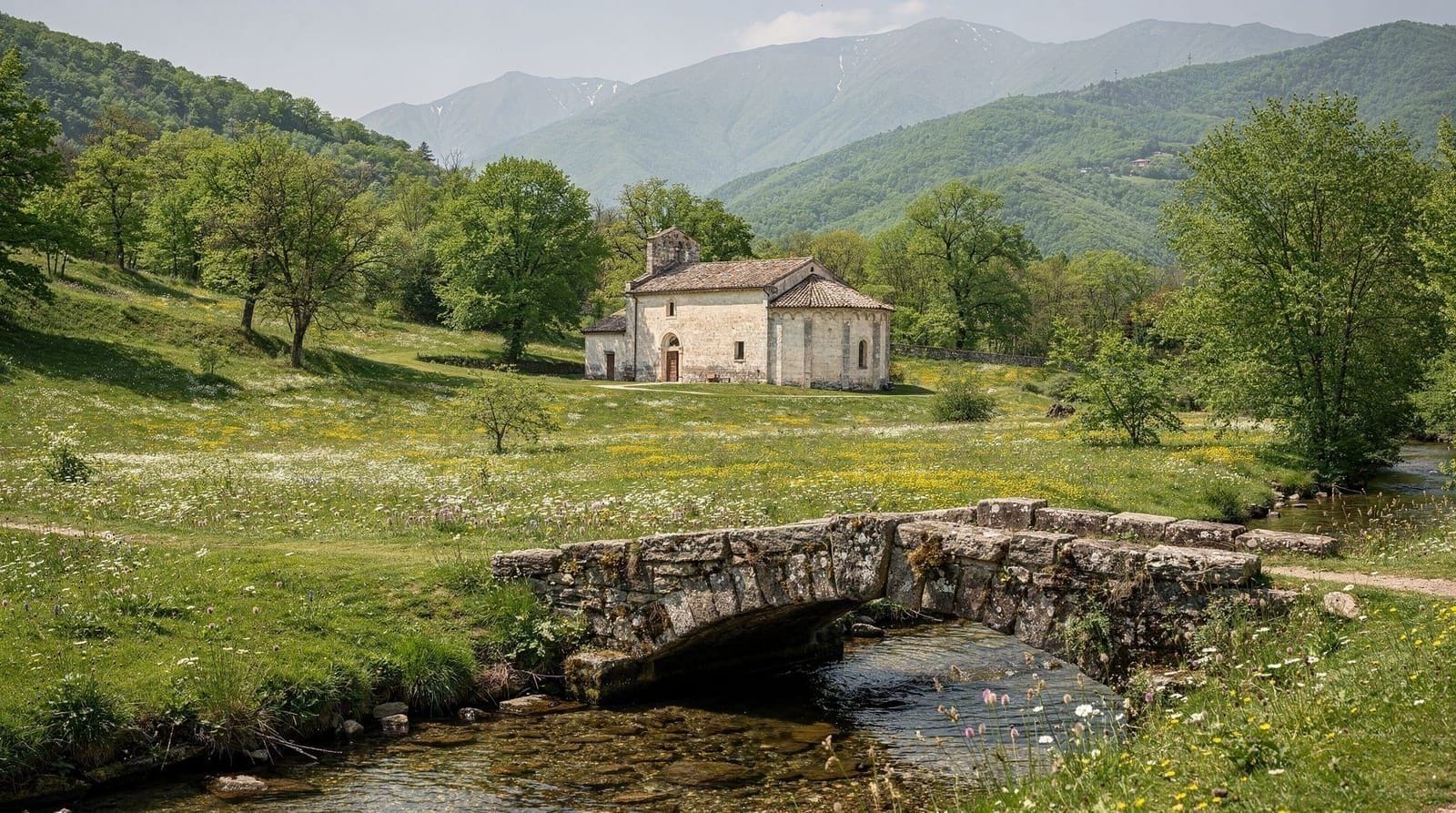
The house itself is modest, but the walk or drive up through the Montalbano landscape — olive terraces, oak woods, occasional views back toward the Arno valley — gives a concrete sense of what Leonardo’s early environment looked like before Florence transformed him. The landscape is largely unchanged from the 15th century.
The medieval castle and Piazza dei Conti
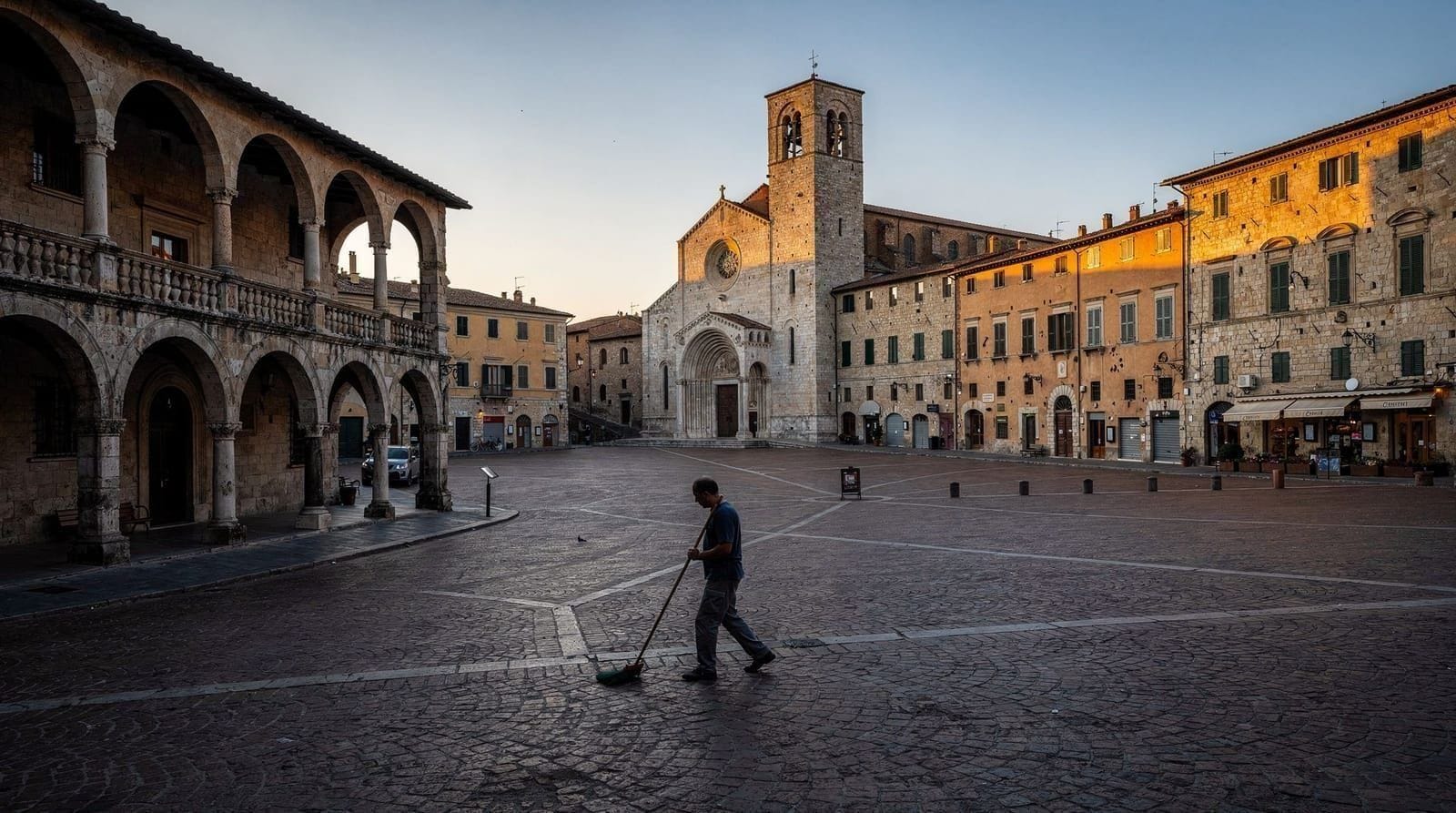
The Castello dei Conti Guidi (now containing part of the museum) occupies the highest point of the town and has a modest tower offering views across the Montalbano hills. Piazza dei Conti at the castle’s base is the centre of Vinci, with a small church, a few restaurants and cafes, and the municipal library.
The church of Santa Croce on the piazza contains the baptismal font where the infant Leonardo was baptised on 16 April 1452 — the font is original and clearly labelled. The church is simple but the direct historical connection makes it worth a brief visit.
Truffle hunting in the Montalbano hills
The olive-and-oak woodland of the Montalbano hills around Vinci is genuine truffle country, and several operators run truffle hunting excursions in the area. These combine a guided hunt with trained dogs through the woods with a lunch at a local farmhouse and typically a winery visit. The season for black truffles (scorzone) runs May-November; white truffles (pregiato) peak October-December.
Truffle hunting tours from Florence typically depart in the morning and include transport to Vinci and the surrounding hills, making them among the more accessible countryside experiences from the city. See tours listed on this page for current options.
Combining Vinci with other nearby stops
Vinci works well combined with nearby destinations:
Vinci plus Prato: Both are on or near the western edge of the Florence metropolitan area. Prato, 20 kilometres north of Vinci, is the textile city with an important Lippi fresco cycle. See our Prato guide.
Vinci plus the FI-PI-LI towns: The expressway connects Florence with Empoli and Pisa; Vinci is a natural detour on a day that goes further west.
For a broader context on the medieval villages and landscape of the Montalbano hills, see our guide to day trips from Florence.
Practical tips
Crowds: Vinci receives significantly fewer visitors than Florence’s main museums, making it a pleasant contrast. Even in summer the Museo Leonardiano rarely feels crowded.
Family visits: The machine models are genuinely engaging for children (and adults). The museum is set up to explain what each invention does and how it works. Vinci is among the better family-friendly day-trip options from Florence.
Leonardo Day: April 15 (Leonardo’s birthday) is celebrated in Vinci with cultural events and usually free museum entry. Worth planning around if you happen to be in the area.
Frequently asked questions about Vinci
Is the Museo Leonardiano worth visiting?
Yes for those interested in Leonardo’s engineering and scientific thinking. The scale models of his inventions are well-made and illuminating. It is a specialised collection rather than a general art museum — manage expectations if you are hoping for paintings. His major works are in Florence (Uffizi, Palazzo Vecchio), Milan and Rome.
How long does Vinci take to visit?
The Museo Leonardiano takes 1-1.5 hours. Adding the drive and visit to Anchiano brings the total to 3 hours. A half-day from Florence is the right allocation, or a morning stop on a day that continues to Pisa or the coast.
Is Leonardo da Vinci actually from this Vinci?
Yes. The historical record is clear. He was born on 15 April 1452 in or near Anchiano (a hamlet of the Vinci municipality) as the illegitimate son of Ser Piero da Vinci and a local woman named Caterina. His baptismal record from the church of Santa Croce in Vinci survives. He moved to Florence at approximately age 14 to apprentice with Verrocchio, but his family roots and childhood landscape were here.
Can I get to Vinci without a car?
Yes but with effort — SITA bus to Empoli then connecting bus to Vinci, roughly 1 hour 15 minutes each way. A car is more practical. Alternatively, guided tours from Florence include transport and typically combine Vinci with truffle hunting or a winery visit.
Where Vinci fits in a Tuscany itinerary
Vinci sits in an underused corner west of Florence, closer to Prato and Mugello than to the Chianti or Val d’Orcia routes most visitors default to. Because it demands only half a day, it pairs naturally with a morning or afternoon elsewhere rather than standing alone: a Florence-based traveller with a car and a free day could reasonably combine Vinci’s museum with a Prato stop for the Filippo Lippi frescoes, or continue on the FI-PI-LI toward Pisa. Compared with the bigger-name day trips — Siena, San Gimignano, Val d’Orcia — Vinci is lower-commitment: less driving, fewer crowds, and a narrower but very specific payoff for anyone genuinely curious about Leonardo as an engineer rather than a painter.
Top experiences
Bookable activities with verified prices and instant confirmation on GetYourGuide.

Florence: Leonardo da Vinci guided walking tour with museum
- Free cancellation
- Small group

Florence: truffle hunting and Vinci with lunch and winery
- Free cancellation
- Small group

Florence: medieval village and Leonardo da Vinci tour
- Free cancellation
- Small group
Florence: Vinci — footsteps of Leonardo and wine tasting tour
- Free cancellation
- Small group