Bologna day trip from Florence
Florence: Tuscany full day small group wine and food tour
- Free cancellation
- Small group
How long is the train from Florence to Bologna?
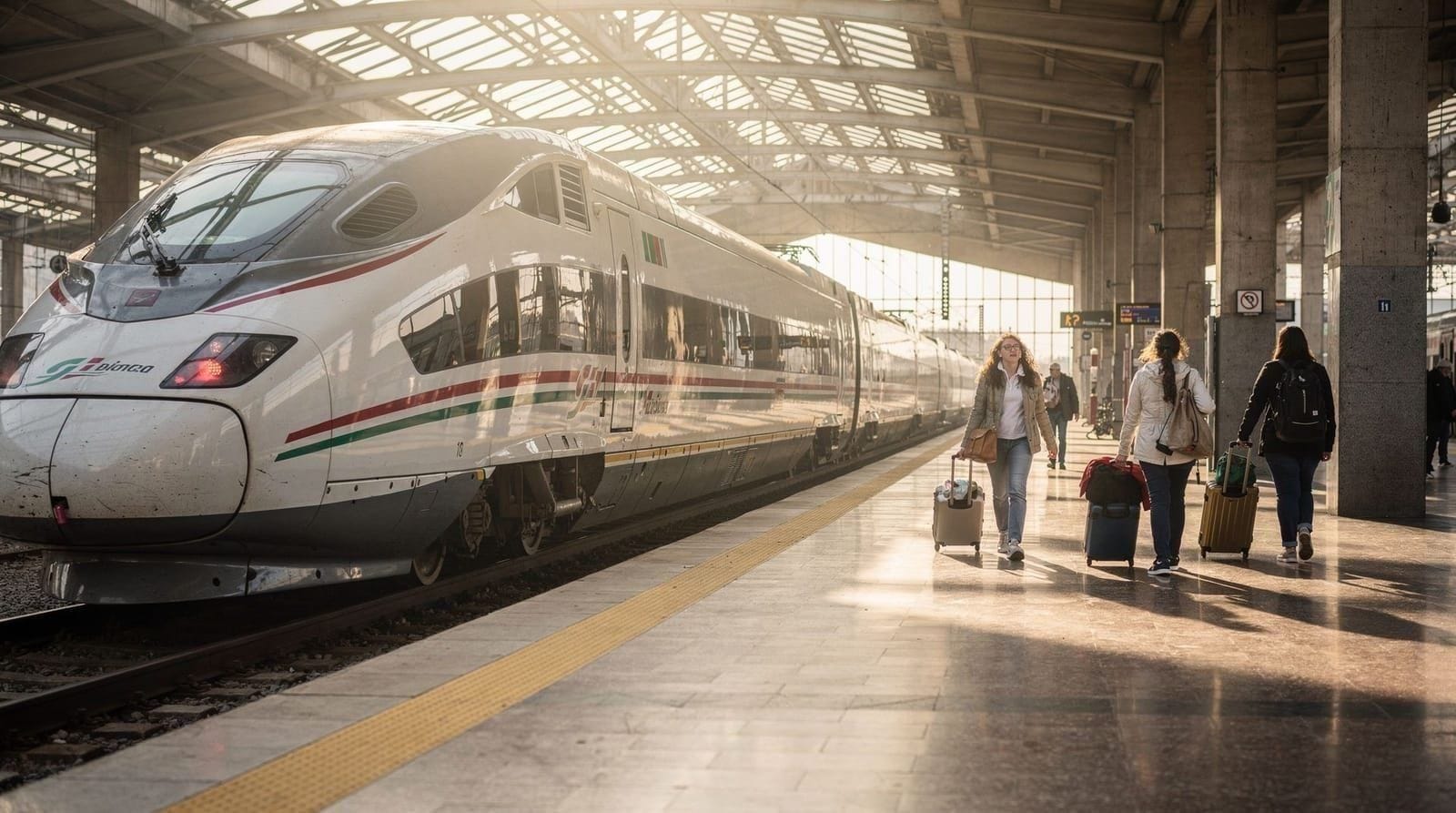
The Frecciarossa high-speed train takes 37–40 minutes from Florence Santa Maria Novella to Bologna Centrale. Fares start from €9.90 each way booked well in advance, rising to €25–35 on the day. Trains depart every 30–60 minutes throughout the day.
Bologna: the unexpected Italian gem right next to Florence
Bologna is just 37–40 minutes from Florence on the Frecciarossa high-speed train — close enough to be easily done as a day trip, surprising enough that most visitors to Florence don’t think to go. They should.
The city is known to Italians by three adjectives: La Rossa (the red — for the terracotta-coloured buildings and the historic Communist political leanings), La Dotta (the learned — it has Europe’s oldest university, founded 1088), and La Grassa (the fat — for the legendary food culture). On all three counts, it delivers.
Bologna is not Florence. It doesn’t have the Uffizi or the Dome or the David. What it has is 40km of medieval porticoes that let you walk all over the city in the rain without getting wet, one of the great Italian food markets still operating in its medieval district, towers and churches that see perhaps a tenth of the visitors they deserve, and restaurants serving the best ragù, tortellini, and mortadella in the world. For a day trip from Florence, this is an excellent choice — especially in rainy weather, when the porticoes make it the most comfortable major Italian city to explore. It pairs naturally with a wider look at day trips from Florence if you’re weighing it against Pisa, Siena, or Arezzo and Cortona.
| Where | Emilia-Romagna, 37–40 min from Florence SMN |
| Cost | From €9.90 one-way (Frecciarossa, booked ahead) |
| Time needed | Full day (8am–7pm realistic) |
| Getting there | Frecciarossa high-speed train |
| Best time | Spring/autumn; porticoes make it good even in rain |
Getting from Florence to Bologna
By high-speed train (Frecciarossa)
The Frecciarossa high-speed train from Florence Santa Maria Novella to Bologna Centrale takes 37–40 minutes. This is the unambiguous best option for a day trip.
| Booking time | Typical fare (each way) |
|---|---|
| 30+ days ahead | €9.90–14 |
| 2–4 weeks ahead | €14–22 |
| Same day | €25–35 |
Book via Trenitalia.com or Italo (both companies run frequent high-speed services on this route). Trains depart roughly every 30–60 minutes from around 5:30am to 11pm. Seat reservation is included with the ticket.
Recommended departure: The 8:00–8:30am Frecciarossa puts you in Bologna by 8:40–9:10am — time for a coffee at a bar before the day begins. Last useful return from Bologna Centrale is around 9–10pm, back in Florence by 10:30pm.
By regional train
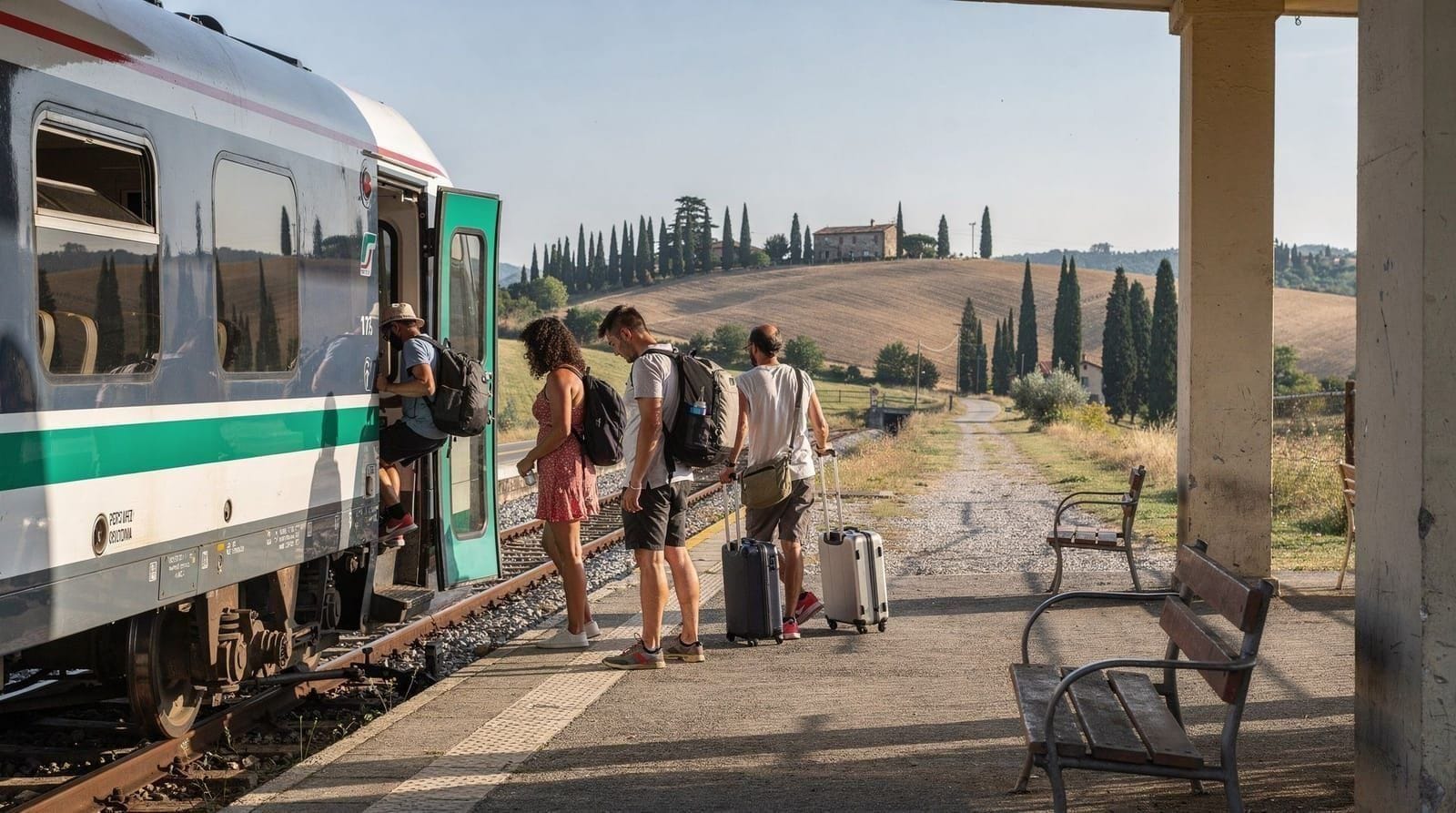
Slower regional trains (Regionale or Regionale Veloce) also serve the Florence–Bologna route, taking 1h30–2h and costing €9–14 with no reservation. Much slower — only worth it if the Frecciarossa is sold out.
By car
The A1 motorway connects Florence and Bologna but crosses the Apennine mountains — the journey takes 1h20–1h40 depending on traffic and the mountain conditions. Much slower than the train and not recommended for a day trip.
What to see in Bologna
Piazza Maggiore and Piazza del Nettuno
The civic heart of Bologna is the pair of connected piazzas in the city centre. Piazza Maggiore is dominated by the massive unfinished facade of the Basilica di San Petronio — begun in 1390 and still not finished (the upper half of the facade remains bare brick). The interior is one of the largest Gothic churches in the world; the 10th chapel on the left contains Paolo Uccello’s stone clock (measuring time in the old 24-hour system) and the extraordinary astronomical meridian line on the floor (Giovanni Domenico Cassini, 1655) — a beam of sunlight enters through a hole in the roof and marks the time and solar position on the marble strip below.
Piazza del Nettuno (adjacent) centres on Giovanni da Bologna’s 1566 bronze Neptune fountain — muscular, theatrical, and still striking after 450 years of use as the city’s gathering point.
Palazzo d’Accursio (west side of Piazza Maggiore) houses the Museo Morando Bolognini (free), with a collection of Bolognese civic art, and a clock tower with views.
The Porticoes
Bologna’s defining feature: 40km of covered walkways (porticoes) line the streets, many dating from the 11th century. They were built by citizens extending the upper floors of their houses over the public street to create covered ground-floor commercial spaces (required by civic ordinance to be at least 7 Bolognese feet tall — about 2.66m, tall enough for a man on horseback).
Walking through Bologna in the rain is more pleasant than most Italian cities in sunshine — the porticoes connect almost everything in the centre. The Portici di San Luca is the most spectacular single stretch: a 3.8km covered walkway of 666 arches climbing from the city up to the Santuario della Madonna di San Luca on the hill above (see below).
The Bologna porticoes were inscribed as a UNESCO World Heritage Site in 2021.
Due Torri (The Two Towers)
Asinelli and Garisenda towers have defined the Bologna skyline since the 12th century. The Torre degli Asinelli (97m) is the tallest medieval tower in Italy. It’s open to visitors — climb 498 steps to the top for a view over the city’s terracotta roofscape and, on clear days, the Apennines. Entry approximately €5. Get there early to avoid queues.
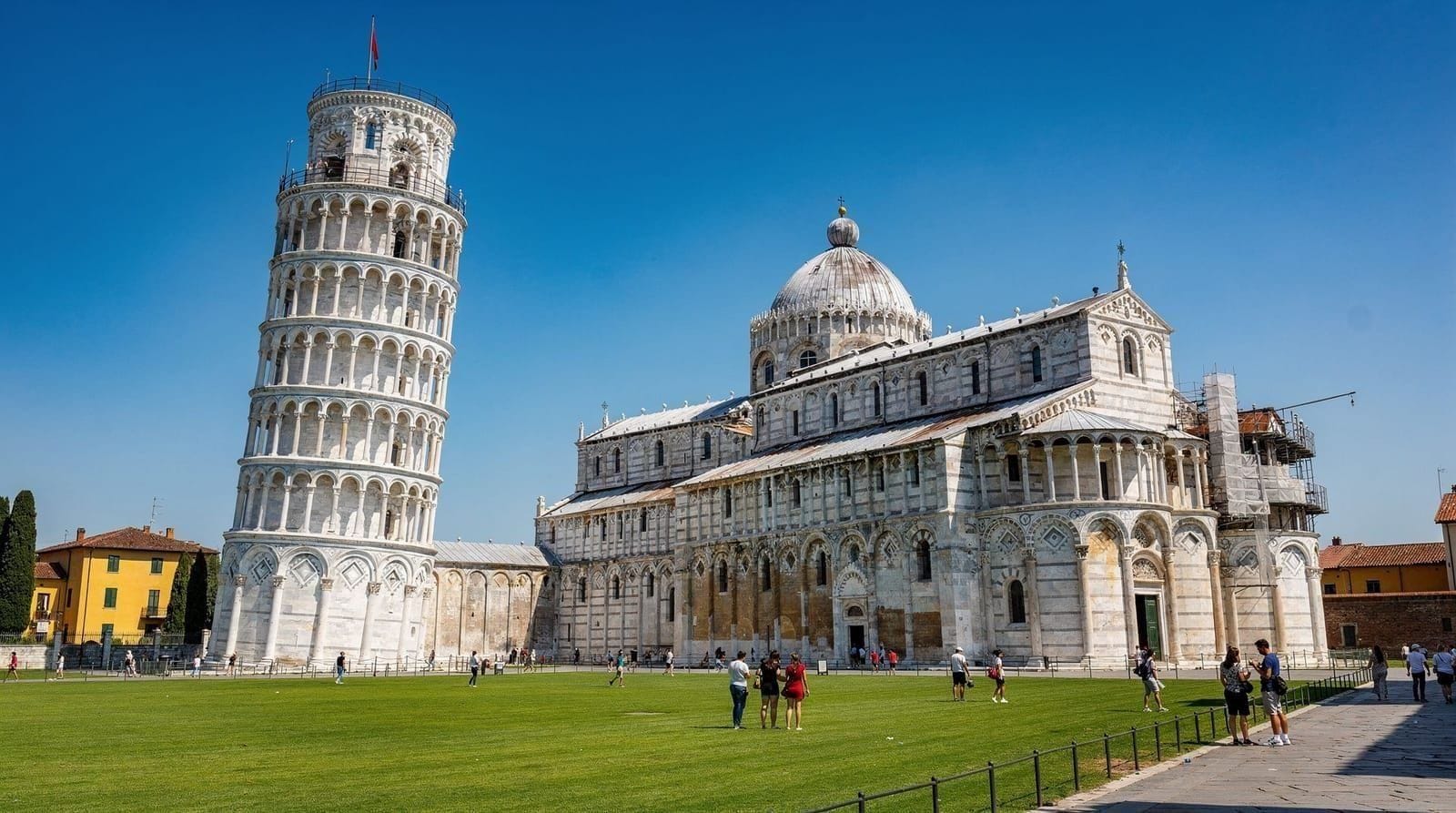
The Torre della Garisenda (48m) leans visibly and dramatically — more than the Leaning Tower of Pisa by percentage of height. It’s closed to visitors (safety concerns) but seen from below is extraordinary.
The Quadrilatero market district
Immediately east of Piazza Maggiore, the Quadrilatero is the best functioning medieval food market in Italy. The lanes — Via Pescherie Vecchie, Via degli Orefici, Via Caprarie — are lined with food stalls that have operated in roughly the same form for centuries. In the morning (best time: 8am–1pm), vendors sell:
- Mortadella: Bologna’s great contribution to the world of cold cuts. The genuine article is made with pork, fat, pistachios, and a blend of spices, and has nothing to do with the pink rubber slices sold internationally as “bologna sausage.”
- Parmigiano-Reggiano: The genuine DOP version produced within 50km. Vendors often cut pieces fresh from whole wheels.
- Fresh pasta: Tagliatelle, tortellini, and passatelli made on site in small shops (sfogline — pasta-making women) who have been rolling pasta by hand here for generations.
- Salumi and cheese: Every kind of northern Italian cured meat, from Prosciutto di Parma to culatello.
Buy mortadella on a bread roll (mortadella in michetta) from any of the stalls for €3–5. It’s one of the great Italian street food experiences.
Pinacoteca Nazionale di Bologna
The national art gallery houses the finest collection of Bolognese painting — which, between the 14th and 17th centuries, was one of Italy’s most important schools. Key works: Raphael’s Estasi di Santa Cecilia (one of his most important religious compositions), Guido Reni’s religious paintings, and the extraordinary collection of Baroque works by Annibale Carracci and his Bolognese Academy.
Entry approximately €6. Open Tuesday–Sunday 9am–7pm. Often uncrowded — a major collection that flies under the radar.
Santuario della Madonna di San Luca
Perched at 300m on the Colle della Guardia above the city, the Baroque sanctuary is reached by the extraordinary 3.8km porticoes walkway (666 arches). The walk takes about 1h uphill; there’s also a bus (Line 20) and — from Via Saragozza — a cable car (funivia, seasonal). The sanctuary itself is a place of active local devotion; the icon of the Madonna of San Luca is brought down to the city in procession each May. The views from the hilltop over Bologna and the Po Valley toward the Alps are excellent on clear days.
Bologna’s university district
The University of Bologna, founded 1088, is the oldest university in continuous operation in the world. Its anatomy theatre in the Archiginnasio (Piazza Galvani 1) is one of the most beautiful Baroque university rooms in existence — ornately decorated with carved wooden shelves, coats of arms, and a professor’s chair positioned above the dissection table. Entry about €3.
The surrounding streets of the Via Zamboni university district are lively even in summer (though much quieter in August when students leave) — lined with bookshops, inexpensive cafes, and osterie serving the cheapest food in the city.
Where to eat in Bologna
Bologna has more restaurants per capita than almost anywhere in Italy, and the quality floor is generally high. Avoid anywhere with laminated tourist menus in multiple languages and English signs outside.
Trattoria da Vito (Via Mario Musolesi 9) — A neighbourhood institution for Bolognese cooking. The tagliatelle al ragù is the reference version. Tortellini in brodo on Sundays. From €20–25 per person. Book ahead.
Trattoria Gianni (Via Clavature 18) — In the Quadrilatero district, with outdoor seating on a medieval lane. Consistent home-style Bolognese cooking. Tagliatelle, crescentine, and grilled meats. €20–28 per person.
Osteria dell’Orsa (Via Mentana 1) — A large, rowdy osteria with affordable food and a young crowd (it’s near the university). Pasta, salumi, and local wine. The cheapest proper meal in the city centre. €12–18 per person.
Tamburini (Via Caprarie 1) — The most famous delicatessen in Bologna, operating since 1932. Excellent for assembled plates of mortadella, Parmigiano, Parma ham, and local cheese. Buy at the counter, eat standing or on the bench outside. €15–20 for a generous plate with wine.
Café del Nord (Piazza Maggiore) — Good coffee and a terrace view of the piazza. Coffee culture in Bologna is serious — locals are particular about their espresso.
crescentine with mortadella: Available from the market or small street food stands throughout the Quadrilatero. Crescentine are small fried dough pockets, filled and served hot. €4–6. One of the best food experiences in the city.
Suggested full-day itinerary
8:00am: Frecciarossa departs Florence SMN 8:40am: Arrive Bologna Centrale. Coffee at station café or nearby bar 9:00am–10:30am: Quadrilatero market — walk the lanes, buy mortadella, watch the pasta-makers 10:30–11:30am: Piazza Maggiore — San Petronio interior, Neptune fountain, Palazzo Comunale 11:30am–12:30pm: Climb Torre degli Asinelli (if queue is manageable) 12:30–2:00pm: Lunch (Trattoria Gianni or Tamburini deli) 2:00–3:30pm: Pinacoteca Nazionale (Raphael, Carracci, Guido Reni) 3:30–4:30pm: University district — Archiginnasio anatomy theatre, Via Zamboni 4:30–5:30pm: Porticoes walk — explore the covered streets north of the centre 6:00pm: Frecciarossa back to Florence (arrives ~6:40pm)
This leaves you home at a reasonable hour with a full day well spent.
Practical information for Bologna visitors
Climate: Bologna is in the Po Valley and can be hot in summer (similar to Florence, 30–35°C July–August). The porticoes provide excellent shade and make it more comfortable to walk than open-piazza cities. In winter it can be foggy and cold (–5°C not unusual in January). Year-round city with good indoor options.
From Bologna Centrale to the centre: The historic centre is about 1.5km from the station. A 20-minute walk directly south on Via Indipendenza leads to Piazza Maggiore. Alternatively take any tram on Line A (€1.50 single journey).
Card: Bologna has a “My Bo” guest card for museum entries. For a single day trip, buying individual tickets at each museum is generally simpler.
English: Bologna is accustomed to some international tourism (trade fairs bring international business travellers) but is not as geared up for English-speaking tourists as Florence. Don’t expect English menus in neighbourhood restaurants — learning “tagliatelle al ragù” and “tortellini in brodo” in Italian is useful.
August: The university population disappears in August and some neighbourhood restaurants close. The city is quieter but many tourist-oriented businesses remain open. The market operates year-round.
Bologna versus Florence’s other day trips
Bologna competes with several other easy rail trips from Florence, and each answers a different mood. If you’ve already done Tuscany-flavoured towns and want something structurally different — food-first, art-second, flat terracotta city instead of hill town — Bologna is the clear pick.
| Day trip | Travel time | Best for | Compare with |
|---|---|---|---|
| Bologna | 37–40 min | Food culture, porticoes, indoor comfort | Pisa day trip |
| Pisa | ~1h | The Leaning Tower, quick half-day | Pisa day trip guide |
| Siena | ~1h30 | Gothic hill-town, Palio history | Siena day trip guide |
| Arezzo & Cortona | ~1h | Piero della Francesca, quiet Etruscan hilltop | Arezzo and Cortona guide |
Unlike Pisa, Bologna rewards a genuinely full day rather than a rushed half-day — there is easily enough to see and eat to fill 8am to 7pm without padding. If your itinerary already includes a Chianti day trip or time in Siena, Bologna offers real contrast: no vineyards, no hill towns, just a dense, walkable, food-obsessed city.
Travellers deciding between Bologna and a second Tuscan hill town often default to whichever fits their existing rail pass or ticket bundle, but the honest comparison is about pace, not proximity. Siena and Arezzo reward slow wandering between churches and viewpoints; Bologna rewards eating your way across a market district and ducking under porticoes between stops. Neither is objectively better — but if you’ve already spent two or three days doing Tuscan piazzas and frescoes, Bologna’s change of register (flat streets, arcaded shade, a completely different regional cuisine) tends to feel like the more refreshing choice of the two.
Where to stay if you extend the trip
Most visitors do Bologna as a single day and return to their Florence accommodation the same night, which works well given the short train ride. If you do decide to stay over, the area around Via Zamboni (university district) is lively and central, while the streets just west of Piazza Maggiore are quieter and closer to the station. Either way, keep your Florence base — Bologna doesn’t need its own multi-night stay unless you’re combining it with Modena or Parma into a longer Emilia-Romagna leg.
Frequently asked questions about the Bologna day trip
Is Bologna worth it for just a day from Florence?
Absolutely — 40 minutes by Frecciarossa makes it one of the most accessible major Italian cities from Florence. A full day in Bologna is more than enough time to see the main sights, eat very well, and understand why Italians consider it their best food city. It also makes a good alternative to Tuscany-fatigue: everything in Bologna is different from Florentine art and landscape.
What is the real “spaghetti bolognese” situation?
In Bologna, the ragù is always served with tagliatelle (egg pasta) — never spaghetti. “Spaghetti bolognese” is considered an international corruption and you won’t find it in any self-respecting Bologna restaurant. The ragù itself is a slow-cooked mixture of beef (and often pork) with soffritto, tomato, and wine — much more meat-forward and less tomatoey than the international version.
Can I visit Parma or Modena from Florence on the same route?
Yes — both are on the high-speed rail line and make excellent day trips. Parma is about 1h from Florence (Frecciarossa), home of Prosciutto di Parma and Parmigiano-Reggiano. Modena is 50 minutes from Florence, home of traditional balsamic vinegar and Osteria Francescana (among the world’s most acclaimed restaurants — not for casual day trippers). Bologna makes a logical hub if you want to add one of these stops.
Is it worth staying overnight in Bologna?
Yes, especially for food enthusiasts. Overnight lets you experience the evening aperitivo culture (Bologna has a vibrant bar scene) and a proper dinner without rushing back for the last train. Hotels are generally cheaper than in Florence. The best day trips from Florence guide compares all options.
Do I need to book the Frecciarossa in advance?
Not strictly, but it pays to. Same-day walk-up fares run €25–35, against €9.90–14 if you book two to four weeks ahead on Trenitalia or Italo. Seats can sell out on weekend mornings, so booking a specific early departure a few days ahead protects both the price and the schedule you’ve planned around.
Top experiences
Bookable activities with verified prices and instant confirmation on GetYourGuide.