Florence vs Rome
Florence: walking tour
- Free cancellation
- Instant confirmation
Should I visit Florence or Rome?
Visit Florence if you want a walkable, art-concentrated city where you can see the world's greatest Renaissance collection in three to four days. Choose Rome if you want ancient history, a larger city experience, and more diverse food and nightlife. For a first-time Italy trip with ten or more days, combine both — 1 hour 30 minutes by high-speed train.
The core difference
Florence and Rome are both Italian, both ancient, and both overwhelmingly visited. But they are fundamentally different cities to experience.
Rome is a capital city with the complexity that entails: 2.7 million residents, 3,000 years of layered history, a sprawling geography that defeats most walkers, and an energy that ranges from the transcendent (the Pantheon at dawn) to the chaotic (the tourist scrum at the Trevi Fountain at noon). Rome is an intense, sometimes exhausting, always overwhelming experience.
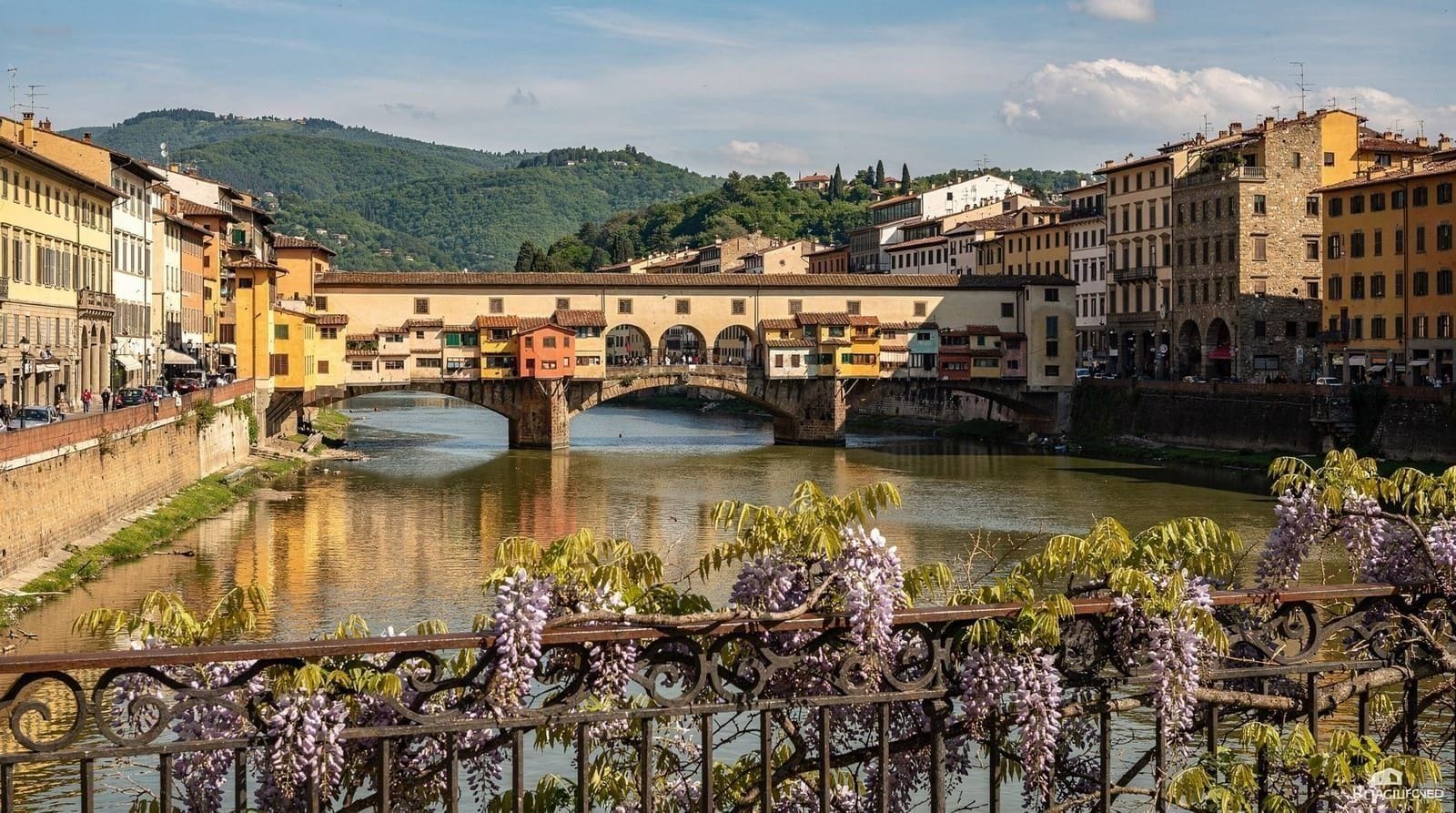
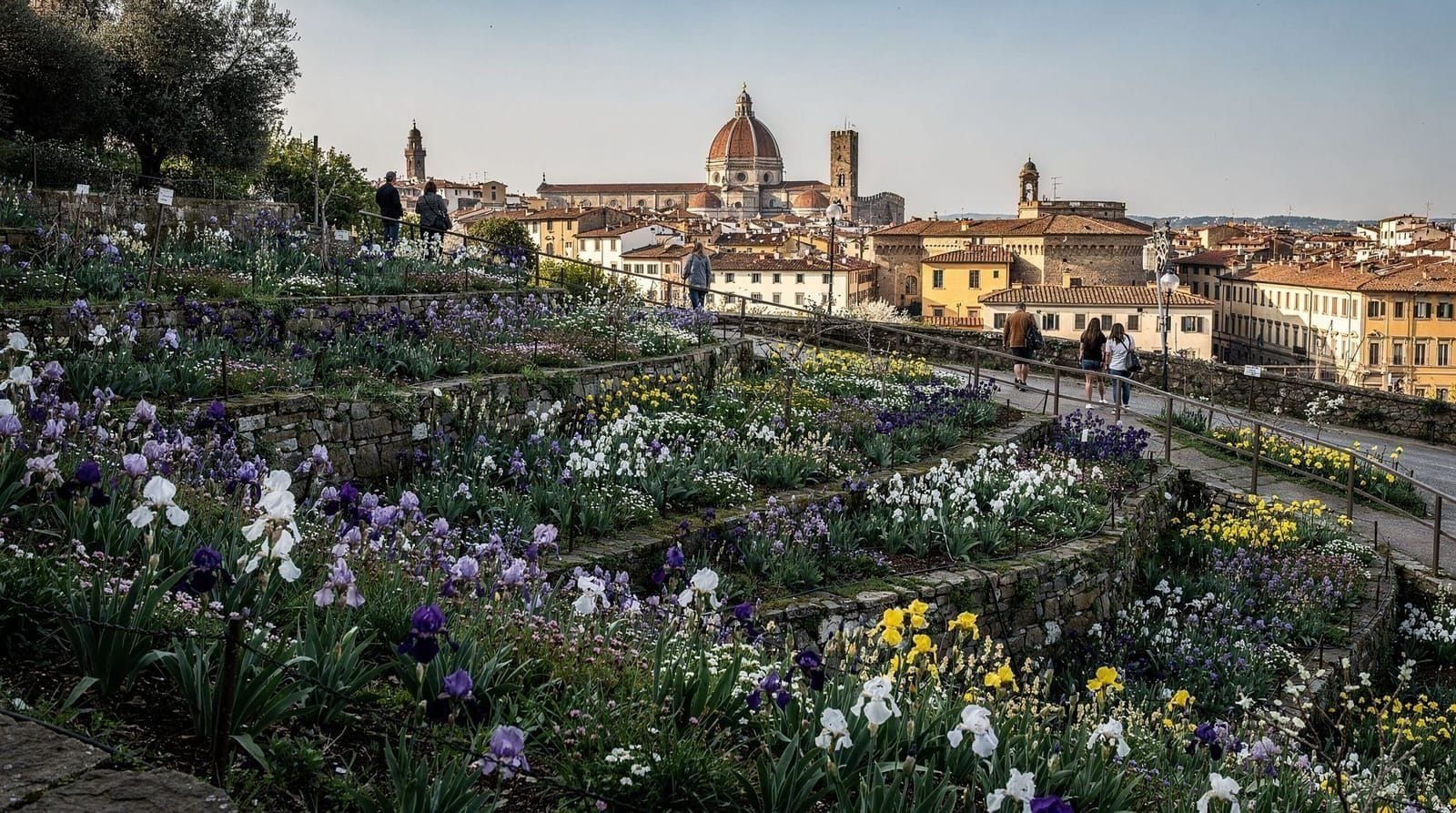
Florence is something else. Smaller (370,000 residents), concentrated (the historic centre fits inside a 30-minute walk in any direction), and focused: it is primarily a Renaissance city with a very clear identity. You can see the city’s greatest treasures — the Uffizi, the Accademia, the Duomo, the Bargello — in three to four days without feeling rushed.
The choice depends on what you want from Italy.
| Where | Florence (Tuscany) vs Rome (Lazio), 1h30 apart by train |
| Cost | Both similar for museums/food; Florence slightly cheaper for hotels |
| Time needed | Florence 3–5 days, Rome 4–7 days |
| Getting there | Florence via Peretola (FLR) or Pisa (PSA); Rome via Fiumicino (FCO) |
| Best time | April–May or September–October for both |
Head-to-head comparison
| Category | Florence | Rome |
|---|---|---|
| Historic area size | Compact (walkable) | Very large (transport needed) |
| Primary appeal | Renaissance art | Ancient history + Renaissance |
| Best museums | Uffizi, Accademia, Bargello | Vatican Museums, Borghese Gallery |
| Navigation | Easy — almost everything on foot | Requires metro/bus/taxi |
| Nightlife | Moderate | Extensive |
| Day trip options | Siena, Chianti, Pisa, Cinque Terre | Pompeii, Tivoli, Ostia Antica |
| Typical trip length | 3–5 days | 4–7 days |
| Crowds at major sights | Very high (small city, few sights) | High (large city, many sights) |
| Food character | Tuscan — meat-focused, hearty | Roman — pasta-focused, diverse |
| Train to each other | 1h30 from Rome | 1h30 from Florence |
Florence’s advantages over Rome
Concentration of world-class art: the Uffizi alone contains the Botticelli room (Birth of Venus, Primavera), Titian, Raphael, Caravaggio, and dozens of other masterpieces. The Accademia has the David. The Bargello has Donatello’s David and the most important collection of Renaissance sculpture outside the Vatican. These three museums are within a 15-minute walk of each other.
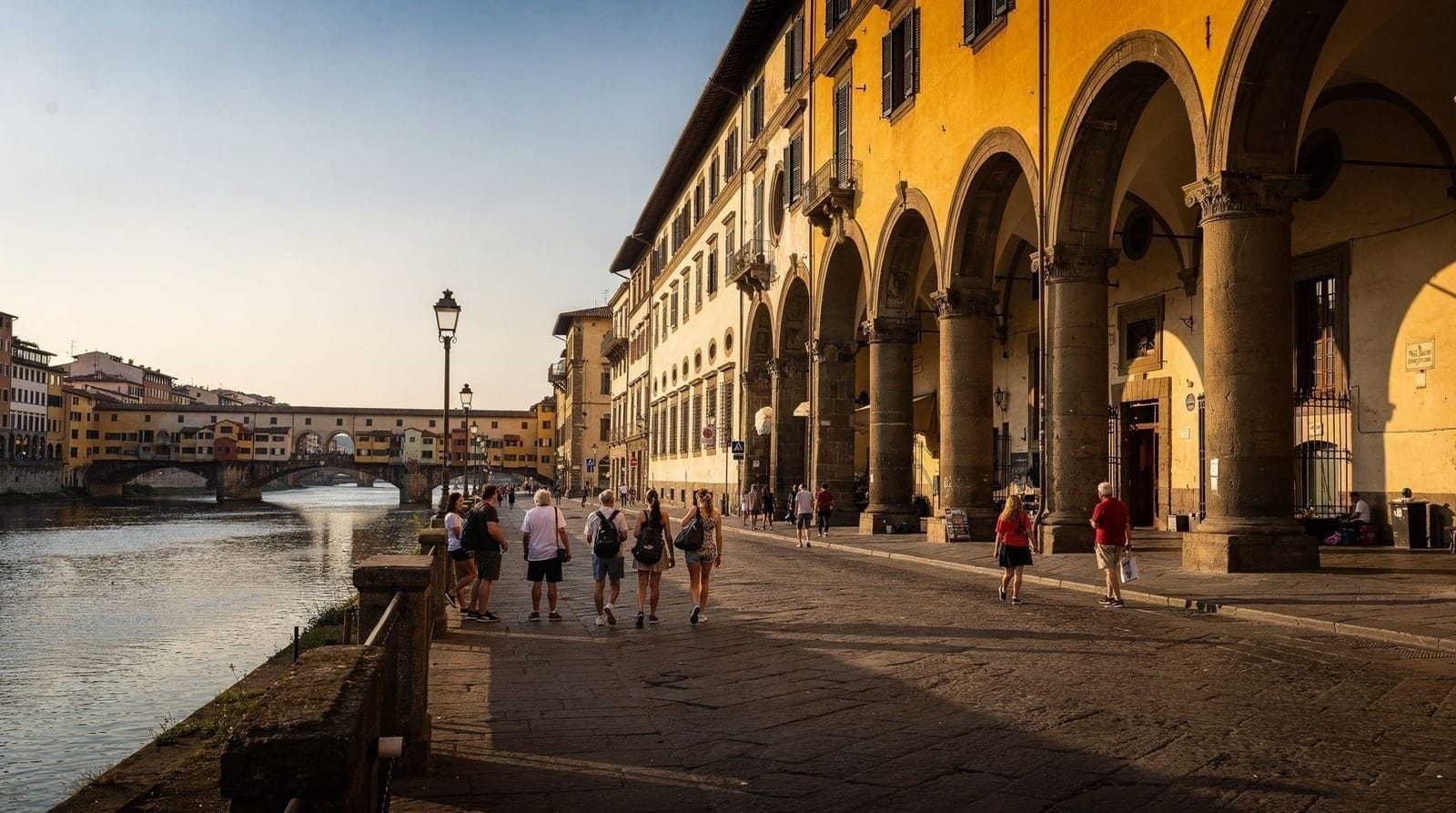
Walkability: the entire historic centre of Florence is navigable on foot. From the Accademia to the Uffizi is a 12-minute walk. From the Uffizi to Pitti Palace is 10 minutes. There is no equivalent in Rome — getting from the Vatican Museums to the Colosseum requires metro or taxi (25–35 minutes).
Day trip access: Florence’s position in Tuscany gives it some of the best day trip options in Italy. Siena, the Chianti wine region, Pisa, the Val d’Orcia, and San Gimignano are all within 90–120 minutes — see our best day trips from Florence guide for the full list. Rome’s day trips (Pompeii, Tivoli, Ostia Antica) are excellent but different in character.
Manageable scale: Florence can feel overwhelming in peak season but the overwhelming is contained. In Rome, the scale of the overwhelm is larger and more diffuse.
Rome’s advantages over Florence
Ancient history: Rome has it; Florence does not. If the Roman Forum, the Colosseum, the Pantheon, and the Appian Way are what you primarily want from Italy, Rome is the correct choice. Florence’s Roman layer is largely buried or absent.
Vatican Museums and Sistine Chapel: the collection is simply larger and wider than anything in Florence. Michelangelo’s Sistine Chapel ceiling is arguably the single most important work of art in the world that you can visit. The Raphael Rooms in the Vatican are a different order of experience from anything comparable in Florence.
Nightlife and evening culture: Rome is a larger and more varied city after dark. Multiple neighbourhoods (Trastevere, Pigneto, Prati, Testaccio) have distinct evening cultures. Florence’s evening scene is pleasant but concentrated and smaller.
Food diversity: Rome’s food scene is broader — the Jewish Roman cuisine around the Ghetto, the pizza culture (Roman thin-crust is completely different from Neapolitan), the Jewish and international influences accumulated over centuries. Florence is more culinarily homogeneous — excellent, but in a narrower range.
San Marino, Trastevere, Pigneto: the neighbourhood-level tourism experience in Rome is richer. Trastevere is one of the most atmospheric neighbourhoods in Europe. Florence’s equivalent — the Oltrarno — is beautiful but smaller.
When to combine both
If you have 10+ days: combine both. The train between them takes 1 hour 30 minutes. A standard combination is three to four nights Florence, four to five nights Rome (or the reverse). The cultural contrast is intentional — Renaissance Florence followed by ancient-and-Baroque Rome is a coherent narrative of Italian art history. If Florence is your first stop, our Florence and Tuscany 5-day itinerary or Florence in three days itinerary fits neatly before the train south.
If you have 5–7 days: choose one. Five days in Florence gives you the core museums and good Tuscan day trips. Five days in Rome gives you the Vatican, Colosseum, and the Forum. Trying to split that time between both cities results in a rushed version of each.
Which city first: starting in Florence and ending in Rome has the advantage of settling into the smaller, more manageable city first. Reverse if you arrive into Rome.
Specific interest guide
| Your priority | Recommended city |
|---|---|
| Renaissance painting | Florence |
| Ancient Rome | Rome |
| Classical sculpture | Both (Bargello vs. Vatican/Borghese) |
| Michelangelo | Both (David in Florence; Sistine in Rome) |
| Wine and food experiences | Florence (Tuscan countryside access) |
| Pizza | Rome |
| Street food | Both (lampredotto in Florence; supplì and trapizzino in Rome) |
| Walking architecture | Florence (more concentrated) |
| Day trips to the countryside | Florence (Chianti, Val d’Orcia) |
| Opera | Both |
| Budget travel | Rome (larger hostel/hotel supply) |
Practical comparison: getting there
Florence: served by Peretola Airport (FLR) — a small regional airport with tram connection to Santa Maria Novella (SMN) station in 18 minutes. More international visitors arrive via Pisa Airport (PSA), which is 1 hour by train. Budget airlines use Pisa; flag carriers increasingly use FLR.
Rome: served by Leonardo da Vinci (Fiumicino, FCO) — major hub with direct connections from North America, Asia, and across Europe. Also Ciampino (CIA) for budget airlines. Transfer to city centre: 45 minutes by train from Fiumicino.
By train between the two: frequent Frecciarossa and Frecciargento high-speed trains. Journey time 1h30 to 1h45. Book through Trenitalia or Italo. Second-class advance tickets from €19; first class around €35–45. Full timetable and station details are in our Florence to Rome train guide, and our Florence train stations guide explains which of the city’s stations you’ll actually depart from.
Combining Florence-Rome with a Tuscany detour
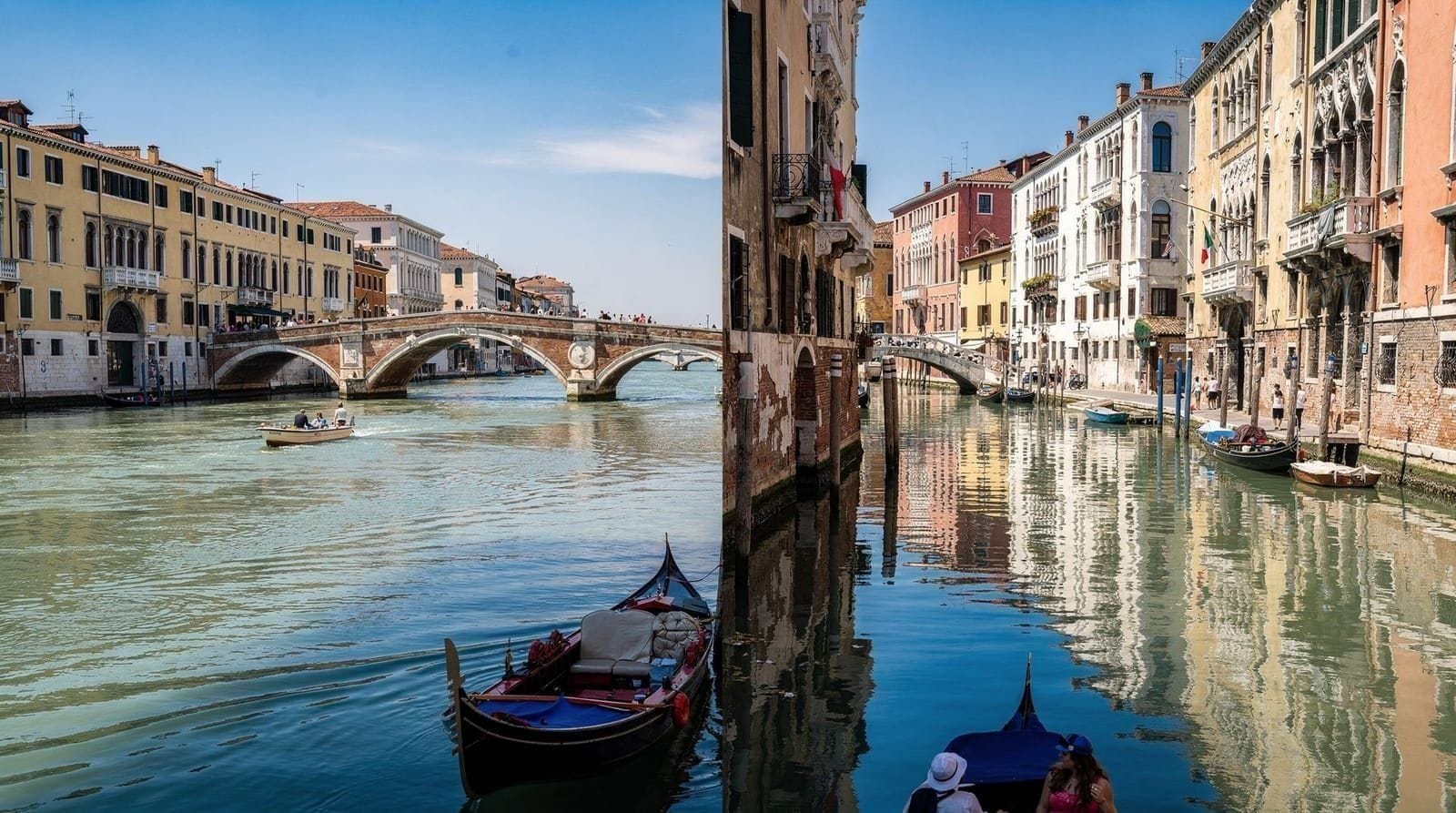
If ancient Rome is the anchor of your trip but you don’t want to skip Tuscany’s countryside, the Florence–Rome train line also stops near Arezzo and Cortona, both worth a half-day break on the way south. A common pattern is Florence (3 nights) → a day trip into Chianti or Val d’Orcia → Rome (4 nights), which gets you Renaissance art, Tuscan countryside, and ancient history without adding extra travel days. Travellers weighing a third city instead of Rome sometimes compare Florence vs Venice — Venice suits a shorter, more atmospheric add-on than Rome’s larger commitment.
The honest verdict
Visit Florence if: this is a dedicated art trip, you have 3–5 days, you prefer walkable cities, or you are specifically interested in Renaissance history. Florence is the more focused, more beautiful, and more digestible of the two cities.
Visit Rome if: this is your first trip to Italy, you have 7+ days, you want ancient history alongside Renaissance art, or you need the larger range of experiences that a capital city offers.
Visit both if: you have the time. They complement each other in ways that make the combined trip more illuminating than either alone. The 1 hour 30 minute train connection makes this easy.
Frequently asked questions about Florence vs Rome
Is the Colosseum or the Uffizi more impressive?
Different categories. The Colosseum is an overwhelming structure — the physical presence of Roman engineering at civic scale. The Uffizi is where you encounter the greatest concentration of Renaissance painting in the world. If pressed: the Uffizi rewards more because of the art inside; the Colosseum rewards the imagination more. Most visitors are more moved by one than the other depending on whether they are drawn to history or art.
Which city is safer for tourists?
Both are very safe by European standards. Pickpocketing exists in both cities, concentrated around tourist sights, public transport (especially buses in Rome), and crowded markets. Rome is a larger city with more varied neighbourhoods; some peripheral areas have higher crime rates but these are irrelevant to tourists. Florence’s compact centre is easy to navigate safely.
What is the best time of year to do a Florence-Rome trip?
April–May or September–October. Both cities are hot and crowded in July and August; both are cold but quieter in January and February. The shoulder seasons offer the best balance. For a two-city trip, April–May is particularly rewarding as Florence’s spring festivals (Scoppio del Carro, Maggio Musicale) are excellent.
Is there anything between Florence and Rome worth stopping at?
Yes. The high-speed train passes through or near several interesting stops. Orvieto (about 1 hour from Rome, accessible by regional train from Orte) has a spectacular Gothic cathedral and Etruscan cave dwellings. Cortona (accessible from Camucia-Cortona station) is a hilltop medieval town with an Etruscan museum. Arezzo (on the Florence–Rome line, 45 minutes from Florence) has stunning Piero della Francesca frescoes in the Basilica of San Francesco — our Arezzo and Cortona guide covers both together.
How many days should I split between Florence and Rome on a first trip?
For a first Italy trip of 7–8 days, three nights in Florence and four in Rome is a reasonable split — Florence’s compact centre needs less time than Rome’s larger, more spread-out sights. If food and wine matter as much as museums, tilt an extra night toward Florence and add a Chianti day trip; if ancient history is the priority, give Rome the extra night instead.
Top experiences
Bookable activities with verified prices and instant confirmation on GetYourGuide.