Florence in spring
Florence: Uffizi Gallery skip-the-line tickets
- Skip the line
- Free cancellation
Is spring a good time to visit Florence?
Spring (April–May) is the best overall time to visit Florence. Temperatures stay between 14–24°C, the Boboli Gardens bloom, and major festivals animate the city. Book Uffizi and Accademia tickets at least two weeks ahead.
Why spring stands apart
Florence in April and May operates at a different frequency from the rest of the year. The stone buildings, which trap heat mercilessly in summer, hold a cool freshness in spring. The Boboli Gardens fill with wisteria, roses, and the scent of lemon blossom from the limonaia. Long evenings stretch the usable day well past eight o’clock. And unlike autumn — which is excellent but quiet — spring Florence is animated: festivals, outdoor markets, people eating at pavement tables long after dark.
This guide covers both months in depth: what the weather actually does, which events are worth planning around, and how to handle the crowds that begin building through May.
| Weather | 10–24°C across April–May |
| Signature event | Scoppio del Carro, Easter Sunday |
| Booking window | 2–4 weeks ahead for the Uffizi and Accademia by May |
| Best for | Gardens (Boboli, Bardini), day trips to Chianti |
| Watch out for | Easter week crowds and pricing |
April in Florence
Weather: Expect 10–18°C. The first two weeks of April can still feel like late winter — mornings are cool enough for a jacket, and rain arrives without much warning. By the third week, when spring genuinely takes hold, temperatures climb into the high teens and the city transforms.
Rain: April has roughly ten rainy days, spread unpredictably. They rarely last all day. A compact umbrella or light waterproof jacket handles most situations.
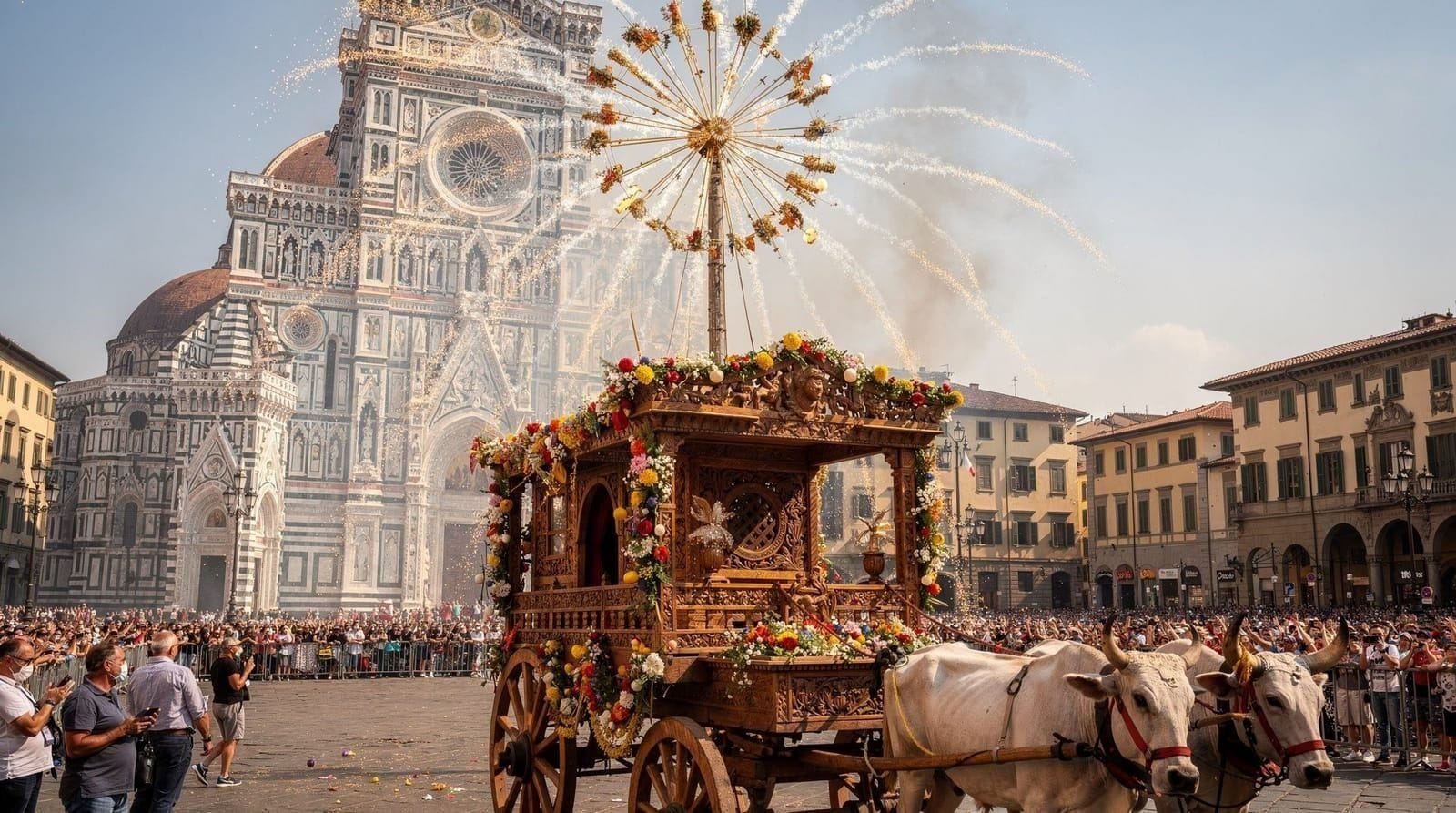
The dominant event: the Scoppio del Carro (Explosion of the Cart) on Easter Sunday. A fifteenth-century gilded cart, drawn by two white oxen, is pulled from the Porta al Prato to the cathedral. At the moment of the Gloria during Easter Mass, a mechanical dove (colombina) shoots from the altar through the cathedral doors and ignites the cart in an explosion of fireworks. The piazza fills to capacity; arrive before 9am for a good position. The ceremony starts around 11am.
Crowds: Easter weekend is peak-within-peak — book accommodation months in advance and purchase all museum tickets well before arrival. The weeks between early April and Easter, and then the week after Easter, are significantly calmer and arguably the best time to visit in the entire year.
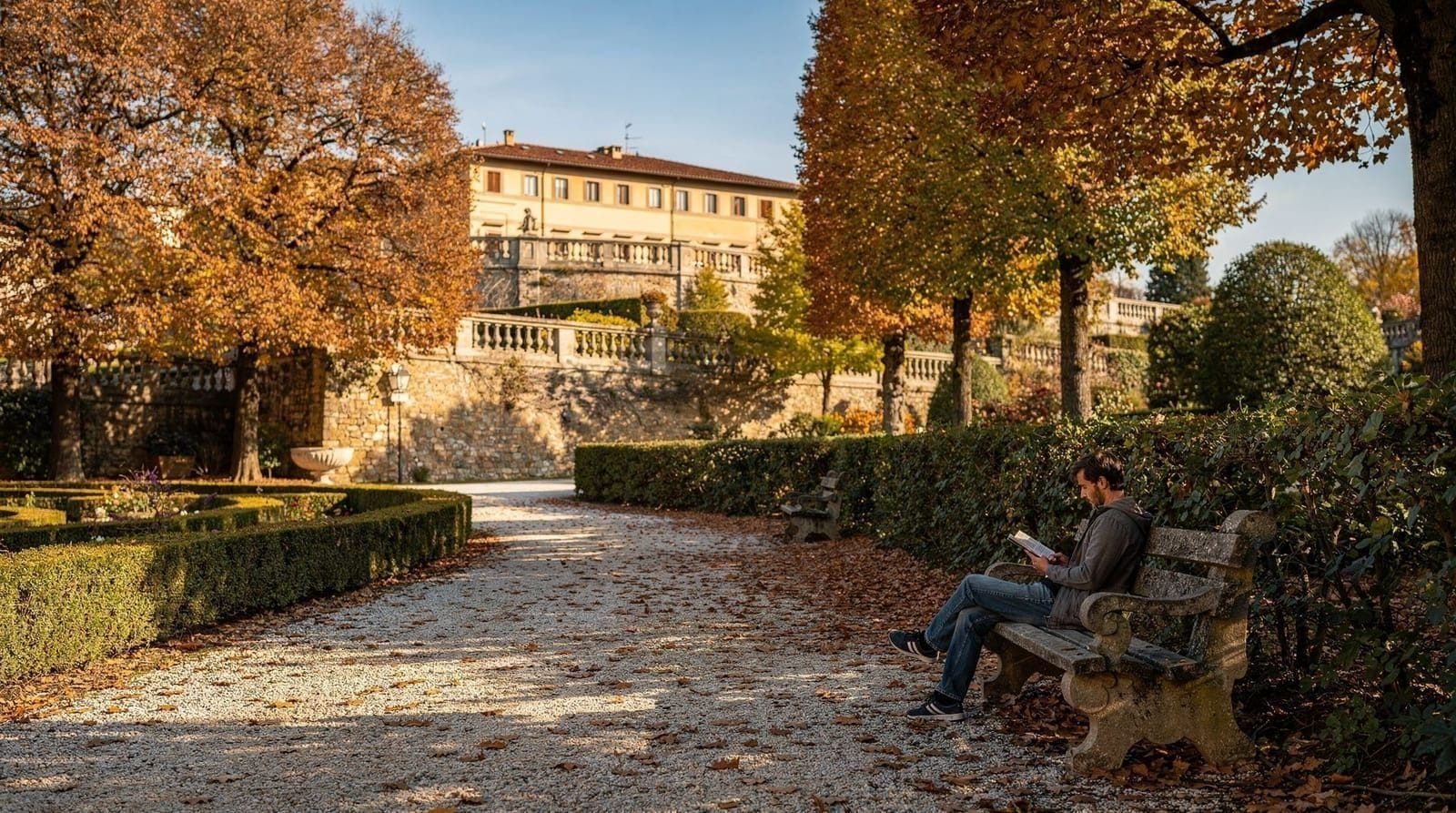
Gardens: the Boboli Gardens, behind Pitti Palace, are exceptional in April. The rose garden along the eastern wall begins to flower from mid-April. The Bardini Gardens on the south side of the Ponte alle Grazie are even less visited and remarkable for their wisteria pergola, which peaks in late April.
What to do: the mild temperatures make this the best month for day trips. Siena is 90 minutes by bus; the Val d’Orcia countryside, famous for its cypress alleys and rolling hills, is at peak beauty in April and May with green fields and wildflowers. See the day trips from Florence section for logistics.
May in Florence
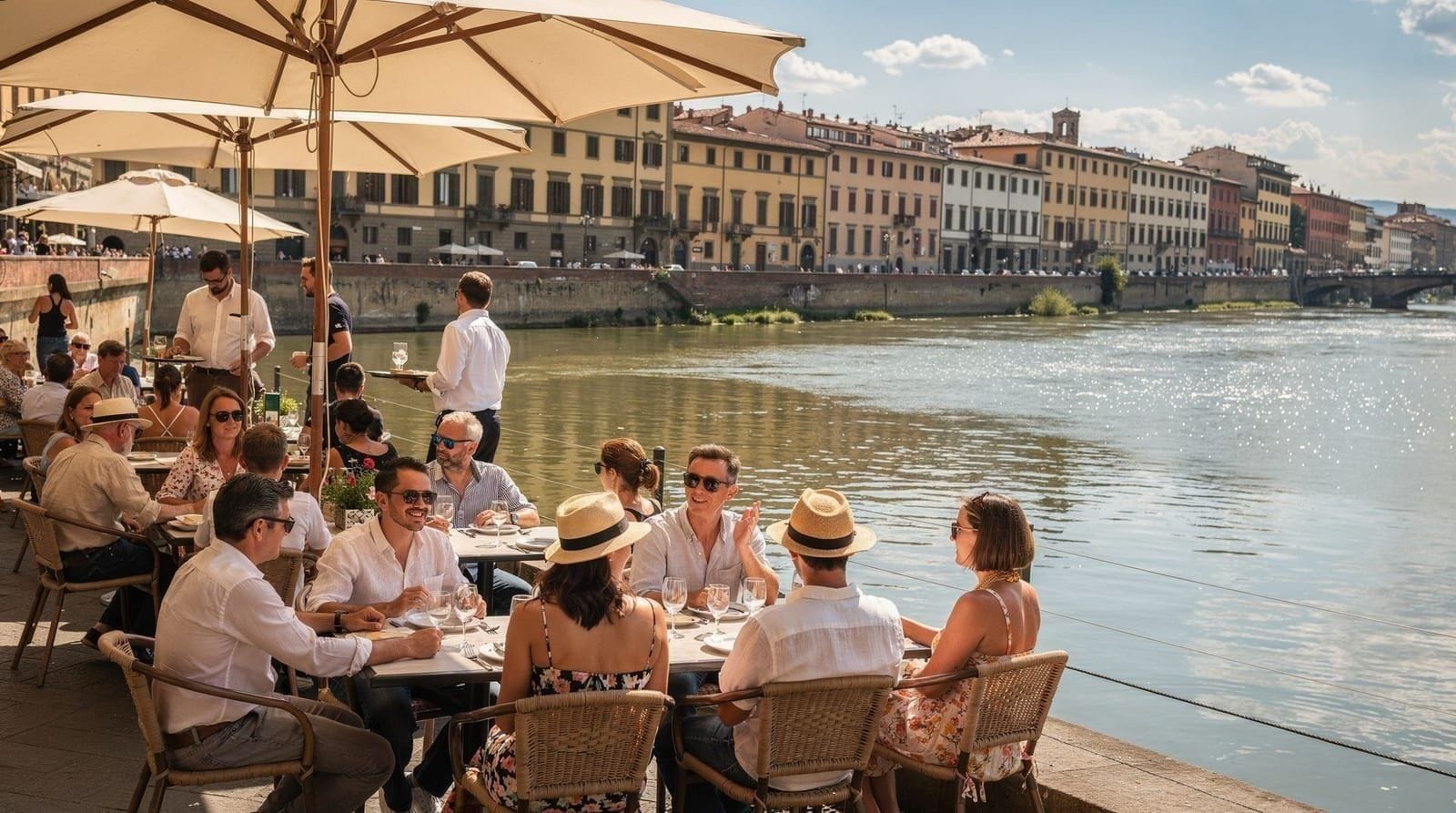
Weather: 14–23°C, reliably warm, and the driest spring month. By late May evenings are warm enough to sit outdoors until well after nine. This is when Florence feels the way the photographs suggest it should.
Maggio Musicale Fiorentino: the name literally translates as “Florentine Musical May” and it remains one of Italy’s most respected classical music and opera festivals. Founded in 1933, it runs from late April through June at the Teatro del Maggio, the opera house beside the Cascine park west of the centre. Tickets range from around €20 for lesser-known productions to over €100 for headline events. Book through the teatro’s website well in advance.
Iris Garden: only accessible in May for the iris competition, the Giardino dell’Iris on the Piazzale Michelangelo hillside holds hundreds of iris varieties and hosts an international cultivar competition. Entry is free during the festival (usually early to mid-May). It is almost unknown to most tourists and completely worth the five-minute detour from the piazzale.
Crowds: May is busy. The Uffizi and Accademia require reservation at least two weeks ahead; three to four weeks is safer. Easter is behind you, but school trip season (primarily Italian and French school groups) begins in earnest from the second week of May and continues through June. Mornings at the Uffizi between 9am and 11am are noticeably less crowded than the early afternoon.
Day trips: May is ideal for Chianti. The vines are leafing out, the hills are green, and wine tastings at Antinori nel Chianti Classico, Badia a Passignano, or Fonterutoli are at their most atmospheric. See the Chianti wine guide for estate recommendations.
Spring festival calendar
| Date / Period | Event | Notes |
|---|---|---|
| Easter Sunday | Scoppio del Carro | Piazza del Duomo, 11am; arrive by 9am |
| Late April–June | Maggio Musicale Fiorentino | Teatro del Maggio; book in advance |
| Early May (2 weeks) | Iris Garden competition | Giardino dell’Iris, free entry |
| 24–26 June (starts June) | Calcio Storico | Medieval football; piazza Santa Croce |
Key spring practicalities
What to book in advance: Uffizi, Accademia, dome climb. For Easter weekend, add hotel and restaurant reservations to the list. A rooftop aperitivo with Duomo views will sell out too.
Museum tip: the first Sunday of each month, Italian national museums are free. This sounds ideal — and it is free — but queues are longer than on paid days. In May, the free Sunday crowds can exceed even the regular high-season queues.
Dress code for churches: short skirts, sleeveless tops, and shorts are not permitted in churches. This applies to Santa Croce, Santa Maria Novella, and the Baptistery as well as the cathedral. A light scarf or sarong in your bag solves the problem instantly.
Mosquitoes: the warm evenings of late May bring the first mosquitoes of the year, especially along the Arno. A roll-on repellent is worth packing.
Spring vs. autumn: which is better?
This comparison comes up constantly. The honest answer:
- April and May win for energy: the city feels alive in a way autumn does not. Festivals, outdoor events, and long warm evenings give spring a momentum that October cannot quite match.
- September and October win for calm: the autumn museums are quieter, hotel prices are slightly lower after the summer peak, and the Chianti harvest adds a specific experience that spring cannot offer.
- For gardens specifically, spring wins by a wide margin. The Boboli in October is still pleasant but there is nothing comparable to May’s roses and wisteria.
For a full comparative view, see best time to visit Florence.
A realistic spring itinerary framework
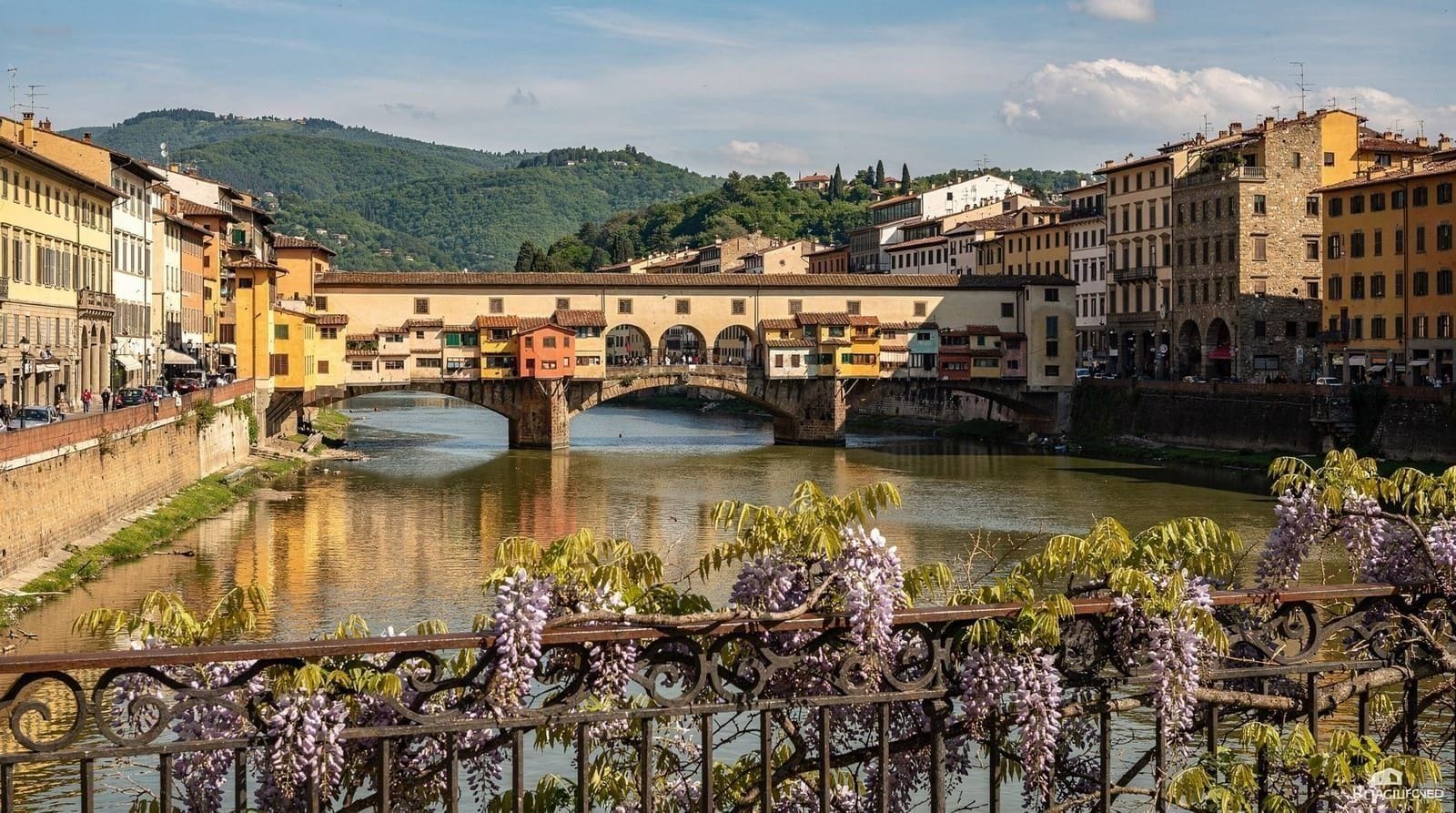
Day 1: Arrive and walk the Oltrarno neighbourhood. Cross the Ponte Vecchio, explore the backstreets between Ponte Vecchio and Piazza Santo Spirito, have dinner in the neighbourhood. Avoid the restaurant clusters immediately beside the bridge.
Day 2: Uffizi in the morning (booked slot required), Piazzale Michelangelo for sunset. A 45-minute walk up Costa San Giorgio or the bus from Piazza San Niccolò both work.
Day 3: Accademia (David), then the Duomo complex. The dome climb takes around 45 minutes and is significantly more breathtaking than the exterior suggests it will be.
Day 4: Day trip to Siena or Chianti. Siena by bus is 90 minutes from Santa Maria Novella bus terminal; Chianti requires a car or organised tour.
Day 5: The museums not yet visited — Bargello, Pitti Palace, Medici Chapels — or Fiesole for a morning of hilltop views and the Roman amphitheatre.
Spring weather week by week
Spring in Florence doesn’t arrive as a single switch — it builds gradually across April and May, with real variation week to week. Early April can still require a coat; by the third week, jackets are optional in the afternoon. Early May feels settled and warm; late May starts edging toward the first hints of summer heat and mosquitoes. Booking flexibility of even a week or two, if you have it, can meaningfully change the weather you actually experience.
What to prioritise in spring
Spring is the season to combine the big indoor sights with Florence’s outdoor pleasures without fighting summer heat or winter cold. Book the Uffizi and Accademia for mornings, then use the mild afternoons for the Boboli Gardens or a walk up to Piazzale Michelangelo — both are at their best with spring light and blooming gardens. If Easter falls within your trip, plan the Duomo area visit around the Scoppio del Carro crowds rather than against them; the piazza is essentially unusable for casual sightseeing that morning.
Spring day trips
Late April through May is arguably the best window of the year for Tuscany day trips, since the countryside is green without the summer haze or heat. Beyond Chianti, the Val d’Orcia and Siena both reward a spring visit with wildflowers and comfortable walking temperatures. If you’re building a multi-day countryside extension rather than a single day trip, the perfect Tuscany week itinerary shows how spring weather supports a slower-paced week outside the city.
Frequently asked questions about Florence in spring
Do I need to book restaurants in April and May?
For dinner in a popular restaurant, yes — especially for Saturday evenings. Florence has excellent trattorias in the Oltrarno, Santa Croce, and Sant’Ambrogio neighbourhoods that fill quickly in spring. Walk-in lunch is usually possible at good places, but weekday dinner reservations should be made at least three to four days ahead.
Is Chianti beautiful in spring?
Exceptionally so. The vineyards are bright green, wildflowers fill the verges, and the rolling hills look exactly like the Tuscan postcards. Late April through May is arguably the most photogenic time in the region. The harvest — equally beautiful in its own way — comes in September and October.
Can I combine Florence with Rome in spring?
Yes. The Rome-Florence high-speed train takes 1 hour 30 minutes. Rome is equally busy in spring, so plan accordingly. A week that splits four nights in Florence and three in Rome (or vice versa) is a manageable and popular combination.
Is the Scoppio del Carro worth seeing?
Yes, if you can position yourself well. Arrive at Piazza del Duomo before 9am on Easter Sunday and find a spot along the barriers near the cathedral doors. The explosion itself lasts only a minute or two, but the atmosphere of the packed piazza and the sight of the ox-drawn cart is memorable. Combine it with the evening Easter celebrations in the church of San Miniato al Monte for a complete day.
Are there good markets in Florence in spring?
The Mercato Centrale (covered food market, open daily except Sunday) is excellent year-round. The Mercato di Sant’Ambrogio (weekday mornings, open-air) is better and less tourist-heavy. On the last Sunday of each month, an antique market fills Piazza dei Ciompi. The Piazzale Michelangelo hosts artisan markets on weekends from late April.
Top experiences
Bookable activities with verified prices and instant confirmation on GetYourGuide.

Florence: Uffizi Gallery skip-the-line tickets
- Skip the line
- Free cancellation
Florence: Accademia Gallery — David skip-the-line ticket
- Skip the line
- Instant confirmation
Florence: ticket to Brunelleschi's Dome with panoramic views
- Skip the line
- Free cancellation
Florence: walking tour
- Free cancellation
- Instant confirmation