Renting a car in Tuscany — what you actually need to know
Is it worth renting a car in Tuscany?
Yes, if you plan to explore Chianti vineyards, Val d'Orcia, San Gimignano, Montepulciano or rural areas. No, if you are staying only in Florence — the ZTL makes driving in the city centre illegal and expensive. Rent a car when you leave Florence, not on arrival.
| Cost | Around €35–100/day depending on car size, plus insurance and fuel |
| Rent for | Chianti, Val d’Orcia, agriturismi, rural hilltop towns |
| Skip if | Staying only in Florence, Pisa, Siena or Lucca — all train/bus reachable |
| Biggest risk | Florence’s ZTL — fines of €80–335 per camera pass |
| Best pick-up | FLR or SMN after your city stay, not on arrival day |
Should you rent a car for Tuscany?
The decision of whether to rent a car in Tuscany is one of the most important logistical questions for visitors. The answer depends entirely on where you are going. For a deeper dive into actually driving once you have the car — road rules, tolls, and regional routes — see the driving in Tuscany guide.
Rent a car if you want to:
- Explore Chianti vineyards (Greve in Chianti, Panzano, Castellina in Chianti)
- Visit Val d’Orcia towns (Pienza, Montalcino, Montepulciano, Bagno Vignoni)
- Reach off-train-route hilltop villages (Volterra, Pitigliano, San Quirico d’Orcia)
- Stay at a rural agriturismo with no public transport connection
- Follow the Chiantigiana (SR222) scenic road at your own pace
Do not rent a car if you:
- Are spending your entire trip in Florence (ZTL will fine you)
- Are only visiting Pisa, Siena, Lucca (all reachable by train or bus)
- Prefer not to deal with narrow medieval village streets and limited parking
The ZTL problem — the most important thing to know
Before renting a car, understand that the Florence ZTL (Zona a Traffico Limitato) is the single biggest source of unexpected costs for tourists in Tuscany.
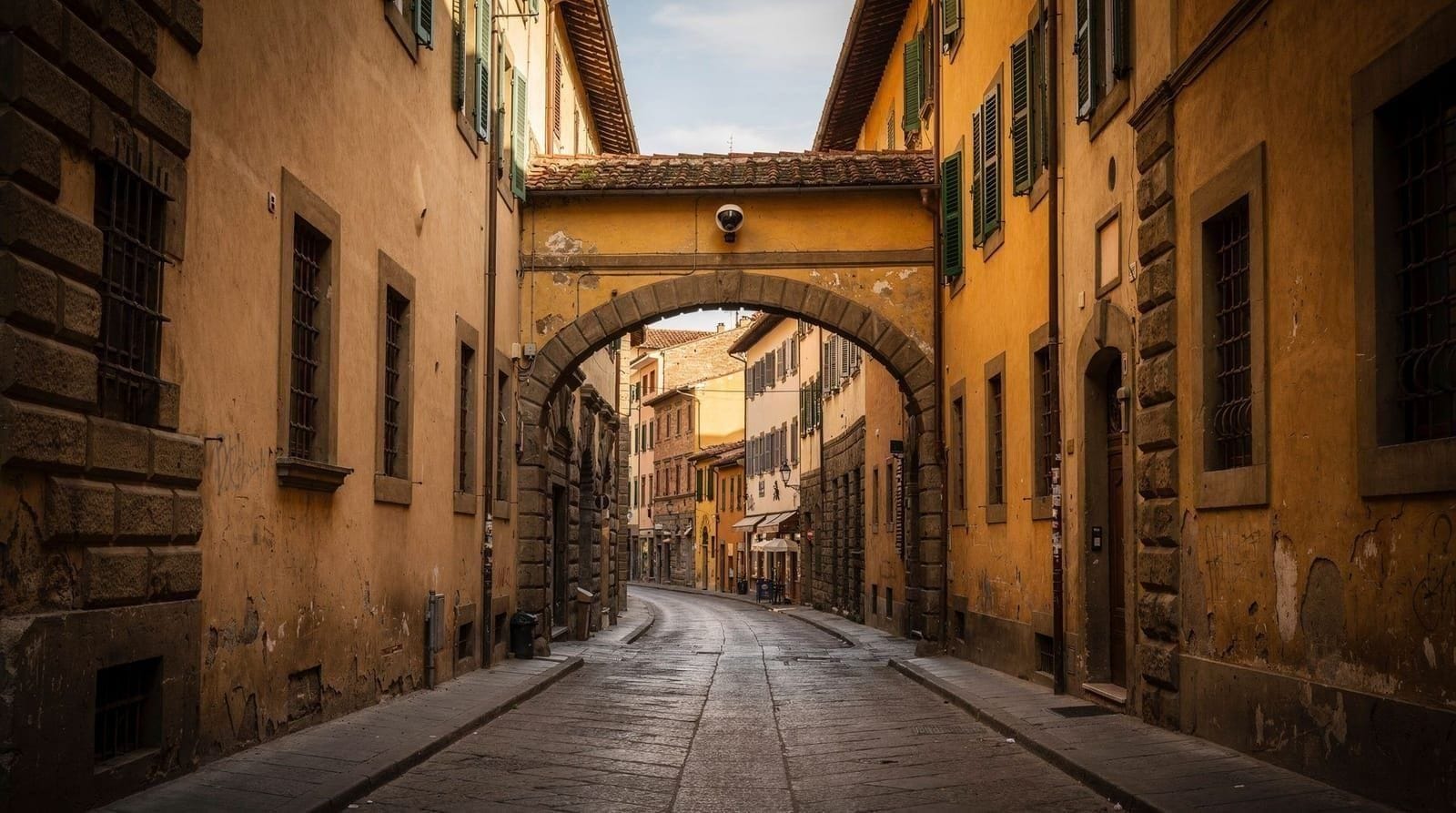
The ZTL covers the entire Florence historic centre. Cameras photograph every vehicle. If you drive into the restricted zone — even accidentally, even for 2 minutes — you receive a fine for each camera you pass. Fines are €80–335 per camera. Rental companies charge an administrative fee of €20–40 per infraction notification on top.
The golden rule: never drive into central Florence with a rental car. Pick up and drop off outside the ZTL boundary, or arrange hotel authorisation in advance if your hotel is inside the zone.
Full details in our ZTL guide.
Where to pick up a rental car
Florence Peretola Airport (FLR)
The most convenient pick-up point if you are flying in. All major companies have desks in the arrivals area:
- Avis, Budget, Hertz, Europcar, Sixt (at the terminal)
- Goldcar, Maggiore (adjacent or shuttle distance)
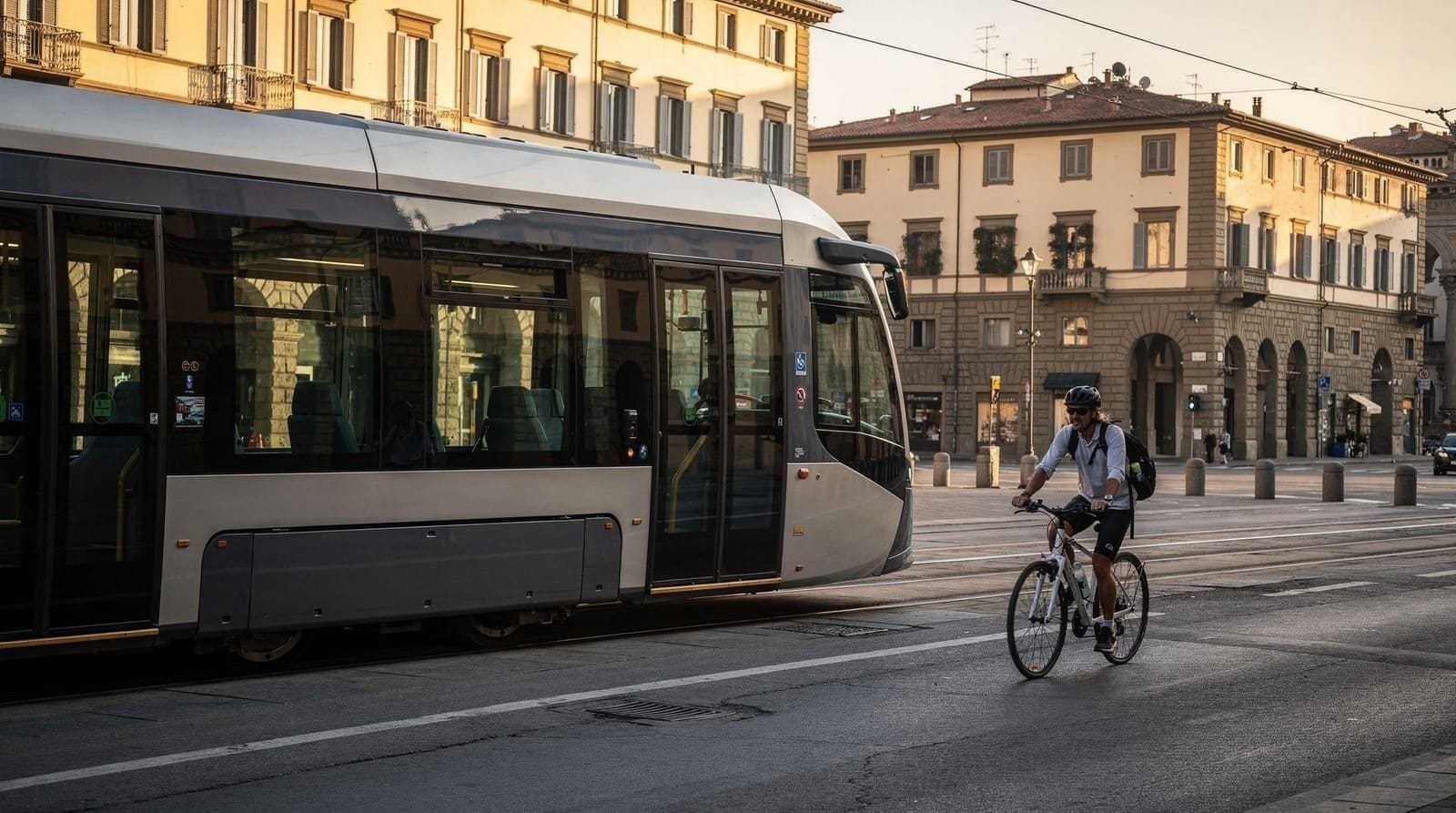
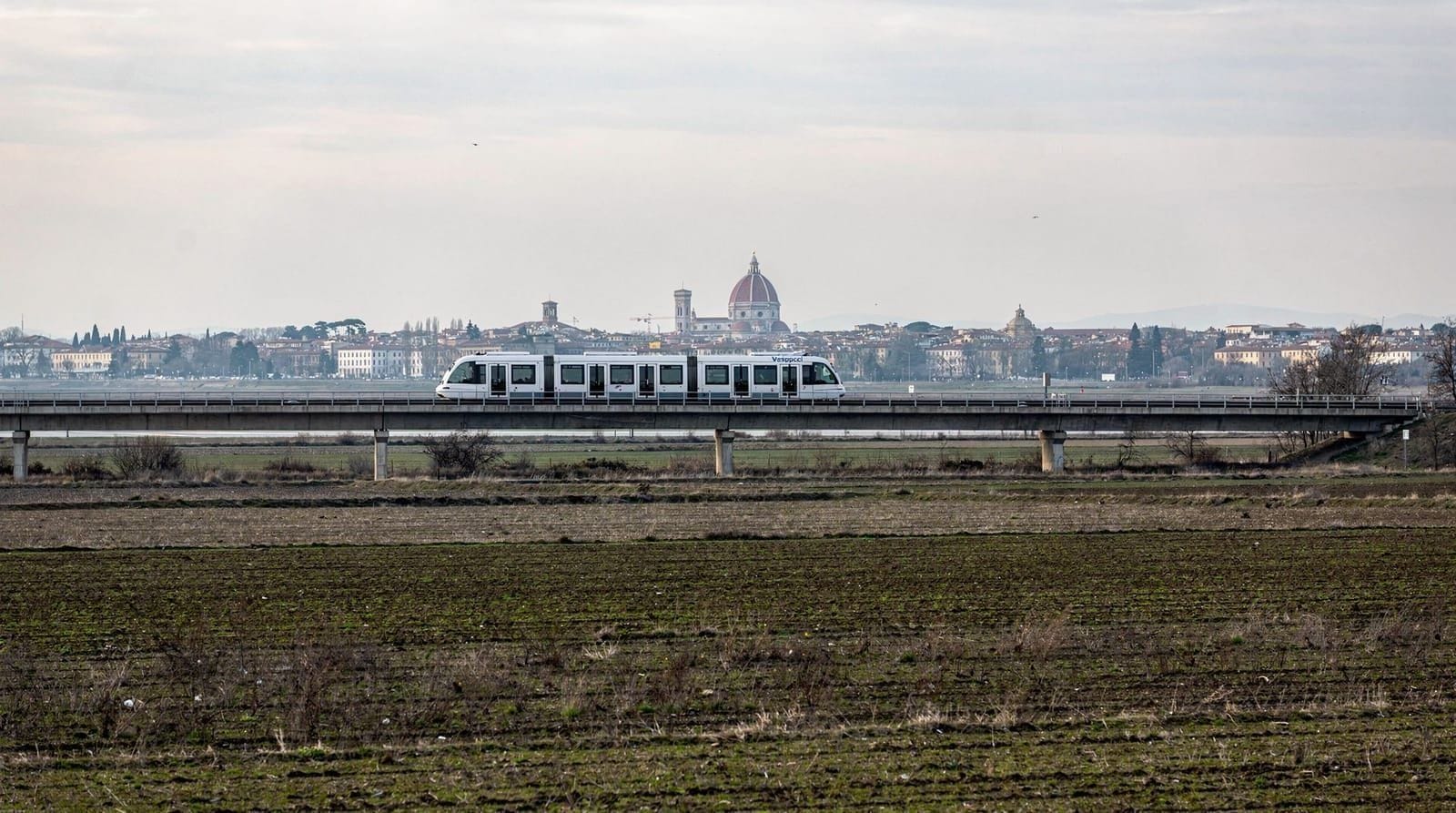
Best strategy: fly into FLR, take the tram T2 into Florence for your initial city stay, then return to the airport by tram to pick up the car when you are ready to begin the Tuscany road trip portion of your holiday.
Florence Santa Maria Novella Station
Avis, Budget, Hertz and Europcar all have desks in or adjacent to SMN station. Picking up here avoids travelling to the airport if you have arrived by train.
Note: the station is technically inside the ZTL boundary. Rental desks are outside or on the perimeter — you will be given clear instructions on how to exit the zone without triggering cameras. Follow these instructions exactly.
Pisa Airport (PSA)
Pisa has a wider selection of budget operators (Goldcar, Keddy, Firefly) on top of the majors. If you have pre-booked and found better rates via PSA, it is a straightforward 75–90 minute drive to Florence or directly into the Tuscan countryside.
Car sizes and what to choose
| Car category | Examples | Best for | Daily rate (approx) |
|---|---|---|---|
| Economy | Fiat 500, VW Polo | Couples, narrow streets | €35–55 |
| Compact | Fiat Tipo, Opel Corsa | 2–3 people with luggage | €45–65 |
| Mid-size | Opel Astra, VW Golf | 4 people, comfortable touring | €55–75 |
| SUV | Fiat 500X, Jeep Renegade | Rough tracks to rural estates | €70–100 |
| Estate / combi | Skoda Octavia, VW Passat | 4 people with lots of luggage | €60–80 |
For most Tuscany road trips, a compact or economy car is ideal. Larger cars become difficult to manoeuvre in medieval village centres and narrow Chianti lanes. An SUV is useful only if you plan to drive on unpaved white roads (strade bianche) to remote wineries.
Manual vs automatic: the vast majority of rental cars in Italy are manual transmission. Automatic cars are available but must be specifically requested and cost more (€10–20 per day extra). Book well in advance if you need an automatic.
Insurance — what you actually need
| Coverage | Notes |
|---|---|
| CDW (Collision Damage Waiver) | Reduces your liability for damage. Often included or can be added at rental desk. Usually recommended. |
| TP (Theft Protection) | Cover for vehicle theft. Worth adding in city areas. |
| EU travel card or credit card coverage | Many premium credit cards include rental car CDW. Check your card’s policy before paying the rental company. |
| SCDW (Super CDW) | Reduces excess to zero. Adds €10–20/day but removes all financial risk. |
Check your credit card’s rental car insurance policy before travel. Some cards (particularly Amex Platinum, many UK premium cards) include CDW coverage when you pay the rental with that card. If this applies to you, decline the rental company’s CDW and save €10–20 per day.
Cost breakdown for a Tuscany road trip
Example: 5-day rental, July, compact car, two people
| Item | Cost |
|---|---|
| Base rental (compact, 5 days, July) | €300–350 |
| CDW insurance | €50–75 |
| Fuel (estimated 500 km) | €50–60 |
| Motorway tolls | €30–50 |
| Parking fees (cities/villages) | €25–40 |
| Total | €455–575 |
Split between two people: approximately €230–290 per person. This is competitive with rail passes and guided tours if you are visiting multiple rural areas that are not well served by trains.
Best Tuscany driving routes
Route 1 — Classic Chianti (1–2 days)
Florence → Impruneta → Greve in Chianti → Panzano → Castellina → Radda → Gaiole → back to Florence
Distance: approximately 100–130 km round trip. The SR222 (Via Chiantigiana) is the famous scenic road through the wine country — narrow, winding, beautiful. Allow a full day to include a winery visit and lunch at a local trattoria. See the Chianti day trip guide for a version of this route without a car, if you decide against renting.
Route 2 — Val d’Orcia (1–2 days from Florence)
Florence → Siena (bypass, don’t drive into the centre) → Montalcino → Pienza → Montepulciano → back via A1
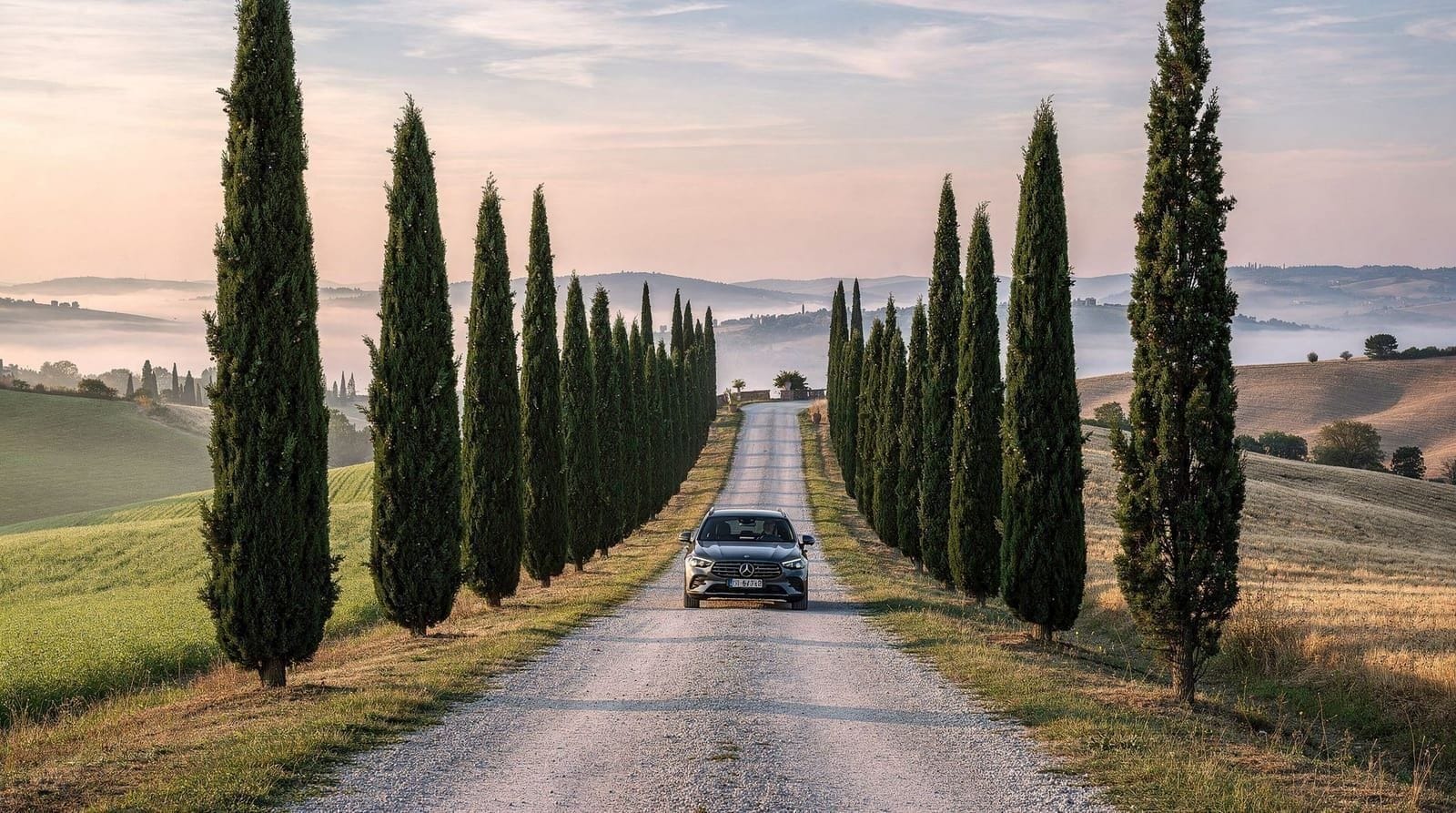
Distance: approximately 200–230 km round trip. The Val d’Orcia is a UNESCO World Heritage landscape — rolling hills, cypress avenues, honey-stone villages. This is the Tuscany of every magazine photo. Best in late spring (April–May) and early autumn (September–October). The Val d’Orcia day trip guide covers this same region for visitors without a rental car.
Route 3 — Etruscan Maremma (2 days)
Florence → Grosseto → Pitigliano → Sovana → Sorano → Saturnia → back to Florence
A less-visited route through southern Tuscany’s wild Maremma coast and Etruscan hilltowns. Pitigliano, built entirely on tufa rock, is extraordinary. Thermal baths at Saturnia are free and open 24 hours. Distance: approximately 350–400 km round trip.
Parking in Tuscany
Italian towns use a colour-coded parking system:
| Line colour | Meaning |
|---|---|
| Blue | Pay and display (€0.50–2/hour). Buy ticket from nearby machine. |
| White | Free parking |
| Yellow | Residents only — do not park here |
| No lines | Usually free but check signs carefully |
Village centres often have free car parks just outside the medieval gates. Use these — driving inside hilltop village centres is difficult and often subject to their own local ZTL regulations.
GPS parking apps: Google Maps shows pay-and-display areas. The EasyPark app works in many Tuscan towns for cashless parking payment.
Fuel (petrol) in Tuscany
- Benzina senza piombo = unleaded petrol (most rental cars)
- Gasolio / diesel = diesel
- GPL = LPG
- Price in 2026: approximately €1.85–1.95 per litre unleaded
Petrol stations on motorways are more expensive than in towns. Many rural stations close at lunch (13:00–15:00) and on Sundays. Self-service pumps accepting cards are available at most motorway service areas 24 hours.
Agriturismo and rural Tuscany — where a car is essential
The best reason to rent a car in Tuscany is not the main hilltop towns — Pisa, Siena, Montepulciano and Lucca are all reachable by train or bus. The reason is the agriturismo network: hundreds of farm stays, wine estates and rural retreats scattered across the Chianti hills, Val d’Orcia and Maremma that are simply inaccessible without a car.
What is an agriturismo?
An agriturismo is a working farm that offers accommodation, and often meals made from on-site produce. They are regulated by Italian law — a minimum percentage of the produce served must come from the farm itself. This regulation makes the category meaningful: you are genuinely eating what was grown or raised there.
The best agriturismi are in deeply rural locations:
- Remote Chianti hillsides 5–10 km from the nearest paved road
- Former Benedictine estates in the Val d’Orcia
- Olive oil farms in the hills above Lucca
- Wine estates in Montalcino with apartment accommodation among the vineyards
None of these are served by public transport. A car is not optional — it is required.
Planning an agriturismo stay
Book early: the best-rated agriturismi in Chianti and Val d’Orcia book out months in advance for July–August and the September–October harvest period. For spring visits (April–May), booking 2–3 months ahead is sufficient.
Location matters: always check the GPS coordinates of your agriturismo before booking, not just the postal address. Some are literally on a hilltop with 5 km of strade bianche access road. Know what you are booking.
Length of stay: agriturismi typically require a minimum stay of 3–7 nights in summer. They are not pass-through accommodations — they are destinations in themselves. Plan to spend time on the property: walking the grounds, tasting wines, watching sunsets from the terrace.
If you’re still deciding between basing yourself in Florence with day trips versus staying rurally with a car, the staying in Tuscany vs day trips guide and the where to stay in Tuscany guide lay out the trade-offs in more detail than this guide’s scope covers.
Rental car vs guided day tours vs public transport: an honest comparison
| Option | Cost (2 people, per day) | Best for | Worst for |
|---|---|---|---|
| Rental car | €90–110 all-in | 6+ locations, agriturismi, flexibility | Florence itself — ZTL risk |
| Guided day tour | €50–90/person | Solo travellers, no driving comfort | Flexibility, off-itinerary stops |
| Train + bus | €10–30/person | Main towns: Pisa, Siena, Lucca | Rural Chianti, Val d’Orcia estates |
The honest calculation: a rental car earns its cost back once you’re visiting more than two or three rural, non-train-served locations, or staying at an agriturismo. For a trip confined to Florence plus one or two classic day trips by train, the car is a net cost with no real benefit — and the ZTL risk alone can outweigh the whole rental. See the Florence airport to city guide if you’re deciding how to handle arrival before you’ve picked up the car.
Budget planning for a Tuscany road trip
Renting a car adds significant cost to a Tuscany trip. Here is a realistic full budget for a 7-day drive through Chianti and Val d’Orcia for two people:
| Cost item | Amount |
|---|---|
| Compact rental car, 7 days (July) | €420–490 |
| CDW insurance | €70–100 |
| Fuel (approx 600–800 km total) | €60–80 |
| Motorway tolls (A1, A11) | €40–60 |
| Parking fees (town centres, 5 days) | €30–50 |
| Total car costs | €620–780 |
| Per person (2 people) | €310–390 |
Compared to the equivalent in train tickets + guided day tours, renting a car is cheaper for:
- Visiting 6+ distinct locations
- Staying in rural agriturismi (where no alternative transport exists)
- Flexibility to stop at scenic viewpoints and roadside vineyards
The car is more expensive than trains alone if you are sticking to the main cities (Florence, Pisa, Siena) where public transport works well.
Safety and driving considerations in Tuscany
Mountain roads and the Chiantigiana
The SR222 (Chiantigiana) and the roads into the Crete Senesi are classified as state roads (statale) but are often no wider than a car and a half. In peak season (July–August), tourist coaches use the same roads.
Rules for narrow Chianti lanes:
- The uphill vehicle has right of way
- Reverse into a passing place rather than expecting the other driver to
- Do not rush — what feels like a delay is part of the experience
- The blind corners on vineyard roads require you to sound your horn before turning
White road (strade bianche) etiquette
When driving unpaved strade bianche to a winery or agriturismo:
- Reduce speed to under 20 km/h — potholes are invisible in dust
- Close your car windows — chalk dust gets everywhere
- Check tyre condition before and after — punctures on remote gravel are not unusual
- Never overtake on strade bianche — the dust cloud from a car ahead blocks visibility for 30+ seconds
Emergency contacts
- Police (Carabinieri): 112 (unified emergency)
- Roadside breakdown: 116 (ACI)
- Rental company emergency: printed in your rental documents — keep this on your phone
Frequently asked questions about renting a car in Tuscany
Do I need an International Driving Permit (IDP) to drive in Italy?
EU licence holders do not need an IDP. Holders of licences from non-EU countries (UK, US, Canada, Australia) technically need an IDP alongside their national licence. In practice, most rental companies accept these licences without an IDP, but carrying one is advisable and they are cheap to obtain from your national motoring association before travelling.
Can I take a rental car from Italy into another country?
Most rental companies allow cross-border travel within Europe but require advance notification. Inform the rental company at booking if you plan to cross into France, Switzerland, Austria or elsewhere. Additional insurance papers may be required.
What speed limits apply in Tuscany?
- Motorway (autostrada): 130 km/h (110 km/h in rain)
- Dual carriageway (superstrada): 110 km/h
- Single road (statale/provinciale): 90 km/h
- Urban roads: 50 km/h (30 km/h in some zones)
- Speed cameras are common on Italian motorways. Respect the limits — fines are substantial.
Are the white gravel roads (strade bianche) drivable in a standard car?
Many strade bianche are drivable in a standard compact car if taken slowly. Particularly rough or remote tracks to estates benefit from an SUV. Ask your rental company whether your vehicle is cleared for unpaved roads — some contracts exclude off-road driving and void insurance.
What if I break down in a rural area?
Call your rental company’s emergency number immediately — it is printed in the rental documents. Most companies have 24-hour roadside assistance. ACI (Italian Automobile Club) also provides breakdown assistance on Italian roads: call 116.
Is there a vignette (motorway sticker) requirement in Tuscany?
No. Italy uses toll booths on motorways rather than vignettes. Pay at the booth in cash or by card as you exit. Some express lanes use Telepass (electronic transponder) — if your rental car has one, you will be charged automatically and it appears on your final bill.
Should I rent the car for my whole Tuscany trip or just part of it?
For most itineraries, just part of it. If your trip starts and ends in Florence with a rural loop in the middle, pick up the car after your Florence days are done and drop it off before you return to the city — this avoids paying for days you’re not using it and sidesteps the ZTL risk entirely. Renting for the whole trip only makes sense if you’re based rurally from day one, such as arriving directly at an agriturismo from Pisa or Florence airport.
Is a GPS unit or phone data plan better for navigation in rural Tuscany?
A phone with an international data plan or local SIM is generally more reliable than a rented GPS unit, since map apps update road closures and diversions in real time. That said, rural Chianti and Val d’Orcia have patchy signal in valleys and behind hills — download offline maps for your route before setting out, so you’re not stranded without navigation at the exact moment you need to find a gravel turn-off.
Top experiences
Bookable activities with verified prices and instant confirmation on GetYourGuide.