Florence ZTL explained — how to avoid fines of €80–335
What is the Florence ZTL and will I get fined?
The ZTL (Zona a Traffico Limitato) is Florence's restricted traffic zone covering the entire historic centre. Cameras photograph every number plate at every entrance. Fines are €80–335 per camera. Rental companies add €20–40 admin fees. If you drive into the ZTL without authorisation, you will be fined.
What is the Florence ZTL?
The Zona a Traffico Limitato (ZTL) is Florence’s restricted traffic zone. It covers virtually the entire historic centre of the city — roughly everything inside the medieval ring roads (viali di circonvallazione). The zone was created to protect both the architectural heritage and the quality of life of residents, and it is enforced with exceptional rigour.
Every vehicle that enters the ZTL without authorisation is photographed by automated cameras. The fine arrives by post weeks later. There is no grace period, no “I didn’t know” exemption, and no easy appeal from abroad.
This guide gives you the information to ensure you never accidentally drive into the ZTL — and to understand how to arrange legitimate access if you genuinely need it.
| Where | Entire historic centre + Oltrarno sub-zone |
| Cost of a fine | €80–335 per camera, plus €20–40 rental admin fee |
| Hours | Mon–Fri/Sat 07:30–20:00 (16:00 Sat); suspended Sundays |
| Getting around instead | Walking, tram, bus — see getting around Florence |
| Best strategy | Don’t rent a car for Florence itself; pick one up for Tuscany only |
ZTL zone boundaries
The main Florence ZTL covers the area roughly bounded by:
- North: Viale Filippo Strozzi / Viale Matteotti
- East: Viale della Giovine Italia
- South: the Arno river (the Oltrarno has its own, smaller ZTL)
- West: Viale Fratelli Rosselli
The ZTL is not a single uniform zone — it is divided into sub-zones with slightly different rules:
| Sub-zone | Area | Notes |
|---|---|---|
| ZTL A | Main historic centre (Duomo, Uffizi, Signoria area) | Strictest; all-day cameras |
| ZTL B | Inner ring areas | Active during peak hours |
| ZTL O | Oltrarno (south of Arno) | Around Pitti Palace, Boboli |
| ZTL D | Piazza Santa Croce | Event restrictions apply |
The Oltrarno ZTL O covers the streets around Piazza Santo Spirito, Piazza dei Pitti and Borgo San Frediano. Tourists staying in Oltrarno hotels should contact their accommodation about access routes.
ZTL operating hours
| Zone | Weekdays | Saturdays | Sundays and public holidays |
|---|---|---|---|
| Main ZTL (A) | 07:30–20:00 | 07:30–16:00 | Suspended |
| ZTL O (Oltrarno) | 07:30–20:00 | 07:30–16:00 | Suspended |
| Some sub-streets | 00:00–24:00 | 00:00–24:00 | 00:00–24:00 |
“Suspended” means the zone restriction is temporarily lifted. However, do not confuse suspended with accessible — parking within the historic centre is still almost impossible and regulated by resident permits.
How the cameras work
Florence has installed over 40 ZTL camera gates at all major entry points to the restricted zone. These are not simple speed cameras — they are licence plate recognition systems connected to a real-time database.
When a vehicle passes a camera:
- The plate is photographed and read automatically
- The plate is checked against the authorised vehicle database
- If unauthorised, a fine notice is generated immediately
- The notice is sent by post to the registered owner (for rental cars: to the rental company)
You do not see a flash or hear a warning. You may not know you have been fined until a letter arrives weeks later.
Multiple cameras on a single journey can mean multiple fines. If you drive from Santa Maria Novella towards the Duomo, you might pass 3–4 camera gates. Each one is a separate infraction.
What the fine looks like
- Base amount: €80–163 depending on the specific article of the Highway Code
- Repeated offences: up to €335
- Rental company admin fee: €20–40 per infraction (varies by company)
- Total possible exposure for a short drive through the centre: €300–500+
Fines typically arrive 60–90 days after the infraction. Italian bureaucracy is slow, but the fines eventually arrive. Rental companies have up to 365 days to notify you.
How to get legitimate ZTL access
If you are staying inside the ZTL
Hotels inside the ZTL can apply for a temporary authorisation (autorizzazione temporanea) for guests arriving by car. The process:
- Contact your hotel at least 48 hours before arrival (ideally 1 week)
- Provide your vehicle’s exact plate number (including the country code)
- The hotel registers the plate for the specific arrival day and time window
- The municipality grants a window (typically 2–4 hours for arrival, during which you can enter and park in the hotel garage or nearest authorised car park)
This authorisation is not transferable and does not allow unlimited access. Once you have dropped your bags and parked, you must not re-enter the ZTL by car during your stay unless you arrange additional access windows.
Important: the authorisation must be registered before you arrive. If you call the hotel from inside the ZTL asking for a code, it is already too late.
For deliveries and trade vehicles
Florence issues ZTL authorisation cards for trade vehicles, delivery services and certain professionals. Tourists cannot apply for these.
If you are dropping off passengers at a ZTL hotel
Some hotels have negotiated specific drop-off windows. Contact your hotel in advance — some can arrange a 15-minute window for drop-off between restricted hours.
Practical strategies to avoid ZTL problems
Strategy 1: Don’t rent a car for Florence at all
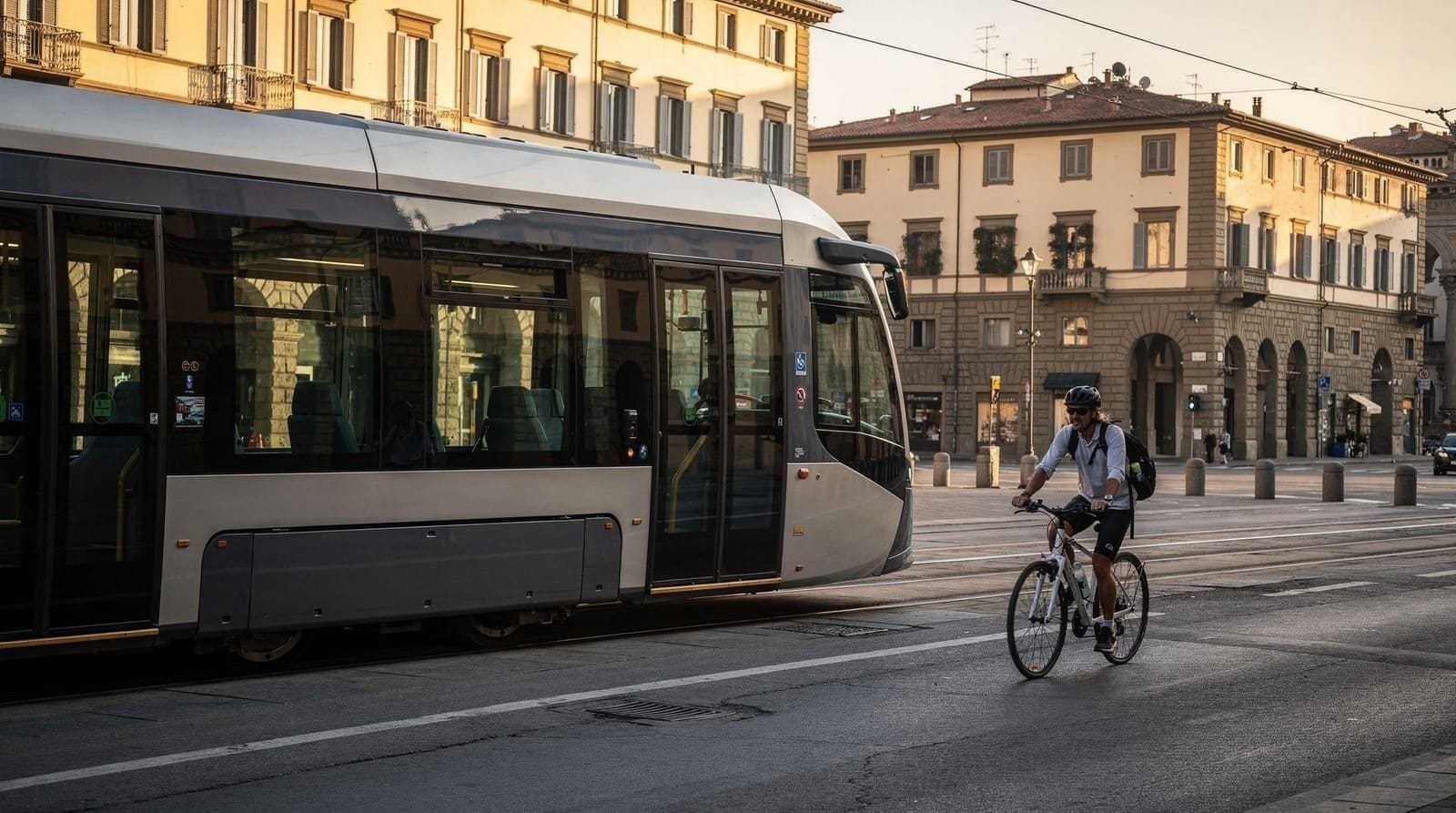
For visiting Florence itself, a rental car is a liability. Walking and trams cover everything within the centre, and our public transport in Florence guide covers bus and tram routes in detail. Train connections reach Pisa, Siena (by bus) and other Tuscany cities without ever touching a ZTL camera. Reserve the rental car for the Chianti and rural Tuscany portion of your trip — see renting a car in Tuscany and driving in Tuscany for how that half works.
Strategy 2: Rent the car at the end of your Florence stay
If your trip is Florence + Tuscany countryside, spend the first 2–3 days in Florence using public transport, then pick up the rental car when you leave for the countryside. Drop it when you return to Florence, or at Pisa or Rome airports. If you’re flying in, our Florence airport to city guide and Pisa airport to Florence guide cover the no-car arrival routes, and Florence train stations guide explains which station to use for onward trains.
Strategy 3: Park outside the ZTL boundary
Several large car parks operate just outside the ZTL. From these you can walk, take a bus or taxi to the centre.
| Car park | Location | Walk to Duomo | Daily rate (approx) |
|---|---|---|---|
| Parcheggio Parterre | Piazza della Libertà | 20 min | €20–25 |
| Parcheggio SMN (Firenze Parcheggi) | Via della Scala | 18 min | €18–24 |
| Garage Via Palazzuolo | Near SMN | 20 min | €20–25 |
| Piazzale Michelangelo | Oltrarno | 40 min walk or bus 12/13 | €2/hour |
| Fortezza da Basso | Viale Filippo Strozzi | 25 min | €20 |
All of these are outside the main ZTL. However, check the current boundary maps on the Comune di Firenze website — boundaries can change.
Which car park to choose based on where you’re staying
If your hotel is near the Duomo or Santa Croce, Parcheggio Parterre or the Fortezza da Basso garage are the shortest realistic walks that stay outside the ZTL. If you’re based near Santa Maria Novella station, Parcheggio SMN or Garage Via Palazzuolo are steps from the station concourse, useful if you’re continuing by train. If you’re staying in the Oltrarno, the Piazzale Michelangelo car park is cheaper per hour but a longer uphill walk — better suited to a short stay than a multi-day park-and-forget.
ZTL in the surrounding area
Fiesole
The village of Fiesole above Florence has its own restricted traffic area. Access to the village centre is restricted. Take the number 7 bus from SMN (€1.50, 30 min) rather than driving.
San Miniato al Monte
The area around San Miniato al Monte church has partial restrictions. Most visitors walk up from Piazzale Michelangelo — there is no parking at the church itself.
Piazzale Michelangelo
Piazzale Michelangelo itself is accessible by car and has a large pay-and-display car park. It is outside the ZTL. This makes it a useful base for the Oltrarno and the famous viewpoint — see our Florence viewpoints guide.
What to do if you have already been fined
If a ZTL fine arrives after your trip:
- Pay within 5 days of receipt for a 30% discount (if the notice includes this offer)
- Pay within 60 days of the infraction date to avoid late penalties
- Appeal is possible if you believe the fine was issued in error, if the camera was malfunctioning, or if you had authorisation that was not recorded. Appeals go to the Comune di Firenze Ufficio Sanzioni. The process requires Italian-language letters and takes months.
- Ignore at your own risk — unpaid Italian fines are now enforceable in other EU countries and increasingly in the UK and US via mutual enforcement agreements. Rental companies may block your credit card.
The ZTL in historical context
Florence’s ZTL was not invented by bureaucrats seeking to create revenue. It emerged from a genuine crisis: by the 1980s and early 1990s, traffic congestion in the historic centre had become so severe that the Renaissance architecture was visibly suffering from vibration, pollution and the visual intrusion of thousands of cars.
The first restricted traffic zones were introduced in the late 1980s and expanded systematically through the 1990s. The installation of electronic camera enforcement began in 1994, making Florence one of the earliest Italian cities to use automated plate recognition for traffic control.
The current system — covering the entire historic centre with over 40 camera gates — was substantially complete by the 2000s. The cameras were updated to digital high-resolution systems in the 2010s. The current generation of cameras reads number plates at night and in rain as reliably as in daylight.
The ZTL has been largely successful from an environmental and heritage perspective. Air quality in the centre has improved measurably. Vibration damage to historic buildings has reduced. Pedestrian life has flourished in streets that were previously choked with traffic.
ZTL and Italian law — the legal framework
The ZTL is governed by the Italian Highway Code (Codice della Strada), specifically articles covering restricted traffic zones (zone a traffico limitato) in historic centres. These provisions allow municipalities to designate restricted zones and use automated enforcement.
The infraction is a civil fine rather than a criminal matter. Points are not deducted from your driving licence (for non-Italian licences). However:
- The fine is the responsibility of the vehicle’s registered owner (for rental cars: the rental company)
- Rental companies are legally obliged to forward fines to the driver who caused them
- Unpaid fines can be pursued across EU borders under the EU Cross-Border Enforcement Directive
- In practice, fines from non-EU countries (UK, US, Canada) are harder to enforce but not impossible — and rental companies hold credit card authorisations that they can charge
The practical implication: do not assume ignoring a ZTL fine will have no consequences. Pay within the early payment window (usually 30 days) for the discounted rate.
Common ZTL misconceptions
“My GPS didn’t warn me”: GPS ZTL warnings are available in Google Maps, Waze and Apple Maps but must be enabled in settings. Many visitors do not check. The absence of a GPS warning does not mean you are in a ZTL-free area.
“The camera didn’t flash — no photo was taken”: Modern plate recognition cameras in Florence do not use a visible flash. They use infrared imaging. The absence of a flash means nothing.
“My rental company said they would not pass on fines”: Rental companies are legally required to disclose the driver’s details to Italian authorities when a fine is issued against their vehicle. They cannot shield you from fines — and they typically charge you administrative fees on top.
“The hotel said it was OK to drive in”: Hotels can arrange temporary ZTL authorisations for arrivals — but only if they have pre-registered your plate number. “Come in and we’ll sort it” is not how it works. The authorisation must be in the system before you enter.
“It was a Sunday — the ZTL was suspended”: The main ZTL is suspended on Sundays and public holidays. However, some sub-zones and specific streets have different rules. Always check for your specific hotel address and entry point.
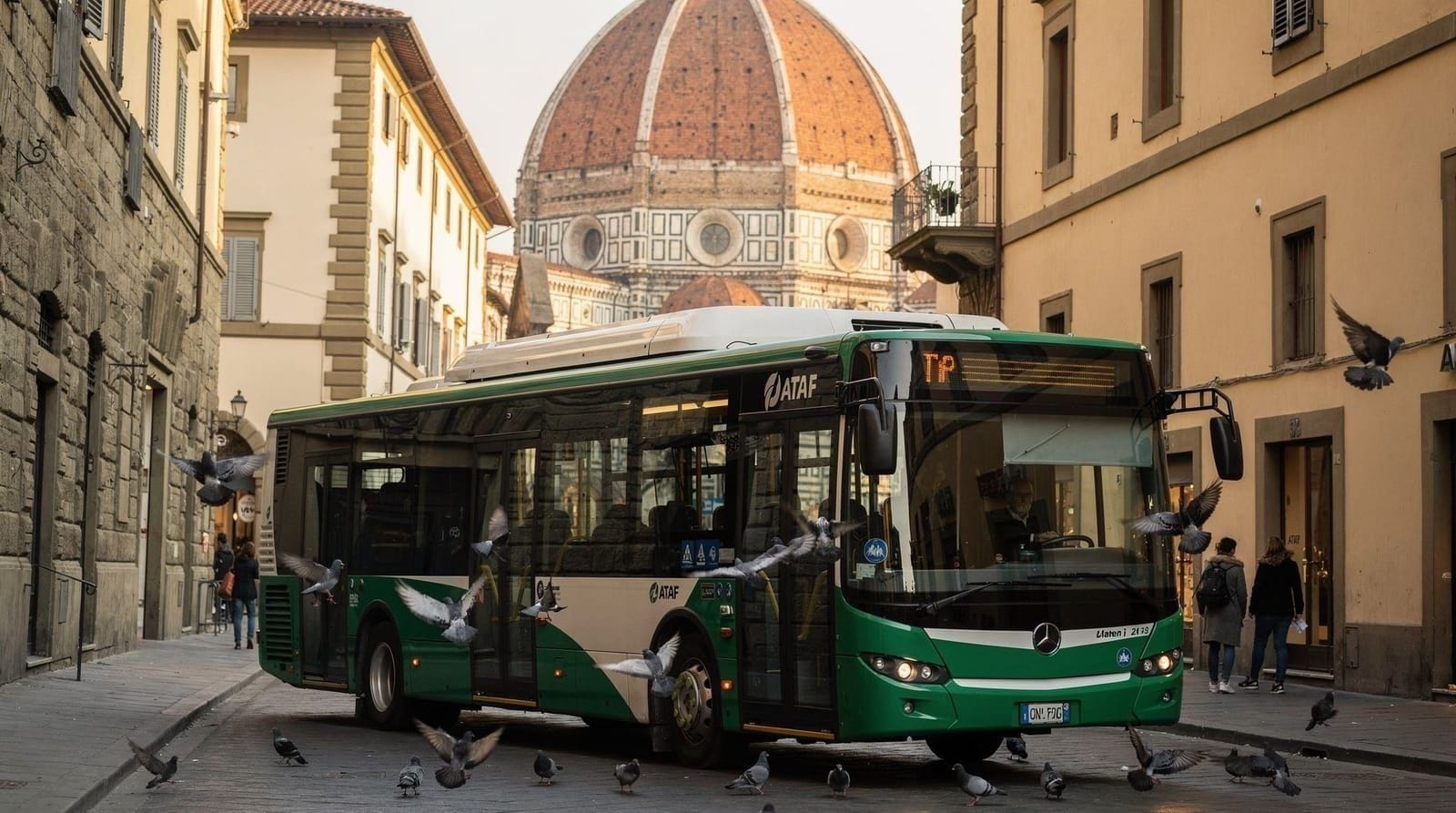
“I saw other cars driving in, so it must be fine”: Residents, taxis, buses and authorised vehicles are permitted inside the ZTL at all times — you cannot tell an authorised local car from an unauthorised tourist rental just by watching traffic. Never use other vehicles as evidence that a street is open.
ZTL zones in other Tuscan cities — a reference
When visiting Tuscany by car, the ZTL pattern repeats across all major historic towns. Here is a quick reference:
| City | ZTL coverage | Operating hours (approx) | Key car parks |
|---|---|---|---|
| Florence | Entire historic centre | Mon–Fri 07:30–20:00, Sat 07:30–16:00 | Parterre, SMN, Michelangelo |
| Siena | Historic centre | Variable by zone; daily in centre | Il Campo perimeter parks |
| Pisa | Campo dei Miracoli area | Daily (check signs) | Large parks near the walls |
| Lucca | Inside the city walls | Mostly restricted | Parks outside the walls |
| San Gimignano | Historic centre | Daily | Parks at town gates |
| Montepulciano | Upper historic town | Daily | Parking below the town |
| Volterra | Historic centre | Variable | Piazza Martiri and perimeter |
In every case: park outside the old town walls and walk in. This is the universal Tuscany driving rule. If your Tuscany plan includes multiple hill towns, our San Gimignano day trip, Lucca day trip and Volterra day trip guides each flag the specific parking spot to use before walking in.
Should you rent a car at all for a Florence trip?
For visitors staying only in Florence, the honest answer is no — a car adds cost, ZTL risk and parking hassle with zero benefit inside the city. The calculation changes only if your itinerary includes multiple rural Tuscany stops (Chianti wineries, Val d’Orcia, Montepulciano, the Maremma) that public transport reaches poorly or not at all. In that case, the staying in Tuscany vs day trips guide walks through whether a car-based countryside itinerary or a Florence-based day-trip strategy suits your trip better, and our Tuscan wine regions guide is a useful reference for which wineries genuinely need a car versus a guided tour.
Frequently asked questions about the Florence ZTL
Do motorcycles and scooters need ZTL authorisation?
Yes. Motorcycles, mopeds and scooters are subject to ZTL restrictions exactly as cars are. Some sub-zones have different rules for two-wheeled vehicles, but the main ZTL applies to all motorised vehicles.
Are electric vehicles exempt from the ZTL?
No. The ZTL applies to all vehicles regardless of engine type. Electric vehicles still need authorisation to enter.
Can I drive to my hotel for a few minutes to drop luggage?
No, unless your hotel has arranged a specific authorisation window for you. Cameras photograph all vehicles regardless of how briefly they enter.
Is there a map of the ZTL I can download?
Yes — the Comune di Firenze publishes an interactive ZTL map at comune.fi.it. Google Maps also shows the ZTL boundary if you search for “ZTL Florence”. The boundary is marked with orange camera signs on the road.
What if my GPS routes me through the ZTL?
GPS devices and apps including Google Maps and Apple Maps generally warn about ZTL zones if you have the appropriate settings enabled. Always check your route before driving rather than following GPS blindly through the historic centre.
Can I drive on the ring roads (viali) that border the ZTL?
Yes — the viali di circonvallazione are outside the ZTL. You can drive along these ring roads to access car parks on the perimeter. Do not turn off the viali into the ZTL streets without authorisation.
How do I recognise a ZTL camera gate?
The gates are marked with orange circular signs reading “ZTL” and orange flashing lights. The cameras are usually mounted above the road on a gantry. When the sign is illuminated, the zone is active.
Should I just avoid renting a car for my whole Italy trip?
Not necessarily — it depends on your itinerary. If you’re staying in cities (Florence, Siena, Pisa, Lucca) connected by train, skip the car entirely and save the ZTL headache. If genuine countryside exploration (Chianti back roads, Val d’Orcia, small hill towns off the train line) is a priority, a car for that portion only, picked up after leaving Florence, is worth it. See our driving in Tuscany guide for where a car actually helps.