Driving in Tuscany — roads, rules and the best scenic routes
Is driving in Tuscany difficult for foreigners?
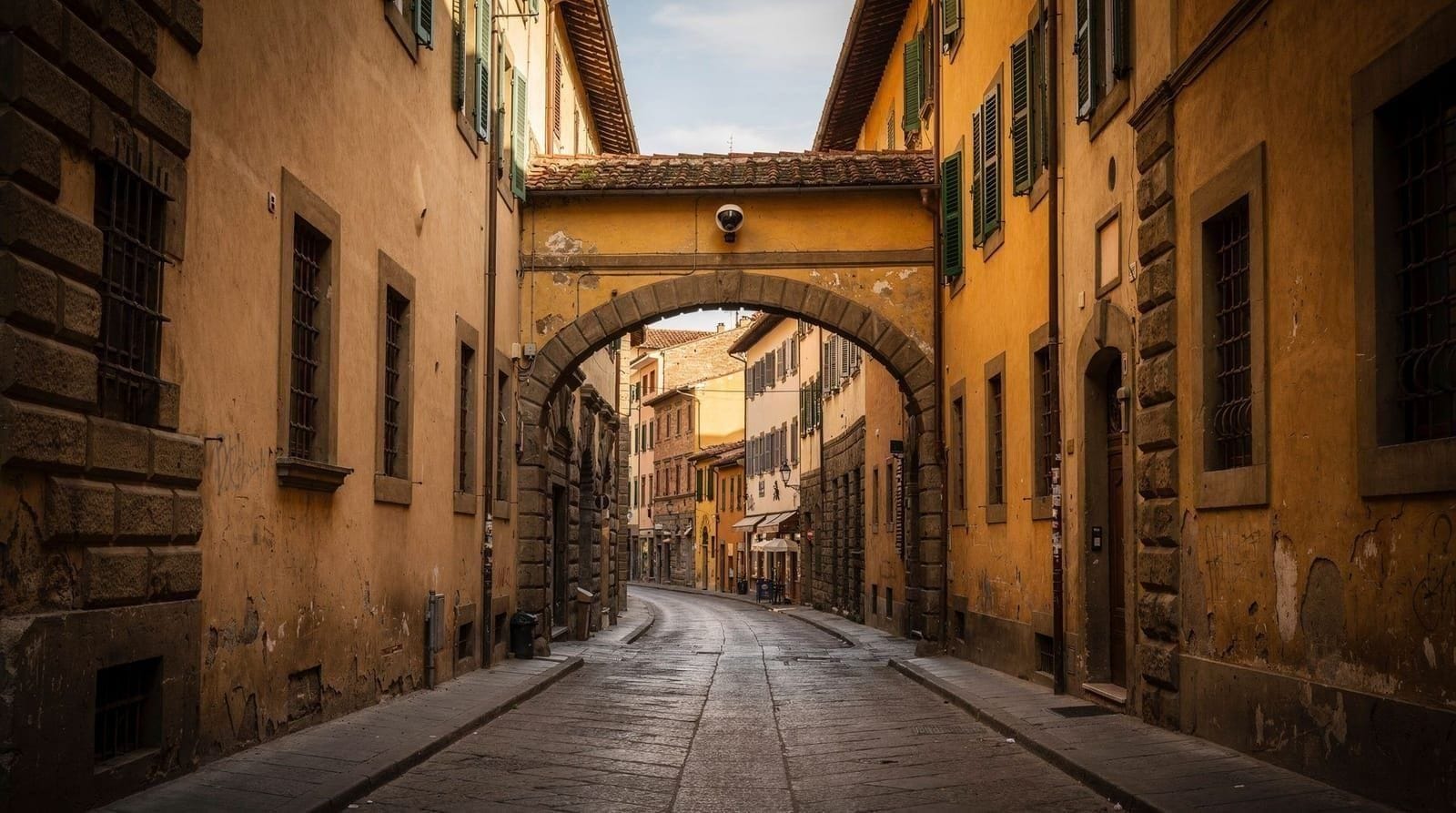
Tuscany's main roads and motorways are straightforward. Narrow medieval village streets, ZTL restricted zones and aggressive local driving styles require caution. The scenery is extraordinary. With a few basic rules, most visitors manage comfortably.
Why driving in Tuscany is worth it
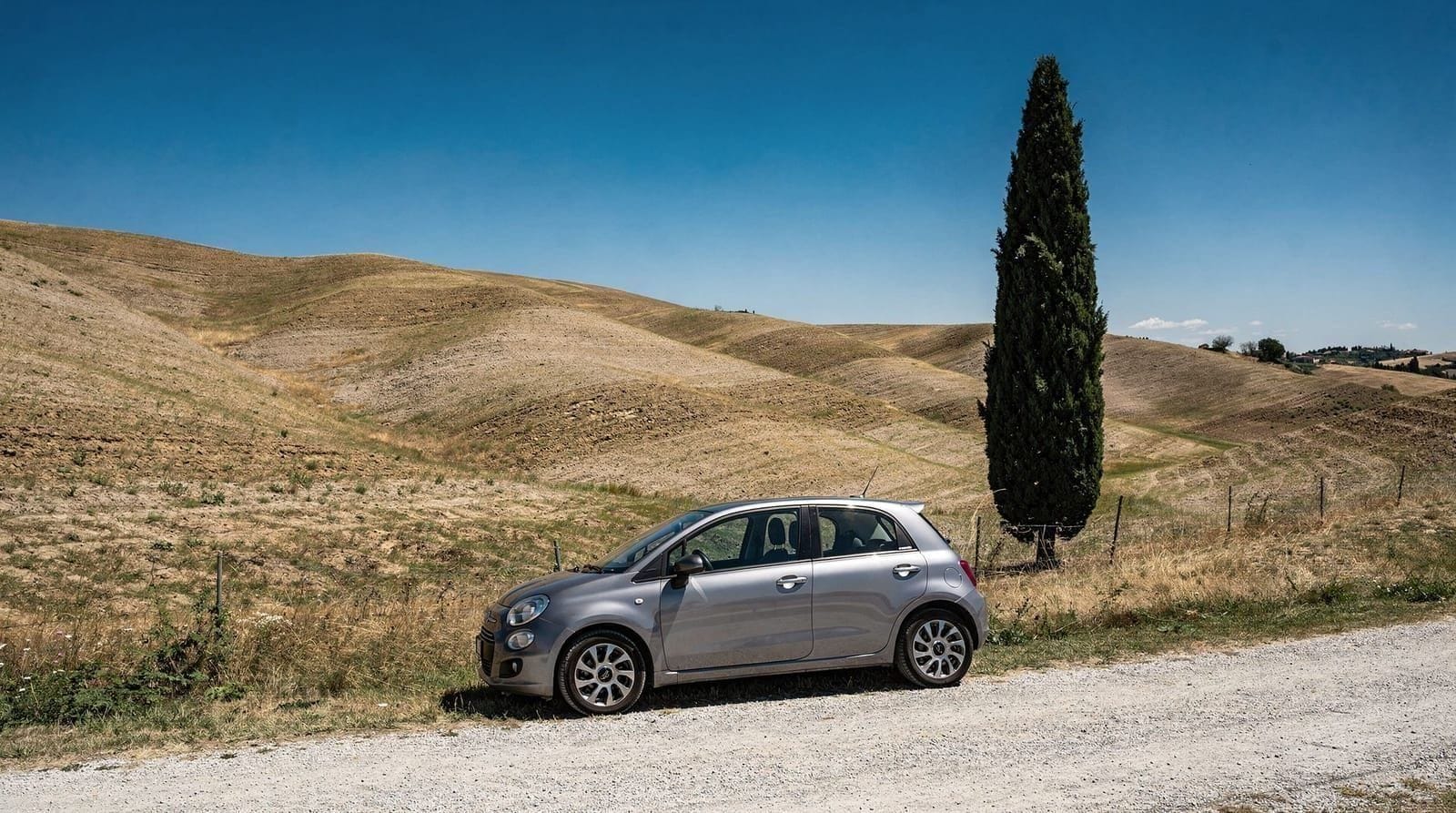
Tuscany is one of the most rewarding regions in Europe for a road trip. The countryside between Florence and Siena — the Chianti Classico zone — is a tapestry of vine rows, olive groves, stone farmhouses and medieval towers. The Val d’Orcia, a UNESCO World Heritage landscape in southern Tuscany, unfolds across rolling hills punctuated by cypress avenues and hilltop villages that are impossible to reach fully by public transport.
A car unlocks the real Tuscany that stays closed to those relying on trains and buses.
The trade-off: Italian city driving is stressful and the ZTL fines are severe. The rule of thumb that eliminates 95% of problems: park outside every walled city and explore the centre on foot.
| Best for | Chianti, Val d’Orcia and hill towns beyond the train network |
| Rental cost | Around €40–90/day for a compact car in high season |
| Fuel | Around €1.70–1.90/litre for unleaded (2026) |
| Tolls | A1 Florence–Rome around €10–14 one-way |
| Avoid | Driving into any historic centre — park outside and walk |
If you’d rather skip the logistics entirely, a guided day out of Chianti by minibus or the Val d’Orcia with a driver removes the ZTL and parking risk altogether — see our best day trips from Florence for options. For the basics of renting the car itself, read renting a car in Tuscany before you book.
Italian road rules — what British, American and Australian drivers need to know
Driving side
Italy drives on the right. UK visitors need to adjust — particularly at roundabouts and junctions. Take extra care on small country roads where the road narrows and the temptation to drift left is natural.
Seat belts
Compulsory for all passengers in all seats. Children under 1.35m must use an appropriate restraint (car seat or booster depending on height/weight). Rental companies can provide children’s car seats — book in advance.
Mobile phones
Hands-free only while driving. Holding a phone while driving is a fineable offence (€165–660). Use a phone mount and the navigation app hands-free.
Alcohol limit
0.5 g/litre (0.5 per mille). For drivers with less than 3 years of licence: 0.0. In practice, this means one small glass of wine is at the limit for an average adult — effectively zero when driving in Tuscany’s wine country.
Headlights
Compulsory at all times outside built-up areas, even in daylight. Most modern rental cars have automatic daytime running lights — these count. Older vehicles may require manual switching.
Motorway safety kit
Carry a reflective warning triangle and a reflective vest in the car. These are required by Italian law — rental cars should have them in the boot. Check before you drive away.
Traffic light etiquette
Red means stop. Do not turn right on red unless a specific sign permits it. Green means go. Amber means stop if you can do so safely — not accelerate as in some countries.
The ZTL system across Tuscany
Every major Tuscan historic town has its own ZTL or restricted access zone:
| Town | ZTL type | Notes |
|---|---|---|
| Florence | Full ZTL with 40+ cameras | Most complex in Tuscany — see full guide |
| Siena | Restricted historic centre | Piazza del Campo is pedestrian-only; limited car access to surrounding streets |
| Pisa | Restricted zone around Campo dei Miracoli | Cameras active; use the large public car parks outside |
| Lucca | Fortified walls create a pedestrian zone | Drive into the outer town; park outside the walls |
| San Gimignano | Pedestrian historic centre | Large car parks at the town gates (€2–3/hour) |
| Montepulciano | Upper town restricted | Car parks below the town |
| Montalcino | Fortified town centre | Car parks outside the walls |
| Volterra | Historic centre restricted | Park at Parcheggio Fonte alle Felci below the centre |
Universal strategy for Tuscany hilltowns: park in the large car parks outside the historic gate, walk into the centre. All these towns are built on hills — the car parks are at the base, the old town is a 5–15 minute walk uphill.
The best scenic driving routes in Tuscany
The Chiantigiana — SR222 (Florence to Siena via Chianti)
Distance: approximately 65 km (Florence to Siena direct) Driving time: 1h30–2h30 depending on stops
The SR222 (Via Chiantigiana) is the original Chianti road, running through the heart of Classico wine country. Starting south of Florence near Impruneta, it winds through Greve in Chianti, Panzano, Castellina in Chianti and Radda before reaching Siena.
Key stops:
- Greve in Chianti: the unofficial capital of Chianti, with wine shops, a triangular piazza and the famous Falorni butcher
- Panzano in Chianti: home of Dario Cecchini (the “rock-star butcher”), and some of the best Sangiovese vineyards
- Badia a Passignano: Antinori’s historic estate, visible from the road, with tours and tastings available
This route is narrow and winding — not suitable for drivers who are uncomfortable on mountain-style roads. Allow 2.5–3 hours to drive it properly with stops.
The Val d’Orcia loop
Distance: approximately 180–220 km from Florence round trip Driving time: 4–5 hours driving, full day with stops
Starting south of Siena, the Val d’Orcia loop takes in:
- Montalcino — hilltop fortress town, home of Brunello di Montalcino wine. The best views of the Val d’Orcia are from the castle walls.
- Sant’Antimo Abbey — Romanesque abbey in a valley below Montalcino, free to visit (check opening times — monks have daily schedules)
- San Quirico d’Orcia — UNESCO World Heritage village, famous for the Horti Leonini gardens and the cypress-lined SP146
- Pienza — the “ideal city” of Pope Pius II, perfectly preserved Renaissance town plan with spectacular panoramic terrace views
- Montepulciano — hilltop wine town (Vino Nobile), with a stunning Piazza Grande at the top
The SP146 between San Quirico d’Orcia and Pienza has the famous cypress avenue viewpoint — the most photographed road in Tuscany. Stop at a lay-by for photos in the early morning or golden hour.
The Crete Senesi — Siena to Asciano
Distance: 30–50 km south of Siena Best in: April–May (spring green) and October–November (harvest tones)
The Crete Senesi (“Sienese clay lands”) is a lesser-known landscape of pale clay badlands, isolated farmhouses and rolling fields. The SP438 between Asciano and Murlo and the road towards Montalcino pass through some of the most surreal scenery in Italy.
The best time to visit is March–May when the fields are green with spring wheat, or September–October when the ploughed clay creates abstract abstract earth sculptures.
Maremma and the Etruscan Coast
Distance: 100–120 km south of Florence Best for: combining sea and hill towns
Less visited than Chianti and Val d’Orcia, the Maremma coast and Pitigliano region offer a completely different Tuscany: the tufa rock towns of Pitigliano, Sorano and Sovana, the Etruscan necropolis at Sovana, and the free thermal spring pools at Saturnia.
Practical driving tips for Tuscany
GPS and navigation
Google Maps and Apple Maps both work well in Tuscany. Download offline maps for the region before travelling — rural areas can have patchy data signal, particularly in the Crete Senesi and Maremma.
ZTL alert: enable ZTL warnings in your navigation app settings. Google Maps and Waze now include ZTL warnings in Italy. Heed these warnings — they can prevent expensive fines.
Petrol stations in rural Tuscany
Many rural petrol stations are unmanned self-service with card-only payment. Fill up in larger towns rather than relying on finding a station in the Chianti hills. Stations on the motorway (autostrada) are always open.
Fuel types:
- Benzina senza piombo = unleaded (most rental cars)
- Gasolio = diesel
- Some newer vehicles use AdBlue additive — check if your rental car requires it
Strade bianche (white gravel roads)
Many wineries and agriturismo are accessed via strade bianche — unpaved gravel roads. These are drivable in a standard compact car if taken slowly (under 20 km/h on rough sections). An SUV provides more clearance and is more comfortable. Check your rental contract — some exclude damage on unpaved roads from the CDW coverage.
Italian motorways (autostrade)
- The A1 (Autostrada del Sole) connects Florence to Rome in about 1h30 by car — same time as the train, but you deal with driving.
- The A11 connects Florence to Pisa and Lucca.
- The A1 south from Florence passes through the Apennine mountains via long tunnels — spectacular engineering.
- Toll payment: cash or card at manned booths; or Telepass electronic transponder (rental cars may have this).
Tuscany road trip sample itinerary (5 days with car)
| Day | Route | Highlights |
|---|---|---|
| Day 1 | Florence → Greve in Chianti → Panzano → Radda | SR222 Chiantigiana, winery visit, lunch in Panzano |
| Day 2 | Radda area → Siena (day) → Montalcino overnight | Siena on foot, Brunello tasting |
| Day 3 | Montalcino → Sant’Antimo → Pienza → Montepulciano | Val d’Orcia UNESCO villages, SP146 cypress road |
| Day 4 | Montepulciano → Val d’Orcia thermal baths → Volterra | Bagno Vignoni thermal pool, Volterra hilltop |
| Day 5 | Volterra → San Gimignano → Florence return | Vermeer towers of San Gimignano, Vernaccia wine |
Driving through the seasons — when to go
Spring (April–May)
The best season for a Tuscany road trip. The poppies are blooming in the wheat fields of the Crete Senesi, the Val d’Orcia is emerald green, the vineyards are leafing out, the roads are not yet crowded and accommodation prices are below peak. Average temperatures of 15–22°C make driving comfortable.
The SR222 Chiantigiana in April–May: a different world from summer. The vine rows are bright green against the reddish soil, wisteria drapes over estate gates, and the terracotta farmhouses glow in soft spring light.
Driving conditions: excellent. Roads are clean and clear after winter. The strade bianche dry out in April and are generally passable in a compact car from mid-April onwards.
Summer (June–August)
The most popular season — meaning the most crowded roads. The SR222 and the roads around Greve, Panzano and Radda are significantly busier than in spring. Temperatures reach 30–38°C. Air conditioning in the rental car is essential.
August is when many Italians themselves go on holiday. This creates a paradox: some rural restaurants close (the owner is also on holiday), but tourist destinations are packed. The first two weeks of August are the most crowded; after 15 August (Ferragosto) things begin to quiet.
Driving conditions: safe but crowded on tourist routes. Motorways and main roads are fine. Narrow Chianti lanes are more stressful with tourist traffic. Drive in early morning or after 17:00 for the best experience.
Autumn (September–October)
The second best season, arguably better than spring for wine travellers. The grape harvest (vendemmia) begins in September in Chianti, and October sees the olive harvest in the hills above Lucca and Fiesole. The light is golden and lower in the sky, perfect for photography.
October has cooler temperatures (15–22°C) and significantly reduced visitor numbers compared to summer. The strade bianche roads remain dry and accessible until early November.
The Val d’Orcia in October: the ploughed clay fields turn from post-harvest gold to deep chocolate brown. The cypress avenues on the SP146 are silhouetted against clear autumn skies. This is arguably the most photogenic month in the region.
Winter (November–March)
Most agriturismi close between November and Easter. Some roads in the higher Apennine passes can have snow and ice. However, Florence and the main towns remain open, and winter driving in the Chianti lowlands is perfectly manageable.
Advantages: zero tourists on the Chiantigiana, discounted accommodation, local restaurants operating for local clientele rather than tourists, the dramatic winter light on the Val d’Orcia landscape.
December: Florence is beautifully decorated for Christmas. The roads are clear. The Duomo, Uffizi and Accademia are open (book ahead — not full but not empty). A winter driving trip through Tuscany for two weeks can be one of the most authentic Tuscany experiences possible.
Renting the right car for Tuscany
A standard compact car (Fiat Panda, Lancia Ypsilon or similar) is the sensible default for most Tuscany road trips: narrow enough for village streets and strade bianche, cheap enough on fuel, and easy to park in the small municipal car parks outside walled towns. Automatic transmission costs more to rent in Italy than in the US or Australia — book well ahead if you need one, since the automatic fleet is smaller. Full background on categories, insurance excess and the pickup process is in renting a car in Tuscany.
Insurance: take the full CDW/theft waiver even if your credit card claims to cover it — Italian rental desks are notoriously aggressive about disputing card cover at the counter, and a zero-excess policy bought in advance avoids the argument entirely. Photograph every panel of the car before driving off, including existing scratches, with a timestamp visible.
One-way rentals: picking up in Florence and dropping off in Rome, Pisa or Siena is usually possible but carries a one-way fee (often €50–150) — worth it if it saves backtracking on a linear itinerary like Florence → Chianti → Val d’Orcia → Rome.
Should you drive at all, or is a tour better?
Driving makes sense if you have 3+ days in the countryside, want to stop spontaneously at a roadside winery, or are travelling with a group that splits the rental cost. It makes less sense for a single day trip, for solo travellers who’d rather not navigate ZTLs alone, or for anyone uneasy on narrow hill roads. For a single day into Chianti or the Val d’Orcia, a small-group minibus tour from Florence often works out similar in cost per person once you add fuel, tolls and parking, without any of the driving stress — see best day trips from Florence for the honest comparison of self-drive versus organised options.
Renting vs. driving yourself: a quick comparison
| Self-drive | Guided day tour | |
|---|---|---|
| Flexibility | Total — stop anywhere | Fixed itinerary |
| Stress | ZTL and parking risk | None — driver handles it |
| Cost (per person, group of 2) | Rental + fuel + tolls + parking | Usually similar for a single day |
| Best for | 3+ days, spontaneous stops | 1 day, solo travellers, wine tasting (no designated driver needed) |
| Wine tasting | Requires a non-drinking driver | Everyone can taste |
Navigating Italian bureaucracy on the road
Documents you must carry
- Your driving licence (original, not a photocopy)
- Your passport or national identity card (EU citizens)
- Rental agreement / vehicle registration document (in the rental car’s glovebox)
- Proof of insurance (insurance card, in the glovebox)
- Emergency triangle (in the boot — check it is there)
- Reflective vest (in the boot or accessible inside the car)
You can be stopped for a random check (controllo) at any time by police (Carabinieri) or traffic police (Polizia Stradale). Be polite, present documents calmly and do not exit the vehicle unless instructed.
If you are stopped by police
Italian police are generally professional and courteous with compliant foreign tourists. Steps:
- Pull over safely and turn off the engine
- Stay in the vehicle unless asked to step out
- Present your licence and vehicle registration
- If issued a verbal warning (avvertimento), acknowledge it
- If issued a written fine, accept the document — you can contest it later if incorrect
- Do not argue or become confrontational
Motorway police (Polizia Stradale)
The Polizia Stradale specifically patrols motorways and main roads. Speed enforcement is their primary focus. On the A1 Florence–Rome motorway, Tutor systems (average speed over long distances) are in use — you cannot simply speed up after passing a camera.
Frequently asked questions about driving in Tuscany
Can I drive to San Gimignano?
Yes, but park outside the town walls in the large car parks (Parcheggio P1 below the south gate is well signed, approximately €2–3/hour). The historic centre is pedestrian-only.
Is it stressful driving in Italy for the first time?
On motorways and main roads, no — Italian motorway driving is similar to other European countries. In city centres and narrow village streets, yes — particularly if you are not used to tight stone-walled lanes. The key is to drive slowly, not to rush, and not to enter historic centres by car at all.
What is the emergency number in Italy?
112 is the universal emergency number (police, ambulance, fire). 116 is the ACI (Italian Automobile Club) roadside breakdown number.
Are there electric vehicle charging stations in Tuscany?
Yes, the network is expanding rapidly. Fast chargers are available at motorway service areas (Autogrill locations). Town centres increasingly have slow chargers in car parks. Apps like Nextcharge or PlugShare show current locations. Rural areas remain sparse — plan charging stops in advance for EV travel.
Do I need a vignette/motorway sticker in Italy?
No — Italy uses toll booths rather than annual vignettes. Pay per journey at the tollbooth as you exit the motorway. Some newer express lanes are Telepass-only — if unsure, use the “CASH” lane.
What if a local starts flashing their lights aggressively behind me?
This is common Italian driving behaviour indicating they want you to move aside or accelerate. On a two-lane road, move to the right side as much as safely possible; on a motorway, move into the right lane at the first opportunity. Do not take it personally — it is cultural, not threatening.
Is it cheaper to drive yourself or book a guided tour into Chianti?
For a single day, cost per person is often similar once fuel, tolls, parking and a rental day are added up — see the best day trips from Florence comparison. Driving wins if you have several days and want to explore beyond a fixed route; a guided tour wins if you want to taste wine without a designated driver, or want zero ZTL risk.
Can I drop the rental car off in a different city, like Rome or Pisa?
Yes, most agencies offer one-way rentals between Florence, Rome, Pisa and Siena, usually for an extra fee of roughly €50–150. It’s worth it for a linear route (for example Florence → Chianti → Val d’Orcia → Rome) rather than backtracking to return the car where you picked it up. Confirm the fee at booking, as it varies significantly by drop-off city.
Top experiences
Bookable activities with verified prices and instant confirmation on GetYourGuide.