San Gimignano day trip from Florence
Florence: Siena, San Gimignano and Chianti day trip
- Free cancellation
- Hotel pickup
How do I get to San Gimignano from Florence?
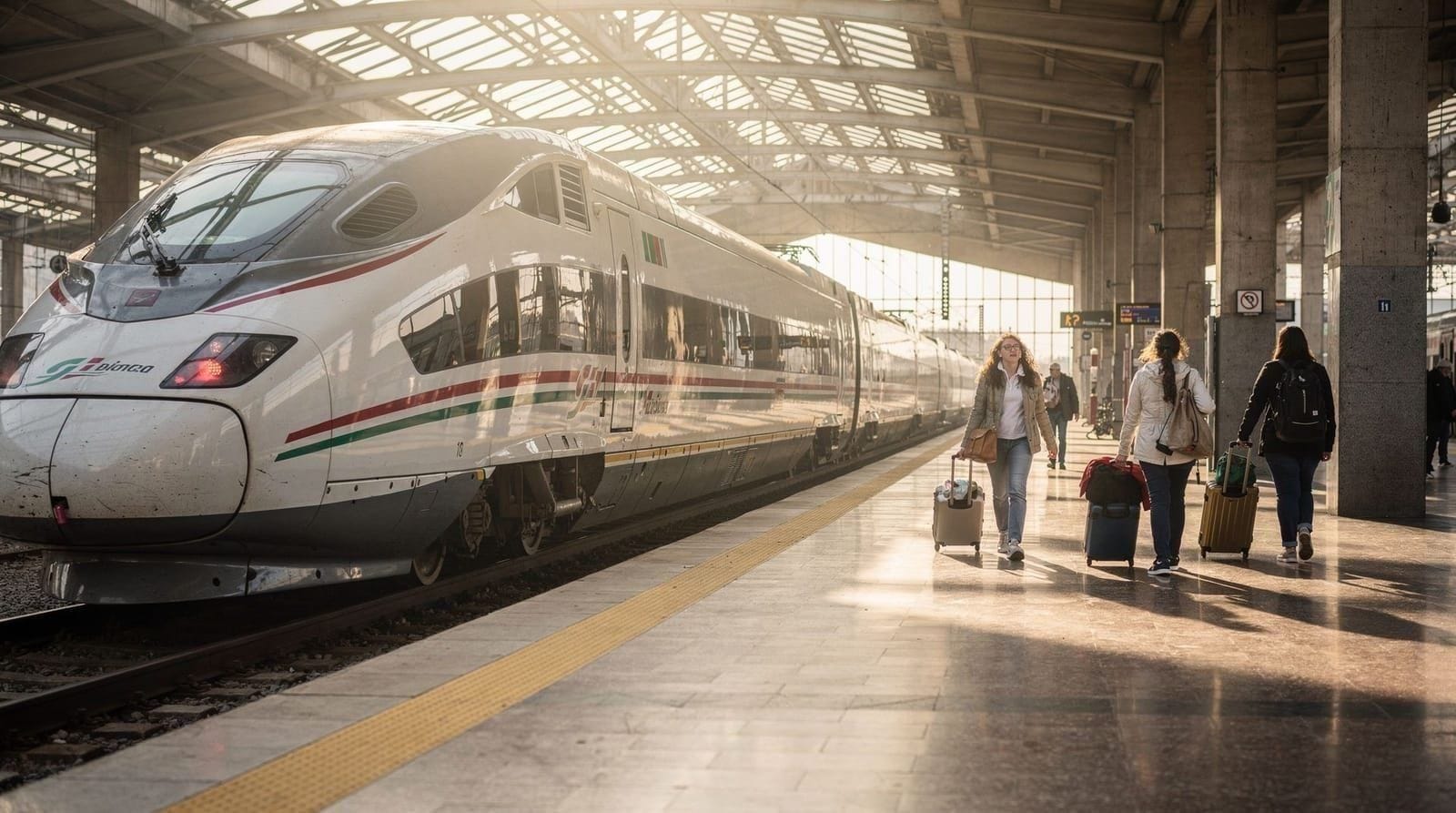
A guided tour or rental car is the practical option. Public buses work in theory (change at Poggibonsi, total 2h+), but departures are infrequent and a return day trip is difficult. Guided day tours from Florence covering San Gimignano, Siena, and Chianti cost €45–80 per person and are genuinely worthwhile.
The medieval skyline of San Gimignano
San Gimignano sits on a ridge between Florence and Siena, visible from miles away by its cluster of tall towers. In the 13th and 14th centuries, wealthy Guelph and Ghibelline families competed for prestige by building ever-taller towers — at the city’s peak there were 72. Only 14 survive, but they’re enough to make the silhouette unmistakable and to give the city its persistent nickname.
The town is a UNESCO World Heritage Site and extremely popular — perhaps too popular in high summer. But the towers are genuinely impressive in a way that photographs fail to convey, the Vernaccia white wine is among Tuscany’s finest, and the combination with nearby Siena and Chianti makes for one of the most satisfying day trips in the region.
| Distance from Florence | about 57km, 1h–1h15 by car |
| Cost (guided tour) | around €45–80 per person, San Gimignano + Siena/Chianti |
| Time needed | 4 hours minimum for towers, church and wine; full day if combined |
| Getting there | guided tour or rental car (buses are impractical) |
| Best time | before 10am or after 5pm to avoid coach crowds |
Getting to San Gimignano from Florence
Guided tour (recommended)
The most popular and practical option is a guided day tour from Florence covering San Gimignano in combination with Siena and/or Chianti. These tours typically depart around 8–9am, cover 2–3 stops, include wine tasting and often lunch, and return to Florence by 7–8pm. Prices range from €45–80 per person. The coach handles all transport logistics, which matters on a route where public bus connections are genuinely awkward.
By car
Florence to San Gimignano is about 57km, taking roughly 1h–1h15 via the Superstrada (FI-SI) toward Siena, exiting at Poggibonsi Nord and following signs. The drive through the Sienese hills is beautiful. San Gimignano has paid car parks outside the city gates (ZTL covers the historic centre — don’t drive in). Parcheggio P1 (Porta San Giovanni side) is the most convenient.
By public transport (possible but awkward)
Two options:
- Tiemme Rapida bus from Florence Autostazione → Siena (1h15) + local Tiemme bus from Siena Piazza Gramsci → San Gimignano (about 1h with changes in Colle Val d’Elsa or Poggibonsi). Infrequent connections — check timetables at Tiemme website.
- Regional train from SMN → Poggibonsi-Colle Val d’Elsa (about 50 min with change at Empoli) + Tiemme local bus → San Gimignano (30 min). Buses from Poggibonsi run roughly every 60–90 minutes.
Total journey time by public transport: 2h–2h30 each way. The return trip requires matching bus and train connections carefully. If you miss the afternoon bus from San Gimignano, you may wait 90 minutes for the next one. For solo travellers comfortable with logistics, it’s doable; for families or groups, a guided tour or rental car is more sensible.
What to see in San Gimignano
The towers and piazzas
The two main piazzas — Piazza della Cisterna and Piazza del Duomo — form a connected open space in the heart of the city. Piazza della Cisterna is octagonal, centred on a 13th-century well, surrounded by medieval palaces and towers, and perpetually atmospheric. Piazza del Duomo is the civic and religious heart.
Torre Grossa (the tallest surviving tower, 54m) can be climbed for views over the surrounding valleys and olive groves. Entry is part of the Museo Civico ticket (€9 combined). The view is worth it — you’ll understand the city’s strategic position on the ridge.
Collegiata di Santa Maria Assunta (the Collegiate Church)
Don’t miss the Collegiata, Siena’s Duomo equivalent in San Gimignano. The interior walls are entirely covered in frescoes: Old Testament scenes on the left nave (by Bartolo di Fredi, 14th century), New Testament scenes on the right (by Barna da Siena), and a Last Judgment by Taddeo di Bartolo on the west wall that is deliberately terrifying — its sinners suffer graphically. The Chapel of Santa Fina (by Benedetto da Maiano) contains exquisite frescoes by Domenico Ghirlandaio.
Entry: about €4. Dress code applies (shoulders and knees covered).
Museo Civico and Torre Grossa
The Civic Museum occupies two floors of the Palazzo del Popolo, with a fine collection of Sienese and Florentine paintings from the 13th–15th centuries — works by Filippino Lippi, Benozzo Gozzoli, and Pinturicchio. The Sala di Dante commemorates the great poet’s visit in 1300 as a Florentine ambassador. Tower access is included.
Entry: €9 (combined museum and tower).
Museo della Tortura
San Gimignano has a medieval torture museum that is… exactly what it sounds like. It’s graphic, crowded, and aimed at shock value. Skip it — there are more interesting things to do with your time.
Wine and gelato
Vernaccia di San Gimignano is the local white wine, the first Italian DOC wine, and excellent with light antipasti and local pecorino. Try it at any bar or enoteca; Enoteca di Piazza della Cisterna (on the eponymous piazza) has good selection by the glass.
Gelateria Dondoli (Piazza della Cisterna 4) has won the World Gelato Championship twice and draws long queues. The saffron-and-pine-nut flavour (Crema di Santa Fina) is their signature. Queue patience required in summer; the gelato is genuinely exceptional.
The history behind the towers
The towers of San Gimignano were not built for military defence in the conventional sense — the city was defended by its walls. The towers were status symbols, expressions of family wealth and political affiliation in a period (12th–14th centuries) when Italian city-states were torn between Guelph (papal) and Ghibelline (imperial) factions and between rival noble clans.
A tower rising above your neighbours was a public statement of power. There was reportedly a civic ordinance that no tower could be taller than the Palazzo del Podestà (the civic tower) — yet families regularly built towers to match or exceed it when they could. At the city’s peak, 72 towers rose above the walls. Wars, earthquakes, and gradual abandonment reduced that number to 14 today.
The surviving towers are mostly from the 13th and 14th centuries. The Salvucci twins (two identical towers built by the Salvucci family) can be seen near Piazza della Cisterna. The Ardinghelli towers frame the entrance to the main piazza. The visible competition between these structures reflects the factional politics of a city that oscillated between Guelph and Ghibelline allegiances across decades.
San Gimignano reached its medieval peak in the 13th century as a stopping point on the Via Francigena (the pilgrim road from Canterbury to Rome), which gave its merchants access to the considerable spending power of pilgrims and traders. The city produced a notable luxury product: saffron, which it grew in the surrounding fields and traded across Europe. This saffron economy funded the tower-building spree. When plague reduced the population in 1348 and Florentine dominance followed in 1353, San Gimignano’s independent commercial days ended — and paradoxically, that ended the pressure for new building. The medieval skyline was preserved by economic stagnation rather than conscious conservation.
The surrounding countryside
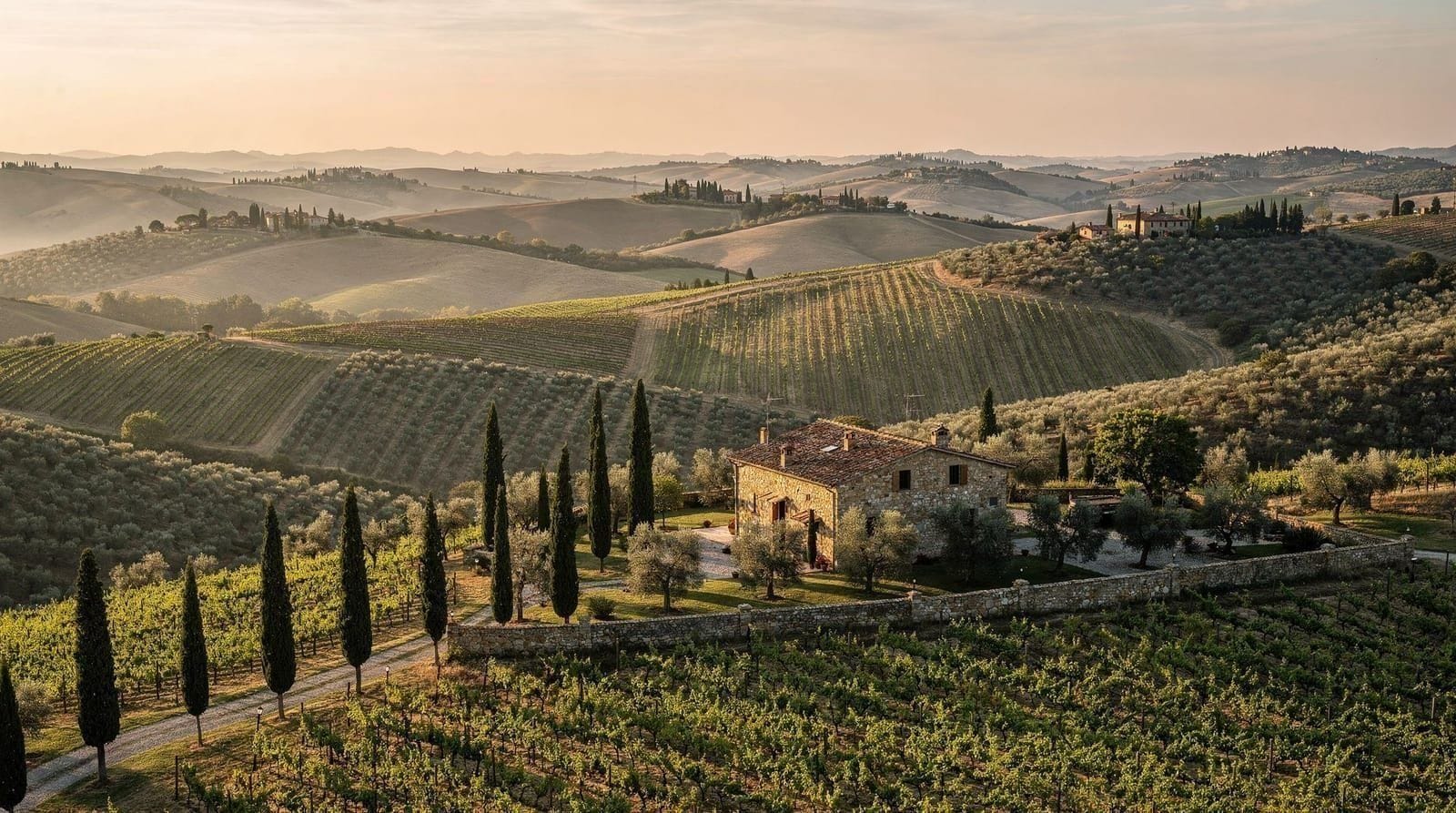
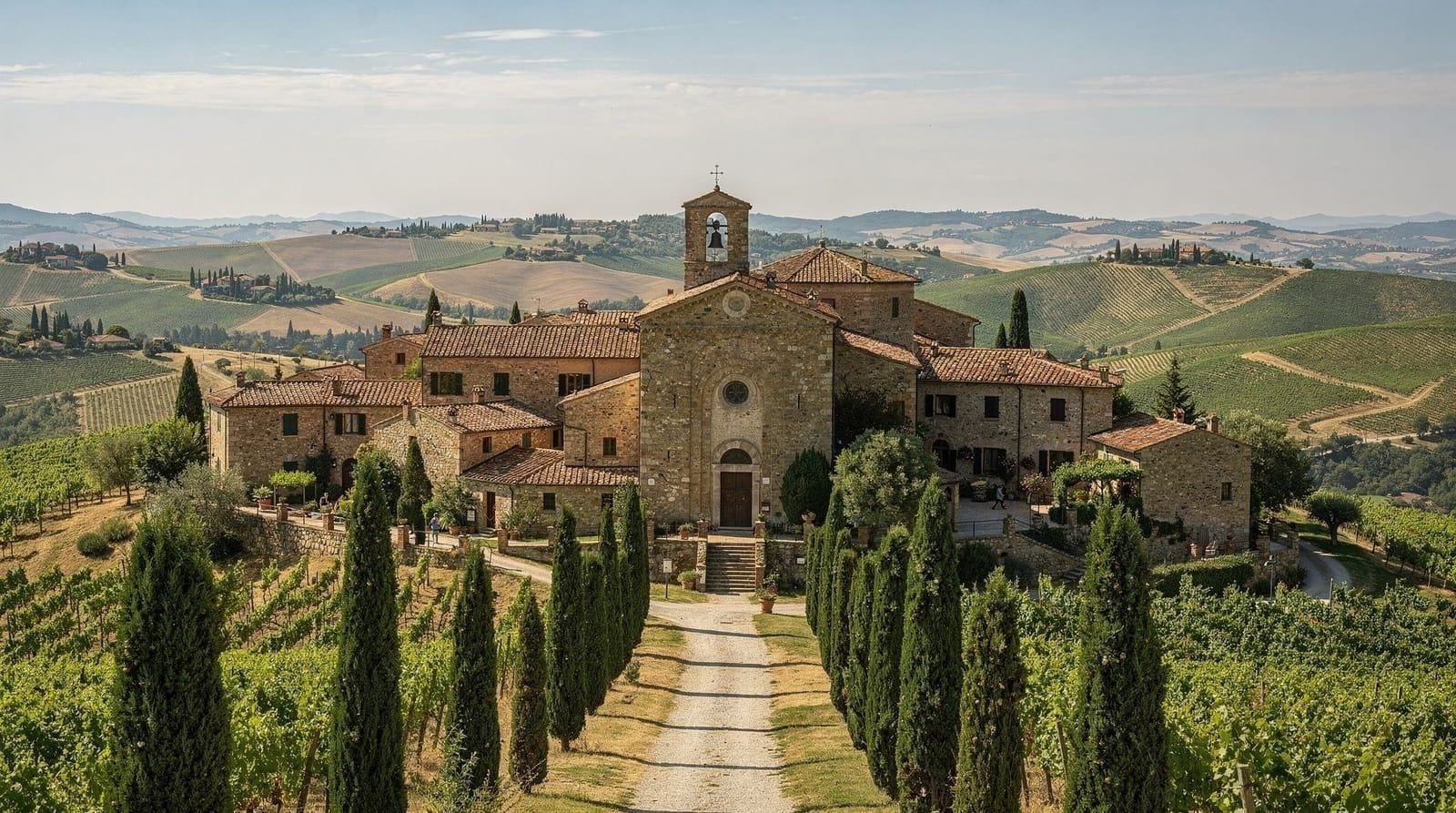
San Gimignano is surrounded by Vernaccia vineyards and the beginning of the Chianti zone. If you have a car, the drive out to the nearby wineries — Fontaleoni, Montenidoli, and Il Colombaio di Cencio are all within 5–10km — is rewarding. The Vernaccia DOCG zone covers about 320 hectares around the town.
Where to eat in San Gimignano
The piazzas are lined with tourist-oriented restaurants charging tourist prices. Walk one or two streets back into the residential lanes for better value.
Osteria del Carcere (Via del Castello 13) — creative Tuscan cooking in a converted medieval prison (the name gives it away). Good pici with local sauces. Around €25–30 per person.
Trattoria Chiribiri (Piazzetta della Madonna 1) — the most recommended local trattoria, with outdoor tables and traditional Sienese cooking. Book ahead if coming in summer. €20–30 per person.
Bel Soggiorno (Via San Giovanni 91) — one of the oldest restaurants in the city, with views over the valley from the terrace. More formal and slightly more expensive (€35–45), but the location and cooking quality justify it.
Street food: The salami and pecorino at the deli shops along Via San Giovanni are excellent for a quick lunch from a paper bag. Local pecorino di Pienza (from the Val d’Orcia, 60km away) is widely sold here.
Best viewpoints and photography
The classic postcard shot of San Gimignano’s skyline is taken from the road approaching from Certaldo or Poggibonsi, where the towers appear suddenly above the vineyards — if you’re driving, there are a couple of informal pull-offs where other visitors have clearly stopped for the same reason. Inside the walls, the rooftop terrace of the Museo Civico (included in the Torre Grossa ticket) gives an unbeatable close-up view of the towers from roughly the same height, looking across at rather than up from below. For a lower, wider shot that captures the town on its ridge with the Val d’Elsa behind it, walk 10–15 minutes out along the road toward Certaldo — the town falls away below you and the whole silhouette comes into view without needing a telephoto lens. Early morning and just after sunset (when the towers are floodlit) both photograph better than midday, when the light is flat and the piazzas are at their most crowded anyway.
Combining San Gimignano with Siena and Chianti
The classic guided day tour from Florence covers:
- San Gimignano in the morning (towers, Collegiate Church, Vernaccia tasting, lunch)
- Chianti wine region in early afternoon (winery visit, olive oil tasting)
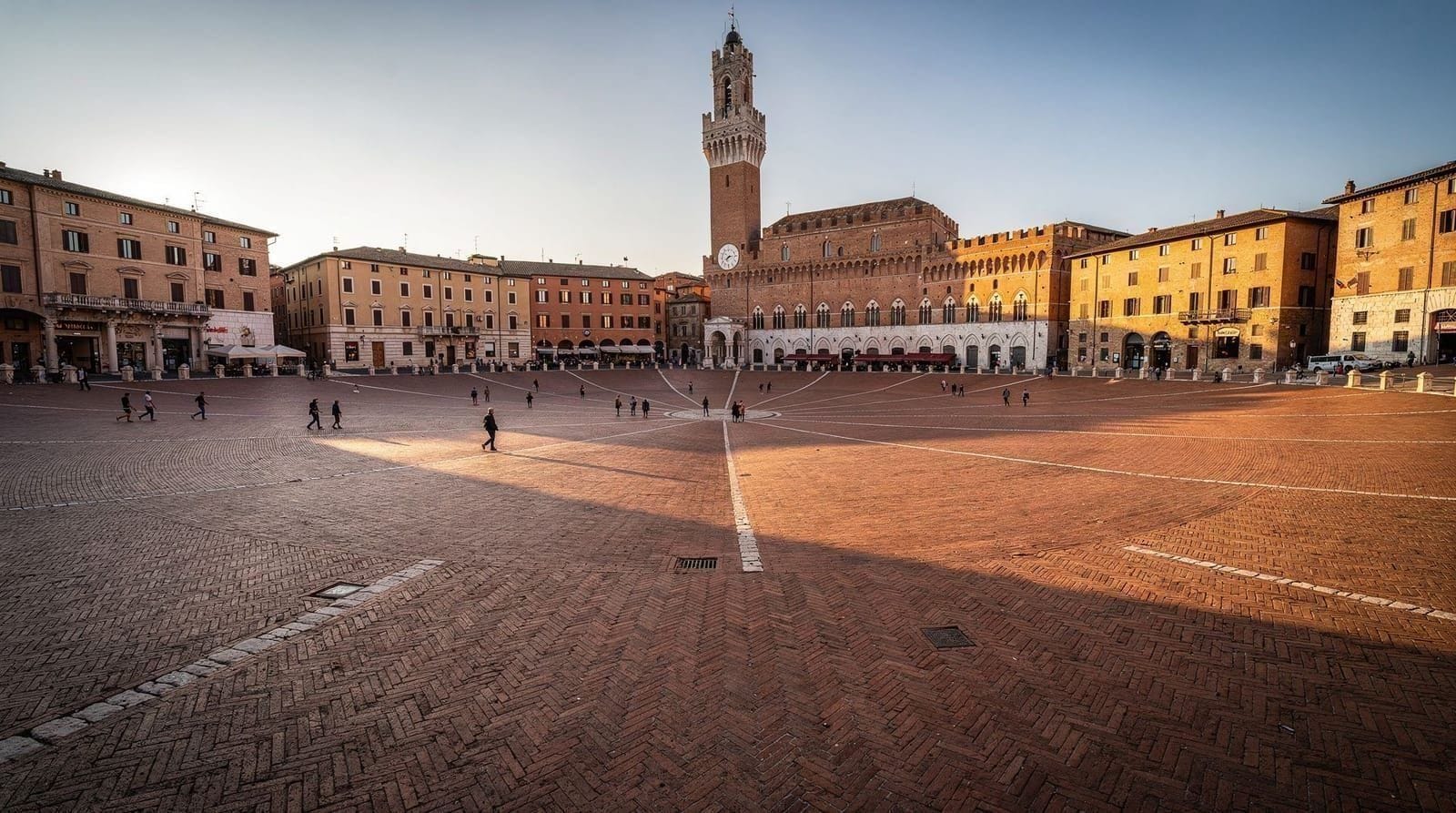
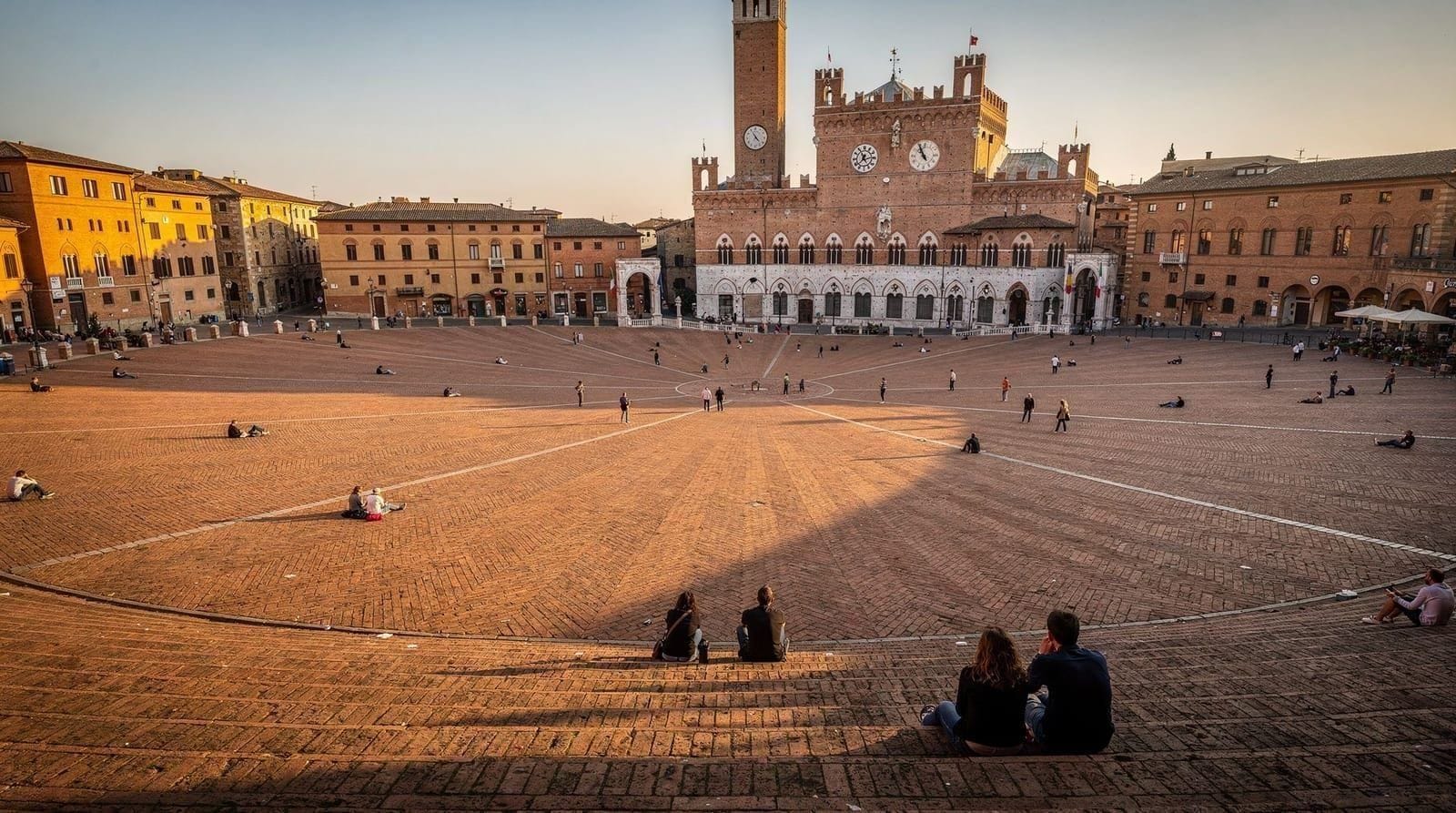
- Siena in the late afternoon (Piazza del Campo, Duomo exterior, aperitivo)
- Return to Florence by 7–8pm
This is a genuinely excellent structure for a day, covering three distinct types of Tuscan experience: the medieval hill town, the wine country, and the great Gothic city. It works best by guided tour (which handles transport between sites) or by rental car with pre-booked winery visits.
See the Siena day trip guide for Siena details and the Chianti day trip guide for winery logistics.
Timing and crowd management
San Gimignano receives over 3 million visitors per year to a town of 8,000 residents. Between 11am and 3pm on summer weekends, the main piazzas are crowded with day-tripper coaches. Strategies to avoid the worst:
Arrive before 10am: The town is peaceful and local at 8–9am. This means an early departure from Florence.
Come on a weekday: Crowds are significantly lower Monday through Thursday than on weekends.
Visit in shoulder season: April–May and September–October are ideal. March and November are quiet but some restaurants and wineries reduce hours.
Stay for dinner: Almost everyone leaves by 5–6pm. The town in the evening is quiet, the towers light up, and you’ll have the piazzas largely to yourself.
| Season | Weather | Crowds | Notes |
|---|---|---|---|
| Apr–May | mild, occasional rain | moderate | best balance, vineyards greening |
| Jun–Aug | hot, dry | very heavy | coach crowds 11am–3pm daily |
| Sep–Oct | warm, stable | moderate | grape harvest, arguably the best month |
| Nov–Mar | cool, some closures | light | quiet town, some restaurants reduce hours |
Extending the trip into Tuscany
San Gimignano works well as a base for exploring further afield rather than just as a single-stop day trip. If you have more time, the rolling landscapes of the Val d’Orcia lie roughly an hour further south, and a broader look at how San Gimignano compares to Florence’s other day-trip options is worth reading before you commit to one itinerary — see the best day trips from Florence overview. If wine is the priority rather than towers, the Chianti day trip guide covers winery logistics from Florence in more depth.
Practical information for San Gimignano visitors
Parking: The city gates are pedestrianised (ZTL). Use the signed car parks outside Porta San Giovanni (P1, P2) or Porta San Matteo. Fees approximately €2/hour. Free parking slightly further out with a 10-minute walk in.
Hills: San Gimignano is on a ridge. The internal streets are mostly paved stone, some steep. Wear comfortable shoes.
Opening hours: The Collegiate Church typically closes 1pm–3pm for a midday break. Plan your visit for morning or late afternoon.
ATMs: There are two banks with ATMs on Piazza della Cisterna and Via San Matteo. Not all wine shops and small restaurants take cards.
Dogs: The town is dog-friendly; you’ll see locals walking their dogs on the main piazzas.
Frequently asked questions about the San Gimignano day trip
Is San Gimignano just a tourist trap?
It is genuinely touristy — but not a trap. The towers, the Collegiate Church frescoes, and the Vernaccia wine are authentically worth seeing. The tourist infrastructure (souvenir shops, tourist menus) is heavier than in Siena or Lucca, but step off the main drag and you find a real medieval town. Just go early or late to manage the crowds.
Can I see San Gimignano in 2 hours?
The main piazzas and exteriors in 2 hours, yes. To see the Collegiate Church frescoes, climb the Torre Grossa, and have a proper gelato and wine — budget 4 hours minimum.
Are there accommodation options in San Gimignano?
Yes — staying overnight completely transforms the experience. Agriturismo farms in the surrounding hills (from €80/night) and hotels within the walls (€100–200/night) allow you to enjoy the town before and after the day-trip crowds. The late afternoon and evening San Gimignano is a different city.
What is the best route by car from Florence to San Gimignano?
Take the SR2 (Via Cassia) south toward Siena, or the Superstrada FI-SI and exit at Poggibonsi Nord. The Via Cassia route through the Chianti hills is more scenic but adds 20 minutes. Follow signs to San Gimignano from Poggibonsi; it’s well-signed.
Top experiences
Bookable activities with verified prices and instant confirmation on GetYourGuide.

Florence: Siena, San Gimignano and Chianti day trip
- Free cancellation
- Hotel pickup

Florence: day trip to Pisa, Siena and San Gimignano with lunch
- Free cancellation
- Hotel pickup
Florence: Tuscan day trip — Siena, San Gimignano, Monteriggioni and Chianti
- Free cancellation
- Hotel pickup

Florence: Tuscany wine tour with 2 wineries and San Gimignano
- Free cancellation
- Small group
Florence: San Gimignano, Siena and Chianti full day tour
- Free cancellation
- Hotel pickup
Florence: truffle hunting with lunch, wine and San Gimignano
- Free cancellation
- Small group