Siena day trip from Florence
Florence: Siena, San Gimignano and Chianti day trip
- Free cancellation
- Hotel pickup
How do I get from Florence to Siena for a day trip?
Take the Tiemme rapida express bus from Florence Autostazione (next to Santa Maria Novella). It's non-stop, takes 1h15, and costs €8 return — faster and cheaper than the train. Buses depart roughly every 30–60 minutes. The Siena bus terminal is 200m from Piazza del Campo.
Siena: the other great Tuscan city
Florence is the Renaissance capital. Siena is the medieval one. The rivalry between the two cities — which dominated Tuscany through much of the 13th and 14th centuries before Florence definitively won — is inscribed in the cities’ characters. Florence swept away its medieval layers in successive waves of Renaissance and Baroque building. Siena largely did not. Its Piazza del Campo, Duomo, Palazzo Pubblico, and maze of contrade streets look broadly as they did in the 14th century.
Siena is a full-day destination. The Piazza del Campo alone deserves a couple of hours — arriving, walking its perimeter, sitting with coffee, watching the light change. The Duomo is one of Italy’s most elaborately decorated Gothic churches, with an interior that overwhelms even visitors accustomed to great Italian churches. Add the Museo dell’Opera del Duomo (housing Duccio’s extraordinary Maestà), the Pinacoteca Nazionale, and a proper lunch, and the day fills naturally.
| Distance from Florence | about 70km, 1h10-1h20 by bus |
| Cost | around €8 bus return, €15 Duomo OPA SI pass |
| Time needed | 6-7 hours for a proper visit; 4 hours minimum |
| Getting there | Tiemme rapida bus (recommended over train) |
| Best time | early morning or late afternoon for the Campo |
See the Siena destination guide for broader trip planning beyond a single day.
Getting from Florence to Siena
The bus (recommended)
The Tiemme rapida express bus is the best option for most visitors. It departs from Florence Autostazione (Piazza Adua, next to Santa Maria Novella — the bus station, not the train station, though they’re connected). The Siena Rapida service is non-stop and takes 1h10–1h20. It arrives at Piazza Gramsci in Siena, about 200 metres from the Piazza del Campo.
| Fare | Price |
|---|---|
| One-way | €4.00 |
| Return (andata e ritorno) | €7.80–8.00 |
Buses depart roughly every 30–60 minutes throughout the day. First departure from Florence around 6am; last return from Siena around 10pm. Buy tickets at the Autostazione ticket windows or at a Siena tabacchi; you can also buy on the bus (slightly more expensive and exact change preferred).
Tip: The SENA/Flixbus long-distance coaches also serve Florence–Siena but are slightly slower and more expensive. Stick with Tiemme Rapida.
The train
The train requires a change at Empoli and takes 1h30–2h each way depending on connections. With infrequent services and a longer overall journey, it’s genuinely inferior to the bus for this route. The train is only worth considering if you’re connecting directly from another city.
By car
Drive south from Florence on the Via Cassia (SS2, the old Roman road — beautiful but slow) or take the A1 south toward Rome and exit at Siena Nord (SS223). Journey time: 1h15–1h30. Siena’s historic centre is ZTL — you cannot drive in it with a rental car. Park at Parcheggio Il Campo (directly under the Piazza, underground, €1.50–3/hour) or at the free car parks by Porta Tufi or Porta Romana. Walk up into the centre from there.
Piazza del Campo — the heart of Siena
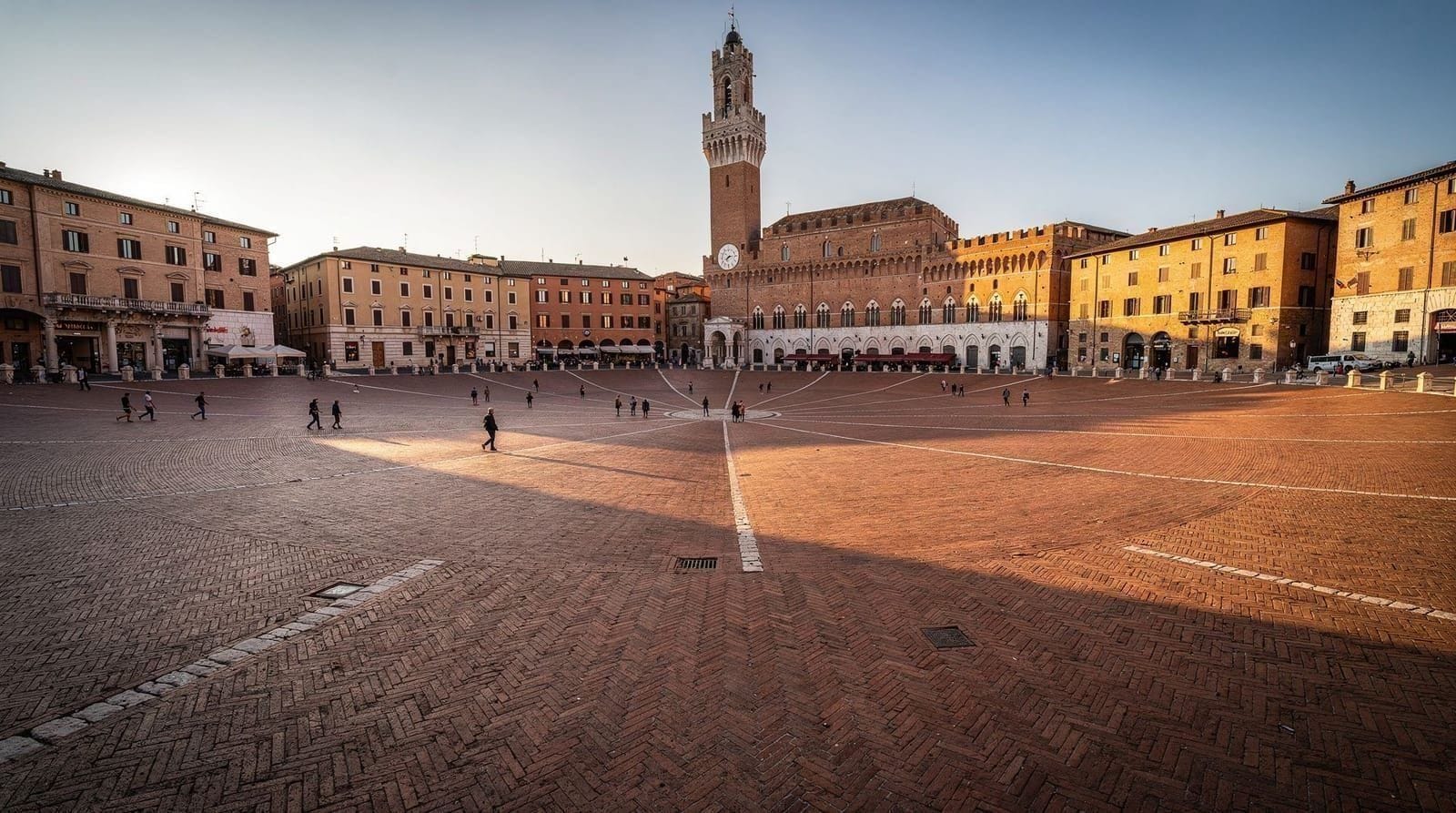
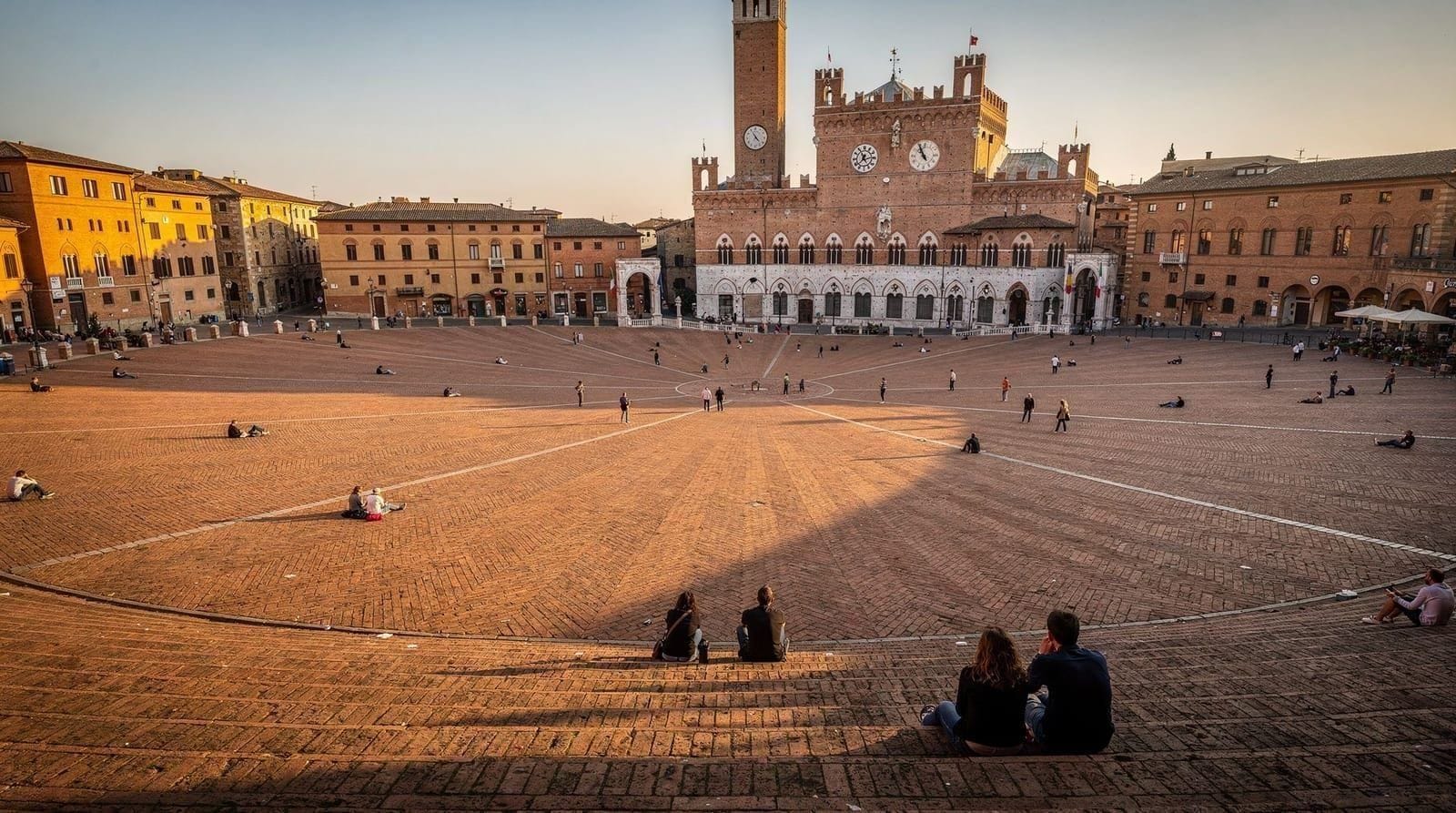
The Campo is one of the great medieval public spaces in Europe. Its unusual fan shape (nine segments of paving radiating from the central drainage point, representing the Council of Nine who ruled 14th-century Siena) has been almost unchanged since the 14th century. The Palazzo Pubblico anchors the lower end; the Fonte Gaia fountain (a 1419 replica — the Jacopo della Quercia originals are in the Museo dell’Opera) centers the upper arc.
What to do here:
- Walk the full perimeter and observe how the medieval palaces around the edge were built to match height and style restrictions set in the 14th century — extraordinarily unified for a naturally evolved piazza.
- Climb the Torre del Mangia (102m, 400 steps, €10) for panoramic views over the city and surrounding hills. Open from 10am; last entry varies seasonally but typically 5–7pm. Gets a queue — go early.
- Sit at a café table and eat. Yes, the piazza cafes are tourist-priced. One coffee there is a reasonable indulgence; a full lunch is not.
The Palazzo Pubblico houses the Museo Civico (entry ~€9), which contains the most important medieval secular frescoes in Italy — Ambrogio Lorenzetti’s Allegory of Good and Bad Government (1338–1339) is remarkable in its detail and early realism.
The Siena Duomo
The Duomo is extraordinary in a way that photographs don’t prepare you for. The exterior is striped white and black marble (the Sienese colours, also the contrade colours). The interior is even more striped and more overwhelming: black-and-white marble pillars, a hexagonal pulpit by Nicola Pisano, windows by Duccio di Buoninsegna, Donatello’s bronze pavement roundel, and the Piccolomini Library (a room entirely frescoed by Pinturicchio with scenes from the life of Pope Pius II, painted in the 1500s with jewel-like colour that looks new).
The Libreria Piccolomini is the highlight — entry is included with the Duomo ticket. The floor of the Duomo itself is a mosaic of marble intarsia panels depicting scenes from the Old Testament, mostly covered for protection but partially revealed annually in late August–September.
OPA SI Pass (recommended): Covers the Duomo interior, Piccolomini Library, Museo dell’Opera del Duomo, and the Battistero. Costs €12–15. Book online in peak season.
Museo dell’Opera del Duomo (separate but highly recommended): Houses Duccio di Buoninsegna’s Maestà (1308–1311), an enormous altarpiece that was the most important painting commission in early 14th-century Tuscany. Entry separately around €7, or included in OPA SI. The museum also has a rooftop walkway (Facciatone) with views over the Campo — one of Siena’s best angles.
Opening hours: The Duomo complex is generally open 10am–7pm (later in summer). Closed to tourists during services (check schedule).
Dress code: Strictly enforced — shoulders and knees must be covered. Disposable paper covers are sold at the entrance for €2 if you forget.
The contrade — Siena’s neighbourhood identity
Siena is divided into 17 historic neighbourhoods called contrade, each with its own colours, animal symbol, museum, fountain, and church. This is not a tourist creation — the contrade are living communities whose members are baptised into them and maintain fierce loyalty. The Palio horse race is the expression of this rivalry, but the contrade operate year-round.
Walking the medieval streets of Siena, you’ll notice the contradaioli flags and symbols on buildings, walls, and windows. The Contrada della Tartuca (tortoise), dell’Aquila (eagle), and Leocorno (unicorn) are some of the 17. Each has a small museum — some are occasionally open to visitors who knock.
Where to eat in Siena
Trattoria Papei (Piazza del Mercato 6) — behind the Palazzo Pubblico, away from the Campo tourists, with outdoor seating on a quieter square. Classic Sienese cooking: ribollita, tagliolini with wild boar, pici (thick hand-rolled pasta). From €18–25 per person.
Enoteca I Terzi (Via dei Termini 7) — excellent wine bar with serious food. The crostini with Sienese toppings (chicken liver, truffled lard, pecorino) are excellent aperitivo. Can be slow service but the wine list is extensive. €25–40 per person.
Osteria dell’Orso (Via di Salicotto 8) — honest neighbourhood restaurant with a simple menu. Soup, pasta, meat. From €15 per person.
Pici with boar ragu: This is Siena’s signature pasta — hand-rolled thick spaghetti, slower to cook than machine-made pasta and better at holding sauce. Order it with cinghiale (wild boar) ragu wherever you find it.
Ricciarelli and Panforte: Siena’s famous confections. Ricciarelli are soft almond biscuits; panforte is a dense spiced cake of medieval origin that keeps for months. Buy from Pasticceria Nannini on Via Banchi di Sopra.
Planning your day in Siena
Suggested full-day itinerary
7:30am: Depart Florence Autostazione (Tiemme rapida bus) 8:50–9:00am: Arrive Piazza Gramsci, Siena. Walk to the Campo. 9:00–10:30am: Piazza del Campo — wander, climb Torre del Mangia (open from 10am, or queue and start at 10). 10:30am–12:30pm: Duomo complex — interior, Libreria Piccolomini, Museo dell’Opera with Maestà and Facciatone viewpoint. 12:30–2:00pm: Lunch in a nearby trattoria. 2:00–4:00pm: Pinacoteca Nazionale (Palazzo Buonsignori) for the Sienese Gothic painting collection, or wander the contrade streets. 4:00–6:30pm: Free exploration, aperitivo in Enoteca I Terzi. 7:00pm: Bus back to Florence (departs Piazza Gramsci).
Half-day alternative (4 hours)
Arrive 9am, prioritise Campo and Torre, see Duomo interior and Piccolomini Library, quick lunch, bus back by 2pm. Rushed but covers the essentials.
Siena versus Florence: which city for which visitor?
Siena is better for: medieval history, Gothic art (Duccio, Simone Martini, the Lorenzetti brothers), atmosphere-led wandering, understanding the Palio and contrade culture, excellent local food.
Florence is better for: Renaissance art (Uffizi, Accademia, Medici chapels), classical architecture (Brunelleschi’s Dome), shopping, more restaurant and nightlife options.
Many visitors find Siena’s preserved medieval character more emotionally affecting than Florence’s Renaissance polish — the city feels more complete, less museum-like. Others find Florence more cosmopolitan and convenient. Both are essential; the best day trips from Florence guide helps you choose what order to tackle them.
Combining Siena with San Gimignano and Chianti
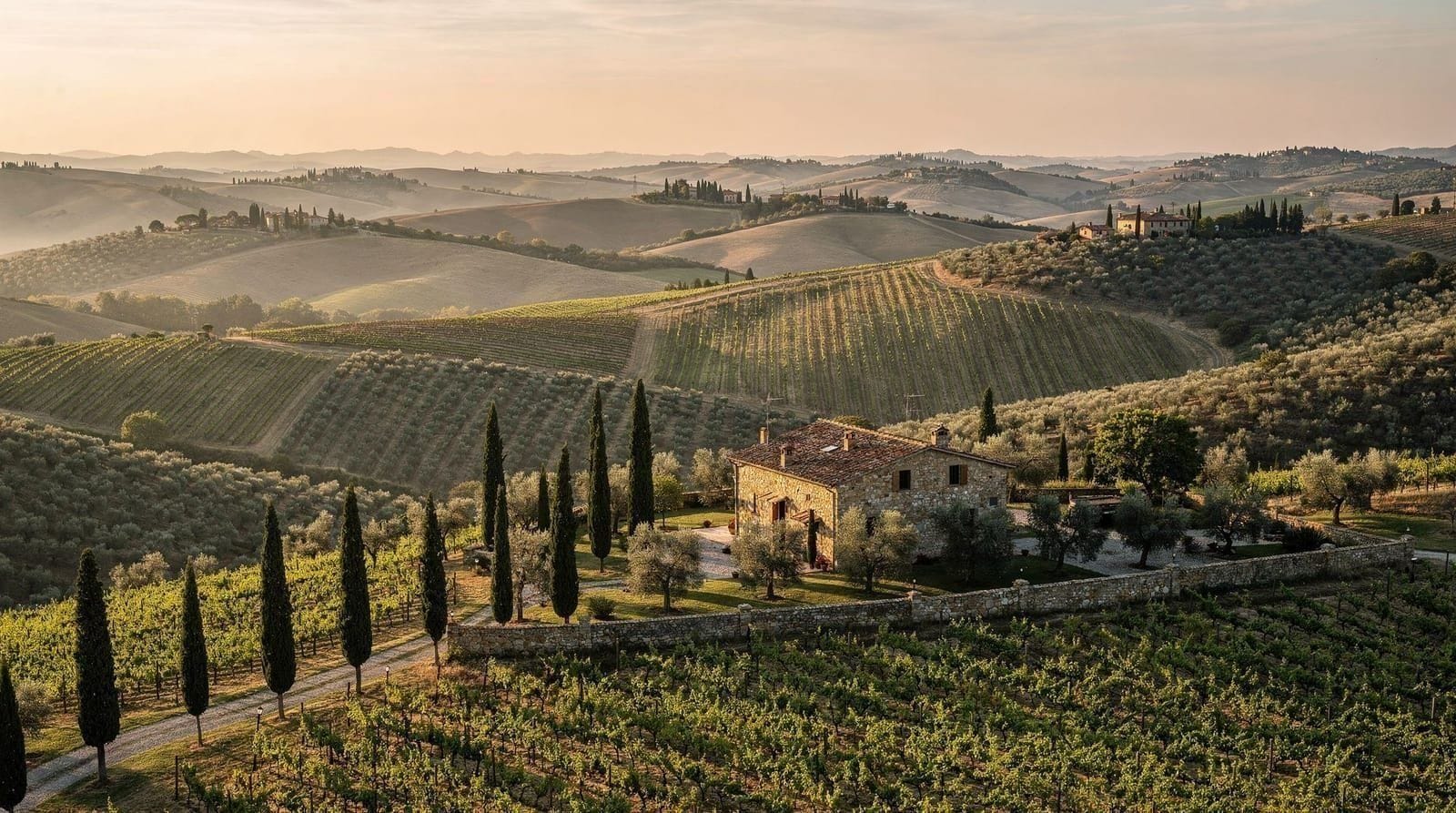
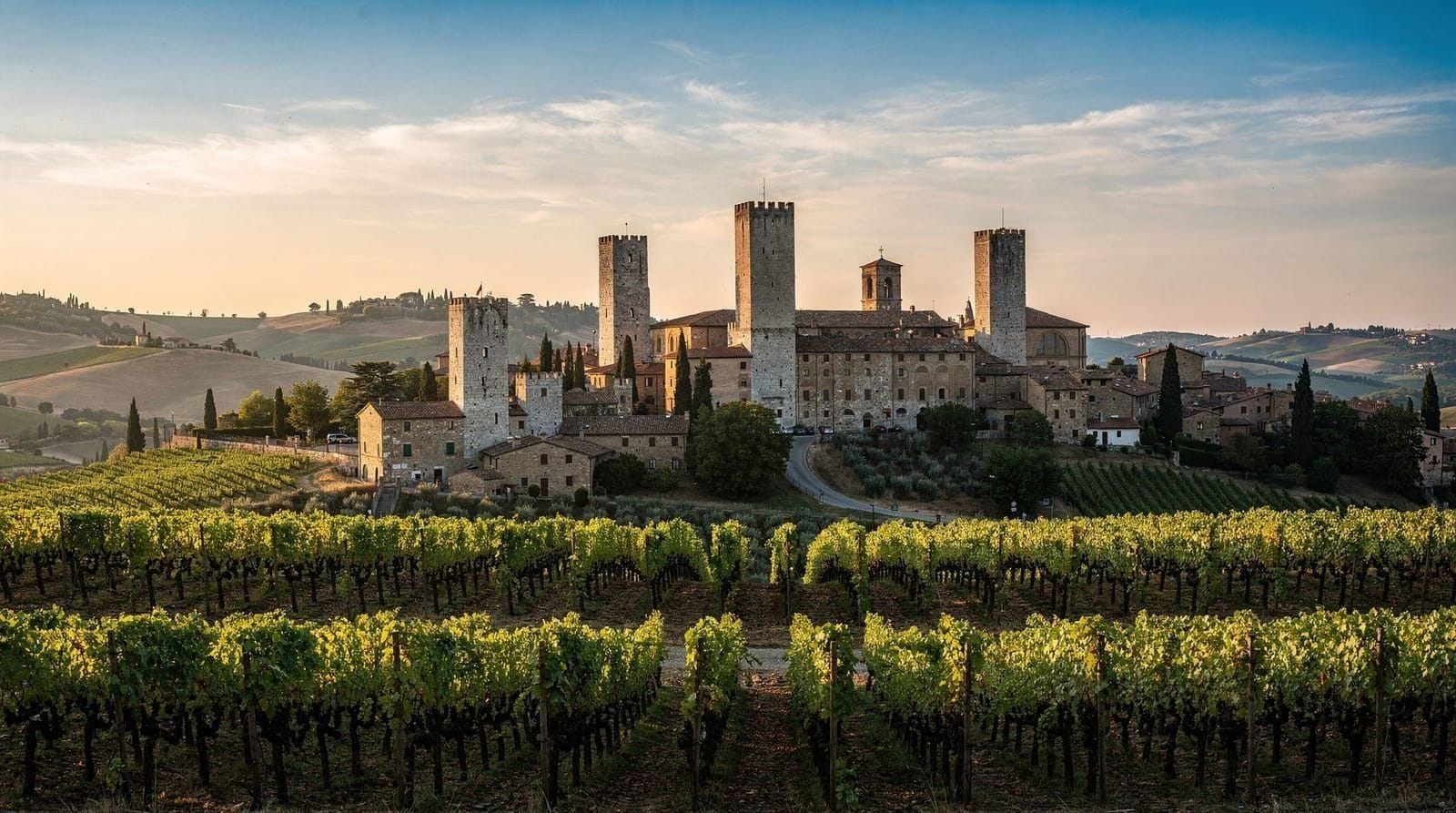
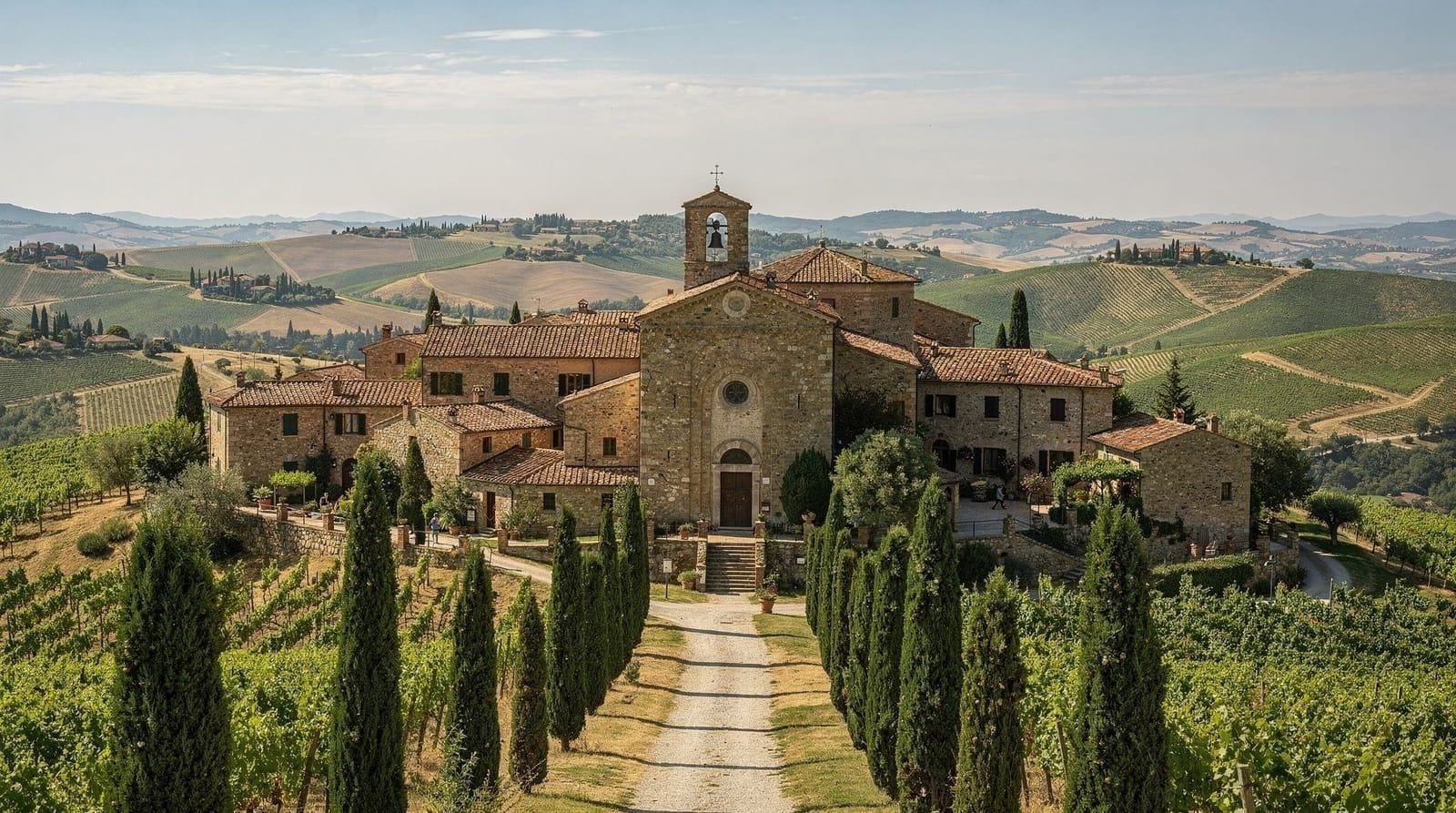
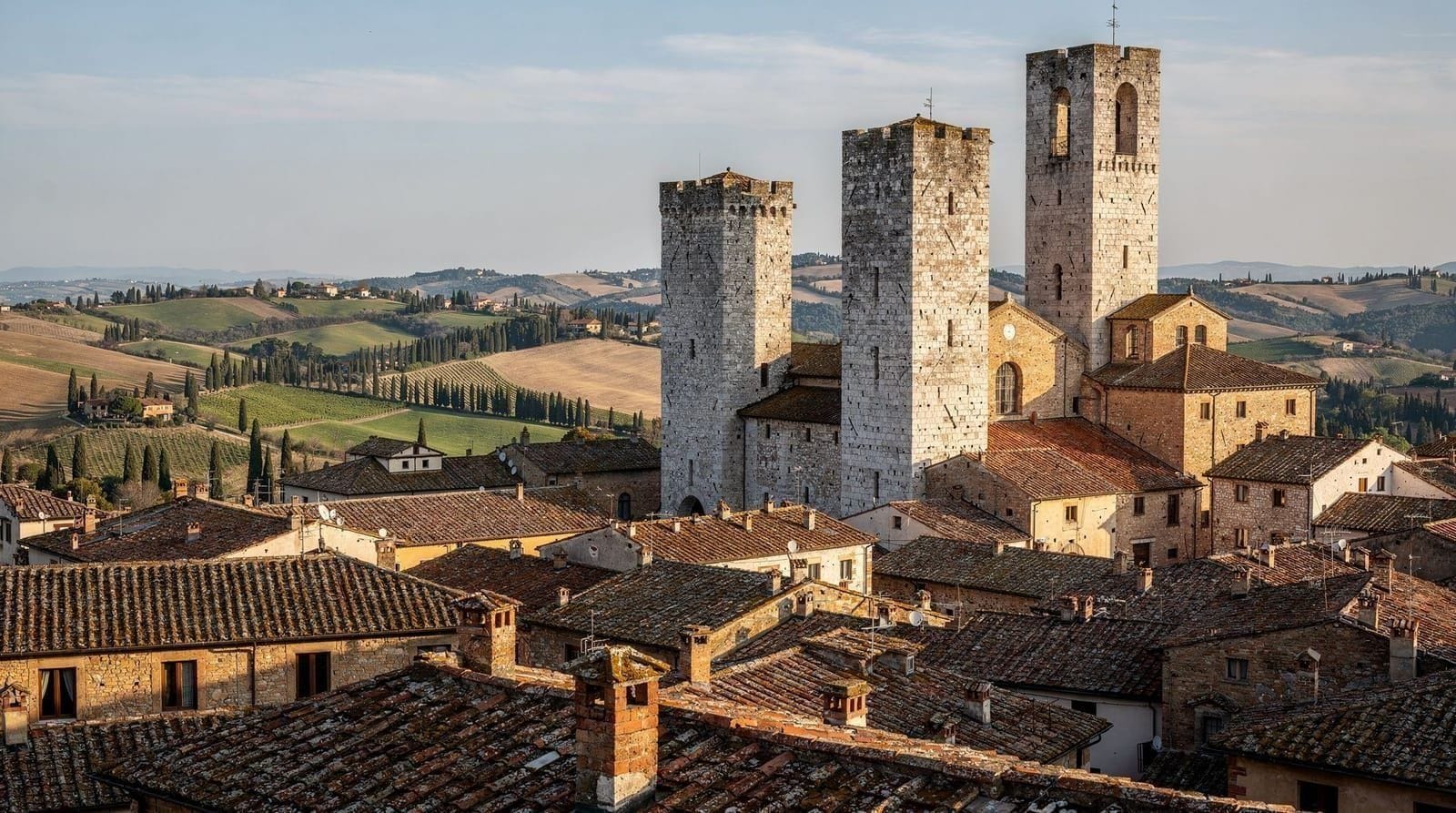
Siena works beautifully as part of a Siena–San Gimignano–Chianti combination tour. By car or guided tour, you can see San Gimignano’s towers in the morning, stop at a Chianti winery for lunch and tasting, and be in Siena for the afternoon — or do this in reverse. Many guided day tours from Florence cover this exact itinerary for €55–90 per person.
See the San Gimignano day trip guide and the Chianti day trip guide for details on those destinations. If wine is the priority on a combined day, the Chianti destination guide has broader context on the region between Florence and Siena.
When to visit: a seasonal comparison
| Season | Weather | Crowds | Notes |
|---|---|---|---|
| Apr–May | mild, some rain | moderate | best balance of weather and crowds |
| Jun–Aug | hot, dry | very heavy | Palio horse race (July 2, August 16) draws huge crowds |
| Sep–Oct | warm, stable | moderate | harvest season, arguably the best month |
| Nov–Mar | cool, quiet | light | some restaurants reduce hours, Duomo floor mostly covered |
If you want to see the Palio itself, plan around 2 July or 16 August specifically and expect the whole city, not just the Campo, to be extremely crowded — this is not a day-trip event unless you book accommodation well in advance.
Photographing the Campo and the Duomo
The Campo photographs best from two spots: street level near the Fonte Gaia, where the fan-shaped paving leads the eye toward the Palazzo Pubblico, and from the top of the Torre del Mangia, where the whole shape of the piazza becomes legible in a way it isn’t from ground level. Morning light (before 10am) rakes across the paving and brings out the texture of the brick; by midday the piazza is flatly lit and full of people sitting in the sun, which makes for a livelier but less architecturally clean photograph. The Duomo’s striped marble facade is dramatic in any light, but the interior is genuinely difficult to photograph well — the black-and-white striping and the low light combine to confuse most cameras’ exposure metering, so if you care about the shot, switch to manual exposure or simply put the camera away and look instead.
Practical information for Siena visitors
Luggage: Left-luggage service at Piazza Gramsci bus terminal (€4–6 per bag). This is useful since there is no train station in the historic area.
Hills: Siena’s historic centre is hilly. The main streets are paved in stone and can be tiring. Wear good walking shoes. The Campo slopes noticeably.
ZTL: Siena has its own ZTL zone covering the historic centre. Don’t drive into it. Park at the designated car parks outside the gates.
Mobile signal: Good throughout the city centre.
Medical: Policlinico Santa Maria alle Scotte hospital on the outskirts (emergency line 118).
Frequently asked questions about the Siena day trip
How much does a day in Siena cost?
Budget estimate: bus return €8, Torre del Mangia €10, OPA SI pass €15, lunch €20, coffee and snacks €8. Total: roughly €60 per person for a full day including transport and main sights.
Can I do Siena as a half-day trip?
Yes but Siena rewards time. A half-day (4 hours) can cover the Campo and the Duomo with Piccolomini Library, but you’ll feel rushed and miss the city’s atmosphere. If possible, give it 6–7 hours.
What’s the best time to visit the Piazza del Campo?
Early morning (8–9am before the crowds) and late afternoon (5–7pm as the light goes golden) are the most rewarding times. Midday is the most crowded and hottest in summer.
Should I book a guided tour or go independently?
For Siena alone, independent travel is very straightforward — bus there, walk everywhere, bus back. Guided tours add value if you want to combine Siena with Chianti wineries or San Gimignano in a single day without driving, or if you want in-depth historical commentary on the buildings and frescoes.
Top experiences
Bookable activities with verified prices and instant confirmation on GetYourGuide.

Florence: Siena, San Gimignano and Chianti day trip
- Free cancellation
- Hotel pickup
Florence: Siena half-day tour
- Free cancellation
- Hotel pickup
Siena: walking tour and skip-the-line Duomo tickets
- Skip the line
- Small group
Florence: Tuscan day trip — Siena, San Gimignano, Monteriggioni and Chianti
- Free cancellation
- Hotel pickup
Florence: afternoon in Siena and dinner in Chianti
- Free cancellation
- Small group
Siena: guided walking tour
- Free cancellation
- Small group
Siena: tour and wine tasting in a Tuscan private castle
- Free cancellation
- Small group