San Lorenzo neighborhood guide: Medici quarter, markets, and honest advice
Florence: Medici Chapels guided tour
- Skip the line
- Small group
What is the San Lorenzo neighborhood in Florence?
San Lorenzo is the neighbourhood north of the Duomo, centred on the Basilica of San Lorenzo — the Medici family church, rebuilt by Brunelleschi and containing the Medici Chapels with Michelangelo's sculptures. The neighbourhood is also home to the Mercato Centrale (indoor food market) and a large outdoor street market selling leather, souvenirs, and clothing. It is Florence's most affordable central accommodation area but also its noisiest and most market-saturated.
San Lorenzo is the neighbourhood that Florence presents most ambiguously to visitors. It contains some of the city’s most important monuments — the Medici family church, the Medici Chapels with Michelangelo’s sculptures, the Laurentian Library — alongside a sprawling outdoor market that is simultaneously one of Florence’s most lively public spaces and one of its most tourist-trappy commercial environments.
Understanding San Lorenzo requires holding both things in mind: the extraordinary heritage of the Medici quarter and the honest commercial reality of the market that now surrounds it.
| Where | north of the Duomo, around Piazza San Lorenzo |
| Main draws | Medici Chapels, Basilica di San Lorenzo, San Lorenzo market |
| Cost | Basilica around €7, Medici Chapels €9-12, market free to browse |
| Time needed | half a day for the church, chapels and library; longer with market and lunch |
| Best time | mornings before market crowds peak; book Medici Chapels ahead March-October |
The Medici heritage: what makes San Lorenzo essential
The Basilica of San Lorenzo was the Medici family’s parish church, rebuilt by Brunelleschi with Medici financing from the 1420s onward. Most of the important figures of the Florentine Renaissance — Brunelleschi, Michelangelo, Donatello, Alberti — were involved in some aspect of the church’s construction or decoration over the course of more than a century.
The Basilica of San Lorenzo
The church is entered from Piazza San Lorenzo (note: the outdoor market stalls crowd directly up to the church steps, which gives the entrance a certain surreal quality). The interior is Brunelleschi’s standard Renaissance geometry — nave, side aisles, transepts, all in pietra serena columns and arches against white plaster — serene, balanced, and spacious.
The key elements:
Old Sacristy (Sagrestia Vecchia): Built between 1421 and 1428, it was one of Brunelleschi’s first major works and one of the defining Renaissance interiors. The space is a cube surmounted by a dome on pendentives — a geometric clarity that had not been seen since antiquity. The bronze reliefs and roundels are by Donatello, who covered the pilasters and the lunettes with figures and scenes that deliberately contrast with Brunelleschi’s pure architectural geometry. The two men reportedly argued about it; the result is a fascinating tension between architectural order and sculptural exuberance.
The nave paintings: Several early Renaissance altarpieces survive in the nave chapels, including a Filippo Lippi Annunciation and a Rosso Fiorentino Marriage of the Virgin (1523) — the latter particularly striking for its Mannerist distortions, almost a century before Mannerism became fashionable.
Practical details: Open Monday–Saturday approximately 10 am–5 pm; Sunday afternoon (Mass restrictions apply). Tickets approximately €7, including access to the Old Sacristy.
The Medici Chapels
Entered from Piazza Madonna degli Aldobrandini — a separate entrance from the church and a separate ticket. The Cappelle Medicee consist of two main spaces:
The Chapel of the Princes (Cappella dei Principi): A baroque mausoleum begun in 1604 for the later Medici Grand Dukes. The octagonal space is clad from floor to dome in pietre dure — the Florentine art of inlay with semi-precious stones. The sheer scale and density of the decoration is extraordinary. Underneath, in the crypt, are the remains of Cosimo de’ Medici and other early family members.
The New Sacristy (Sagrestia Nuova): Michelangelo’s great contribution, designed from 1520 and worked on intermittently until he left Florence permanently in 1534. The architecture is deliberately in tension with Brunelleschi’s Old Sacristy: same geometric plan, but with Mannerist distortions in the pilasters, windows, and architectural details.
The tombs are the main draw. Lorenzo de’ Medici and Giuliano de’ Medici (the brothers of Lorenzo il Magnifico) are buried here, commemorated by undistinguished wall tombs. The two ducal tombs — for Giuliano di Nemours and Lorenzo di Urbino — are the masterworks: each has a seated idealized portrait of the duke above, and reclining allegorical figures below: Day and Night on Giuliano’s tomb, Dawn and Dusk on Lorenzo’s.
Full discussion: Medici family history and Michelangelo in Florence.
Practical details: Tuesday–Sunday, 8:15 am–2:00 pm (hours vary seasonally). Closed Mondays. Tickets approximately €9–12. Book in advance for March–October.
The Laurentian Library
Accessed from the cloister of San Lorenzo: the Biblioteca Medicea Laurenziana (Piazza San Lorenzo 9). Commissioned by Pope Clement VII from Michelangelo in 1523 as a repository for the Medici manuscript collection; the vestibule staircase was designed by Michelangelo from Rome (from a clay model) and built after his departure.
The staircase is one of the most extraordinary architectural spaces in Florence: a seemingly impossible formal invention, with central and side flights of different widths and profiles, columns in niches where they support nothing, and a deliberate violation of classical proportional rules. It has been described as the first fully Mannerist architectural interior.
The reading room above is serene by contrast — long, barrel-vaulted, with Michelangelo’s own wooden reading desks and an intarsia floor. The library holds around 11,000 manuscripts and 4,500 printed books; occasional exhibitions display individual treasures.
Practical details: Open Monday–Saturday, limited hours (typically 9:30 am–1:30 pm); check the official website. Entry approximately €3–5.
The San Lorenzo market: what it is and how to navigate it
The outdoor market extends through several streets around the Mercato Centrale building: Via dell’Ariento, Via Rosina, Via Sant’Antonino, and the streets immediately around the basilica. It operates daily, typically 9 am to 7 pm, except Sundays.
The market sells: leather goods (wallets, bags, belts, gloves), clothing, household textiles, souvenirs, scarves, and various tourist goods. The vendors are usually from West Africa, China, or southern Italy, and most have been established in the same spot for years.
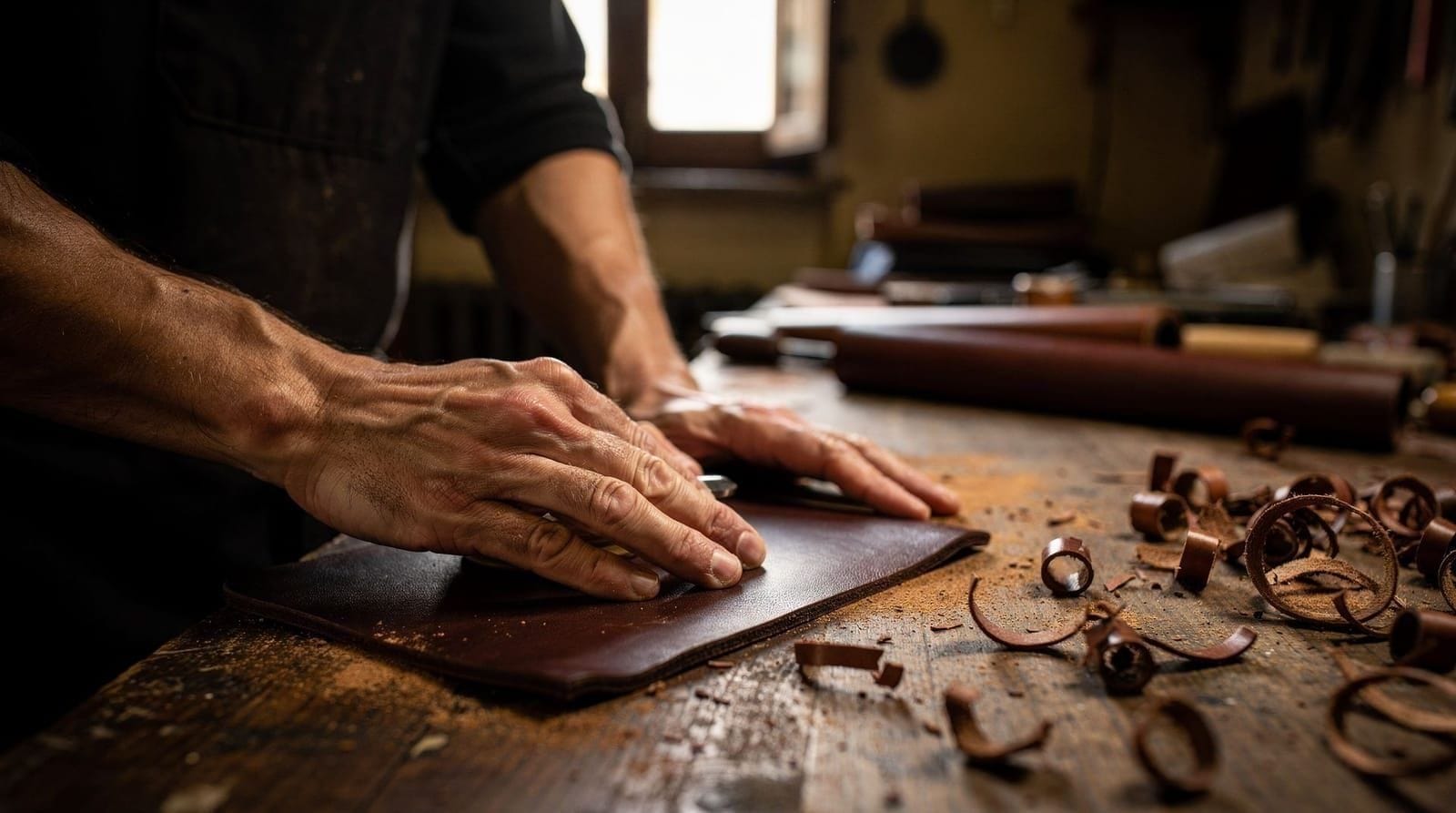
The honest assessment: A significant proportion of the leather goods sold here are not what they are claimed to be. “Handmade in Florence,” “genuine leather,” “Made in Italy” — these claims are made regularly; they are not regularly true. Some vendors do sell genuinely made-in-Italy goods; many sell Chinese-manufactured goods at Italian-market prices. See Florentine leather tradition guide for how to distinguish real from fake.
What to actually buy in the market: Fresh produce stalls on the inner streets, flowers, and occasionally genuinely local crafts sold by verified artisans (look for the Artigiani Fiorentini certification and a visible working process). The market is worth walking through as an experience; it is not a reliable venue for significant leather purchases.
The Mercato Centrale: the honest food option
The covered Mercato Centrale building (Via dell’Ariento 12) has two distinct levels:
Ground floor (traditional market, open approximately 7 am–2 pm Monday–Saturday): Genuine fresh produce, meat, fish, cheese, and bread stalls, operating since 1874. This is where Florence’s restaurants stock their larders and where local residents shop. Prices are market prices; the quality is excellent. The cheese counter (Formaggi Baroni) and the tripe sandwich vendor (lampredotto, Florence’s classic street food) are highlights.
Upper level food hall (open until midnight): Converted in 2014 into a stylish food hall with multiple restaurants and bars under the original iron-and-glass roof. The food is good but expensive by Florence standards — expect €15–25 for a meal, €6–8 for a glass of wine. The atmosphere is lively and the setting is excellent. Worth one lunch or dinner for the experience; the ground-floor stalls offer better value for everyday eating.
Eating in San Lorenzo: where to actually go
The streets immediately around the outdoor market have the highest concentration of tourist-trap restaurants in Florence: menus in eight languages, photos on outdoor boards, greeters who approach you in the street. Most are mediocre for the price.
What to avoid: The laminated-menu-in-every-language restaurants on Via dei Ginori, Via Nazionale, and around the market perimeter. They are convenient and broadly safe but not good value.
Where to eat instead:
Trattoria Mario (Via Rosina 2r) — a genuine institution, open since 1953, with communal tables and no menu: they bring what’s available. Closes in the afternoon. Arrive before noon or expect to queue. Cash only. Very cheap, genuinely good, unmistakably Florentine.
Nerbone (inside the Mercato Centrale, ground floor) — the traditional stand-up food counter inside the market; excellent lampredotto (tripe) sandwiches, ribollita, and daily specials at market prices. Open for lunch until about 2 pm.
Trattoria Sergio Gozzi (Piazza San Lorenzo 8r) — honest neighbourhood trattoria on the piazza itself; relatively good value given the location.
Za Za (Piazza del Mercato Centrale 26r) — slightly more upmarket than Mario or Nerbone, with a full menu; generally reliable for Tuscan classics at fair prices.
Accommodation in San Lorenzo
San Lorenzo has Florence’s cheapest accommodation within walking distance of the major sights. Understand what you’re getting: the outdoor market is noisy during the day (even on its quietest days), the streets are not peaceful, and the neighbourhood aesthetics are utilitarian rather than beautiful. The trade-off is proximity (10 minutes to the Accademia, 5 minutes to the Duomo) and price.
Hotels worth considering:
Hotel Perseo (Via dei Cerretani 1) — Clean, reliable budget option at the edge of San Lorenzo near the Duomo. Manages its constraints honestly; €80–130.
Hotel Cimabue (Via Bonifacio Lupi 7) — Quieter street, slightly off the main market axis; modest rooms, reasonable management; €90–140.
Hostel Plus Florence (Via Santa Caterina d’Alessandria 15) — One of the better large hostels in Florence; clean facilities, social atmosphere, close to the station and San Lorenzo; dorms from €25, private rooms from €70.
For visitors who want San Lorenzo proximity without the market noise: look for hotels on the streets that run north–south (Via dei Ginori, Via Guelfa) rather than the east–west streets that carry the market traffic.
How San Lorenzo compares to other central options
San Lorenzo is not the only budget-friendly central neighbourhood, and it is worth weighing against the alternatives before booking. Our where to stay in Florence guide covers the full picture; the short version is that San Lorenzo trades atmosphere for price and proximity. If quiet streets and a more residential feel matter more than saving €20-30 a night, the best areas to stay in Florence guide points toward quieter alternatives such as the streets around Santo Spirito or San Niccolò in the Oltrarno — both further from the Duomo but considerably calmer after dark, with better restaurant options on the doorstep.
San Lorenzo and the ZTL
The ZTL (restricted traffic zone) covers most of San Lorenzo’s streets. If you are arriving by car, do not attempt to drive to your hotel — the cameras are automatic and fines are €80–335. The nearest practical parking is at the Fortezza da Basso (a 15-minute walk north) or the station car parks. Taxis can legally enter the ZTL for drop-offs.
A realistic morning in San Lorenzo
If you have half a day, a sensible order avoids doubling back and dodges the worst of the crowds. Arrive at the Basilica di San Lorenzo around 9-9:30am, before tour groups build up, and spend 30-45 minutes on the church interior and Old Sacristy. Walk the short distance to the Medici Chapels entrance on Piazza Madonna degli Aldobrandini next — this is worth booking ahead, since the timed-entry slots for the New Sacristy fill up by late morning in high season. Budget a full 90 minutes here; rushing Michelangelo’s tombs defeats the point of coming. From there, the Laurentian Library is a short walk back through the cloister and takes 15-20 minutes even for a thorough look at the staircase and reading room. By early afternoon, the outdoor market and Mercato Centrale are in full swing, which makes them a natural next stop for lunch — Nerbone inside the market building is the easiest option if you don’t want to walk further, though Trattoria Mario is better if you’re willing to queue.
Getting around from San Lorenzo
To the Accademia: 10 minutes north on Via Ricasoli.
To the Duomo: 5 minutes south on Via dei Cerretani.
To the Uffizi: 15 minutes south, through the Piazza della Signoria.
To the train station (Santa Maria Novella): 10 minutes west on Via Nazionale.
To Oltrarno: 20 minutes, crossing either Ponte Vecchio or Ponte Santa Trinita.
Frequently asked questions about San Lorenzo
Is San Lorenzo good for a first-time visitor to Florence?
It’s acceptable — centrally located, cheap, and close to the Medici Chapels and San Lorenzo church. The neighbourhood experience itself is not what most people picture when they think of Florence. For a first-time visitor who wants to understand Florence’s atmosphere and character, Oltrarno or Santa Croce are better.
What is the San Lorenzo church most famous for?
The Medici Chapels with Michelangelo’s New Sacristy sculptures (the allegorical figures of Day, Night, Dawn, and Dusk) and the Laurentian Library staircase. The church itself (Brunelleschi’s interior and the Old Sacristy) is also significant. The combination makes San Lorenzo one of the richest single sites in Florence for Renaissance architecture and sculpture — comparable in importance to the Accademia and the Uffizi for different reasons.
Is the Medici Chapels worth the entry fee?
Absolutely yes. The New Sacristy is Michelangelo’s most complex sculptural project and arguably emotionally more powerful than the David. The allegorical figures on the ducal tombs — particularly Night and Dawn — carry a psychological weight that is entirely different from the heroic energy of the Accademia. The baroque Chapel of the Princes is spectacular in a different, more decorative way. Budget at least 90 minutes.
When is the San Lorenzo market closed?
The market operates daily except Sundays and certain public holidays. It is significantly smaller in winter (November through February), when some stalls close. During August, some vendors take their own holidays; the market may be at reduced capacity mid-month. Check locally for current operating days.
Top experiences
Bookable activities with verified prices and instant confirmation on GetYourGuide.