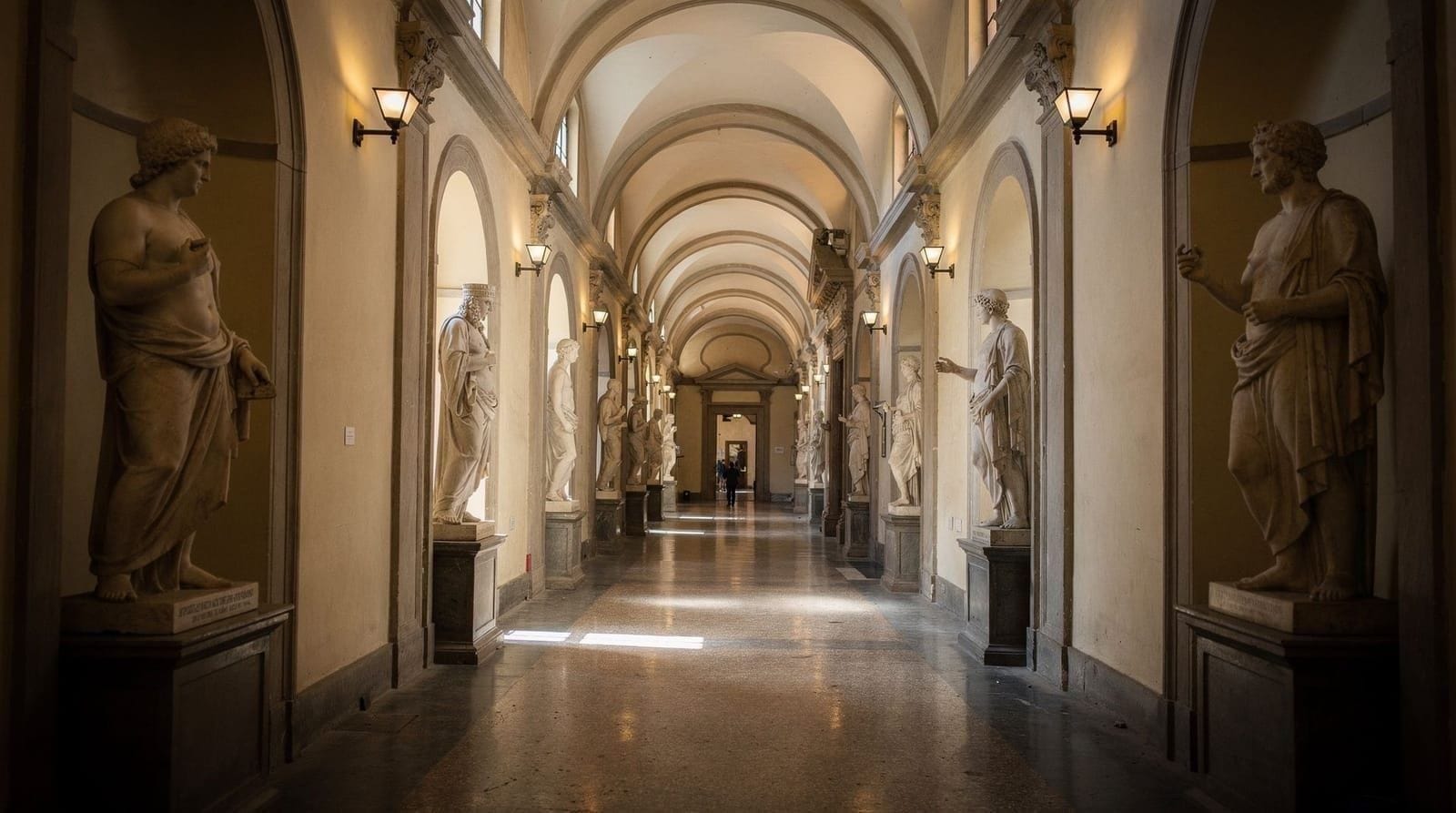
The Medici family: Florence's greatest dynasty
Florence: Medici family private guided walking tour
- Free cancellation
Who were the Medici family?
The Medici were a Florentine banking dynasty who ruled Florence for most of the period between 1434 and 1737. They financed the Renaissance by commissioning Botticelli, Michelangelo, Brunelleschi, and Leonardo da Vinci, and produced three popes and two queens of France. Their palaces, chapels, and collections are still the main reason people visit Florence.
No other family in history has left such a physical mark on a single city. Walk anywhere in central Florence and within ten minutes you will encounter something the Medici built, commissioned, or caused to be built. The Uffizi Gallery, the Boboli Gardens, the Medici Chapels, the Laurentian Library, Ponte Vecchio’s famous shops — all Medici projects. Even the word “bank” in its modern sense owes something to their innovations.
Understanding who the Medici were, and how they operated, transforms what you see when you walk through Florence.
| Span of rule | roughly 1434–1737, with interruptions |
| Key sites | Palazzo Medici Riccardi, Medici Chapels, Uffizi, Boboli Gardens |
| Time to see the highlights | half a day at a brisk pace, a full day unhurried |
| Cost | Medici Chapels around €9, Uffizi around €25–30, Palazzo Medici Riccardi around €10 |
| Best starting point | Piazza San Lorenzo, near the family’s parish church |
The rise: from merchants to bankers to kings
The Medici appear in Florentine records as early as the 13th century — moderately wealthy wool merchants from the Mugello valley north of the city. For most of their early history they were prosperous but unremarkable. The transformation came with Giovanni di Bicci de’ Medici (1360–1429), who parlayed a small banking operation into what became the largest financial institution in Europe.
The Medici Bank’s genius was structural. Giovanni established branches across Europe — Rome, Venice, Geneva, Bruges, London — each semi-autonomous but reporting to Florence. He cultivated the Vatican as a client, managing papal finances at a time when the papacy was both enormously wealthy and in perpetual need of sophisticated financial services. By the time Giovanni died, the bank was the cornerstone of the European economy.
Giovanni’s son Cosimo (1389–1464) inherited both the bank and the political ambitions. Cosimo understood something that his predecessors had not: that in Florence’s turbulent political environment, wealth alone was insufficient protection. You needed alliances, institutions, and legitimacy. He cultivated these systematically, supporting popular causes, lending money to citizens as well as kings, and building on a scale that demonstrated permanence and civic commitment.
When rival families orchestrated his exile in 1433, they discovered they had miscalculated badly. Florence’s economy wobbled without Medici credit. Within a year, Cosimo was recalled. He returned as effectively the ruler of a nominally republican city — never holding an official title beyond “first citizen,” but controlling appointments, foreign policy, and finances with a near-absolute hand.
Cosimo spent the rest of his long life doing two things simultaneously: accumulating power and spending it on art and scholarship. He commissioned Brunelleschi to rebuild San Lorenzo basilica, hired Donatello to create sculptures for his palaces, established the Platonic Academy — essentially Europe’s first humanist think-tank — and began the art collection that would eventually become the Uffizi. When he died in 1464, the city gave him the title Pater Patriae: Father of the Fatherland.
The Medici timeline
| Year | Event |
|---|---|
| 1397 | Giovanni di Bicci founds the Medici Bank |
| 1434 | Cosimo returns from exile, begins effective rule of Florence |
| 1469 | Lorenzo “il Magnifico” becomes head of the family at age 20 |
| 1478 | Pazzi Conspiracy: Giuliano killed, Lorenzo escapes |
| 1492 | Lorenzo dies aged 43; Florence’s golden age effectively ends |
| 1494 | Piero de’ Medici expelled from Florence by Charles VIII of France |
| 1512 | Medici return to Florence with Spanish support |
| 1527 | Medici expelled again during the Sack of Rome |
| 1531 | Alessandro de’ Medici becomes hereditary Duke of Florence |
| 1537 | Cosimo I becomes Duke, later Grand Duke of Tuscany |
| 1743 | Anna Maria Luisa, last Medici, dies; leaves the entire collection to Florence in perpetuity |
The golden age: Lorenzo il Magnifico
Lorenzo de’ Medici was 20 years old when his father Piero died in 1469, leaving him at the head of the family. He had been prepared carefully — educated by humanist scholars, sent on diplomatic missions as a teenager, trained in banking by capable managers. But nothing quite prepares a 20-year-old for running a city.
He managed it with extraordinary skill. Lorenzo maintained the fiction of Florentine republicanism while exercising power more completely than his grandfather had dared. He manipulated electoral systems, controlled the appointment of magistrates, conducted foreign policy as if Florence were his personal state. When the Pope threatened Florence, Lorenzo sailed to Naples alone and negotiated a peace settlement that most observers considered impossible — and returned to Florence to a hero’s welcome.
But Lorenzo’s genuine passion was culture. He was himself a poet of real accomplishment, writing in Italian at a time when serious scholars wrote exclusively in Latin — a deliberate choice that influenced the development of Italian as a literary language. He gathered at his household the greatest minds available: Botticelli, Michelangelo (who lived with the family as a teenage prodigy), Poliziano, Ficino, Pico della Mirandola.
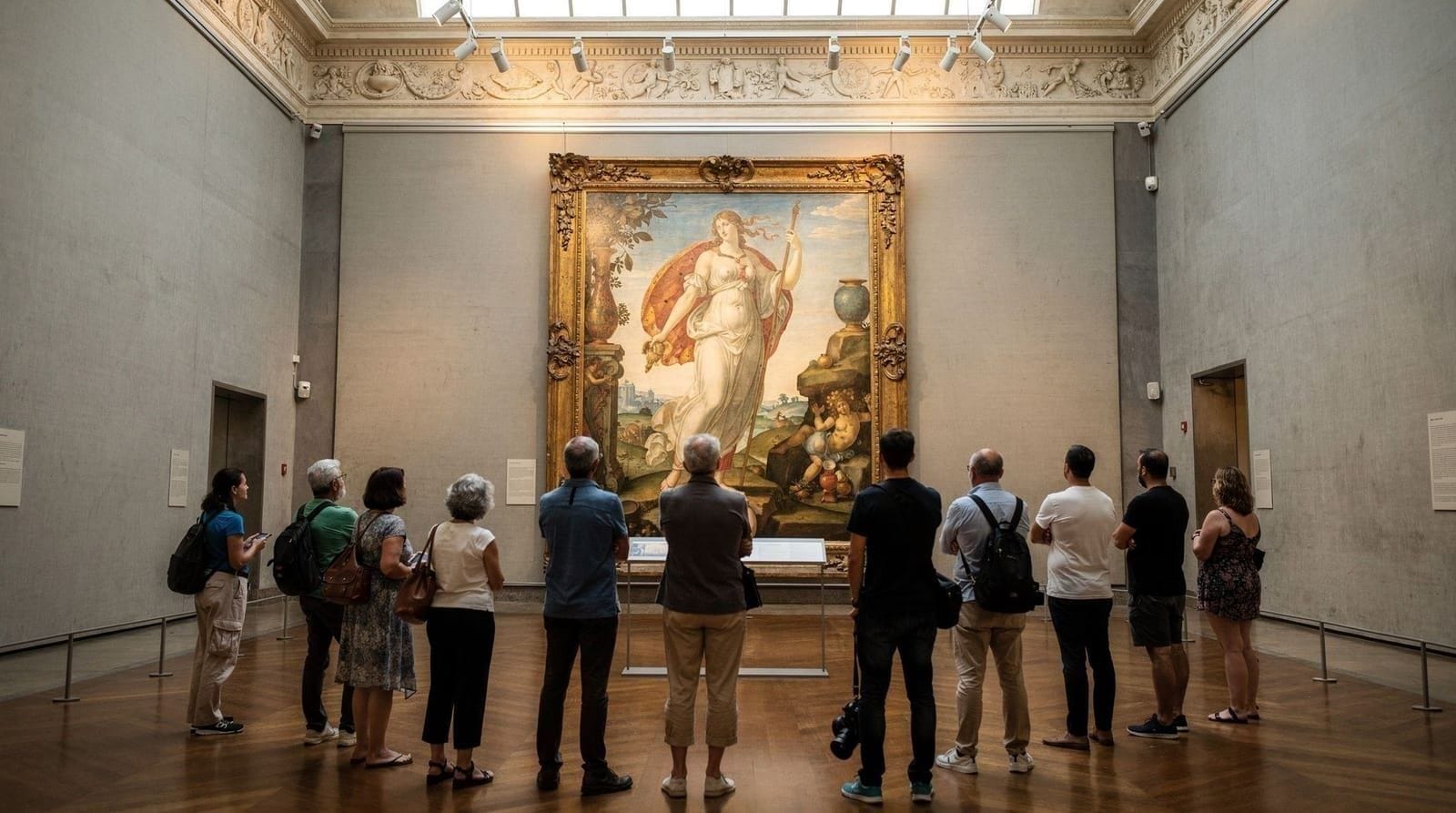
The Botticelli paintings most visitors come to Florence to see — the Birth of Venus, La Primavera — were painted for the Medici circle during Lorenzo’s time, almost certainly under his personal direction. The scholarly program behind them, drawing on Neoplatonic philosophy and classical mythology, was the intellectual project of Lorenzo’s Platonic Academy.
Michelangelo was 13 when Lorenzo noticed him in the garden of San Marco, where Medici sculptures were kept for study. Lorenzo invited him to live in the palazzo as a member of the household, eating at the family table, being educated alongside Lorenzo’s sons. The relationship shaped Michelangelo’s entire early development.
Lorenzo died in 1492, aged 43, of a hereditary disease that had also killed his father and grandfather. The artist Poliziano, present at the death, wrote that Michelangelo wept for days.
The Pazzi Conspiracy: violence at the altar
The most dramatic episode in Medici history happened on 26 April 1478, during High Mass in the Duomo. The Pazzi family — wealthy bankers who resented Medici dominance and had lost lucrative papal contracts to them — had conspired with Pope Sixtus IV and the Archbishop of Pisa to murder Lorenzo and his brother Giuliano simultaneously.
The conspirators had arranged for the attack to happen at the moment of the elevation of the Host, when the congregation bowed and the brothers would be separated and distracted. It nearly worked. Giuliano was stabbed 19 times by Francesco de’ Pazzi and a hired assassin, and died on the cathedral floor. Lorenzo was also attacked but managed to draw his sword, ward off his attackers, and retreat into the Old Sacristy, where supporters barred the heavy bronze door.
The aftermath was swift and brutal. The Archbishop of Pisa was hanged from a window of the Palazzo della Signoria still in his vestments. Francesco de’ Pazzi, wounded in the Duomo attack, was stripped and hanged beside him. Lorenzo had portraits of the conspirators painted on the Bargello walls — a public humiliation that was eventually painted over but remained in cultural memory.
The entire Pazzi family was ruined: their property confiscated, their name erased from public records, even their heraldic symbols removed from buildings. Pope Sixtus, furious that the conspiracy had failed, placed Florence under an interdict (essentially excommunicating the entire city) and went to war. Lorenzo survived both attacks through a combination of diplomatic brilliance and luck.
Medici popes and queens
Two Medici became pope: Giovanni di Lorenzo de’ Medici became Leo X in 1513, making him the first Florentine pope and the man who commissioned Raphael’s Vatican frescoes, began the building of St. Peter’s Basilica in its current form, and — in one of history’s great miscalculations — dismissed Martin Luther’s initial protests as a minor monkish squabble. His cousin Giulio became Clement VII in 1523, and presided over the catastrophic Sack of Rome in 1527.
Two Medici women became queens of France. Catherine de’ Medici (1519–1589) married Henri II of France and, after his death, served as regent and effective ruler during the tumultuous Wars of Religion. She introduced the fork to the French court (the French had been eating with their hands), and is often credited or blamed for bringing Italian cuisine and fashion to France. Her influence on French court culture was enormous. Marie de’ Medici (1575–1642) married Henri IV of France, commissioned the Luxembourg Palace in Paris (still standing), and commissioned Rubens to paint the famous cycle of paintings celebrating her life, now in the Louvre.
The final Medici: Anna Maria Luisa’s gift
The male Medici line died out with Gian Gastone in 1737, the last Grand Duke. The succession passed to the Austrian House of Lorraine under a pre-arranged treaty. Florence feared that the new rulers would strip the city of its art — as other conquering powers had done — and ship it to Vienna.
Anna Maria Luisa de’ Medici, the last surviving Medici, was determined this would not happen. She negotiated the “Family Pact” of 1737, signed with the incoming rulers, which stipulated that all Medici art, collections, and libraries would remain in Florence forever — for the benefit of the public and the glory of the state — and could never be transferred or alienated.
The result: the Uffizi Gallery, with its 100,000 works. The Accademia. The Pitti Palace collections. The Medici Chapels. The Bargello. All of it, kept in Florence, accessible to the world, because one woman negotiated a treaty 286 years ago. When you stand in front of Botticelli’s Birth of Venus, you are there because of Anna Maria Luisa.
Where to see the Medici legacy in Florence
Palazzo Medici Riccardi
Via Cavour 3, a five-minute walk north of the Duomo. This was the family’s original palace, built for Cosimo by Michelozzo in 1444–1484 and the first great Renaissance palazzo in Florence. The building established the visual vocabulary of the palatial residence — rusticated stone exterior, elegant courtyard — that every other Florentine palazzo imitated.
The interior is now largely occupied by the Palazzo Medici Riccardi museum. The single room not to miss is the Chapel of the Magi, with Benozzo Gozzoli’s frescoed walls (1459–1461) depicting the Procession of the Magi. The faces in the procession are portraits — Lorenzo and other Medici appear as participants in the Biblical scene. The detail is extraordinary and surprisingly intimate.
Medici Chapels (San Lorenzo)
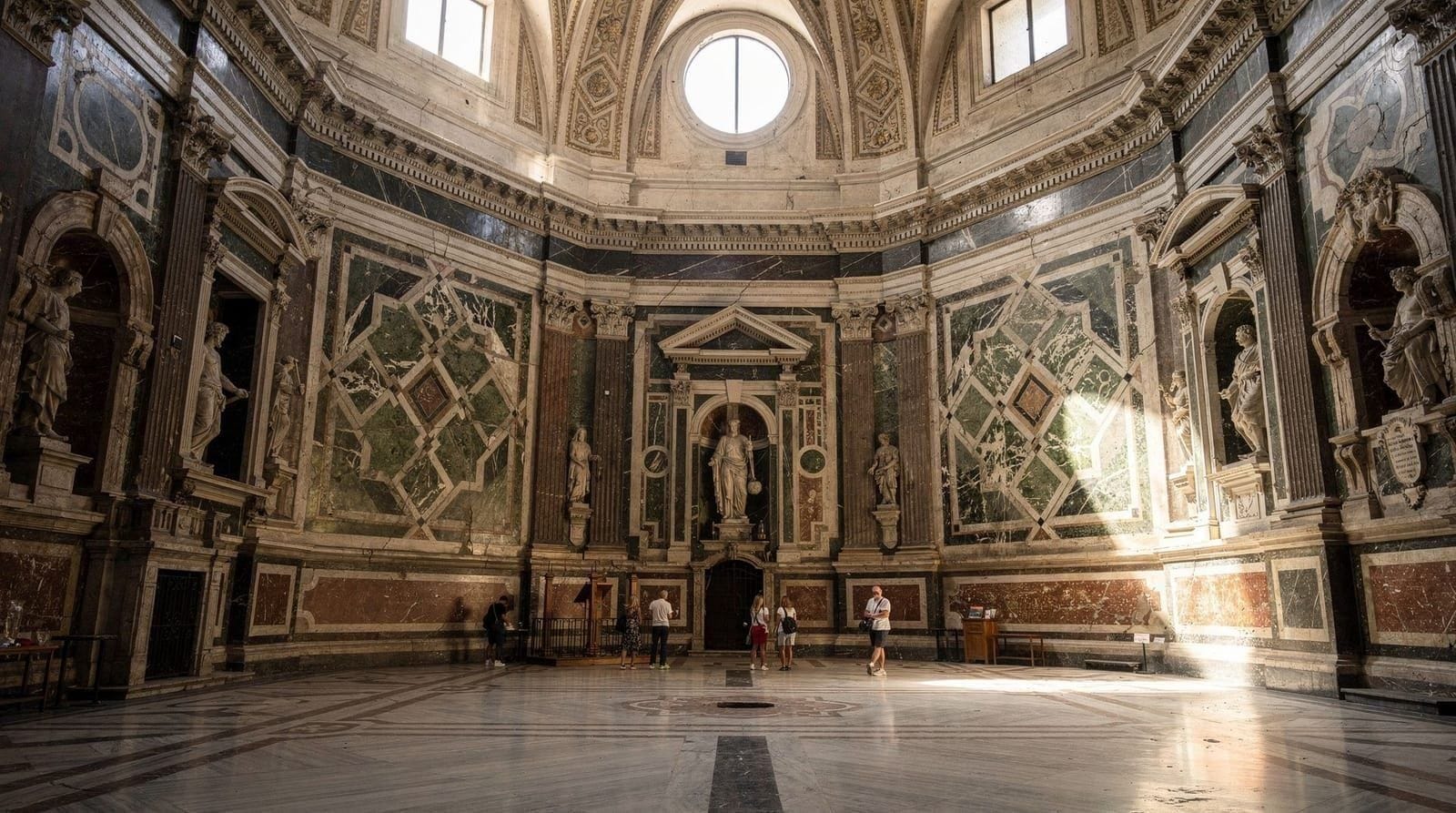
The Cappelle Medicee are entered from Piazza Madonna degli Aldobrandini (not through the church itself). This is where nearly the entire Medici dynasty is buried, and Michelangelo’s contribution to the New Sacristy represents some of his most complex work. The figures of Day, Night, Dawn, and Dusk on the ducal tombs carry an emotional weight entirely different from the heroic David.
Tickets should be booked in advance, especially from March through October. The chapels are occasionally closed on Sundays — verify before visiting.
A Medici Chapels walking tour is the best way to understand what you’re seeing; the iconographic program is dense and not self-explanatory.
Uffizi Gallery
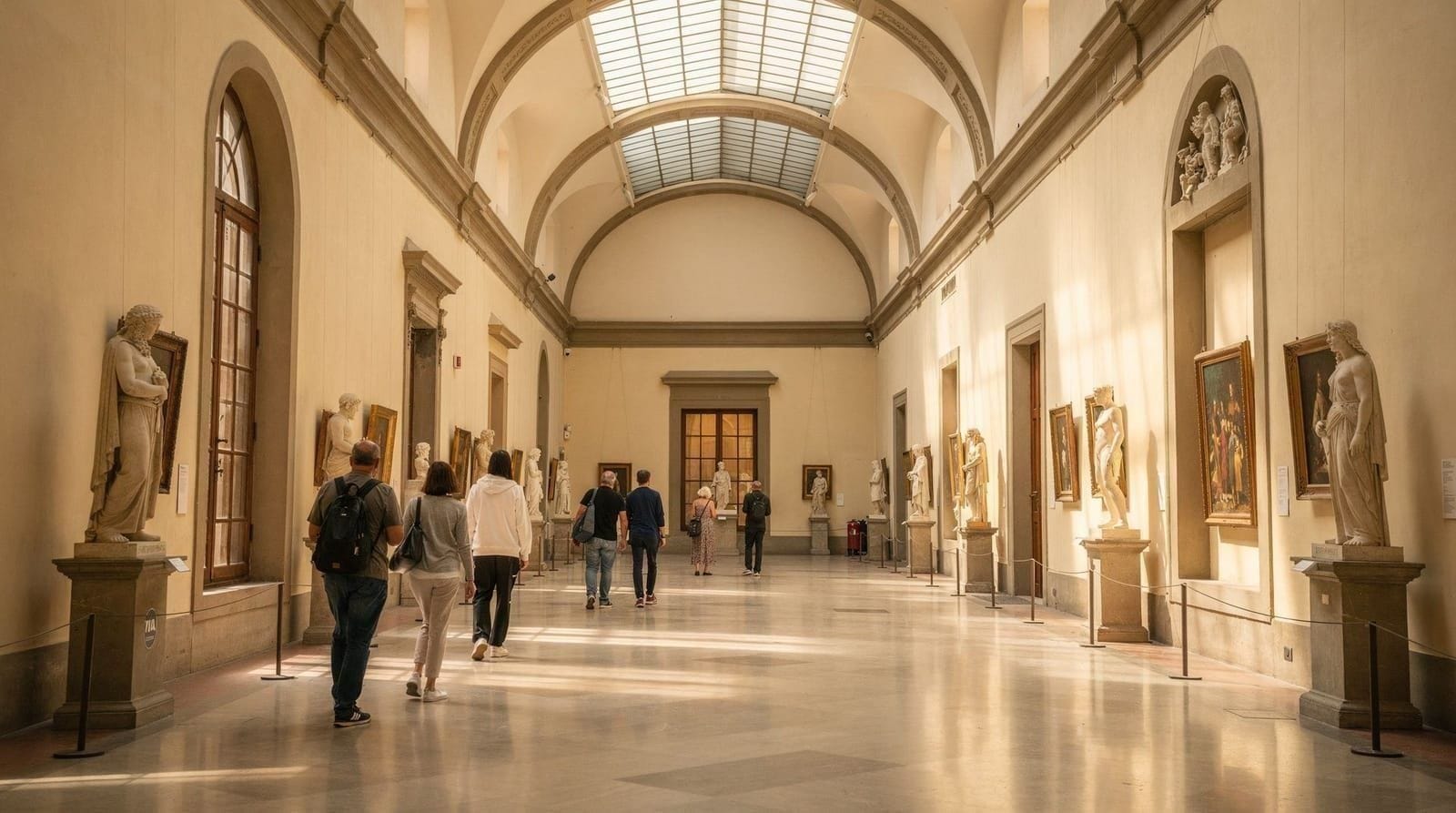
Built by Cosimo I (1559–1581) as the administrative offices of the Florentine state — uffizi means offices — the building was converted to house the Medici art collection in 1581. It is now the world’s greatest collection of Italian Renaissance painting. The Botticelli room alone (rooms 10–14) justifies any queue.
Full visit guide: Uffizi Gallery guide. Book Uffizi skip-the-line tickets months in advance for April–October visits.
Boboli Gardens
The Medici pleasure gardens behind Palazzo Pitti extend over 45,000 square metres of terraced hillside. Originally designed for Eleanor of Toledo (wife of Cosimo I) in the 1550s, the gardens display the Mannerist sensibility of the period: elaborate geometry, hidden grottos, water features, and statuary throughout. The Buontalenti Grotto near the entrance contains casts of Michelangelo’s Prisoners.
Entrance is combined with Palazzo Pitti tickets. The gardens are best in spring when the roses are out; they are fully open and worth an afternoon. See also the Bardini Gardens, a quieter Medici-era alternative across the Arno in Oltrarno.
Basilica of San Lorenzo
The church, not the Chapels, is a separate entrance and separate fee. San Lorenzo was the Medici’s parish church — rebuilt by Brunelleschi with Medici financing, completed after his death. The Old Sacristy contains Donatello’s decorative bronzes; Brunelleschi’s geometry is pure and still thrilling. Michelangelo designed but never completed the facade: it remains rough stone, which tells its own story about the complications of working for powerful patrons.
The Laurentian Library, accessed from the church cloister, was commissioned by Clement VII (the Medici pope) from Michelangelo in 1523. The vestibule staircase is the strangest staircase in Florence — Michelangelo broke every classical rule deliberately, in a way that makes it feel simultaneously ancient and deeply modern.
Walking the Medici city
A systematic Medici walking tour of central Florence can be done in half a day. The essential route:
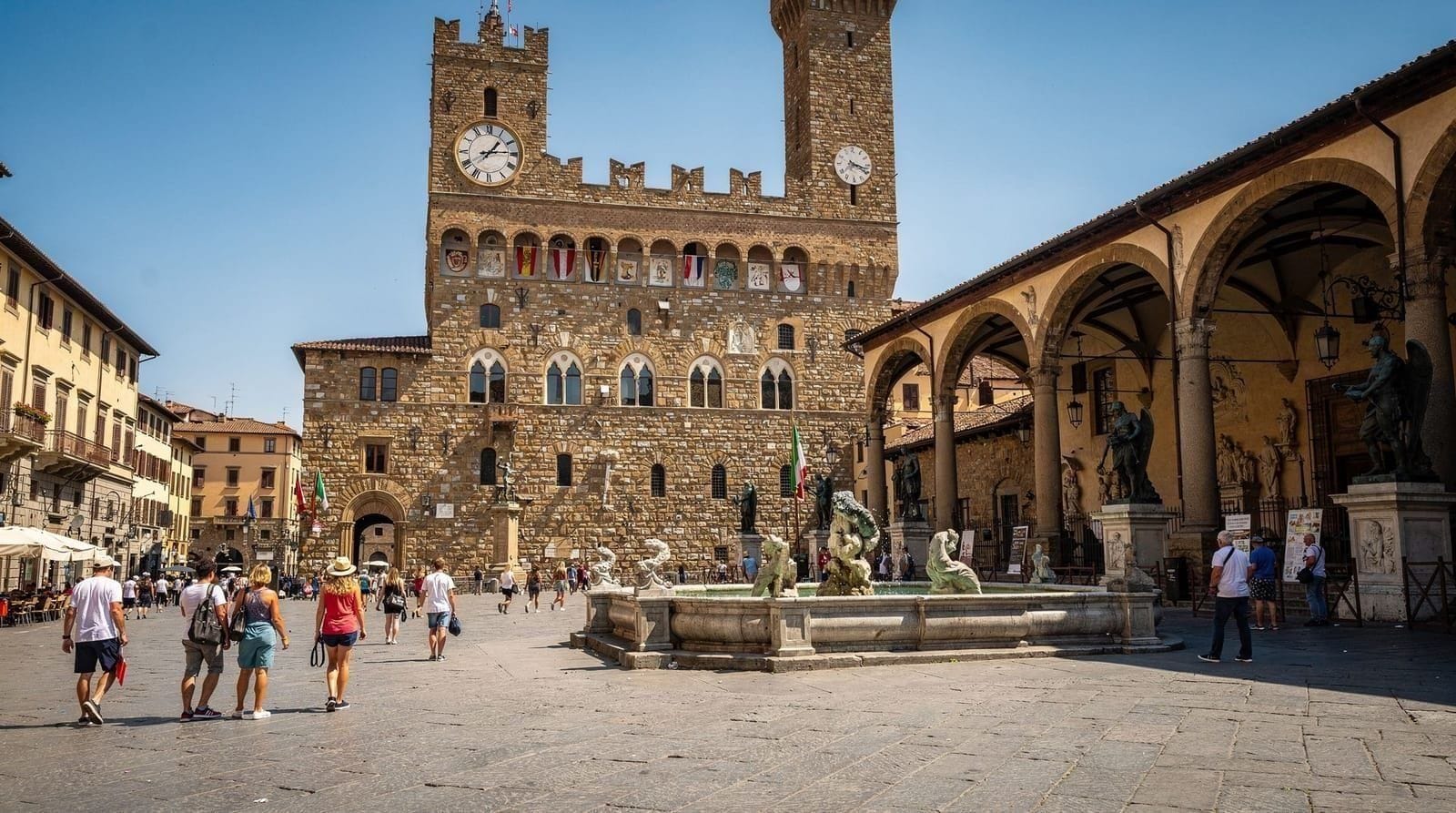
Start at Piazza San Lorenzo, where the outdoor market hides the church where the family is buried. Walk south to Palazzo Medici Riccardi for the Gozzoli frescoes. Continue south to the Duomo — stand at the door and remember the Pazzi Conspiracy. Continue to Piazza della Signoria, where Savonarola (Lorenzo’s nemesis) held his Bonfires of the Vanities and was eventually burned himself. Cross to the Uffizi loggia and then to the river, crossing Ponte Vecchio — whose current shops exist because Cosimo I forced the butchers out in 1565 and replaced them with goldsmiths.
Finish in Oltrarno, at Palazzo Pitti, which the Medici bought from the ruined Pitti family in 1549. Walk up to Boboli Gardens in the late afternoon. The view from the top of the gardens, back over the Duomo toward the hills, is the view the Medici had from their pleasure grounds every day. It remains one of the best views in Europe.
If you only have half a day
Not every visitor wants a full Medici deep-dive. If you have three or four hours, the highest-value route is: Palazzo Medici Riccardi for the Gozzoli frescoes (30–40 minutes), the Medici Chapels for Michelangelo’s New Sacristy (45–60 minutes), and a walk through Piazza della Signoria to see where the David originally stood and where the Pazzi Conspiracy’s aftermath played out. Add the Uffizi Gallery only if you’ve pre-booked — walk-up queues can eat your entire afternoon.
Families with children often get more out of the story-driven version of this history — the Pazzi Conspiracy’s violence at High Mass, the secret room where Michelangelo hid, Catherine de’ Medici introducing the fork to France — than the art-historical version. Framing the walk as a real-life political thriller works well for younger visitors who might otherwise find a “dynasty” tour dry.
If you have a second half-day to spend on the Medici, the Michelangelo in Florence guide goes deeper into the New Sacristy’s sculptures, and the Uffizi Gallery guide covers the Botticelli rooms the family commissioned directly. Travellers with a car or willing to take a short bus ride can extend the story outside the city: the Medici villas at Poggio a Caiano and Fiesole show how the family lived away from the political pressure of central Florence, in a rural, more relaxed register that the city palazzi never allow for.
However much of the story you take in, resist the temptation to treat the Medici as a single monolithic dynasty with one consistent character. The family across three centuries includes a cautious banker, a poet-statesman, two popes with very different political instincts, an assassinated duke, and a scholar-collector who gave everything away for the public good. That variety is part of what makes the story worth telling in the first place.
Medici sites outside the historic centre
Two Medici properties reward a slightly longer trip. The Villa di Poggio a Caiano, about 17 kilometres northwest of Florence, was Lorenzo the Magnificent’s favourite country retreat and shows a different side of Medici patronage — an elegant working villa rather than an urban power statement, with frescoes celebrating the family’s political triumphs in a more relaxed, pastoral setting. The Villa Medici at Fiesole, in the hills just above the city, offered the family sweeping views over Florence and was where Lorenzo gathered his humanist circle away from the noise of the city; it can be combined with a general Fiesole visit for the views alone, even without going inside. Both villas have limited and seasonal opening hours, so check before making the trip specifically for them.
Where the Medici story gets complicated
It’s worth being honest that Medici patronage and Medici politics were never separate. The same family that funded Botticelli and protected the young Michelangelo also crushed republican opposition, exiled rivals, and produced a pope whose dismissal of Martin Luther helped trigger the Reformation. Guided tours sometimes flatten this into a simple story of enlightened patrons; the more accurate picture is a family whose art patronage was inseparable from — and often a direct instrument of — political control. Understanding that tension is part of what makes the Medici story more interesting than a straightforward “great family, great art” narrative.
Frequently asked questions about the Medici
Were the Medici Renaissance artists themselves?
Lorenzo de’ Medici was a genuine poet — his verses are still read and anthologized in Italian literature courses. He also wrote carnival songs and a long pastoral poem, Ambra. Other family members were patrons rather than creators, though Cosimo de’ Medici was reportedly a skilled negotiator who occasionally advised Brunelleschi on architectural decisions. The family’s role was to finance, commission, and sometimes direct art rather than make it.
What happened to the Medici Bank?
It collapsed gradually in the late 15th century, partly because Lorenzo was more interested in culture and politics than banking, and partly because the bank had extended too much credit to the Burgundian rulers of the Netherlands (who defaulted). By Lorenzo’s death in 1492, the bank was a shadow of its former self. The family survived on landed income and political power for the next two and a half centuries.
Can you visit the Medici villas outside Florence?
Yes. The Villa di Poggio a Caiano (about 17 km northwest of Florence) is the best preserved, with extraordinary frescoes commissioned by Lorenzo. The Villa Medici at Fiesole offers superb views over Florence and can be combined with the Fiesole and Medici villas half-day tour. Both require advance planning as they have restricted opening hours.
How many Medici became pope?
Two. Leo X (Giovanni de’ Medici, son of Lorenzo il Magnifico) was elected in 1513 and served until 1521. Clement VII (Giulio de’ Medici, nephew of Lorenzo) served from 1523 to 1534. A third Medici, Leo XI, was elected pope in 1605 but died 27 days later — the shortest papacy of the 17th century — earning the nickname “Papa Lampo” (Lightning Pope).
Is the Medici family still alive?
The legitimate male Medici line ended with Gian Gastone in 1737. However, there are people with the Medici surname today, some of whom claim descent from illegitimate branches of the family. None has any legal claim to Medici properties or titles, which passed to Austria in 1737 and subsequently to the Italian state.
What is the best Medici tour in Florence?
The Medici family private walking tour is the best single introduction, combining the key sites with historical context. For the chapels specifically, a Medici Chapels guided tour with a specialist guide explains the complex iconographic program of Michelangelo’s sculptures. The Medici experience tour combines a walking introduction with the Uffizi, which makes sense if you only have one day.
Top experiences
Bookable activities with verified prices and instant confirmation on GetYourGuide.

Florence: Medici family history tour
- Free cancellation
- Small group
Florence: Medici Chapels guided tour
- Skip the line
- Small group
Florence: the Medici experience tour
- Free cancellation
- Small group
Florence: skip-the-line Medici Chapels and Medici family heritage tour
- Skip the line
- Free cancellation
Florence: Renaissance and Medici walking tour
- Free cancellation
- Small group