Where to stay in Florence: honest area guide for every budget
Florence: walking tour
- Free cancellation
- Instant confirmation
What is the best area to stay in Florence?
It depends on your priorities. Centro Storico puts you steps from everything but is expensive and noisy. Oltrarno is more authentic and quieter, with a local neighbourhood feel, but has fewer major sights immediately at hand. San Lorenzo is central and budget-friendly but scruffier. Santa Croce balances centrality with slightly less tourist saturation. For first-time visitors, Oltrarno or the edge of Centro Storico offers the best overall experience.
Florence is a small city by modern standards — you can walk from Santa Maria Novella station to Santa Croce in 20 minutes, and from the Duomo to Piazzale Michelangelo in 35. Where you stay matters less here than in Rome or London. But it still matters.
The difference between staying in a Centro Storico hotel two minutes from the Uffizi and a quiet Oltrarno side street is the difference between waking up to tour groups and waking up to the smell of a neighbourhood bakery. Both are legitimately good choices; they’re different experiences. This guide explains each area honestly, with real hotels, real prices, and real trade-offs.
| Where | Six areas compared: Centro Storico, Oltrarno, Santa Croce, San Lorenzo, San Niccolo, Piazza Repubblica |
| Price range | €60–500+/night depending on neighbourhood and star rating |
| Booking window | 3–6 months ahead for April–May and September–October |
| Best for first-timers | Oltrarno or the quieter edge of Centro Storico |
| Avoid if budget-conscious | Piazza della Repubblica area (premium for central squares) |
For the neighbourhood-by-neighbourhood shortlist of the best individual streets and micro-areas, see best areas to stay in Florence; this guide focuses on the trade-offs between them.
Florence neighborhood comparison
| Neighborhood | Vibe | Price range/night | Best for |
|---|---|---|---|
| Centro Storico | Tourist-heavy, central, convenient | €150–400+ | First-timers, sightseers |
| Oltrarno | Authentic, local, quieter | €100–280 | Repeat visitors, atmosphere-seekers |
| Santa Croce | Balanced, slightly less crowded | €100–250 | Mid-range travellers |
| San Lorenzo | Budget, gritty, near station | €60–150 | Budget travellers |
| San Niccolo | Quiet, residential, Oltrarno hillside | €90–200 | Peaceful stays, hikers |
| Piazza della Repubblica area | Central, walkable everywhere | €130–350 | Convenience-focused |
Centro Storico: the case for and against
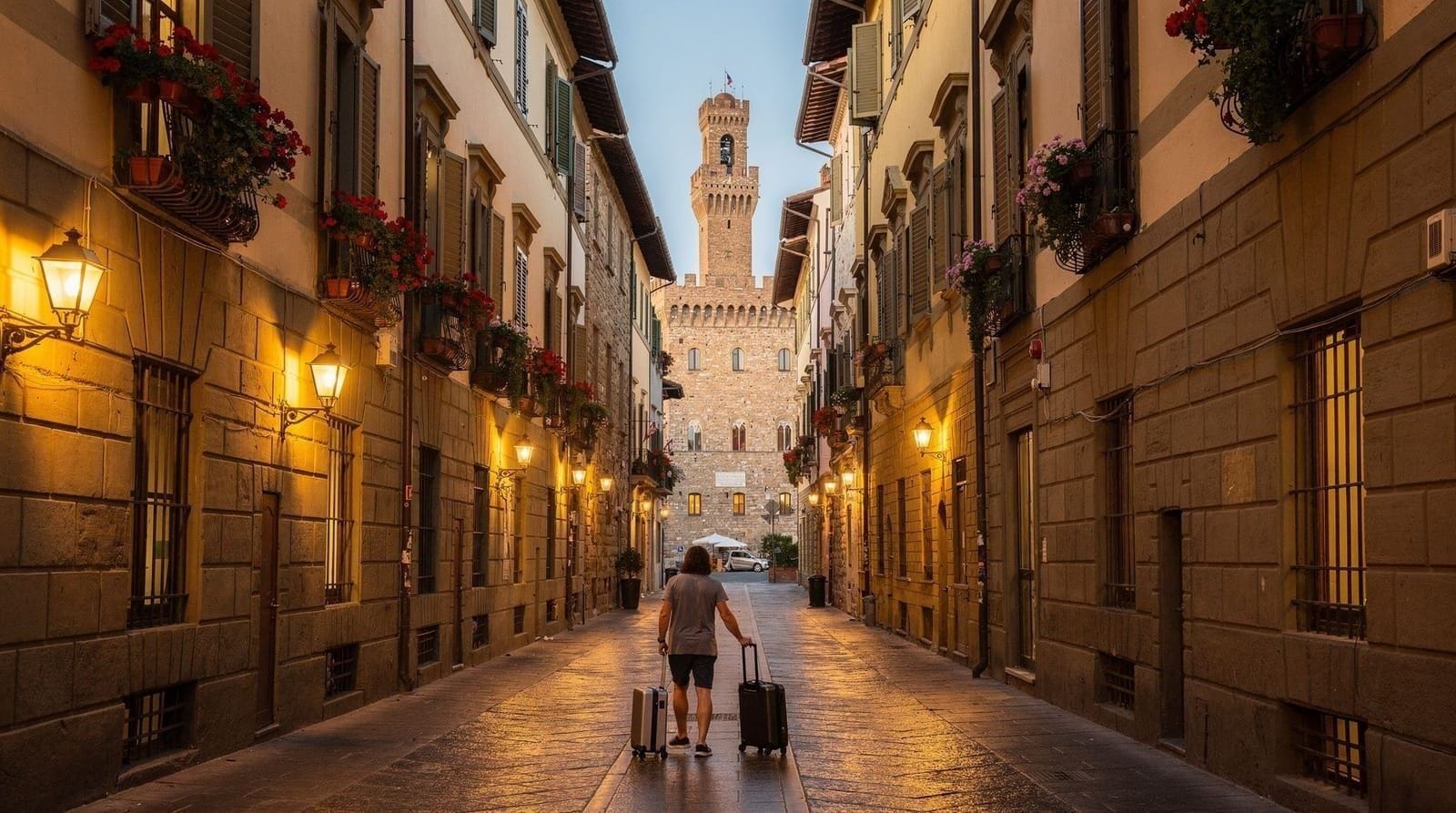
The historic centre — roughly the area between the Duomo, Piazza della Signoria, and the Arno — is where most of the major sights are concentrated. Staying here means walking out your door and being 60 seconds from streets that Dante walked.
The case for: Maximum proximity to the Uffizi, Accademia, Duomo, and Ponte Vecchio. No need for taxis or transport to major sights. Best selection of historic palazzo hotels. Atmospheric streets in the early morning and evening when day-trippers leave.
The case against: Noisy. The tour group traffic on Via dei Calzaiuoli and around the Duomo is relentless from 9 am to 7 pm. Restaurant quality around major sights is often poor for the price; see best restaurants Florence for where locals actually eat. Hotels command premium prices for the location.
Hotels worth knowing:
Helvetia & Bristol (Via dei Pescioni 2) — a grand old hotel with genuine character, 5-star service, rooms from €300–500. The winter garden bar is one of the more pleasant indoor spaces in Florence.
Hotel Davanzati (Via Porta Rossa 5) — well-located, family-run 3-star hotel with a loyal repeat clientele. Rooms are not large but well-maintained; prices around €150–220. Honest value for the location.
Hotel Perseo (Via dei Cerretani 1) — budget-friendly but clean, near Santa Maria Novella station. Good for visitors who prioritise location and accept smaller rooms; from €80–120.
AdAstra (Via dei Conti 7, near San Lorenzo) — boutique guesthouse in a medieval building, 8 rooms, genuinely thoughtful design; €150–230. The kind of place that guests return to.
Oltrarno: the best neighbourhood for most visitors
The Oltrarno — literally “beyond the Arno” — is the area south of the river, centred on Piazza Santo Spirito and extending to Palazzo Pitti and the Boboli Gardens. This is where many Florentines who can afford to live in the historic centre actually choose to live.
The streets here are quieter, the restaurants are better for the price, and the pace is different. The Oltrarno has its own identity — artisan workshops, small wine bars, family-run trattorias, neighbourhood bakeries. It is becoming more expensive and more touristic as visitors discover it, but it retains a local character that the Centro Storico has largely lost.
The case for: More authentic Florentine atmosphere. Better value restaurants. Quieter streets. Close to Palazzo Pitti, Boboli Gardens, and Piazzale Michelangelo. The Brancacci Chapel (Masaccio’s frescoes, among the greatest in existence) is here. Easy walk to Centro Storico via Ponte Vecchio or Ponte Santa Trinita.
The case against: Slightly further from the major north-bank attractions (Uffizi, Accademia, Duomo) — 10–15 minutes’ walk, which is not a serious problem. Fewer large hotels; accommodation is mostly boutique and guesthouse scale. Piazza Santo Spirito can be noisy on summer evenings.
Full guide: Oltrarno neighborhood guide.
Hotels worth knowing:
Soprarno Suites (Via Maggio 35) — six suites in a beautifully restored palazzo, each individually designed. Via Maggio is one of the nicest streets in Oltrarno; prices €180–280. Excellent for couples.
Hotel Lungarno (Borgo San Jacopo 14) — the Ferragamo family’s Oltrarno hotel, on the Arno with views of Ponte Vecchio. Genuinely elegant; rooms from €250–500. The attached restaurant is excellent.
Casa Santo Nome di Gesù (Piazza del Carmine 21) — a convent turned hotel, quiet and atmospheric, with an extraordinary cloister garden. Not luxurious but peaceful and well-priced; €100–170.
Oltrarno Splendid (Lungarno Guicciardini 9) — Arno-view rooms in a comfortable mid-range hotel; one of the best balcony-over-the-river options in Florence without the luxury hotel price tag; €140–240.
Santa Croce: the balanced choice
The area around the Basilica di Santa Croce — Florence’s Franciscan basilica, where Michelangelo and Galileo are buried — occupies a quieter part of the historic centre, slightly east of the main tourist axis. It’s a 10-minute walk from the Uffizi and 5 minutes from the Bargello.
The neighbourhood is livelier in the evenings than the immediate Duomo area, with a concentration of bars and restaurants around Piazza Santa Croce and the streets toward the Arno. Sant’Ambrogio market, a few blocks north, is one of Florence’s most authentic food markets. The Sant’Ambrogio market food tour is one of the better food experiences in the city.
Hotels worth knowing:
Hotel Balestri (Piazza Mentana 7) — Arno-view mid-range hotel near Santa Croce; reliable, family-friendly, good location; rooms €130–210.
Hotel Monna Lisa (Borgo Pinti 27) — a 15th-century palazzo with a garden, genuinely romantic, family-run for over a century. Rooms are large and atmospheric; €160–280.
Hotel Perseo — see Centro Storico above; also convenient for Santa Croce.
San Lorenzo: budget-friendly but know what you’re getting
San Lorenzo is the neighbourhood immediately north of the Duomo, centred on the Basilica di San Lorenzo and the surrounding outdoor market. This is where you’ll find the cheapest accommodation in the historic centre — and some of the most tourist-saturated street market commerce in Florence.
The outdoor San Lorenzo market sells leather goods, souvenirs, and clothing of variable provenance; see Florentine leather tradition for honest buying advice. The Mercato Centrale indoor market (rebuilt as a food hall) is worth visiting for lunch but has become expensive.
The case for: Cheapest accommodation close to the major sights. Near Santa Maria Novella station. San Lorenzo basilica and Medici Chapels are here.
The case against: Noisy. The street market extends through multiple blocks and operates loudly. Not the most pleasant part of Florence for walking and lingering. Evening restaurant options are mediocre for the price.
Full guide: San Lorenzo neighborhood guide.
San Niccolo: the quiet Oltrarno hillside
San Niccolo is the eastern part of Oltrarno, running along the hillside between the Arno and the Florentine city walls. The neighbourhood is younger and more residential than the area around Santo Spirito, with small wine bars, artisan workshops, and a distinctly local character.
The street of Via San Miniato and the hillside paths above it lead up to Piazzale Michelangelo and the Basilica of San Miniato al Monte — this is one of the best walking routes in the city. The neighbourhood is well-suited to visitors who want easy access to the sunset viewpoints and a quieter base.
Full guide: San Niccolo guide.
Hotels worth knowing:
Hotel Silla (Via dei Renai 5) — a traditional 3-star hotel in a palazzo, with a pleasant courtyard; the nicest hotel in the San Niccolo area; €110–180.
San Marco: quiet and museum-focused
The San Marco area, north of the Duomo around Piazza San Marco and the Accademia Gallery, is a smaller and quieter option than it might sound given its central location. It’s mostly residential and academic — the University of Florence has several departments nearby — with a calmer, less commercial atmosphere than the streets immediately around the Duomo.
The case for: Genuinely close to the Accademia (for Michelangelo’s David) and the San Marco Museum (Fra Angelico’s frescoes). Quieter than Centro Storico proper. Good mid-range hotel supply.
The case against: Fewer restaurants and shops of note. Feels slightly disconnected from the river and the more atmospheric parts of the old city; a 15–20 minute walk to Ponte Vecchio.
Santa Maria Novella: the station area
The blocks immediately around Santa Maria Novella station are convenient but not Florence’s most charming corner. This is a practical rather than atmospheric choice, and it’s honest to say so.
The case for: Unbeatable for arrivals and departures — the airport tram (T2) and all regional and high-speed trains terminate here. Generally the most budget-friendly hotel supply in the historic centre.
The case against: Less charming streetscape, more transient foot traffic, and a noticeably different feel after dark than the Duomo or Oltrarno areas. Best treated as a base for convenience rather than atmosphere; see Florence train stations for what to expect on arrival.
Practical booking advice
Book early for peak season: April, May, September, and October are Florence’s busiest months. Popular properties in the €150–300 range sell out 3–6 months ahead for these dates. January–March and November offer significantly lower prices and availability.
Avoid the August trap: August is hot (30–35°C), crowded, and many Florentines leave. Some restaurants and shops close for part of August. It is not the worst time to visit — museums are open and major sights are accessible — but it is not the pleasant experience that spring or autumn offers.
Location relative to museums: The Uffizi and Accademia are in the Centro Storico; the Brancacci Chapel is in Oltrarno. If you plan to spend your main museum days at the Uffizi and Accademia, staying on the north bank saves 15 minutes each way. If the Brancacci Chapel and Boboli Gardens are priorities, Oltrarno is more convenient.
Noise considerations: Ask specifically about room location when booking. “City view” in Italian hotels sometimes means “street level, facing the early-morning delivery trucks.” Courtyards and inner rooms are consistently quieter. The Lungarno (river-facing) streets sound romantic but can be noisy from traffic.
Frequently asked questions about where to stay in Florence
Is Florence safe to walk at night?
The historic centre is among the safer city centres in Europe. The main concerns are ordinary urban ones: bag-snatching (rare but not unknown), occasional pickpocketing in crowded areas (Duomo, train station), and car traffic in the non-ZTL streets. Walking back from a restaurant at 11 pm through the Santa Croce or Oltrarno area is completely normal and generally comfortable.
What is the best Florence hotel for views?
The Arno-facing rooms at Hotel Lungarno (Oltrarno) and several hotels on the Lungarno della Zecca Vecchia have excellent river views. For Duomo views, Hotel Brunelleschi (Piazza Santa Elisabetta) has rooms directly facing the cathedral. For panoramic city views, hotels on the Oltrarno hillside above Piazzale Michelangelo can be extraordinary, though they require a taxi or a good walk to reach the main sights.
Are there apartments available for a week’s stay?
Yes. For stays of a week or more, a serviced apartment can be significantly more economical than a hotel, particularly for families. Check for properties with proper tourist licensing (the owner should be able to provide a registration number). Via Maggio and Piazza Santo Spirito in Oltrarno, and the Santa Croce area, tend to have the most characterful apartment properties.
How far in advance should I book?
For peak dates (April–May, September–October), 3–6 months ahead for good properties. For winter visits (November–March, excluding Christmas), 4–8 weeks is usually sufficient. The Maggio festival period (late April–late June) fills up particularly quickly for quality mid-range properties.
Which area is best for a first-time visitor with only 3 days?
Oltrarno or the quieter edge of Centro Storico near San Marco. Three days is tight enough that walking distance to the Uffizi, Accademia and Duomo genuinely matters, but Oltrarno’s 10–15 minute walk to those sights is a small trade-off against a noticeably better evening atmosphere and food scene. See how many days in Florence for how the length of your stay should shape this decision.
Is it worth paying more for a river view?
Only if it matters to you personally — a Lungarno-facing room is a genuine pleasure but adds a significant premium and, on the busier river roads, some traffic noise. For most visitors, the money is better spent on location within a quieter neighbourhood (an inner courtyard room in Oltrarno, for example) than on a view alone.
What to pack and plan: practical Florence logistics
Shoes: This deserves its own mention. Florence is a city you walk — its historic centre is about 2.5 km east–west and 1.5 km north–south, and the best way to navigate it is on foot. The streets are almost all stone or cobblestone: beautiful, historic, and hard on shoes not designed for it. Comfortable leather shoes or well-cushioned walking shoes are not optional if you plan to cover any distance. Sandals with inadequate support are a common mistake with painful consequences.
Clothing: Florence is a Catholic city with many churches. Entry to churches requires covered shoulders and knees. A lightweight scarf or jacket in your bag solves this for women; long trousers solve it for men. Many churches will provide paper coverings at the door, but this adds unnecessary delay.
Water: Drinking water is available free from Florence’s many public fountains (le fontanelle). The tap water from the nasoni street fountains is safe and cold; carry a refillable bottle rather than buying plastic bottles, which are expensive and environmentally costly.
Card vs cash: Most restaurants and shops in Florence now accept credit and debit cards, but some smaller trattorias and market stalls still prefer cash. Keep €20–40 in small bills for market purchases and neighbourhood bars. ATMs (bancomat) are common throughout the city; avoid the private ATMs in tourist-concentrated areas, which charge unfavourable exchange rates.
Museum timing: The Uffizi and Accademia both sell out for particular time slots during peak season; confirm your booking and keep the confirmation on your phone. Arrive 10–15 minutes early; security queues exist even with pre-booked tickets. See booking Florence attractions online for the complete guide to tickets.
Food timing: Florentine restaurants serve lunch from approximately 12:30–2:30 pm and dinner from 7:30–10:30 pm. Arriving at 12:00 or 7:00 will get you a table at a place that opens early for tourists; arriving at 1:00 or 8:00 pm will get you into genuinely local timing. The mid-afternoon period (2:30–7:30 pm) is very hard to find a meal in Florence; plan ahead or rely on bars that serve panini.
Gelato: The best gelato in Florence has muted, natural colours and is stored in covered metal containers, not piled high in bright mounds. The brightly coloured mounds — fluorescent green for pistachio, vivid pink for strawberry — indicate artificial colouring and often inferior ingredients. The extra cost at artisan gelato shops (Gelateria dei Neri, Gelateria Sbrino, Edoardo) is worth it. See best gelato Florence for recommendations.
Top experiences
Bookable activities with verified prices and instant confirmation on GetYourGuide.