What a Cinque Terre day trip from Florence is really like
Every travel blog will tell you the Cinque Terre day trip from Florence is “doable in a day.” They’re not wrong — technically. But after doing it myself and watching dozens of bleary-eyed tourists shuffle back onto the 6:15pm train looking like they’d survived something, I feel a responsibility to give you the real picture.
| Where | La Spezia, ~2hrs from Florence by fast train |
| Cost | Around €80–110 total (train, Cinque Terre Card, lunch) |
| Time needed | A full day, 7am–9pm realistically |
| Villages you’ll see | Realistically 3 of the 5 in one day |
| Best time | May, June or September |
The journey itself: longer than you think
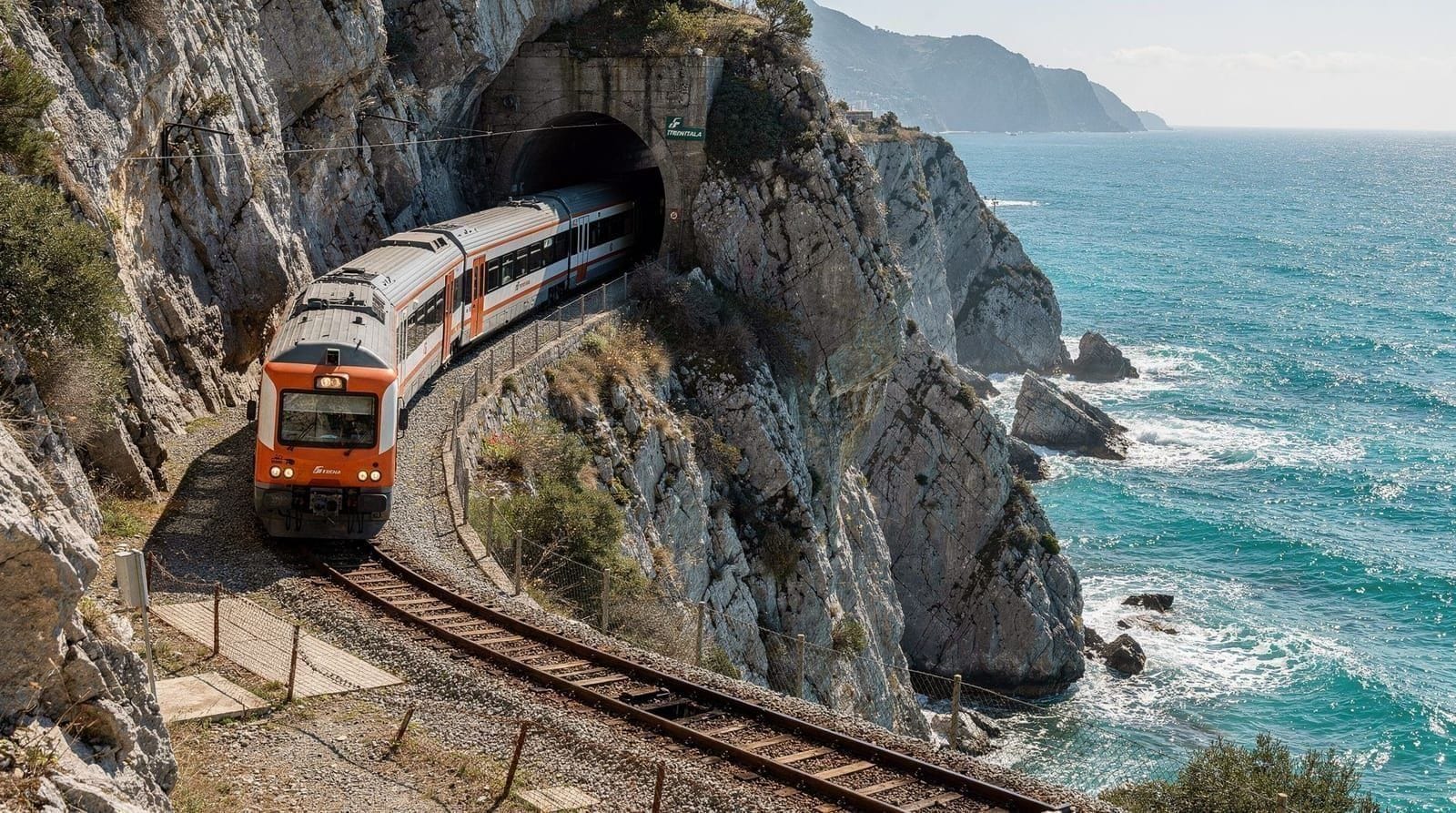
Let’s start with the maths. Florence Santa Maria Novella to La Spezia Centrale takes around 2 hours by fast Intercity or Frecciarossa train. From La Spezia, a regional train hops you along to Riomaggiore in about 12 minutes, or you can take the village-to-village trains across all five. That’s roughly 2 hours 20 minutes on a good day, door to the first coloured house.
Do that twice and you’ve used almost five hours just in transit. Add navigating the chaotic regional Cinque Terre Express train — the one where everyone on the platform is trying to squeeze aboard the same three-car train — and you’re easily looking at 5.5 to 6 hours of travel.
I left Santa Maria Novella at 7:42am. I was back in my Florence apartment by 9:15pm. In between, I had roughly 8 hours on the ground, split across three villages.
What you actually get in one day
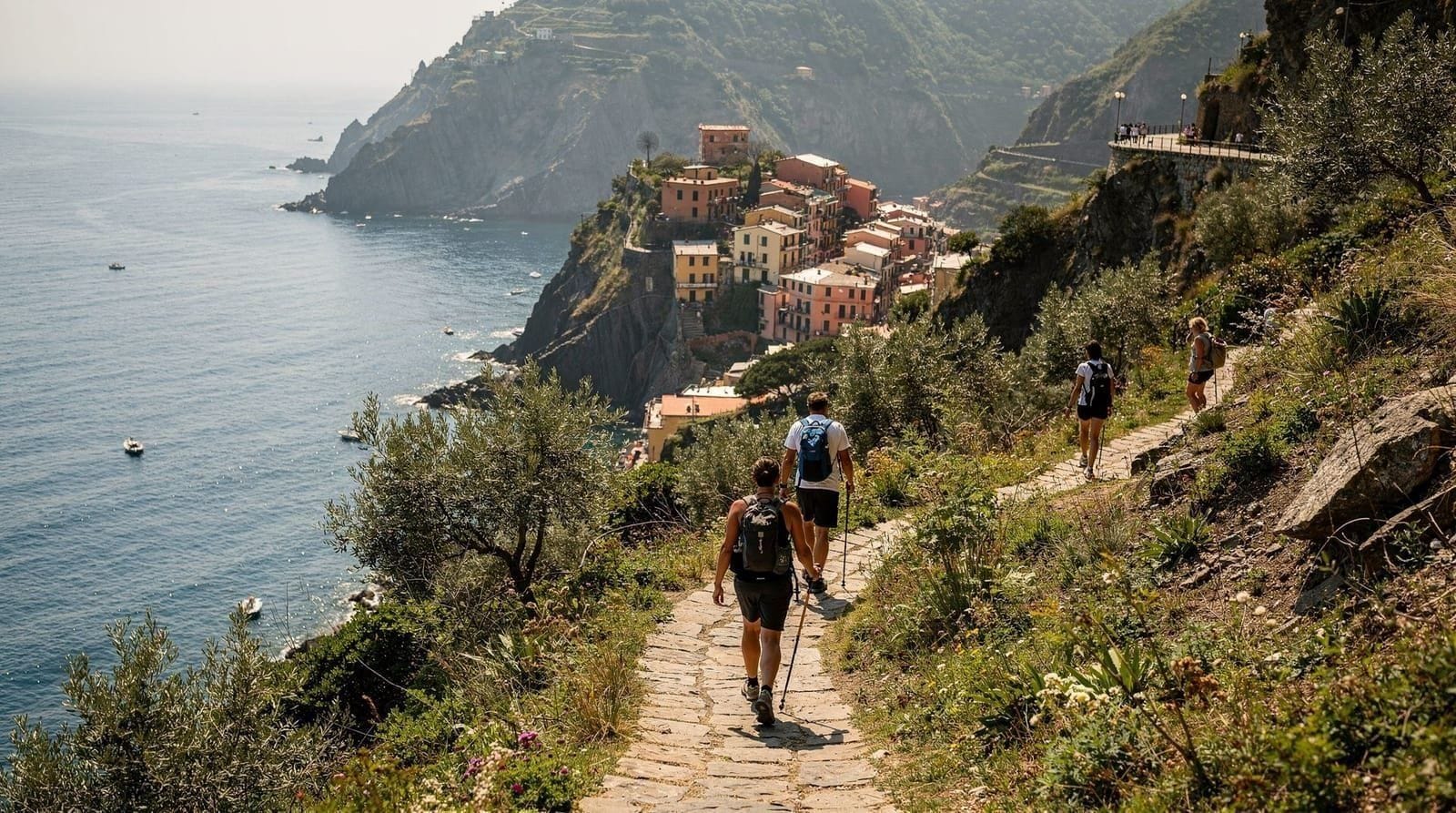
Here is what I managed: a proper lunch in Manarola — linguine alle vongole at Trattoria dal Billy, around €18 for the pasta — followed by a swim at the rocky beach below the village. Then a walk to Corniglia on the famous Sentiero Azzurro path, which took 1 hour 20 minutes uphill in September heat. Then a train to Vernazza for an aperitivo and photos of the famous harbour.
I did not make it to Monterosso, the largest village with the actual sandy beach, which is the one many people most want to see. I did not hike the full five-village trail (that’s roughly 12 kilometres with significant elevation). I did not linger anywhere without feeling the pull of a timetable.
What I got was a beautiful, exhausting, genuinely worthwhile day. But I had to let go of the fantasy of “seeing all five villages.”
The honest crowds problem
The Cinque Terre Vernazza harbour photo — the one on every travel poster, with the pastel houses tumbling down to the turquoise water — exists. It’s real. It’s beautiful. It is also surrounded by roughly 400 people at any given moment between 11am and 4pm in high season.
The villages are tiny. Riomaggiore’s main street is maybe 300 metres long. Pour 3,000 day-trippers through it and the charm curdles into something resembling a theme park. My advice: if you go, leave Florence on the first train (there’s one around 7:15am) and be at your first village before 10am. The late-morning light on the boats in Riomaggiore harbour, with almost nobody else there, is genuinely one of the most beautiful things I’ve seen in Italy.
Guided tours versus going solo
I went solo and would do it again — but I knew the trains, had a Cinque Terre Card (€18.50 for unlimited train travel within the villages plus trail access), and speak enough Italian to navigate. If you’re not confident with Italian rail chaos, a guided day trip from Florence removes the stress of connections and gives you an expert local voice.
The key thing to check with any tour: how many hours do you actually spend in the villages versus on a bus or train? Some tours with optional Pisa stops mean you only get 4 hours at the coast. A dedicated Cinque Terre-focused tour from Florence typically gives you 6-7 hours on the ground, which is the minimum for a satisfying day. Our guide to getting to Cinque Terre breaks down the train connections in more detail if you’re going solo, and if you’re still deciding whether the trip is worth the effort at all, is a Cinque Terre day trip worth it? weighs it against the alternatives.
Should you stay overnight instead?
If you can, yes. One night changes everything. You’re there for sunset when the light hits the harbour walls at Vernazza and turns everything golden. You can walk the early-morning trail before the crowds arrive. You can eat properly at a table by the water and order the second carafe of local Sciacchetrà wine without watching a clock.
Hotels in the Cinque Terre fill months in advance for May through September. Expect to pay €150-220 for a double room in a decent hotel, more for anything with a view. The village of Corniglia is the quietest and cheapest; Vernazza has the best atmosphere. If you’re weighing this against other overnight side trips from your Florence base, the staying in Tuscany vs day trips guide covers the general trade-off between basing yourself in Florence and splitting your stay.
How this compares to Florence’s other big day trips
Cinque Terre is the longest and most demanding day trip commonly done from Florence — roughly double the round-trip travel time of Pisa or Siena. If you’re choosing between options rather than set on the coast specifically, it’s worth being honest about that trade-off: Siena and San Gimignano both give you 8-9 hours on the ground for around 3 hours less total travel, and pair well together in a single day. Cinque Terre wins on scenery and swimming; Tuscan hill towns win on ease and depth of time actually spent sightseeing rather than sitting on a train.
The five villages: a quick briefing
If you’re doing this day trip, you need to know what you’re choosing between. Most guided tours hit two or three villages; solo visitors can reach four if they start early and move efficiently.
Riomaggiore: The southernmost village, usually the first stop arriving from La Spezia. Steep and narrow, with a small marina where fishing boats are hauled up the ramp. The main street (Via Colombo) runs uphill from the marina and has the highest concentration of restaurants and shops in the Cinque Terre.
Manarola: Twenty minutes west by train from Riomaggiore. The village that photographs best — the view from the path above town, with the multicoloured houses stacked above the rocky inlet, is the image on every poster. The Nessun Dorma bar perched above the village has views worth a glass of wine.
Corniglia: The only one of the five not directly on the sea — it sits on a promontory 100 metres above the water, reachable by a staircase of 382 steps from the train station or by shuttle. The quietest of the five as a result. No beach, but the views from the belvedere are extraordinary.
Vernazza: The most photogenic harbour, with a natural cove, a medieval watchtower, and the castle remains at the headland. The piazza in front of the harbour fills with people in the afternoon. This is the one most visitors say they wish they’d had more time in.
Monterosso al Mare: The largest village, with a proper sand beach, a vibrant promenade, and the most developed infrastructure. The old town (medieval, with the characteristic striped campanile) is connected to the newer beach area by a tunnel. Most people who want to swim come here.
What the food and wine situation is
The local wine is Cinque Terre DOC — a dry white made from Bosco, Albarola, and Vermentino grapes grown on the steep terraced vineyards that make the landscape so dramatic. It’s light, slightly mineral, and pairs with the seafood in a way that feels inevitable. A glass at any trattoria costs €5-8; a bottle to take away €10-15 from wine shops in the villages.
The rarer local wine is Sciacchetrà — a passito (dried grape) dessert wine, amber-coloured, intensely sweet, made in tiny quantities from grapes dried on racks before pressing. A small glass costs €10-20 and is worth ordering at least once.
The seafood on menus is almost entirely correct — anchovies (alici) are the Cinque Terre speciality, served marinated or fried. The pasta alle vongole (clams) is reliable everywhere. Trofie al pesto is the Ligurian pasta shape you’ll see on every menu — short twisted strands served with the basil pesto that the Ligurian coast does better than anywhere in the world.
The bottom line
The Cinque Terre day trip from Florence is worth doing if it’s the only opportunity you have. The journey is long but manageable, the scenery is jaw-dropping even through the crowds, and one very good lunch by the sea will make it feel worthwhile.
But go in with calibrated expectations. You won’t see all five villages properly. You’ll be tired. You’ll spend more than you planned — the Cinque Terre is not cheap, with most restaurants charging a tourist premium and the Cinque Terre Card adding to costs.
And if you have any flexibility, add a night. Even just one. Your future self, sitting with an Aperol Spritz watching the sun go down over the Vernazza harbour, will thank you.
The Sentiero Azzurro (Blue Trail): what it actually involves
The trail connecting all five villages is approximately 12 kilometres in total, with significant elevation changes between each village. It is not a flat coastal walk. The section between Riomaggiore and Manarola (the Via dell’Amore, the “Lovers’ Lane”) is the flattest and most famous — it was carved from the cliff face in the 1920s and offers dramatic views of the sea — but it has been partially closed for years due to landslide damage and is only intermittently accessible. Check current status before planning your itinerary around it.
The hardest sections of the trail are the ascents and descents around Corniglia. The village sits on a promontory, and both the approaches from Manarola and toward Vernazza involve significant climbing. In summer heat, these sections are genuinely tiring.
The full five-village traverse in a single day is possible for fit walkers who start early and don’t dawdle, but it takes 5-6 hours of actual walking plus time in the villages. This leaves no time for lunch, swimming, or the aperitivo in Vernazza that makes the day feel earned rather than survived. Most people who attempt the full traverse end up exhausted and unable to properly appreciate anything they see.
The better approach: pick two adjacent villages for the walking section, do it in the cool of the morning, and spend the warm afternoon hours at a table or in the water rather than on a rocky path in the sun.
The hidden coves and swimming
Between the villages, accessible by boat from the harbours or via steep paths from the trails, are a series of small coves that offer swimming away from the village beaches. These are never uncrowded in summer — word travels — but they’re significantly quieter than Monterosso’s main beach.
The boat service running between the villages (operated by Navigazione Golfo dei Poeti, roughly €8-15 per leg depending on distance) is slower than the train but offers a completely different perspective of the villages from the water. If you’re there in high season and train platforms are crowded, the boat is also a more relaxed way to move between Monterosso, Vernazza, and Manarola.
It doesn’t run to Corniglia (the village has no harbour), and it’s weather-dependent — rough seas cancel the service without much notice, which is worth knowing if your plan depends on it for the return leg. In practice, treat the boat as a bonus experience for one leg of the day rather than your primary transport plan — build your itinerary around the train, and use the boat opportunistically if the weather and timing line up on the day.
Practical details for 2025
Train: Book Trenitalia or Italo in advance, especially in summer. Frecciarossa trains book up. The regional Cinque Terre Express from La Spezia doesn’t take reservations — just queue early.
Best months: May, June, and September. July-August is the peak of both heat and crowds. October is quieter and the light is beautiful, but some paths may be closed after autumn rains.
What to wear: Proper walking shoes. The paths are uneven stone steps. Flip-flops are genuinely dangerous on the Sentiero Azzurro.
Trail status: Always check current conditions before your visit — sections close regularly after heavy rain or in winter. The Parco Nazionale delle Cinque Terre website publishes current trail status.
Budget: Train from Florence return €30-45 depending on timing. Cinque Terre Card €18.50. Lunch €20-30. Total day budget: €80-110 including transport.
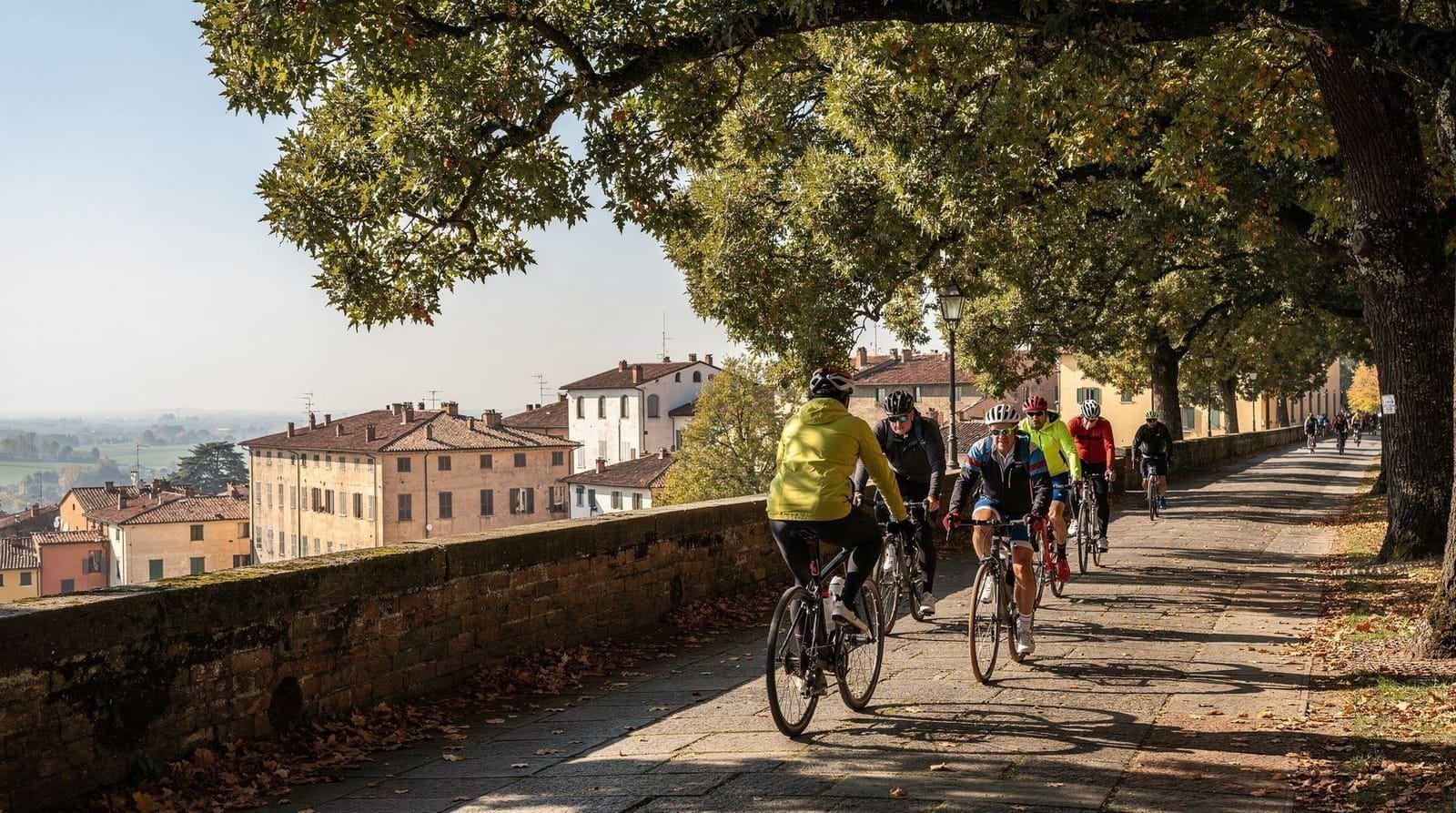
For more day-trip planning from Florence, see the Florence day trips guide and the Lucca cycling day trip article if you want a less exhausting alternative that’s still genuinely beautiful. For background on the Cinque Terre as a destination in its own right, see our destination overview.
Top experiences
Bookable activities with verified prices and instant confirmation on GetYourGuide.