Best photo spots in Florence — the photographer's guide
What is the best photo spot in Florence?
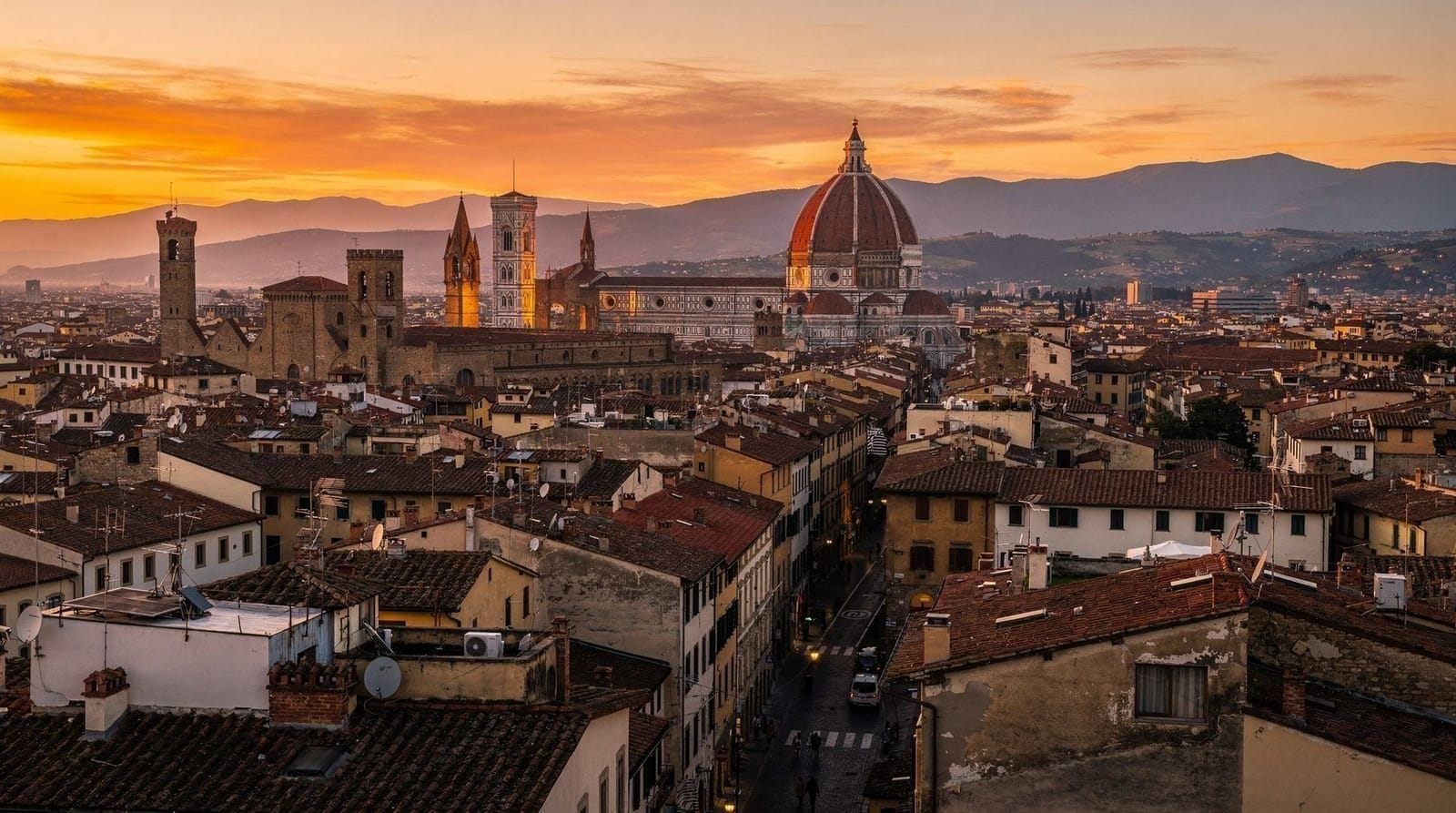
Piazzale Michelangelo offers the iconic panoramic view over the city with the Duomo dome and Palazzo Vecchio tower. For a less crowded alternative, the Bardini Garden rose terrace gives a similar angle. Both are best at sunrise (05:30–06:30 in summer) or golden hour (1h before sunset).
Why Florence is a photographer’s city
Florence is arguably the most photogenic city in Italy per square kilometre. The concentration of Renaissance architecture, the compact historic centre, the Arno river cutting through the middle, and the surrounding hills all create an extraordinary visual environment.
The challenge is not finding photo spots — it is finding them before 300 other tourists do.
This guide gives you the locations, the best times, the specific angles and the insider knowledge to photograph Florence at its most stunning.
| Where | Piazzale Michelangelo, Bardini Garden, the Arno bridges, Oltrarno streets |
| Best time | Sunrise or golden hour, avoid midday July–August |
| Cost | Free at most spots; €10–15 for Campanile/Dome access |
| Gear | 24–70mm covers most situations; tripod fine at open viewpoints |
| Booking | None needed for viewpoints; timed tickets for Dome/Campanile |
The iconic panoramic viewpoints
1. Piazzale Michelangelo
The spot: a large piazza on a hill in the Oltrarno, with a bronze copy of Michelangelo’s David and a terrace overlooking the entire city.
Why it works: from here you see the complete Florence skyline — Brunelleschi’s dome, Giotto’s Campanile, Palazzo Vecchio tower, the terracotta rooftops, and the hills of Fiesole in the background. It is the definitive Florence photograph.
Best times:
- Sunrise (05:30–07:00 in summer, 07:00–08:30 in winter): almost no tourists. The soft pink light catches the dome perfectly. Take bus 12 from SMN station or walk up via Via San Miniato al Monte (20 min, signed).
- Golden hour (1 hour before sunset): the most popular time. Arrive 30–45 minutes early in summer to get a good position at the railing.
- Blue hour: 20–30 minutes after sunset the city lights come on, the sky turns deep blue and the illuminated dome is extraordinary.
Practical tips:
- Use a 24–35mm lens for the full panoramic sweep
- Use a 70–100mm to isolate the dome with the surrounding rooftops
- The southwest corner of the piazza (left when facing the city) is often less crowded and gives a slightly different angle with Ponte Vecchio visible
- A tripod fits comfortably here — no restrictions in this open piazza
Avoid: midday in July–August. The piazza is full of tour coaches, the light is flat and overhead, and the heat makes shooting unpleasant.
2. Bardini Garden terrace
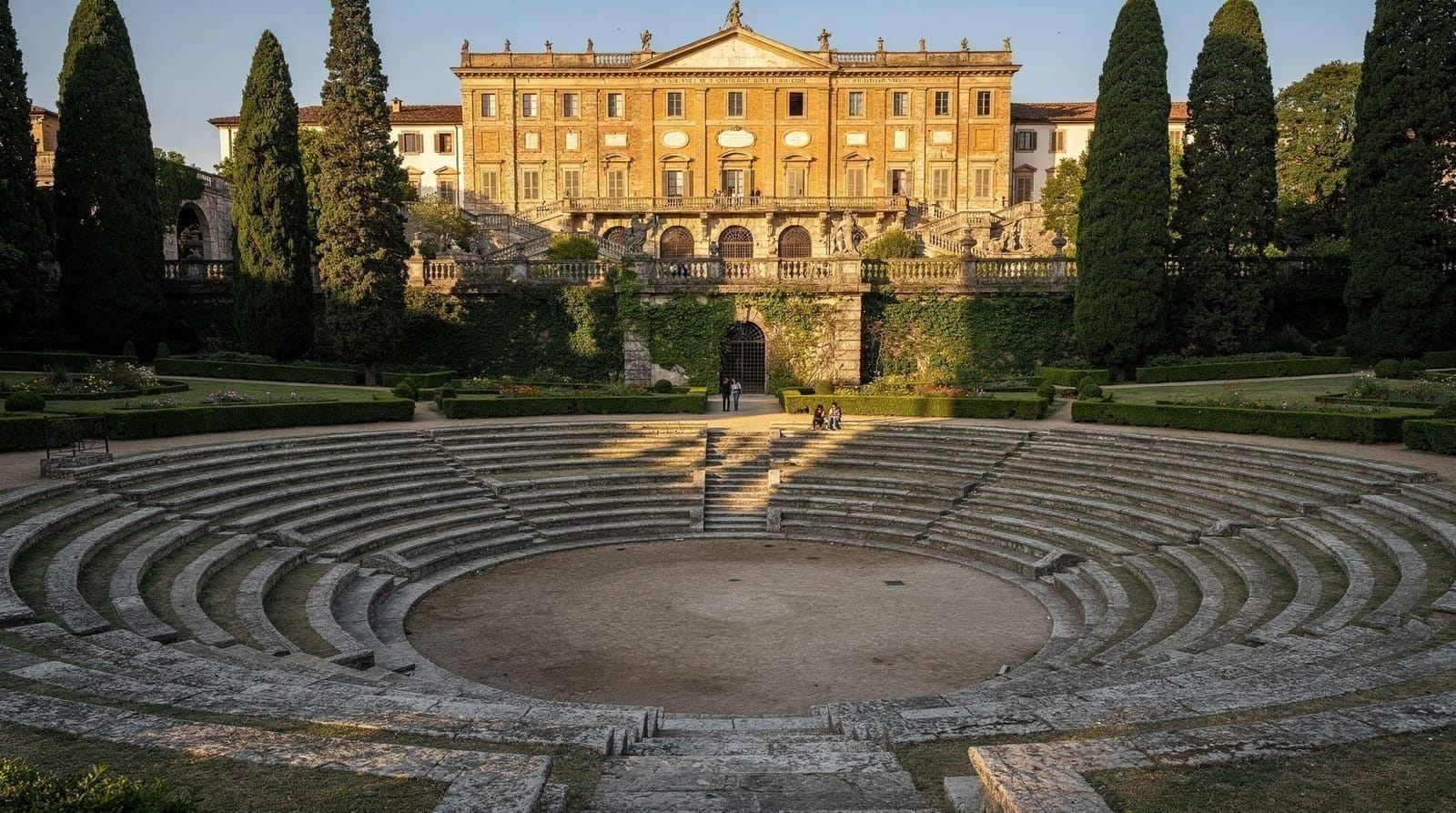
The spot: a historic private garden (now public) on the Oltrarno hill, with a formal rose terrace that gives a slightly different angle than Piazzale Michelangelo — less crowded and with the garden in the foreground.
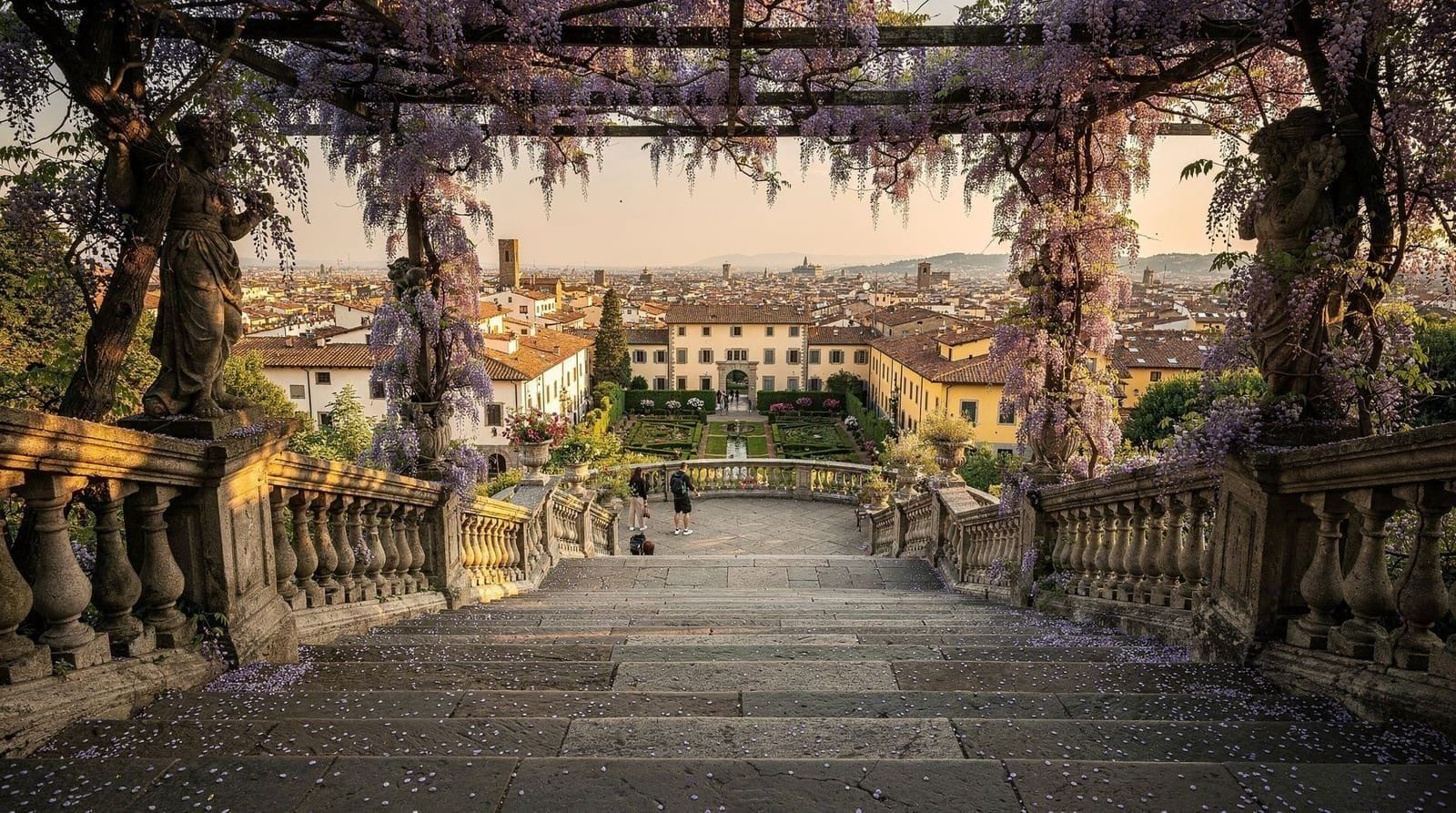
Why it works: the rose pergola in the upper garden creates a beautiful framing element with the city and dome behind. In May when the wisteria and roses bloom, this is one of the most beautiful photographs in all of Florence.
Best times:
- Spring (late April–May): wisteria blooms in the pergola arbour above the balustrade. This is the must-shoot period.
- Golden hour any season: the terrace catches the same light as Piazzale Michelangelo but without the crowds.
- Morning: the garden opens at 10:00 and is much quieter than the afternoon.
Entry: €10 (combined ticket with Boboli Gardens available). The rose terrace is in the upper section — take the ramp from the main garden entrance.
Lens: 24–50mm for the terrace framing. 100–200mm to compress the dome against the terrace.
Access: see our Bardini Gardens guide for full visiting information.
3. San Miniato al Monte
The spot: the Romanesque church above Piazzale Michelangelo, with an even higher vantage point and far fewer visitors.
Why it works: the view from the churchyard is broader than Piazzale Michelangelo, slightly higher and — crucially — you have the church facade itself as a compositional element in some angles.
Best times: sunset, when the church is illuminated and the Benedictine monks sing Vespers inside (open to the public, approximately 18:00 in summer).
How to get there: continue up the road above Piazzale Michelangelo on foot (10 additional minutes) or take bus 12/13 to the San Miniato stop.
For the fuller picture of what each of these hillside viewpoints offers beyond photography, see the Florence viewpoints guide and the dedicated sunset spots in Florence guide, which ranks all of them by crowd level and timing.
The Arno and its bridges
4. Ponte Santa Trinita — the best Ponte Vecchio shot
The spot: the bridge immediately upstream (west) of Ponte Vecchio.
Why it works: standing on Ponte Santa Trinita gives a direct view of the Ponte Vecchio with the Arno leading into it. Include the arches of Ponte Santa Trinita in the foreground for a layered composition.
Best times:
- Sunset: the golden light catches the yellow-painted buildings of the Ponte Vecchio facades.
- Blue hour: the Ponte Vecchio is illuminated and reflects in the Arno.
- Morning: for flat light ideal for detail shots.
Tip: stand slightly to the southeast end of Ponte Santa Trinita and use the bridge’s own arch as a framing device with the Ponte Vecchio in the centre.
5. Lungarno Serristori — Ponte Vecchio reflection
The spot: the south bank walkway (Oltrarno side) between Ponte Vecchio and Ponte alle Grazie.
Why it works: the calm Arno reflects the Ponte Vecchio perfectly in early morning before wind disturbs the surface. This is the reflection shot.
Best times: 06:00–08:00 before boats and wind disturb the water.
Technique: tripod on the bank, long exposure (2–6 seconds), f/11, ISO 200. Wait for a completely calm moment.
6. Ponte alle Grazie (downstream view back to Ponte Vecchio)
The spot: the bridge east of Ponte Vecchio, looking back upstream.
Why it works: looking northwest from Ponte alle Grazie you get the Ponte Vecchio in the middle distance with the Oltrarno hills behind and the Palazzo Vecchio tower visible. A different angle to the standard Ponte Santa Trinita view.
Florence rooftops and elevated views
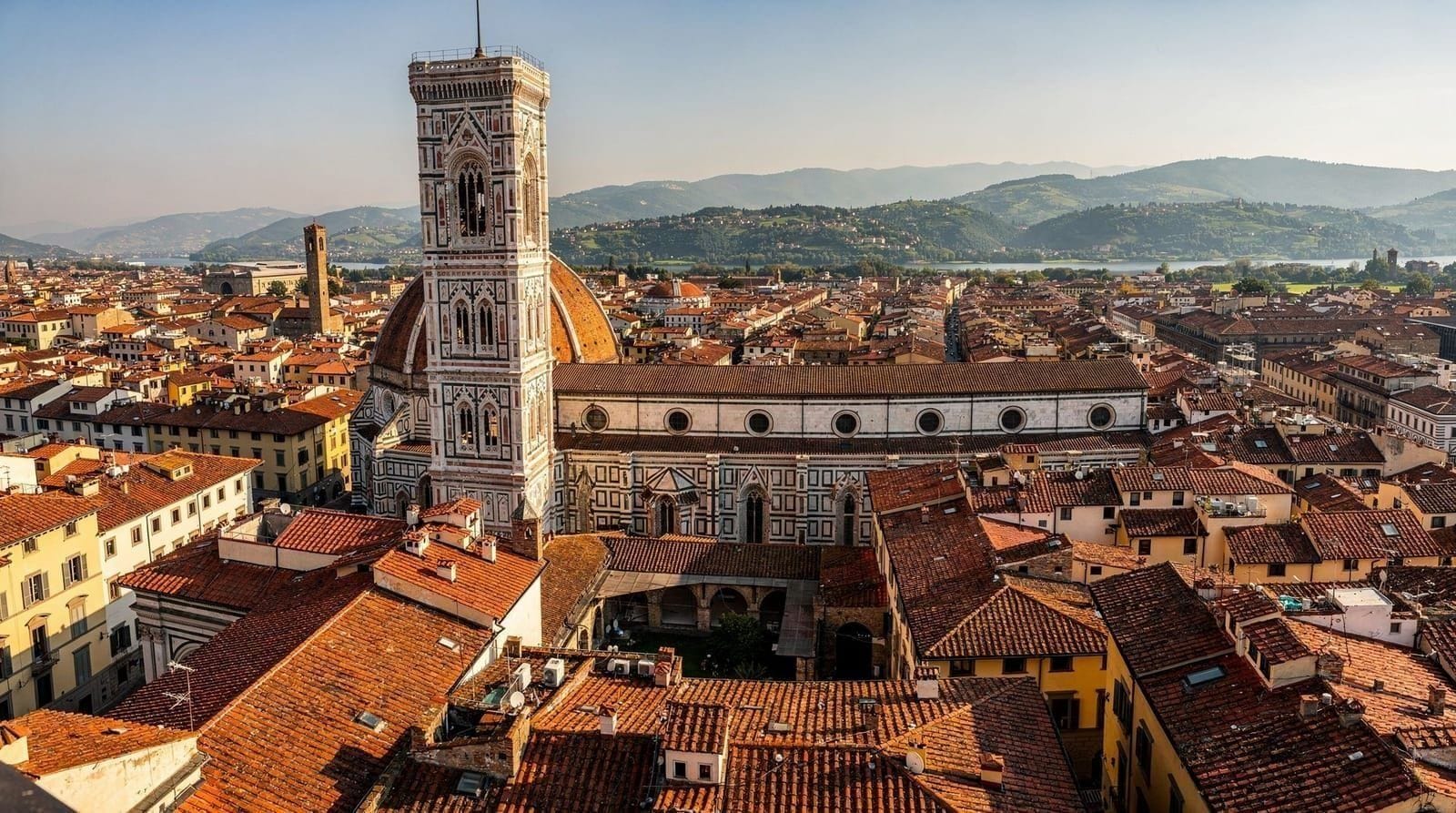
7. Campanile di Giotto (Giotto’s Bell Tower) — looking at the Dome
The spot: the 84-metre bell tower adjacent to the Duomo. Ticket access to the top (414 steps, no lift).
Why it works: from the top of the Campanile you look directly across at the Brunelleschi dome from the same height — an extraordinary and unusual perspective that most photos of Florence do not show.
Entry: €15 (separate from Duomo dome climb). Book on the Opera di Santa Maria del Fiore website.
Lens: 24–50mm to get the full dome in frame at this close range. A wide-angle (16–24mm) works for the surrounding rooftop view.
8. Brunelleschi’s Dome lantern — looking back at the Campanile
The spot: the top of the dome itself, above the drum, looking back at the Campanile and Baptistery below.
Why it works: the reverse perspective — looking down from the dome onto the city and the Baptistery is dramatic. The dome interior frescoes are also photographable on the way up.
Entry: requires timed entry ticket to the dome (€15 as part of the Duomo complex pass). Book online — walk-up queues can be 2–3 hours.
Access: 463 steps (including the narrow passage between the inner and outer shells — slightly claustrophobic, wide-angle lens useful here).
9. Orsanmichele Terrace and Via de’ Calzaiuoli
The spot: the exterior tabernacles of the Orsanmichele church on Via de’ Calzaiuoli, and the view from this street.
Why it works: the statues in the tabernacles (Donatello’s St George is here in a copy) make excellent foreground elements with the Duomo visible between buildings. The perspective along Via de’ Calzaiuoli towards the Duomo is a classic street shot.
Best times: early morning before the street fills with pedestrians.
Street photography and neighbourhoods
10. Oltrarno — the artisan quarter
The spot: the streets around Via dei Serragli, Piazza Santo Spirito, Via Maggio and Borgo San Frediano.
Why it works: the Oltrarno is where Florentine artisans work — gold beaters, leather craftsmen, restorers, book-binders. It is a working neighbourhood that still looks like the Renaissance city rather than a tourist zone. The morning light on the south-facing streets is extraordinary.
Best times: 08:00–11:00 weekday mornings when workshops open.
What to photograph: craftsmen at work in open doorways, the faded frescoes on external walls, the narrow streets with drying laundry, the magnificent Palazzo Pitti facade from Piazza de’ Pitti. The Oltrarno neighbourhood guide has a fuller walking route if you want to combine photography with visiting actual workshops.
11. Mercato Centrale — food photography
The spot: the covered iron market building in San Lorenzo, open all day.
Why it works: the ground floor has Florence’s best food market — fresh produce, meats, cheese, fresh pasta. The light through the iron roof structure is beautiful for food photography. The upper floor has prepared food stalls.
Best times: 07:00–09:00 when the fish and meat vendors are at peak activity.
Technique: fast lens (f/2.8 or wider) at ISO 800–1600. The indoor light is mixed but warm in morning. Pair the visit with the wider Mercato Centrale guide for stall-by-stall recommendations once the camera goes away.
12. Piazza della Signoria — details and perspectives
The spot: Florence’s main civic square, surrounded by Palazzo Vecchio, the Loggia dei Lanzi (open-air sculpture museum) and Renaissance buildings.
Why it works: the Loggia dei Lanzi contains Cellini’s Perseus, Giambologna’s Rape of the Sabine Women and other masterpieces — completely free to photograph at any time, outdoors. The Palazzo Vecchio tower dominates the skyline.
Best times: early morning (07:00–09:00) before the piazza fills. The loggia is open 24 hours and looks extraordinary at night with the sculptures illuminated.
Technique: the Rape of the Sabine Women is designed to be viewed from multiple angles — walk around it. For the Palazzo Vecchio tower, stand in the northeast corner of the piazza and use a 24mm for the most dramatic perspective.
Hidden and lesser-known photo spots
13. Piazza della Repubblica — the arch
The spot: the 19th-century triumphal arch at the west end of Piazza della Repubblica, with the carousel below.
Why it works: the carousel at dusk with warm light and a slight blur from a slow shutter creates a joyful, unusual Florence image. The arch itself is monumental and often overlooked.
14. Via dei Servi — Duomo view without tourists
The spot: the straight street running from Piazza del Duomo northwest towards Piazza della Santissima Annunziata.
Why it works: looking south along Via dei Servi from the top of the street gives the Duomo dome floating above the rooftops, compressed by a short telephoto (70–100mm). No cars, relatively few pedestrians, clean sight lines.
Best times: morning light (10:00–11:00 for sun on the dome).
15. Badia Fiorentina campanile — the skyline centrepiece
The spot: the hexagonal Gothic campanile of the Badia Fiorentina church, visible from the street behind the Bargello Museum on Via del Proconsolo.
Why it works: the tower appears in countless Florence skyline shots and makes a powerful vertical element in compositions. The adjacent Piazza di San Firenze gives a ground-level view.
Photography tours in Florence
If you want expert guidance, a photography walking tour with a local professional photographer will significantly improve your images. Tours typically last 2–3 hours and cover the best light spots with composition and technique advice.
The walking pace is slower than sightseeing tours, allowing proper time at each location. Many operators specialise in golden hour and sunrise tours — the best light for photography.
Best season for each type of shot
Florence photographs well year-round, but light quality and crowd levels shift substantially by month.
| Season | Light quality | Crowds at viewpoints | Best for |
|---|---|---|---|
| Winter (Dec–Feb) | Low, soft, long shadows | Low | Empty-street shots, misty mornings |
| Spring (Mar–May) | Clear, warming | Rising, peaks by May | Bardini wisteria, green Boboli backdrops |
| Summer (Jun–Aug) | Harsh midday, excellent golden hour | Very high | Sunrise shoots before crowds arrive |
| Autumn (Sep–Nov) | Warm, golden, forgiving all day | Moderate, dropping | Best overall balance of light and crowds |
If a single trade-off matters most, autumn gives the best light-to-crowd ratio of the year, closely followed by winter for anyone willing to shoot in cooler, flatter conditions for near-empty piazzas.
Combining photography with the rest of a Florence visit
Most of the spots above sit inside or beside a garden, museum, or neighbourhood covered elsewhere on this site — worth building into the same outing rather than treating photography as a separate errand. The Piazzale Michelangelo and San Miniato al Monte cluster connects directly to the best gardens in Florence for a longer hillside morning, while the bridge and river shots around Ponte Vecchio fit naturally into general sightseeing covered in getting around Florence for planning walking routes between spots without wasted time.
Frequently asked questions about photography in Florence
Do I need permission to photograph Florence’s artworks?
Public spaces (streets, piazzas, exteriors of buildings) can be photographed freely. Inside churches: generally permitted for personal, non-commercial use without flash. Inside museums (Uffizi, Accademia): check the specific museum policy — some permit photography without flash in certain galleries, others prohibit it entirely. The Uffizi allows photography in most areas without flash.
Is drone photography allowed in Florence?
Drone flying in Florence’s historic centre is severely restricted and generally requires permits that are very difficult to obtain. The historic centre is within a restricted airspace zone. Do not fly a drone over the Duomo or the city centre without verified permits.
What lens is most useful for Florence?
A 24–70mm f/2.8 or equivalent covers 90% of Florence photography situations: wide enough for narrow streets and interiors, long enough for architectural details. If carrying one lens, a 35mm or 50mm prime is the classic choice. A 16–35mm ultra-wide is useful for the Duomo interior.
When do the monuments open for early morning photography?
Most churches open 07:00–08:00. The Campanile and Dome open when the complex opens (times vary by season, check Opera del Duomo). Piazzale Michelangelo is open 24 hours. Bardini Garden opens at 10:00 (closed in winter — check seasonal schedule).
Can I photograph the food markets in Florence?
Yes — Florence’s markets are public spaces and photography is welcomed. Vendors generally appreciate being asked before close-up portraits. Early morning is best for uncrowded market photography.
What post-processing works best for Florence photos?
Florence’s warm terracotta palette responds well to gentle warm tone curves and increased clarity. The Duomo’s coloured marble (white, green, pink) is best represented accurately rather than heavily processed. The city’s architectural stonework in shade can be lifted with targeted shadow recovery.
Is Piazzale Michelangelo or the Bardini Garden better for photos?
Piazzale Michelangelo gives the wider, more iconic panorama and is free at any hour, which makes it the better choice for sunrise or blue hour when the Bardini is closed. The Bardini Garden’s terrace is better for a quieter shoot with a foreground element (the rose pergola or wisteria) and is worth the entry fee specifically in late April and May.
How much time should I budget for a dedicated photo walk?
A focused half-day (4–5 hours) covering two or three of the spots above, including travel time between them, is realistic without feeling rushed. Trying to cover more than four locations properly in a single session usually means arriving at each one during worse light.
Top experiences
Bookable activities with verified prices and instant confirmation on GetYourGuide.

Florence: 2-hour private photo walking tour
- Free cancellation
Florence: analog photography tour
- Free cancellation
- Small group
Florence: professional photoshoot at the Duomo
- Free cancellation
Florence: segway sunset with climb to Piazzale Michelangelo
- Free cancellation
- Small group
Florence: electric bike night tour with gelato
- Free cancellation
- Small group