Florence viewpoints — every panorama ranked and explained
What is the best viewpoint in Florence?
Piazzale Michelangelo is the iconic free panorama. For a paid alternative, the top of Giotto's Bell Tower (Campanile) gives an extraordinary view looking directly at the Brunelleschi dome from the same height. Both are best at sunrise or golden hour.
Florence’s viewpoints — a complete guide
Florence is a city that rewards height. The Renaissance architects who built it understood the drama of a dome rising above a sea of terracotta rooftops, and they designed it to be seen. The result is a city where every elevated point reveals a new layer of the skyline.
This guide covers every significant viewpoint in Florence — from the famous Piazzale Michelangelo to the less-visited rooftop terraces and hillside perches — with access, cost, best timing and honest assessment of the view.
| Where | Oltrarno hillside (Piazzale Michelangelo, Bardini) and Duomo complex (dome, Campanile) |
| Cost | Free (Piazzale, San Miniato) to around €15 (dome, Campanile) |
| Time needed | 30–45 min for a single stop; a half day for a proper circuit |
| Getting there | Bus 12/13 to Piazzale Michelangelo, or a 20-minute walk up from Porta San Niccolò |
| Best time | Golden hour or sunrise; book timed tower entries in advance |
For a broader planning view of where to base yourself for these walks, see our best areas to stay in Florence guide.
Tier 1 — The unmissable panoramas
Piazzale Michelangelo
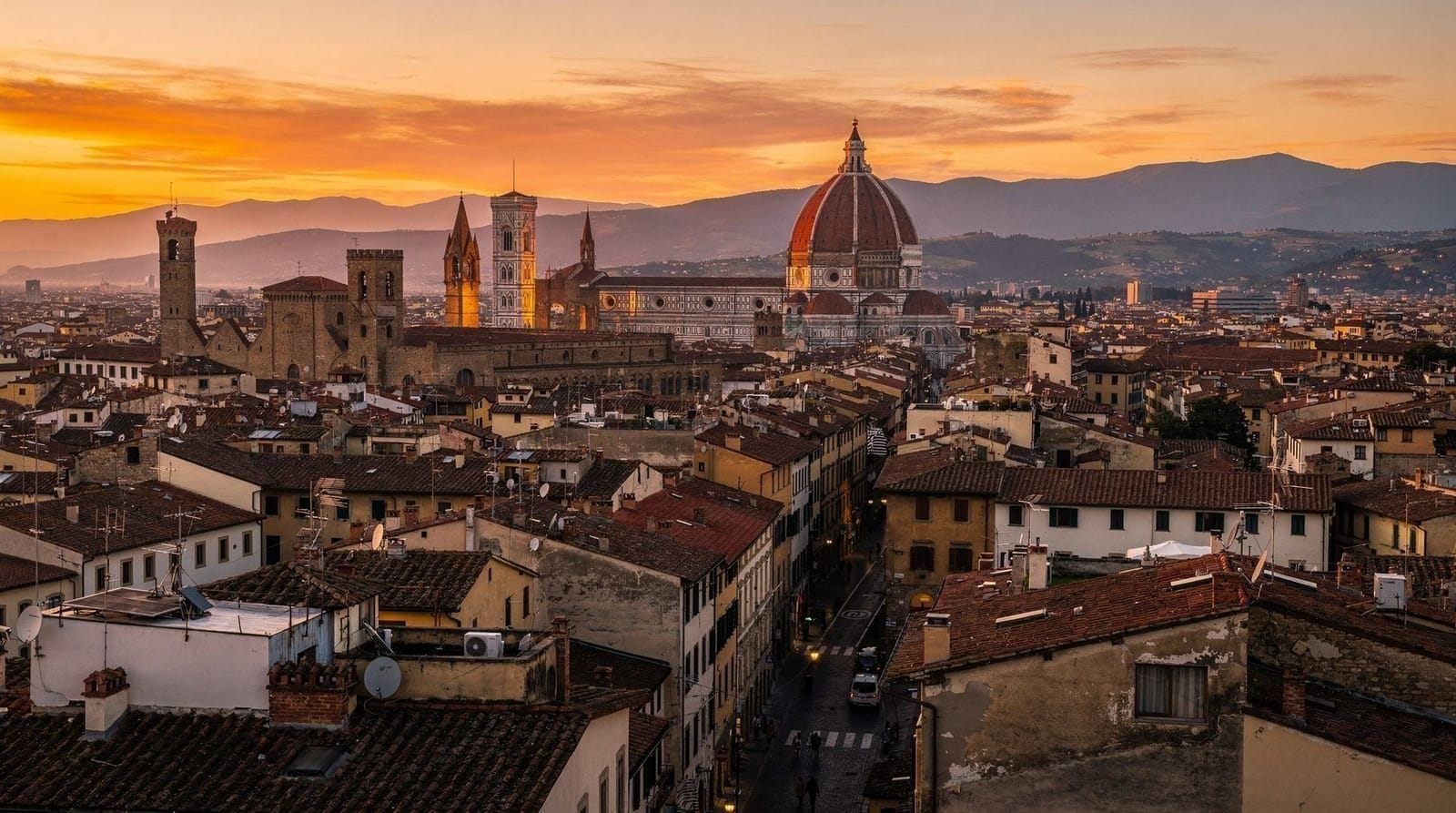
What you see: the complete Florence skyline — Brunelleschi’s dome, Giotto’s Campanile, Palazzo Vecchio tower, the Arno and its bridges, Fiesole on the hills.
Cost: free (24 hours)
Access:
- Bus 12 from Santa Maria Novella station (€1.50, 20 min) or bus 13 return
- Walk up from Porta San Niccolò via the stepped path (Scalinata del Poggi) — approximately 20 minutes from the riverside, well signed
- Drive and park in the large car park on the north side of the piazza (pay per hour)
Best times:
- Sunrise (May–August: 05:30–06:30): the light is pink and golden, the piazza is empty. Take the overnight bus or walk up in the dark — worth the effort.
- Golden hour (1h before sunset): this is the famous shot. Arrive 30–45 minutes early for a spot at the railing. Very crowded in summer.
- Blue hour: 20 minutes after sunset the sky deepens to blue and the city lights illuminate. The dome of the Duomo is beautifully backlit.
- Night: the piazza remains lit and the view is lovely — more atmospheric but harder to photograph without a tripod.
Practical notes: multiple cafés and a restaurant on the terrace (prices are elevated — this is a tourist piazza). Public toilets available (€0.50). The bronze David copy at the centre is photogenic. Vendors sell selfie sticks and prints — not needed.
Crowd warning: July–August at sunset, this is one of the most crowded spots in Florence. Busloads of tour groups arrive. If you want a quiet experience, go at sunrise. For a full guide to this specific spot, see our Piazzale Michelangelo guide; for other elevated angles across the city, our best photo spots in Florence and sunset spots in Florence guides cross-reference every option here.
Brunelleschi’s Dome — the lantern
What you see: the historic centre at your feet — Giotto’s Campanile directly across (same height), the Baptistery, Piazza del Duomo below, rooftops in every direction, Fiesole and Settignano in the hills.
Cost: €15 (part of the Duomo complex single-use pass, book on operaduomo.firenze.it — see our Duomo complex tickets explained guide for how the pass bundles work)
Access: Timed entry, purchased online. Enter through the Dome access point on the north side of the Cathedral. 463 steps — no lift. The passage between the inner and outer dome shells is narrow (slightly claustrophobic). Allow 30–45 minutes for the climb.
Best times: morning (09:00–11:00) when the light is angled across the city. Avoid afternoon if possible — the sun is in your eyes looking south.
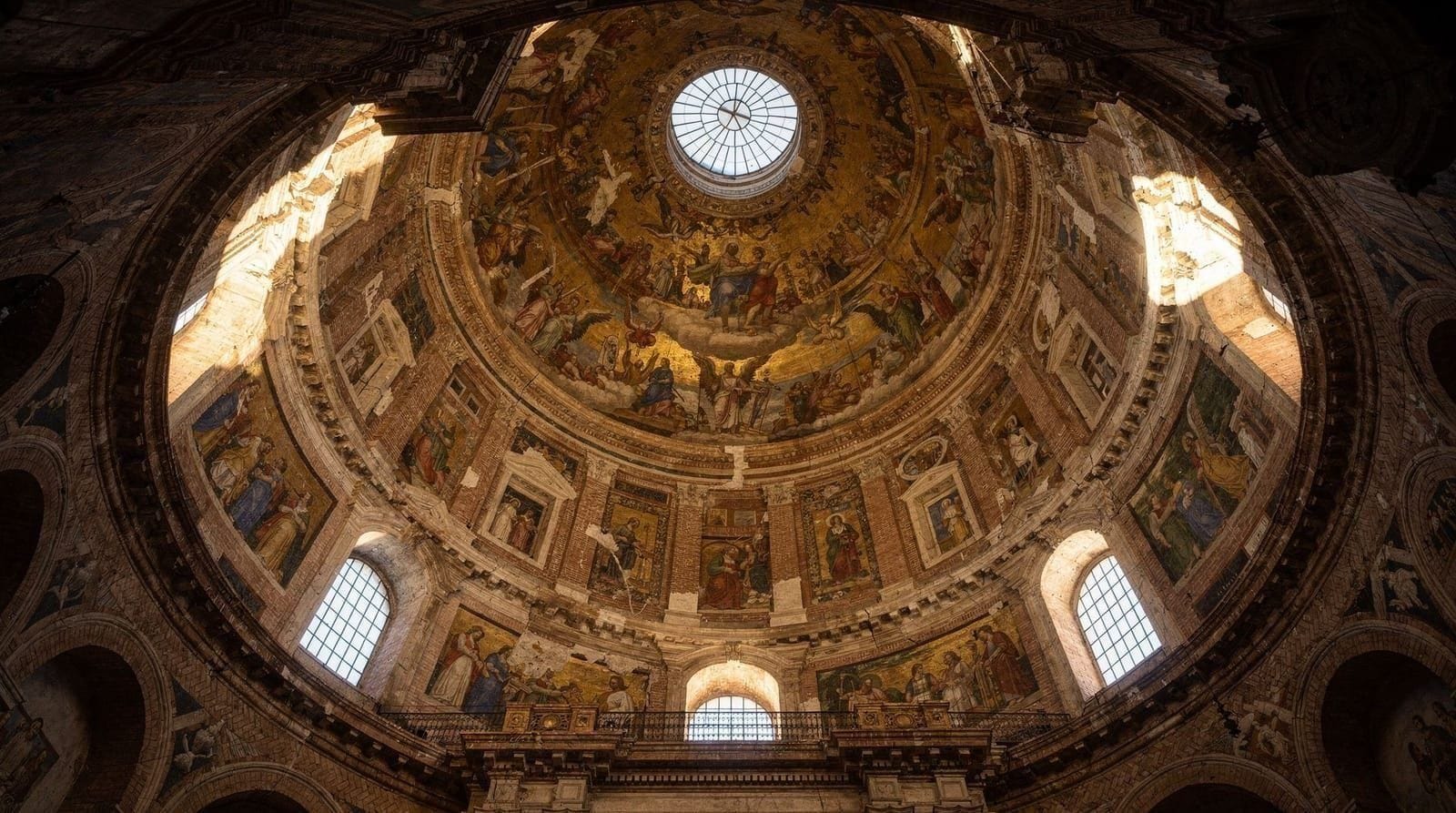
What makes it unique: you are looking directly across at Giotto’s Campanile from the same height — an angle you cannot get from any other viewpoint. You also see the city from inside the Duomo’s own crown, which is extraordinary for architectural context.
Giotto’s Bell Tower (Campanile)
What you see: the dome of the Brunelleschi Cathedral from the same height (just across the piazza), the Baptistery immediately below, the city’s street pattern spreading in every direction, and views extending to the Apennine mountains on clear days.
Cost: €15 (Campanile only ticket on operaduomo.firenze.it, or part of the Duomo complex pass)
Access: entrance on the south side of the Campanile, Piazza del Duomo. 414 steps — no lift. The top is an open terrace with metal railings. Allow 20–30 minutes for the climb.
Best times: morning for the dome in good light, late afternoon for warm light across the surrounding city.
What makes it unique: the view of the dome from this angle — close, at the same level — is the shot that defines Florence for most photographers. No other public viewpoint gives you the dome this close and this large.
Tier 2 — Excellent but requiring payment or effort
Bardini Garden (Giardino Bardini)
What you see: a panorama similar to Piazzale Michelangelo but with the garden’s rose pergola and villa rooftops in the foreground. Less of a 180-degree sweep, more of a curated composition.
Cost: €10 (combined ticket with Boboli Gardens available)
Access: entrance on Costa San Giorgio (Oltrarno), a steep uphill walk from the Ponte Vecchio area. Open Tuesday–Sunday (check seasonal hours); closed Mondays and some winter periods.
Best times:
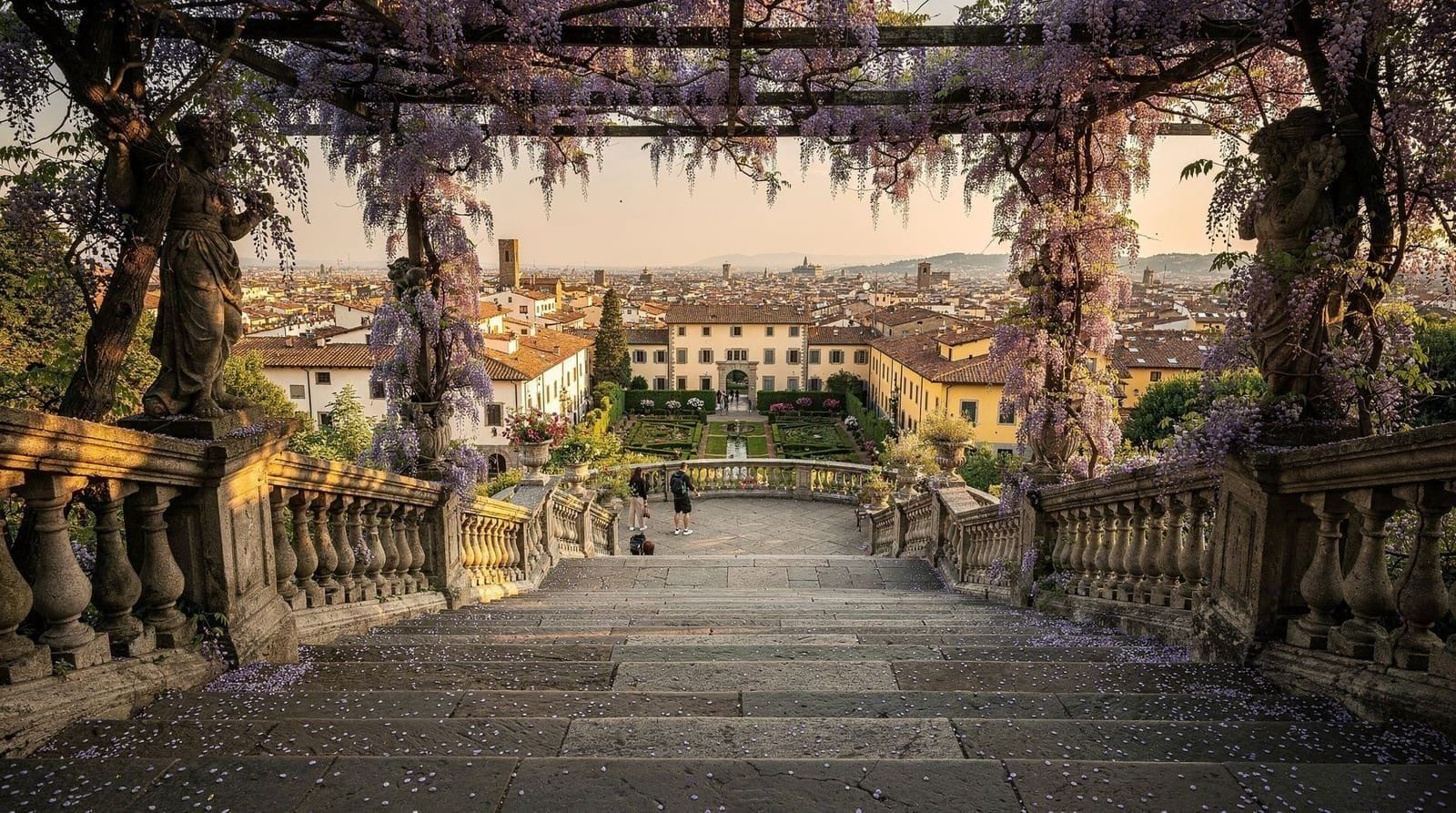
- Late April–May: the wisteria pergola over the upper terrace balustrade frames the dome view with flowering wisteria — the most beautiful period
- Morning 10:00–12:00: the garden receives morning light on the terrace
- Any golden hour when the garden is open
Full details in our Bardini Gardens guide.
Fiesole — the view from the Roman amphitheatre
What you see: Florence from above, in the valley below the Etruscan hilltop town of Fiesole. The valley and the entire Arno plain visible, with the city 8 km to the south.
Cost: €7 entry to the Fiesole archaeological area (amphitheatre and museum)
Access: Bus 7 from Santa Maria Novella station (€1.50, 25 min). Get off at Fiesole main square (Piazza Mino da Fiesole). The archaeological area is a short walk from the square.
Best times: late afternoon, when the light comes over the hills and illuminates Florence below. The Roman theatre itself is photogenic at any time.
What makes it unique: Fiesole gives you distance and elevation to see Florence as a whole in its geographical context — the Arno plain, the surrounding hills, the city concentrated in its ancient boundaries. It is the view the Medici would have had from their villas. If you want to build a whole half day around it, our Fiesole half-day guide covers the amphitheatre, the museum and where to eat afterwards, and the Fiesole destination page covers the town itself.
Palazzo Vecchio — Arnolfo Tower
What you see: close-up rooftop views of central Florence. Directly below: Piazza della Signoria and the surrounding medieval street pattern. Visible: Orsanmichele, the Duomo dome very close and large, the Bargello tower.
Cost: included in Palazzo Vecchio museum ticket (€14–17 depending on season), or separate tower access at reduced rate
Access: enter Palazzo Vecchio from Piazza della Signoria. Tower access is from inside the museum — steep narrow stairs to the top.
Best times: morning or late afternoon. Midday light is flat.
What makes it unique: you see the city from the same vantage point as medieval Florence’s rulers. The Signoria below, the streets of the Republic — it is historically charged. Full ticket details and opening hours are in our Palazzo Vecchio guide.
San Miniato al Monte
What you see: a slightly higher and broader version of the Piazzale Michelangelo view, from the churchyard terrace above.
Cost: free
Access: continue up the hill from Piazzale Michelangelo (10 min on foot, well signed, or Bus 12/13 to San Miniato stop — note not all buses reach this stop, check current timetable)
Best times: sunset and late afternoon. The church interior (Romanesque, 11th–12th century) is worth visiting for the inlaid marble floor and gilded apse — it is typically open until about 19:30 in summer.
Bonus: Vespers are sung by Benedictine monks at approximately 17:30 (winter) and 18:30 (summer) — open to all visitors. The sound of Gregorian chant in this ancient church is extraordinary. Sit quietly in the nave.
Tier 3 — Specific and specialist viewpoints
Boboli Gardens — upper terrace
What you see: the Palazzo Pitti and surrounding hillside from above. Not a classic Florence panorama but a beautiful garden view toward the Belvedere fort.
Cost: €10 (combined with Bardini available)
Access: main entrance via Palazzo Pitti on Piazza de’ Pitti. See our Boboli Gardens guide.
Via del Belfredelli — secret Ponte Vecchio angle
What you see: the Ponte Vecchio from a high angle on the Oltrarno hillside, partially obscured by vegetation — a more intimate and less photographed angle.
Cost: free (public road)
Access: uphill from Ponte Vecchio on the south bank; follow the signs for Costa Scarpuccia and Via del Belfredelli. This is a residential road — be respectful.
Piazza Santo Spirito — ground-level Oltrarno perspective
What you see: not a panorama, but the most authentic neighbourhood piazza in Florence. The Santo Spirito church facade at different hours of the day offers strong architectural photography.
Cost: free (public piazza)
Best times: evening aperitivo hour (18:00–20:00) when locals fill the piazza and the church is lit.
Rooftop bars in central Florence
Several hotel rooftop bars offer elevated views with drinks:
- Soprarno Suites: rooftop terrace with Arno views, open to non-guests (with purchase)
- Hotel Continentale: “Sky Bar” near Ponte Vecchio, open to non-guests
- Westin Excelsior: top-floor bar on Lungarno Vespucci with Arno and Ponte views
These are expensive but give you elevated views with a drink in hand. No tripods, but a monopod or steady railing shot is possible. Pair the rooftop hour with dinner nearby — our best rooftop bars in Florence guide and aperitivo in Florence guide cover which terraces are worth the markup and which are overpriced for the view alone.
Free vs paid viewpoints — which to choose
Not every viewpoint needs a ticket, and the free options are genuinely excellent — this isn’t a case of paying for a better view, just a different one.
- Choose free (Piazzale Michelangelo, San Miniato al Monte, Via del Belfredelli) if you want the classic wide panorama with the dome in context, and you don’t mind sharing the spot with other visitors at peak times.
- Choose paid (Dome, Campanile, Bardini, Fiesole) if you want a specific angle you cannot get for free — looking directly across at the dome from the Campanile, or the wisteria-framed view from Bardini in spring — or if you want a quieter, timed-entry experience away from the piazzale crowds.
- Do both if you have two days: one free sunset at Piazzale Michelangelo, one paid morning climb up the Campanile or Dome. They show you completely different sides of the same city.
Building a one-day viewpoint circuit
If you only have one day and want to hit the highlights without wasting time, a realistic order looks like this: start with the Campanile or Dome climb first thing in the morning (09:00, before the heat and queues build), walk down through the Duomo district, cross the river and climb to Bardini Garden or continue up to Piazzale Michelangelo in the early afternoon lull, then stay for golden hour and sunset at Piazzale Michelangelo or continue the extra 10 minutes to San Miniato al Monte for the Vespers and a quieter view. This fits comfortably into a single day and covers the two very different registers of Florence viewpoint — the close-up architectural climb and the wide panoramic sweep. For a fuller day-by-day plan that folds this circuit into a broader visit, see our Florence in one day itinerary or Florence in two days itinerary.
Comparing the top viewpoints
| Viewpoint | Cost | Height | Crowds | Best angle |
|---|---|---|---|---|
| Piazzale Michelangelo | Free | Medium | Very high (sunset) | Full city panorama |
| Brunelleschi’s Dome | €15 | Highest | Moderate | Campanile + city |
| Giotto’s Campanile | €15 | High | Moderate | Dome + city |
| Bardini Garden | €10 | Medium | Low | Dome + garden foreground |
| Fiesole amphitheatre | €7 | Highest (distance) | Low | City in valley |
| San Miniato al Monte | Free | Slightly above Piazzale | Low | Same as Piazzale, less crowded |
| Palazzo Vecchio tower | €14+ | Medium | Low | Central rooftops, close-up |
Photography at the viewpoints — technical guidance
Equipment for Florence panoramas
The most versatile setup for Florence viewpoints is a 24–70mm zoom lens (full frame equivalent). This covers:
- Wide shots of the full skyline at Piazzale Michelangelo (24mm)
- Compressed telephoto shots of the dome from the Campanile terrace (70mm)
- Street-level compositions on the walk up from the Arno
A 70–200mm lens is useful for:
- Isolating the dome against the skyline from Piazzale Michelangelo
- Details of the Cathedral’s marble exterior and the Baptistery mosaics (from the Campanile)
- Portraits of the city with compressed perspective
A tripod is permitted in public areas (piazzas, streets) and is essential for:
- Blue hour long exposures of the illuminated city after sunset
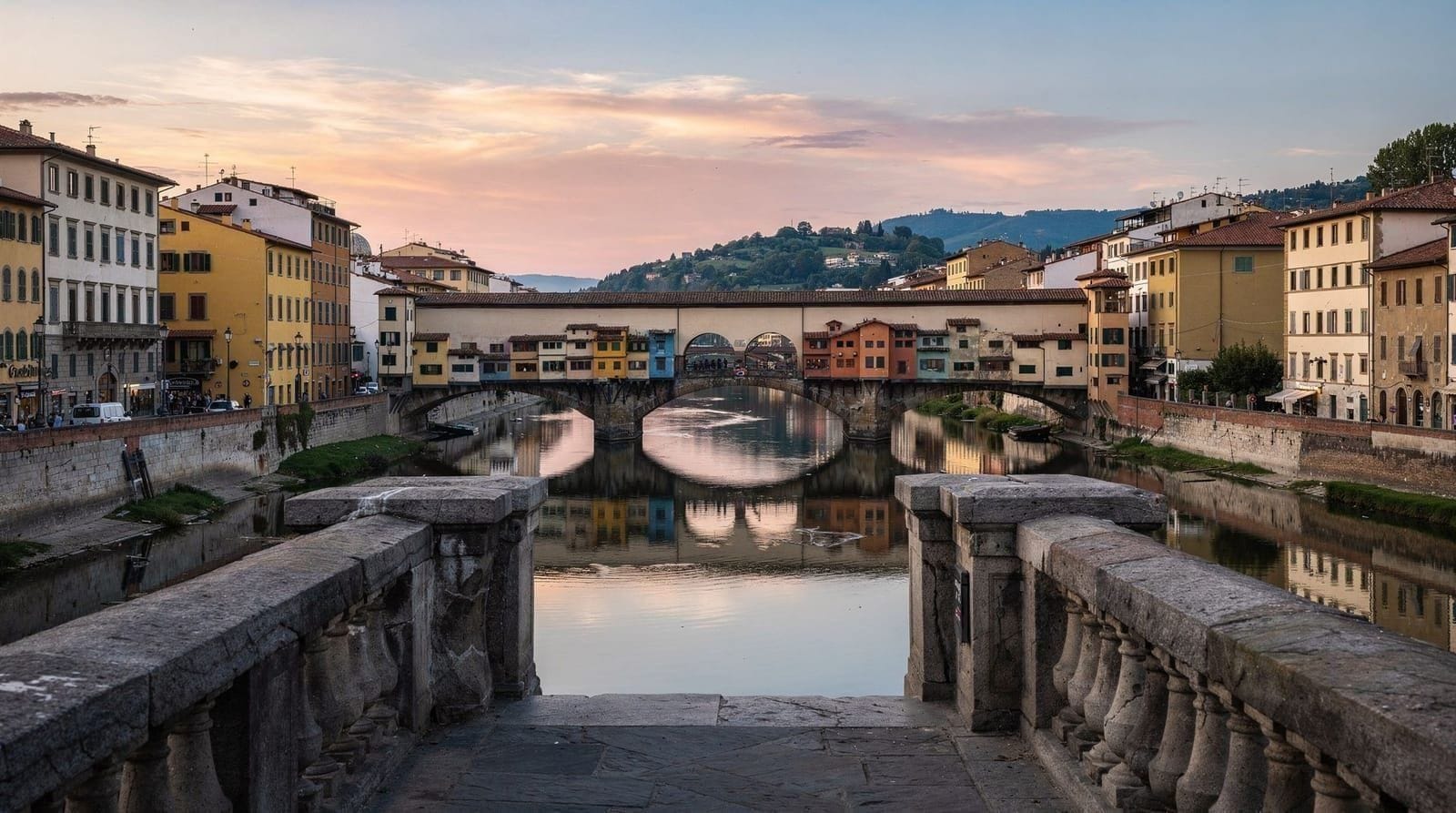
- Arno reflections at dawn or dusk (4–10 second exposures)
- Night photography of the Ponte Vecchio
Exposure settings by situation
| Situation | Aperture | Shutter | ISO | Notes |
|---|---|---|---|---|
| Golden hour panorama | f/8 | Auto | 400–800 | Bracket exposures ±1 stop |
| Blue hour city | f/11 | 2–6 sec | 200 | Tripod essential |
| Dawn Arno reflection | f/11 | 4–8 sec | 200 | Wait for calm water |
| Interior dome frescoes | f/4 | 1/60+ | 1600–3200 | No flash permitted |
| Campanile view — dome | f/8 | Auto | 400 | Overexpose dome slightly |
| Street reportage | f/5.6 | 1/125+ | 800–1600 | Zone focus for speed |
Mobile phone photography at Florence viewpoints
Modern smartphone cameras (iPhone 15 Pro, Samsung S24 Ultra, Pixel 8) are fully capable of excellent results at Florence viewpoints:
- Piazzale Michelangelo panorama: use the standard wide lens (1x) for the full sweep; zoom in (3–5x optical) to isolate the dome
- Blue hour: use the dedicated night mode on any recent flagship — they handle 3–6 second exposures automatically
- Arno reflections: rest the phone on the parapet railing for stability; activate night mode for long exposures
- Campanile looking at the dome: the close distance and dramatic angle works particularly well on wide-angle lenses
Post-processing Florence images
The characteristic Florence palette — terracotta, creamy stone, Pietra Serena grey, the green of the Duomo marble — responds well to:
- Reducing orange saturation slightly (the terracotta can look garish if oversaturated)
- Increasing clarity/texture on stone architecture
- Gentle warm tone curves for golden hour shots
- Reducing highlights on bright sky to recover dome detail
Seasonal changes at the viewpoints
Winter viewpoints
Florence in winter (November–March) offers dramatically different viewpoints. Morning fog frequently fills the Arno valley, leaving only the rooftops and the dome emerging above a white blanket. This “inversion” fog — called nebbia — typically lifts by 10:00–11:00.
Photographs of Florence in winter fog from Piazzale Michelangelo or Fiesole are extraordinary — the dome appears to float above the mist, completely cut off from the city below. This is a rare photographic opportunity unavailable in summer.
Winter sunrise: around 07:30–08:00, manageable without a pre-dawn alarm. The light is cold and blue initially, turning warm as the sun clears the eastern hills. The piazzale is empty.
Spring blooms
April–May brings wisteria to the Bardini Garden pergola and roses to garden terraces throughout the city. The Bardini Garden terrace in late April frames the dome with purple wisteria — the most sought-after seasonal Florence photograph.
Summer heat haze
July–August heat creates atmospheric haze over the city. This reduces the sharpness of distant telephoto shots but creates a romantic, painterly softness in landscape views. The “golden hours” in summer (around 05:30 and 20:45) have much less haze than midday. For a season-by-season breakdown of the whole city, not just the viewpoints, see our guides to Florence in winter, Florence in spring and Florence in summer.
Frequently asked questions about Florence viewpoints
Can I see all of Tuscany from the top of the Duomo?
On a clear day you can see Fiesole, Settignano and the Apennine mountain range to the north and northeast. To the south and southwest the Tuscan hills spread towards Siena, and on exceptional days the outline of Siena’s cathedral town is visible 70 km away.
Is the Campanile or the Dome better to climb?
The Campanile is 50 steps shorter (414 vs 463) and has open railings at the top for better photography. The Dome gives you the interior frescoes on the way up and the unique perspective of looking across at the Campanile. Both are worth it if you have time; the Campanile is the better photography choice.
Are the views from Florence viewpoints accessible for people with limited mobility?
Piazzale Michelangelo and San Miniato al Monte are accessible by bus (Bus 12/13). The terrace at Piazzale Michelangelo is flat and accessible with wheelchairs. All the tower climbs (Dome, Campanile, Palazzo Vecchio) involve stairs only — no lifts. Bardini Garden has steep paths but the upper terrace is reachable with effort.
Is it worth visiting Piazzale Michelangelo in winter?
Yes. Winter sunrise is at a manageable hour (around 07:30–08:00) and the fog over the Arno valley creates spectacular atmospheric photography. The crowd pressure drops dramatically between November and February.
Can I see stars from Florence viewpoints?
Light pollution in Florence is significant. Fiesole, being away from the central city lights, gives better dark sky conditions. For serious night sky photography, drive south to Val d’Orcia or the Maremma where true darkness exists.
Should I book viewpoint tickets in advance?
For the Dome and Campanile, yes — both use timed entry with limited daily capacity on operaduomo.firenze.it, and summer slots sell out days ahead. The free viewpoints (Piazzale Michelangelo, San Miniato) need no booking, just an early or late arrival to beat the crowds. Bardini Garden rarely sells out but confirm its seasonal opening hours before you climb up.
Which single viewpoint should I choose if I only have time for one?
For most first-time visitors, Piazzale Michelangelo at golden hour remains the single best choice — it’s free, it shows the whole skyline, and it needs no advance booking. If you’d rather spend that time inside the Duomo complex instead, our is Florence worth visiting guide and how many days in Florence guide can help you weigh viewpoints against the rest of the city’s priorities.
Top experiences
Bookable activities with verified prices and instant confirmation on GetYourGuide.

Florence: 2-hour private photo walking tour
- Free cancellation
Florence: golden hour walk tour to Piazzale Michelangelo
- Free cancellation
- Small group
Florence: sunset panoramic tour — Fiesole and Michelangelo Square
- Free cancellation
- Small group
Florence: segway sunset with climb to Piazzale Michelangelo
- Free cancellation
- Small group
Florence: on e-bike to Piazzale Michelangelo
- Free cancellation
- Small group