Brunello di Montalcino guide
Florence: Montalcino wine tour with Brunello
- Free cancellation
- Small group
How do I visit Brunello producers from Florence?
Montalcino is about 120 km south of Florence — roughly 1h45 by car or via a guided tour. There is no direct train; the nearest station is Buonconvento (15 km away). Full-day wine tours from Florence including transport and lunch start at around €95 per person.
Italy’s most serious red wine
If you have one bottle of Italian wine in your cellar, it is probably not Brunello di Montalcino — and that’s a shame, because it is arguably the finest red wine produced in Italy. Made exclusively from Sangiovese Grosso in a single commune south of Siena, Brunello combines Sangiovese’s natural acidity and tannin with the altitude, soil, and climate of one of Tuscany’s most dramatic landscapes.
This guide covers everything you need to know before visiting: the wine’s history, how the appellation works, which producers to visit, how to get to Montalcino from Florence, and what you should realistically expect to pay. If you’re weighing Montalcino against Tuscany’s other wine regions, see the Tuscan wine regions overview and the Chianti wine guide for comparison.
| Where | Montalcino, ~120km south of Florence |
| Cost | Tastings from €20–30; premium estates €50–150 |
| Time needed | Full day if driving from Florence |
| Getting there | Car (1h45) or guided wine tour; no direct train |
| Best time | Year-round; late Feb for Benvenuto Brunello release event |
A brief history: one family changed Italian wine
Until the 1860s, the wines of Montalcino were made as they had been for centuries — a blend of red and white grapes, consumed young. Then Ferruccio Biondi-Santi, working with his grandfather Clemente, began vinifying 100% Sangiovese Grosso in a way that produced wines meant to age. His 1888 Brunello Riserva still exists in a few private cellars.
Biondi-Santi’s experiment remained largely unknown until the 1960s and 1970s, when wine critics — particularly Luigi Veronelli and later Robert Parker — began recognising Montalcino as one of the world’s great wine regions. DOCG status came in 1980, the first wine in Italy to receive it.
Today the appellation has approximately 250 producers ranging from tiny family estates with a few hectares to international corporations like Banfi (Castello Banfi), which planted 850 hectares starting in the 1970s and largely built the modern export market for Brunello.
Understanding the DOCG rules
Brunello di Montalcino has among the most demanding production rules in Italy:
Grape variety: 100% Sangiovese Grosso (the local biotype also called Brunello). No blending permitted.
Zone: The entire Montalcino commune, covering about 3,500 hectares of eligible vineyard. Altitude ranges from 120 to 600 metres, creating wide variation in style between valley-floor estates and high-altitude sites.
Aging: Standard Brunello requires a minimum of 5 years total aging: at least 2 years in large oak botti (the traditional large Slavonian or French oak casks), then at least 4 months in bottle. Many producers age for 3+ years in oak.
Riserva: Minimum 6 years total aging. Released only in exceptional vintages.
Release dates: Brunello is released in January 5 years after the harvest. The 2019 vintage was released in January 2024.
| Wine | Minimum aging | Typical release | Price range |
|---|---|---|---|
| Rosso di Montalcino DOC | 1 year | Spring after harvest | €15–35 |
| Brunello di Montalcino DOCG | 5 years | January (5 years after vintage) | €40–120 |
| Brunello Riserva DOCG | 6 years | Exceptional vintages only | €80–250+ |
The terroir: why Montalcino is special
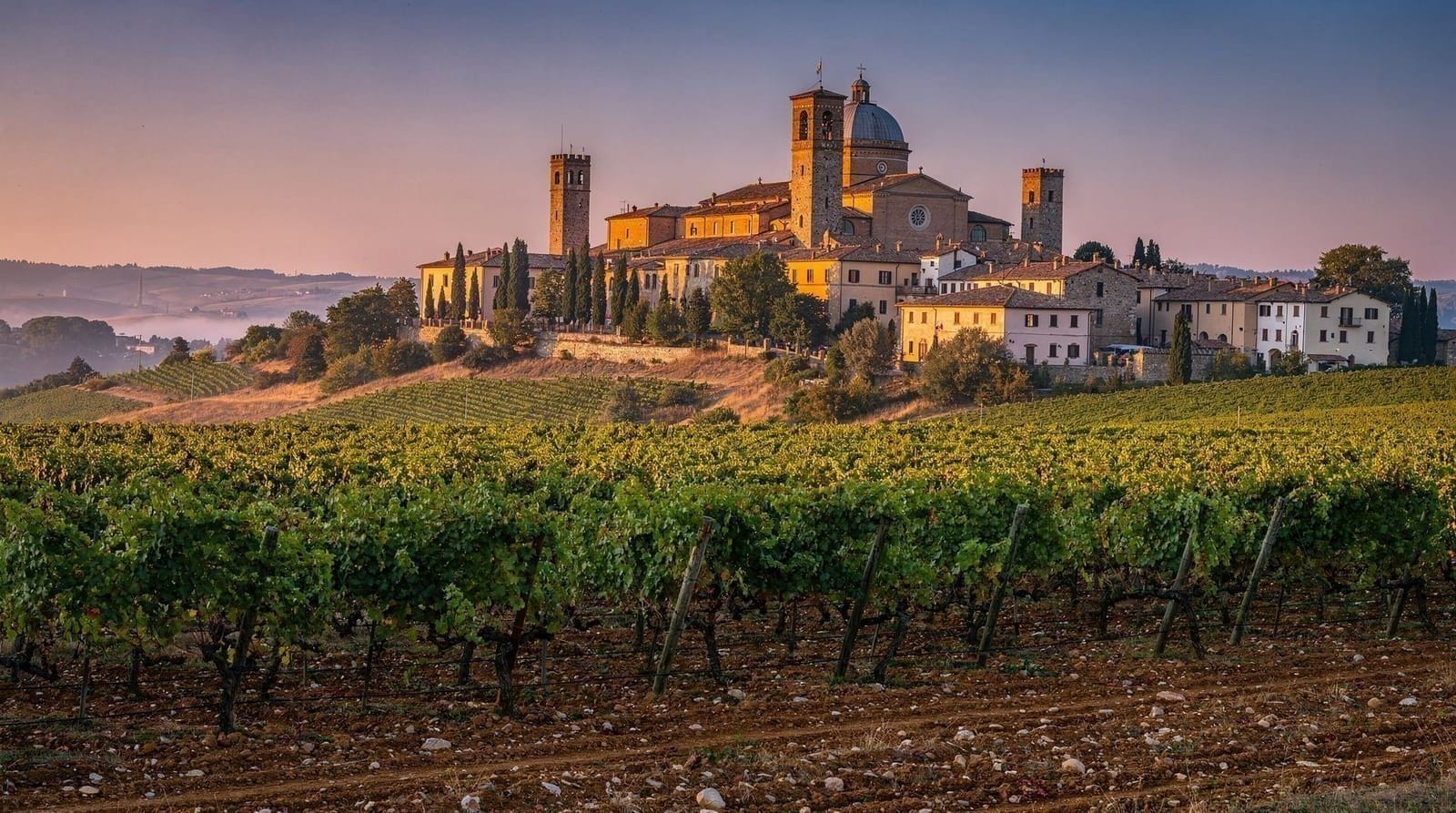
The hill town of Montalcino sits at 564 metres in the province of Siena, roughly 40 km south of the city. The commune is bounded by three river valleys — the Ombrone, Arbia, and Orcia — that create a natural amphitheatre with markedly different microclimates on each face.
Northern slopes: Cooler, higher altitude, more mineral and structured wines. Producers include Biondi-Santi (Greppo estate) and Poggio di Sotto.
Southern slopes: Warmer, fuller-bodied wines with more immediate appeal. Altesino, Casanova di Neri, and many of the modern-style producers are based here.
Eastern areas: More clay-rich soils producing rounder, more approachable styles.
Western slopes: Galestro limestone-clay soils similar to Chianti Classico, producing elegant, long-lived wines.
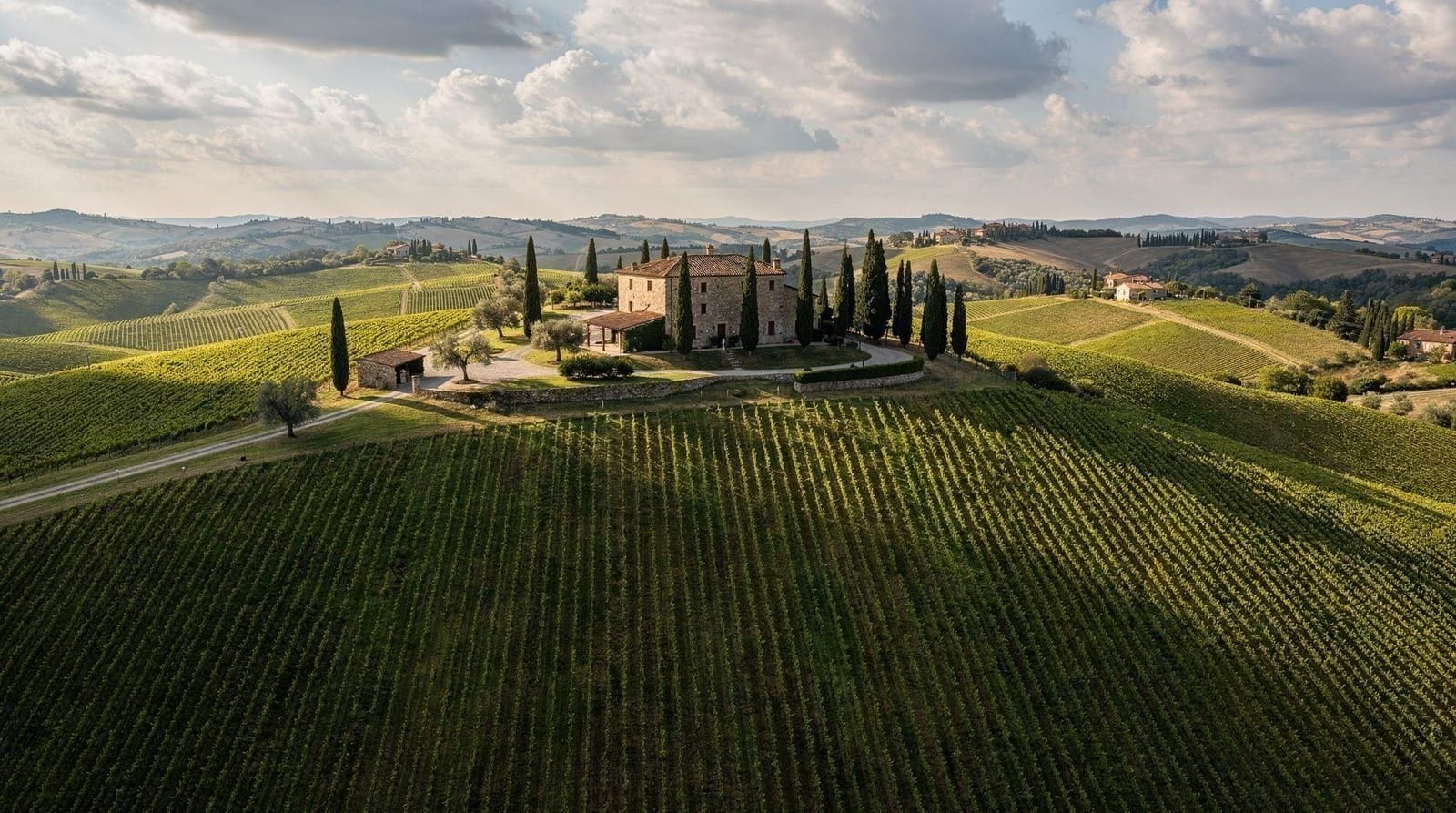
The soil across Montalcino is primarily tufo (tufaceous rock) and galestro interspersed with clay. Both drain well and encourage the deep root systems that make Sangiovese so compelling in this location.
Top producers to visit
Biondi-Santi (Il Greppo estate): The most historically significant estate in Montalcino, now managed by the fourth generation of the founding family (Franco Biondi-Santi died in 2013; the estate was purchased by EPI Group but the family winemaker continues). Wines are deliberately old-school: long aging, firm tannin, extraordinary longevity. Visits by appointment only; expect to pay €80+ for a tasting that includes older library vintages.
Castello Banfi (near Sant’Angelo in Colle): The most visitor-friendly estate, with a medieval castle, wine museum, restaurant, and hotel. They produce wines across the price spectrum from accessible Rosso to premium single-vineyard Brunello (Poggio alle Mura). Tastings from €20, no reservation required during opening hours.
Il Poggione (Sant’Angelo in Colle): Family-owned since the early 20th century, consistently producing excellent Brunello at relatively fair prices (€45–65 for standard bottling). Guided visits with tasting from €30, Monday–Saturday.
Casanova di Neri: Producers of the Cerretalto single-vineyard Brunello, which repeatedly earns perfect scores from international critics. Visits by appointment, €50+ for premium tasting.
Poggio di Sotto (now part of the Bertarelli group): Biodynamic estate producing wines of extraordinary finesse from high-altitude vineyards. Among the most sought-after bottles in the appellation. Appointment-only, tastings €80–150.
Altesino: One of the first estates to introduce single-vineyard Brunello (Montosoli) in the 1970s. Good guided tours and reasonable pricing (€25–40 for standard tasting).
Ciacci Piccolomini d’Aragona: Historic estate with a 17th-century palazzo, producing reliable, fairly priced Brunello. Visitors welcome Monday–Saturday.
Getting to Montalcino from Florence
Montalcino is 120 km from Florence. The journey by car takes approximately 1 hour 45 minutes via the A1 motorway toward Rome, exiting at Chiusi-Chianciano Terme, then north on the SR2 and local roads.
By train: There is no direct train to Montalcino. The nearest station is Buonconvento on the Florence–Siena–Grosseto line, about 15 km from Montalcino. From there you need a taxi or rental car. The Sena bus company runs a direct bus from Siena to Montalcino (about 1h15) but only a few times per day.
By car: Essential for visiting multiple wineries. The drive from Florence is straightforward. Note that once in the Val d’Orcia, parking in Montalcino itself is in paid car parks outside the walls — most of the historic centre is pedestrianised.
By guided tour: The most practical option for most visitors. Full-day tours from Florence (7–8 hours) typically include one or two winery visits, a lunch, and often combine Montalcino with Montepulciano or Pienza. Transport is included so you can drink freely. The wine tasting in Florence guide covers what’s realistic if you don’t have a full day to spare for the round trip.
Wine tourism in the town of Montalcino
The fortified medieval town of Montalcino itself is worth half a day beyond the wineries. The 14th-century Fortezza (fortress) houses an excellent enoteca selling wines from most local producers — this is the best place to try Brunello without booking a winery visit. A glass of standard Brunello runs €8–12; Riserva €12–20. The fortress is open daily; there’s a small entry fee (€4) for the walls with panoramic views.
The town also has several shops specialising in Montalcino wine and local products: honey, saffron, and the local Pici pasta. The weekly market (Friday morning) is a genuine local affair with produce from surrounding farms.
For food, the restaurants in and around Montalcino tend to be good value: a full Tuscan lunch with Rosso di Montalcino runs €25–35 per person. Trattoria Il Moro and Osteria Porta al Cassero are reliable options within the walls.
Brunello vintages: what to look for in 2026
Brunello vintages vary significantly. Because releases are always 5 years after harvest, what’s available now (2026) is primarily from the 2021 vintage for standard Brunello, with some 2019 and 2020 also on shelves.
| Vintage | Rating | Notes |
|---|---|---|
| 2016 | Legendary | Perhaps the finest of the decade; very limited |
| 2018 | Excellent | Elegant, balanced, drinking well now |
| 2019 | Outstanding | Rich, structured, 10–20 year potential |
| 2020 | Very good | Warm vintage, approachable |
| 2021 | Excellent | Fresh acidity, great balance |
The 2016 Brunello is largely sold out at release prices but worth hunting for at auction or specialist retailers. If you’re visiting a winery, ask if they have any 2016 remaining — some estates kept back small quantities.
Brunello vs. Rosso di Montalcino: which to buy
If you’re new to Montalcino, start with Rosso di Montalcino. The best producers make wine every bit as compelling as mediocre Brunello, at one-third the price. Look for Rosso from Il Poggione, Altesino, or Ciacci Piccolomini — typically €20–28 at the cellar door.
Brunello is worth the premium if you can age it properly (a wine fridge or cellar is ideal) or if you’re buying a mature vintage. Young Brunello — the 2021s being released now — is often tannic and closed; it won’t show its best for another 5–10 years.
Drinking Brunello in Montalcino: the enoteca experience
You don’t need to visit a winery to experience Brunello at its best in Montalcino. The town’s enotecas offer a more accessible and often more educational experience.
Enoteca della Fortezza (inside the 14th-century fortress): The official Montalcino wine shop, operated by the Consorzio del Vino Brunello di Montalcino. Stocks wines from over 100 producers with a comprehensive selection of current releases and older vintages. A glass of standard Brunello: €8–12. Riserva: €12–20. Older library vintages from specific producers can be expensive but are available on request.
Enoteca Bacchus (Via del Giglio): Smaller, more intimate, run by enthusiastic local staff. Excellent for comparing two or three producers side-by-side. The staff will guide selection if you explain what you’re looking for.
Caffè Fiaschetteria Italiana (Piazza del Popolo): The main piazza café, established in 1888. A glass of Rosso di Montalcino with a sandwich is the traditional local lunch. Prices reasonable.
The tasting note for good Brunello at release (5 years old): firm, almost austere tannins, bright cherry and plum fruit, earthy undertones of dried herbs and mineral. Young Brunello often feels closed — the palate impression improves significantly if you drink a glass, wait 30 minutes, then return to it. Oxygen is Brunello’s friend.
If you’re short on time, the enoteca route is genuinely the more efficient way to taste widely. A single afternoon at Enoteca della Fortezza, moving through four or five producers’ current releases by the glass, gives a broader sense of Montalcino’s stylistic range than a single winery appointment — where you’ll typically taste only that estate’s own lineup. Save the winery visit itself for the one or two producers whose wines you already know you love, or whose cellars and setting you specifically want to see.
Brunello and the Benvenuto Brunello event
Each February, the Consorzio del Vino Brunello di Montalcino hosts the Benvenuto Brunello — the official release event for the current vintage and preview of upcoming releases. Wine trade visitors and journalists taste new releases alongside producers. Around 300 wineries participate.
The public can attend the final day’s tastings (typically the third Sunday in February). Tickets are available via the Consorzio website. This is the best single opportunity to taste across the entire appellation in one session. The Fortezza della Montalcino is the main venue, with additional tastings in the town’s restaurants and enotecas.
If you’re planning a February trip to Florence, the Benvenuto Brunello is worth building around — the 2-hour drive to Montalcino and back is very manageable.
Beyond the public tasting day, some producers hold their own open-cellar events during Benvenuto Brunello week, occasionally with reduced or waived tasting fees for anyone who’s bought a public event ticket. These aren’t always well advertised outside Italy — checking individual producer websites or social media in the weeks before your trip is worth the effort if you’re building a February visit specifically around the event.
What else to do in Montalcino
The wine is the reason most visitors come, but Montalcino has more to offer:
The Fortezza: The 14th-century fortress is largely intact, with walkable ramparts offering panoramic views over the Val d’Orcia and the Orcia valley. Entry €4, which also gets you access to the enoteca inside.
Sant’Antimo Abbey (12 km south): One of the finest Romanesque churches in Italy, built in the 12th century in white travertine stone in a valley setting. The Benedictine monks sing Gregorian chant at the daily services (schedule on the abbey website). A 20-minute drive from Montalcino on a beautiful winding road through vineyards and olive groves. Free entry.
Castello di Castiglione del Bosco: A luxury resort built around a medieval village and Brunello estate. The estate restaurant (Campo del Drago) serves excellent food with their own wines. Reservations required.
Combining Montalcino with other Val d’Orcia destinations
Montalcino sits in the northeastern corner of the Val d’Orcia, UNESCO World Heritage landscape. A logical loop from Florence combines:
- Montalcino (morning: winery visit, walk the Fortezza)
- Pienza (lunch: the perfect Renaissance town, excellent Pecorino)
- Montepulciano (afternoon: Vino Nobile tasting in the underground cantinas)
This circuit is about 90 km and takes a full day. It’s the route most guided Val d’Orcia tours follow, and it makes for one of the finest days in Tuscany.
Frequently asked questions about Brunello di Montalcino
Why is Brunello so expensive?
Several factors: strict production rules limiting yields, mandatory 5-year aging before release (tying up capital and cellar space), the high reputation of the appellation driving demand, and limited overall production (about 4 million bottles per year from the whole appellation). Compare this to Barolo, another long-aged Italian red with similar prices — €40–80 for a good bottle is the baseline.
Can I visit Montalcino as a day trip from Florence?
Yes, though it’s a long day. Driving, you’ll spend about 3h30–4h in the car round-trip. Most guided tours depart around 8:30–9am and return by 7pm. If combining with Montepulciano and Pienza, expect a full 9–10 hour day. It’s much more comfortable with a car than by public transport.
Is Brunello better than Barolo?
This is a matter of taste and terroir, not a question with an objective answer. Barolo (from Nebbiolo in Piedmont) tends to be more aromatic and perfumed, with higher tannin and acidity in youth; Brunello (Sangiovese) has more cherry and earthy notes with firm but less brutal tannins. Both are among Italy’s greatest wines and both reward aging.
Should I visit Montalcino or Chianti if I only have one day?
It depends what you want. Chianti is closer to Florence, has more varied stops (castles, small towns, a wider range of price points), and suits a first Tuscan wine day — see the Chianti day trip guide for the logistics. Montalcino is a longer drive but offers a narrower, more serious focus on one of Italy’s greatest wines, with fewer but more memorable stops. First-time Tuscany visitors often do better with Chianti; wine-focused travellers on a return trip tend to prefer Montalcino. If you have two or more days to give to Tuscan wine country, doing both — Chianti as a shorter outing, Montalcino as the dedicated full-day trip — gives a genuinely useful comparison of Sangiovese’s range, from Chianti’s brighter, more approachable style to Brunello’s structure and depth.
Planning your Montalcino day around Florence
Because the round trip eats into the day, most visitors build their Montalcino visit as a single dedicated outing rather than combining it with central Florence sightseeing. If you’re deciding how to allocate limited days, the best day trips from Florence guide sets Montalcino against shorter, closer options like Chianti or San Gimignano — useful if you’re trying to fit in more than one wine region without exhausting yourself on transport.
Top experiences
Bookable activities with verified prices and instant confirmation on GetYourGuide.

Florence: Montalcino wine tour with Brunello
- Free cancellation
- Small group
Montalcino: Brunello wine tasting and lunch in a Tuscan castle
- Free cancellation
- Small group
Montalcino: winery tour with Brunello vertical tasting
- Free cancellation
- Small group
Florence: private Montalcino and Montepulciano wine tour
- Free cancellation
Florence: Montalcino, Montepulciano and Val d'Orcia with lunch
- Free cancellation
- Small group

Siena: Brunello di Montalcino full day wine tour with tastings
- Free cancellation
- Small group