Chianti wine guide
Florence: Chianti wineries tour with wine tasting
- Free cancellation
- Small group
How do I visit Chianti wineries from Florence?
You need a car or a guided tour — there is no train to the Chianti hills. Half-day tours from Florence start at around €55 per person and include transport plus two or three wine tastings.
Understanding Chianti: Italy’s most misunderstood wine
For decades, “Chianti” conjured images of straw-covered bottles (fiaschi) filled with thin, acidic red wine. That reputation is decades out of date. Today’s Chianti Classico is one of Italy’s most serious red wine appellations, producing age-worthy bottles that rival Barolo and Brunello at a fraction of the price.
The confusion starts with the name. There are multiple Chianti appellations, and not all of them produce wine at the same quality level. Understanding the difference will save you from disappointment at the wine shop and help you get far more out of a winery visit. If you’d rather see the wine country in person than just read about it, the Chianti day trip guide covers the logistics of getting there.
| Where | Chianti Classico zone, between Florence and Siena |
| Cost | Tastings €10–35; guided half-day tours from €55 |
| Time needed | Half-day tour minimum; full day for 2–3 estates |
| Getting there | Car or guided tour — no train to the wine country |
| Best time | Spring–autumn; Sept–Oct for harvest atmosphere |
The Chianti appellation family
Chianti DOCG
The broad Chianti appellation covers a large zone in central Tuscany with several sub-zones: Chianti Colli Fiorentini (the hills around Florence), Chianti Colli Senesi (around Siena), Chianti Rufina (northeast of Florence, often underrated), and others. These wines must contain at least 70% Sangiovese and are released younger and at lower price points. Quality varies widely — a €7 supermarket Chianti and a €25 Chianti Rufina from a serious producer are worlds apart.
Chianti Classico DOCG
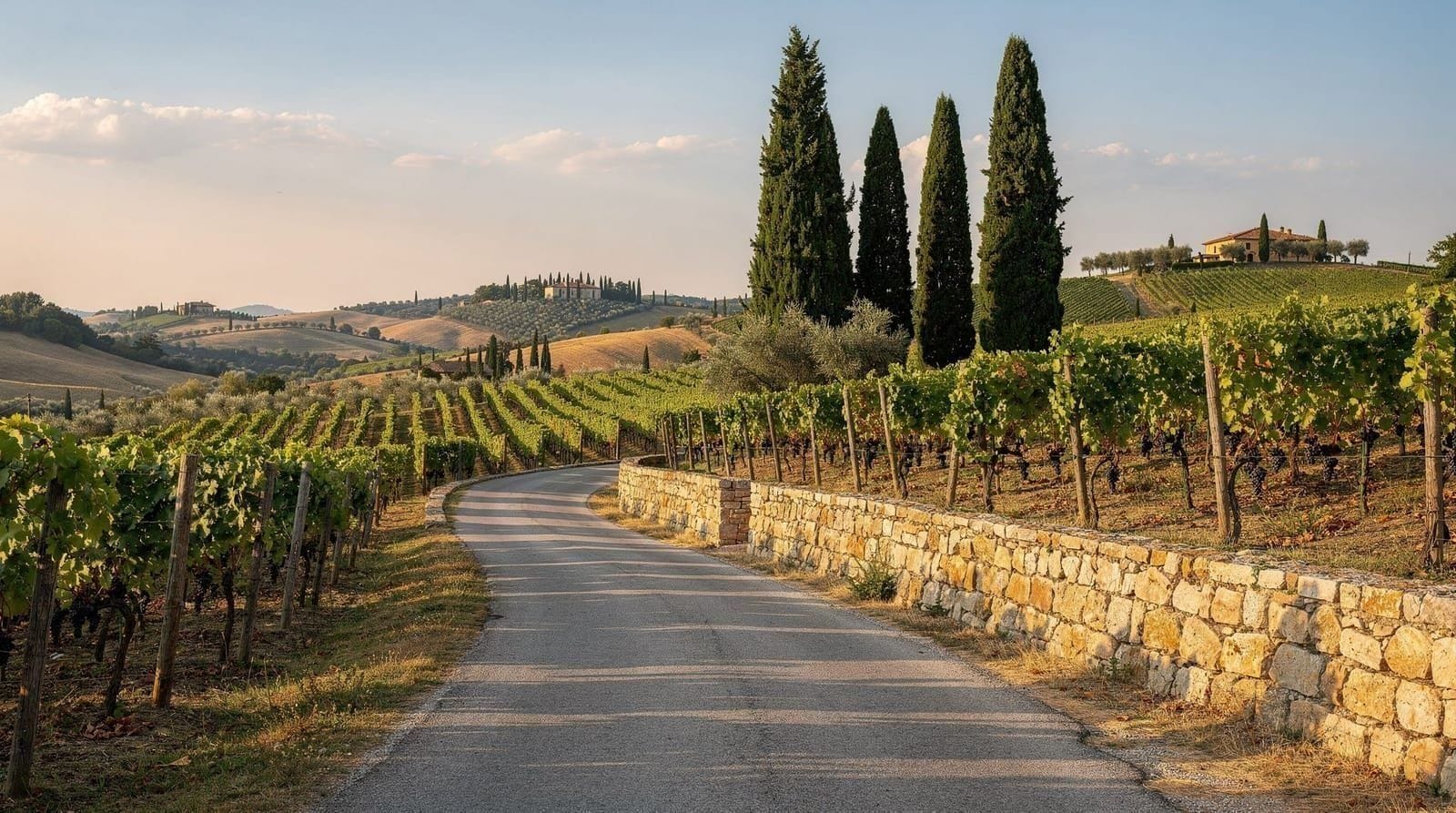
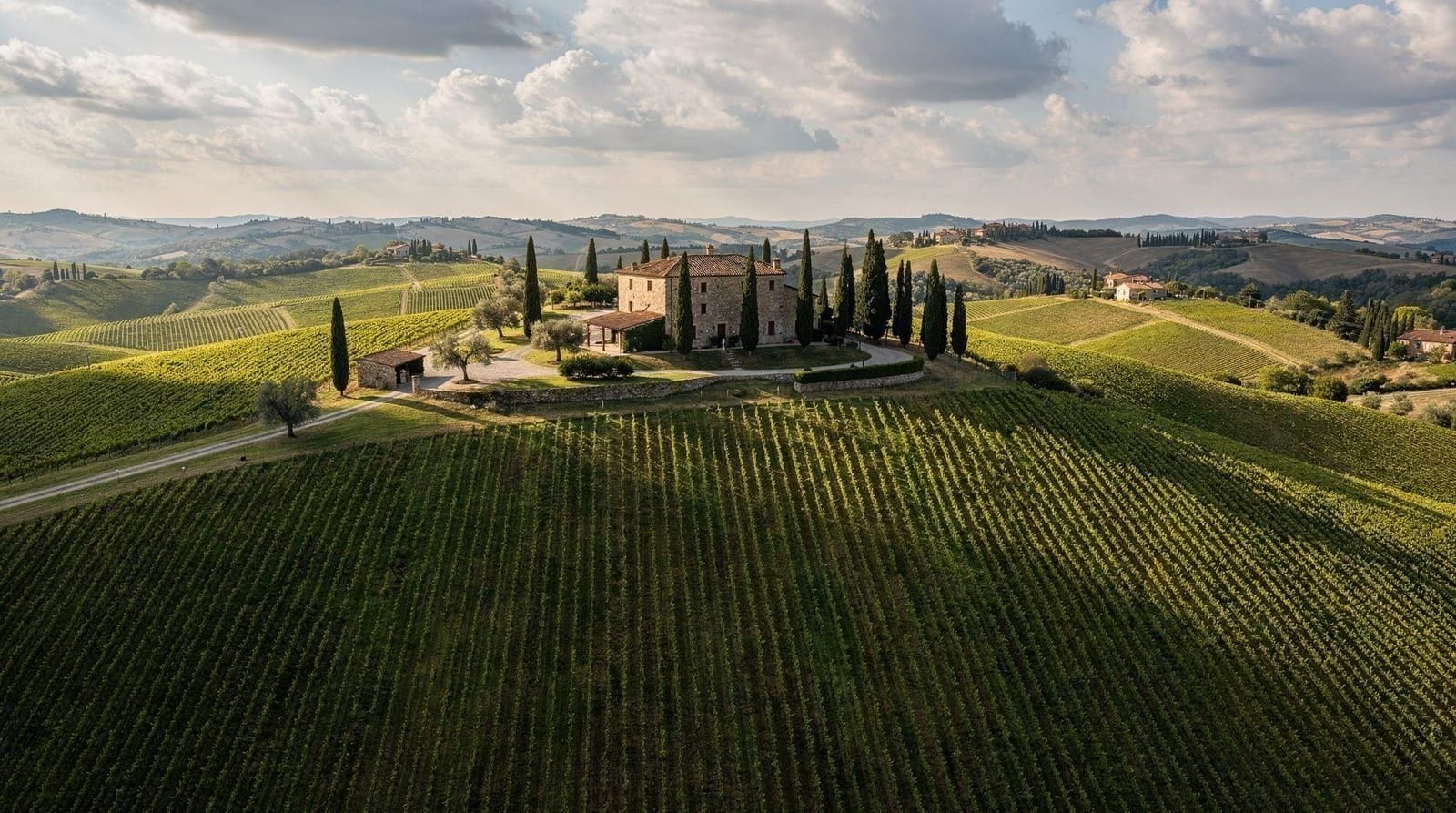
This is the historic heart of the appellation, a roughly 72,000-hectare zone between Florence and Siena. The villages of Greve in Chianti, Panzano, Radda in Chianti, Gaiole in Chianti, and Castelnuovo Berardenga are its epicentres.
Rules here are stricter: minimum 80% Sangiovese (most top estates use 100%), no irrigation permitted, lower yields, and mandatory aging before release. The black rooster — the Gallo Nero — on the neck label identifies authentic Chianti Classico.
| Quality level | Minimum aging | Typical price |
|---|---|---|
| Annata (standard) | 12 months | €12–22 |
| Riserva | 24 months (3 in bottle) | €22–45 |
| Gran Selezione | 30 months, single vineyard | €40–90+ |
Gran Selezione is the appellation’s top tier, introduced in 2014. Each producer creates their own single-vineyard or best-barrel selection, so wines vary enormously in style. Antinori’s Tignanello estate makes the Badia a Passignano Gran Selezione; Castello di Ama produces San Lorenzo. These are serious collector wines.
The Sangiovese grape
Chianti Classico lives or dies by Sangiovese — a grape that is notoriously site-sensitive and difficult to grow. At its best, it produces wines with:
- High natural acidity that keeps them food-friendly and age-worthy
- Firm tannins that soften dramatically with 5–10 years in bottle
- Aromas of dried cherry, plum, dried violets, leather, tobacco, and earthy underbrush
- A savoury finish with hints of dried herbs and sometimes a mineral edge
Poor Sangiovese — grown in the wrong soils or over-cropped — produces thin, harsh, astringent wine. That’s where the fiasco reputation came from. In the right hands and the right terroir (galestro limestone-clay soils are ideal), it is sublime.
Top wineries to visit near Florence
You don’t need to travel far. Several major estates sit within 30–45 minutes of Florence by car.
Antinori nel Chianti Classico (near San Casciano Val di Pesa): The most architecturally dramatic winery in Tuscany, carved into a hillside designed by studio Archea. The tasting experience is theatrical — you descend through barrel rooms and emerge into a panoramic restaurant. Tastings from €30, reservations essential. Note: Antinori is also the producer of Tignanello, one of the most famous Super Tuscans.
Castello di Verrazzano (near Greve in Chianti): One of the estate’s claims to fame is that Giovanni da Verrazzano, the explorer who sailed the New York harbour, was born here in 1485. Today it produces reliable Chianti Classico Riserva, olive oil, and honey. Guided tours with tasting run €25–40, restaurant on site.
Fattoria di Rampolla (near Panzano): Small, biodynamic estate in the “Conca d’Oro” (golden bowl) above Panzano, one of the most prized sub-zones. The wines are elegant and restrained. Available by appointment.
Fontodi (Panzano): Run by the Manetti family, Fontodi is among the most respected names in Chianti Classico. Their Vigna del Sorbo Gran Selezione regularly scores 95+ points. Visits by appointment, tasting €35–55.
Villa Calcinaia (near Greve): Owned by the Capponi family since 1524, one of the oldest wine-producing families in Chianti. More intimate than the larger estates, excellent for understanding traditional viticulture.
Badia a Coltibuono (near Gaiole): A former Benedictine abbey dating to the 11th century, now producing excellent Chianti Classico and running cooking classes. The restaurant serves authentic Tuscan cuisine with estate wines.
Castello di Brolio (Gaiole in Chianti): Baron Bettino Ricasoli, who invented the original Chianti formula in the 1870s, lived here. The Barone Ricasoli winery is the oldest in Italy (founded 1141). The castle is open to visitors and the Brolio Chianti Classico is widely available at good value.
Getting to Chianti from Florence
This is where honesty matters: there is no direct train to the Chianti wine country. The SR222 (Via Chiantigiana) winds through the hills between Florence and Siena, but public transport on this road is minimal and unreliable for winery visits.
Your options:
Renting a car: The most flexible option. Drive south on the A1 or take the SR222 directly for the scenic route. Keep in mind that wine tasting and driving don’t mix — if you’re doing multiple tastings, designate a non-drinking driver or take a tour. Also remember Florence’s ZTL (limited traffic zone): parking near the city centre is difficult and fines for ZTL violations run €80–335.
Guided tours from Florence: The easiest option. Tours include transport, a guide, and typically two or three winery visits with tastings and lunch or snacks. Half-day tours leave Florence around 9am or 2pm. Full-day tours include lunch at an estate. Prices start around €55 for half-day, €80–120 for full-day. The Chianti wineries tour is the most popular option from Florence.
Private tours: If you want flexibility in which wineries you visit, a private driver or private tour costs more (typically €150–300 for two people) but lets you choose your estates and pace.
What to expect at a winery visit
Most Chianti estates offer tiered tastings:
- Basic tasting (3 wines, no food): €10–18
- Standard guided tour with tasting (cellar walk + 3–4 wines + bread and local cured meats): €20–35
- Premium tasting with lunch (full tour + 5+ wines + full Tuscan meal): €60–100
Always book in advance, especially April–October. Walk-in visits to smaller estates are rarely possible. Many top producers (Fontodi, Rampolla) are appointment-only.
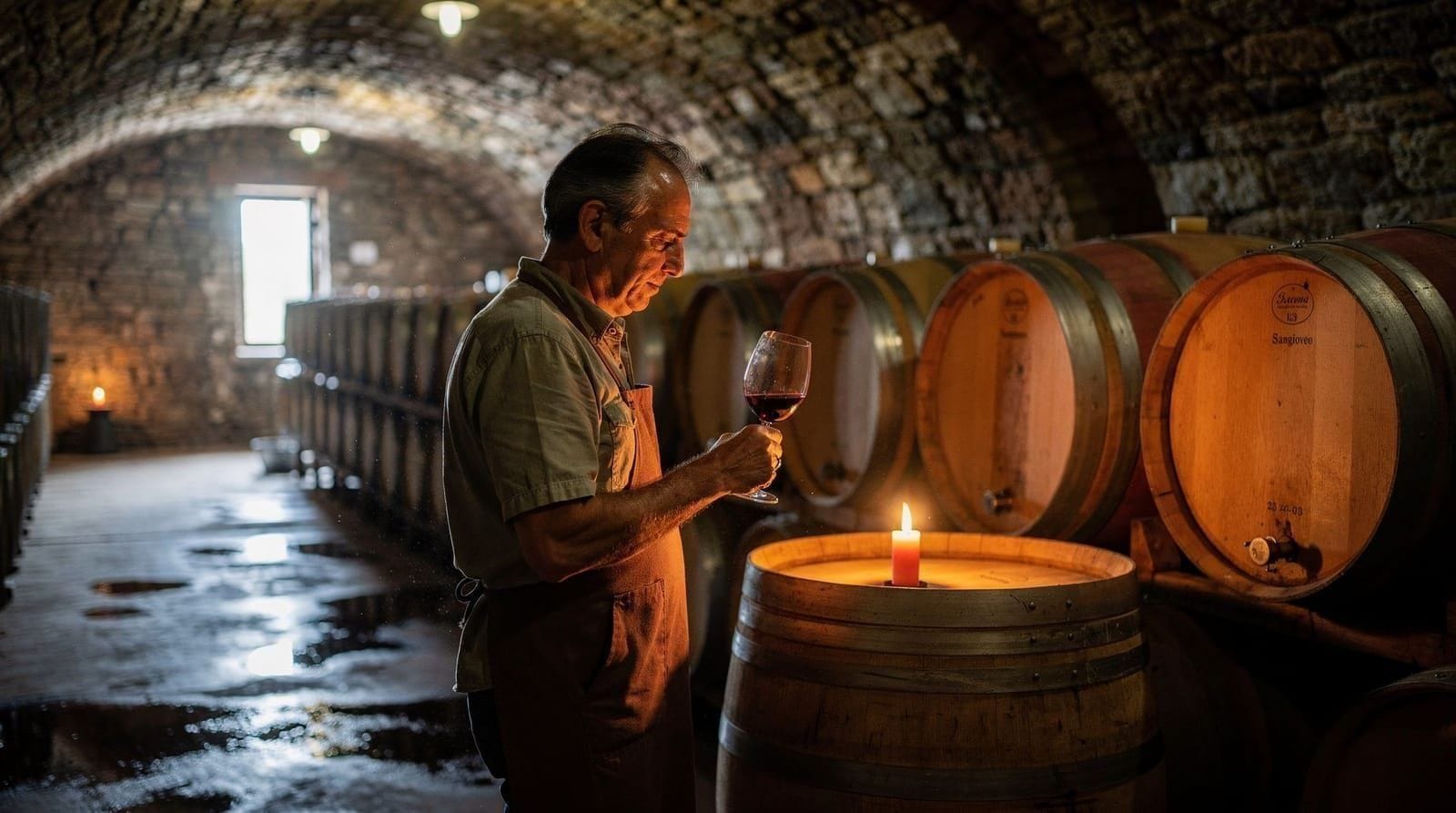
Most tastings include at least one Annata Chianti Classico, one Riserva, sometimes a Gran Selezione, and often olive oil (nearly every Chianti estate also produces olive oil from the same hills).
Chianti Classico villages worth visiting
The wine itinerary is also a cultural one. The villages along the SR222 are among the most beautiful in Tuscany.
Greve in Chianti: The main market town, with a distinctive trapezoidal piazza surrounded by arcaded buildings. The weekly Saturday market is genuine. Good place to buy wine directly, including from the Enoteca Falorni with over 1,000 labels.
Panzano in Chianti: A small hilltop village famous for its wine and for the butcher Dario Cecchini, who has turned his shop into a theatrical experience. If you eat meat, his daily show at Solociccia is worth planning around.
Radda in Chianti: Quieter and more medieval, with an intact village centre. Good enoteca options and a more local feel.
Gaiole in Chianti: Set lower in the valley, with access to several major estates. The Castello di Brolio is a short drive south.
Castelnuovo Berardenga: The southernmost commune, closest to Siena. Home to Fèlsina, producer of excellent Berardenga Chianti Classico.
Chianti and food: what to eat
Sangiovese’s acidity and tannin structure make it a natural food wine. The Chianti region’s cuisine mirrors the wine perfectly:
- Bistecca alla Fiorentina: The definitive pairing. A thick T-bone of Chianina beef, grilled rare. Found at every serious Chianti trattoria.
- Pappardelle al cinghiale: Wide pasta ribbons with wild boar ragù. The boar comes from the same hills as the vines.
- Ribollita: The peasant bread and vegetable soup, twice-cooked, rich and earthy. Needs Chianti Classico.
- Crostini with chicken liver pâté: A starter in every Tuscan home and restaurant.
- Aged Pecorino di Pienza: From the Val d’Orcia, but omnipresent on Chianti tasting boards.
Chianti Rufina: the underrated exception
Before leaving the topic of Chianti sub-zones, Chianti Rufina deserves a mention. Located northeast of Florence in the Sieve valley, Rufina produces wines that are notably more elegant and acid-driven than Chianti Classico — often described as “the Burgundy of Tuscany.” Producers like Selvapiana and Frescobaldi’s Nipozzano estate make wines that age for 20+ years. Because the name doesn’t carry the prestige of Classico, prices remain remarkably reasonable: good Rufina Riserva for €18–25.
Vintages: what years to look for
Not all Chianti Classico vintages are equal. Sangiovese is highly sensitive to the growing season.
| Vintage | Quality | Notes |
|---|---|---|
| 2019 | Outstanding | Balanced, age-worthy |
| 2020 | Very good | Warm year, ripe and immediate |
| 2021 | Excellent | Fresh and structured |
| 2022 | Good-very good | Very hot summer, some over-ripeness |
| 2023 | Promising | Good balance, not yet widely released |
For Gran Selezione and Riserva, wines from 2019 and 2021 are drinking beautifully now and will improve for another decade.
The Gran Selezione tier: what it means in practice
Gran Selezione was introduced in 2014 as the top classification tier for Chianti Classico — but the rules don’t specify which vineyard or selection is used, leaving each producer to define their own top tier. This creates significant variation.
Single-vineyard Gran Selezione: Some producers (Fontodi’s Vigna del Sorbo, Badia a Passignano by Antinori, Isole e Olena’s Cepparello) use a specific named vineyard. These are the most terroir-specific expressions and arguably the most interesting.
Best-barrels Gran Selezione: Other producers blend their finest barrels from multiple sites into a single Gran Selezione. The result is consistently excellent but less geographically expressive.
Price reality check: Gran Selezione ranges from €40 (less prestigious producers) to €100+ (Fontodi, Ama, Monsanto). At €40–60, several good Gran Selezione wines represent genuine value compared to similarly-priced Burgundy, Barolo, or Brunello. At €80–100, you’re paying for name recognition as much as incremental quality.
Aging requirement: 30 months total before release, including at least 3 months in bottle. In practice, most serious Gran Selezione are released 36–48 months after harvest.
Chianti Classico and the global market
Chianti Classico has successfully repositioned itself in the global wine market over the past two decades. Following a period in the 1980s–1990s when cheap fiasco Chianti had damaged the name internationally, the Classico Consortium invested heavily in image rehabilitation: stricter rules, the Gran Selezione tier, and a consistent communication strategy emphasising the Gallo Nero.
The results are measurable. Average prices for Chianti Classico DOCG have increased significantly in real terms since 2000. Export markets — the US, Germany, Switzerland, and Canada — account for about 70% of sales. The American market, in particular, has embraced Chianti Classico as a food-wine alternative to California’s richer, oakier reds.
For visitors, this means: the best Chianti Classico is never cheap, but compared to equivalently prestigious wines from Burgundy or Napa, it remains an extraordinary value. A €25 Chianti Classico Annata from a serious producer (Isole e Olena, Villa Cerna, Il Palazzino) will give you more pleasure at the dinner table than a €25 wine from almost any other region in the world.
This value-for-money argument is worth making explicitly because it changes how you should shop. Rather than chasing the most famous name at a winery shop, ask staff which of their mid-tier wines they personally think overdelivers for the price — in Chianti Classico, that answer is very often the standard Annata bottling from a serious estate rather than the flagship Gran Selezione, which carries a real premium for a smaller step up in quality.
Buying and taking wine home
Almost every Chianti estate will ship wine to your home country — ask when booking your visit. EU visitors can bring home unlimited quantities; non-EU visitors should check customs limits (typically 2 litres duty-free in the US, though this rarely applies in practice for personal consumption).
In Florence, the best wine shops for Chianti are: Buca Mario (near Piazza della Repubblica), Enoteca Alessi, and the wine section of Mercato Sant’Ambrogio.
If you’re not visiting an estate directly, these city shops are also the more reliable place to buy older vintages — wineries typically sell only their current releases at the cellar door, while a good Florence enoteca will stock back vintages from multiple producers side by side, letting you compare how a 2019 and a 2021 from the same estate are showing right now.
Frequently asked questions about Chianti wine
Is Chianti the same as Chianti Classico?
No. Chianti DOCG and Chianti Classico DOCG are separate appellations with different boundaries and rules. Chianti Classico is a more restricted zone with stricter production rules and is generally considered higher quality. Look for the Gallo Nero (black rooster) on the neck label.
What does the rooster on Chianti mean?
The black rooster (Gallo Nero) is the historical symbol of the Chianti Classico Consortium, tracing back to a medieval legend about a boundary dispute between Florence and Siena. It certifies that the wine is an authentic Chianti Classico DOCG. Not all bottles with a rooster are Chianti Classico — some producers use roosters as brand imagery — so check for the DOCG designation on the label.
How do I pronounce Chianti?
“Kee-AN-tee” — the ‘ch’ in Italian is always a hard ‘k’ sound before ‘i’ and ‘e’.
Can I do a day trip to Chianti from Florence?
Yes, and it’s one of the best day trips available from Florence. A half-day tour (4–5 hours) typically visits two wineries and includes transport. A full day (7–8 hours) adds lunch at an estate, more wineries, and sometimes a stop in Siena or Greve. The Chianti classico route guide covers the self-drive option in detail.
What is the difference between Chianti and Super Tuscans?
Super Tuscans are premium wines from Tuscany that don’t conform to the Chianti DOCG rules — often because they include international grape varieties like Cabernet Sauvignon or Merlot, which weren’t permitted in the traditional Chianti blend. They’re classified as IGT (Indicazione Geografica Tipica), which sounds humble, but wines like Sassicaia and Tignanello sell for €100+ per bottle. Read more in the Super Tuscans guide.
Should I choose Chianti or Brunello di Montalcino for a wine day trip?
Chianti is closer to Florence, more varied in price and style, and a gentler first experience of Tuscan wine country — see the comparison in the Brunello di Montalcino guide. Brunello is a longer drive south but offers a narrower, more serious focus on a single, more expensive style of Sangiovese. If you only have one wine day and this is your first visit to Tuscany, Chianti is the more practical choice.
Both regions are made from Sangiovese, but they express it very differently: Chianti Classico’s galestro soils and cooler average altitude tend to produce brighter acidity and red-fruit character, while Montalcino’s warmer position and Sangiovese Grosso biotype produce fuller, more structured wines built for longer aging. Tasting both back to back — a Chianti Classico Riserva and a young Brunello, if you can find a shop pouring both — is one of the more educational half-hours available to a visitor curious about how much terroir changes a single grape variety.
Comparing Chianti’s sub-zones
Not every part of the Chianti Classico zone tastes the same, and understanding the broad geographic split helps you choose which villages to prioritise on a short visit.
| Sub-area | Style | Notable producers |
|---|---|---|
| Greve/Panzano (Conca d’Oro) | Warm, full-bodied, immediately appealing | Fontodi, Rampolla, Querciabella |
| Radda/Gaiole | Higher altitude, more structured, longer-lived | Volpaia, Badia a Coltibuono, Castello di Ama |
| Castellina/San Casciano | Elegant, Galestro-driven, often value-priced | Antinori, Villa Cerna |
| Chianti Rufina (separate zone) | Acid-driven, ages 20+ years, underrated | Selvapiana, Frescobaldi Nipozzano |
This table is a starting point, not a rule — individual producers within each sub-area can deviate significantly from the general style, and a good estate visit is the fastest way to test these generalisations against what’s actually in the glass.
Top experiences
Bookable activities with verified prices and instant confirmation on GetYourGuide.

Florence: Chianti wineries tour with wine tasting
- Free cancellation
- Small group
Florence: Chianti hills wineries tour with tasting
- Free cancellation
- Small group
Florence: Chianti half-day wine tour
- Free cancellation
- Small group
Florence: Chianti vineyards tour with wine tasting dinner
- Free cancellation
Florence: private 4-hour Chianti tour and wine tasting
- Free cancellation
Florence: great Chianti wine and olive oil trail with lunch
- Free cancellation
- Small group