Vino Nobile di Montepulciano guide
Val d'Orcia: Montepulciano, Pienza and Montalcino with winery
- Free cancellation
- Small group
How do I visit Vino Nobile producers in Montepulciano?
Montepulciano is 120 km from Florence — about 1h45 by car. The cantinas (cellars) are built directly into the tuff rock beneath the city and many welcome visitors without advance booking. Tastings typically cost €10–30 per person.
| Where | Montepulciano, Val d’Orcia — 120km from Florence |
| Getting there | Car, 1h45–2h; or train + bus via Chiusi-Chianciano Terme |
| Cost | Tastings €10–30; bottles €18–40 (Riserva €35–80) |
| Booking | Walk-in usually fine within city walls; estates outside need reservations |
| Best paired with | Pienza and Montalcino for a full Val d’Orcia day |
The “noble wine” of Tuscany’s southern hills
In 1685, the Italian poet Francesco Redi wrote his “Bacco in Toscana” (Bacchus in Tuscany), rhapsodising about the wines of his time. He called the wine of Montepulciano “il re dei vini” — the king of wines. Whether or not you agree with 17th-century tastes, the name stuck: Vino Nobile di Montepulciano, the “noble wine,” has been a prestige product of this hilltop city for centuries.
Today it is one of Italy’s 77 DOCG wines — the highest classification — and a genuinely distinctive expression of Sangiovese in a landscape quite different from Chianti or Montalcino.
The wine and the grape
Vino Nobile di Montepulciano must contain at least 70% Prugnolo Gentile, the local name for the Sangiovese Grosso biotype found in this specific area. The wine often contains 15–30% other varieties, most commonly Canaiolo Nero and sometimes Colorino, which add soft fruit and colour.
The name causes endless confusion: Vino Nobile di Montepulciano (wine from the town of Montepulciano in Tuscany, made primarily from Sangiovese) is entirely different from Montepulciano d’Abruzzo (a wine from Abruzzo, eastern Italy, made from the Montepulciano grape variety). The only connection is a coincidence of historical names.
Production rules
DOCG Vino Nobile di Montepulciano:
- Minimum 70% Prugnolo Gentile (Sangiovese Grosso)
- Minimum 2 years total aging (1 year in oak)
- Riserva: 3 years aging (1.5 in oak)
Rosso di Montepulciano DOC:
- Minimum 70% Prugnolo Gentile
- Only 6 months aging required
- Released in March after harvest
| Wine | Minimum aging | Typical price |
|---|---|---|
| Rosso di Montepulciano DOC | 6 months | €12–22 |
| Vino Nobile di Montepulciano DOCG | 2 years | €18–40 |
| Vino Nobile Riserva DOCG | 3 years | €35–80 |
The cantinas: cellars cut into living rock
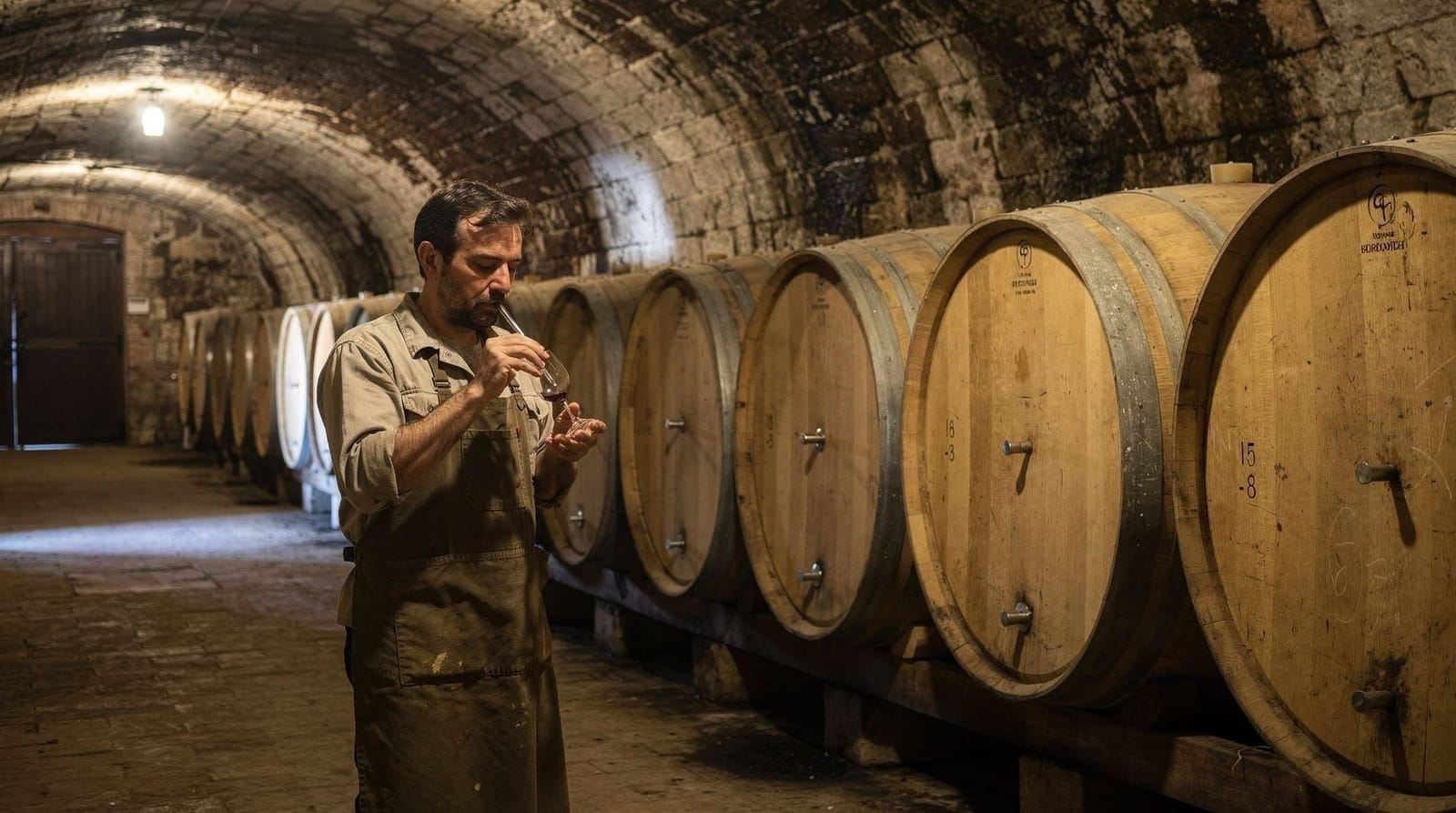
What sets Montepulciano apart from other Tuscan wine towns is not just the wine but the architecture of production. The city sits on a hill of tufo — a porous volcanic rock — and its cantinas (wine cellars) are carved directly into this material, some extending 20–30 metres underground. The temperature and humidity remain constant year-round, making them ideal for aging wine.
Walking the main Corso in Montepulciano, you’ll see cantina entrances at street level or in cellars beneath palazzi. Many are open to visitors either freely or with a small tasting fee.
Cantina Contucci (beneath Palazzo Contucci, Piazza Grande): One of the oldest cantinas in the city, in use since at least the 16th century. The Contucci family has been producing Vino Nobile here for centuries and still lives above the cellars. Self-guided cellar visits are usually free; guided visits with tasting €15–25.
Cantina Gattavecchi (Via Collazzi): Built into the city walls, with atmospheric vaulted tunnels. Very visitor-friendly; tastings from €10.
Avignonesi (outside the city walls, near La Stella): One of the most prestigious estates in Montepulciano, now biodynamic. Their wine museum and visitor experience are excellent. Tastings from €25, reservation recommended.
Poliziano: Named after the 15th-century humanist Angelo Poliziano who was born in Montepulciano, this estate is run by Federico Carletti and produces some of the most consistent Vino Nobile in the appellation. Guided visits by appointment, €30–50.
Boscarelli: Small, family-run estate producing Vino Nobile with great precision. The Nobile di Boscarelli is their flagship. Appointments essential.
Dei: Relatively newer estate (founded 1964) producing Vino Nobile of excellent quality-to-price ratio. Tastings by appointment.
Walking the city: wine and architecture together
Montepulciano is one of the most beautiful Renaissance towns in Tuscany, a perfectly preserved hilltop settlement rising 605 metres above sea level. The main street climbs steeply from the Porta al Prato gate through Piazza Marzocco to the summit at Piazza Grande.
Piazza Grande: The civic heart of the city, with the unfinished Duomo (cathedral), Palazzo Comunale (a smaller Florentine imitation of Palazzo Vecchio), and several Renaissance palazzi. The view south over the Val d’Orcia is extraordinary.
Tempio di San Biagio: A 16th-century church by Antonio da Sangallo the Elder, sitting on a terrace outside the walls — considered one of the finest examples of High Renaissance ecclesiastical architecture. Free to enter.
The city’s main cantina street runs along Via Ricci and through several side alleys. The tourist information office on Via Gracciano maps the open cantinas.
Getting there from Florence
Montepulciano is approximately 120 km from Florence. The most direct route by car takes the A1 motorway south toward Rome, exiting at Valdichiana (exit Bettolle/Sinalunga), then east on the SP146 to Montepulciano. Drive time is around 1h45–2h.
By train: There is no station in Montepulciano itself. The Montepulciano Stazione (on the Chiusi–Siena line) is 9 km from the hilltop town, served by a local bus (Tiemme). Alternatively, take the train to Chiusi-Chianciano Terme (about 2h from Florence), then a bus or taxi up to Montepulciano.
By tour: The Val d’Orcia loop tour from Florence — covering Montepulciano, Pienza, and Montalcino — is the most popular way to see this area without driving. Full-day tours depart Florence around 8:30–9am, cover all three towns, and return by 7pm.
Combining Montepulciano with other destinations
Montepulciano sits on the eastern edge of the Val d’Orcia, making it a natural starting point for exploring the area:
Pienza (15 km west): The ideal Renaissance town commissioned by Pope Pius II in the 1460s. Famous for its Pecorino di Pienza (fresh sheep’s milk cheese, often aged in walnut leaves or clay), with shops along the main street offering tastings. Pair Pecorino with Vino Nobile for a perfect combination.
Montalcino (35 km west): The home of Brunello di Montalcino, Tuscany’s most prestigious red wine. Combining both towns in a single day is common and logical.
Chianciano Terme (15 km south): A spa town with thermal waters if you want to recover after the wine tasting.
Bagno Vignoni (25 km west): A unique village centred on a thermal pool (now decorative, not swimmable) in the main piazza. One of Tuscany’s most surreal and photogenic spots.
What to eat in Montepulciano
The local cuisine pairs perfectly with Vino Nobile’s structure.
Pici: The local pasta — hand-rolled thick spaghetti, traditionally served with ragù d’anatra (duck sauce) or all’aglione (a thick garlic tomato sauce). Found in every restaurant.
Cinghiale (wild boar): Roasted, braised in wine, or as a pasta sauce. The Tuscan hills are full of wild boar.
Pecorino di Pienza: The local sheep’s milk cheese from nearby Pienza. Soft, medium-aged, or aged with walnut leaves. A glass of Vino Nobile with aged Pecorino is one of the great simple pleasures of Tuscan travel.
Porchetta: Whole roasted pork with herbs and garlic. Available at market stalls and some alimentari (delis).
Vintages and buying advice
Vino Nobile di Montepulciano is released 2 years after harvest (Riserva after 3 years). Current vintages on shelves in 2026 will primarily be 2023 standard bottlings and 2022 Riserva.
| Vintage | Quality | Notes |
|---|---|---|
| 2019 | Outstanding | Balanced, excellent aging potential |
| 2020 | Very good | Warm year, accessible and fruit-forward |
| 2021 | Excellent | Fresh acidity, structured, long potential |
| 2022 | Good-very good | Hot summer; some concentration |
| 2023 | Promising | Results look strong; Riserva not yet released |
For the best value, look to the standard Vino Nobile at €18–30 from producers like Il Poggione (not their Brunello estate, but the Montepulciano range), Contucci, or Dei. The Avignonesi Vino Nobile at €30–40 represents a significant step up in quality and is biodynamically farmed.
Planning a Montepulciano visit from Florence
Timing your day
A dedicated Montepulciano day from Florence works well if you leave by 8:30am. Arrive in Montepulciano around 10:30am — the cantinas open at this time. Spend the morning visiting two cantinas (allow 1.5 hours per visit including tasting), then have lunch in the city. The afternoon is perfect for Pienza (Pecorino shopping and espresso on the main street, 20 minutes west) before driving back to Florence via the A1.
If combining with Montalcino, the logical order is: Montalcino in the morning (winery visit), Pienza for lunch, Montepulciano in the afternoon for an enoteca or cantina visit. The drive from Montalcino to Pienza to Montepulciano covers the triangle of the Val d’Orcia from west to east — never more than 20 minutes between stops.
What to buy and bring home
The cellar door price for Vino Nobile is typically €18–30 for standard bottling, €30–50 for Riserva. Buying direct from the producer saves the retailer’s margin.
For non-wine purchases, Montepulciano’s main street has excellent shops for:
- Vin Santo: Sweet dessert wine made here alongside the red
- Cinghiale products: Wild boar salami, pâté, prosciutto
- Ceramics: Hand-painted in traditional Montelupo Fiorentino style
- Honey: The Tuscan hills produce excellent wildflower and chestnut honey
The town has a small but good supermarket (Coop on Via Gracciano) for local products at everyday prices.
The wine and the landscape: understanding Prugnolo Gentile’s terroir
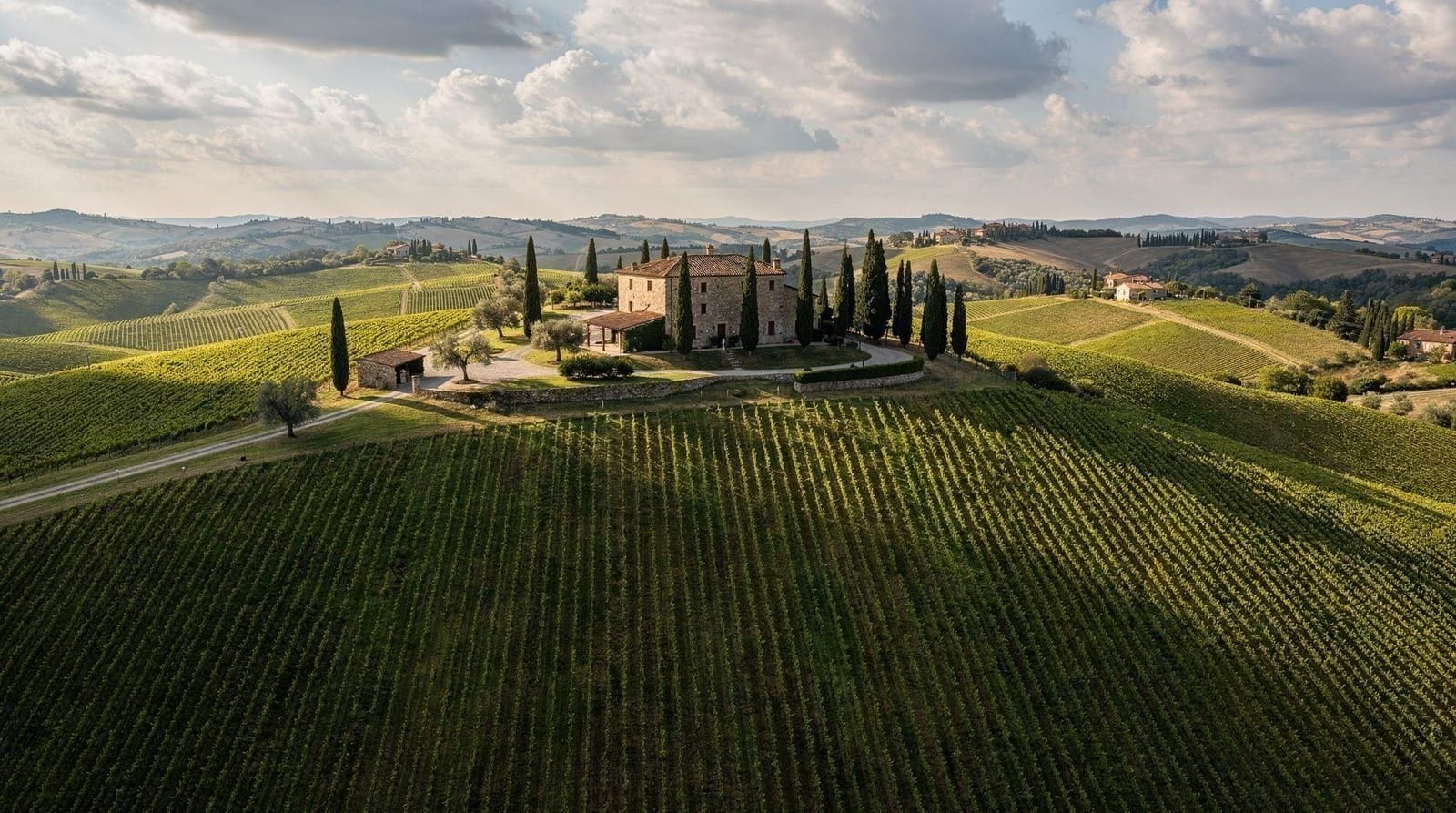
Montepulciano sits on a hill of tuff and clay at 605 metres. The altitude and the clay-limestone soils create conditions different from either Chianti or Montalcino: somewhat warmer than Chianti Classico (more southerly latitude, lower altitude), but cooler than the floor of the Val d’Orcia. The diurnal temperature variation (cool nights, warm days) preserves acidity in the grapes — which is why good Vino Nobile has both fruit richness and backbone.
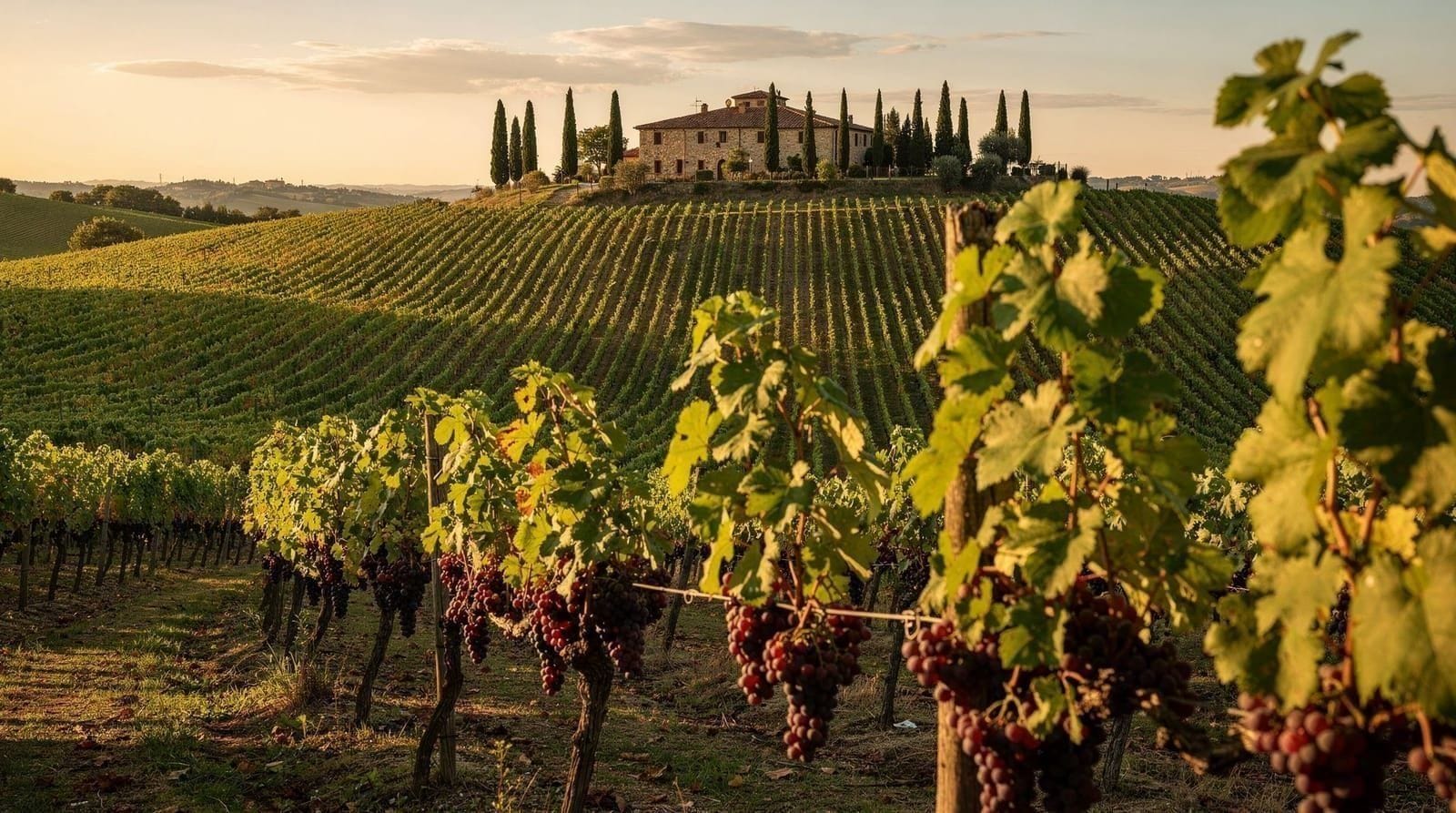
Prugnolo Gentile is the local biotype of Sangiovese. Like all Sangiovese clones, it ripens medium-late (typically harvested in late September to mid-October), produces wines with high natural acidity and moderate alcohol, and benefits from aging in oak to soften its initially firm tannins.
The clay-limestone soils (galestro and alberese) here are structurally similar to parts of Chianti Classico — which may explain why Vino Nobile’s style bridges Chianti and Brunello rather than being a wholly separate expression.
Planning around Vino Nobile: the wider Tuscan wine picture
Vino Nobile rarely stands alone on an itinerary. For the full regional context — how it compares to Chianti, Brunello, and the coastal Super Tuscans — see the Tuscan wine regions guide. If Brunello is competing for your time on the same trip, the Brunello di Montalcino guide covers the neighbouring appellation in the same depth.
Most visitors reach Montepulciano as part of a wider Val d’Orcia loop rather than a standalone trip — see the Val d’Orcia day trip guide for how Pienza, Montalcino and Montepulciano fit into a single day, and the staying in Tuscany vs day trips guide if you’re weighing an overnight in the area instead.
Frequently asked questions about Vino Nobile di Montepulciano
Is Vino Nobile as good as Brunello di Montalcino?
They’re different wines at different price points. Brunello is generally more age-worthy and commands higher prices (€40–120 vs. €18–40 for Vino Nobile). But the best Vino Nobile Riserva from producers like Boscarelli or Poliziano can rival mid-tier Brunello at half the price. Vino Nobile is often better value.
Do I need to reserve winery visits in Montepulciano?
For the cantinas within the city walls (Contucci, Gattavecchi, Crociani), you can often walk in during regular hours. For estate wineries outside the walls (Avignonesi, Poliziano, Boscarelli), reservations 2–5 days in advance are recommended, especially in high season (April–October).
What is Nobile di Montepulciano like when young vs. aged?
Young Vino Nobile (1–3 years from release) can be quite tannic and closed. The wine opens beautifully with 5–10 years of bottle age — the tannins soften, the cherry fruit deepens, and secondary notes of tobacco and earth emerge. Riserva needs even longer. If you want something drinkable young, choose Rosso di Montepulciano or a warmer vintage like 2020.
Is there a wine festival in Montepulciano?
Yes — the Bravio delle Botti is a barrel-rolling race through the city streets on the last Sunday of August. Eight city districts (contrade) compete, pushing enormous wine barrels up the steep streets to Piazza Grande. It’s preceded by a medieval pageant and is one of the most atmospheric festivals in Tuscany.
Top experiences
Bookable activities with verified prices and instant confirmation on GetYourGuide.

Val d'Orcia: Montepulciano, Pienza and Montalcino with winery
- Free cancellation
- Small group

Montepulciano: wine tasting and cellar tour
- Free cancellation
- Small group
Montepulciano: Vino Nobile, architecture and the heart of Montepulciano
- Free cancellation
- Small group
Montepulciano: winery tour and tasting with appetizers
- Free cancellation
- Small group

Florence: private Montalcino and Montepulciano wine tour
- Free cancellation
Florence: Val d'Orcia highlights tour with wine tasting
- Free cancellation
- Small group
Montepulciano: lunch at a winery with Vino Nobile di Montepulciano
- Free cancellation
- Small group