Chianti Classico route
Florence: Chianti wineries tour with wine tasting
- Free cancellation
- Small group
How long does the Chianti Classico route take from Florence to Siena?
The SR222 (Via Chiantigiana) is about 75 km from Florence to Siena and takes 1.5–2 hours of pure driving time. With winery visits and village stops, allow a full day — most people do the route south to Siena and return to Florence by motorway. You need a car; there is no practical public transport option.
The Via Chiantigiana: Tuscany’s great wine road
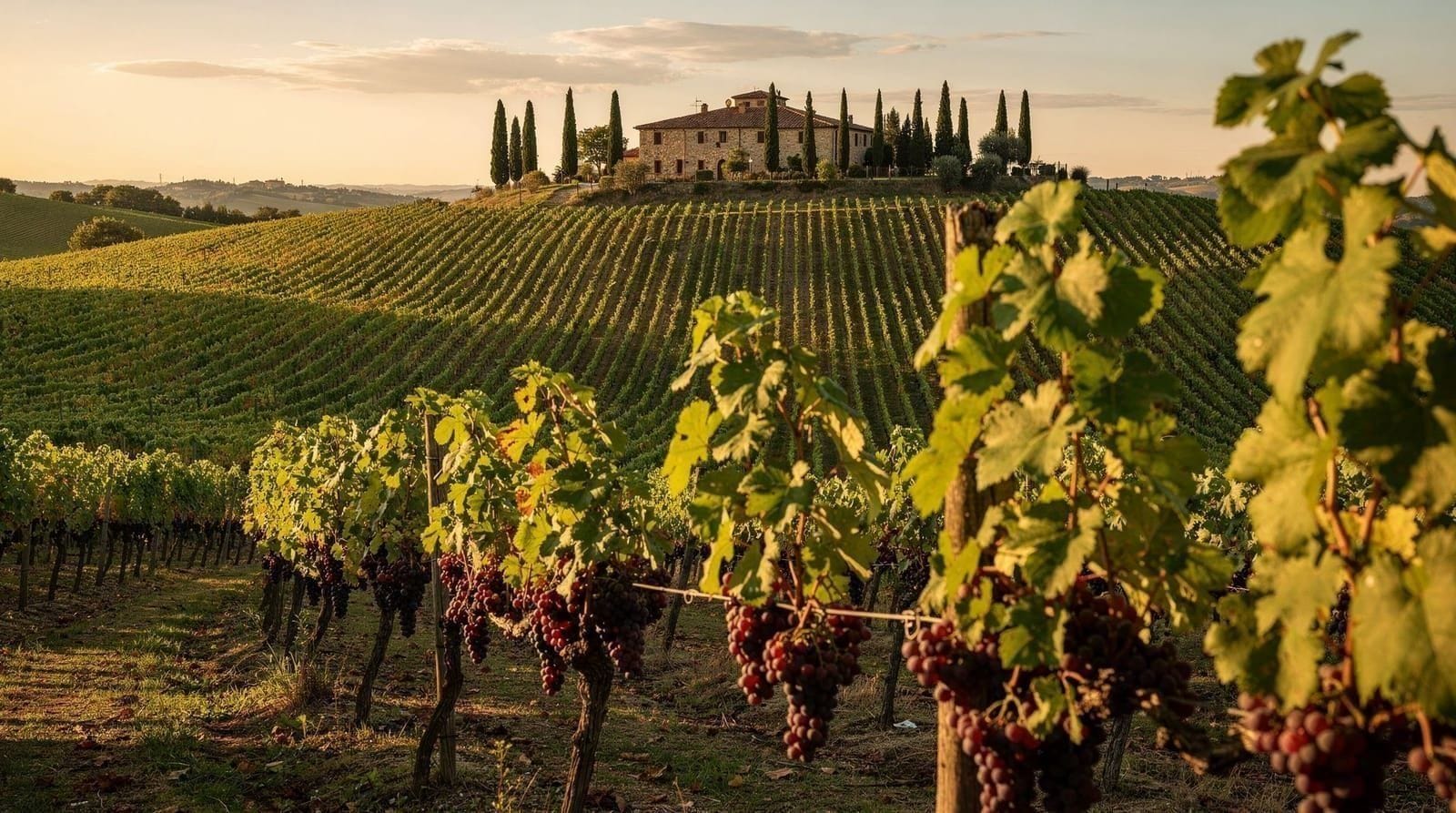
The SR222 — known locally as the Via Chiantigiana (Chianti Road) — is one of the most beautiful drives in Italy. It runs 75 km from Florence south through the heart of the Chianti Classico DOCG zone, threading through cypress avenues, vineyard-covered hills, and ancient hilltop villages before descending into Siena.
This is not a fast road. The bends are tight, the gradient changes constantly, and every kilometre offers a reason to stop. Allow a full day to do it properly — or two days if you want to combine winery visits with exploring the villages at pace. If a self-drive day sounds like too much logistics, the Chianti wine guide and Chianti day trip guide cover guided alternatives that cover the same ground without the navigation.
| Where | SR222 (Via Chiantigiana), Florence to Siena, ~75km |
| Cost | Car hire €60–80/day + €175–225/couple for tastings, lunch, wine |
| Time needed | Full day (8am–7pm realistic) |
| Getting there | Self-drive only — no practical public transport |
| Best time | Spring for landscape, Sept–Oct for harvest |
Before you leave Florence: practical preparation
Renting a car
Pick up from central Florence or Florence airport (FLR). Most international rental companies operate here. Note: Florence’s ZTL (Limited Traffic Zone) covers the historic centre — if your car hire is collected from a central hotel, confirm with the hotel’s reception how to exit the ZTL before returning the vehicle. A GPS or downloaded offline map (Google Maps works well) is essential on the SR222. See the renting a car in Tuscany guide and driving in Tuscany guide for the fuller rules on ZTL fines, insurance, and one-way rental logistics.
Italian driving rules to know
- Speed limits on rural roads (like the SR222): 90 km/h on straight stretches, but the road’s bends make 50–70 km/h realistic most of the time
- No alcohol if you’re driving: Italian BAC limit is 0.5 mg/ml (lower than the UK, equal to roughly one glass of wine for most adults)
- ZTL zones exist in all historic centres — Greve, Radda, and Gaiole all have some pedestrianised areas. Park outside the walls and walk in
Booking wineries
Before leaving Florence, confirm reservations at the estates you want to visit. Email works well for Italian producers; some have online booking. Two to three wineries is a realistic day’s visiting with lunch.
The route: Florence to Siena via the SR222
Florence to Strada in Chianti (17 km)
The route begins south of the city on the Viale Michelangiolo, passing the famous viewpoint at Piazzale Michelangelo (worth a stop if you haven’t seen it). From here, the SR222 proper begins as you descend into the valley and immediately start climbing into the first hills.
The first stretch — through Bagno a Ripoli and Grassina — passes through the Florentine suburbs before the landscape opens into proper wine country near Capannaccia.
Strada in Chianti (18 km from Florence)
A small village with a church and a good bakery. The name simply means “on the Chianti road.” Nothing requiring a stop, but useful to know you’ve entered the Chianti zone.
Nearby: Antinori nel Chianti Classico is 8 km west of Strada in Chianti, near San Casciano Val di Pesa — the most spectacular winery in the region. If you haven’t visited, this is worth the detour even if you’re not doing the tasting.
Greve in Chianti (30 km from Florence)
The main town of the Chianti Classico zone. Population 14,000; the commercial and cultural hub of the wine region.
Piazza Giacomo Matteotti: The distinctive wedge-shaped piazza surrounded by loggia-fronted buildings is unlike any other square in Tuscany. The statue in the centre is of Giovanni da Verrazzano, the Florentine explorer who mapped the eastern US coastline.
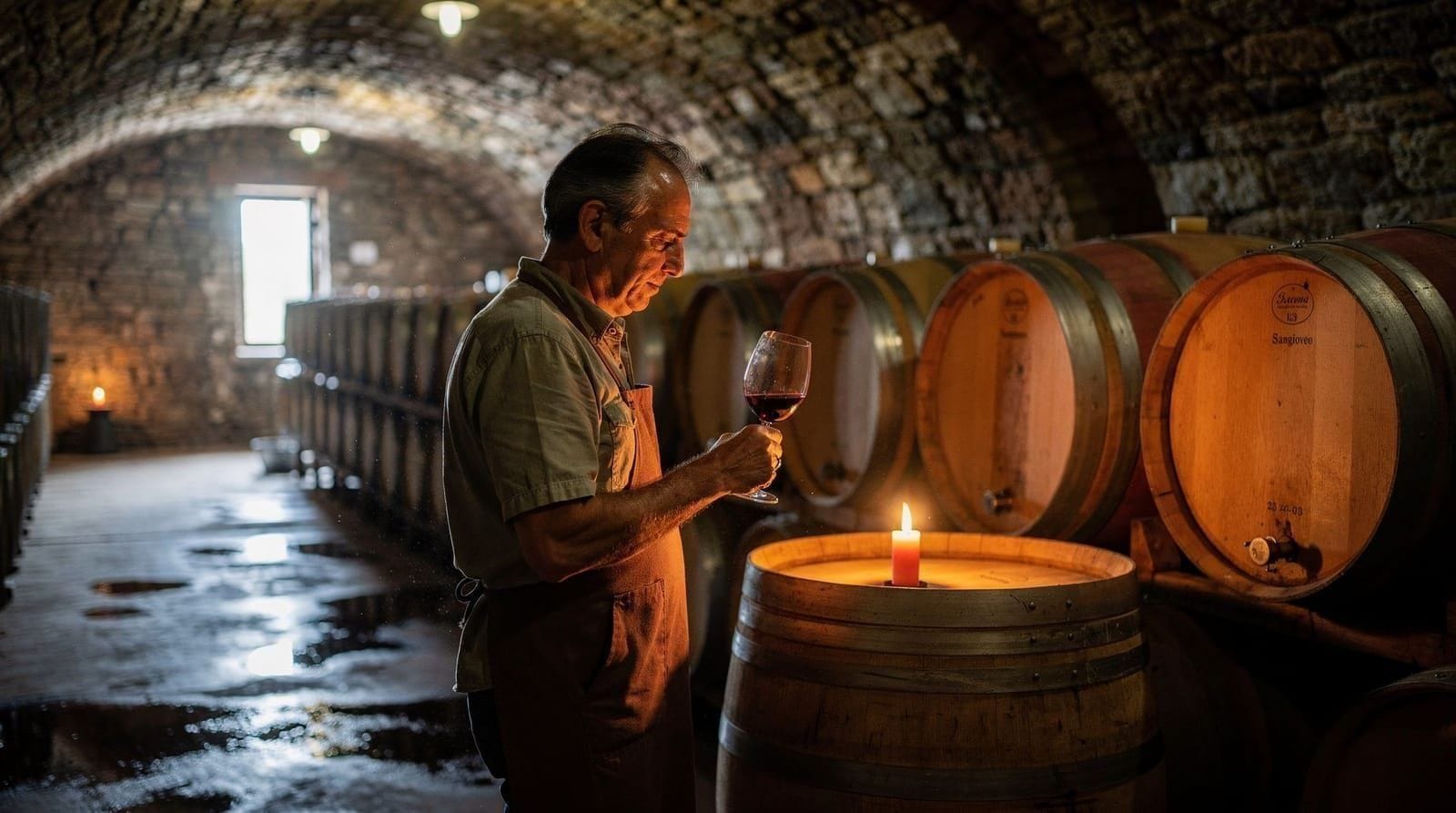
Enoteca Falorni (Piazza Matteotti): The essential stop in Greve. Over 1,000 wines from the Chianti region and beyond, with self-service tasting machines (wine dispensers that charge €1–4 per measure on a prepaid card). You can taste 5–10 different Chianti Classico Annata, Riserva, and Gran Selezione, then buy your favourite. Open daily.
Macelleria Falorni (same piazza): The family butcher, one of the most famous in Tuscany, selling Chianina beef, cinghiale (wild boar) salumi, rigatino (Tuscan pancetta), and more. Buy provisions for a picnic in the vineyard.
Saturday market: If you’re here on a Saturday morning, the weekly market fills the piazza and surrounding streets with produce, cheese, olive oil, honey, and crafts from local farms. Genuinely local — not touristy.
Parking in Greve: Car parks are outside the historic centre. The Parcheggio Garibaldi and Parcheggio Verdiana both have plenty of space. Park here and walk into the piazza.
Panzano in Chianti (38 km from Florence)
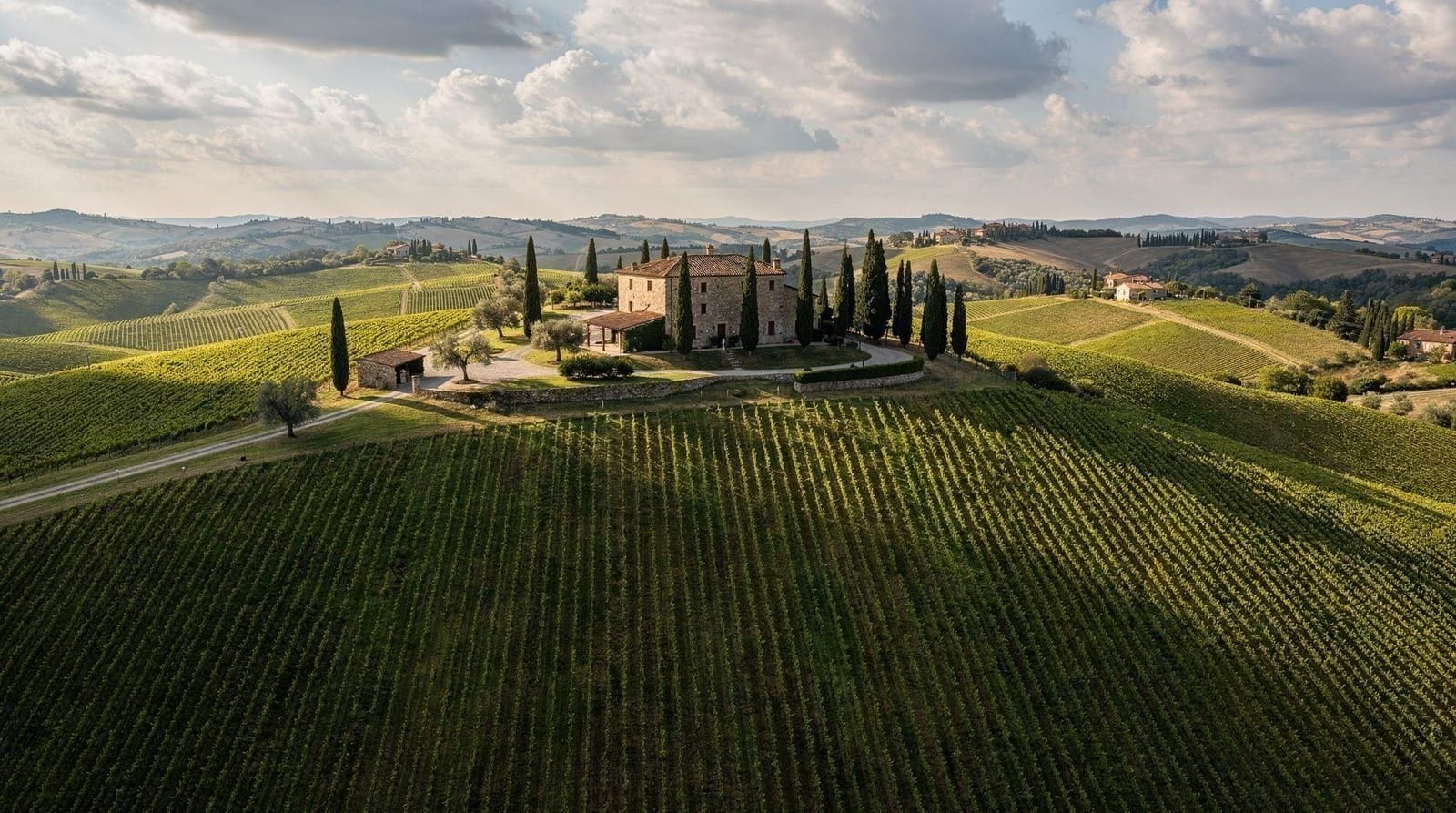
A hilltop village perched above the Conca d’Oro — the “golden bowl,” a natural amphitheatre of south-facing vineyards considered by many viticulturalists to be the finest growing terrain in all of Chianti Classico.
Fontodi: The most famous estate in Panzano, producing Gran Selezione wines that receive near-perfect scores from international critics. The vineyard views from the estate access road are spectacular. Appointment only — book well in advance.
Dario Cecchini’s butcher shop: Cecchini is arguably the most famous butcher in Italy — a theatrical showman who recites Dante while cutting meat and has inspired chefs and writers from around the world. His original butchery on Via XX Luglio is open as a shop and restaurant experience (Solociccia). Reservations required for the restaurant.
Panzano for lunch: Small selection of trattorie and pizzerias, all reliable. Il Vescovino has a terrace with views over the Conca d’Oro.
Radda in Chianti (50 km from Florence)
The medieval heart of the Chianti League (Lega del Chianti), the 14th-century alliance of Florentine territories. The town retains its medieval plan with a circuit of walls, a central palazzo, and a castle.
More local and less visited than Greve, Radda is the best place to get a sense of authentic Chianti village life. The Thursday market is small but genuine.
Enoteca Il Poggio: Good selection of local wines, knowledgeable staff, tasting available.
Fattoria Vignale: A hotel and winery on the edge of Radda, with wine tastings and a good restaurant. Useful if you want to break the route overnight.
Gaiole in Chianti (60 km from Florence)
A quieter market town in the valley, serving as the gateway to the southern Chianti estates.
Castello di Brolio (7 km southeast): The Barone Ricasoli estate — the oldest winery in Italy (founded 1141). The 19th-century castle stands on a dramatic hilltop above vineyards. Open for visits with a small entry fee; enoteca and guided tours available. Bettino Ricasoli created the first modern Chianti formula here in the 1870s.
Badia a Coltibuono (5 km northeast): An 11th-century abbey turned wine estate, with a restaurant and cooking school. The estate’s Chianti Classico is reliably good; the dining room in the former cloister is one of the most atmospheric restaurants in the region.
Castelnuovo Berardenga (70 km from Florence)
The southernmost Chianti Classico commune, bordering the Siena province. Home to the Fèlsina estate, producer of the Berardenga bottling and excellent Riserva.
The town itself has less to offer tourists than the northern villages, but it’s well placed as a last stop before descending to Siena (10 km south).
Siena: end of the wine road
After a day in Chianti, Siena makes a natural endpoint. Park outside the walls at the Fortezza Medicea car park or Santa Caterina (discounted parking). The historic centre is entirely pedestrianised.
If you’re returning to Florence that evening, take the SR2 north to the A1 motorway — about 45 minutes direct, versus 1.5–2 hours back via the SR222.
Alternative ways to do the route without driving
By Vespa or Fiat 500
A classic Chianti experience. Several Florence operators offer classic Vespa scooters (with or without a guide) for touring the SR222. The Chianti Vespa or Fiat 500 tour is particularly enjoyable for couples. Fiat 500 tours include a guide and driver, leaving you free to taste. Obviously not suitable for those who can’t ride a scooter.
By e-bike
The Chianti e-bike tour from Florence covers the gentler parts of the route — the electric assist makes the hills manageable. The SR222 itself has significant gradients, so guided bike routes tend to avoid the main road and take vineyard lanes. Duration typically 4–6 hours; suitable for reasonably fit cyclists.
Guided tour
A standard guided Chianti wine tour from Florence uses a minivan, covers 2–3 wineries with tastings, includes lunch or a food stop, and returns to Florence in the evening. No driving, no navigation, free to taste as much as you want. The most comfortable option for wine-focused visitors.
The Eroica cycling event: context for road users
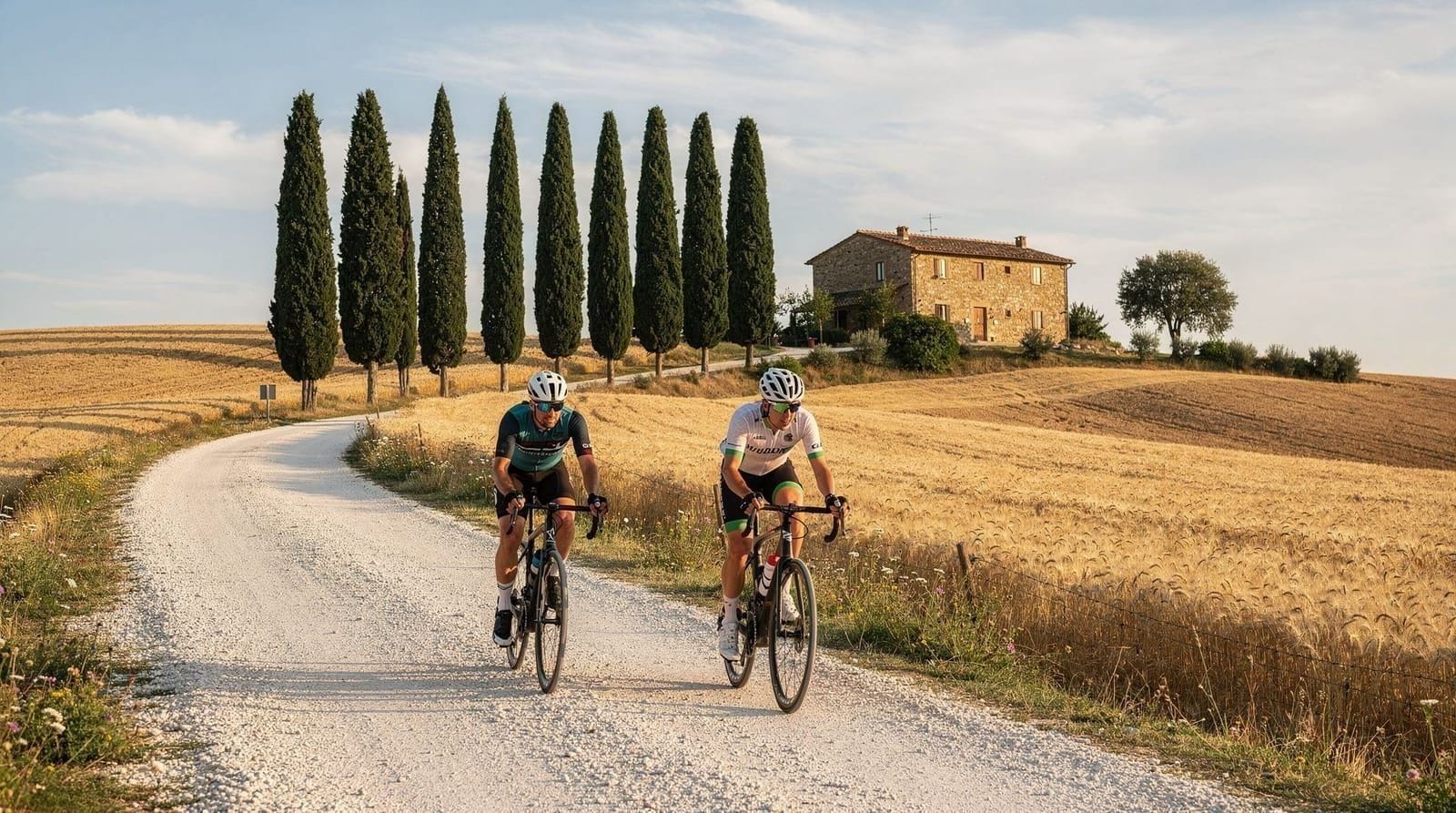
If you’re driving the Chianti route in late September or early October, be aware of the Eroica — an annual vintage-bicycle event centred on Gaiole in Chianti that attracts 8,000+ cyclists. The event covers routes of 46, 75, 130, and 209 km on the strade bianche. Roads in the Gaiole area are closed to motor traffic on the event day (first Sunday of October); the rest of the SR222 has very heavy bicycle traffic all weekend.
If your trip coincides with the Eroica, plan to visit the northern Chianti (Greve, Panzano) rather than the southern section around Gaiole and Radda. Or embrace it — the Eroica is a spectacular event to witness, with thousands of cyclists in vintage wool jerseys on pre-1987 steel-frame bikes. The village of Gaiole becomes a temporary museum of cycling history.
Chianti in autumn: the harvest context
September–October is arguably the best time to visit Chianti, but it’s also the busiest period at the wineries. The grape harvest (vendemmia) typically runs from mid-September to mid-October, depending on the season and elevation. During harvest:
- Many estates are focused on production, not tourism, and may limit or cancel standard tours
- Some estates offer harvest participation experiences (picking grapes with the estate workers, followed by lunch) — book these months in advance
- The landscape is at its most dramatic: the vines turn from green to gold, orange, and crimson over a period of about 3 weeks
- The estate roads become busy with tractors and harvest vehicles — allow extra time for driving
If you want to taste the new vintage, the Novello wine (a Beaujolais-style early-release wine) is released on 6 November each year. Some Chianti estates produce a Rosso di Toscana Novello — lighter and fruitier than standard Chianti, consumed within months of harvest.
What to buy on the route
Beyond wine, the Chianti route offers excellent local products worth buying directly from the source:
Olive oil: From October onwards, new-harvest olive oil (olio nuovo) is available at estates. The bright green, peppery fresh oil has a very different character from the mild oil that sits on supermarket shelves. Buy direct from estates that produce both wine and oil (Verrazzano, Fontodi, Badia a Coltibuono) — typically €18–28 for a quality 500ml bottle.
Honey: The Chianti hills have significant acacia, chestnut, and wildflower honey production. Farm stalls and market vendors along the SR222 sell excellent honey at prices well below what you’d pay in Florence shops.
Saffron: Grown in the red-clay soils around San Gimignano (40 km west), genuine Zafferano di San Gimignano DOP is the world’s most expensive spice by weight. Available in specialist shops in Greve and the Chianti villages. Check for the DOP mark — much cheaper “Moroccan saffron” is sold alongside it.
Vinegar: Aged Chianti vinegar (aceto di Chianti), made from wine that didn’t pass the Chianti Classico tasting panel, is one of the best uses of slightly imperfect wine. Available at estate shops and the Enoteca Falorni. True balsamic vinegar of Modena is a different product from Emilia-Romagna, not made here.
Practical information
Fuel: There are petrol stations in Greve and Gaiole. Rural stretches between are long — fill up in Greve rather than risk running low on the SR222.
Opening times: Most wineries close 1–2:30pm for lunch. Don’t arrive at a cellar at 1pm. Plan morning visits (9:30–12:30) and afternoon visits (2:30–6pm).
Wild boar: The Chianti hills have a large cinghiale (wild boar) population. They are genuinely common and often cross roads at night. Drive carefully after dark on rural roads.
Mobile signal: Patchy on the SR222 — download your maps offline before leaving Florence.
Emergency: The Italian emergency number is 112. Roadside assistance from ACI (Automobile Club Italia) is available at 803 116.
Frequently asked questions about the Chianti route
Is the SR222 paved and driveable in a standard rental car?
Yes — the SR222 is a paved regional road throughout. Minor access roads to some estates are unpaved gravel (strade bianche); a normal car handles these fine in dry conditions. In rain, take it slowly — the white gravel roads can be slippery. No 4x4 required.
How much should I budget for a day on the Chianti route?
Roughly: car hire (if not already rented) €60–80/day; fuel €10–15; 2 winery visits with tastings €50–70; lunch at an estate or trattoria €25–40; wine to take home (variable, but €30–60 is typical). Total: €175–225 for two people excluding car hire.
Can I do the route in half a day?
You can drive Florence–Greve–Panzano–Radda in about 3 hours including one winery stop and a lunch. It’s rushed and you’ll see only a fraction of the region. A full day is strongly recommended.
Is the Chianti route well-signposted?
Reasonably well. The Chianti Classico zone is signed with the Gallo Nero (black rooster) symbol at entry points. Winery signs are common on the SR222. However, GPS can be unreliable on minor roads — the major estates have their own brown tourist signs but smaller producers may not. Having printed directions or a confirmed offline GPS map is useful.
Should I self-drive or take a guided tour?
Self-driving gives total flexibility over pacing and stops, but means one person in the group can’t taste freely, and navigating the SR222’s tight bends after a winery visit is a real consideration. A guided minivan tour removes both problems — everyone tastes, no one drives — at the cost of a fixed itinerary and less time at any single stop. Couples and small groups without a designated driver generally do better with a guided option; those who want to linger at a specific village or estate, or combine the drive with cycling in Tuscany, are better served self-driving.
There’s also a middle path some visitors overlook: hiring a private driver for the day, which costs more than a shared minivan tour but less than most people assume, and gives you the guided tour’s freedom-to-drink combined with the self-drive’s flexibility over which villages to prioritise. It’s worth asking about at Florence tour desks if the standard shared-group itinerary doesn’t match what you want to see.
Self-drive versus guided: a quick comparison
| Self-drive (SR222) | Guided minivan tour | |
|---|---|---|
| Flexibility | Full control of stops and pace | Fixed itinerary, 2–3 wineries |
| Tasting | One driver can’t drink | Everyone tastes freely |
| Navigation | Your responsibility, patchy signal | Handled for you |
| Cost | Car hire + fuel + tastings | Per-person tour price, often similar all-in |
| Best for | Independent travellers, photographers | Couples, groups without a driver |
Staying overnight in Chianti instead of a day trip
Some visitors prefer to base themselves in Chianti for a night or two rather than doing the full loop in a single day from Florence. Radda and Panzano both have small hotels and agriturismi with vineyard views, and an overnight stay removes the pressure to be back in Florence by evening — useful if you want to linger over a long lunch at Badia a Coltibuono or catch the light on the Conca d’Oro at sunset. The Chianti wine weekend itinerary lays out a realistic two-day version of this route with an overnight stop built in, and the best wineries near Florence guide is worth checking before you commit to a shortlist, since not every well-known estate takes walk-ins.
Top experiences
Bookable activities with verified prices and instant confirmation on GetYourGuide.

Florence: Chianti wineries tour with wine tasting
- Free cancellation
- Small group
Florence: Chianti hills wineries tour with tasting
- Free cancellation
- Small group
Florence: Chianti wine region Vespa or Fiat Topolino tour
- Free cancellation
- Small group
Florence: Chianti tour on e-bike with professional guide
- Free cancellation
- Small group
Florence: Chianti half-day wine tour
- Free cancellation
- Small group