Florence in August
Florence: Uffizi Gallery skip-the-line tickets
- Skip the line
- Free cancellation
Should I visit Florence in August?
August is the most challenging month: 30–35°C heat, Ferragosto closures (August 10–20), and peak tourism in the first half. That said, if August is your only option, book all tickets in advance, plan outdoor activity for early morning and evening, and research which restaurants stay open before you arrive.
August: the reality
There is no gentle way to say this: August is the hardest month to visit Florence. The heat is relentless, the tourist concentration is at its annual peak, and a significant portion of the city’s best eating and drinking establishments close for their own holidays.
But August is also the month when roughly 15–20% of all annual visitors arrive in Florence. Many of them have school holiday constraints, and many of them have a genuinely good time. This guide is about how.
| Weather | 30–35°C, occasionally 38°C+ during heatwaves |
| Crowds | Very high Aug 1–20; easing from Aug 22 |
| Closures | Many neighbourhood restaurants shut Aug 8–20 (Ferragosto) |
| Booking window | Uffizi 3–4 weeks ahead; dome climb 1–2 weeks ahead |
| Best time to go instead | Florence in autumn if dates are flexible |
The heat
August temperatures in Florence regularly reach 32–35°C. During heatwaves — which have become more frequent in recent years — temperatures can exceed 38°C. The stone architecture that gives the city its beauty also traps heat: walking the narrow streets between the Duomo and Santa Croce at 2pm in August can feel like a convection oven.
The humidity, while lower than coastal cities, still sits around 60–65%, which prevents the dry heat that makes deserts theoretically more comfortable.
Practical implications:
- Outdoor sightseeing between 12pm and 4pm is genuinely difficult
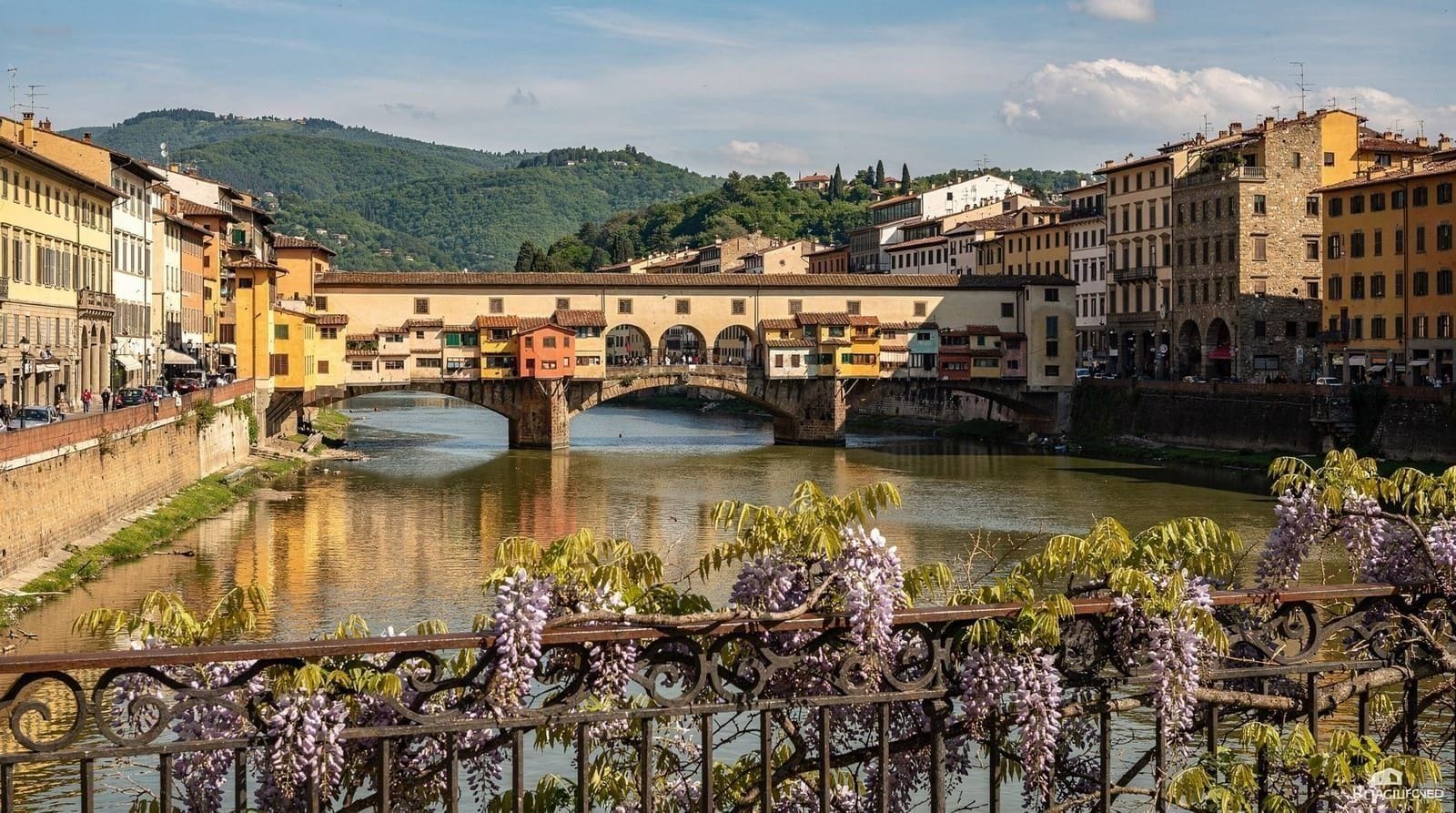
- The Ponte Vecchio is barely crossable at midday in July and August without physical contact with other visitors
- Public water fountains (nasoni) are your friends — use them constantly
- The tram from Santa Maria Novella (SMN) to Scandicci and back is free (just to ride in air conditioning) — an extreme measure but Florentines are known to use it
Ferragosto: the closing of Florence
August 15 is the Italian national holiday of Ferragosto — originally the Feriae Augusti, the Roman emperor’s holiday. Modern Italy has transformed it into the focal point of the summer vacation season.
From approximately August 8 through August 20, a significant percentage of Florentine-owned businesses close. This includes:
- Neighbourhood trattorias and osterie (many of the city’s best local eating)
- Some artisan workshops (leather, marbling, jewellery)
- Many small shops and alimentari (grocery shops)
- Some wine bars and enoteche
What stays open: chain coffee shops, tourist-facing restaurants near major sights, the Mercato Centrale, supermarkets (reduced hours on August 15 itself), and all major national museums.
The museum question: the Uffizi, Accademia, Bargello, Pitti Palace, and the Duomo complex all remain open through August 15 and the surrounding period, though hours may be slightly reduced. Check official websites. The main national museums have been required to remain open on national holidays in recent years, though this policy can change.
Planning your August visit
Research restaurants before you arrive
This is the most important August-specific planning step. Before departure, identify five to ten restaurants you want to try, then check their websites or social media pages for August closing dates. If you cannot find information online, email or call. Nothing is more deflating than arriving in Florence having planned dinner at a specific trattoria and finding the shutters down.
Alternatives that tend to stay open: the restaurants inside Mercato Centrale (second floor food hall), larger restaurants in the tourist circuit (lower quality on average but reliable), and restaurants in hotel buildings.
Book all tickets well in advance
August is the peak booking period:
- Uffizi: book 3–4 weeks ahead minimum. Do not plan to buy on arrival.
- Accademia: 2–3 weeks ahead
- Duomo dome climb: 1–2 weeks ahead; morning slots sell out first
- Cooking classes and wine tours: 2+ weeks ahead
Use the early morning strategically
Florence in August at 7:30–8am is a different city. The narrow streets of the Oltrarno, the piazzas, even the Ponte Vecchio — all are walkable and relatively calm before 9am. Some visitors get up at 6:30am, walk to Piazzale Michelangelo for the sunrise view, then descend through the Oltrarno before the heat builds. This is not martyrdom — it is the best version of summer Florence.
Embrace the evening schedule
Adopt the Italian summer rhythm:
- 7pm–8pm: aperitivo (a Spritz or Negroni with snacks, often included in the price)
- 8:30–9pm: dinner starts
- 11pm–midnight: the passegiata and gelato
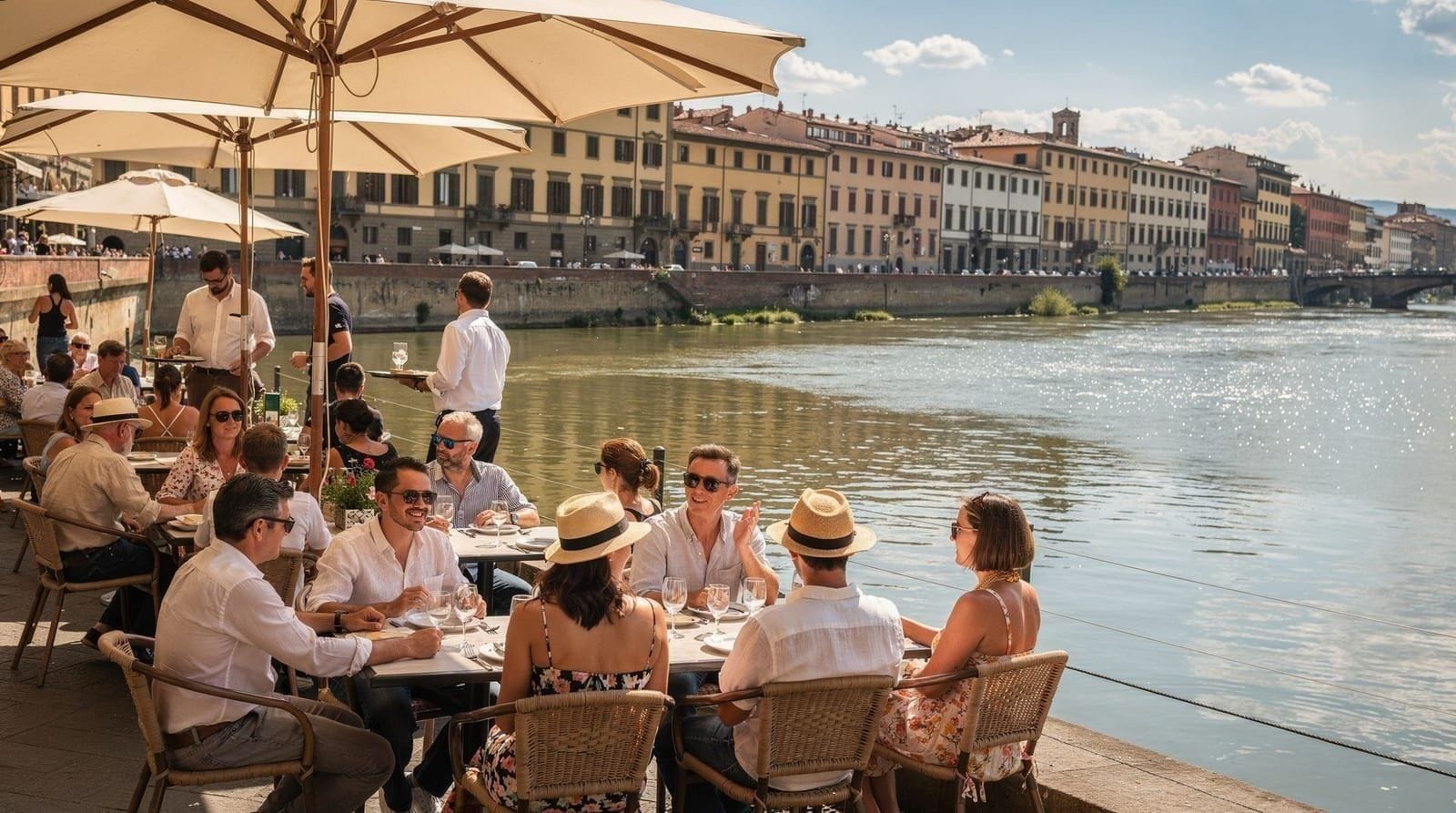
The Lungarni in August at 9:30pm are one of Florence’s genuine pleasures — warm, lit, with the Arno reflecting the bridges. The city is at its most beautiful in the late evening and early night.
Evening activities specifically suited to August
The electric bike night tour takes advantage of the cool evening temperatures and shows the city’s illuminated monuments from a completely different angle. The Arno river cruise at sunset includes the same visual content as the Piazzale Michelangelo view but from water level, with the bridges passing overhead.
The late August opportunity
From approximately August 22–31, the character of Florence shifts. European school holidays are ending. Northern Italian families are returning home. The tourist pressure — while still present — decreases by roughly 20–30% compared to the first three weeks of August.
Hotels sometimes run late August discounts (not always, and it requires flexibility, but worth checking). Neighbourhood restaurants begin reopening. The Mercato di Sant’Ambrogio, which struggles in high August, comes back to life.
This window — the last ten days of August — is genuinely one of the better times to visit if you have flexibility within a summer constraint. It is warmer than September but considerably less dense.
August and day trips
The ZTL (restricted traffic zone) in Florence’s centre means you cannot drive a car in the historic core. But for day trips to Tuscany, having a car parked at the Villa Costanza park-and-ride (on the southwestern outskirts, with tram connection to the centre) allows access to:
- Siena: 90 minutes by bus from the SMN terminal, or about 70 minutes by car to a parking garage outside Siena’s historic centre. August 16 is the second Palio di Siena horse race — if you can get into the Piazza del Campo early enough, this is one of the most visceral spectacles in Italy. Expect extreme crowds.
- Chianti: a car makes the difference in Chianti. The winery estates, the hilltop villages of Greve in Chianti and Radda in Chianti, and the back roads between them are genuinely cooler than the city.
- The coast: a two-hour drive reaches the Etruscan Coast (Populonia, Baratti, Castiglione della Pescaia). August makes more sense at the beach than in a city.
Specific practicalities for August
Cash: carry some. Small local stalls at the Ferragosto period may have unreliable card machines as they reduce staffing.
Dress code: churches require covered shoulders and knees regardless of the temperature. This is enforced actively in August when the most inappropriately dressed visitors arrive. A light scarf weighs almost nothing and eliminates this issue.
Accommodation location: in August, location within Florence matters more than in other months. Staying within 10 minutes’ walk of the Duomo means you can return to your hotel during the midday heat, rest, and re-emerge in the late afternoon. Staying in the Oltrarno means crossing the river each time.
Mosquitoes: August is peak mosquito season. Pack repellent. Hotels typically provide mosquito coils or electric repellent devices but ask at check-in to confirm.
Honest summary by week
| Period | Crowd level | Restaurant closures | Heat | Verdict |
|---|---|---|---|---|
| Aug 1–10 | Very high | Starting to close | Very hot | Manageable with planning |
| Aug 10–20 | High–very high | Maximum closures | Very hot | Most difficult period |
| Aug 20–25 | Medium–high | Reopening | Hot | Better |
| Aug 25–31 | Medium | Mostly open | Hot | Better value, less dense |
What to prioritise in August
Given the heat, prioritise indoor, air-conditioned sights during the middle of the day and save outdoor experiences for the edges of the day. The Duomo dome climb is genuinely uncomfortable in midday August heat — the stairwell traps warmth — so book the earliest possible slot or skip it in favour of the air-conditioned Uffizi or Accademia instead. Evening plans work especially well in August: a sunset visit to Piazzale Michelangelo, followed by dinner in the Oltrarno once the streets have cooled, captures the city at its best without fighting the heat.
Where the August crowds concentrate (and where they don’t)
Crowd pressure in August is not evenly distributed across the city. The Duomo, Ponte Vecchio, and the streets immediately around the Uffizi see the highest density, often uncomfortably so at midday. The Oltrarno, the streets around Sant’Ambrogio, and the smaller squares away from the main sightseeing spine stay noticeably calmer even during the first three weeks of the month. If the crowd density itself is wearing you down, deliberately spending an afternoon in one of these quieter pockets can reset the trip.
If you can shift your dates
August is rarely anyone’s first-choice month once they know the alternatives. If school holidays or work don’t lock you in, both spring and autumn deliver a noticeably easier trip — cooler temperatures, fewer closures, and shorter queues — for a similar or lower cost outside the absolute peak weeks. Even shifting within August matters: the last ten days consistently see 20–30% less crowd pressure than the first three weeks, and reopened restaurants, as covered above.
Frequently asked questions about Florence in August
Should I cancel my August Florence trip?
Only if you can genuinely move it to a better month. If August is fixed by school or work constraints, go — but go prepared. The art is still there, the architecture is still there, and the evening quality of the city is genuinely special. Just accept that the midday heat is not something to fight.
Is the Uffizi air-conditioned?
Yes. This is one of the real mercies of an August Florence trip: the Uffizi, Accademia, Bargello, and Pitti Palace are all air-conditioned to preserve the art. An afternoon in the Uffizi is also an escape from the heat. The same applies to most churches (cool but not air-conditioned).
What is the Palio di Siena and how do I see it in August?
The second Palio of the year takes place on August 16. It is a bareback horse race around the Piazza del Campo in Siena — one of the most intense and emotional events in Italy. Getting into the Piazza (the standing area in the centre, which is free) requires being there from morning — the race runs at approximately 7:30pm but the build-up begins hours earlier. The contrade (city districts) eat communal dinners in their neighbourhood streets the night before; this is worth attending if you know a local.
What is the best gelato in Florence in August?
Look for covered containers, natural colours, and Italian-language signs. Avoid any gelato piled high in ornate mounds with bright artificial colours (blue, bright pink, orange) — this is marketing for tourists, not quality. Gelateria dei Neri (Via dei Neri), Gelateria dei Medici (Via del Corso), and Gelateria Carabè (Via Ricasoli) are consistently recommended by regular visitors and Florentines themselves.
Is it better to visit Rome or Florence in August?
Both are hot and crowded in August. Rome is significantly larger and so the crowds are more diffuse, but the heat can be more intense (Rome’s geography traps air). Florence is more compact, which makes both the crowd concentration and the heat feel more acute. If forced to choose in August, Rome’s greater range of things to do (more museums, more outdoor spaces, more evening life in different neighbourhoods) gives it a marginal edge for an August visit.
Top experiences
Bookable activities with verified prices and instant confirmation on GetYourGuide.

Florence: Uffizi Gallery skip-the-line tickets
- Skip the line
- Free cancellation
Florence: Accademia Gallery — David skip-the-line ticket
- Skip the line
- Instant confirmation
Florence: electric bike night tour with gelato
- Free cancellation
- Small group
Florence: Arno city river cruise with commentary
- Free cancellation