Gelato tourist traps in Florence: how to spot the fake and find the real thing
Florence: gelato tour and culinary walk in city center
- Free cancellation
- Small group
How do I spot fake gelato in Florence?
Real artisan gelato is stored in covered metal pozzetti (you cannot see it). Fake gelato is piled in fluorescent open mountains. Real pistachio is grey-green; fake is bright lime. Real gelato costs €2.50-3.50 for a cup or cone. Any gelato visible in towering coloured peaks above the counter rim is an industrial product, not artisan gelato.
Florence’s gelato geography: two cities side by side
Florence has excellent gelato. It also has a parallel universe of tourist-trap gelato so visually dramatic that it draws people away from the excellent gelato. Understanding the geography of this division is the most useful skill you can bring to gelato eating in Florence.
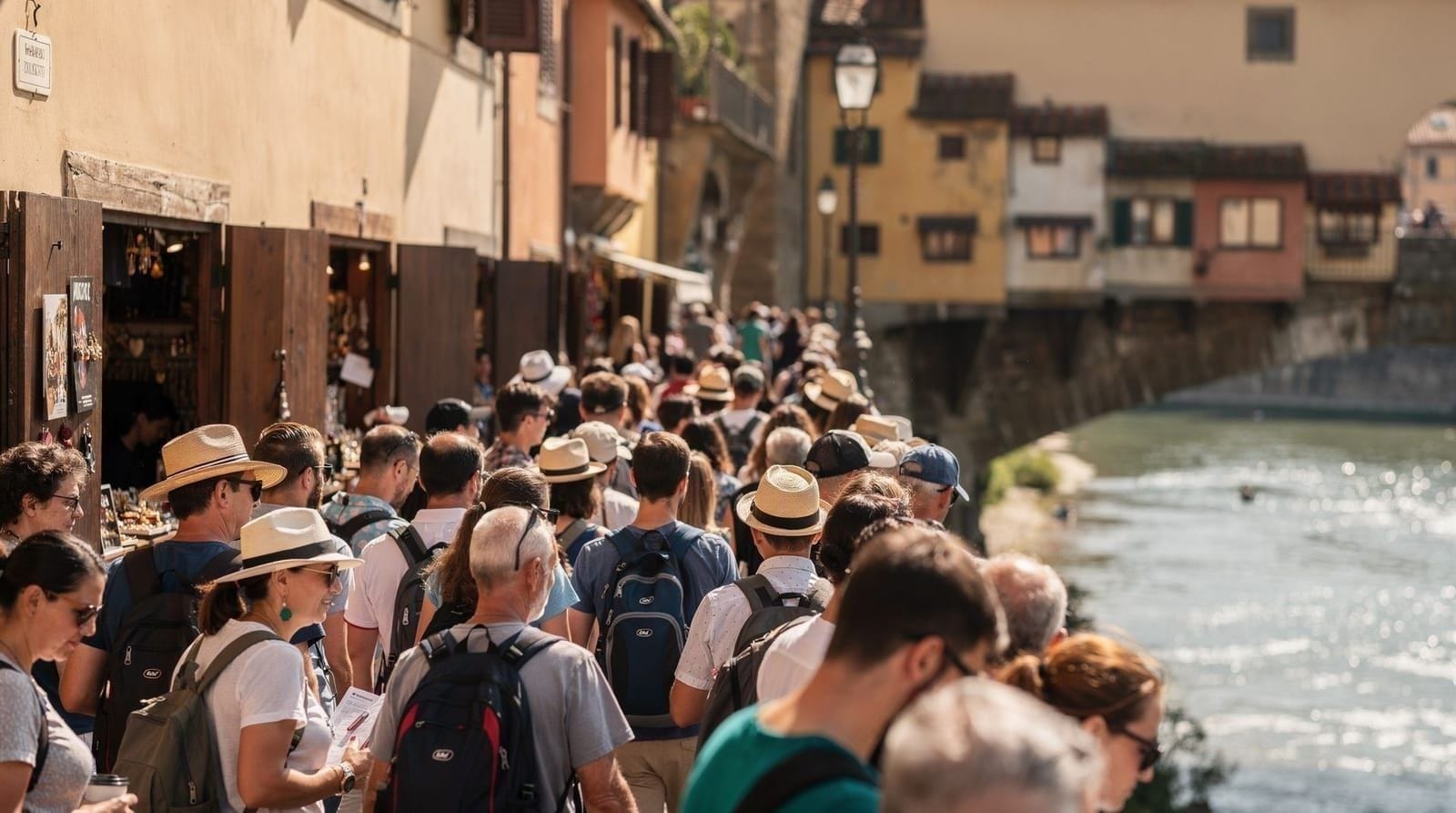
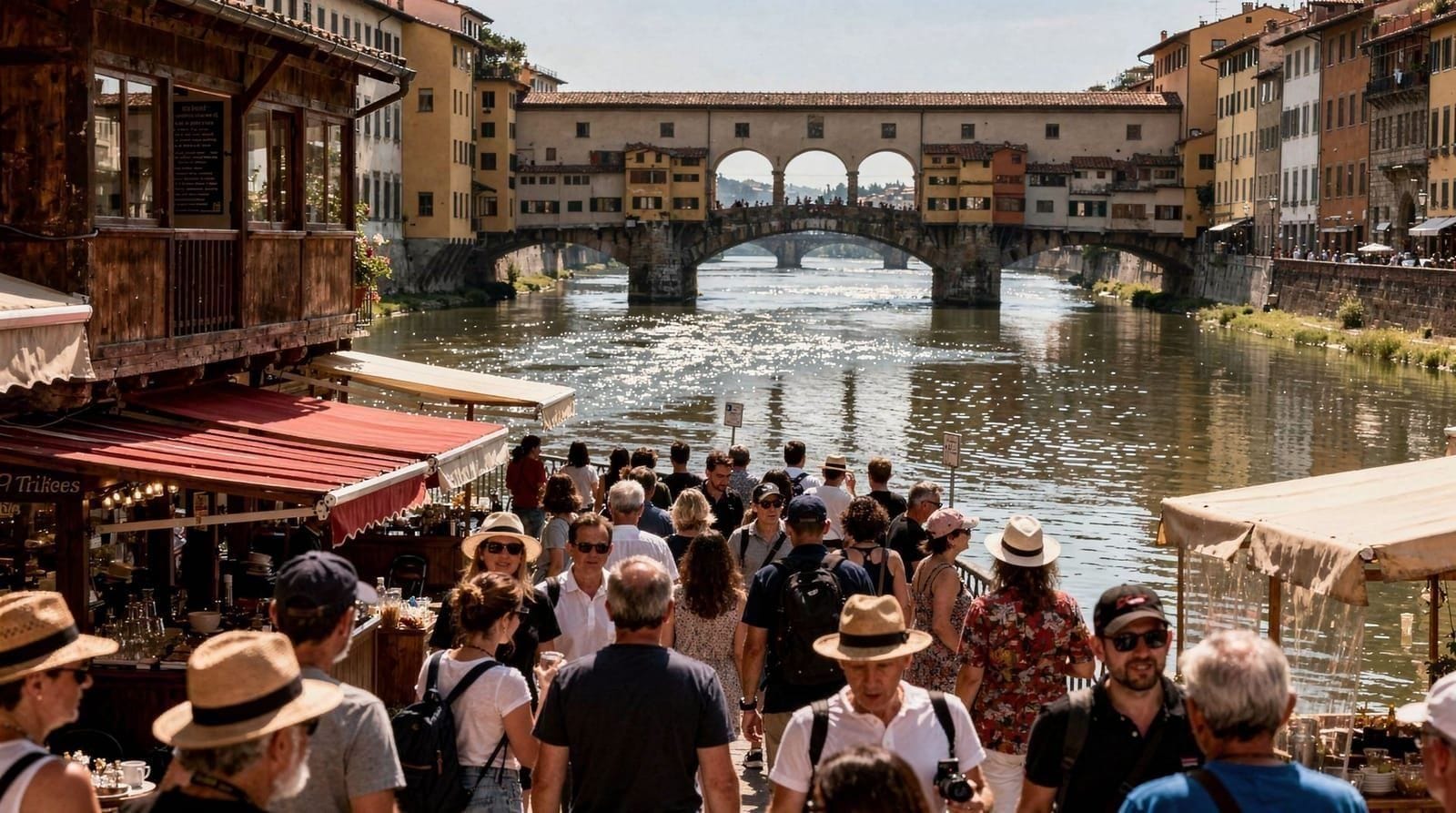
The tourist-trap gelato gravitates toward the major sights: the area around the Duomo, via de’ Calzaiuoli, the Ponte Vecchio approaches and Piazza della Signoria. The genuine artisan gelato gravitates toward residential streets: the Santa Croce area, the Oltrarno, San Lorenzo (the neighbourhood, not the market), and the streets around Sant’Ambrogio.
This pattern is not accidental. Real artisan gelato operations have thin margins — they make relatively small batches fresh daily from quality ingredients. They cannot sustain the €5-6 per scoop tourist pricing that compensates for expensive tourist-area rents. So they locate in neighbourhoods where local customers provide the base business. This means walking five minutes off the tourist circuit, which is among the best investments of time you can make in Florence.
| Where | Genuine gelaterie cluster in Santa Croce, Oltrarno, San Lorenzo neighbourhood |
| Cost | €2.50–3.50 artisan (coppetta); €8–10 tourist-trap two-scoop |
| Time to spot | About 10 seconds — check the display, colour, and price |
| Getting there | 5-minute walk off the main tourist circuit usually suffices |
| Best time | Late morning or early evening, when fresh batches are out |
This gelato-specific warning is one part of a wider pattern in Florence’s tourist zones — see our companion Florence tourist traps guide and restaurant scams in Florence guide for the full picture beyond dessert.
The four signs of tourist-trap gelato
Sign 1: You can see it
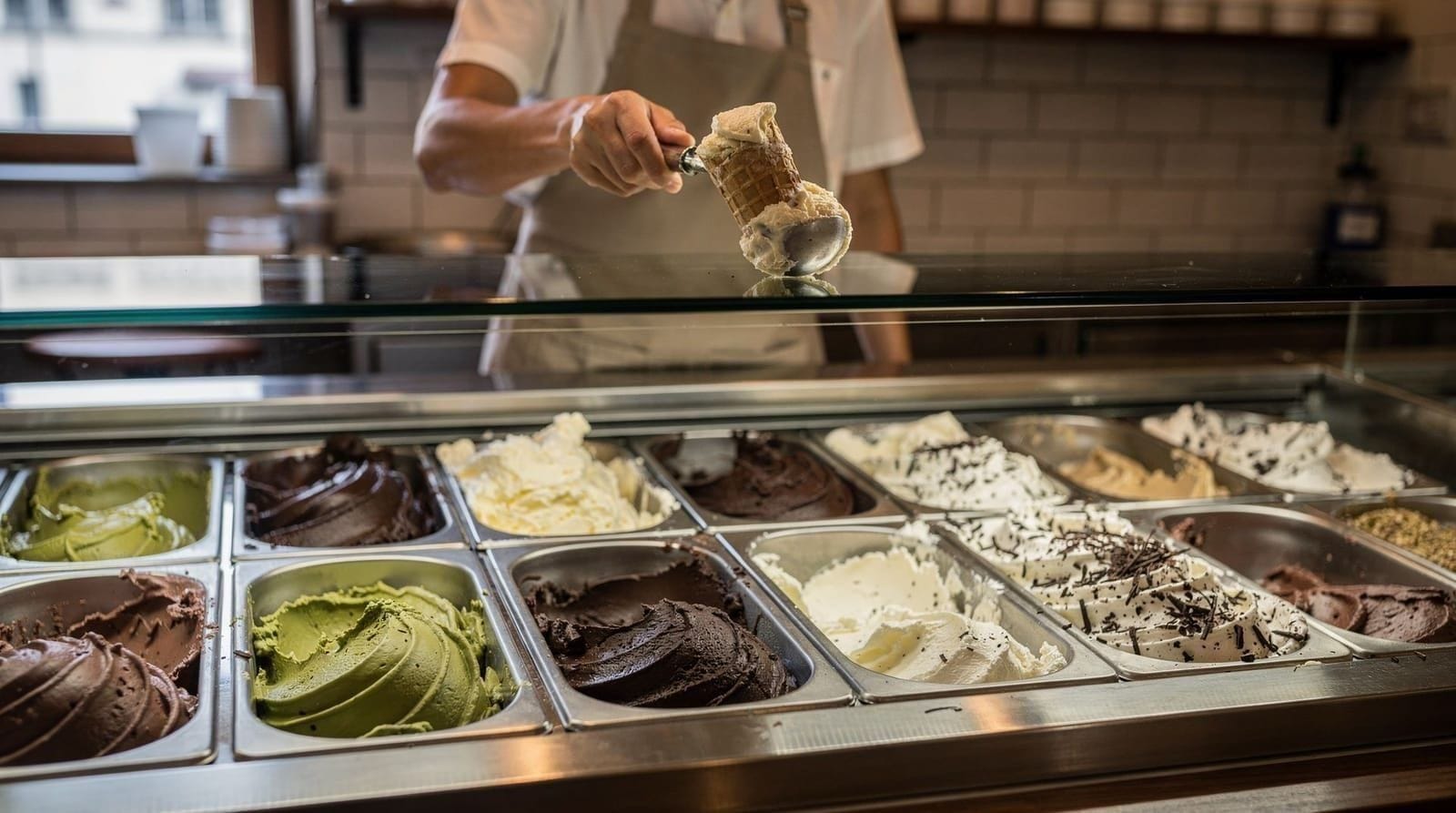
This is the single most reliable indicator. Artisan gelato is made and stored in a way that keeps it below the rim of horizontal covered containers called pozzetti. The lids open when a portion is served, then close again immediately. When you walk past an artisan gelateria, you cannot see the gelato — you see a counter with lids.
Tourist-trap gelato is displayed in towering mounds above the counter rim, sometimes with decorative peaks reaching 20-30 centimetres. This display technique — called “mountain style” — serves a purely visual marketing function. The mounded gelato is exposed to air, temperature fluctuation and light. It degrades faster than pozzetti-stored gelato and requires a stabiliser-heavy mix to maintain its shape.
The mountain display exists because it attracts attention and looks spectacular. It does not exist because it produces better gelato. In fact, it produces worse gelato and requires more industrial additives to make the peaks stable.
Sign 2: Unnatural colours
Colour is the second-most reliable indicator. Here are the natural colours of ingredients in genuine artisan gelato:
Pistachio: Ground Sicilian or Bronte pistachios produce a grey-green paste. The gelato should be muted greenish-grey — the colour of an unshelled pistachio nut. Bright, vivid lime green is pistachio flavouring or heavily coloured paste, not whole pistachios.
Strawberry: Fresh strawberries produce pale to medium pink gelato. Electric red or vivid pink strawberry uses colouring. Seasonal fresh strawberry gelato (spring, approximately April-June in Tuscany) is pale and intensely flavoured.
Lemon: Fresh lemon juice in a gelato base produces an almost white product — very pale yellow. Vivid sunshine yellow lemon gelato uses colouring.
Chocolate: Genuine cocoa produces rich dark brown gelato. Very dark, almost black chocolate indicates high-quality single-origin or high-percentage cocoa. The colour should look like melted dark chocolate, not a uniform commercial brown.
Hazelnut: Ground Piedmontese hazelnuts produce warm medium brown. It should look different from chocolate and have a distinct roasted nut colour.
If the pistachio is bright green, the strawberry is red, and the lemon is vivid yellow, you are looking at a coloured industrial product.
Sign 3: Price above €3.50 per serving
A serving of artisan gelato — a cup (coppetta) or cone (cono) with two scoops — at a genuine Florentine gelateria costs €2.50-3.50. Some premium gelaterie in higher-cost neighbourhoods go to €4.
Tourist-trap gelato near major monuments prices by the scoop: €4-5 per scoop. A two-scoop serving therefore costs €8-10. The same amount of premium artisan gelato at a neighbourhood gelateria costs €3.
The quality differential is the inverse of what the price suggests. You are paying more for industrial gelato with artificial colours than for fresh daily-made artisan gelato.
Tip: Always choose a cup (coppetta) over a cone. You get more gelato for the same price — cones add material cost without adding gelato volume.
Tip: Don’t be afraid to ask for a taste (un assaggio) before committing to a flavour. Genuine gelaterie routinely offer a small taster spoon on request, especially for flavours you’re unsure about — it’s normal practice, not an imposition, and a shop that refuses or seems irritated by the request is itself a small negative signal.
Sign 4: Location in the tourist orbit
Not every gelateria in a tourist area is bad, but the prior probability is significantly higher. If you are standing within sight of the Duomo or Ponte Vecchio, look carefully at signs 1-3 before committing. If you see covered pozzetti and muted natural colours, it may be genuine despite the location. If you see mounds and fluorescent colours, it is definitely not artisan quality.
The industrial gelato base explained
Understanding how tourist-trap gelato is made helps explain the quality gap.
Commercial gelato production uses a pre-made base — a powder or liquid mix containing stabilisers, emulsifiers, sugar, milk powder and flavourings. This base is combined with flavouring and churned in a machine. The result is consistent (predictable, non-varying) and cheap to produce. The stabilisers (typically CMC, locust bean gum or carrageenan) allow the gelato to be mounded high without collapsing and extend shelf life.
The colouring is added separately to match expected consumer expectations — bright green pistachio, electric pink strawberry — because the industrial flavourings do not produce natural colours.
Artisan gelato uses the actual ingredient: whole Bronte pistachios ground fresh, fresh strawberries, genuine single-origin cocoa. The flavour is categorically different. The colour is natural and muted. The batch size is small. The shelf life is shorter (consumed same day or next day).
This is why artisan gelato cannot be sold at tourist prices from tourist locations — the economics only work at neighbourhood prices and volumes.
Florence’s best genuine gelaterie
Gelateria dei Neri — the benchmark
Via dei Neri 9-11r, Santa Croce neighbourhood Consistently listed among the best in Florence for two decades. Pozzetti storage, muted natural colours, daily fresh production. The hazelnut and pistachio are outstanding. Queue is often out the door at peak times, which is itself a positive sign — it is mostly local students and Florentines, not a coach tour group. Serving: €2.50-3.
Gelateria dei Medici
Via de’ Medici 4r, near San Lorenzo Excellent location relative to the tourist circuit — close enough to reach easily, far enough that it serves genuine neighbourhood traffic. Good pistachio and excellent seasonal fruit flavours. Covered pozzetti. €2.50-3.
Vivoli
Via Isola delle Stinche 7r, Santa Croce One of the oldest gelaterie in Florence (est. 1930), famously serves gelato only in cups (no cones). Traditional recipe, excellent quality, pozzetti storage. Slightly higher prices than some (€3-4) but genuinely premium product.
Gelateria Santa Trinita
Piazza Santa Trinita 1r, Oltrarno approach Positioned at the south end of Via Tornabuoni, this gelateria serves the office workers and residents of the Oltrarno approach. Good quality, honest prices, pozzetti, and natural colours. A solid option before or after crossing into the Oltrarno.
Edoardo
Piazza del Duomo 45r, near Duomo One of the few genuinely good gelaterie in immediate tourist territory. Uses natural and organic ingredients, avoids artificial colours and flavourings. Prices are tourist-area (€3.50-4.50) but the quality is real. If you need gelato near the Duomo and want the genuine article, this is where to go.
The gelato tour alternative
Rather than navigating the gelato landscape independently, a guided gelato tour with a knowledgeable local guide covers multiple legitimate gelaterie, explains what to look for, and includes context about Florentine food culture. These tours typically visit 4-6 stops including sweet and savoury elements and cost €30-45 per person — roughly 10 servings worth of single-serving tourist gelato for a much better experience. See the GYG-linked gelato tours for current options, or pair the idea with a hands-on class using our gelato and pizza classes guide.
Understanding the seasons
Genuine artisan gelato changes seasonally. In early spring (March-April): citrus, almond, hazelnut dominate. Late spring (April-June): fresh strawberry, cherry, early figs. Summer: melon, peach, mixed berry. Autumn: fig, grape, pear, chestnut (marrone). Winter: chocolate, walnut, hazelnut, spiced flavours.
If you are visiting in July and you see fresh fig gelato at a gelateria, it is likely using seasonal Tuscan figs — a positive quality indicator. If you see fresh strawberry gelato in November, it is using imported or stored strawberries, not seasonal product.
Tourist-trap gelato does not change seasonally. The same fluorescent pistachio and strawberry are available year-round because they use flavourings and colourings, not fresh ingredients.
This seasonal test is one of the easiest ways to evaluate a gelateria without needing to inspect colour or storage closely: ask what’s currently in season, or simply look for a small handwritten sign noting a limited-time flavour (fig in September, chestnut in November, blood orange in January). Genuine artisan shops treat seasonal changeover as a point of pride and will often mention it unprompted; tourist-trap operations rarely bother, since their flavour list barely changes month to month.
Making your own gelato
Gelato-making classes in Florence are one of the genuinely worthwhile tourist activities. A good class teaches the underlying science — the role of stabilisers, the relationship between sugar content and freezing temperature, the emulsification process — alongside hands-on production. You leave with better gelato appreciation and a usable recipe.
Look for classes that use real ingredients (whole fruit, nuts, dairy) rather than a commercial base mix. Small-group classes in working kitchens are better than large-scale demonstration events. The GYG-linked gelato making class is a good starting point, and it’s covered in more depth in our gelato and pizza classes guide.
Gelato vs sorbet vs granita
Gelato: Dairy-based, churned, Italian frozen dessert. 15-30% fat from milk and cream. Churned slowly for low air content. Served at -10 to -12°C.
Sorbet (sorbetto): Dairy-free, fruit-based, churned. Technically can be vegan. More intensely fruity than gelato. Good sorbet at a quality gelateria is excellent; commercial sorbet is often over-sweetened and under-fruited.
Granita: Semi-frozen slush, stirred during freezing to create a crystalline texture rather than a smooth one. A Sicilian product by origin. In Florence, lemon granita is the most common and can be excellent — or can be sugared water. Vivoli’s granita is consistently good.
Gelato near specific Florence landmarks
| Location | Honest assessment | Nearest good option |
|---|---|---|
| Piazza del Duomo | Mostly tourist traps within 50m; Edoardo is the exception | Gelateria dei Medici (5 min walk) |
| Ponte Vecchio | Tourist trap territory | Gelateria Santa Trinita (2 min walk south) or Gelateria dei Neri (10 min east) |
| Piazza della Signoria | No good options immediately adjacent | Walk north on Via dei Calzaiuoli to find options, or east towards Santa Croce |
| Accademia / San Marco | Several tourist-facing operations; check for pozzetti | Gelateria dei Medici nearby |
| Piazzale Michelangelo | Single overpriced option at the square | Walk down to Oltrarno for genuine options |
Gelato as part of a wider honest-planner mindset
The gelato tourist trap is one of the clearest, most visual examples of a pattern that repeats across Florence’s biggest sights — see our Ponte Vecchio reality check and overrated things in Florence guide for other spots where the most photographed option isn’t the best one. Once you’ve internalised the pozzetti-vs-mountain rule for gelato, the same instinct (avoid the loudest, most visible version right next to a monument; walk a few streets for the real thing) applies to restaurants, souvenir leather and guided tours alike. Our Florence street food guide and best restaurants in Florence guide apply the same logic to food more broadly.
Frequently asked questions about gelato tourist traps in Florence
Why is gelato sometimes so cheap outside of Italy?
Gelato sold in other countries at very low prices (€1-2 per scoop) typically uses a commercial base with higher air content (called overrun), lower fat content, and more stabilisers. Italian artisan gelato has a specific production standard for fat content and overrun that makes it genuinely different from industrial versions sold globally. Cheap gelato is a different product.
Is there such a thing as vegan gelato in Florence?
Yes. Sorbet is naturally dairy-free. Many artisan gelaterie also offer coconut milk-based or oat milk-based gelato in a small range of flavours. Some gelaterie are entirely vegan. Look for signage indicating senza lattosio (lactose-free) or vegano — legitimate gelaterie will label this clearly. Tourist-trap gelaterie also sometimes market vegan options, but the quality issue remains regardless of the dairy question.
Can I tell if gelato is fresh by looking at it?
Not easily — both fresh and older gelato in pozzetti look similar when stored correctly. The most reliable freshness indicator is visiting a gelateria that is popular with locals (queues during local lunch and dinner hours, not just during tourist rush hours) and that visibly makes its gelato on site or receives daily deliveries from a local producer. Some gelaterie post the production date for each flavour.
Is gelato better in the morning or evening?
Many gelaterie produce fresh batches in the morning and replenish during the day. The freshest gelato is typically available in the late morning (before the midday rush depletes popular flavours) or in the early evening when a fresh evening batch has been prepared. This timing also tends to have shorter queues at popular gelaterie.
What is brioche con gelato?
A Sicilian tradition now available at some Florence gelaterie: gelato served inside a soft sweet brioche bun rather than a cone or cup. It is a legitimate and excellent format — the brioche absorbs gelato as you eat it and the sweetness of the bread complements the gelato flavours. Less common in Florence than in Sicily but worth trying when you see it at a quality gelateria.
Should I trust a gelateria just because it has a long queue?
Not automatically — check who is queueing. A queue made up mostly of locals, students and repeat visitors at odd hours (mid-afternoon, late evening) is a strong positive signal. A queue that only appears during peak tourist hours right beside a major monument, with staff actively beckoning passersby inside, is a weaker signal and worth checking against the pozzetti and colour tests before joining.
Top experiences
Bookable activities with verified prices and instant confirmation on GetYourGuide.

Florence: gelato tour and culinary walk in city center
- Free cancellation
- Small group
Florence: gelato making class
- Free cancellation
- Small group
Florence: old city street food tour and guided sightseeing
- Free cancellation
- Small group
Florence: walking tour with pizza and gelato making class
- Free cancellation
- Small group