Restaurant scams in Florence: how to eat well and not get ripped off
How do I avoid restaurant scams in Florence?
Avoid any restaurant with a street tout, a photo menu, or a 'menu turistico' sign near the Duomo, Ponte Vecchio or Piazza della Signoria. Walk at least 3 streets away from major tourist sights before sitting down. A genuine Florentine meal — pasta, second course, house wine, water — costs €25-35 per person, not €50-70.
The restaurant problem Florence actually has
Florence does not have a widespread illegal restaurant fraud problem. What it has is something more insidious: entirely legal overcharging, structured specifically to extract maximum money from people who don’t know local price benchmarks.
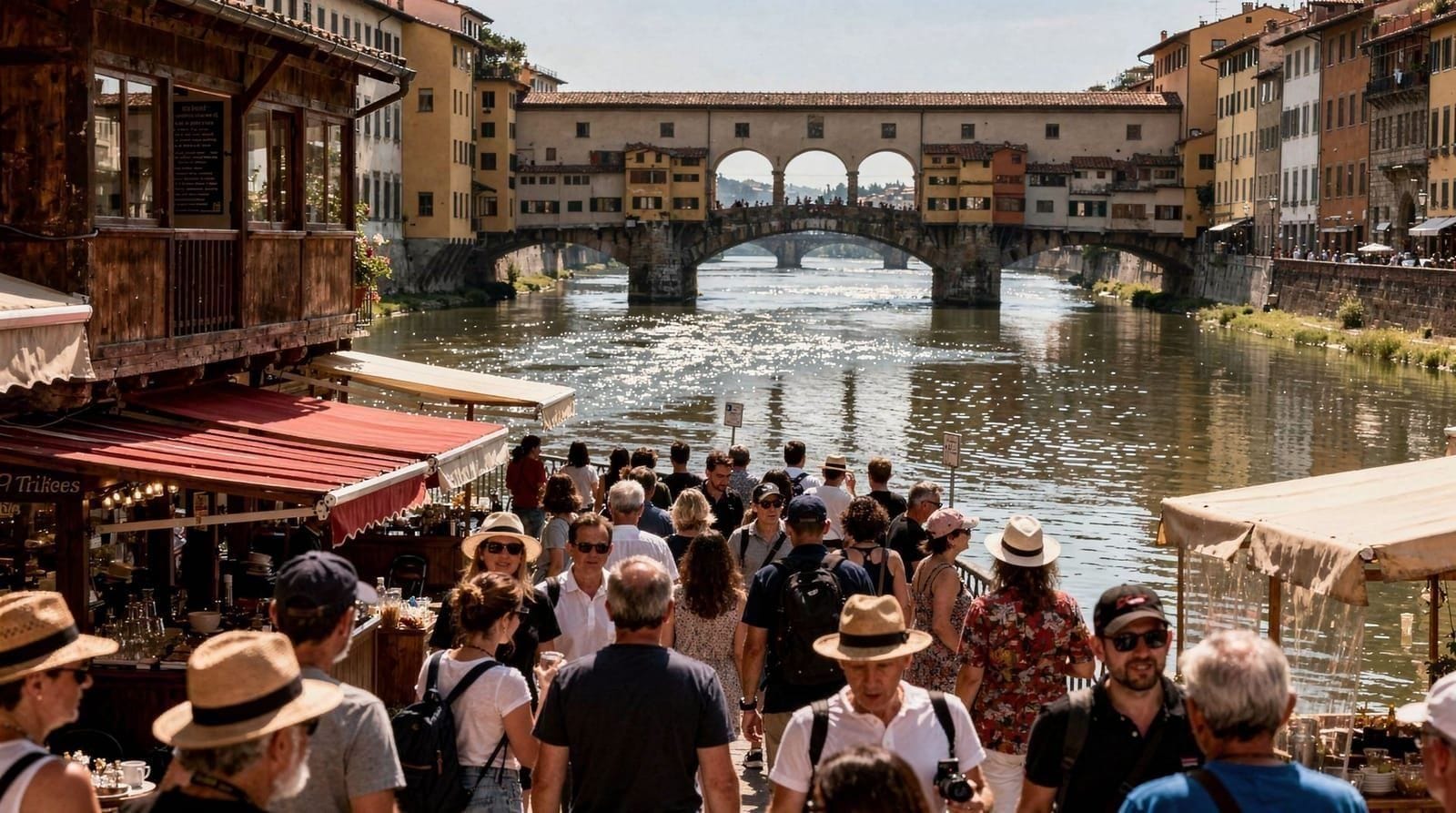
The tourist-facing restaurants near the Duomo, Ponte Vecchio and Piazza della Signoria are not technically scamming you. They display their prices. The €22 pasta, the €6 coperto, the 12% service charge and the €4 bottle of water are all visible if you read carefully. But they are designed to be read in a hurry, in a foreign language, after a morning of sightseeing when you are hungry and tired and just want to sit down.
This guide is about reading the signals correctly before you sit down.
| Honest meal cost | around €25-35/person (pasta, second course, house wine, water) |
| Trap meal cost | around €50-70/person (same dishes, hidden extras) |
| Highest-risk zones | Duomo, Ponte Vecchio approaches, Piazza della Signoria |
| Safer zones | Oltrarno, Sant’Ambrogio, San Niccolò |
| Rule of thumb | walk 3+ streets away from a major sight before sitting down |
The tourist trap restaurant checklist
Signal 1: A person standing outside inviting you in. No genuine neighbourhood restaurant in Florence does this. The practice of imbonimento — soliciting customers from the street — is associated entirely with tourist-facing restaurants that struggle to fill seats on the strength of their food alone.
Signal 2: A photo menu. Italian restaurants serving Italian food to Italian customers do not need photographs of what pasta looks like. Photo menus exist to communicate across language barriers. Their presence signals the restaurant is designed for tourists, and priced accordingly.
Signal 3: “Menu Turistico” prominently displayed. These set-price tourist menus typically run €15-22 and include 3 courses plus wine and water. The food is almost invariably the lowest-quality output the kitchen produces: often reheated, frozen pasta dressed with sauce from a jar, and second courses that have been sitting in a steam tray.
Signal 4: Staff soliciting from the doorway. Even absent active street tout-ing, restaurants where a staff member stands in the doorway making eye contact with passersby and gesturing inside are operating in tourist-trap mode.
Signal 5: The location. Via de’ Calzaiuoli (the pedestrian street from Duomo to Piazza della Signoria), Piazza del Duomo itself, Piazzale degli Uffizi, Lungarno Archibusieri beside Ponte Vecchio, Piazza della Repubblica. These locations have the highest tourist trap concentration. This is not universal — there are exceptions — but the prior probability of a tourist trap is highest here.
The hidden charges: how the bill inflates
A tourist-trap restaurant near the Duomo might show a menu with pasta at €18. By the time the bill arrives, the actual cost per person could be double. Here is how:
| Item | Menu price | Reality |
|---|---|---|
| Pasta dish | €18 | €18 |
| Coperto (cover) | Usually in small print | €4-6 per person |
| Bread | Often listed separately | €2-3 extra |
| Water | €3-4 | For a 500ml bottle, replaced automatically |
| Service charge | Often added without notice | 10-15% of total |
| Wine by the glass | €8-12 | Per glass, poured generously |
A meal showing €36 on the menu can realistically reach €60-65 per couple with these additions. None of it is illegal. All of it is avoidable by reading the full listino prezzi (price list) before sitting down, not just the pasta section.
The honest benchmark: At a genuine Florentine trattoria (not fine dining), coperto should be €2-3, pasta should be €10-14, a half-litre carafe of house wine should be €8-12, and there should be no automatic service charge (tipping is appreciated but discretionary).
Where the worst concentrations are
Around the Duomo
The streets immediately surrounding the Piazza del Duomo — Via de’ Martelli, Via Brunelleschi, Via de’ Cerretani — have the highest tourist-trap restaurant density in Florence. The restaurants here benefit from proximity to the most-visited sight and capture visitors who are hungry after queuing for the dome or the baptistery.
Ponte Vecchio approaches
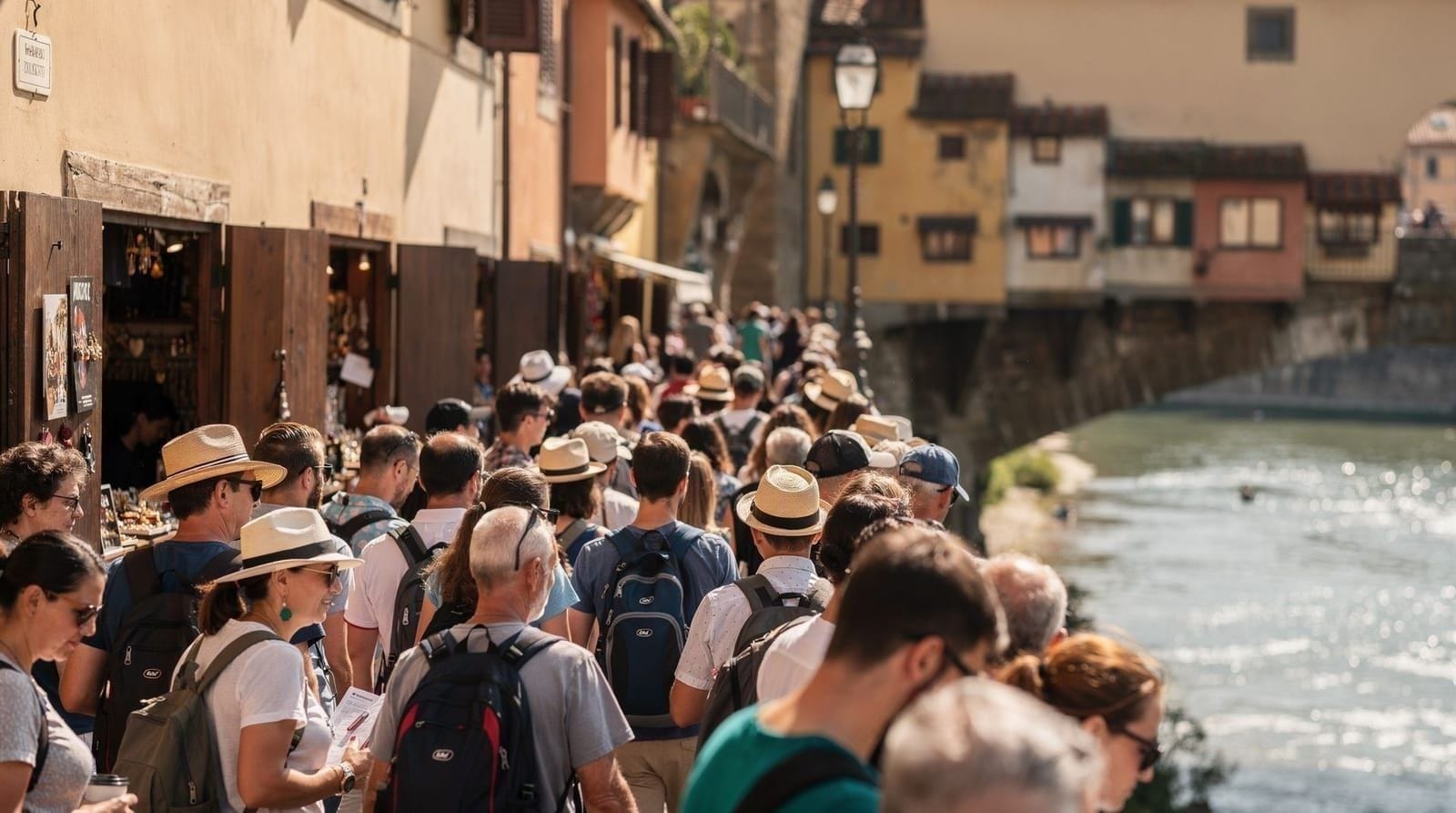
Borgo Santi Apostoli, Lungarno degli Acciaiuoli and the small piazzas around the bridge approaches are heavily tourist-facing. The restaurants here price accordingly.
Piazza della Signoria surroundings
The famous square and its immediate approaches — Via della Vigna Nuova, Via Lambertesca — host several tourist-facing restaurants. The exception is that there are a few genuine wine bars in this area (enoteche) that serve good food at honest prices — you can distinguish them by their wine focus and bar-format service rather than full table service.
Via de’ Calzaiuoli
The pedestrian thoroughfare connecting Duomo to Piazza della Signoria is lined with fast food, gelato shops and a handful of table-service restaurants. None of the table-service restaurants on this street are genuine neighbourhood trattorias.
Where genuine restaurants exist
Oltrarno
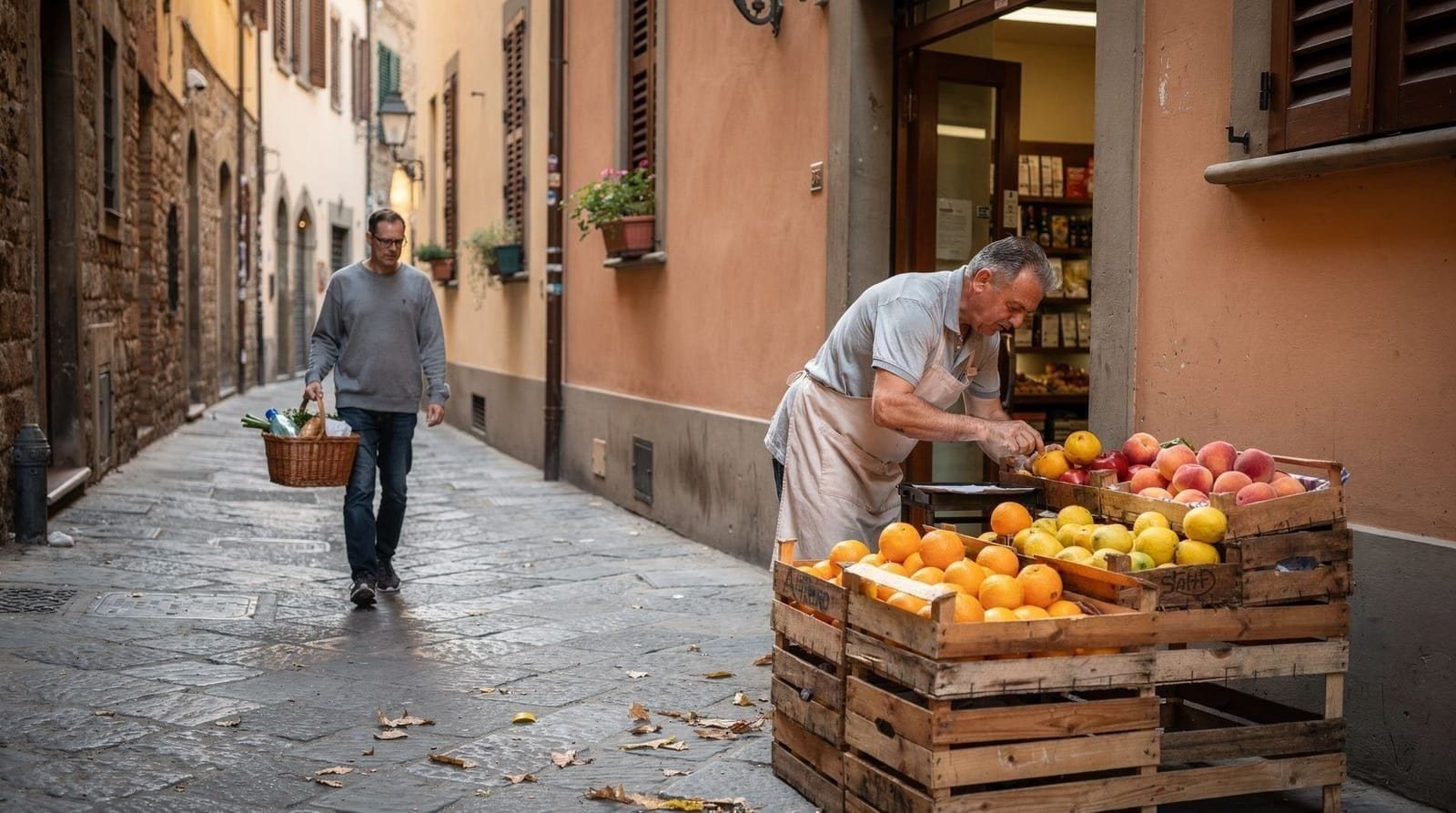
Cross any bridge. The neighbourhood south of the Arno — from the Pitti Palace west to San Frediano and east towards the Ponte alle Grazie — has Florence’s densest concentration of genuine neighbourhood restaurants.
Specific streets to explore: Via del Presto di San Martino, Borgo San Frediano, Via dell’Orto, Via de’ Serragli. These are residential streets where Florentines eat. Prices are €10-14 for pasta, €14-20 for a second course, carafe wine from €8. No photo menus. No touts.
Sant’Ambrogio
The area around the Sant’Ambrogio market (Piazza Lorenzo Ghiberti, Via dei Macci, Via Ghibellina east of the Bargello) is an authentic food neighbourhood. The market has been serving Florentine households since 1873 and the surrounding restaurants, particularly the simpler lunch spots, reflect local rather than tourist pricing. It also sits within easy walking distance of Santa Croce, so it is easy to combine a genuine lunch with sightseeing.
San Niccolò
The street Via San Niccolò running east from the Ponte alle Grazie along the south bank is one of Florence’s most underrated restaurant streets. It is 700 metres from the Ponte Vecchio but feels like a different city: local wine bars, neighbourhood trattorias and pizzerias operating on normal margins.
Beyond restaurants: the same pattern elsewhere in Florence
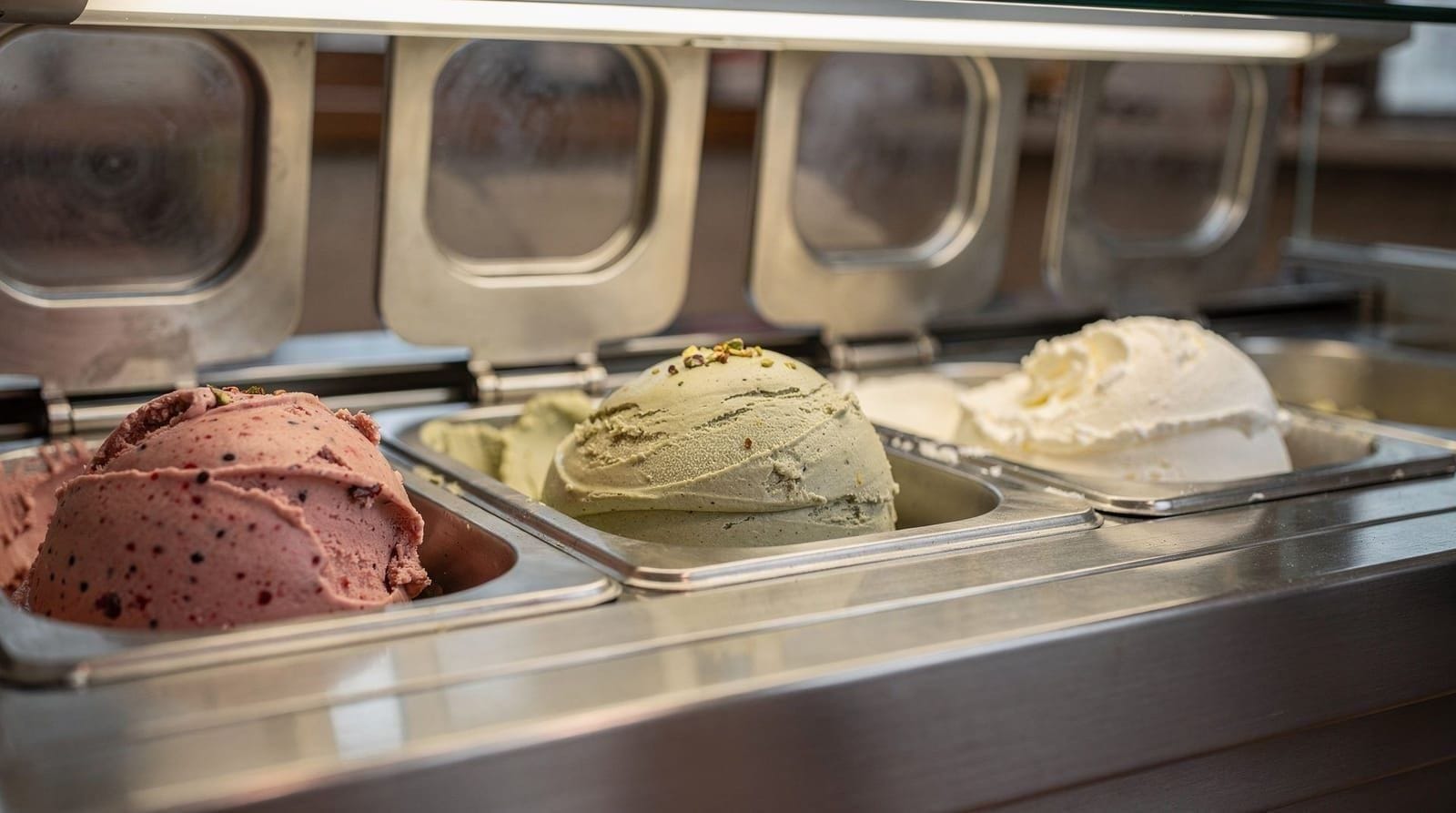
Restaurant overcharging is one piece of a wider pattern. The same “designed to be read in a hurry” logic shows up at Ponte Vecchio jewellery shops, at stalls selling “leather” goods that are not leather at all, and at gelaterie using bright artificial colours and towering swirls as a quality signal rather than an actual one — covered in our gelato tourist traps guide. If you want the fuller picture of what to skip across the city, not just at the table, see the Florence tourist traps overview and the companion overrated things in Florence guide. For a shortlist of places that get the food right, our best trattorias in Florence guide is the practical next stop after this one.
Specific traps by type
The “Fiorentina steak” trap
Bistecca alla Fiorentina is Florence’s signature meat dish — a T-bone steak from Chianina cattle, at least 600g, cooked rare, priced by weight (per 100g). The legitimate price at a genuine steakhouse or butcher-restaurant is approximately €6-9 per 100g, so a proper portion runs €35-55 per person. Tourist trap restaurants near the Duomo charge similar prices but serve lower-grade beef in smaller portions, sometimes not from Chianina cattle at all. The honest version requires going to a genuine steakhouse — check our best restaurants guide for names.
The “fresh truffles” trap
Truffle dishes are listed on tourist menus at prices that suggest genuine fresh Périgord or local truffle. The actual product in many cases is truffle-flavoured oil (synthetic 2,4-dithiapentane) on pasta, which costs pennies. Real truffle dishes, particularly with fresh white truffle (tartufo bianco) in season (October-December), are legitimately expensive — €25-60 for a pasta supplemented with fresh truffle shaved tableside. If the truffle pasta is €18 on a tourist menu, it is almost certainly truffle oil.
The free-seating tourist conversion
In some tourist areas, small tables on the pavement are occupied by customers apparently having a coffee or snack. Passersby are invited to “take a seat” and shown a menu. The setup is designed to look casual and cheap; the bill for coffee, snacks and coperto is not. Always ask to see the price list before sitting at any table in a high-tourist area.
What a full day of honest eating looks like
A useful way to internalise the price benchmarks above is to walk through an actual day rather than a list of rules.
Breakfast, standing at a bar counter (al banco) rather than seated, is a cappuccino and a cornetto for around €2.50-3.50 total almost anywhere away from Piazza del Duomo — sitting at a table for the same order can double the price, so check whether there is a seating surcharge before you sit.
Lunch is the cheapest honest meal of the day. A piatto del giorno at a genuine trattoria in the Oltrarno or around Sant’Ambrogio runs €10-15 for a full plate, and many places offer a simpler lunch-only menu that never appears in the evening.
Aperitivo, roughly 6-8pm, is a Florentine institution worth understanding on its own terms: a drink (€6-10) that typically comes with a buffet of small snacks included in the price. This is one of the better-value meals in the city if you eat generously from the buffet, and it is almost never advertised to tourists near the major sights, which is itself a useful signal of authenticity.
Dinner at a genuine trattoria away from the sights follows the €25-35 benchmark above. If you want a full Fiorentina steak dinner, budget €35-55 per person and go to a restaurant that specialises in it rather than one offering it as one line among fifty dishes.
How to order correctly at a genuine trattoria
Once you have found a genuine restaurant, some practices save money and improve the experience:
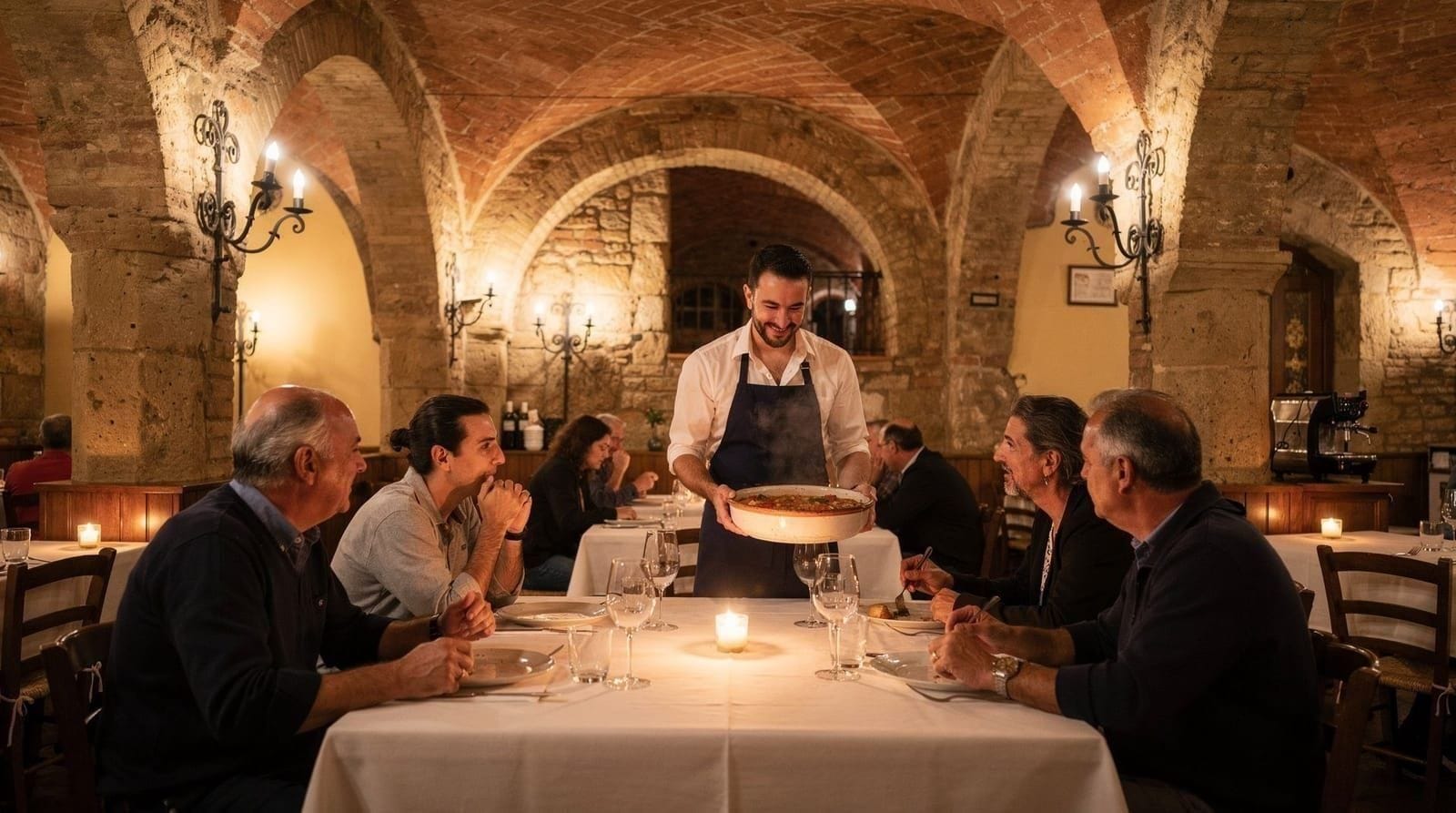
Drink the house wine. Vino della casa in a decent trattoria is a perfectly drinkable Chianti or Vernaccia ordered as a carafe. At €8-12 for half a litre, it is far better value than a listed bottle. Tourist restaurants rarely offer a good house wine or actively discourage it.
Eat the daily specials. The piatto del giorno (dish of the day) uses seasonal ingredients and is the freshest thing in the kitchen. It is usually the best value.
Order water from the tap. Asking for acqua del rubinetto (tap water) is legal and normal in Italy. Tourist restaurants will still try to sell you bottled water, but genuine trattorias will often bring tap water without comment.
Skip the dessert menu at meal service. Tourist restaurants push dessert hard because the margins are high. At a genuine trattoria, dessert is fine. At a tourist trap, it is €8-12 for something that came from a commercial freezer.
The language of honest menus
Genuine Florentine menus have some reliable markers:
- Listed first in Italian with English second or not at all
- Pasta dishes named correctly: pappardelle al cinghiale, ribollita, pici all’aglione
- Seasonal items (what’s available in spring vs autumn varies)
- No photographs
- Prices consistent with neighbourhood (not inflated for location)
- Coperto stated clearly at the bottom in a standard amount
If a menu has five languages, photos and a tourist set menu, and is located within 200 metres of a major monument, you already know what it is.
Frequently asked questions about restaurant scams in Florence
Is tipping required in Florence restaurants?
No. Tipping is not culturally required in Italy. If a service charge has been added to your bill (usually 10-15%, and this should be listed on the menu), you have already paid for service. If there is no service charge, rounding up or leaving €2-5 on a €40-50 bill is a generous and appreciated gesture. Never feel obligated to tip beyond a service charge that was already applied.
What should I do if I see charges I didn’t expect on the bill?
You are entitled to an itemised receipt (ricevuta fiscale or scontrino fiscale) from every Italian restaurant — it is legally required. Ask for it if you don’t receive it. Compare the amounts to what was agreed on the menu. If a service charge appears that was not on the menu, you can politely question it. If water refills were charged individually without disclosure, same. In practice, disputing charges at a tourist restaurant is more effective as a preventive measure (read the menu carefully) than as a correction after the fact.
Are there good restaurants near the Duomo at all?
Yes, a small number. Wine bars (enoteche) near Piazza della Signoria can be excellent — Cantinetta dei Verrazzano on Via dei Tavolini is a bakery-wine bar combination with genuine food at fair prices. Buca Mario, one of Florence’s oldest restaurants (est. 1886), is on Piazza degli Ottaviani and serves traditional food at prices that reflect its age and tourist clientele but with consistent quality. The key is to research specific places rather than being guided by location alone.
What is the difference between a ristorante, trattoria and osteria?
Historically: ristorante (formal, full service, higher prices), trattoria (family-run, honest cooking, moderate prices), osteria (wine-led, simple food). In practice in contemporary Florence, the distinction is blurred. Many places call themselves an osteria that would have been a trattoria 20 years ago. What matters is not the label but the menu prices, format and clientele.
Should I avoid tourist areas for food entirely?
Not entirely. Some excellent restaurants exist in tourist areas. The Sant’Ambrogio market and the eastern stretches of the historic centre (around Santa Croce) have good food at normal prices even though they are touristic. The Oltrarno is genuinely less tourist-saturated. The principle is not geographic avoidance but awareness of the signals described above.
Can I trust restaurant review apps in Florence?
With caution. Review platforms are subject to systematic manipulation, and tourist trap restaurants in Florence have financial incentive to manage their online reputation. A restaurant with 4.2 stars and 3,000 reviews is not necessarily better than one with 4.5 stars and 200 reviews — the volume may reflect consistent tourist traffic rather than genuine quality. Italian platforms like Gambero Rosso and Dissapore, and local food journalism (including the Florence food blog La Cucina Italiana), tend to be more reliable than international review aggregators.
Top experiences
Bookable activities with verified prices and instant confirmation on GetYourGuide.