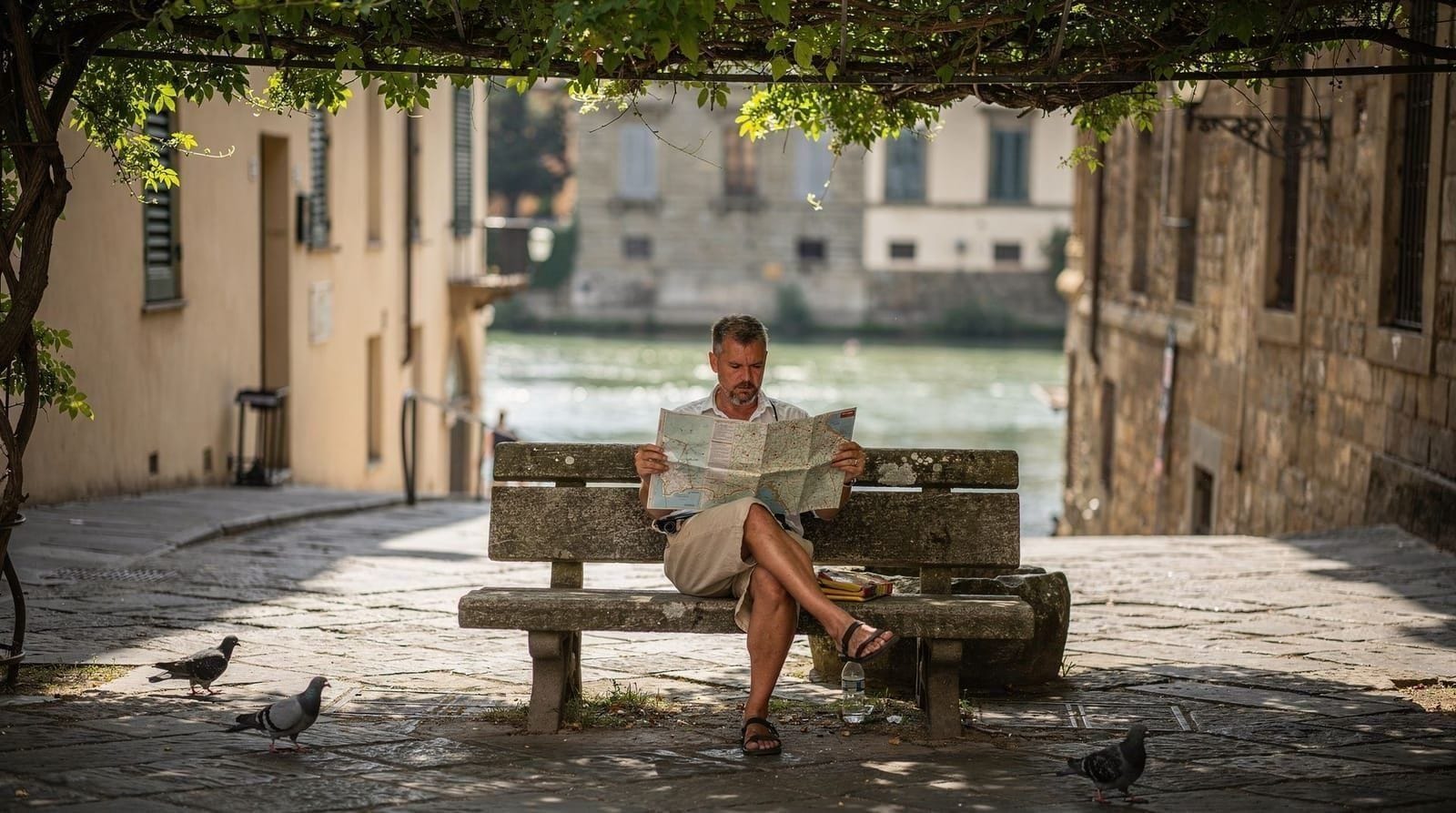
Is Florence worth visiting?
Florence: walking tour
- Free cancellation
- Instant confirmation
Is Florence worth visiting?
Yes — with realistic expectations. Florence has the highest concentration of Renaissance art in the world, extraordinary architecture, and genuinely excellent food. The downsides are real: expensive, crowded in peak season, hot in July–August, with a tourist economy that has inflated restaurant prices near monuments. Go in April–May or September–October, pre-book museums, and stay at least 3 days.
The honest case for Florence
| Best for | Art, architecture and food lovers; short breaks; Tuscany day trips |
| Cost | Mid-range trip around €120–180/person/day incl. hotel, food, one museum |
| Time needed | 3 days minimum, 4–5 comfortable |
| Getting there | FLR airport (18 min tram) or Pisa airport (1h train) |
| Best time | April–May or late September–October |
Let us start with what no one disputes: Florence has the highest concentration of Renaissance art in the world, in a medieval city that remains largely intact, surrounded by one of Europe’s most beautiful regions.
The Uffizi Gallery contains the original Birth of Venus. The Accademia houses the original David. Brunelleschi’s Dome was the most ambitious engineering project of the 15th century and it is still standing. These are not “nice to see” attractions — they are touchstone moments of human creative achievement.
For anyone with even a passing interest in art, architecture, or history, Florence is not merely worth visiting. It is essential.
The scale of what Florence produced in roughly 150 years (approximately 1400–1550) is extraordinary. Brunelleschi invented linear perspective and built the dome. Ghiberti made the Baptistery doors that Michelangelo called “the Gates of Paradise.” Donatello reinvented sculpture. Masaccio transformed painting. Botticelli synthesised ancient mythology with Renaissance humanism. Leonardo explored everything. Michelangelo transcended his medium in every medium he touched. All in the same city, within walking distance of each other’s workshops, competing for commissions from the same family: the Medici.
No other city in history has produced this density of creative achievement in such a short time. Whether or not you particularly care about art before you arrive, it is difficult to spend three days in Florence and not come away changed in some way by proximity to that legacy.
But there is a complication.
The honest case against the hype
Florence’s reputation sometimes implies an idyllic Renaissance city where you wander cobbled streets in golden afternoon light, pause at open doorways to peer into quiet workshops, and discover art at every turn.
This is partly true and partly the work of careful marketing.
The reality includes:
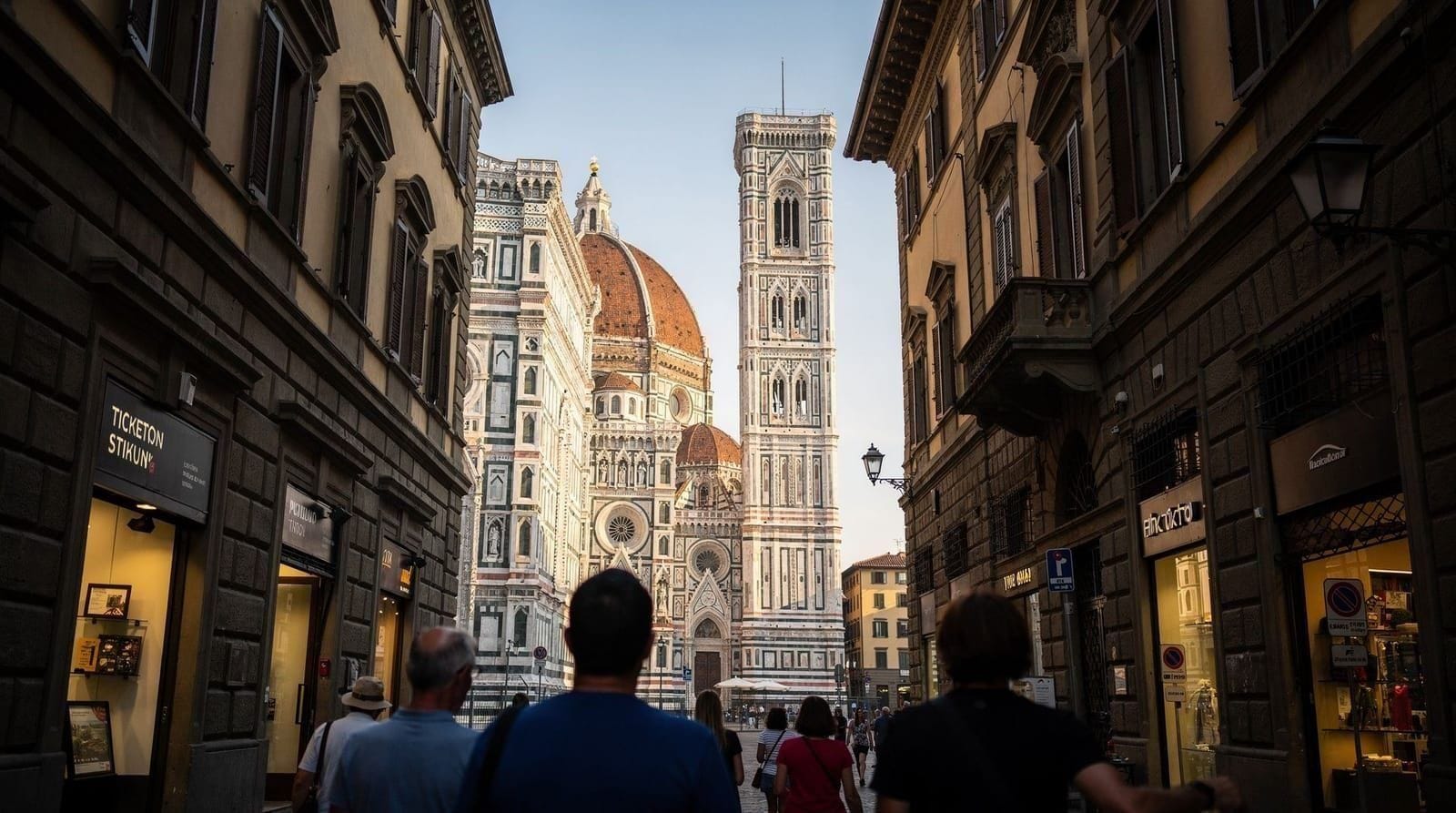
The tourist infrastructure is overwhelming in the centre. The corridor between Santa Maria Novella station, the Duomo, and Ponte Vecchio is one of the most aggressively tourist-dense stretches in Europe. Selfie sticks, tour group umbrellas, souvenir hawkers, and a density of “menu del giorno” restaurants designed entirely for people who will not return. If you stay in this zone, your experience of Florence will be filtered through an army of other visitors having the same experience at the same time.
July and August are punishing. Temperatures of 32–35°C are common. The Uffizi, while air-conditioned, has queues snaking through the heat outside. Cobblestones reflect the heat. The city feels full to bursting with tourists. Several Florentine businesses close for Ferragosto in August. This is the least pleasant version of Florence.
The price inflation around monuments is real. A pasta dish €9–12 at a neighbourhood trattoria costs €20–26 within sight of the Duomo. A coffee €1.20 standing at a local bar becomes €4.50 at a table near Piazza della Repubblica. This is not unique to Florence but it is pronounced here.
Queuing without pre-booking is miserable. Walk-in visitors to the Uffizi in summer can wait 3 hours. Some visitors do this, see the museum in a frantic rush, and leave feeling the city is not worth the effort. It is not the city’s fault; it is the result of not pre-booking.
The “local experience” requires effort to find. It exists — in Oltrarno, in Sant’Ambrogio market, in the wine bars of San Niccolò. But it does not come to you. You have to cross the river, walk away from the obvious routes, and look for it.
Where Florence genuinely excels
The art is as good as advertised
Botticelli’s Birth of Venus — the real one, in Room 10 of the Uffizi — is a different experience from any reproduction. The scale, the quality of the tempera on panel, the expressions of the figures, the specific shade of blue-green in the sea. Photographs flatten it; the original has texture, atmosphere, and presence that photography cannot capture.
The David is more remarkable still. Michelangelo carved it from a single block of marble that had been abandoned for 25 years as unworkable. The finished figure — 5.17 metres of concentrated attention and pre-combat tension — is impossible to stand in front of without feeling something.
If you care about art at all, Florence is worth visiting for the Uffizi and Accademia alone.
The Renaissance architecture is intact
Unlike many European cities that lost their historic fabric to war damage or post-war development, Florence’s medieval and Renaissance centre is largely preserved. Walking from Piazza del Duomo to Piazza della Signoria, you pass through streets that Dante, Machiavelli, and Leonardo walked. The scale, the stone, the proportions of the buildings — this is not a reconstruction. It is the original.
Brunelleschi’s Dome, completed in 1436, remains one of the greatest architectural achievements in history. Standing at its base and looking up at the herringbone brickwork still induces genuine astonishment at what was accomplished without modern engineering.
The food scene is excellent
Tuscany is one of the world’s great food regions. Florence, as its capital, benefits from proximity to Chianina beef (the breed for bistecca), Chianti wine, wild boar for cinghiale pasta, fresh truffles, aged Pecorino, extra-virgin olive oil from the surrounding hills, and fresh pasta traditions that are genuinely distinctive.
The tourist trap restaurants give a false impression. Move two streets in any direction, find a trattoria with a hand-written menu and no photographs of the food, and you will eat very well for €25–40 per person.
The day trips are superb
Florence’s position in Tuscany makes it arguably the best base in Italy for regional exploration. Siena, San Gimignano, Lucca, Pisa, the Chianti wine region, and Val d’Orcia are all reachable in under 2 hours. For visitors who stay 5+ days, Florence becomes a launchpad for some of the most beautiful landscapes in Europe.
The Chianti day trip — vineyards, medieval hilltop villages, wine tastings, cypress avenues — is the experience that makes many visitors understand why Tuscany has been inspiring painters and poets for centuries. Beyond Chianti, Siena, San Gimignano and Pisa are all realistic under-2-hour trips, and our best day trips from Florence guide ranks all the realistic options against each other.
How much does a Florence trip actually cost?
Budget varies enormously depending on season and style, but a realistic mid-range trip runs €120–180 per person per day, covering a good mid-range hotel, two meals (one trattoria, one casual), and one paid museum entry. Budget travellers can get this closer to €70–100/day using hostels or budget hotels slightly outside the centre, market lunches, and free sights like the Duomo exterior and Piazzale Michelangelo. Luxury travel in Florence has essentially no ceiling. See the Florence trip cost and budget guide for a full line-by-line breakdown, and Florence on a budget for concrete ways to cut costs without cutting the experience short.
Who should visit Florence
Art lovers: Florence is essential. No city on earth packs equivalent Renaissance masterpieces into a comparable space.
Architecture enthusiasts: Brunelleschi, Alberti, Ghiberti, and the medieval Palazzo Vecchio form a living portfolio of architectural history.
Food and wine travellers: Tuscany is a world-class food region. Florence is the gateway to it.
History enthusiasts: The Medici, the Renaissance, Dante, the Pazzi Conspiracy, Galileo’s trial, the 1966 flood — Florence is soaked in layered history at every scale.
Short-break travellers: Three days in Florence, well-planned, is a deeply satisfying weekend trip.
Who might be disappointed
Visitors who hate crowds: July–August Florence is genuinely unpleasant in terms of density. Consider October instead.
Travellers on very tight budgets: Hotels in the centre are expensive. Museum fees accumulate. Consider budget strategies: staying slightly outside the centre, free museum Sundays, market lunches.
People seeking “untouched” Italy: Oltrarno hints at it, but Florence’s centre is a major international tourist destination. For authentic rural Italy, Tuscany’s smaller towns — Volterra, Cortona, Barga — offer more of that.
Beach lovers or outdoors travellers: Florence is a city destination. The Tuscan hills are beautiful for walks, but if beaches or hiking are primary goals, the Italian coast or Dolomites serve better.
When to go to make the most of Florence
| Month | Pros | Cons |
|---|---|---|
| January–February | Low prices, quiet, no queues | Cold (5–10°C), some closures, short days |
| March | Warming up, increasingly pleasant | Still some rain; Easter can be very busy |
| April–May | Ideal: 18–24°C, flowers, manageable crowds | Easter week is peak; April prices rise |
| June | Long days, warm, good atmosphere | Crowds increasing, prices high |
| July–August | Long days | 30–35°C heat, maximum crowds, Ferragosto closures |
| September | Excellent: cooler, wine harvest beginning | Still fairly busy first half |
| October | Sweet spot: golden light, lower prices, thin crowds | Rain increasing late month |
| November | Very quiet, authentic feel | Rainy, cold evenings, some closures |
| December | Christmas markets, festive atmosphere | Crowded Christmas week, cold |
The honest recommendation: April–May or late September–October. These windows offer the best balance of weather, reasonable crowds, and full attraction access.
Florence versus other Italian destinations
Florence vs Venice
Venice is visually unique — there is nothing else like it. But it is extremely expensive, crowded on the main tourist routes, and has limited practical amenities. Florence has better restaurants, better museums, better day trip options, and is more liveable as a base. Venice should be seen, but for a single Italian destination, Florence gives more.
Florence vs Rome
Rome has more layers of history (2,700 years versus Florence’s peak period of 200–300 years). The Vatican, Colosseum, and Roman Forum are extraordinary. But Rome is large, chaotic, and harder to navigate. Florence is compact and walkable. For art specifically, the Uffizi and Accademia rival anything Rome has to offer. The two cities complement each other well if you can visit both.
Florence vs the Amalfi Coast
Completely different propositions: art and history versus coastal scenery and leisure. Both are excellent; the choice depends on your travel style. A trip that combines 3 days in Florence with 3–4 days on the Amalfi Coast covers both bases.
The things that genuinely surprise first-time visitors
The intimacy of the masterpieces. Italy’s greatest art is not behind glass in temperature-controlled rooms; much of it is accessible in small, human-scale spaces. The David stands in a rotunda sized for one large sculpture. The Botticelli Room in the Uffizi is not vast. You can stand very close to works that reproduce at poster size. This proximity is not available in most major museums.
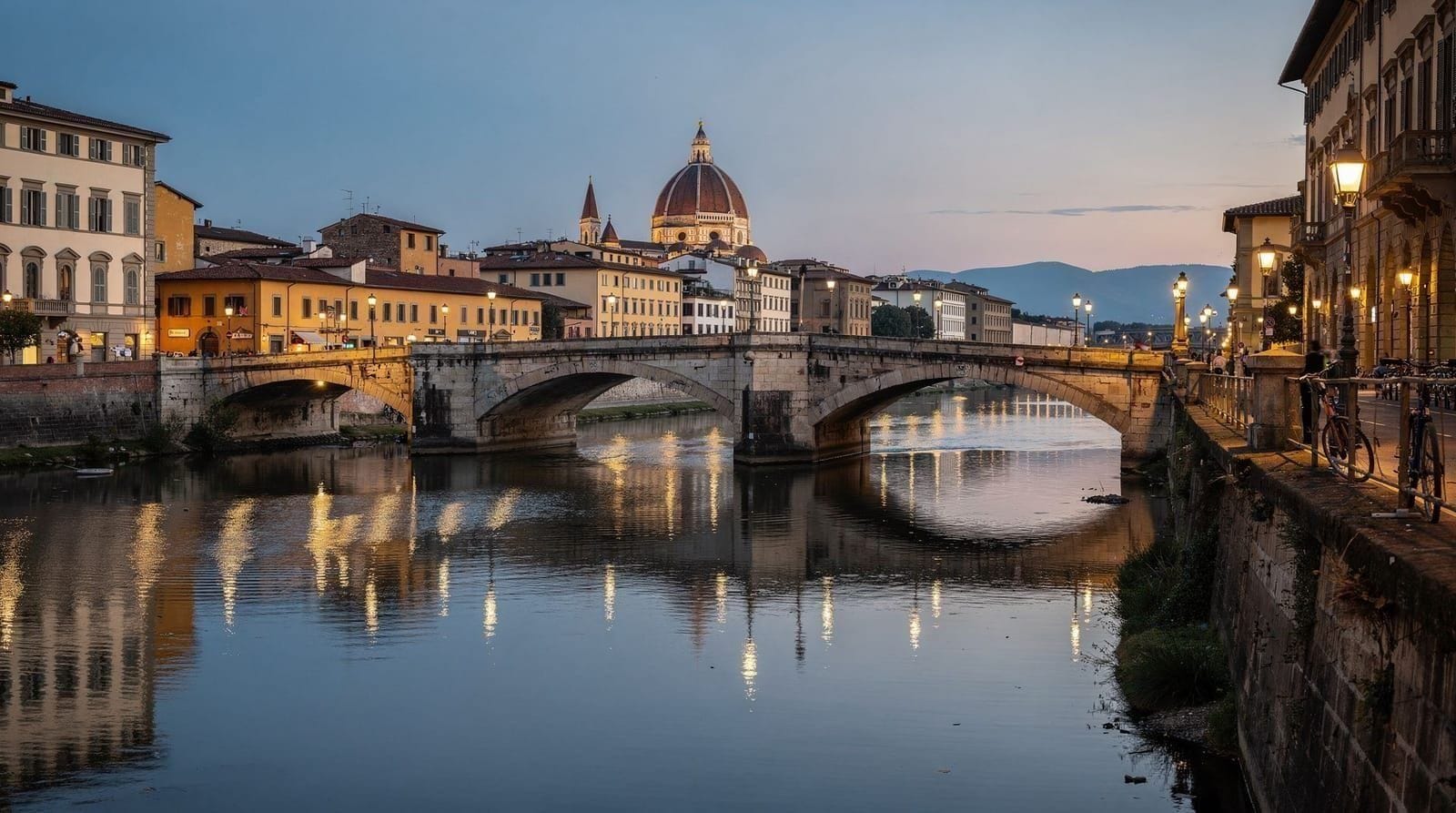
The streets are as interesting as the museums. Florence’s medieval urban fabric — the pattern of streets unchanged since the 13th century, the stone buildings at the same scale as when Dante lived nearby, the Arno embankment in evening light — is the context that makes the art coherent. Standing in Piazza della Signoria knowing that the original David stood here until 1873, that this is where Savonarola was burned in 1498, that Machiavelli walked this square — the physical space adds dimensions that photography cannot.
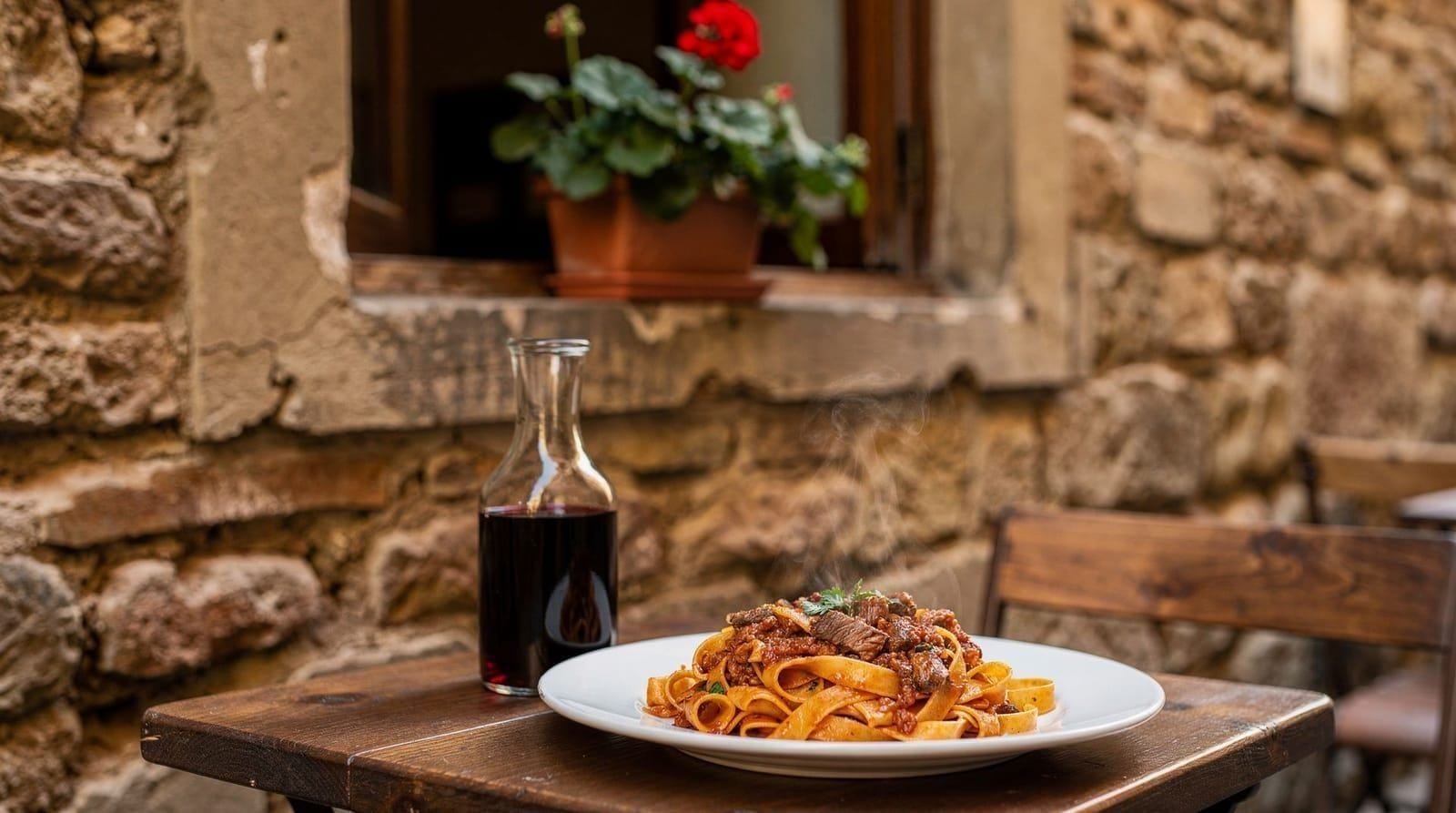
The food is better than expected. Visitors who arrive thinking Italian food means pizza and pasta discover bistecca alla Fiorentina (wood-fired Chianina beef), ribollita (Tuscan bread and bean soup), lampredotto (offal sandwich from market stalls), fresh pappardelle with wild boar ragù, and a glass of Chianti from the region where the wine comes from. Florence’s food is specific, honest, and genuinely excellent at the right price point.
The day trips transform the experience. Florence-as-city is significant. Florence-as-gateway-to-Tuscany is extraordinary. Taking the bus to Siena, driving through Chianti vineyards, seeing the Val d’Orcia landscape — these experiences frame the city art in a regional context that makes the Medici patronage, the wine economy, and the agricultural wealth that funded the Renaissance suddenly legible.
The verdict
Florence is worth visiting. It is one of a handful of cities in the world where the real thing genuinely exceeds the expectation built by decades of photographs and film — where standing in front of the original masterpiece produces a different, deeper response than looking at reproductions.
Go with realistic expectations about crowds and costs. Avoid July–August if you can. Pre-book your museum tickets. Spend time in Oltrarno. Eat at trattorias, not tourist restaurants. And give yourself at least three days.
Done properly, Florence is one of the great travel experiences. Done in a rush, without preparation, in peak summer heat — it can be a disappointment. The city is generous to visitors who approach it with patience and preparation.
For a deeper first-timer’s walkthrough of exactly how to plan those first days — what to book, what to skip, where to stay — see the first time in Florence guide and how many days in Florence for matching your trip length to what you actually want to see.
Frequently asked questions about visiting Florence
Is one day in Florence worth it?
One day is better than nothing, but it is not enough to do the city justice. With one day you can see the Uffizi (pre-booked) or Accademia but not both, plus the exterior highlights. If Florence is a stop on a longer Italy itinerary, two nights and two days is the minimum recommended.
Is Florence worth visiting without going to museums?
Surprisingly, yes — to a point. Florence’s streets, piazzas, markets, restaurants, and free architecture are genuinely excellent. The Duomo exterior and Piazza della Signoria are extraordinary without paying for entry. Piazzale Michelangelo is free. Oltrarno is free to wander. But skipping the Uffizi and Accademia means missing the primary reason most people visit Florence.
Can I visit Florence if I don’t like art?
Yes. The food, architecture, and ambience of the city stand independently of the major museums. A visitor who skips the Uffizi but spends two days eating excellent Tuscan food, wandering Oltrarno, taking a day trip to Chianti for wine tasting, and watching the sunset from Piazzale Michelangelo will have had a very good trip.
Is Florence safe to visit?
Florence is one of Italy’s safer cities. Petty theft (pickpockets) is the main concern in crowded tourist areas — particularly around the Duomo, Ponte Vecchio, and busy markets. Violent crime targeting tourists is rare. Standard precautions apply: use a secure bag, don’t leave valuables visible in cars, be aware in very crowded areas.
Is Florence worth visiting on a tight budget?
Yes, with adjustments. Stay slightly outside the absolute centre (San Lorenzo or Santa Croce edges rather than Piazza della Repubblica), eat market lunches at Mercato Centrale or Sant’Ambrogio, and prioritise one or two paid museums rather than trying to see everything. The free sights alone — the Duomo exterior, Piazzale Michelangelo, Oltrarno’s streets — deliver real value. See Florence on a budget for specific numbers.
How does Florence compare to smaller Tuscan towns for a more relaxed trip?
Florence gives you the concentrated art and history; smaller towns like Lucca or hilltop villages in Chianti give a slower, quieter pace with far fewer crowds. Many visitors find the ideal trip combines both — a base in Florence for the museums, with day trips or a short stay in a smaller town for contrast. Neither replaces the other; they serve different parts of what makes a Tuscany trip satisfying.
Is Florence worth visiting more than once?
Yes, and repeat visitors are common. A first trip tends to focus on the Uffizi, Accademia and Duomo complex — the essential list. A second trip lets you slow down: linger longer in Oltrarno, take a Chianti or Val d’Orcia day trip you skipped the first time, revisit a favourite trattoria, or finally book the Vasari Corridor or a specific special exhibition. Florence rewards depth; there is genuinely more to see than a single visit, however well planned, can cover.
Top experiences
Bookable activities with verified prices and instant confirmation on GetYourGuide.