How many days in Florence?
Florence: Uffizi Gallery skip-the-line tickets
- Skip the line
- Free cancellation
How many days do I need in Florence?
3 days covers the essential Florence — Uffizi, Accademia, Duomo complex, and a half-day in Oltrarno. Add a 4th or 5th day for day trips to Siena, Chianti, or Pisa. First-timers with 2 days must prioritise ruthlessly.
The honest answer depends on what you actually want to do
Florence is compact — you can walk from Santa Croce to the Duomo in 15 minutes. But the city is also extraordinarily dense with world-class art. The Uffizi alone contains 50+ rooms; many visitors try to sprint through in two hours and feel they saw nothing. The Accademia is shorter but David is not something you rush.
The real question is not how small the city is, but how much time you are willing to spend inside museums versus wandering streets, eating bistecca, and sitting at a café in a quiet piazza.
Here is an honest breakdown by trip length.
| Minimum recommended | 3 days for first-timers |
| Sweet spot | 4–5 days, Florence plus one Tuscan day trip |
| Cost per extra day | Around €80–150/person for lodging, food and a museum or two |
| Book ahead | Uffizi and Accademia — weeks in advance for Apr–Oct |
| Best base | Centro Storico, Oltrarno or San Marco |
One day in Florence — survival mode
Realistic verdict: You will see the highlights. You will not understand the city.
One day in Florence requires ruthless decisions. The Uffizi takes 2–3 hours if you focus on the must-sees (Botticelli’s Birth of Venus and Primavera, Caravaggio, Leonardo, Michelangelo’s Holy Family). Add 45 minutes of queuing even with a pre-booked skip-the-line ticket, walking between rooms, and a water break.
A realistic one-day itinerary:
- 8:30 Arrive at Uffizi (pre-booked timed entry, skip the queue)
- 11:30 Walk Piazza della Signoria, see the outdoor sculpture collection
- 12:00 Lunch near Mercato Nuovo — lampredotto sandwich or a trattoria away from the tourist strip
- 14:00 Ponte Vecchio, then a 20-minute walk to Piazzale Michelangelo for views
- 16:30 Explore Oltrarno streets briefly
- 18:00 Aperitivo and done
What you skip: Accademia and Michelangelo’s David, Brunelleschi’s Dome climb, Medici Chapels, Palazzo Vecchio interior, all neighbourhood exploration. That is a lot.
Two days in Florence — the minimum for first-timers
Realistic verdict: Core museums covered. No time for the city to breathe.
Two days lets you split the Uffizi and Accademia properly. Pre-book both with timed entry — without reservations, you will spend 2–3 hours queuing for the Accademia alone in peak season.
Day 1 — Uffizi and Centro Storico
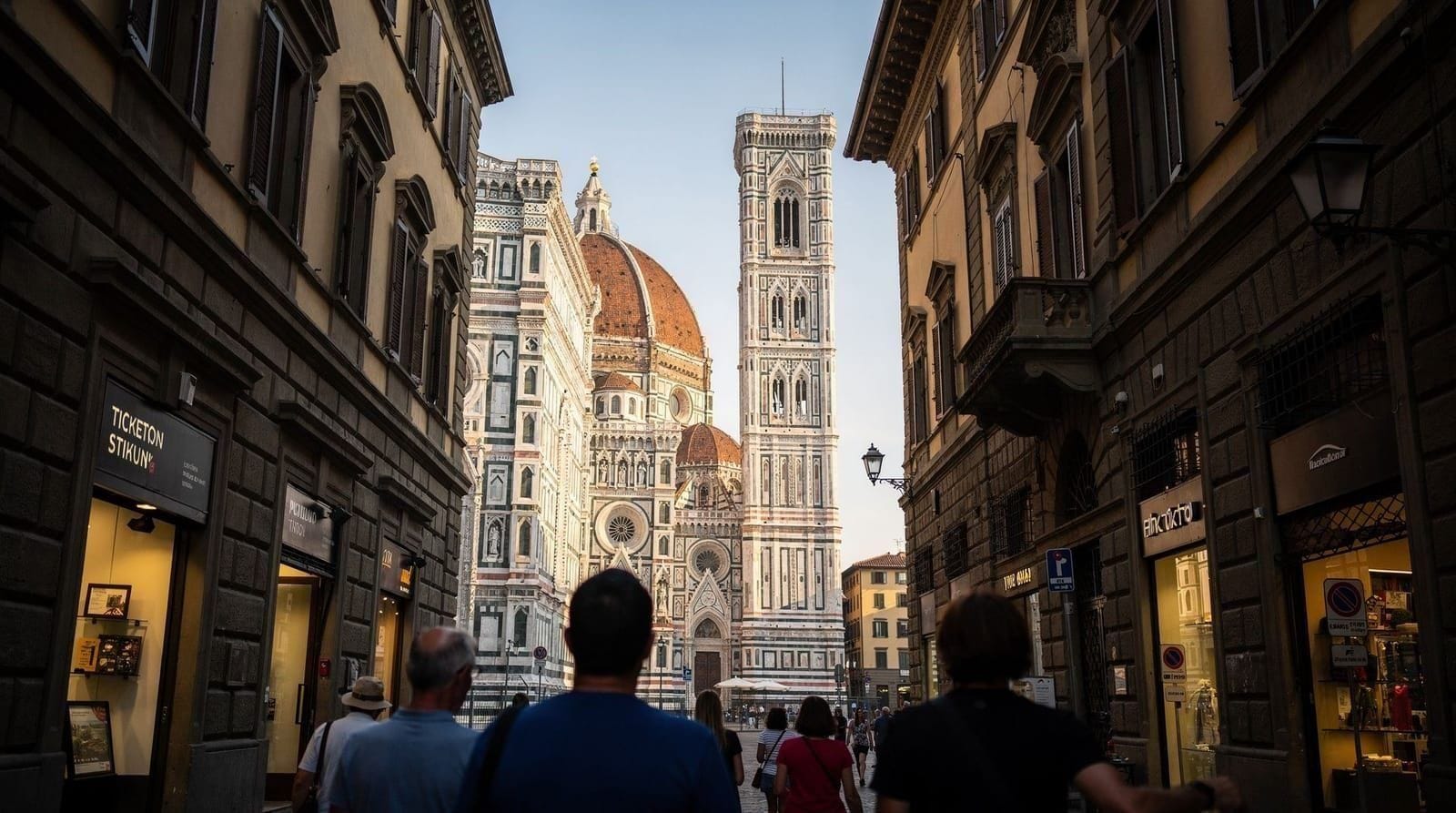
Morning at the Uffizi (timed entry, arrive 5 minutes early). After lunch, walk to Piazza della Repubblica, the Baptistery, and the Duomo exterior. The Duomo itself is free but you need a separate ticket to climb Brunelleschi’s Dome — book in advance if this is a priority. End with a stroll across Ponte Vecchio and dinner in Oltrarno.
Day 2 — Accademia and neighbourhood
Accademia first (pre-booked, 90 minutes is enough). Then San Lorenzo market and the Medici Chapels if you have booked. Afternoon in San Marco district, or a walk up to Fiesole for panoramic views over the city. Evening aperitivo at a rooftop bar.
What you still miss: Palazzo Vecchio interior, Bargello, a real evening wander in Oltrarno, any Tuscan day trip.
Three days — the recommended minimum
Realistic verdict: This is where Florence starts to make sense.
Three days allows you to see the essential museums without rushing them, spend an afternoon getting lost in Oltrarno, and have at least one relaxed evening meal at a proper trattoria. This is the trip length most visitors who return to Florence wish they had given themselves the first time.
| Day | Morning | Afternoon | Evening |
|---|---|---|---|
| 1 | Uffizi Gallery (timed entry) | Piazza della Signoria, Palazzo Vecchio exterior | Dinner near Santa Croce |
| 2 | Accademia — David | Duomo dome climb or Medici Chapels | Aperitivo in Piazza della Repubblica |
| 3 | Oltrarno: Pitti Palace or Boboli Gardens | San Miniato al Monte, Piazzale Michelangelo | Bistecca dinner in a local trattoria |
The third day in Oltrarno is often the one visitors remember most. Away from the main tourist circuits, you find working leather workshops, small wine bars, family-run trattorias, and a neighbourhood that still feels Florentine rather than staged. Read more in the Oltrarno neighbourhood guide.
Four days — adding a Tuscan day trip
Realistic verdict: Now you are travelling, not just sightseeing.
A fourth day in the Florence area unlocks Tuscany. The best options by train from Santa Maria Novella:
- Siena — 1h30 by bus (Sena/FlixBus, €14–18 return), or 1h20 by train to Empoli then change. The Campo and Duomo alone justify the trip. See the Siena day trip guide.
- Pisa — 1 hour by train, around €9–12 return. Two hours at the Campo dei Miracoli, then back for dinner. Simple and satisfying.
- Lucca — 1h20 by train. Walk the city walls, rent a bike, eat well. Lucca guide.
If you have a car, four days opens up Chianti — vineyards, medieval villages, and wine tastings that trains cannot reach. The Chianti Classico route runs south from Florence through Greve, Radda, and Castellina.
Five days or more — the Tuscany trip
Realistic verdict: Do this if you possibly can.
Five or more days means Florence as base plus proper Tuscan exploration. By day three you have finished the main museums; days four and five become discoveries rather than checklists.
Possible extensions:
- Val d’Orcia — Montepulciano, Pienza, Montalcino — requires a car or a guided tour. Cypress-lined roads, Brunello wine, and some of the most photographed landscapes in Europe. Best done as a full day or an overnight stay. See the Val d’Orcia guide for driving logistics and winery recommendations.
- San Gimignano — The best-preserved medieval tower city in Italy, easy to combine with Siena on a single day trip. 14 medieval towers still stand; once there were 72.
- Cinque Terre — Technically doable as a day trip (train to La Spezia, about 2h30 each way from Florence) but honestly exhausting. Better as an overnight. The train journey alone is 5 hours round trip. Reserve Cinque Terre for a trip where it is the destination, not a detour.
- A cooking class or wine tour — With five days you finally have an afternoon to spare for a pasta-making class or a Chianti vineyard visit. Several excellent options operate from Florence; cooking classes guide has the most reliable operators.
- Fiesole — The hilltop Etruscan and Roman town above Florence, reachable in 25 minutes by bus 7 from Piazza San Marco. Roman amphitheatre, monastery gardens, and the best panoramic view of Florence. A perfect half-day when you need a break from museums.
A five-day visit lets you experience both the art city and the agricultural region that produced the art’s patrons — Chianti wine funding Medici commissions, Brunello from the hillsides below Montalcino, fresh truffles from the Tuscan hills feeding the same trading families whose portraits hang in the Uffizi.
The Oltrarno afternoon — what most itineraries skip
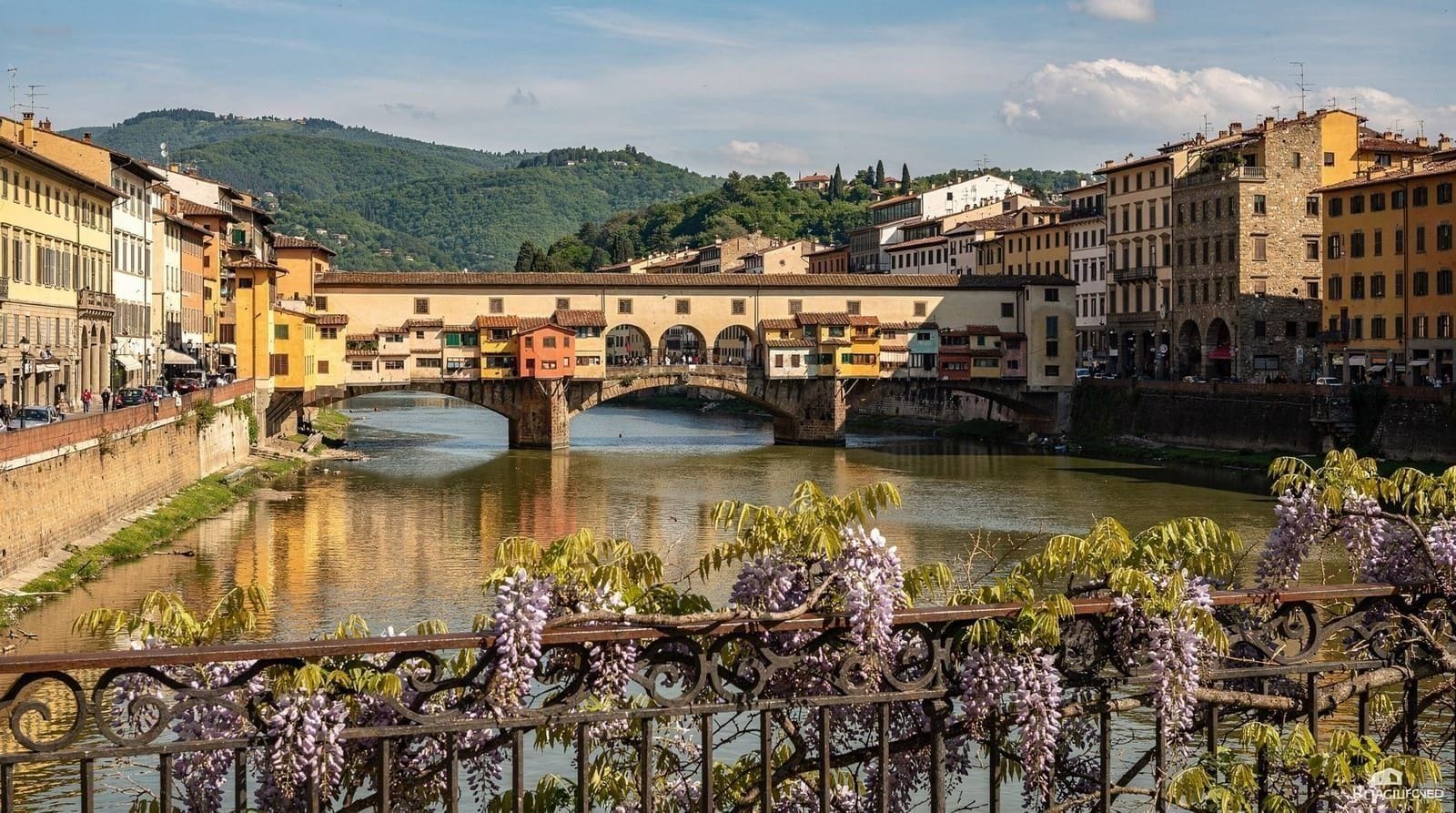
Most three-day Florence itineraries concentrate north of the Arno — Uffizi, Accademia, Duomo, Piazza della Signoria. Crossing Ponte Vecchio into Oltrarno, the neighbourhood south of the river, is where many visitors have their best Florence moment.
Oltrarno retains the character of a working neighbourhood: artisan leather workshops (the genuine kind, where items are made on-site rather than imported), small wine bars (enoteche) where locals drink a glass standing at the counter at 6pm, family-run trattorias with handwritten menus that have barely changed since the 1980s, and streets quiet enough in the morning to hear your own footsteps on the cobblestones.
Pitti Palace and Boboli Gardens are Oltrarno’s main paid attractions — the Palatine Gallery inside the palace has a staggering collection of Raphael and Titian, and Boboli Gardens offer a landscaped escape from urban density. But the neighbourhood itself — Piazza Santo Spirito in the evening, the streets around Via Maggio, the San Niccolò district below Piazzale Michelangelo — requires nothing more than a willingness to walk slowly and look.
Read more in the Oltrarno neighbourhood guide.
What slows you down (don’t underestimate these)
Queues without pre-booking. In April–October, walk-in visitors wait 2–3 hours at the Accademia and 1–2 hours at the Uffizi. Book both online before you travel — it is not optional.
Museum opening days. Several Florence museums close on Mondays: the Accademia, Uffizi, Bargello, Medici Chapels. The Duomo dome closes some Sundays for religious services. Check before planning your schedule.
The heat in July–August. Temperatures of 32–35°C make afternoon sightseeing miserable. Many visitors need a long break after lunch. Museums become the cool refuge; outdoor exploration shifts to early morning and evening.
Cobblestones and distances. Florence looks small on a map but Piazzale Michelangelo is a 25-minute uphill walk from Ponte Vecchio. After a full day of museum-going, feet need care. Build in café breaks.
Day allocation by interest
| Interest | Recommended days |
|---|---|
| Art-focused (Uffizi, Accademia, Bargello, Pitti) | 4–5 days |
| Architecture and landmarks (Duomo, Palazzo Vecchio, towers) | 3 days |
| Food and wine (cooking classes, tastings, markets) | 3 days + 1 day trip |
| Relaxed city exploration, minimal queuing | 2–3 days |
| Florence + Tuscany road trip | 5–7 days |
| Short break / weekend | 2 days minimum |
Practical planning notes
Book the Uffizi and Accademia before you book your flights. This is not an exaggeration. During peak season (April–September), timed-entry slots fill weeks in advance. Trying to book on arrival often means choosing between 8am or a 3-day wait.
Get your hotel in Centro Storico, Oltrarno, or San Marco. These three neighbourhoods put you within walking distance of everything. Santa Croce is also excellent and slightly quieter at night. Avoid hotels near the main train station if you prioritise ambience over convenience — the Santa Maria Novella area is noisier and less charming.
The tram from FLR airport to Santa Maria Novella station takes 18 minutes and costs €1.70. It is the fastest and cheapest option. If you fly into Pisa instead, a direct train to Santa Maria Novella takes about 1 hour.
Florence is not a driving city. The ZTL (limited traffic zone) covers most of the historic centre. Drive a rental car into the centre and you face fines of €80–335. Use the car only for Chianti and Val d’Orcia day trips; park outside the ZTL and take public transport into the city.
Florence with kids: does the day count change?
Yes, generally add a day. Children tire faster in museums and need more outdoor breaks, so a family itinerary that would be 3 days for adults often works better spread over 4. Break up the Uffizi and Accademia visits (aim for 60–90 minutes each rather than the full 3 hours) and build in park time — the Boboli Gardens and a gelato stop go a long way toward resetting a tired child’s mood. The Florence with kids itinerary plans a realistic family pace day by day, and kid-friendly museums in Florence flags which collections actually hold children’s attention.
If you’re combining Florence with another Italian city
Many first-time Italy visitors are deciding how to split time between Florence and Rome, Venice, or Milan rather than planning a Florence-only trip. As a rule of thumb: Florence needs a minimum of 3 days to feel complete, and so does Rome — trying to compress both into under a week means sacrificing depth in one or both. See Florence vs Rome and Florence vs Venice for how the two compare if you’re deciding which deserves more of a fixed total.
Frequently asked questions about how long to spend in Florence
Is one week in Florence too long?
A week in Florence itself would feel long for most visitors — you would repeat museums or spend days simply wandering, which is actually pleasant but not everyone’s travel style. A smarter approach is 3–4 days in Florence and 2–3 days exploring Tuscany: Siena, Chianti, Val d’Orcia, or Cinque Terre. That makes a week feel perfectly paced.
How long should I spend at the Uffizi?
Plan 2.5–3 hours minimum to see the highlights without rushing. Art enthusiasts easily spend 4 hours. The gallery is large — 45 rooms on the first floor alone — and the masterpieces are concentrated in the first 20 rooms. A timed-entry ticket with an audio guide adds 30–40 minutes but improves understanding significantly.
Can I see Florence and Rome in one week?
Yes, but it requires discipline. Rome needs at least 3 days to see Vatican, Colosseum, and the historic centre. Florence needs 3 days. That leaves one travel day and no margin. The train between the two cities takes 1h30 by high-speed Frecce. It is a workable week; it is not a relaxed one. Consider skipping one major attraction in each city rather than racing through both.
Is it worth spending more than 3 days in Florence?
For first-time visitors, 3 days is the minimum for a satisfying trip; 4 days is comfortable. Beyond 4 days in the city itself, additional time is better spent in Tuscany — day trips or overnights in Siena, Chianti, or Val d’Orcia give your Florence holiday more texture and variety.
How early should I book Uffizi tickets?
Book as soon as your travel dates are confirmed — ideally 4–8 weeks in advance for April–October travel. The Uffizi sells a limited number of timed-entry slots per hour; popular morning slots fill fastest. If you arrive without a ticket, the walk-in line can stretch to 3 hours in peak season.
What is the best neighbourhood to stay in Florence?
Centro Storico (around the Duomo and Piazza della Repubblica) is central but expensive and crowded. Oltrarno is the most atmospheric — quieter streets, local bars, great trattorias, and still a 10-minute walk from the Uffizi. San Marco and Santa Croce are excellent mid-tier choices with good restaurant access and manageable crowds. For a deep dive on accommodation, see the where to stay in Florence guide and the best areas to stay in Florence.
Is 2 days in Florence enough if it’s part of a longer Italy trip?
It’s workable but tight. Two days lets you see the Uffizi and Accademia if both are pre-booked, plus a walk through Centro Storico and across Ponte Vecchio, but you’ll skip Oltrarno, the Duomo dome climb, and any day trip. Treat it as a taster rather than a complete visit, and accept you’re deliberately trading depth for covering more of Italy on this trip.
What’s the ideal split between Florence itself and Tuscany day trips?
For a 5-day trip, 3 days in Florence and 2 days split between one or two Tuscan destinations (Siena plus Chianti, or a Val d’Orcia day) is the most commonly recommended split, and matches how most repeat visitors structure their time. Fewer than 3 Florence days risks rushing the Uffizi and Accademia; more than 2 Tuscany days without a car becomes logistically harder, since most towns require a bus or train connection back through Florence.
Top experiences
Bookable activities with verified prices and instant confirmation on GetYourGuide.

Florence: Uffizi Gallery skip-the-line tickets
- Skip the line
- Free cancellation
Florence: Accademia Gallery — David skip-the-line ticket
- Skip the line
- Instant confirmation
Florence: walking tour
- Free cancellation
- Instant confirmation
Florence: dome climb and cathedral 3-day Duomo complex pass
- Skip the line
- Instant confirmation