Opera and classical music in Florence: the honest guide
Florence: Arno river cruise at sunset with live concert
- Free cancellation
Where can I hear opera in Florence?
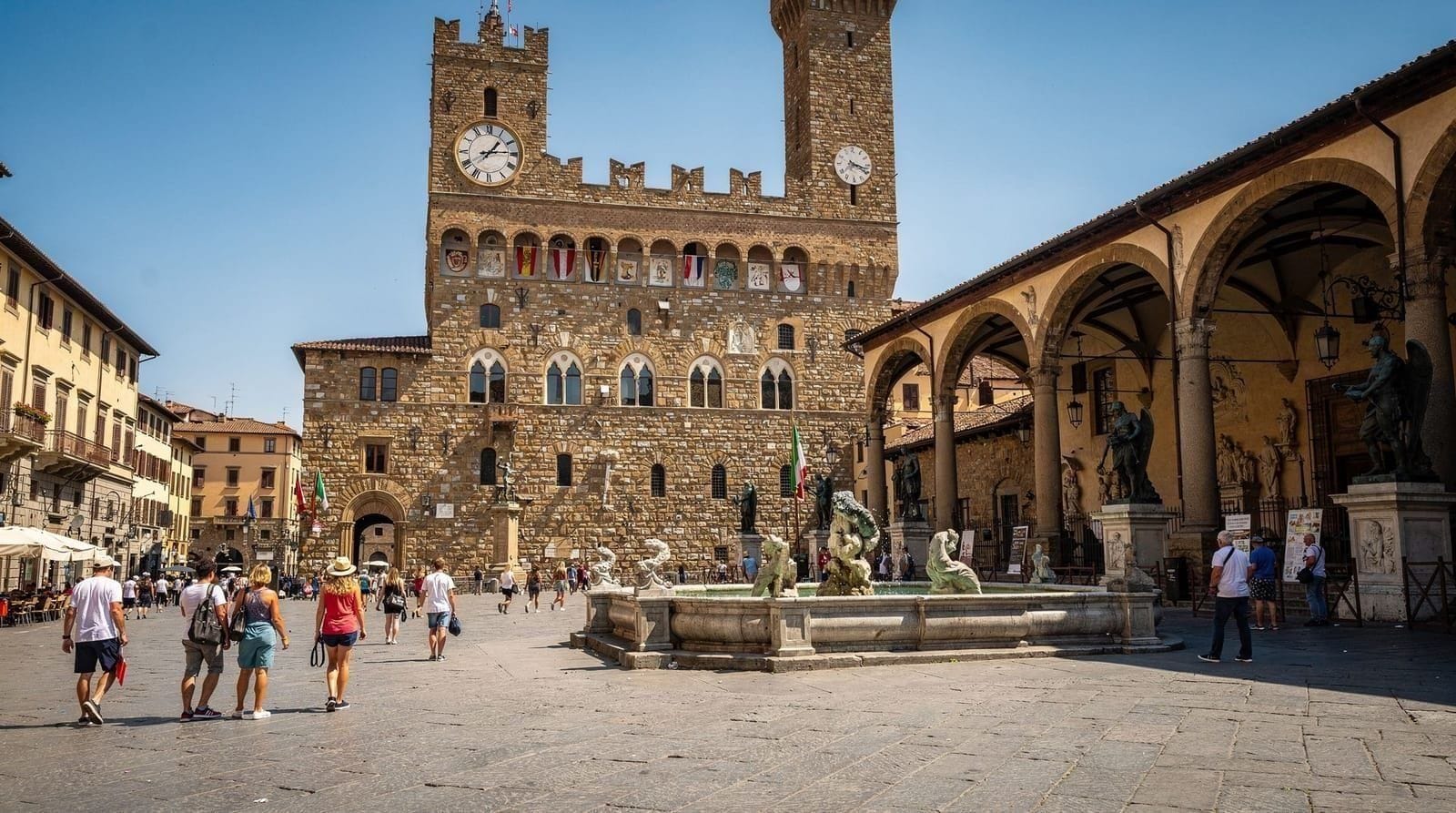
The main venue is the Teatro del Maggio Musicale Fiorentino (Piazzale Vittorio Gui), Florence's opera house and the site of Italy's oldest music festival. Smaller venues include the Teatro della Pergola, the Palazzo Vecchio courtyard (summer), and numerous churches that host chamber concerts and choral performances year-round. Evening concerts in atmospheric settings are available through operators specialising in the tourist market.
Florence invented opera. This is not a metaphor or a mild exaggeration. The art form — sung drama with orchestral accompaniment — was created in Florence in the 1590s by a group of humanist scholars, composers, and performers who called themselves the Camerata Fiorentina. They were trying to reconstruct ancient Greek theatre; what they accidentally created was something entirely new and entirely influential.
Today Florence has a major opera house, a historic theatre, a thriving chamber music scene, and an atmospheric evening concert market aimed at tourists — some of it excellent, some not worth your time. This guide tells you what’s what.
| Main venue | Teatro del Maggio Musicale Fiorentino |
| Cost | around €15–150 for opera; €10–30 for chamber concerts |
| Season | October–late spring; Maggio festival late April–June |
| Booking | 2–4 weeks ahead regular season; 4–8 weeks for the Maggio festival |
| Dress | smart casual acceptable; some dress formally for major productions |
Where opera was born: the Camerata Fiorentina
In the 1570s and 1580s, a group of scholars and musicians met regularly at the Palazzo Bardi on Via dei Benci, hosted by Count Giovanni de’ Bardi. The group — which included the composer Giulio Caccini, the theorist Vincenzo Galilei (Galileo’s father), and the singer and composer Jacopo Peri — was fascinated by ancient Greece and convinced that Greek tragedy had been sung throughout.
They developed a new compositional technique they called stile recitativo (recitative style): a single vocal line, closely following the rhythm and accent of spoken Italian, accompanied by simple chords. The idea was to make the music serve the text, not overwhelm it — a reaction against the elaborate polyphony of late Renaissance choral music, where multiple voices singing different texts simultaneously made the words incomprehensible.
Jacopo Peri set the myth of Orpheus and Eurydice to this new style in 1597, for a private performance (the music is largely lost). In 1600, he revised and expanded it as Euridice, performed at the Pitti Palace for the wedding of Marie de’ Medici and Henri IV of France. This is the earliest opera whose music survives complete.
Claudio Monteverdi, working in Mantua, developed the form dramatically in his Orfeo (1607), and opera became an established art form. But Florence is where it started.
Teatro del Maggio Musicale Fiorentino
Address: Piazzale Vittorio Gui 1, near Piazza Vittorio Veneto (about 1.5 km west of the Duomo, near the train station).
The current building, opened in 2014, replaced an older facility and was controversial when it opened: a contemporary design by architect Paolo Desideri, with an unusual exterior and ambitious acoustics. The 1,820-seat main auditorium has received good reviews for its sound quality.
The resident company maintains a full season of opera productions, orchestral concerts, ballet, and chamber performances from October through late spring. The major event is the Maggio Musicale Fiorentino festival, held from late April through late June — Italy’s oldest music festival, founded in 1933. Productions during the Maggio typically include significant international guest artists and conductors.
Ticket prices: ranging from approximately €15 (rear stalls, limited view) to €120–150 (front stalls, first rows, boxes) for full opera productions. Orchestral concerts are typically €20–60. Student and under-30 discounts are often available.
Booking: The Teatro del Maggio website sells tickets in English. For the Maggio festival (April–June), book popular productions 4–8 weeks in advance. For regular-season opera, 2–4 weeks is usually sufficient.
Dress code: Smart casual is acceptable for most performances. A significant proportion of Italian opera-goers dress formally; you will not be turned away in neat trousers and a shirt, but you may feel underdressed at a major production. Avoid tourist-casual (shorts, sandals).
Teatro della Pergola
Address: Via della Pergola 18–32, in the San Croce area.
Florence’s oldest theatre, built in 1656 by the Accademia degli Immobili under Medici patronage. It is one of the best-preserved baroque theatres in Italy, with a horseshoe plan, wooden boxes, and the characteristic intimate feel of the period.
The Pergola is now primarily a spoken theatre, presenting Italian-language productions of classic and contemporary drama. However, it also hosts the Amici della Musica (Friends of Music) concert season — an excellent chamber music series that has been running since 1920 and presents world-class performers in an intimate setting.
Amici della Musica tickets start at approximately €10 for the standing gallery and run to €30 for the best seats. This is remarkable value for the quality of performance; the Friends of Music series is popular with serious music-lovers but rarely sells out far in advance for individual concerts. Check the Amici della Musica website for the season program.
Church concerts: the good and the tourist trap
Florence has dozens of churches that offer evening concerts — everything from serious chamber performances to tourist-oriented “greatest hits of classical music” with a glass of Prosecco included. Quality varies enormously.
The genuinely good church concerts:
The Badia Fiorentina (Via del Proconsolo) hosts occasional sacred music concerts in its Romanesque interior. These are typically performed by serious chamber ensembles and choral groups, often connected to Florentine conservatories. Quality is generally high; check local listings.
The Basilica of Santa Croce (Piazza Santa Croce) occasionally presents large-scale concerts in its Gothic nave, using the acoustic properties of the space. These tend to be significant events; check the Santa Croce website.
Orsanmichele (Via dei Calzaiuoli) presents chamber concerts in its extraordinary Gothic interior. Admission is typically free or by minimal donation.
The tourist-market concerts:
Many operators offer “classical music in a historic palazzo” or “opera arias in a Renaissance setting” events, priced at €25–60 per person, aimed at visitors who want an atmospheric evening without navigating the Italian-language opera house system.
These events range from genuinely enjoyable (a quartet of conservatory-trained musicians performing in an 18th-century sala) to disappointing (a small ensemble playing amplified music in a room that is marketed as “historic” but is basically a banquet hall). Before booking:
- Check whether the musicians are named and whether they have genuine credentials.
- Look for events associated with specific conservatories or music schools (the Conservatorio Luigi Cherubini is Florence’s main institution).
- Be sceptical of “opera” events that promise Puccini’s greatest hits in 90 minutes without an orchestra — what you get is piano-accompanied arias, which can be pleasant but is not opera.
The Maggio Musicale festival in context
The Maggio Musicale Fiorentino, running since 1933, is Italy’s oldest music festival and one of the historically important ones in Europe — though its prestige relative to Salzburg, Edinburgh, or Aix-en-Provence has varied over the years. In its post-2014 period (new building, upgraded facilities), the festival has attracted significant conductors and productions.
If your visit coincides with late April through late June, attending a Maggio performance is one of the better ways to spend an evening in Florence. The festival mixes opera, orchestral concerts, ballet, and recitals across the main season; the full program is published online in January or February for that year’s festival.
The festival’s historic premieres include works by Shostakovich, Mahler revivals, and notable Italian opera productions. Recent seasons have continued this tradition of ambitious programming alongside the standard repertoire.
Music in context: the Medici and the arts
The Medici family’s relationship with music was as intense as their relationship with painting and sculpture. Lorenzo de’ Medici wrote carnival songs — laude — that were performed in processional celebrations through the city. Cosimo I sponsored madrigal composers at his court; the Medici court was a centre of musical innovation throughout the 16th century.
The connection between the Medici and the birth of opera is direct: the Camerata met in a Bardi palazzo, and the first surviving opera was performed at a Medici wedding. Music, like painting and sculpture, was part of the Medici program of cultural leadership. See Medici family history for the full context.
Practical information for attending performances
Getting to the Teatro del Maggio: The theater is about 1.5 km from the Duomo — a 20-minute walk through the train station area (not scenic but straightforward) or a short taxi. There is no direct public transport link that serves the theater particularly well; most visitors take a taxi or walk.
Arriving: Italian opera houses typically open 45 minutes before the curtain. Early arrival lets you find your seat, buy a program, and absorb the atmosphere. Late arrivals are usually seated at a suitable break in the performance rather than during the performance itself.
Programs: Printed programs are available (typically €5–10); they include full librettos with Italian text and often an English translation.
Interval: Italian opera performances have intervals (usually one, sometimes two for longer works). The bar in the lobby serves wine, prosecco, and small snacks. Prices are moderate by Italian standards and reasonable by opera house standards.
Language: All operatic singing is in the original language (Italian, German, French, Russian depending on the work), with Italian and English surtitles projected above the stage. Understanding Italian is not required.
Finding listings and booking
Teatro del Maggio Musicale: maggiofiorentino.com (English-language version available). Season typically announced in autumn for the following year; festival program in January–February.
Amici della Musica: amicidellamusicadifirenze.it. Season runs October–April.
Firenze Spettacolo: the monthly events magazine, available in newsstands and hotels, covers all performing arts in Florence including experimental and contemporary music.
Teatro della Pergola: teatrodellapergola.it. Programs are primarily in Italian; the theater can be contacted by email in English for accessibility queries.
Frequently asked questions about opera and music in Florence
Do I need to speak Italian to enjoy opera in Florence?
No. Opera is a visual and musical experience as much as a verbal one; the stories are usually well-known (or easy to read in advance); surtitles in both Italian and English are provided at the Teatro del Maggio. Many opera regulars argue that you experience the music more directly without the distraction of full linguistic comprehension.
What operas are commonly performed in Florence?
The standard Italian repertoire dominates: Verdi (Rigoletto, La Traviata, Otello, Aida), Puccini (La Bohème, Tosca, Madama Butterfly, Turandot), Rossini, Donizetti. The Maggio Musicale also programs German and French repertoire (Wagner, Mozart, Bizet) and occasionally presents rarities and premieres. Florence’s own operatic inheritance — the Camerata’s early repertoire — is occasionally revived for historical interest.
Is there live jazz or popular music in Florence?
Yes. Jazz is well established in Florence: the Jazz Club Firenze (Via Nuova de’ Caccini 3) presents regular performances; the Estate Fiesolana festival at the Roman theatre in Fiesole (summer) includes jazz and popular concerts alongside classical programming. Smaller live music venues are scattered through the Oltrarno and San Niccolo area. See Oltrarno neighborhood guide for evening options in that district.
Can I visit the Teatro del Maggio when there is no performance?
Guided tours of the theater are sometimes available; check the theater’s website. The exterior is interesting but not spectacular; the interior is best experienced during a performance. If you happen to be in Florence during the Maggio festival, even a single orchestral concert is a worthwhile experience.
What is the Conservatorio Luigi Cherubini?
Florence’s main music conservatory, named after the Florentine composer Luigi Cherubini (1760–1842). It presents student and faculty concerts throughout the academic year, often in the conservatory itself and in other venues. These concerts are typically priced very modestly (€5–15) and offer an opportunity to hear serious young musicians in an intimate setting. The conservatory website (conservatorio.firenze.it) lists upcoming events.
What is the Estate Fiesolana?
The Estate Fiesolana (Fiesole Summer) is an open-air arts festival held at the Roman theatre in Fiesole, the hilltop town above Florence. The theatre dates to the 1st century BC and seats approximately 2,000 people in its ancient stone cavea. The festival runs from June through August and presents a mix of opera, classical concerts, jazz, theatre, and contemporary music — the combination varies by year.
The combination of ancient setting, warm summer evenings, and excellent acoustics makes the Estate Fiesolana one of the most atmospheric performing arts experiences accessible from Florence. The theatre is reached by bus from the centre of Florence (Bus 7 from Piazza San Marco, approximately 20 minutes) or by taxi.
Tickets range from approximately €15 to €50 depending on the event. The program is announced each spring; check the official website or ask at the Florence tourist office for the current season.
Music in Florence beyond classical
Florentine musical culture extends significantly beyond the operatic and orchestral tradition.
Jazz: The city has a genuine jazz culture. The Jazz Club Firenze (Via Nuova de’ Caccini 3), in the Santa Croce area, presents regular evening performances from established and emerging Italian and international musicians. The venue is intimate and acoustically good; membership (a very small fee) is required but easily arranged at the door. The Fiesole festival includes jazz programming in summer.
Contemporary and electronic: The Manifattura Tabacchi (Via delle Gore 2-16), a former tobacco factory north of the historic centre, has been converted into a cultural venue that hosts contemporary music events, from experimental to electronic. The venue also houses studios, a restaurant, and creative businesses. Primarily active in summer; check listings.
Sacred choral music: Florence’s ecclesiastical tradition produces several fine choirs that perform in the city’s churches. The Schola Gregoriana Mediolanensis occasionally performs at San Miniato al Monte; the Coro della Toscana performs at various venues. Sacred music in a Romanesque or Gothic church setting is a distinct experience from opera or orchestral concerts. These events are typically free or very modestly priced; check local listings.
Street musicians: The ZTL zone and the major piazzas attract a mix of street performers throughout the day and evening. Quality varies dramatically. The standard of string quartets on Piazza della Signoria on a summer evening can be unexpectedly high; the standard of amplified folk-pop on Via dei Calzaiuoli less so. Florence’s street music licensing system means that performers must audition, which filters out the worst. The Piazza della Repubblica, the Piazza Santissima Annunziata, and the Oltrarno piazzas tend to have the best-quality buskers.
Building an evening around music
Visitors who want a full evening rather than just a concert should think about sequencing. A Teatro del Maggio opera night pairs well with an early dinner near the theatre before the performance, since the area around the station isn’t a strong dinner destination in its own right — save the atmospheric restaurant for afterwards, back in the centre, if the performance finishes early enough. A Teatro della Pergola chamber concert, by contrast, sits inside the historic centre near Santa Croce, so a pre- or post-concert dinner in that neighbourhood works naturally.
For a lower-key evening, a free or low-cost church concert at Orsanmichele or the Badia Fiorentina combines easily with an early aperitivo and a walk through the centre — a good option for travellers who want live music without committing an entire evening or a significant budget to it. Musical evenings in Florence also work well as a change of pace partway through a trip heavy with museums; see the Florence history guide for how music fits into the city’s broader cultural story, and the Medici family history guide for the dynasty’s direct role in opera’s invention.
Travellers who prefer to plan spontaneously rather than book weeks ahead should lean toward the church concert circuit and the Conservatorio Cherubini’s student performances — both tend to have tickets available closer to the date, unlike the Teatro del Maggio’s headline productions. This makes music a genuinely flexible part of a Florence trip: as structured or as improvised as your itinerary allows.
Travellers building a themed cultural day around the Medici story specifically should consider anchoring an evening around opera or a Camerata-adjacent concert — it closes the loop on a narrative that otherwise runs through paintings and palaces alone, since the Medici’s musical patronage is the one strand of their cultural program most visitors never experience directly rather than just reading about.
Where to stay for easy access
The Teatro del Maggio’s location near the train station, away from the historic centre, is the one significant logistical wrinkle in Florence’s music scene. Visitors staying in the centro storico or Oltrarno face a 20-minute walk or a short taxi each way; those who plan to attend several performances during their stay may want to weigh a hotel closer to the station against the appeal of a more central base. The where to stay in Florence guide and best areas to stay guide cover this trade-off in more detail — for most visitors attending one or two performances, staying centrally and taking a taxi is the simpler choice.
Top experiences
Bookable activities with verified prices and instant confirmation on GetYourGuide.