Palazzo Pitti galleries: Palatine Gallery, Boboli and what to see
Florence: Pitti Palace, Boboli Garden and Palatine Gallery tour
- Small group
- Free cancellation
What is in Palazzo Pitti in Florence?
Palazzo Pitti houses five separate museums: the Palatine Gallery (28 Raphael and Titian paintings), the Royal Apartments, the Gallery of Modern Art, the Costume Gallery, and the Silverware Museum. The Boboli Gardens extend behind the palace. Entry covers Palatine + Modern Art + Costume galleries; Boboli and Silverware Museum require a combined ticket (€16 standard).
Palazzo Pitti is the largest palace in Florence — a massive Renaissance structure on the Oltrarno side of the Arno that was home to the Medici family, then the Habsburgs, then the Savoy royal family for centuries, and is now one of Italy’s most important museum complexes. Most tourists heading to the Oltrarno visit the Palazzo Vecchio or the Uffizi and miss the Pitti entirely. This is a significant oversight.
| Where | Piazza Pitti, Oltrarno — 10 min walk from the Uffizi via Ponte Vecchio |
| Cost | Around €16 standard entry; combined pass around €22; Uffizi 5-day pass €38–45 |
| Time needed | 2–3 hours for the highlights; a full day to see everything |
| Best time | Weekday mornings; spring/autumn for Boboli |
| Booking | Advance booking helpful for summer weekends, not essential otherwise |
Overview: five museums in one
Palazzo Pitti is not a single museum — it is a complex of five separate galleries sharing a building:
| Gallery | What’s inside | Highlights |
|---|---|---|
| Palatine Gallery | High Renaissance and Baroque painting | 28 Raphaels, Titians, Caravaggio, Rubens |
| Royal Apartments | State rooms of the Savoy dynasty | Original 19th-century furnishings, historic textiles |
| Gallery of Modern Art | 18th–20th century Italian painting | Macchiaioli movement, early Impressionist parallels |
| Costume and Fashion Gallery | 200+ years of Italian fashion | Royal wedding dresses, court costumes |
| Silverware Museum | Medici treasures and goldsmiths’ work | Extraordinary collection of amber, ivory, silverware |
The Boboli Gardens (45 hectares of Renaissance landscape garden) and the Bardini Gardens are accessible from the palace complex with a combined ticket.
Tickets and how to buy them
| Ticket | Approx. price | Covers |
|---|---|---|
| Standard entry | €16 | Palatine Gallery, Royal Apartments, Modern Art, Costume Gallery |
| Combined pass | €22 | Standard entry + Silverware Museum + Boboli/Bardini Gardens |
| Uffizi 5-day pass | €38–45 | Uffizi + full Pitti complex + both gardens, valid across 5 days |
The standard entry ticket covers the Palatine Gallery, Royal Apartments, Gallery of Modern Art, and Costume and Fashion Gallery. The Silverware Museum requires a separate ticket or the combined pass, which also includes the Boboli and Bardini Gardens. The Uffizi 5-day pass is excellent value for visitors planning to cover both sides of the river, since it folds the Uffizi Gallery into the same booking.
Booking online in advance is recommended for summer weekends but the Pitti is significantly less constrained than the Uffizi or Accademia — walk-up is usually feasible. If you’re weighing the Firenzecard against buying tickets individually, the Firenzecard worth it guide breaks down where the Pitti fits into the maths.
The Palatine Gallery: the main event
Why it’s different from the Uffizi
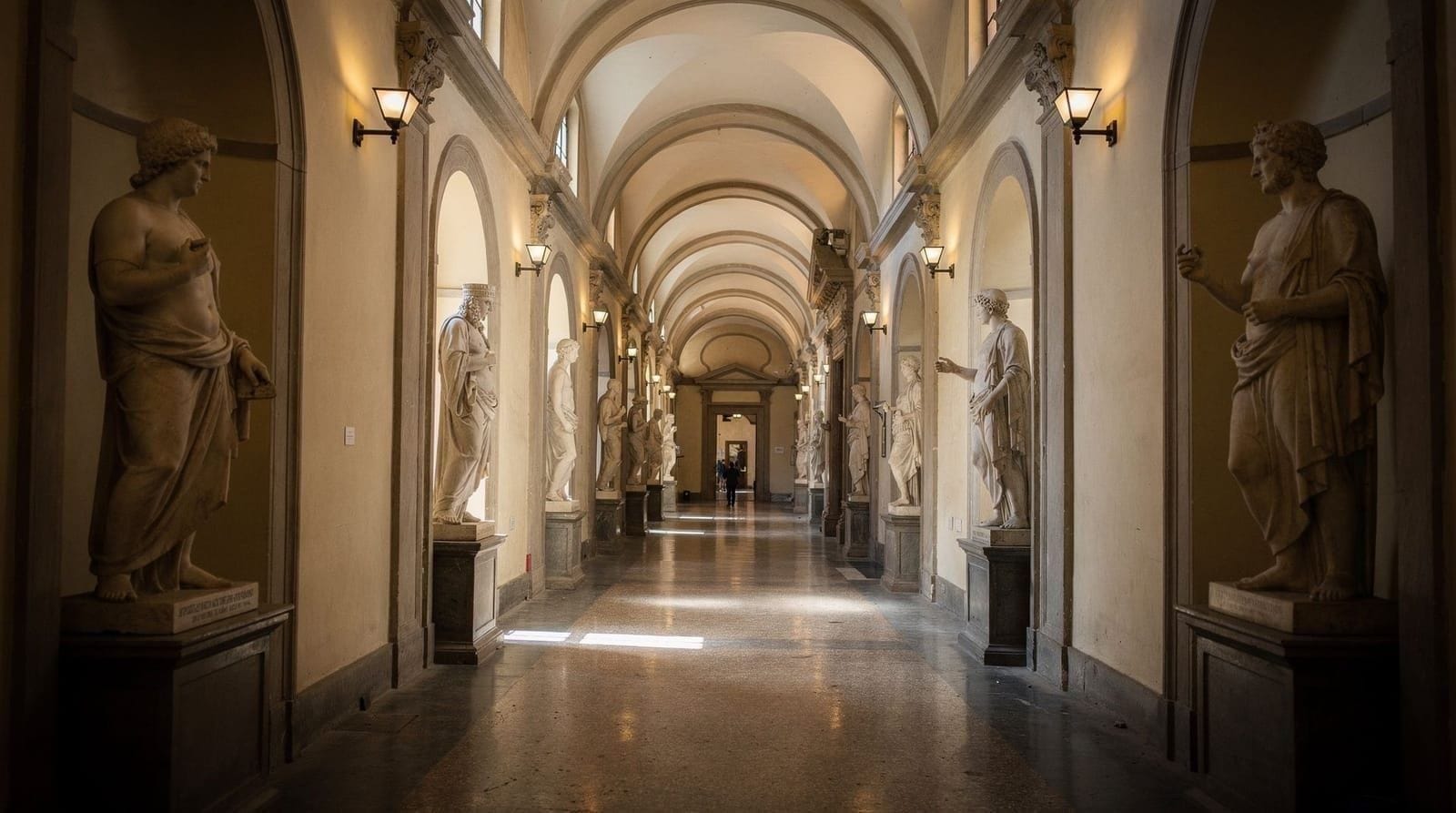
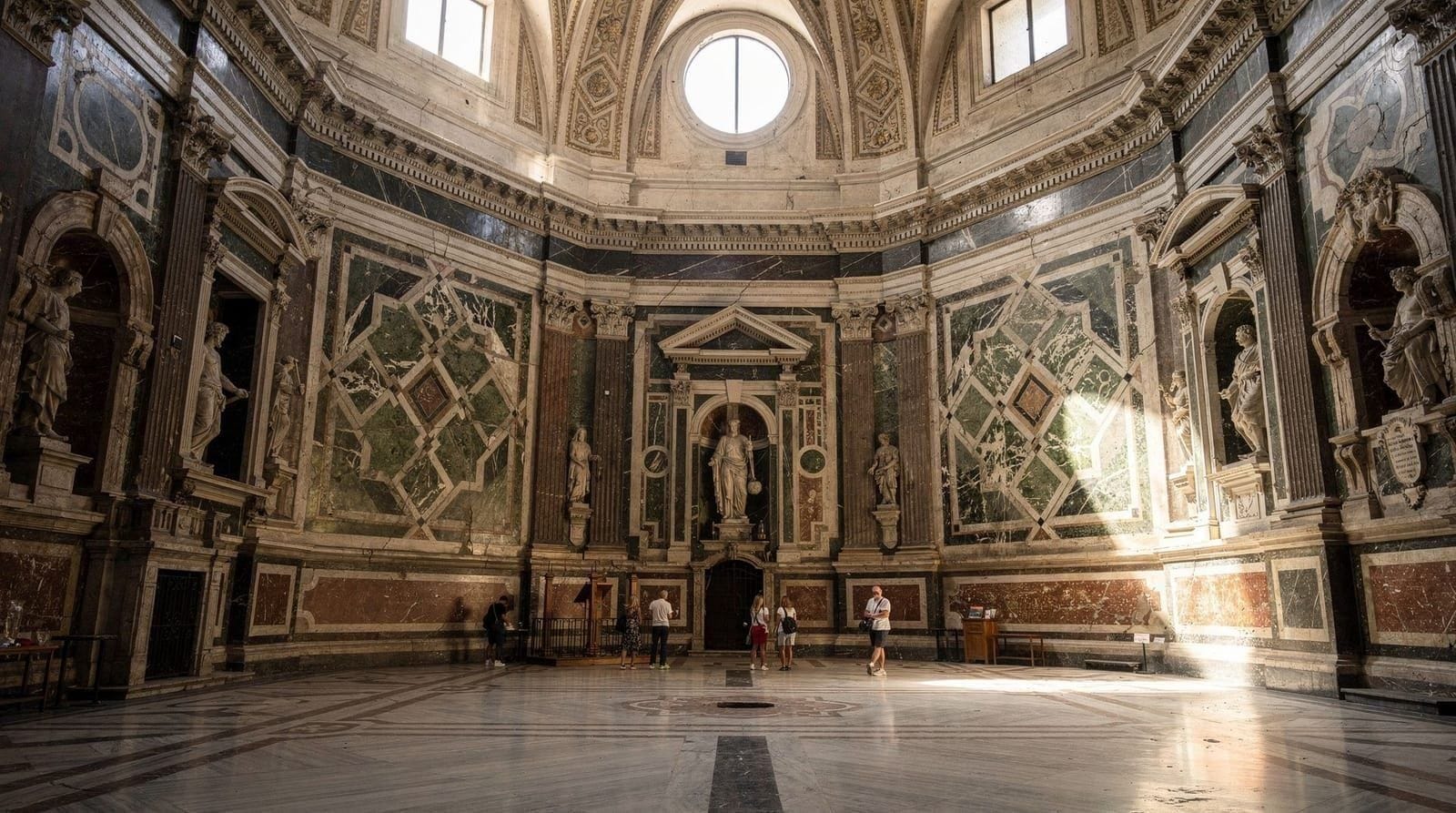
The Galleria Palatina is not arranged chronologically or thematically — it is hung as it would have been as a private collection, with paintings floor-to-ceiling in lavishly decorated rooms. This salon-style hanging (sometimes called “baroque hanging”) was how aristocratic collectors displayed art, and it produces a quite different experience from the white-wall, one-painting-at-a-time convention of modern museums.
The result: you enter rooms covered in frescoed ceilings, gilded walls, and tiered paintings, and you have to actively look and discover what’s there. It’s more demanding than the Uffizi but also more like the experience of seeing art in the context it was actually made for.
Must-see works
Raphael: The Palatine contains approximately 28 paintings by Raphael — a concentration found nowhere else in the world. Among the most important:
- Donna Velata (c. 1516) — the veiled woman, widely believed to be La Fornarina (Raphael’s lover). The lace and silk of the veil are rendered with astonishing technical precision.
- Madonna of the Chair (c. 1514) — one of Raphael’s most reproduced Madonnas, in a circular tondo format with warmth and intimacy uncharacteristic of the monumental Madonnas.
- Leo X with Two Cardinals (c. 1518) — the papal portrait that became a model for political portraiture for centuries, showing the Pope as statesman rather than saint.
Titian:
- Portrait of a Gentleman (c. 1540) — the psychology of the sitter is readable entirely from the face; Titian’s portrait technique is at its finest here.
- La Bella (c. 1536) — a sumptuous portrait of a woman in elaborate dress, possibly connected to the Duchess of Urbino.
- Concert (attributed) — figures making music in a grouping of mysterious intimacy.
Fra Bartolomeo, Andrea del Sarto, Perugino: Major works by Raphael’s contemporaries and predecessors, providing context for why Raphael was considered unprecedented.
Rubens and Van Dyck: The Medici acquired significant Flemish works; the Palatine has important Rubens alongside the Italian collections.
Caravaggio: Works by Caravaggio and his followers (Artemisia Gentileschi’s contribution to Caravaggism is represented here) provide the Baroque counterpoint to the High Renaissance dominance.
Room highlights
Room of Saturn: one of the most concentrated rooms of Raphael in existence.
Room of Jupiter: Fra Bartolomeo and major altarpieces.
Room of Mars: Titian and Rubens sharing wall space — the contrast between their approaches to colour and form is immediately visible.
Room of Apollo: More Titian, Andrea del Sarto’s Holy Family.
Plan to spend 60–90 minutes in the Palatine Gallery. If you try to rush through it, you’ll miss half of what’s there. Visitors who have already done the Uffizi Gallery sometimes assume the Palatine will feel repetitive; in practice the salon-style hanging and the sheer density of Raphael make it feel like a different kind of museum entirely, not a smaller version of the same one.
The Royal Apartments
Immediately adjacent to the Palatine Gallery, the Royal Apartments preserve the state rooms used by the Savoy royal family in the 19th and early 20th centuries. These are dramatically different from the Palatine — red silk damask walls, Biedermeier and neo-Baroque furniture, portraits of Victor Emmanuel II and his successors, and the general atmosphere of a 19th-century European royal court.
Not everyone finds this interesting, but for visitors curious about how Italian unification (1861) affected Florence’s role as a briefly-capital city, these rooms are a direct window into a different era.
The Boboli Gardens
The Giardino di Boboli occupies 45,000 square metres of terraced hillside behind the palace. Begun by Cosimo I in 1550, it was the model for formal Renaissance gardens across Europe. The French gardens at Versailles were partly inspired by Boboli.
Key features
The Amphitheatre: An open-air oval performance space carved into the hillside directly behind the palace, used by the Medici for performances and celebrations. The Egyptian obelisk in the centre was brought from Rome.
The Grottos: The Buontalenti Grotto (1583–1593) is one of the most extraordinary spaces in Florence — a series of artificial cavern rooms decorated with stalactites, fossils, and casts of Michelangelo’s Prisoners (originals now in the Accademia). Satyrs, mythological beasts, and coloured minerals create a pre-Surrealist dreamspace. Don’t miss it.
The Kaffehaus: A Rococo pavilion on the upper terraces with an outdoor terrace and a view over the rooftops of the Oltrarno and the Arno valley. One of the least-visited and most rewarding viewpoints in Florence. The café inside serves coffee and drinks.
Neptune Fountain and Isolotto: The large oval island in the lower garden with a Neptune fountain is a formal centrepiece best photographed in early morning light.
Classical sculpture: The garden’s walkways are lined with Roman and Renaissance sculptures, some original, some copies. The combination of formal geometry and accumulated historical objects creates an atmosphere entirely different from the clean white-cube galleries inside.
Best time to visit Boboli
Spring (April–May) when the wisteria blooms, and autumn (September–October) for the light. Summer afternoons can be very hot — the upper terraces have little shade. The garden is officially open from 8:15 am; early morning visits (first hour) are particularly pleasant and quiet.
Gallery of Modern Art
The Galleria d’Arte Moderna occupies the third floor and covers 18th–20th century Italian painting and sculpture. The collection’s great strength is the Macchiaioli movement — mid-19th century Italian painters working in broken colour patches several decades before Impressionism proper in France.
Giovanni Fattori, Silvestro Lega, Telemaco Signorini: these artists are little known internationally but produced work of genuine quality. The room devoted to Macchiaioli paintings is worth 20 minutes for anyone interested in 19th-century art history.
Silverware Museum
The Museo degli Argenti covers three floors of the left wing and displays the astonishing accumulated luxury of the Medici dynasty: amber vessels, ivory figurines, Florentine pietra dura (hardstone intarsia) work, silver vessels, lapis lazuli vases, and the extraordinary collection of Lorenzo de’ Medici’s ancient vases (Roman and Hellenistic vessels mounted in gilded silver by Ghiberti and others). This is one of the finest decorative arts collections in Italy and rarely crowded.
Practical planning
The Pitti complex is large enough to require choices about what to prioritise. For a 3-hour visit:
- Palatine Gallery (90 min) — don’t rush the Raphael rooms
- Boboli Gardens (60 min) — Buontalenti Grotto, Amphitheatre, Kaffehaus view
- Royal Apartments (30 min) — if state rooms interest you
For a full day visit, add the Modern Art Gallery, Silverware Museum, and Costume Gallery.
Getting there from central Florence
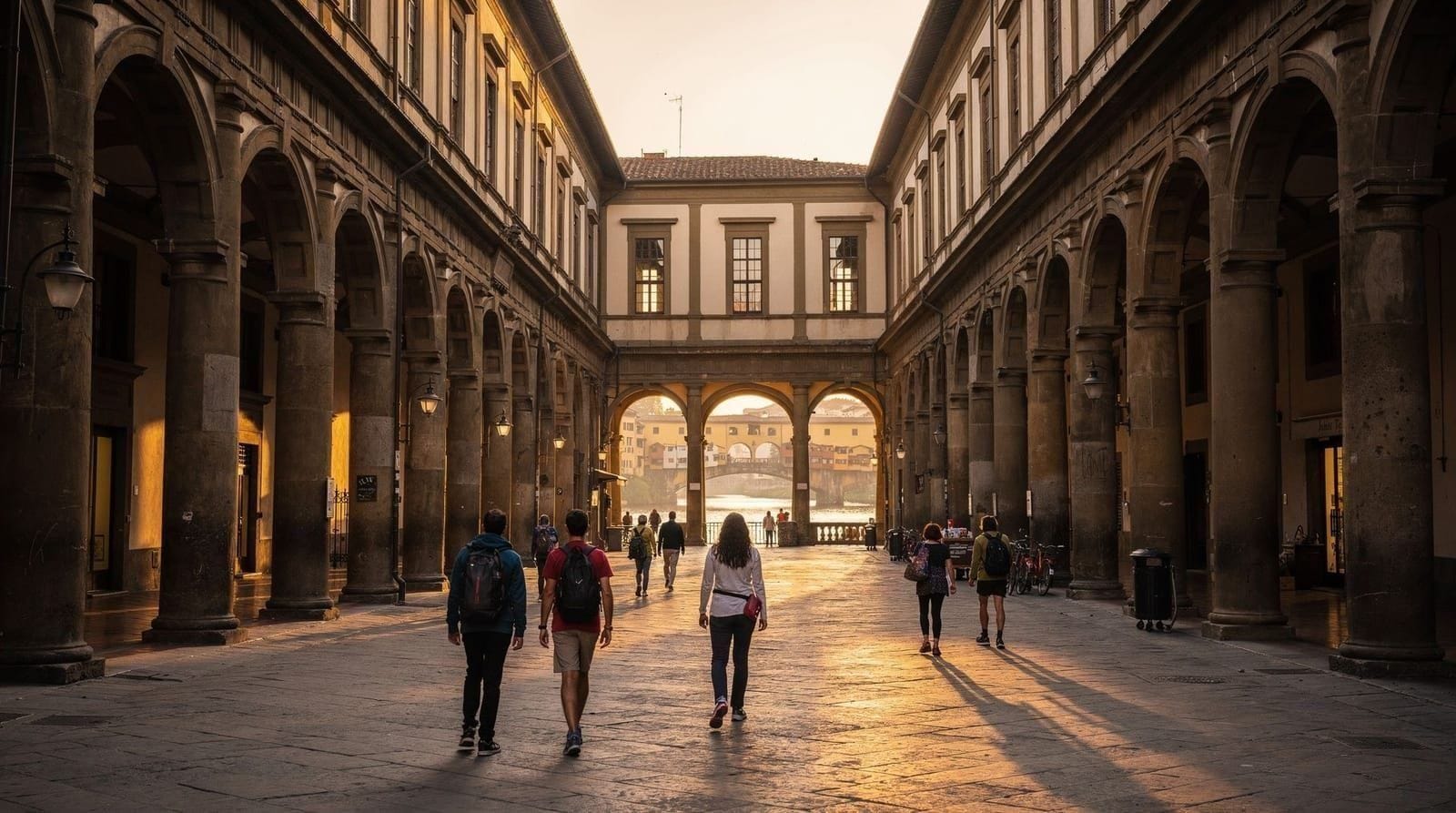
The Pitti is on the Oltrarno side of the Arno, a 10-minute walk across the Ponte Vecchio (or Ponte Santa Trinita, which is less crowded). From the Uffizi, walk south to the river, cross the Ponte Vecchio, and follow Via Guicciardini south to the palace — about 10 minutes.
The Oltrarno neighbourhood around Piazza Santo Spirito is one of Florence’s most genuinely local areas, with good lunch options that are substantially less tourist-oriented than the north side of the river.
The walk itself is worth savouring rather than rushing: crossing the Ponte Vecchio at a quiet hour (early morning or after dinner) avoids the worst of the midday crush on the bridge, and the Vasari Corridor that runs above the shops once let the Medici walk this same route from the Uffizi to the Pitti without setting foot on the street. It is currently not open for general visits, but knowing it’s there overhead adds a layer to the walk.
Related guides
- Uffizi Gallery: complete visitor guide
- Best Florence combo tickets
- Is the Firenzecard worth it?
- Medici Chapels guide
- Best museums in Florence
Frequently asked questions about Palazzo Pitti
Is Palazzo Pitti crowded?
Significantly less crowded than the Uffizi or Accademia. Even in July, the Palatine Gallery rarely feels overwhelmed. This makes it one of Florence’s best half-day options for visitors who want great art without queue stress.
Can I visit Palazzo Pitti in the rain?
The Palatine Gallery, Royal Apartments, and other interior galleries are unaffected by weather. The Boboli Gardens are less pleasant in heavy rain. A rainy day is actually ideal for spending the full morning in the Palatine Gallery and Modern Art Gallery.
Is the Uffizi or Palazzo Pitti better?
They serve different purposes. The Uffizi is the comprehensive survey of Italian art from medieval to Baroque; the Palatine is an intense immersion in High Renaissance painting, particularly Raphael. If you only have time for one, the Uffizi covers more ground. If you have time for both, the Palatine Gallery’s concentrated Raphael collection is genuinely unmissable.
Can you enter Boboli without visiting the palace?
The Boboli Gardens require a ticket that also covers the Palatine Gallery and other palace galleries. There is no garden-only ticket. However, you can enter through the gardens entrance on Piazza Pitti and go directly to Boboli without walking through the gallery first.
The Palatine Gallery: how to navigate the rooms efficiently
The Palatine Gallery’s salon-style hanging — paintings stacked floor to ceiling in each room — can feel overwhelming on a first visit if you try to look at everything. The practical approach for most visitors is to identify the key rooms in advance and allocate time accordingly.
The Room of Saturn (Room 1 from the gallery entrance) is the Raphael room: Portrait of a Man (Agnolo Doni), Madonna of the Chair, Portrait of a Pregnant Woman (La Gravida), Lady with a Veil (Donna Velata), and Portrait of Cardinal Bibbiena. Plan 20–25 minutes in this room alone.
Room of Jupiter (Room 2) contains Fra Bartolomeo’s major altarpieces and Andrea del Sarto’s work.
Room of Mars (Room 3) has Rubens’ Consequences of War, the Four Philosophers, and Titian’s Concert. The immediate visual contrast between Titian’s Italian colour and Rubens’ Flemish energy — in the same room — is one of the Palatine’s great pleasures.
Room of Apollo (Room 4) includes Titian’s Portrait of a Gentleman, Andrea del Sarto’s Holy Family, and more Raphael.
Room of Venus (Room 6, reached after the Royal Apartments corridor) contains Titian’s La Bella and Portrait of Pietro Aretino.
The practical suggestion: begin in the Room of Saturn and work through the Royal Apartments to the Room of Venus, then return through the secondary rooms as time allows. The first four rooms of the Palatine Gallery contain the strongest concentration of major works.
The Oltrarno neighbourhood: context for the Palatine
Palazzo Pitti’s location on the south side of the Arno gives it a different character from the museums north of the river. The Oltrarno (“beyond the Arno”) neighbourhood surrounding the palace is one of Florence’s most interesting areas for walking, eating, and understanding the city as a living place rather than an outdoor museum.
Piazza Santo Spirito: 10 minutes west of the Pitti, this square is the heart of working-class Oltrarno Florence. The Basilica di Santo Spirito (Brunelleschi’s last major work, begun 1436) faces an open piazza with local cafés, a weekly farmers’ market (Saturday mornings), and a distinctly non-tourist atmosphere. Buca Mario on the piazza has been serving traditional Florentine food since 1886.
Via Maggio: The long street running north from Piazza Pitti toward Ponte Santa Trinita is Florence’s antique dealer street — dozens of shops selling genuine and reproduction antique furniture, artwork, and objects. Window-shopping is free and educational; prices range from reasonable to extraordinary.
Artisan workshops: The Oltrarno retains active workshops for leather goods, picture framing, bookbinding, and restoration. Scuola del Cuoio (behind Santa Croce), Giulio Giannini e Figlio (on Piazza Pitti itself), and numerous smaller operations make this the best area in Florence for genuine craft purchases as opposed to market-stall souvenirs.
Eating near Pitti: The restaurants immediately facing Piazza Pitti on the north side charge tourist premiums. Two streets further into the Oltrarno, the pricing and quality ratio improves significantly. Bevo Vino and Trattoria da Sergio (Via dei Serragli area) are consistently recommended by locals.
Comparing Palazzo Pitti’s collections to the Uffizi
Visitors sometimes wonder why they should make the 15-minute walk across the Arno to see the Pitti when the Uffizi already exists. The genuine answer is that the two collections address different questions about Italian Renaissance painting.
The Uffizi tells the story of Italian art from its medieval origins through the 17th century — broadly, historically, with a focus on chronological development. The Palatine Gallery shows you what an extraordinary High Renaissance collection looked like in its original domestic setting. You’re not in a modern museum with neutral walls and discreet lighting; you’re in a palace room with ceiling frescoes of the planets, gilded cornices, and paintings hung at angles optimised for the patron’s viewing position in a specific chair at a specific desk.
The Raphael rooms in the Palatine are genuinely different from the Raphael in the Uffizi, not because the works are better or worse but because the context transforms the experience. The Palatine’s Madonna of the Chair has been in the same building for roughly 400 years. The Uffizi’s Raphael has been in a public museum for 200. One of these feels more like what Raphael was making it for.
Best time to visit Palazzo Pitti
| Season | Palatine Gallery | Boboli Gardens |
|---|---|---|
| Spring (Apr–May) | Comfortable, moderate crowds | Wisteria blooms, ideal walking weather |
| Summer (Jun–Aug) | Cooler than the Uffizi’s queues but can still fill by late morning | Hot on the upper terraces; go early or late |
| Autumn (Sep–Oct) | Quietest of the year | Best light for photos, mild temperatures |
| Winter (Nov–Mar) | Very quiet, some short-hour days | Bare but atmospheric; check Boboli’s earlier closing time |
Across all seasons, the first hour after opening is consistently the quietest window in both the galleries and the gardens — arriving by 8:30–9:00 am gives you the Room of Saturn largely to yourself before tour groups build up.
Palazzo Pitti with kids and accessibility notes
Children generally cope well with Palazzo Pitti because Boboli gives them room to run after the more static galleries — the Amphitheatre lawns and the Isolotto paths are good spots to let energy out before or after the Palatine rooms. The Buontalenti Grotto’s fossils and fake stalactites tend to be a hit with younger visitors who find plain paintings hard going. For a fuller family plan across the city, see the Florence with kids guide.
Accessibility is mixed: the ground-floor Silverware Museum and much of Boboli’s lower terraces are step-free, but the Palatine Gallery’s grand staircase has no lift alternative in parts of the building, and Boboli’s upper terraces involve genuine hill gradients. Visitors with mobility needs should check current access routes before visiting; the accessible Florence guide covers museum-by-museum accessibility in more depth.
Top experiences
Bookable activities with verified prices and instant confirmation on GetYourGuide.

Florence: Pitti Palace and Boboli Gardens ticket
- Instant confirmation
- Mobile ticket
Florence: Pitti Palace and Boboli Gardens guided tour
- Small group
- Free cancellation
Florence: Pitti Palace and Boboli Gardens walking tour
- Small group
- Free cancellation
Florence: Uffizi, Pitti Palace and Boboli 5-day ticket
- Skip the line
- Free cancellation
Florence: Uffizi Gallery, Pitti Palace and Boboli Gardens tour
- Skip the line
- Free cancellation