Public transport in Florence — tram, bus and passes explained
Florence: hop-on hop-off tour — 1 or 2 day ticket
- Free cancellation
- Mobile ticket
How does Florence public transport work?
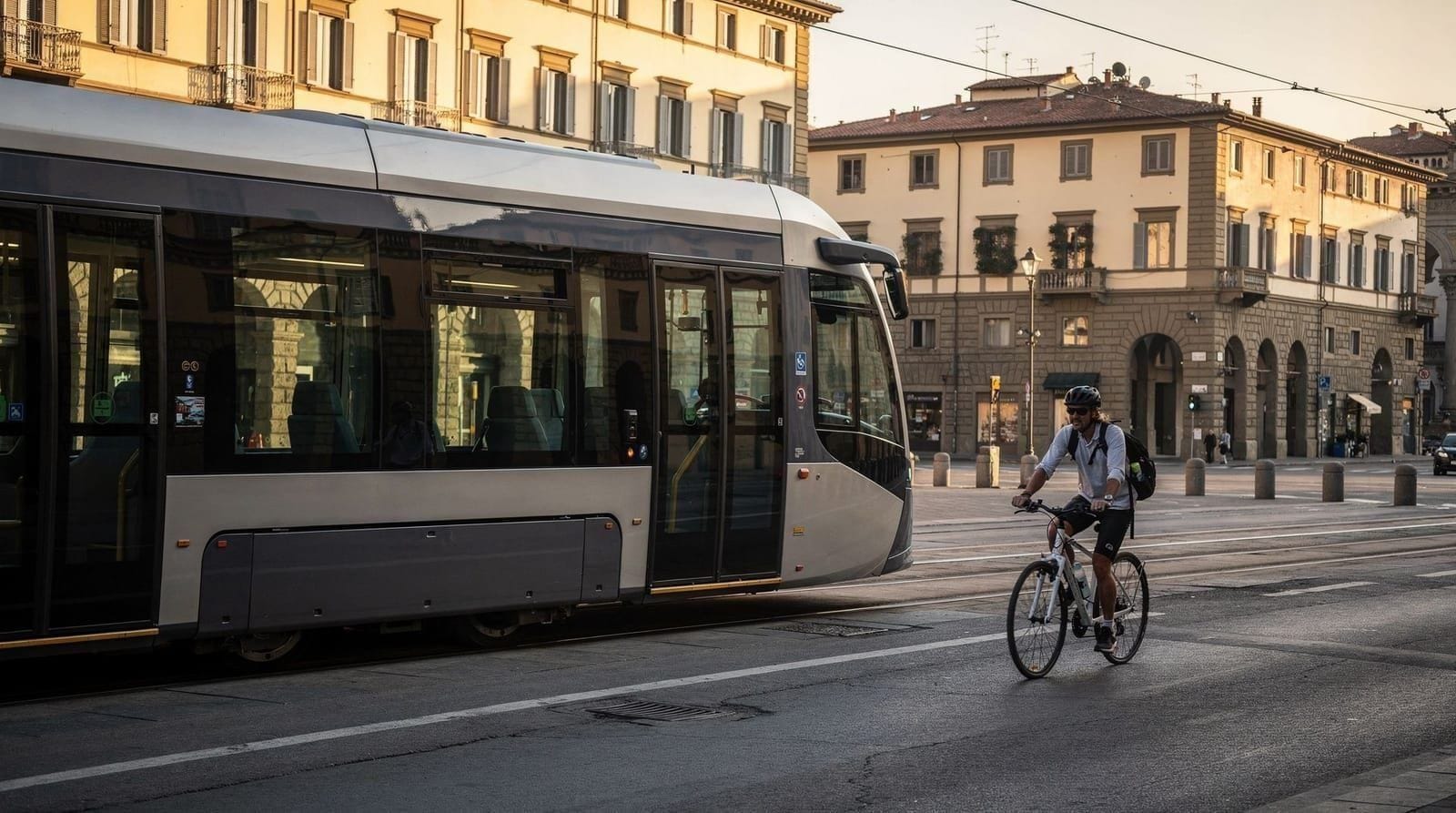
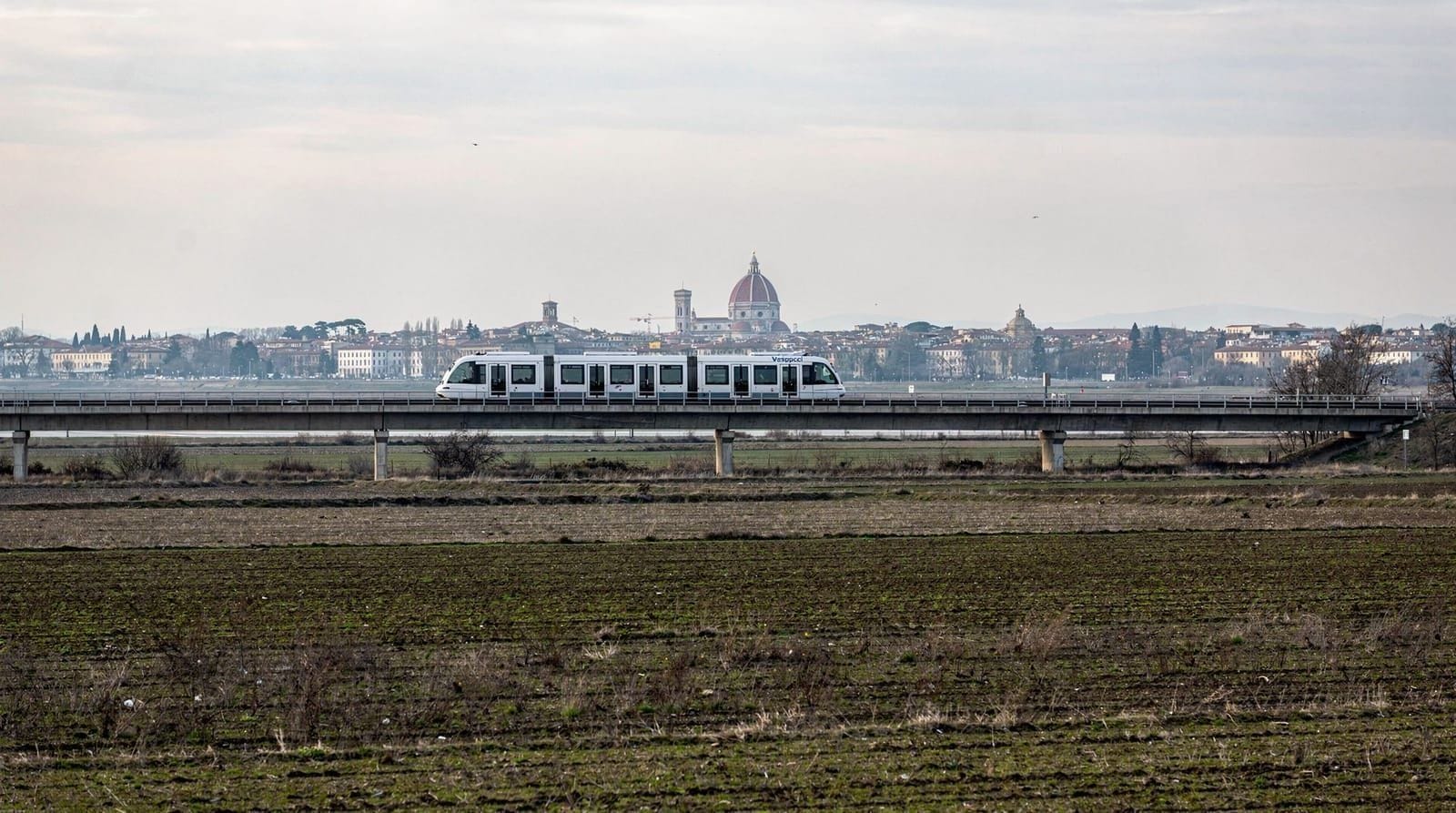
Florence's public transport is operated by Autolinee Toscane and covers the city with buses and two tram lines (T1 and T2). A single ticket costs €2 and is valid for 90 minutes on all services. The tram T2 connects the airport to the city centre in 20 minutes.
Florence’s public transport is operated by Autolinee Toscane (which replaced ATAF) and covers the city and immediate surrounding area with a network of buses and two tram lines. Trenitalia trains connect to regional destinations.
| Cost | €2 single (90 min); €18.20 for 10 journeys |
| Coverage | City buses, tram T1/T2, connects to regional Autolinee Toscane coaches |
| Airport link | Tram T2, 20 min to Santa Maria Novella |
| Buy tickets | Tabacchi, ticket machines, or the Autolinee Toscane app |
| Best for | Airport transfer, Piazzale Michelangelo, Fiesole day trip |
For visitors, the system is simple: one ticket type covers all buses and trams for 90 minutes, and the tram T2 is the connection to the airport. For the fuller picture of getting around once you’re in the city — including walking routes and taxis — see the getting around Florence guide.
Ticket types and prices
| Ticket | Price | Validity | Notes |
|---|---|---|---|
| Single journey | €2.00 | 90 min, all buses and trams | Must be validated |
| 10-journey carnet | €18.20 | 10 trips, no time limit | One validation per trip |
Where to buy
- Tabacchi: shops with a white T on a black background. Found throughout Florence, typically open 07:00–20:00. Most accept card.
- Ticket machines: at all tram stops and some major bus stops. Accepts cards and cash.
- Autolinee Toscane app (iOS and Android): buy and activate tickets digitally. Recommended — saves finding a tabacchi on arrival.
- Newsagents and kiosks: most newspaper sellers near major transport hubs sell bus and tram tickets.
- On board: buses in some suburban areas allow on-board purchase (at higher prices). In the city, always buy before boarding.
Validation rules
Validate every ticket on every journey. Insert paper tickets into the yellow stamping machines on board. In the Autolinee Toscane app, tap “Validate” just before boarding. Inspectors operate regularly, and an unvalidated ticket is fined (amount set by Autolinee Toscane, see their official site) on top of the ticket price — even if you have the ticket in your pocket.
A 90-minute single ticket allows unlimited changes between buses and trams within that 90 minutes from first validation.
Your €2.00 single ticket and the carnet cover days spent moving around Florence, but a day trip to Siena is a separate journey with its own timetable. Fixing the departure ahead of time helps on that route, since you then know which bus you are taking and when you will be back. When your day is planned, you can buy your Siena ticket on Omio.
The tram network
Florence has two operational tram lines with additional lines under construction:
T2 — Vespucci line (Airport to Santa Maria Novella)
The T2 is the most important line for visitors. It runs from Florence Peretola Airport (FLR) to Unità terminus beside Santa Maria Novella station, with 14 stops.
| Key stops | Neighbourhood | Notes |
|---|---|---|
| Aeroporto | FLR Airport | Terminal connection |
| Guidoni | Via Guidoni | Industrial area |
| Nenni-Torregalli | Peretola | |
| Novoli | Via Tevere area | |
| Fortezza | Fortezza da Basso | Exhibition centre, northern hotels |
| Lavagnini-Rosselli | Via Rosselli | Near Cascine park |
| Alamanni-Stazione | SMN west entrance | 5 min walk to SMN main entrance |
| Unità | SMN east, Piazza Unità | Terminus; best for the historic centre |
Frequency: every 4–6 minutes during peak hours, every 10–12 minutes early morning and late evening. Hours: approximately 05:00–00:30 daily. Fare: standard €2 single — same ticket as all other Autolinee Toscane transport.
T1 — Scandicci line
The T1 runs southwest from Piazza dell’Unità (beside SMN) to Villa Costanza and onwards to Scandicci. Useful for hotels along Viale Francesco Redi and Viale Guidoni, and for the Cascine park entrance.
Most tourists do not need the T1.
Future tram lines
Florence is expanding its tram network. Lines T3 (Bagno a Ripoli, southeast), T4 (Campi Bisenzio, northwest) and others are in various stages of planning and construction. Construction in 2025–2026 may cause some road disruptions near SMN — check current information on arrival, and allow a few extra minutes if your route passes through an active construction zone.
Key bus routes for visitors
The full Autolinee Toscane bus network covers over 100 routes. The following are the most useful for tourists:
Route 12 — Piazzale Michelangelo
SMN Station → Ponte alla Carraia → Ponte alle Grazie → Piazzale Michelangelo → San Miniato al Monte
This is the bus most visitors use. Bus 12 climbs from the north bank of the Arno up to Piazzale Michelangelo — the famous viewpoint over Florence — without requiring the steep stair climb on foot (or with large bags). See the Piazzale Michelangelo guide for what to do once you’re up there and the best times to go.
| Stop | Notes |
|---|---|
| Stazione SMN | Piazza della Stazione |
| Ponte alla Carraia | Oltrarno side |
| Piazzale Michelangelo | The main viewpoint |
| San Miniato | Final stop near San Miniato al Monte church |
Journey time: approximately 20 minutes from SMN to Piazzale Michelangelo. Frequency: every 20–30 minutes.
The last stop is close to the church, so the same ride also works for a visit to San Miniato al Monte. If you are timing the trip for the golden hour, the sunset spots guide helps you decide where to be, and it is worth planning the return bus before the crowds leave all at once.
Route 13 — Return from Piazzale Michelangelo
Bus 13 is the reverse of route 12, returning from Piazzale Michelangelo and San Miniato to SMN station. Same fare, same frequency.
Route 7 — Fiesole
Piazza della Libertà → San Domenico → Fiesole (Piazza Mino)
The easiest way to reach the hilltop Etruscan town of Fiesole — one of the best half-day trips from Florence.
Journey time: approximately 20 minutes. Frequency: about every 20 minutes. Fare: standard €2 — Fiesole is within the Autolinee Toscane zone. See the Fiesole half-day guide for what to see once you arrive.
Route 23 — Cross-river and Oltrarno
SMN → Santa Croce → Arno riverside → Piazzale Michelangelo direction
Useful for cross-river journeys to Santa Croce and the eastern Oltrarno. Does not go all the way up to Piazzale Michelangelo (take 12 for that).
Route 14 — Cascine Park
SMN → Careggi hospital → Cascine park entrance
The Cascine park is Florence’s main green space — 3 km along the Arno west of the centre. Worth visiting on Tuesday mornings (Cascine market, Florence’s largest outdoor market) and for a river walk or picnic. Bus 14 runs along the northern edge.
Night buses (N routes)
Autolinee Toscane operates night buses (N1, N2 etc.) on Friday and Saturday nights, roughly every 60–90 minutes. They are infrequent and follow different routes to day services. For late-night returns (after midnight), taxis are more practical.
Intercity buses from Florence — for Siena and beyond
For destinations not well served by train, Autolinee Toscane also runs the regional bus network. The main intercity bus station is adjacent to SMN station.
| Destination | Service | Journey time | Frequency | Fare |
|---|---|---|---|---|
| Siena | Autolinee Toscane (rapid) | 1h15 | Every 1–2h | See the Autolinee Toscane website |
| Certaldo | Autolinee Toscane | 45 min | Hourly | €5 |
| Greve in Chianti | Autolinee Toscane | 55 min | Every 1–2h | See Autolinee Toscane |
| Impruneta | Autolinee Toscane | 35 min | Hourly | €3.40 |
| San Casciano Val di Pesa | Autolinee Toscane | 40 min | Hourly | €3.40 |
Siena by bus: the Florence–Siena bus (Autolinee Toscane, rapid “corsa rapida”) is faster and more direct than the train for this particular journey. The bus station in Siena is at Piazza Gramsci, right at the edge of the historic centre. Journey time approximately 1h15.
The Autolinee Toscane app — recommended for visitors
The official Autolinee Toscane app is available free on iOS and Android. It offers:
- Journey planner: enter a destination, get route options with live timing
- Ticket purchase: buy tickets directly in the app
- Digital ticket validation: tap “Use” just before boarding — the ticket screen shows a live animation that inspectors accept
- Real-time arrivals: shows next bus or tram at each stop
Setting up: download before you arrive, create an account and add a payment method. It works without Italian data — download the Florence offline map before leaving home and use Wi-Fi to buy tickets.
Wheelchair and accessibility
Autolinee Toscane buses and trams are increasingly low-floor accessible:
- All tram T2 cars are fully accessible (low floor, ramp at doors)
- Most bus routes operate low-floor vehicles on main city routes (not guaranteed on suburban routes)
- Priority seating is clearly marked on all vehicles
- The Autolinee Toscane app includes accessibility filtering for journey planning
The Florence historic centre’s cobblestone streets are challenging for wheelchair users. The main pedestrianised routes (Via dei Cerretani, Via Roma, Via Por Santa Maria) have relatively smooth stone surfaces. Piazza della Signoria is entirely cobbled. Piazzale Michelangelo has accessible viewpoints, and bus 12 is the recommended way to reach it without navigating the Rampe Poggi steps. For a wider look at step-free routes, sights and hotels, read the accessible Florence guide.
Common mistakes to avoid
- Not validating your ticket: the most common mistake. Always stamp/validate before the doors close.
- Not buying before boarding: buses in the city centre do not have onboard ticket sales. Always buy in advance.
- Using the wrong tram stop: T2 has two stops near SMN — “Alamanni-Stazione” is closest to the SMN west entrance; “Unità” is the terminus, closest to the Piazza dell’Unità and the main historic centre pedestrian zone.
- Expecting hourly buses to be on time: in peak traffic (17:00–19:00), buses can be 5–15 minutes late. Plan accordingly.
- Assuming trams replace buses: trams only cover the T1 and T2 corridors. For most city centre journeys, walking is faster than any bus or tram.
Florence public transport and the tourist experience
Avoiding transport mistakes that cost money
The most expensive public transport mistake in Florence is not the ticket price — it is the ZTL fine. Visitors who arrive by taxi, try to get out near their hotel in the restricted zone and ask the driver to “just quickly drop them off” are accumulating fines that arrive by post months later.
The second most expensive mistake: not validating a ticket. The €2 bus ticket unvalidated is a potential fine. This is not theoretical — inspectors actively check on the most popular tourist routes (especially bus 12 to Piazzale Michelangelo).
The third mistake: buying tickets at the airport and not realising that the purchase does not count as validation — you still need to insert the ticket in the yellow machine on the bus or tram.
Transport and the tourist pace
Florence rewards slowness. The tourists who sprint between the Uffizi, Accademia and Ponte Vecchio in a single day, using buses to save 10 minutes, miss the city. The tourists who walk from the Duomo through the Bargello quarter to Santa Croce, stopping in a bar for a coffee, discovering an overlooked church doorway, pausing to watch a craftsman gilding a picture frame in an open workshop — these visitors understand Florence.
Transport in Florence is for:
- Getting from the airport or station to your hotel on arrival
- Reaching Piazzale Michelangelo without the steep climb
- Day trips to Fiesole
- Late-evening returns when you are tired
Everything else in the historic centre: walk. Always walk.
Where you sleep changes how much transport you need. A hotel close to the station makes the airport tram trivial, while a base in the centre means you may barely touch a bus. The best areas to stay in Florence guide compares the options, and the Florence travel tips guide gathers the other practical habits worth knowing before you arrive.
Regional public transport from Florence — beyond the city
The Autolinee Toscane city network connects to the broader Tuscany transport system at SMN station. From the bus station next to SMN (Via Santa Caterina da Siena):
Key intercity bus services
| Destination | Operator | Journey time | Fare | Frequency |
|---|---|---|---|---|
| Siena | Autolinee Toscane (rapid) | 1h15 | See the Autolinee Toscane website | Every 1–2h |
| San Gimignano | Autolinee Toscane via Poggibonsi | 1h30–2h | See the Autolinee Toscane website | Limited |
| Volterra | Autolinee Toscane via Colle Val d’Elsa | 2h+ | See the Autolinee Toscane website | Very limited |
| Greve in Chianti | Autolinee Toscane | 55 min | See Autolinee Toscane | Every 1–2h |
| Impruneta | Autolinee Toscane | 35 min | €3.40 | Hourly |
Siena by bus: for Florence–Siena specifically, the Autolinee Toscane rapid service is faster than the train (the train takes about 1h30; the bus is a direct 1h15 on the motorway). Depart from the SMN bus station, not the train station. Our Siena day trip guide covers what to do once you arrive.
San Gimignano: requires a change at Poggibonsi. The total journey is 1h30–2h. San Gimignano itself is car-free — visitors park at the gates and walk in. By bus, you arrive at one of the town gates directly. For the town itself, see the San Gimignano day trip guide; for the more remote hilltop town, the Volterra day trip guide explains why it takes planning without a car.
Regional trains from SMN — the useful routes
For visits to Pisa, Lucca, the Versilia coast, Arezzo and the Chianti-bordering towns of Empoli and Certaldo, regional trains from SMN are the standard approach. See our Florence train stations guide for the full network.
Night-time transport options
Florence does not have a comprehensive night bus network. If your evenings involve dinner, drinks or a late walk, the Florence at night guide and the aperitivo guide show where the evening tends to happen, which helps you choose a base that makes the journey home easy. After 23:00, your practical options are:
- Radio taxi (4390 or 4242): reliable, metered. App itTaxi shows real-time availability and fare estimate before booking. Average wait time 5–10 min.
- itTaxi app: the standard Italian taxi app. Works throughout Florence. Set pickup to your current location, choose your destination, see the fare estimate.
- Friday/Saturday night buses: Autolinee Toscane operates N routes on these nights (approximately every 60–90 min). Check the Autolinee Toscane app for current routes.
- Hotel-arranged taxi or private driver: for late returns from restaurants or events, ask your hotel concierge to arrange. Many hotels have standing relationships with reliable drivers.
- Walk: central Florence at night is safe and enjoyable. For distances under 2 km, walking at midnight on a warm summer night through the illuminated piazzas is genuinely pleasant.
Public transport vs walking vs taxi: an honest comparison
| Option | Cost | Best for |
|---|---|---|
| Walking | Free | Almost everything inside the historic centre — it’s mostly small |
| City bus/tram | €2 single (90 min) | Airport transfer, Piazzale Michelangelo, Fiesole, late-night returns |
| Taxi/rideshare | €10–20 for most central trips | Heavy luggage, late night, mobility needs |
| Rental car | Not recommended in the centre | Only for excursions into rural Tuscany — see driving in Tuscany |
For arrivals specifically, the tram T2 from the airport is usually faster and cheaper than a taxi once you account for traffic — the full comparison is in the Florence airport to city guide. If you’re landing at Pisa instead, public transport plays a much smaller role and the train is the main connection — see the Pisa airport to Florence guide.
Frequently asked questions about Florence public transport
Does the 90-minute ticket allow a return journey?
No. The 90-minute ticket allows travel in any direction during the validity period, but it is not a return — it is a time-limited ticket. If you validate at 10:00 you can change buses or trams freely until 11:30, but you must re-validate for the return journey after 11:30.
Can I use a contactless bank card directly on Florence buses?
As of 2026, a contactless payment rollout is underway but not yet universal on Autolinee Toscane buses. The Autolinee Toscane app and paper tickets remain the standard method. Check the Autolinee Toscane website for the latest status.
Is there a bicycle sharing scheme in Florence?
Yes — Ridemovi (formerly Mobike) operates dockless e-bikes and standard bikes throughout Florence. Download the Ridemovi app, scan a QR code and ride. Charges apply per minute of use.
How do I find my bus stop in Florence?
Bus stops are marked with orange signs showing the route numbers and timetable. Stops in the centre are dense — there is usually one within 200 metres. The Autolinee Toscane app will direct you to the correct stop for your journey.
What time does the tram T2 start in the morning?
The first T2 tram departs the airport at approximately 05:00–05:30 and SMN terminus at approximately 05:00. The last departure from the airport is around 00:10 and from SMN around 00:30. Check the Autolinee Toscane website for current timetables as these can change seasonally.
Are dogs allowed on Florence buses?
Small dogs in carriers are allowed. Larger dogs require a muzzle and must travel in a designated area. Guide dogs for people with disabilities are always permitted without restrictions.
Do I need public transport if I’m only staying in the historic centre?
Probably not much. Most of the sights covered elsewhere on this site — the Duomo, Uffizi, Ponte Vecchio, Piazza della Signoria, Santa Croce — sit within a compact zone that’s walkable end to end in under 30 minutes. The main exceptions are the airport transfer, the climb to Piazzale Michelangelo, and any day trip beyond the city, all of which genuinely benefit from a bus, tram, or train.
Which ticket should I buy for a typical 3-day visit?
If you’re only using transport for the airport arrival/departure and one or two extra trips (Piazzale Michelangelo, Fiesole), single tickets or the 10-journey carnet (€18.20) are all you need. There are no day or multi-day passes in the official fare grid (see at-bus.it), and most sightseeing for visitors staying centrally happens on foot.
Is the Autolinee Toscane network useful for reaching San Gimignano or Siena?
Both are reachable by regional Autolinee Toscane coach from the SMN bus station rather than the city bus network itself — Siena in around 1h15 and San Gimignano in 1h30–2h with a change at Poggibonsi. These regional coaches use separate tickets from the city Autolinee Toscane fares. If day trips to either are on your itinerary, book or check timetables the day before, since departures thin out compared to city buses.
Top experiences
Bookable activities with verified prices and instant confirmation on GetYourGuide.