Santa Croce Basilica Florence: complete visitor guide
Florence: Santa Croce Basilica exclusive tour
- Small group
- Free cancellation
What is Santa Croce famous for in Florence?
Santa Croce is Florence's most significant Franciscan church and contains the tombs of Michelangelo, Galileo Galilei, Niccolò Machiavelli, and Rossini. Giotto painted the chapels in the right transept. It is also known as the 'Pantheon of Florence.' Entry costs €8; ticket booking is recommended in peak season.
The Florentine Pantheon
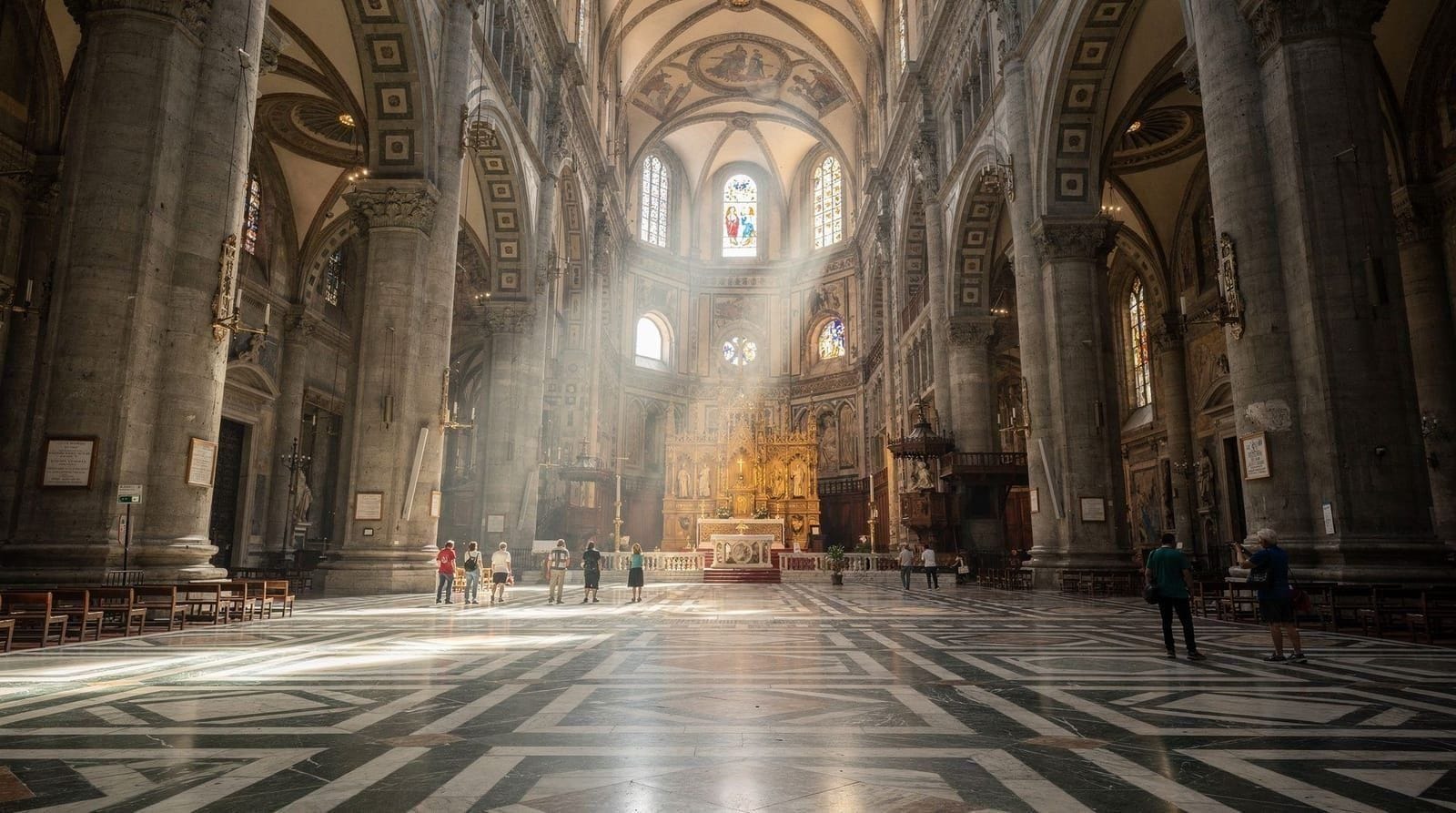
Santa Croce is Florence’s grandest Franciscan church and one of the largest Gothic churches in Italy. In terms of the density and significance of what it contains — tombs, frescoes, chapels, architecture, and historical resonance — it rivals any church in the country.
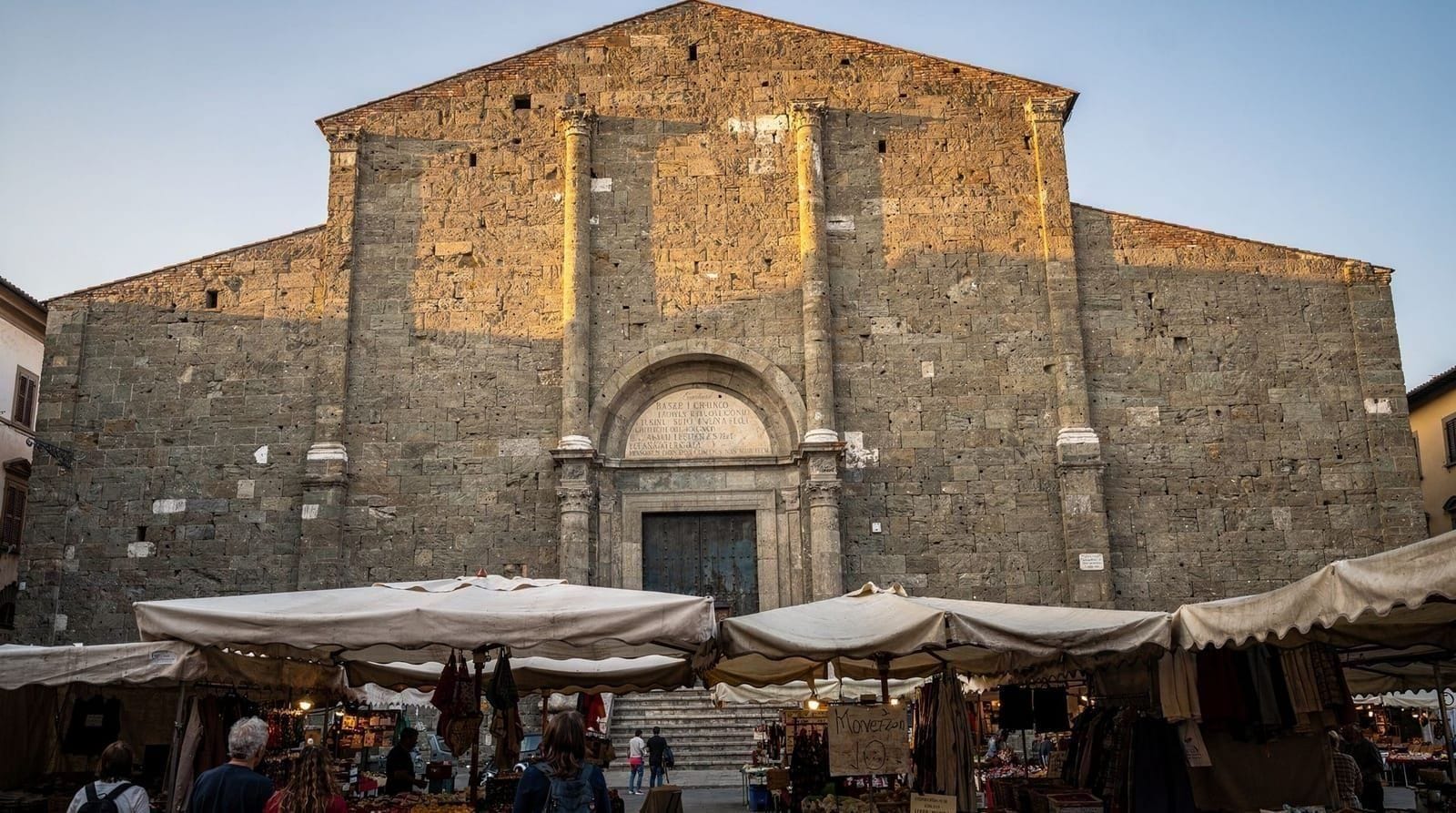
The building was begun in 1294, according to tradition by Arnolfo di Cambio (the same architect who designed the cathedral and Palazzo Vecchio), though the facts of the early history are disputed. The facade is 19th century neo-Gothic — like the Duomo’s, it replaced a bare medieval facade. Inside, the basilica is about 115 metres long, with a wide nave, side aisles, and a forest of chapels opening off the transept. It is the brightness of the interior that first surprises most visitors — the high windows and white walls have a lightness unusual for a Gothic building of this scale.
Across the centuries, Santa Croce became the preferred burial church of Florentine artistic and intellectual achievement. Over 300 funerary monuments cover the nave floor. The most famous tombs are against the walls.
| Where | Piazza Santa Croce, 10-12 min east of Piazza della Signoria |
| Cost | around €8 adults, €6 ages 11-17 |
| Time needed | 60-90 minutes; 2 hours for Giotto and the Pazzi Chapel in depth |
| Getting there | on foot via Via dei Benci or the market streets |
| Best time | weekday mornings; book ahead April-October |
The great tombs of the nave
Michelangelo Buonarroti (1475–1564)
The first major tomb on the right (south) wall as you enter, immediately after the entrance. Michelangelo died in Rome and his body was initially prepared for burial there, but the Florentines sent agents to Rome who smuggled the body back — it arrived in Florence two weeks after his death, in February 1564. The funeral was an event of civic proportions.
The tomb monument was designed by Giorgio Vasari and executed by his workshop. Three female figures — representing Painting, Sculpture, and Architecture — mourn above the sarcophagus. The bust portrait of Michelangelo above is considered a decent likeness. The epitaph below is characteristically Florentine in its civic pride.
Galileo Galilei (1564–1642)
On the opposite (left, north) wall, directly across from Michelangelo. Galileo was buried here only in 1737 — for nearly a century after his death he lay in a small room under the Campanile of Santa Croce, denied a proper tomb by the Church because of his condemnation for heresy. The eventual monument was designed by Giovan Battista Foggini; it contains remains of three fingers and a tooth removed from his body before reburial — the right middle finger is now in the Galileo Museum near Ponte Vecchio.
Niccolò Machiavelli (1469–1527)
Further along the right wall. A much smaller monument than Michelangelo’s, with an allegorical figure holding a tablet with the Latin epitaph “Tanto nomini nullum par elogium” — “For so great a name, no praise is adequate.” Machiavelli lived in political disgrace in his later years; his rehabilitation as a great thinker was posthumous.
Dante Alighieri (1265–1321)
A cenotaph — Dante died in Ravenna and is buried there. Florence repeatedly requested the return of his remains; Ravenna refused. The large monument (designed by Stefano Ricci, 1829) is a memorial and not a tomb. Dante was exiled from Florence in 1302 — the monument is a belated civic apology.
Other notable tombs
- Lorenzo Ghiberti (1378–1455): creator of the Gates of Paradise; floor slab in the north aisle
- Leon Battista Alberti (1404–1472): architect, humanist; floor slab
- Gioachino Rossini (1792–1868): the opera composer; right aisle, large monument moved here in 1900
Giotto’s frescoes
The Bardi Chapel
The first chapel to the right of the high altar contains Giotto’s scenes from the life of St Francis — painted around 1320, making them among Giotto’s latest works. The programme includes the Renunciation of Worldly Goods, the Stigmatisation, and several other scenes. They were whitewashed over in the 18th century and rediscovered and heavily restored in the 19th — some sections are original, others are 19th-century reconstruction. Even in this compromised state, the spatial confidence of the figures and the psychological weight of the narrative are unmistakable.
The Peruzzi Chapel
Adjacent to the Bardi Chapel, also by Giotto (c. 1315–1320), depicting scenes from the lives of St John the Baptist and St John the Evangelist. These are considered the more ambitious of the two cycles — the architectural backgrounds are more complex, the spatial organisation more sophisticated. Ruskin considered them the summit of European painting before perspective. They too were whitewashed and restored in the 19th century.
Other chapels in the transept include work by Agnolo Gaddi, Taddeo Gaddi (Giotto’s most important pupil), and, in the Baroncelli Chapel, one of the earliest known night scenes in Western painting — the Announcement to the Shepherds.
The Pazzi Chapel
At the far end of the first cloister (accessible from inside the complex), the Pazzi Chapel is Brunelleschi’s final major work — commissioned by the wealthy banker Andrea de’ Pazzi in the 1440s and completed after both Brunelleschi’s death (1446) and the Pazzi Conspiracy (1478, when the Pazzi family attempted to assassinate the Medici and was subsequently exiled).
The chapel is a rectangle covered by a shallow dome on pendentives, with a barrel-vaulted portico at the entrance. The aesthetic is Brunelleschi at his most austere: grey pietra serena ribs and pilasters on white walls, a colour scheme that reduces the architecture to pure geometry. Luca della Robbia contributed the glazed terracotta roundels of the twelve apostles (white figures on blue grounds) in the lateral arches, and the terracotta frieze of the evangelists in the pendentives.
It is a small space — perhaps 20 by 12 metres — but nearly perfectly proportioned. Spend 10–15 minutes here in silence if you can.
The cloister and museum
The first cloister (Primo Chiostro) dates from the 14th century and is one of the most tranquil spaces in central Florence. A garden of grass and a single large tree fills the centre; the surrounding arcade carries carved lunettes and coats of arms. This is where Brunelleschi’s portico entrance to the Pazzi Chapel is best appreciated from the outside.
The Museo dell’Opera di Santa Croce occupies the former refectory of the Franciscan convent. The key work is Cimabue’s Crucifix (c. 1280), badly damaged in the 1966 flood and painstakingly restored — a haunting ruin of a masterpiece, the surface paint lost in the central figure but the expressive head of Christ still legible. Also here: Donatello’s gilded bronze St Louis of Toulouse (1424), Taddeo Gaddi’s large fresco of the Last Supper, and frescoes by Andrea Orcagna.
Tickets and practical information
| Ticket | Price |
|---|---|
| Adults | €8 |
| Ages 11–17 | €6 |
| Under 11 | Free |
| Audioguide | Additional charge |
The ticket covers the basilica, cloister, Pazzi Chapel, and museum. Book in advance via GetYourGuide or the official Santa Croce website during peak season (April–October). Walk-up entry is usually possible but lines can be 20–30 minutes in summer.
| Hours | Times |
|---|---|
| Monday–Saturday | 9:30–17:30 (last entry 17:00) |
| Sunday | 14:00–17:30 (morning: religious services only) |
| Dress code | Shoulders and knees covered |
| Photography | Permitted without flash |
Important: The basilica closes on major religious feast days. Some chapels are closed for conservation work on a rotating basis — the Giotto frescoes are sometimes partially screened.
Getting there and what’s nearby
Santa Croce is 10–12 minutes on foot east of Piazza della Signoria, along Via dei Benci or through the market streets. It anchors the east side of the historic centre.
The square outside — Piazza Santa Croce — is one of the city’s largest and most relaxed. The area around it (Borgo dei Greci, Via dei Neri) has some of the better-value lunch spots in the centre.
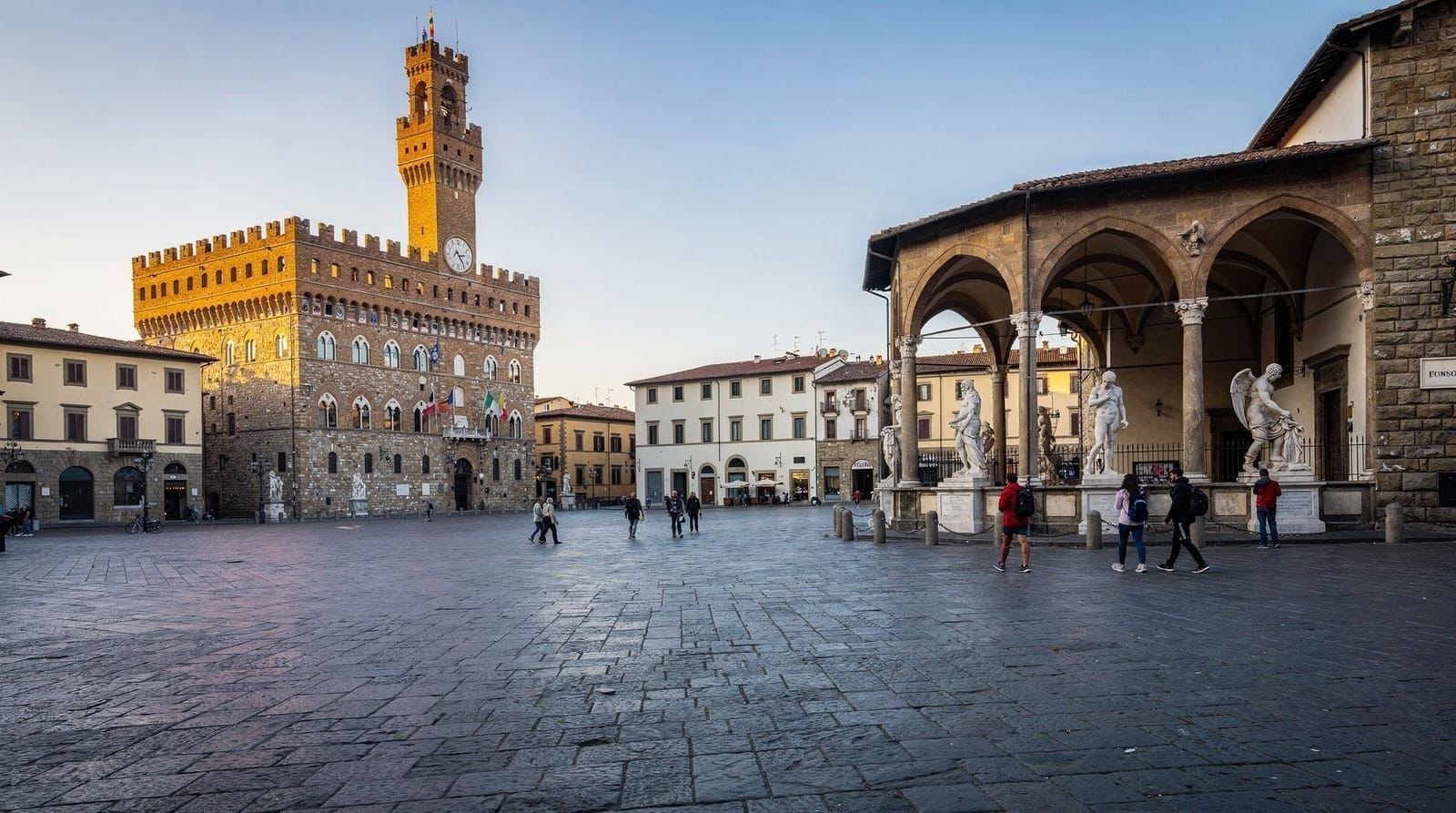
For context on the wider centre and connections to other landmarks, see the Piazza della Signoria guide, the Florence destination guide, and the best walking tours of Florence. If Renaissance art and Medici history is what draws you to Santa Croce, the Medici Renaissance tour covers how the church fits into a broader itinerary. For a smaller, quieter counterpart on the other side of the centre, the Santa Maria Novella church guide is worth reading — a useful comparison for anyone deciding which Florentine church deserves their limited time.
Santa Croce compared to Florence’s other major churches
Santa Croce is one of several major churches competing for a visitor’s limited time, and it’s worth knowing what sets it apart before you commit an hour and a half to it.
| Santa Croce | Duomo | Santa Maria Novella | |
|---|---|---|---|
| Main draw | tombs (Michelangelo, Galileo), Giotto frescoes | dome, exterior, scale | Masaccio’s Trinity, Renaissance facade |
| Typical visit | 60-90 min | 60-90 min (plus dome climb) | 45-60 min |
| Crowds | moderate | very heavy | moderate |
| Cost | around €8 | free nave, paid dome/museum | around €7.50 |
| Best for | history and tombs | architecture and views | Renaissance painting |
None of the three substitutes for the others — see the Duomo guide for the cathedral complex and the Santa Maria Novella guide for the third of Florence’s essential churches.
Frequently asked questions about Santa Croce
Why is it called the Pantheon of Florence?
Because of the extraordinary concentration of tombs of significant Florentines — Michelangelo, Galileo, Machiavelli, Ghiberti, and hundreds of others. The comparison to the Roman Pantheon (which contained the tombs of Raphael and Italian kings) reflects the Florentine tradition of the church as a monument to civic achievement.
Can I attend a service at Santa Croce?
Yes. Sunday morning Masses are held and the church is in active Franciscan use. During services, the tourist visit area is restricted. Times vary — check the official website.
Is there a cafe or restaurant in the complex?
The museum refectory area sometimes has a small refreshment point (seasonal). The square outside (Piazza Santa Croce) has several cafes and bars.
How long should I allow for Santa Croce?
Allow 60–90 minutes for the basilica, Pazzi Chapel, cloister, and museum in combination. If you are particularly interested in the Giotto frescoes or the architectural details of the Pazzi Chapel, 2 hours is not excessive.
Top experiences
Bookable activities with verified prices and instant confirmation on GetYourGuide.