Florence Duomo: complete visitor guide
Florence: ticket to Brunelleschi's Dome with panoramic views
- Skip the line
- Free cancellation
Do I need to book Florence Duomo tickets in advance?
Yes — timed entry for Brunelleschi's Dome sells out days or weeks ahead, especially April–October. The cathedral itself is free but requires a free reservation. Book via the official Opera del Duomo website or via GetYourGuide to avoid the queue.
The Florence Duomo at a glance
Standing at the heart of the city since the 14th century, the Cattedrale di Santa Maria del Fiore — universally known as the Duomo — is the defining image of Florence. Its terracotta-and-white marble facade, the rust-orange dome by Filippo Brunelleschi, and Giotto’s adjacent Campanile form a skyline that has barely changed in 600 years.
The complex comprises five distinct sites managed by the Opera di Santa Maria del Fiore: the cathedral itself, the dome, the Campanile, the Baptistery of San Giovanni, the Crypt of Santa Reparata, and the Museo dell’Opera del Duomo. Each one rewards close attention; together they represent the fullest portrait of medieval and early-Renaissance Florence available anywhere.
This guide covers everything you need to plan your visit honestly — real ticket prices, what sells out, how early to arrive, and what most visitors miss.
| Where | Piazza del Duomo, historic centre |
| Cost | Cathedral free (reservation); combined complex pass around €30 |
| Time needed | Half a day for the full complex |
| Getting there | Walkable from every central hotel; 3 min from Piazza della Repubblica |
| Best time | First slot (8:15am) or the last hour before closing |
Tickets and prices
| Site | Admission |
|---|---|
| Cathedral interior | Free (timed reservation required) |
| Brunelleschi’s Dome | Included in combined pass |
| Giotto’s Campanile | Included in combined pass |
| Baptistery of San Giovanni | Included in combined pass |
| Crypt of Santa Reparata | Included in combined pass |
| Museo dell’Opera del Duomo | Included in combined pass |
| Combined Duomo Complex Pass | €30 (valid 72 hours) |
| Children under 6 | Free |
The combined pass is the best value by far. Buy it in advance online — the official Opera del Duomo website and authorised booking platforms such as GetYourGuide sell timed-entry tickets. The dome in particular sells out days (sometimes weeks) ahead between April and October, and on weekends year-round.
Honest warning: Touts near the square occasionally offer “skip-the-line” tickets for inflated prices, sometimes re-selling official tickets at a premium. Always buy from the official site or a verified partner. There is no such thing as a legal back-door to the dome — only timed-entry slots, and those sell out.
The cathedral (Santa Maria del Fiore)
Entry to the nave is free but requires a free timed-entry reservation made online. The exterior marble — white Carrara, green Prato serpentine, and pink Maremma — was completed between 1876 and 1887 to a neo-Gothic design by Emilio De Fabris, though the original medieval facade was demolished in 1587. Do not judge the interior by its exterior grandeur: the nave is surprisingly austere by Italian standards, deliberately so.
Inside, the key things to seek out are:
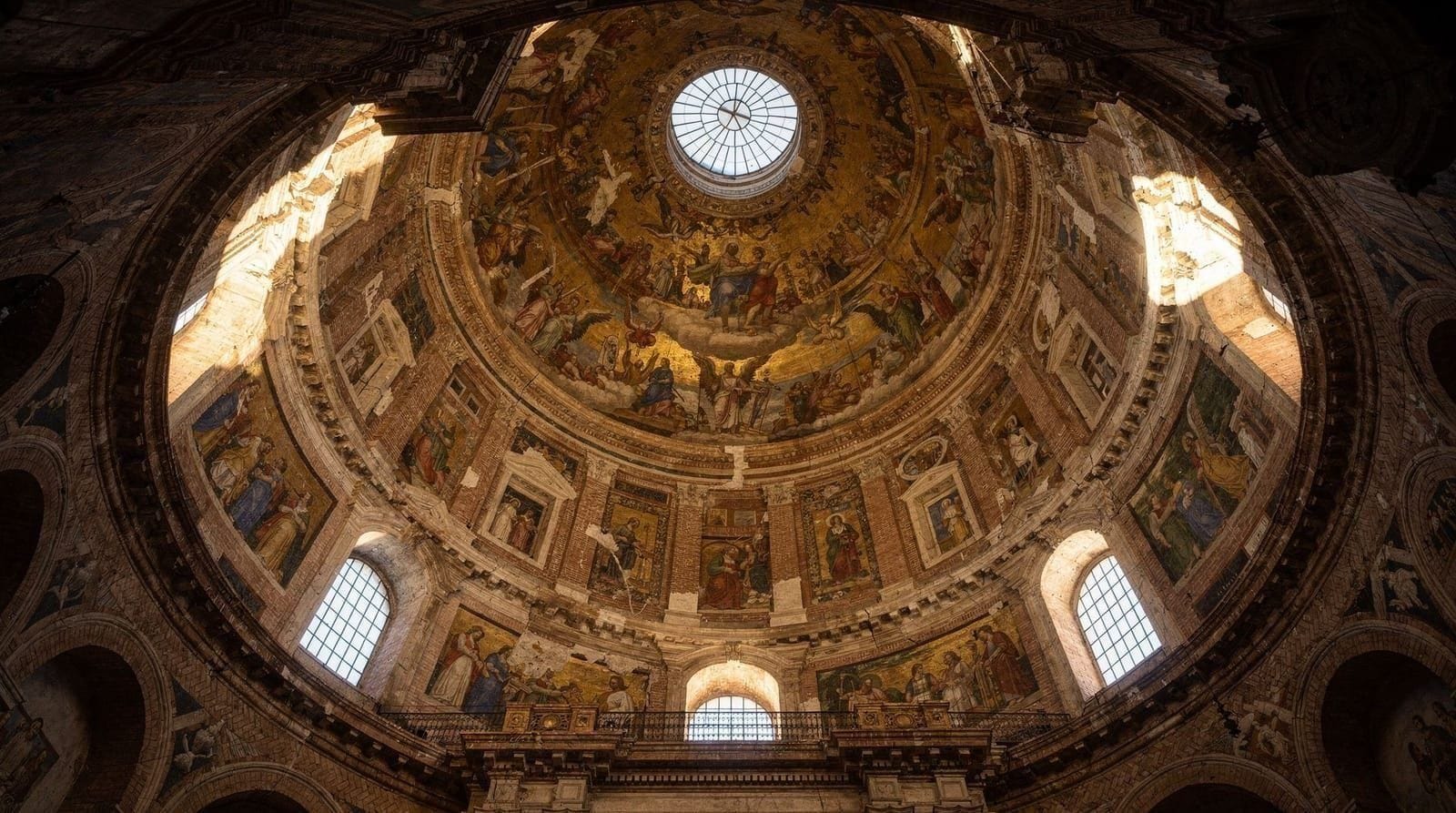
- The fresco of the Last Judgement by Giorgio Vasari inside the dome, visible from the floor and at close range during the climb
- The equestrian portraits of John Hawkwood and Niccolò da Tolentino — both painted to look like bronze sculpture (trompe-l’oeil) by Uccello and Castagno
- The entrance to the dome staircase, set in the left (north) transept — this is where your timed-entry begins
- The clock by Paolo Uccello above the main door, running backwards by medieval convention (the “Italian hour” counted from sunset)
The cathedral closes for services; avoid 10:00–12:00 on Sundays and religious holidays. Photography without flash is permitted in the nave.
Climbing Brunelleschi’s Dome
The dome is the centrepiece. Filippo Brunelleschi built it between 1420 and 1436 without conventional scaffolding, using an octagonal double-shell design with interlocking herringbone brickwork that still puzzles engineers today. At its completion, it was the largest dome in the world; it remains the largest masonry dome ever constructed.
The climb in practice:
| Detail | Information |
|---|---|
| Steps | 463 |
| Duration | 30–45 minutes up, 20 minutes down |
| Width at narrowest | ~60 cm — not suitable for severe claustrophobia |
| Lift | None |
| Pushchairs/wheelchairs | Not possible |
| Dogs | Not permitted |
| Minimum age | None official, but narrow stairs make it unsuitable for very young children |
The staircase winds between the inner and outer dome shells. Halfway up, a gallery encircles the interior at the base of the drum — you can look straight down to the cathedral floor 50 metres below. Vasari’s fresco of the Last Judgement fills the interior surface of the dome above you. From the lantern terrace at the top, Florence spreads in every direction: the Arno, the hills of Fiesole, the tower of Palazzo Vecchio, and on clear days the distant outline of the Apennines.
What to bring: Water is essential in summer. The passage gets warm even on mild days. Wear layers in winter — it can be cold at the top. Sensible shoes with grip are recommended; some steps are worn smooth.
Booking tip: The dome has specific timed-entry slots (typically 15-minute windows). Arrive 5–10 minutes before your slot. Late arrivals may be turned away. If your dates are flexible, early morning slots (8:15) are less crowded; the last hour of the day offers golden-light views.
Giotto’s Campanile
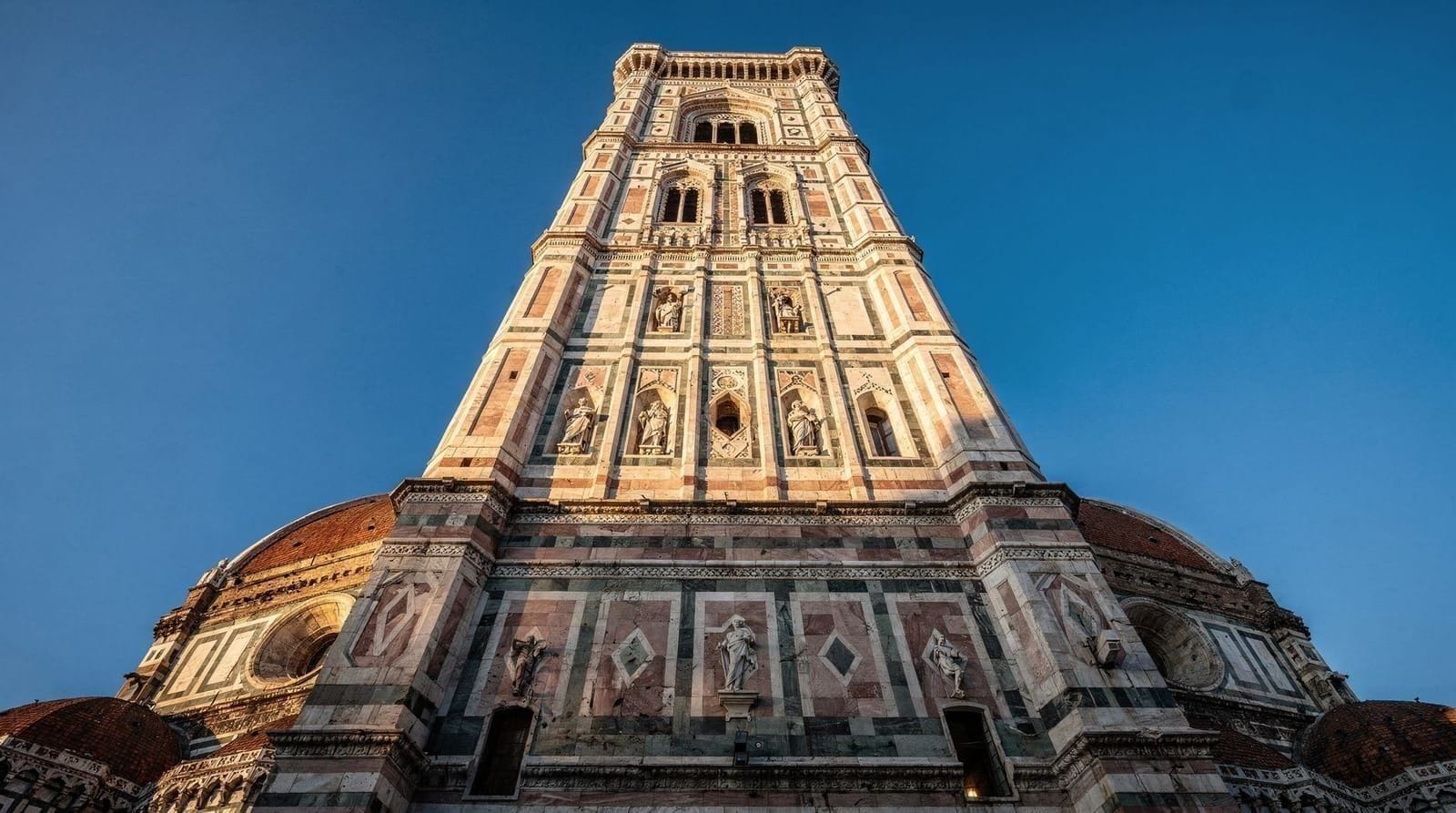
The freestanding bell tower beside the cathedral was begun by Giotto di Bondone in 1334 — hence the name — though he died after completing only the base. Andrea Pisano and Francesco Talenti finished it by 1359. The lower panels are decorated with hexagonal reliefs representing the arts, sciences, planets and virtues (the originals are in the Museo dell’Opera; what you see on the tower are faithful copies).
The climb is 414 steps to the top terrace. Unlike the dome, the Campanile staircase is wide and regularly punctuated by viewing terraces. From the top, you stand at the same height as the dome’s drum — giving a view of the dome itself that is impossible from any other vantage point in the city. Arrive early (before 9:00) to have the terrace nearly to yourself.
| Detail | Campanile |
|---|---|
| Height | 84.7 m |
| Steps | 414 |
| Intermediate terraces | Yes (every 60–80 steps) |
| Best time | Early morning or 1 hour before closing |
The Campanile is included in the combined Duomo Complex pass. Separate single-entry tickets are also available.
The Baptistery of San Giovanni
Directly opposite the cathedral’s main facade, the Baptistery is one of Florence’s oldest buildings — scholars date its construction to between the 4th and 7th centuries, with major reconstruction in the 11th and 12th centuries. For Renaissance Florentines, it was thought to be a converted Roman temple to Mars, which gave it special prestige.
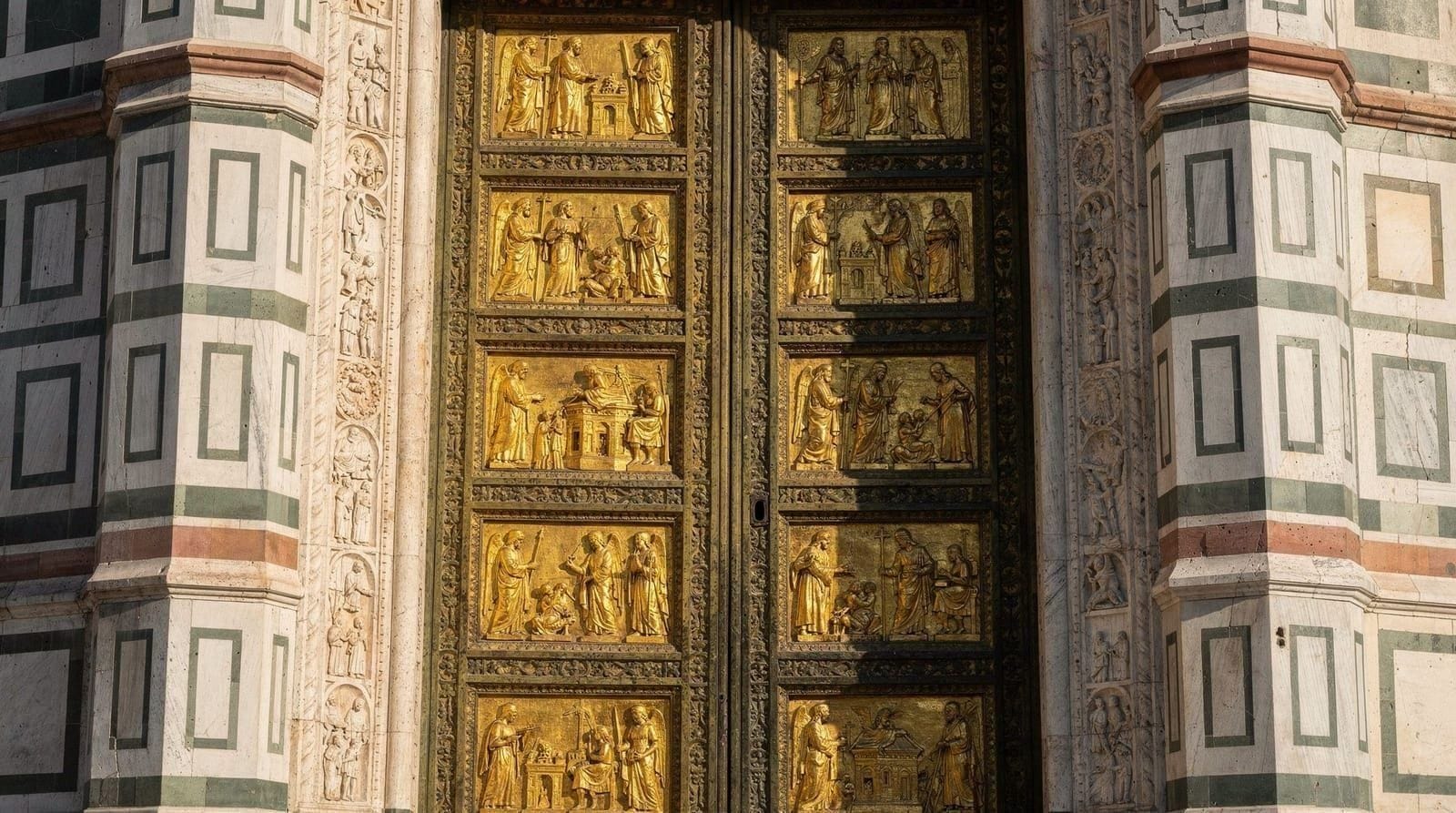
The Gates of Paradise: Lorenzo Ghiberti spent 27 years (1425–1452) creating the east doors — the ones facing the cathedral. Michelangelo reportedly named them the “Gates of Paradise.” The panels depict ten Old Testament scenes in gilded bronze with extraordinary perspective and narrative depth. What you see today are exact reproductions; the originals are preserved in the Museo dell’Opera del Duomo.
The interior mosaic: The 13th-century mosaic ceiling inside the Baptistery is one of the finest in Italy. The central panel shows Christ in Judgement surrounded by hierarchies of angels; the surrounding cycles depict the stories of Joseph, the Virgin, the Baptist, and scenes from Genesis. Allow 20–30 minutes inside.
The Baptistery is included in the combined pass; it requires a separate timed-entry slot, bookable alongside your dome slot.
The Museo dell’Opera del Duomo
Most visitors skip the museum. Do not. It holds the originals of the objects you see copies of throughout the complex, plus the tools and models Brunelleschi used to build the dome — an extraordinary collection rarely found elsewhere.
Highlights:
- Gates of Paradise (original panels) — Ghiberti’s bronze masterwork in a climate-controlled room
- Donatello’s Mary Magdalene — an intensely emotional late work in polychrome wood
- Donatello’s Cantoria (singing gallery) — marble relief with dancing putti, matched by Luca della Robbia’s version
- Michelangelo’s Bandini Pieta — the artist’s own version of the Pieta, left unfinished; the hooded figure at the back is a self-portrait
- Arnolfo di Cambio’s original facade sculptures — fragments of the demolished medieval facade
- Brunelleschi’s death mask and tools, including his ox-hoist design
The museum is large and rarely crowded, especially on weekday afternoons. It is included in the combined pass. Allow 45–60 minutes minimum.
Piazza del Duomo: orientation
The square is pedestrianised and central to the historic city. Key things to know before you arrive:
- Tourist restaurants directly on the square charge a heavy premium — eat one street back. Via dei Servi, Via della Pergola and Via del Proconsolo all have better options at lower prices.
- Pickpockets are active around the square, particularly in summer when crowds are dense. Keep bags in front of you.
- Photography: The full facade is nearly impossible to photograph in one frame from the square — it is simply too large. Walk to the corner of Via dei Servi to the north for the classic three-quarter view of dome plus Campanile.
- Opening at 8:15: Arrive at the dome entrance before 8:20 for the first slot; the queue at 8:30 is already substantial in peak season.
Getting to the Duomo
The cathedral is in the exact centre of historic Florence, walkable from every major hotel in the city.
| Starting point | Walking time |
|---|---|
| Santa Maria Novella train station | 12 minutes |
| Ponte Vecchio | 10 minutes |
| Piazza della Repubblica | 3 minutes |
| Piazza della Signoria | 8 minutes |
| Accademia Gallery | 8 minutes |
Florence’s ZTL (limited traffic zone) covers the entire historic centre. Do not drive to the Duomo — park outside the ZTL (Parterre or Piazzale Michelangelo car parks) and walk or take a taxi.
What to visit nearby
The Duomo sits within the dense historic core. Within a 10-minute walk you have:
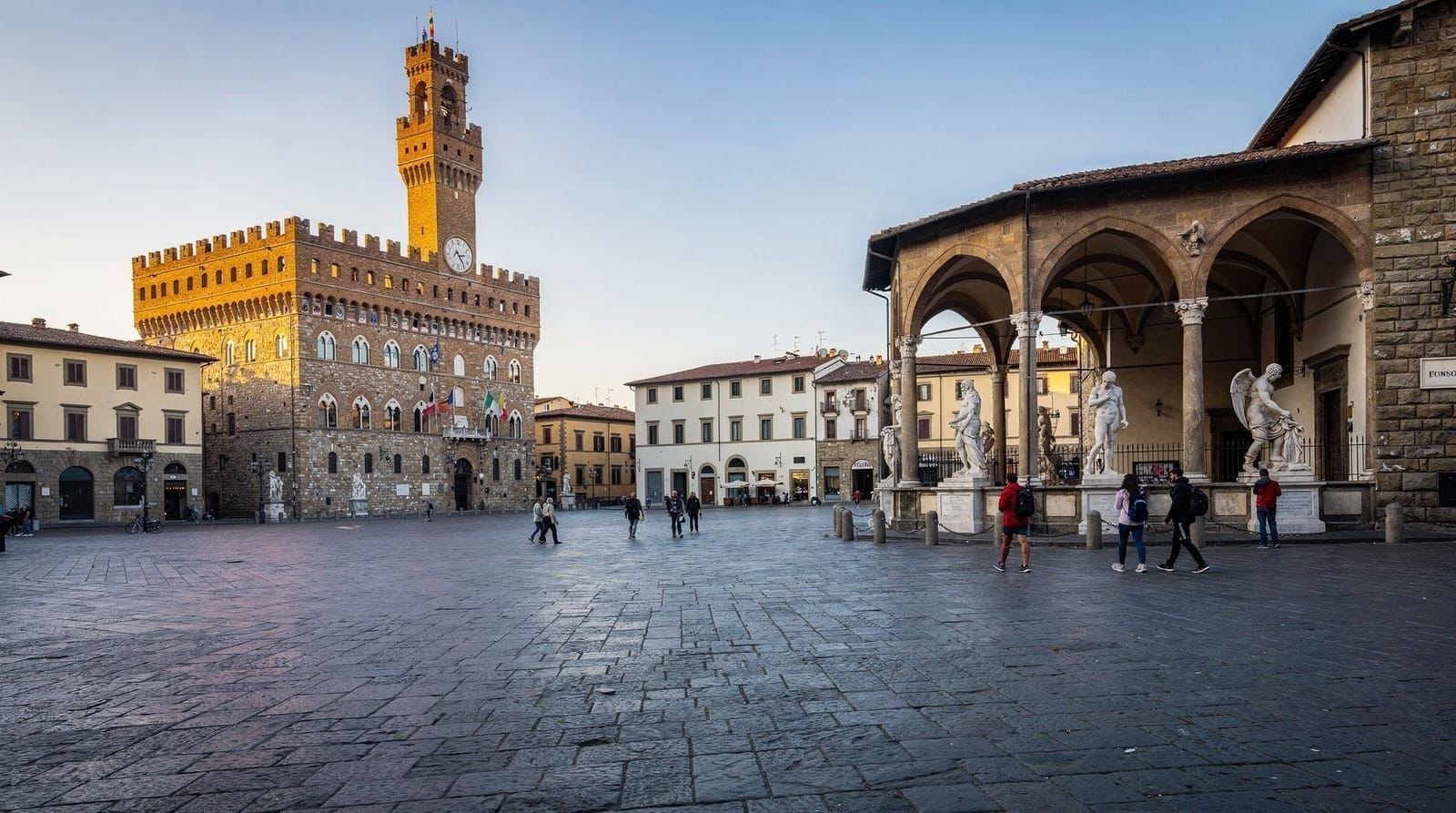
- Piazza della Signoria and Palazzo Vecchio — Florence’s civic heart
- Santa Croce Basilica — 15 minutes east
- Best walking tours of Florence — many begin at the Duomo
- The Oltrarno neighbourhood — 15 minutes south across the Arno
- Baptistery of Florence — directly opposite the main facade
For planning your full day, see the Florence destination guide and our 2-day Florence itinerary.
Seasonal tips
| Season | Notes |
|---|---|
| April–May | Best light, warm, crowds building; book dome 2 weeks ahead |
| June–August | Very hot and crowded; dome sells out weeks ahead; carry water |
| September–October | Excellent conditions; autumn light is beautiful; book 1 week ahead |
| November–March | Shortest queues; book 2–3 days ahead; some earlier closing times |
| August | Some services close; city at maximum tourist density |
Religious feasts affect opening: the Feast of San Giovanni (24 June) and Christmas/Easter bring modified hours. Always check the Opera del Duomo website before your visit.
Comparing the Duomo to Florence’s other big-ticket sights
First-time visitors often ask whether the Duomo, the Uffizi, or the Accademia deserves priority if time is tight. They are not really comparable experiences: the Duomo complex is architecture and engineering (the dome climb, the marble facade, the Baptistery mosaics), while the Uffizi and Accademia are painting and sculpture collections. Most visitors with two or more days in Florence do all three; with a single day, the Duomo complex has the advantage of being outdoors and requiring less mental stamina than a full gallery visit, and it anchors the historic centre so well that everything else radiates from it. See the Florence museum passes compared guide if you’re weighing a combined ticket across several sights.
Visiting with limited time
If you only have an hour at the Duomo complex, spend it on the cathedral interior and the exterior facade rather than attempting a rushed dome climb — the climb rewards unhurried time and feels wasted if you’re watching the clock. With two hours, add the Baptistery and its mosaic ceiling. A genuinely thorough visit, including the dome, Campanile, and the Museo dell’Opera del Duomo, needs closer to half a day, so plan accordingly if the Duomo is only one stop among several on a single-day Florence itinerary.
Booking logistics that trip people up
The combined pass and the individual timed-entry slots are not always the same booking flow, which causes confusion. Buying the Duomo Complex Pass online reserves your window for the dome and Baptistery, but you still need to select a specific date and time for each site within the 72-hour validity — it is not a single open ticket. Arrive at the correct entrance for each site (the dome entrance is separate from the cathedral entrance, on the north side), and bring a printed or phone copy of your confirmation, since queues move faster with a scannable code ready rather than searching an inbox at the door.
Photographing the dome from outside
If you want the dome in a single frame without climbing it, the classic photograph is from Piazzale Michelangelo across the Arno, where the dome rises above the rooftops with the whole city in the frame. Closer in, the corner of Via dei Servi (mentioned above) gives the three-quarter facade-and-dome view; the roof terrace of the Uffizi café offers a rare eye-level angle onto the dome’s drum. Early morning and the last hour of golden light both flatter the terracotta tiles far more than midday sun.
Frequently asked questions about the Florence Duomo
Is the dome climb worth it?
Yes, without reservation. The engineering of the double shell is visible at close range during the climb — you walk between the two skins. The fresco above and the panorama at the top are both exceptional. It is physically demanding (463 steps, no lift, some narrow passages) but the experience is unique.
Can I visit the Duomo without booking?
For the cathedral only (free entry), you can walk in on a same-day free reservation if slots remain. For the dome, Campanile and Baptistery, last-minute tickets are rarely available between April and October. Always book in advance.
How long should I allow for the full complex?
Allow a full half-day: 1 hour for the cathedral and dome climb, 30–45 minutes for the Campanile, 30 minutes for the Baptistery, and 45–60 minutes for the museum. The combined pass is valid for 72 hours, so you can spread visits over multiple days.
Is the Duomo accessible for disabled visitors?
The cathedral nave is wheelchair accessible. The dome climb, Campanile, and crypt are not — all involve stairs with no lift alternative. The Baptistery has step-free entry. The museum has a lift. Call the Opera del Duomo in advance for specific accessibility needs.
What is the Duomo made of?
The exterior cladding is polychrome marble: white Carrara marble, green Prato serpentine, and pink Maremma marble. The dome is covered in terracotta tile. The structural material is a mix of stone and brick — Brunelleschi’s dome required special lightweight spugna stone mixed with standard brick to reduce the load.
Top experiences
Bookable activities with verified prices and instant confirmation on GetYourGuide.

Florence: dome climb and cathedral 3-day Duomo complex pass
- Skip the line
- Instant confirmation
Florence: cathedral terraces and dome skip-the-line tour
- Skip the line
- Small group
Florence: Duomo tour with Brunelleschi's Dome climb access
- Skip the line
- Free cancellation
Florence: cathedral tour with Brunelleschi's Dome climb ticket
- Skip the line
- Free cancellation
Florence: skip-the-line Duomo, Baptistery and Giotto Bell Tower
- Skip the line
- Free cancellation