Best walking tours in Florence 2026: complete guide
Florence: walking tour
- Free cancellation
- Instant confirmation
What are the best walking tours in Florence?
Florence's best walking tours range from free tip-based tours (good for orientation) to small-group guided tours of 2–3 hours covering the Duomo, Palazzo Vecchio, and Ponte Vecchio (€25–45), to specialist tours focusing on Renaissance art, the Medici, or Oltrarno artisan workshops (€40–80). Book in advance April–October.
Why take a walking tour in Florence
Florence’s historic centre is approximately 3 km east-to-west and 2 km north-to-south — compact enough to walk entirely, and dense enough with significance that every street and building has a story. The problem for independent visitors is that the significance is not always legible from the outside. The grey limestone of the Palazzo Strozzi, the apparently identical medieval towers, the marble churches — without context, much of what is extraordinary about Florence can look like undifferentiated old stone.
| Where | Starts near the Duomo or Piazza della Signoria for most operators |
| Cost | Around €20–40 (group), €40–70 (small group), €150–250 (private) |
| Time needed | 2–3 hours for a standard highlights tour |
| Booking | 3–7 days ahead for popular small-group tours, April–October |
| Best time | Morning for highlights tours, evening for atmosphere and aperitivo |
A good guide changes this. The most important thing a guided walking tour does is not show you the famous places — you can find those on any map — but explain why the arrangement of buildings in a given piazza, or the choice of a particular patron for a particular chapel, reflects something specific about power, money, piety, and ambition in 15th-century Florence.
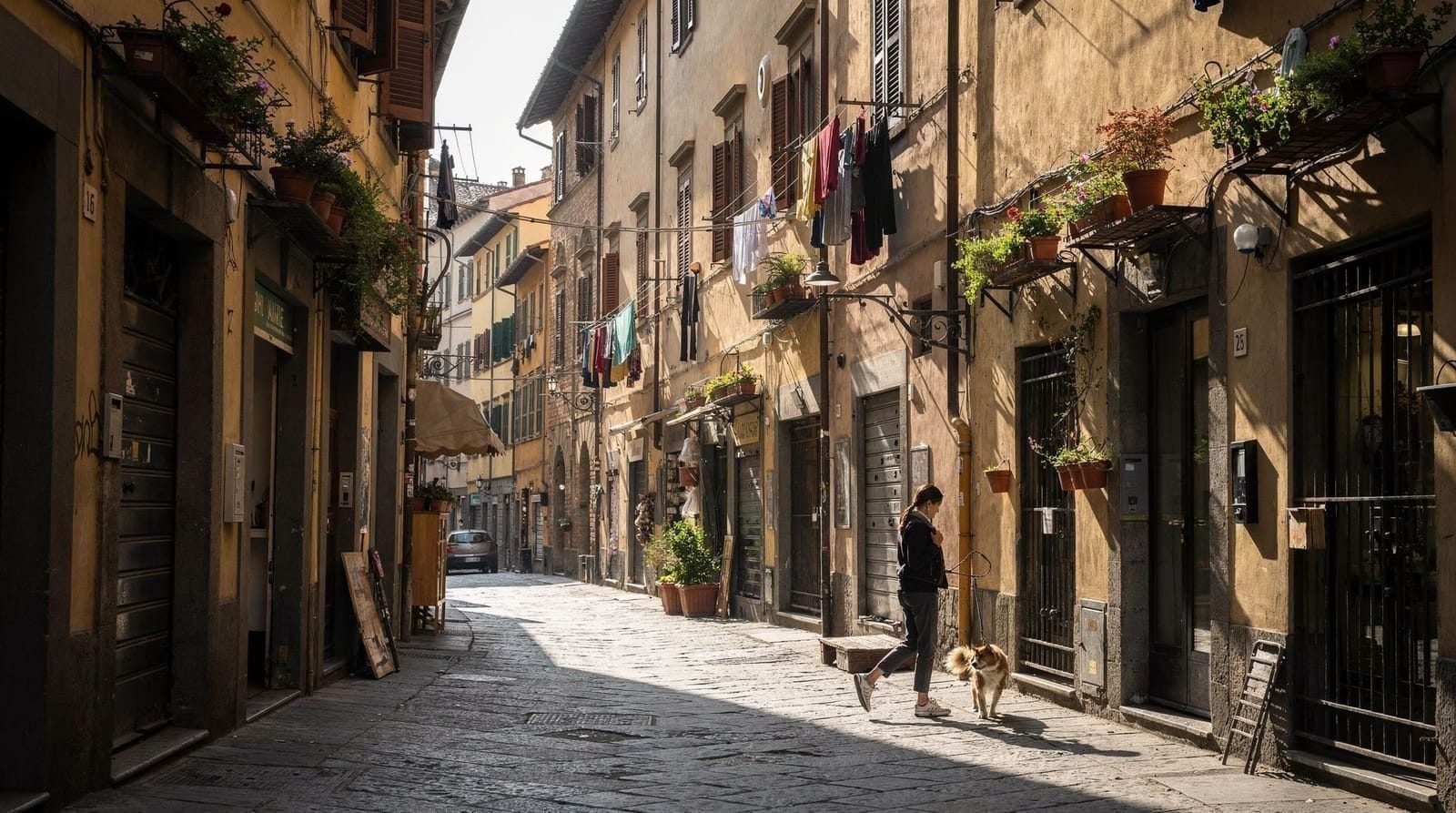
The second thing a good guide does is take you off the main axes. The walk from the Duomo to Piazza della Signoria via Via dei Calzaiuoli is obvious; the route via Via dei Servi and Via della Pergola, with its medieval street pattern and mix of religious and secular architecture, is not — but it is more interesting.
City highlights tours
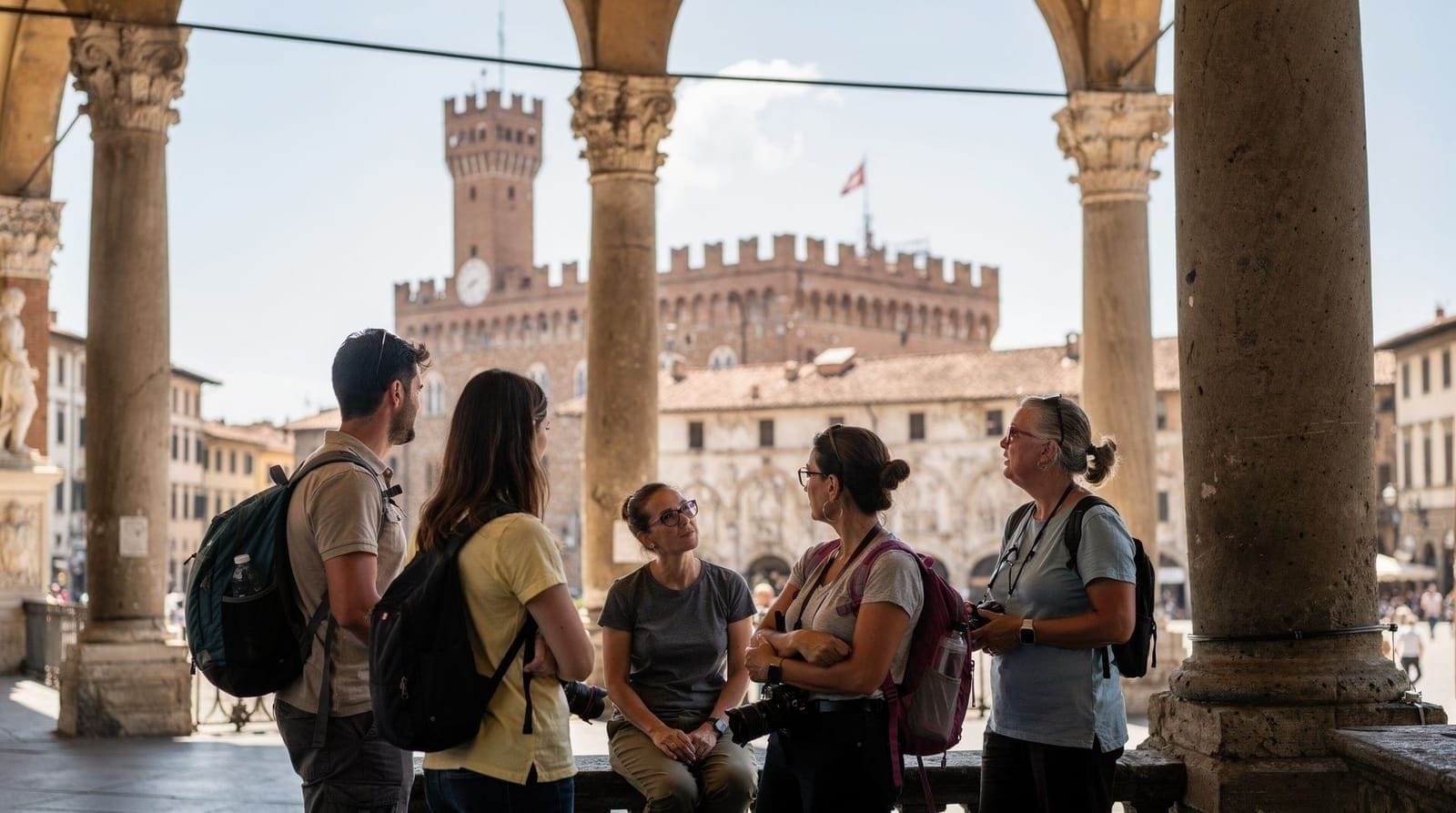
City highlights tours are the right starting point if you are in Florence for 2–3 days and need orientation before going deeper. They typically cover:
- Piazza del Duomo — exterior of the Duomo, Baptistery doors, and Campanile (no dome climb unless specifically included)
- Via dei Calzaiuoli — the main pedestrian axis linking Duomo to Signoria, passing Orsanmichele
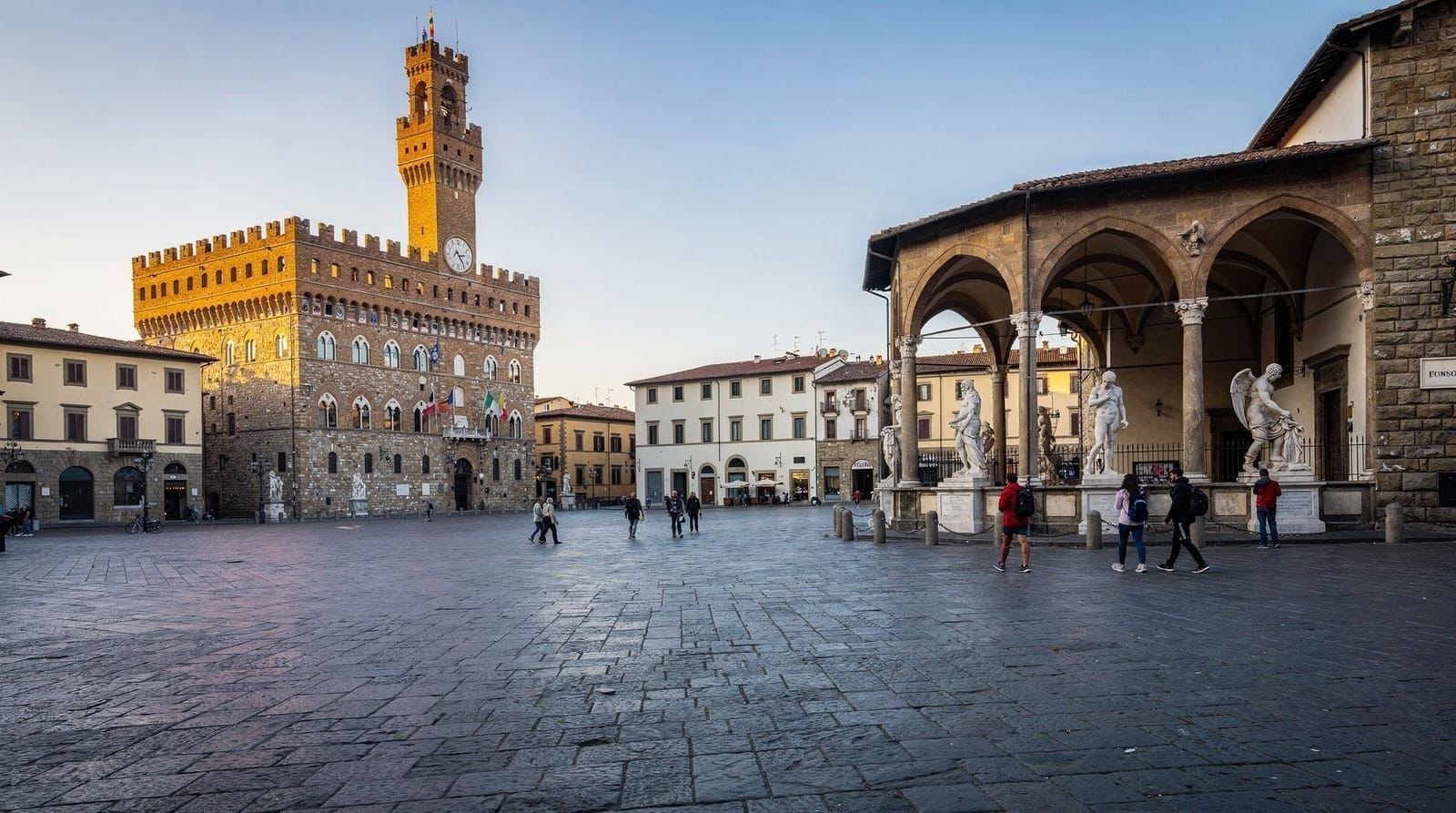
- Piazza della Signoria — Palazzo Vecchio, Loggia dei Lanzi sculptures, Neptune fountain
- Uffizi exterior — context for the collection without entering
- Ponte Vecchio — bridge history, jewellers’ tradition, Vasari Corridor overview
Duration: 2–3 hours. Group size: varies from 10 to 25 depending on operator. Price: €20–40.
These tours are logistically sensible — they use the main streets and avoid the need for additional transport. The guides who run them are typically licensed by the Comune di Firenze with a specialisation in art history or architecture.
What to look for in a good highlights tour:
- Maximum group size of 15 (smaller is better for seeing and hearing)
- A licensed Florentine guide (look for the badge on the guide’s jacket)
- Inclusion of Orsanmichele — this building is consistently skipped by rushed tours and is one of Florence’s great buildings
- Free cancellation with 24-hour notice
Specialist and themed tours
Renaissance art history tours
These tours are not for the faint-hearted. The guides — usually historians or art historians with deep specialist knowledge — focus on the sequence of innovation that took place in Florence between approximately 1400 and 1520: the development of perspective, the new treatment of human anatomy, the role of patronage in directing artistic innovation.
Key stops: Baptistery doors (Ghiberti vs. Brunelleschi competition panels), Santa Maria Novella (Masaccio’s Trinity), Orsanmichele (Donatello and Ghiberti bronze figures), Palazzo Vecchio, Piazza della Signoria.
Duration: 2.5–3 hours. Price: €35–60. Group size: typically 8–12 for quality operators.
These tours work best if you have some background interest in art history. They are not designed for children or visitors who are not interested in looking closely at buildings and sculpture.
City highlights with Duomo access
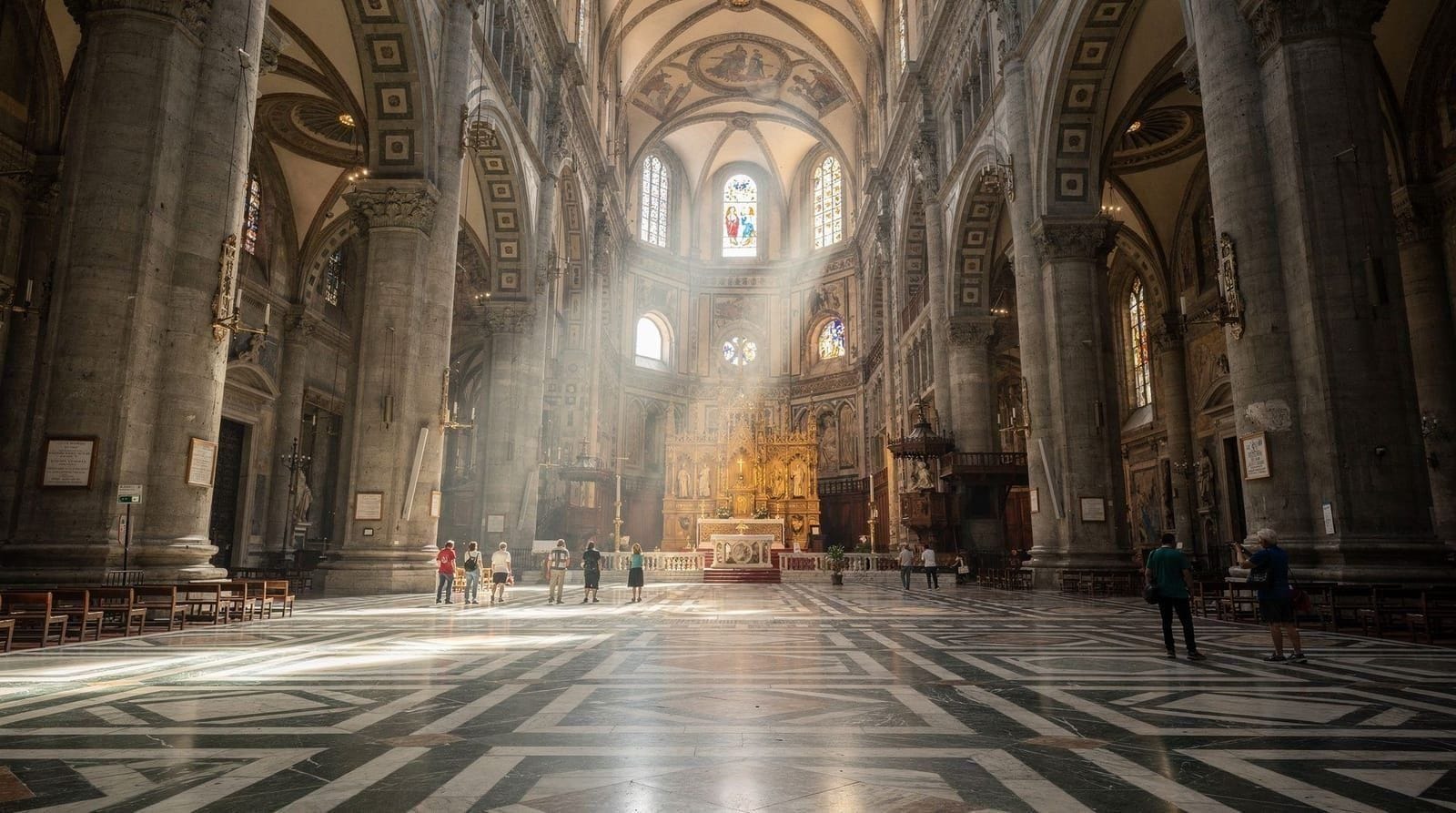
Several operators offer a standard city walk with a timed-entry ticket for the Duomo complex (dome or Campanile) included. These are efficient for first-time visitors who want to cover the key outdoor sights and climb the dome without organising two separate bookings.
Honest note: The dome entry is timed; the tour typically delivers you to the dome entrance at the start or end of the walk. This means either your sightseeing is anchored to an 8:15 departure or you spend the last part of the tour in a queue. Read the logistics carefully before booking.
Free walking tours: what they actually offer
Free (tip-based) walking tours are a legitimate way to get oriented on day one, but they come with real trade-offs. Groups tend to be larger (20–35 people is common), the guide is paid entirely through tips rather than a fixed fee, and the route is fixed rather than adapted to interests. They’re a reasonable choice if budget is tight or you want a low-commitment first look at the city before deciding whether to book a paid specialist tour later. The dedicated free walking tours in Florence guide covers which operators are consistently well-reviewed and what a fair tip actually looks like.
Small-group versus large-group tours
| Feature | Large group (15–25) | Small group (6–12) | Private (2–8) |
|---|---|---|---|
| Price | €20–35 | €40–70 | €150–250 |
| Flexibility | Low | Medium | High |
| Guide quality | Variable | Generally higher | Dedicated |
| Ability to ask questions | Limited | Good | Complete |
| Best for | First visit, budget | Art history, depth | Families, special interests |
Small-group tours are consistently rated higher by visitors who want depth. The guide has time to answer individual questions, adjust pace, and take detours. Large-group tours are better for covering the basics quickly.
Private tours give complete control of itinerary, pace, and content. For families with young children, private tours allow the guide to adapt to shorter attention spans and unexpected stops.
Evening tours
Florence’s streets change completely after 18:00. The tourist crowds thin, the light goes amber and then rose, and the residents emerge. Evening tours — which typically run 18:30 to 20:30 or 21:00 in summer — offer:
- The loggia dei Lanzi in raking light
- Arno reflections from Ponte Santa Trinita
- The Duomo facade illuminated
- Quieter streets through the Oltrarno
Some evening tours include a stop for an aperitivo — typically Campari Soda or Spritz with Florentine snacks at a bar frequented by local residents rather than tourists. The combination of walking and aperitivo is a particularly good introduction to how Florentines actually spend their evenings.
What to wear and bring
| Item | Recommendation |
|---|---|
| Footwear | Comfortable flat shoes; cobblestones are uneven, sandals lead to blisters |
| Sun protection | Hat and sunscreen essential May–September |
| Water | Bring a bottle; fill it at the stone drinking fountains (nasoni) throughout the centre |
| Clothing | Church entry requires covered shoulders and knees; most tours include at least one church interior |
| Bag | Small, closeable; pickpockets operate in tourist crowds |
Most tours include an earpiece system (called a whisper guide or radio guide) allowing you to hear the guide clearly even in noisy squares and churches.
How to choose and book
Booking platforms: GetYourGuide, Viator, and direct booking through local operators. Prices are comparable across platforms; GetYourGuide typically offers the most reliable cancellation terms.
Reviews: Filter for recent reviews (last 6 months). Look specifically for comments about group size (larger than advertised is a common complaint), guide knowledge depth, and time management.
Cancellation: Always choose free cancellation for Florence tours. Weather, illness, or itinerary changes are common, especially in spring and autumn.
Languages: English-language tours dominate the market. French, German, and Spanish tours are available from several operators. Italian-language tours are rarer for tourists but available.
Combining with other Florence experiences
Walking tours pair naturally with:
- Florence Duomo guide: Book your dome timed entry around your tour
- Piazza della Signoria: Most tours end here; add Palazzo Vecchio inside separately
- Oltrarno walking tour: Cross Ponte Vecchio for an afternoon continuation
- Medici Renaissance tour: Specialist follow-up to the highlights overview
For the full planning context and what to do outside the centre, see the Florence destination guide.
If your interests run more towards renaissance painting than street-level history, the Renaissance art in Florence guide explains which works and locations reward a specialist tour versus independent viewing.
Frequently asked questions about walking tours in Florence
Can I book a walking tour on the same day?
Yes for popular operators, but availability is not guaranteed between April and October. For highly rated small-group tours, book 3–7 days ahead. Free tours are typically walk-up but may limit numbers.
Are walking tours good for families with children?
Depends on children’s ages and interests. Under-8s generally find 3-hour walking tours too long. Several operators run family-specific tours (1.5–2 hours, adapted commentary, interactive elements). For older children (10+), a highlights tour is genuinely accessible with a good guide.
How much should I tip the guide?
For standard group tours: €3–5 per person is reasonable if you enjoyed it; €8–10 for an outstanding tour. Private tour guides are typically tipped €10–20 per group. Free tours (tip-only): €10–20 per person is appropriate for a good 2-hour tour.
What happens if it rains?
Walking tours run in light rain — guides carry umbrellas or the group has a wet-weather plan. In heavy rain, most operators offer reschedule or refund. Some tours use the covered logge (street-level arcades, common in Florence’s medieval streets) for shelter during showers.
Should I do a walking tour before or after visiting the Uffizi and Accademia?
Before, if possible. A good highlights or art history tour on your first day gives context that makes the major museums more rewarding — you’ll recognise names, patrons, and stylistic developments rather than encountering them cold. If scheduling forces a choice, prioritise the museum booking time slot and fit the walking tour around it.
Is a free walking tour worth it compared to a paid one?
For pure orientation on a first day, yes — a free tour covers the same core landmarks as a budget paid tour. For depth, specialist knowledge, or a smaller group where you can actually ask questions, a paid small-group or private tour is the better investment. See the free walking tours guide for specifics.
Top experiences
Bookable activities with verified prices and instant confirmation on GetYourGuide.

Florence: walking tour and optional fast-track Duomo visit
- Free cancellation
- Small group
Florence: city highlights guided walking tour
- Free cancellation
- Instant confirmation
Florence: highlights walking tour with expert guide
- Free cancellation
- Small group
Florence: main sights guided walking tour
- Free cancellation
- Instant confirmation
Florence: free guided walking tour with a local guide
- Free cancellation
- Instant confirmation
Florence: Leonardo da Vinci guided walking tour
- Free cancellation
- Small group