Medici Renaissance tour Florence: the complete route
Florence: Renaissance and Medici walking tour
- Free cancellation
- Small group
What is the Medici Renaissance tour in Florence?
The Medici Renaissance tour follows the key sites of Florence's most powerful dynasty: San Lorenzo church and Medici Chapels (Michelangelo's New Sacristy), Palazzo Medici Riccardi, Uffizi Gallery, Palazzo Vecchio, and the Vasari Corridor. Guided tours of 2–3 hours cover the family's rise, patronage of the arts, and eventual fall.
The family that made Florence
No other family in European history left as dense a physical imprint on a single city as the Medici left on Florence. Walking the historic centre, you encounter their commissions and their residences at almost every turn: the dome they helped fund, the churches they patronised, the palace where they lived, the corridor they built to walk unseen above the heads of the citizens they governed.
Understanding the Medici is not a prerequisite for visiting Florence — millions of people enjoy the Uffizi and Duomo without knowing who paid for them. But the city becomes dramatically more legible once you understand the Medici, because so many of the great works of the Renaissance were made in response to specific Medici commissions, Medici political needs, or Medici aesthetic preferences.
This guide maps the Medici presence across the city and recommends how to follow it, whether independently or on a guided tour.
| Route length | roughly 2.5 km, walkable in 2.5–3 hours |
| Cost | around €25–70 for a guided version; €40–60 in entry fees independently |
| Best time | weekday morning, starting by 9am |
| Booking | Medici Chapels and Uffizi need advance tickets in peak season |
| Good for | first-time visitors wanting context, not just checklists |
The Medici in brief
The Medici family rose to prominence in the early 15th century through banking. Giovanni di Bicci de’ Medici (1360–1429) established the Medici Bank — which became the largest bank in Europe under his son Cosimo — with branches in Rome, Venice, London, and Geneva. The Rome branch handled the papal finances, giving the Medici unique political leverage.
The main figures:
| Person | Dates | Why they matter |
|---|---|---|
| Giovanni di Bicci | 1360–1429 | Founded the bank; first great patron |
| Cosimo de’ Medici (il Vecchio) | 1389–1464 | Became de facto ruler of Florence; patronised Donatello, Brunelleschi, Fra Angelico |
| Piero di Cosimo | 1416–1469 | Brief rule; contracted gout; continued patronage |
| Lorenzo de’ Medici (il Magnifico) | 1449–1492 | Survived the Pazzi Conspiracy; golden age of Florentine culture; Botticelli, Leonardo, the young Michelangelo |
| Piero di Lorenzo (lo Sfortunato) | 1472–1503 | Expelled by the French invasion; end of first Medici republic |
| Giovanni de’ Medici | 1475–1521 | Became Pope Leo X; brought Raphael and others to Rome |
| Giulio de’ Medici | 1478–1534 | Became Pope Clement VII; commissioned Michelangelo’s New Sacristy |
| Alessandro de’ Medici | 1510–1537 | First Duke of Florence; assassinated |
| Cosimo I de’ Medici | 1519–1574 | First Grand Duke of Tuscany; built Uffizi, Vasari Corridor; Vasari frescoes in Palazzo Vecchio |
| Anna Maria Luisa de’ Medici | 1667–1743 | Last Medici; bequeathed entire collection to Florence on condition it remain in the city |
The Medici sites: a complete route
1. San Lorenzo church and the Old Sacristy
The Medici chose San Lorenzo — a few minutes north-west of the Duomo — as their parish and eventual funerary church. Giovanni di Bicci commissioned Brunelleschi to rebuild it in 1419; the project continued for decades, eventually covering most of the existing church.
The Old Sacristy (Sagrestia Vecchia, accessible through the church) is Brunelleschi’s first fully mature architectural work — a cube covered by a dome on pendentives, with Donatello’s terracotta reliefs in the pendentives and the two bronze doors (also Donatello) in the arches flanking the altar. The sarcophagus of Giovanni di Bicci and his wife Piccarda stands at the centre. The sacristy is a small space but one of the most perfectly resolved rooms in Renaissance architecture.
The church nave was completed by Michelozzo after Brunelleschi’s death. Donatello’s two bronze pulpits — his last works, completed by assistants after his death in 1466 — stand in the nave and are among the most intense, rough-surfaced bronzes in Florence.
Entry to the church: around €9 (includes Laurentian Library). For the fullest picture of the tombs and sculptures here, the Medici Chapels guide covers the New Sacristy room-by-room.
2. Medici Chapels (Michelangelo’s New Sacristy)
Enter from the back of San Lorenzo (separate entrance on Piazza Madonna degli Aldobrandini). The complex comprises:
Cappella dei Principi (Chapel of the Princes): The enormous octagonal mausoleum begun in 1604 for the later Medici Grand Dukes. Covered in rare coloured stone from floor to dome — granite, porphyry, lapis lazuli, malachite, jasper. Ostentatious rather than beautiful in the conventional sense, but the sheer material wealth on display is historically instructive. Six Grand Dukes are buried here.
Sagrestia Nuova (New Sacristy, by Michelangelo): A small room designed by Michelangelo between 1520 and 1534 as a companion to Brunelleschi’s Old Sacristy. Two tomb monuments for Medici dukes (Lorenzo, Duke of Urbino, and Giuliano, Duke of Nemours) carry the famous allegorical figures:
- On Lorenzo’s tomb: Dusk (a tired male figure, day ending) and Dawn (a female figure awakening, uneasy)
- On Giuliano’s tomb: Night (a sleeping female, with owl and mask) and Day (a powerful male, head unfinished, as if not wanting to be seen)
The figures are among Michelangelo’s most psychologically complex works. He worked on them between Rome visits; the New Sacristy was never entirely finished — the wall niches left empty. In 1530, after the Medici returned from exile and the republic was crushed, Michelangelo hid in the room’s basement for two months, afraid for his life. Drawings he made on the walls during that period are visible on guided tours.
The wall opposite the tombs was intended to hold a monument to Lorenzo il Magnifico and his brother Giuliano (assassinated in the Pazzi Conspiracy of 1478); this wall was never finished. Only the Madonna by Michelangelo stands there, with two small saints by assistants.
Ticket: around €9 adults; book in advance. The New Sacristy is the most important reason to visit; allow 30–45 minutes. See the Michelangelo in Florence guide for how these tombs fit into his wider body of work in the city.
3. Palazzo Medici Riccardi
One block north-east of San Lorenzo, the Palazzo Medici was the family’s primary residence from 1444 (when Cosimo moved in) until 1540 (when Cosimo I moved to Palazzo Vecchio). Michelozzo designed it for Cosimo il Vecchio; the facade of rough rusticated stone on the ground floor, smoother dressed stone above, became the model for most subsequent Florentine palace design.
The Chapel of the Magi (inside, upper floor): Benozzo Gozzoli painted the walls in 1459–1461 with the Procession of the Magi — ostensibly a Biblical scene, actually a portrait gallery of the Medici and their court. Cosimo, Piero, and Lorenzo (as a young boy) ride in the procession. The Patriarch of Constantinople and members of the Byzantine delegation to the Council of Florence (1439) are also identifiable. The colours are extraordinary — gilt, blue, and green in a dense floral landscape. Entry: €10; groups of maximum 8 at a time. Book in advance.
The Luca Giordano Gallery (ground floor): A 17th-century hall with ceiling frescoes by Luca Giordano celebrating the Medici dynasty. Less visited but impressive in scale.
4. Uffizi Gallery
The Uffizi was built by Cosimo I de’ Medici in 1560–1581 as the offices (uffizi = offices) of the Florentine government. The collection — assembled by successive Medici — is one of the greatest concentrations of Renaissance art in the world. Anna Maria Luisa de’ Medici, the last of the dynasty, bequeathed the entire collection to the city of Florence in 1743 on the condition that it never leave the city.
For the Medici narrative specifically: Room 35 (Botticelli) contains the Primavera and Birth of Venus, both commissioned by the Medici or their circle. The self-portraits gallery (Vasari Corridor) includes Medici family portraits by Bronzino. The Tribuna — an octagonal room at the historic heart of the gallery — was designed by Buontalento as the symbolic heart of the Medici collection.
Entry: advance booking essential — see the how to book Uffizi tickets guide for the fastest route in, and the full Uffizi Gallery guide for a room-by-room plan.
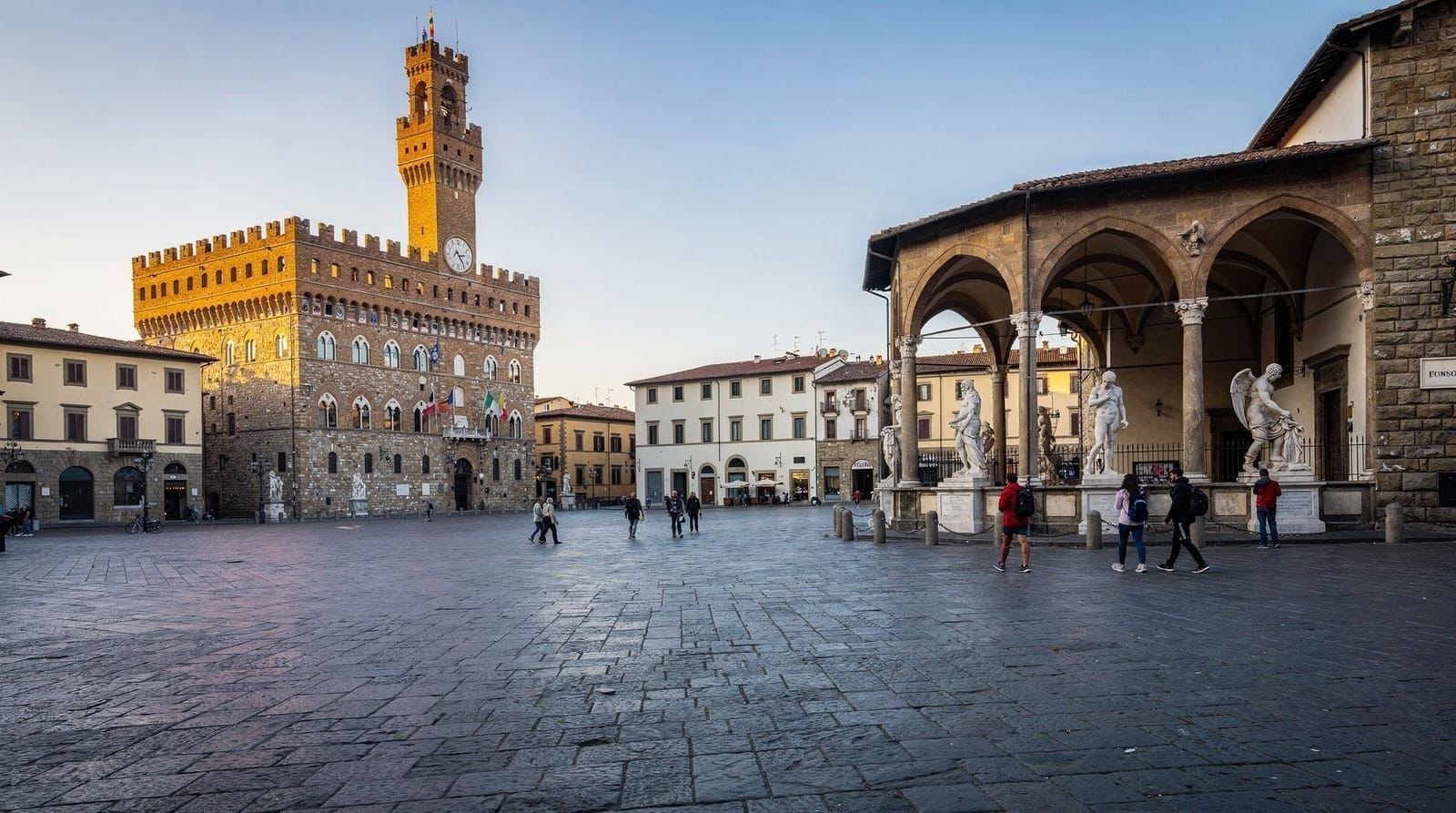
5. Palazzo Vecchio and Piazza della Signoria
After 1540, Cosimo I made Palazzo Vecchio — the medieval town hall — the Medici ducal residence and administrative centre. Giorgio Vasari was commissioned to decorate the entire interior as a celebration of Medici power: the Salone dei Cinquecento ceiling frescoes, the apartments of Cosimo and Eleonora, the studiolo of Francesco I.
See the full Piazza della Signoria guide for details. The Medici connection is central to understanding everything Vasari painted here.
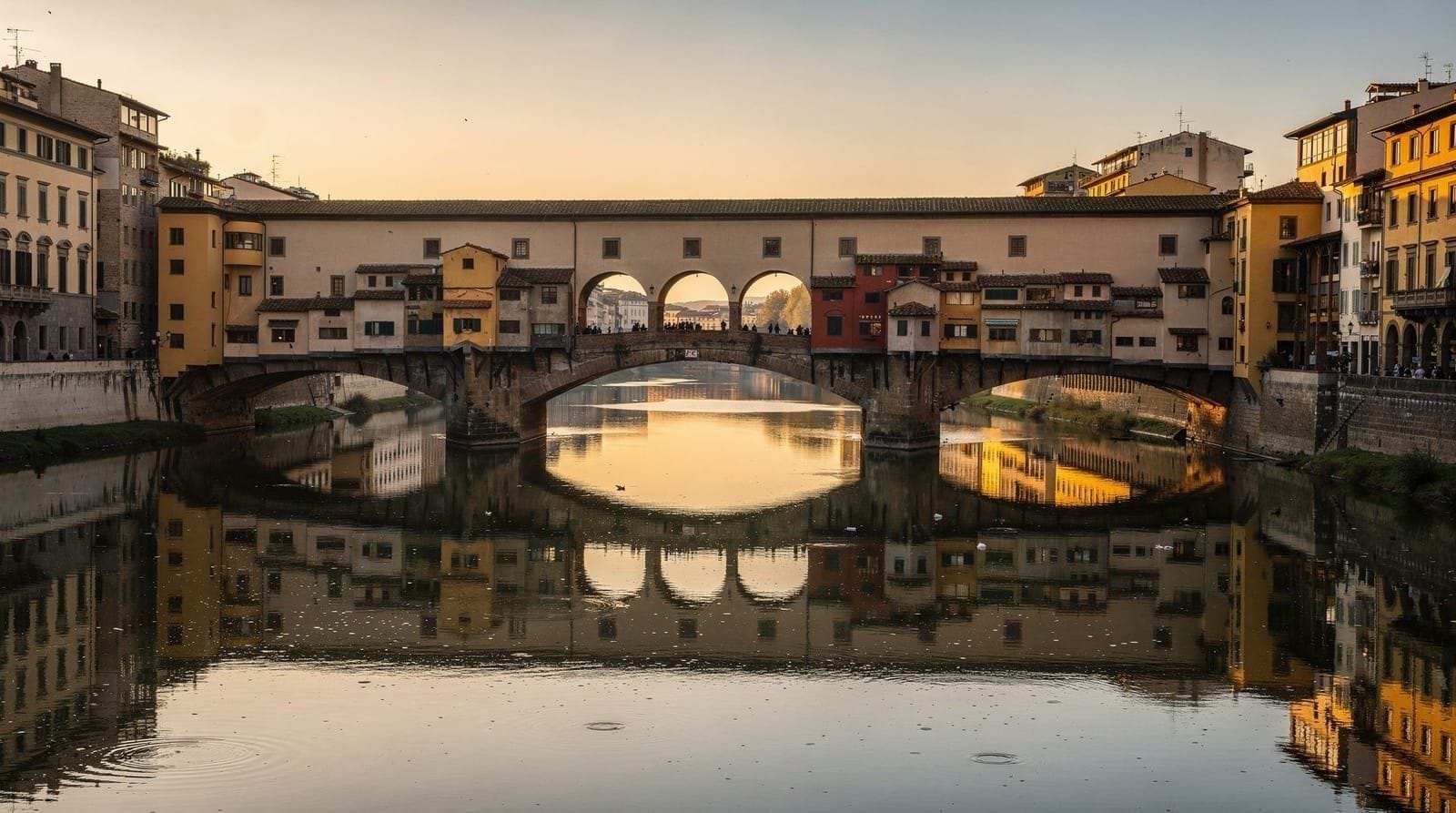
6. Ponte Vecchio and the Vasari Corridor
Cosimo I commissioned the Vasari Corridor in 1565 to connect the Uffizi to the Palazzo Pitti, allowing the Medici to walk across the city in private. The corridor runs above the east side of Ponte Vecchio — the small windows punched through the Ponte Vecchio shop walls to let the corridor pass.
See the Ponte Vecchio guide for the full story of the bridge and corridor.
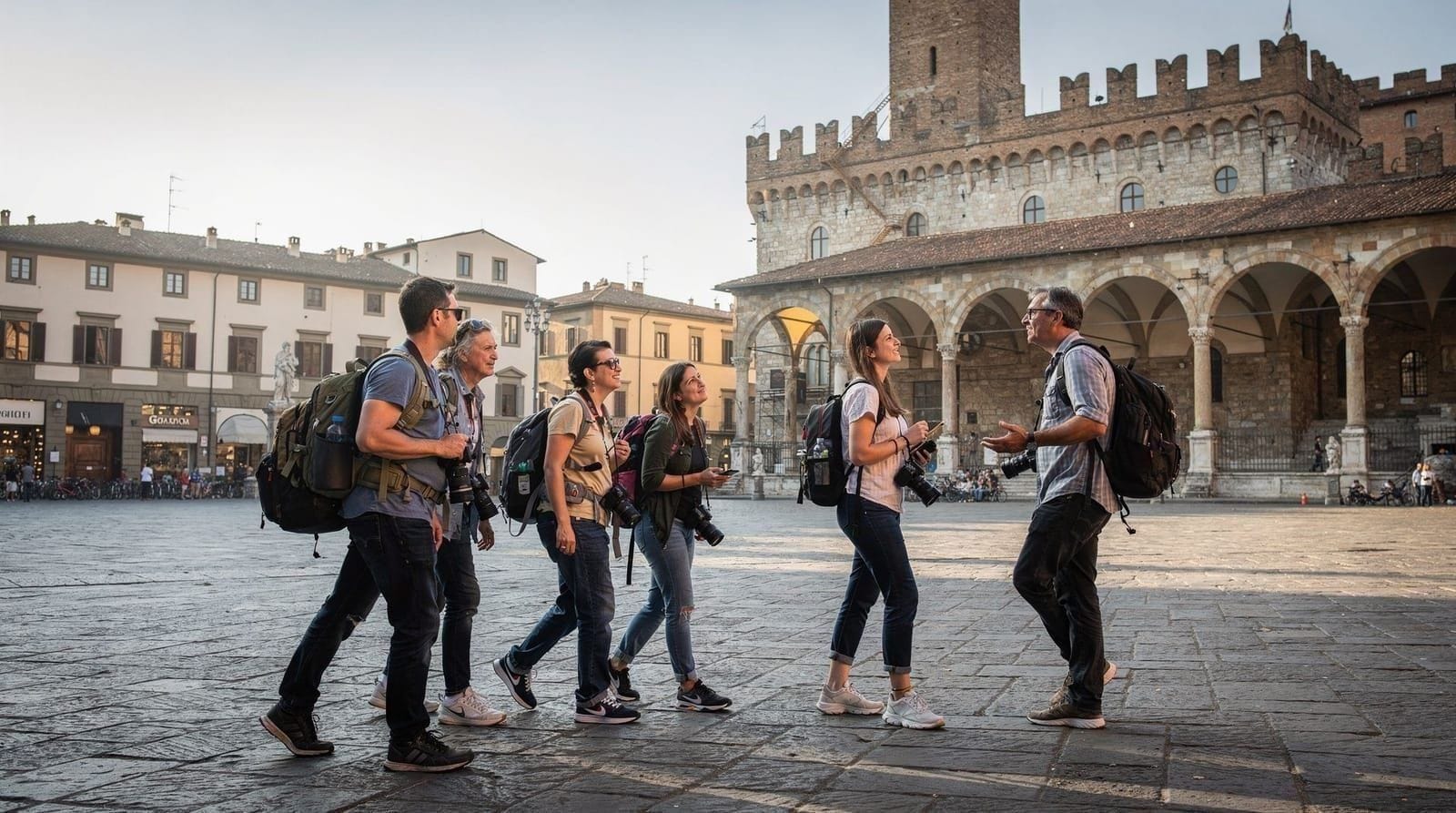
Guided Medici tours: what to look for
The best Medici-focused walking tours do three things that independent visits cannot easily replicate:
-
They tell the story as narrative. The rise of the banking dynasty, the patronage decisions, the Pazzi Conspiracy (1478, in which Lorenzo’s brother Giuliano was stabbed 19 times during High Mass in the Duomo), the French invasion, the exile and return — this is a genuinely dramatic political history that makes all the buildings and artworks more legible.
-
They explain the patronage logic. Why did Cosimo commission Donatello rather than Ghiberti? Why did Lorenzo support Botticelli’s pagan mythologies? Understanding the relationship between patron and artist changes how you look at individual works.
-
They handle logistics. The Medici Chapels, Palazzo Medici chapel, and specific Uffizi rooms all have capacity limits; a guide who has pre-arranged access saves you queuing separately.
Available tour types:
| Tour type | Duration | Price | Best for |
|---|---|---|---|
| Walking tour (Medici history) | 2–2.5 hours | €25–45 | Overview, narrative |
| Walking tour + Medici Chapels | 2.5–3 hours | €45–70 | History + Michelangelo |
| Private tour (walking) | 2–3 hours | €150–250 | Deep dive, families |
| Medici Chapels guided tour (in chapel) | 1–1.5 hours | €35–55 | Focused Michelangelo study |
The Pazzi Conspiracy: a Medici story worth knowing
On 26 April 1478, during High Mass in the Duomo, members of the Pazzi family (Medici banking rivals) and their allies attacked Lorenzo and Giuliano de’ Medici simultaneously. Giuliano was stabbed 19 times and died; Lorenzo escaped with a sword wound to the neck, retreating into the sacristy.
The aftermath was brutal: Lorenzo had the conspirators hunted down and hanged from the windows of the Bargello. The Archbishop of Pisa, implicated in the plot, was hanged alongside the bankers who had financed it. The Pazzi family was stripped of its name, its property, and even its heraldic insignia — the word “Pazzi” was for a time forbidden in Florence.
Lorenzo’s response to the conspiracy became the event that consolidated his absolute control of Florence. The public sympathy generated by his brother’s murder and his own near-death effectively silenced the republican opposition.
This story unfolds, geographically, in the Duomo (the attack), the Bargello (the executions), and Piazza della Signoria (subsequent civic celebrations). Any guided Medici tour should cover it.
Planning the route: timing and breaks
The full six-stop route described above works best split across a morning and an early afternoon, not compressed into one sitting. San Lorenzo, the Medici Chapels, and Palazzo Medici Riccardi are all within five minutes of each other and form a natural first block — allow around two hours for all three including queuing. Break for lunch near Mercato Centrale, a five-minute walk from San Lorenzo and a genuinely good food stop rather than a compromise.
The second block — Uffizi, Palazzo Vecchio and Piazza della Signoria, then Ponte Vecchio — is denser and benefits from a pre-booked Uffizi slot early afternoon (2–2.5 hours minimum). If you’re travelling with children or simply want a lighter pace, split the route across two separate half-days rather than trying to complete it all at once; Renaissance-history fatigue is real, and the Medici sites reward attention more than speed.
Travellers continuing south of the river afterwards can extend the day into the Oltrarno, where Palazzo Pitti — the Medici’s final grand residence — picks up the story exactly where Ponte Vecchio leaves off.
Independent versus guided: an honest comparison
Doing this route independently costs less and lets you linger where you want, but the Medici story is genuinely dense — six generations, three popes, two queens of France, a failed conspiracy, an exile, a restoration — and the individual sites’ own labelling rarely connects the dots between them. A guide’s main value here isn’t access (most of these sites don’t require a guide to enter) but narrative: turning six separate ticket stubs into one coherent afternoon.
A reasonable middle path: do the route independently using this guide as your script, and book a single specialist Medici Chapels guided tour for the one stop — the New Sacristy — where expert context adds the most, since the iconographic program of Dawn, Dusk, Day and Night is genuinely difficult to parse alone.
Frequently asked questions about the Medici tour
What is the single most important Medici site in Florence?
The New Sacristy (Medici Chapels) contains Michelangelo’s finest work in Florence — the Night, Day, Dawn, and Dusk figures are extraordinary. San Lorenzo church and the Old Sacristy show the beginning of Medici patronage. Palazzo Vecchio shows its apotheosis. If you can only visit one, make it the Medici Chapels.
Where did the Medici live?
Three main residences: Palazzo Medici Riccardi (1444–1540, primarily), Palazzo Vecchio (1540–1549, briefly), and Palazzo Pitti (1549 onward, across the Arno). Villas at Careggi and Cafaggiolo served as country retreats.
Do I need to book Medici Chapels tickets in advance?
Yes. The New Sacristy is very popular and operates with timed-entry tickets that sell out on busy dates. Book at least 3–5 days ahead in peak season (April–October). In November–February, same-day or next-day booking is usually possible.
Did the Medici really have a curse?
The family’s decline was real enough without a curse. The direct Medici line died out with Gian Gastone in 1737; his sister Anna Maria Luisa was the last. The family’s history includes multiple political failures, assassinations, incompetent rulers, and a series of Popes whose ambitions destroyed Florence’s independence — but also six generations of extraordinary art patronage that left a permanent mark on Western civilization.
Top experiences
Bookable activities with verified prices and instant confirmation on GetYourGuide.

Florence: Medici family private guided walking tour
- Free cancellation
Florence: the Medici experience tour
- Free cancellation
- Small group
Florence: Medici family history tour
- Free cancellation
- Small group
Florence: the Medici family guided walking tour
- Free cancellation
- Small group
Florence: Medici Chapels guided tour
- Skip the line
- Small group