An hour above Tuscany: what a hot-air balloon flight is actually like
The alarm goes off at 4:45am. Outside, Siena is still dark and absolutely silent. I have agreed — paid, actually, €235 per person — to get into a large wicker basket and be carried into the Tuscan sky by a balloon. I am trying to remember why.
My partner thought it would be romantic. She was right. I also have a well-documented fear of heights and suspect this will be the most expensive thirty seconds of pure terror I have ever voluntarily purchased.
This is the story of what actually happened.
| Where | Near Siena/Chianti or the Val d’Orcia |
| Cost | Around €200–280/person, private baskets €1,200–1,500 |
| Time needed | Half a day, including 4:45am start and transfer back |
| Season | April through October, weather-dependent |
| Booking | Ahead, with a flexible cancellation policy |
Why people do this at dawn
Hot-air balloons need calm air. Wind disrupts the flight path and makes landing unpredictable, which is understandably something the pilots prefer to avoid. The calmest air in Tuscany exists in the hour before and after sunrise, when the land hasn’t yet heated up and the thermal currents that build through the day haven’t started.
So you get up before the world, drive to a field outside Siena or in the Chianti hills, and watch a team of six people inflate what looks like a coloured cathedral while the stars fade out and the horizon turns slowly pink.
The inflation process takes about 45 minutes and is genuinely spectacular on its own. The burner is tremendously loud — a roar that seems absurdly out of place in the pre-dawn quiet — and the balloon takes shape like a slow, impossible flower.
The basket and the takeoff
The basket fits eight passengers plus the pilot, a laconic Florentine named Marco who had clearly heard every variation of nervous joke a first-timer could make. We each claimed a corner. There are no seats — you stand, which means you hold on to a padded rope handle and look out.
I expected the takeoff to feel dramatic. It doesn’t. One moment you’re on the ground; ten seconds later you’re ten metres up and still rising, and you haven’t felt anything dramatic at all. No lurching, no sway, no sudden stomach drop. Just a quiet, very gentle ascent.
The burner fires every few minutes to maintain altitude — another tremendous roar that you both feel and hear in your chest — but between firings, the flight is completely silent. No engine hum. No wind noise, because you’re moving with the wind. Just the occasional creak of the basket.
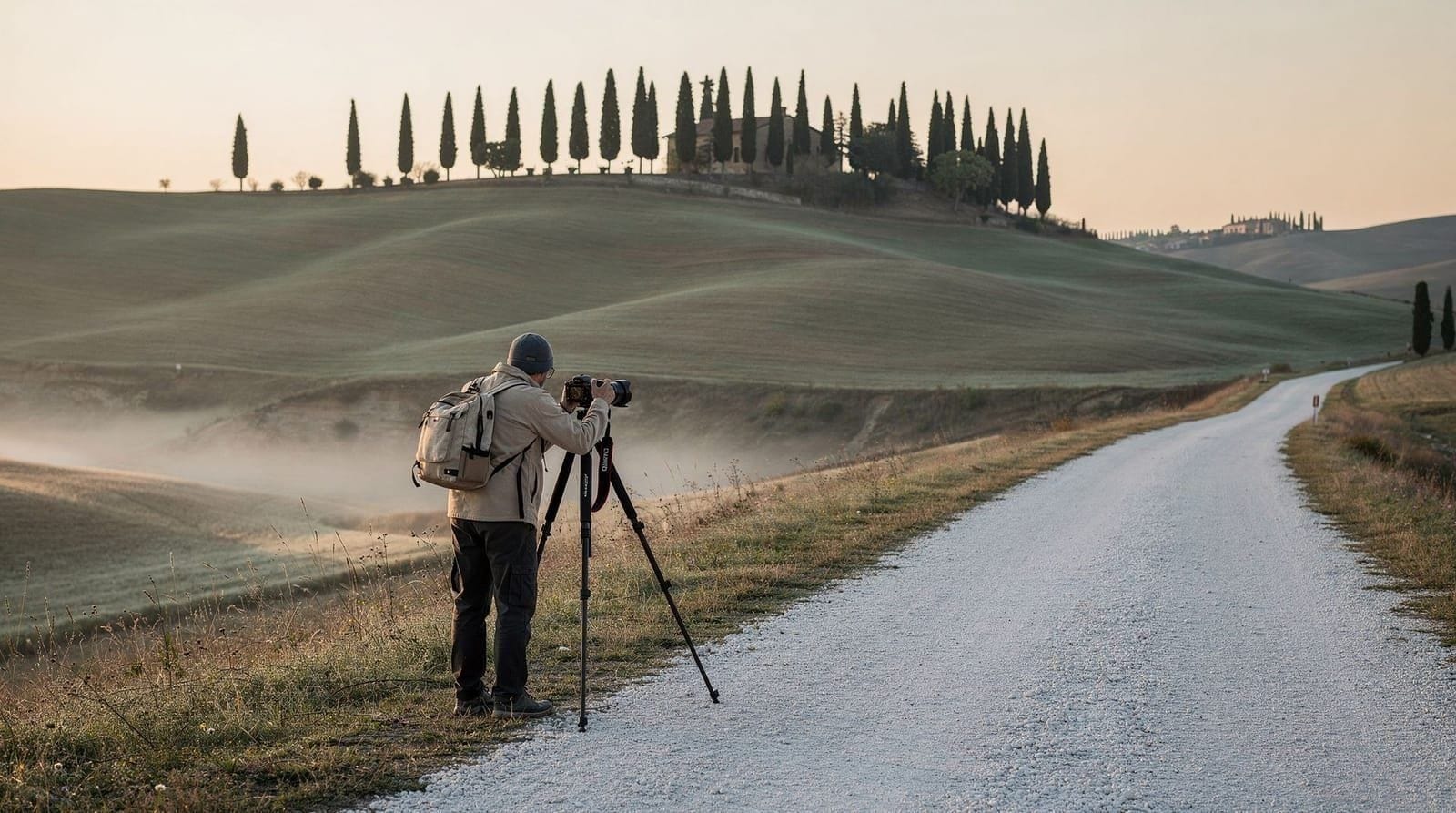
At 400 metres, the Tuscan hills spread out below us in every direction. Cypress trees line gravel roads like something from a Renaissance painting. Vines trace perfect rows across south-facing slopes. A hilltop village — Radda in Chianti — glows white in the early light, still asleep.
The actual experience of flying
I waited for the terror. It didn’t arrive, which surprised me more than anything. I think it’s because there’s no sense of exposure in the way a cliff edge or a glass-floor observation deck creates. You’re enclosed on four sides. The basket is solid. You don’t feel the altitude the same way.
What you feel instead is a profound, slightly hallucinatory calm. We floated over a winery — I could see the barrels through the open cellar doors — and then over a medieval farm, and then for a long stretch over nothing but vines and olive trees and the smoke rising from a chimney far below.
At one point the pilot dropped us so low we were skimming just above the treetops and we could smell the pine and morning dew. At another, he took us up to 800 metres where the whole bowl of the Chianti region was visible and the outline of Florence was a grey smudge on the horizon.
What nobody tells you
It is not a smooth ride if there’s even a slight breeze. Our flight had a gentle cross-wind that pushed us in an arc over the hills rather than a straight line, and there was occasional rocking in the basket when we hit different air pockets. It wasn’t violent, but if you have serious motion sickness, be aware.
The landing is the rough part. Our pilot announced the landing site — a field chosen based on where the wind had taken us — and then spent twenty minutes slowly descending. The actual touchdown involved the basket dragging along the ground for about fifteen metres before tipping on its side. Everyone screamed. Everyone laughed. Nobody was hurt. It is apparently always like this.
You need a car or a taxi home. The ground crew follows in a van and drives you back to your starting point, but your balloon will not land where it took off. Factor this into your plans if you’re on a tight schedule.
The fizz at the end is a real tradition. Every reputable operator ends the flight with prosecco and a certificate. Ours also laid out a small spread of local cheese and salumi. At 8am, I have never been so happy to eat Pecorino.
Cost and booking
Most Tuscany balloon operators charge between €200 and €280 per person, with private flights (just your group, 4-6 people) ranging €1,200-1,500 for the basket. Prices include the certificate, the landing celebration, and transport back to the meeting point.
Flights typically run April through October, with occasional early-November departures. Weather cancellations happen — always book with a flexible cancellation policy, as operators commonly reschedule on short notice due to wind.
The Chianti departure (from a vineyard estate near Greve in Chianti, about 30 minutes south of Florence) offers the classic rolling-hills landscape. The Val d’Orcia departure near Siena gives you the more dramatic, wide-open territory of cypress avenues and UNESCO-listed medieval hills.
Both are worth it. If you can only do one, and your base is Florence, the Chianti option is more practical. If you’re overnighting in Siena, the Val d’Orcia flight is extraordinary.
The photography challenge
Ballooning and photography have a complicated relationship. The flight is beautiful and you want to document it; the reality is that the gondola is moving, you’re at variable altitude, and the light conditions change constantly. What works:
For landscapes: A wide angle lens (or phone on wide mode) captures the scale better than a standard focal length. The challenge is that the most dramatic landscape moments — low passes over treetops, wide panoramic views — are hard to photograph while also experiencing. Decide in advance whether you’re photographing the flight or experiencing it.
For portraits of other passengers: Easier than you’d expect. The gentle light at dawn is flattering, and the expressions on people’s faces as the balloon rises — that particular mixture of nerves and wonder — are worth capturing.
For the balloon itself: Best photographed from the ground by the chase crew, who will usually share their images with you afterward. From inside the gondola, it’s difficult to see more than a portion of the balloon above you.
What can’t be photographed adequately: the silence. The quality of light at 600 metres before the world wakes up. The smell of the countryside coming up from below. These are the parts of the experience that only you get to keep.
Choosing a reputable operator
The Tuscan balloon industry has been operating since the 1980s, and the established operators have good safety records. Key things to check:
ENAC certification: The Italian Civil Aviation Authority regulates hot-air balloons. All commercial operators should be able to show current ENAC certification.
Pilot experience: Ask specifically how many flight hours the pilot has. Pilots with 500+ flight hours are significantly more experienced than those newly certified. Good operators publish this information.
Fleet age and maintenance: Modern burner systems and newer balloon envelopes (the fabric “envelope” has a finite lifespan) matter. Ask when the envelope was last replaced.
Cancellation policy: Weather cancellations happen regularly. What is the rebooking policy? Is your flight fee refunded or credited if weather prevents departure? This should be clearly stated before you pay.
What’s included: Some operators include a basic prosecco toast; others include a proper celebratory breakfast. Some include hotel pickup from central Florence; others require you to reach a meeting point. Clarify before booking.
The Val d’Orcia versus Chianti question
Both are magnificent. The practical difference:
| Chianti | Val d’Orcia | |
|---|---|---|
| Departure point | Vineyard estate, 30–40 min south of Florence | Near Siena or Pienza |
| Landscape | Vine rows, olive groves, farms on ridges | Open plains, cypress avenues, hill towns |
| Feel | Intimate, classic rolling hills | More cinematic, dramatic and open |
| Best if | Based in Florence, time is tight | Already touring southern Tuscany |
If your base is Florence and time is tight, Chianti. If you’re already touring southern Tuscany and overnighting in Siena or Pienza, the Val d’Orcia road trip itinerary area gives you the more extraordinary balloon option, and it pairs naturally with a day exploring Val d’Orcia by car or a stop in San Gimignano on the way back north.
Would I do it again?
Without hesitation. The fear-of-heights thing was a complete non-issue, which I suspect is true for most people once they’re actually up there. My partner cried a little when we were floating over the vines at sunrise, which is either embarrassing or completely understandable depending on your perspective.
I spent two weeks in Tuscany that June. I saw the Uffizi, ate extraordinary food, drank Brunello in a medieval cellar in Montalcino, and walked the walls of Lucca. The balloon was still the morning that felt most singular — the one that felt like something no photograph would ever quite capture.
Get up at 4:45am. It’s worth it.
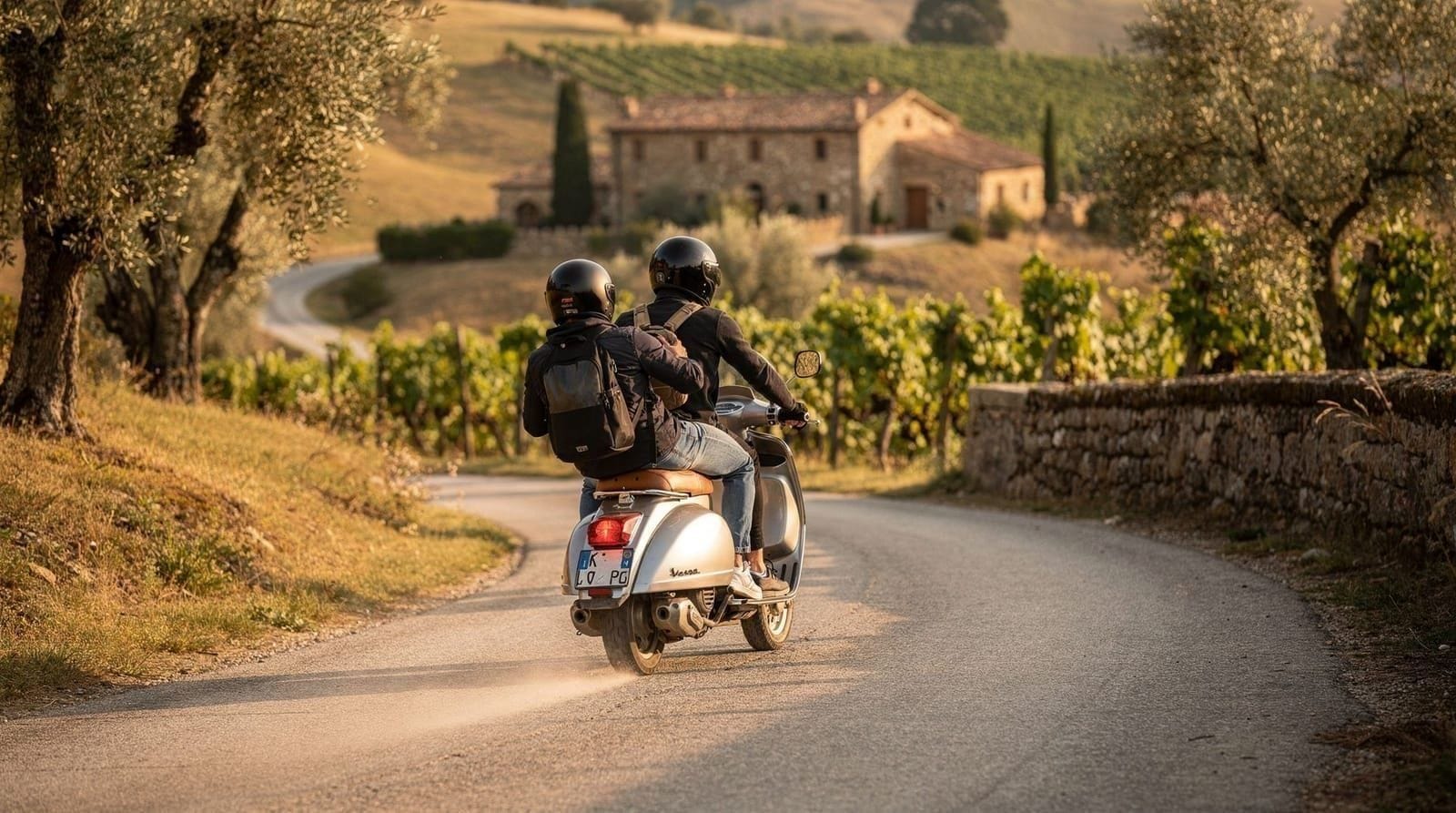
For more experiences in the Tuscan countryside, see the guide to Chianti wine country and the Val d’Orcia itinerary. If heights remain a concern, the Vespa tour through Chianti keeps you firmly on the ground while covering similar landscape.
Top experiences
Bookable activities with verified prices and instant confirmation on GetYourGuide.